Hours at an average pace
Showing 30 books
About 291 hours for 25 of 30 books with measured lengths. Estimates use 250 words a minute, adjusted for each book's difficulty. At 2 hours a day, about 146 days for those books.
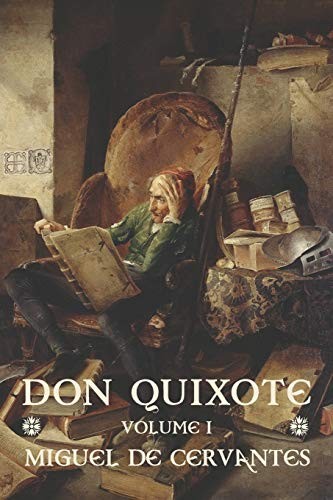
Taught throughout world literature courses and often called the first modern novel. Introduced here by Harold Bloom, and in 2002 one hundred writers from fifty-four countries voted it the best work of fiction.
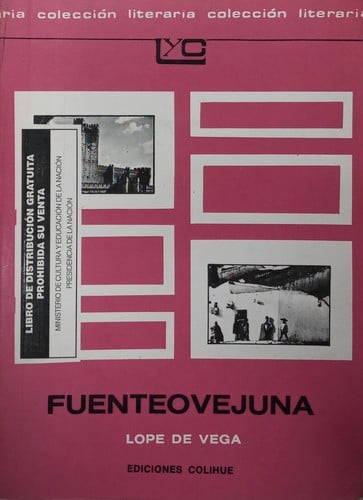
The most performed and most taught play of the Spanish Golden Age after Life Is a Dream, standard in Hispanic and world-theatre curricula.
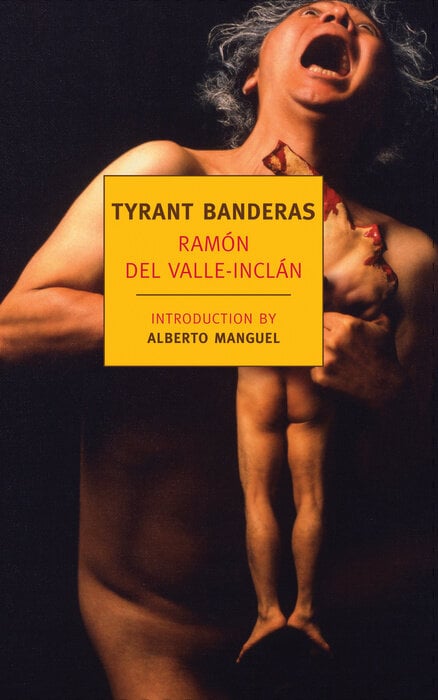
A standard text in Hispanic-studies and Latin American literature courses as the origin point of the dictator novel.
A central play of the Spanish Golden Age and standard in Spanish literature courses worldwide, regularly staged and anthologized, though less taught in English-language curricula than Hamlet.
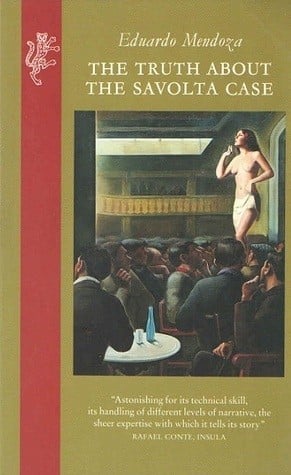
Standard in Spanish university curricula as the novel that marks the transition from Francoist to democratic Spanish fiction.
Winner of the Premio Planeta in 1991 and the Premio Nacional de Narrativa in 1992, it is a central work of contemporary Spanish fiction and is widely taught in Spanish literature courses.
It is the central text of the Spanish picaresque, taught in Spanish Golden Age courses beside Lazarillo de Tormes and Quevedo's Buscón. It sits below Don Quixote and is rarely assigned outside Hispanic studies.
Widely taught in contemporary Spanish literature and Holocaust-memory courses, and Muñoz Molina's most studied book.
Scholarly work in Spanish treats it as a major novel, and it is widely regarded as a landmark of postwar Spanish fiction. English-language teaching is thinner because the translation arrived late.
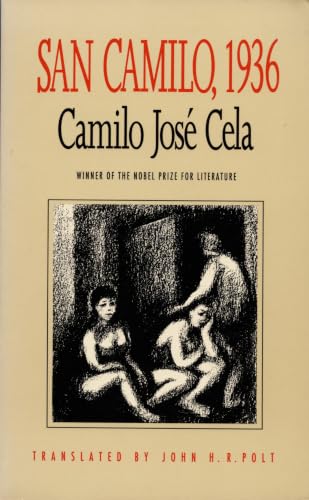
San Camilo, 1936 appears on Spanish literature syllabi and is recognized as a major work within Cela's oeuvre, but it lacks the international canonical standing of La Colmena or La familia de Pascual Duarte. It is studied primarily in Hispanic literature programs and rarely appears in general world literature curricula.
No. 11 on this list. The City of Marvels · Eduardo Mendoza · 1986
Widely taught in courses on the contemporary Spanish novel and a standard text in Barcelona-focused literary study.
Challenging15 hours
Start this bookNo. 12 on this list. Amadis of Gaul · Garci Rodríguez de Montalvo · 1508
The founding text of the Iberian chivalric romance and a fixture of Spanish medieval and Renaissance literature courses. It is read mostly in specialist and survey settings, not as a universal school text.
Moderate28 hours
Start this bookNo. 13 on this list. A Manuscript of Ashes · Antonio Muñoz Molina · 1986
Taught in contemporary Spanish literature courses as the founding novel of Mágina and a key text of the historical-memory novel.
Difficult12 hours
Start this bookNo. 14 on this list. Marianela · Benito Pérez Galdós
One of Galdós's best-known novels and a standard text in Spanish literature courses, though less central than his Fortunata and Jacinta.
Easy4.2 hours
Start this bookNo. 15 on this list. Soldiers of Salamis · Javier Cercas · 2001
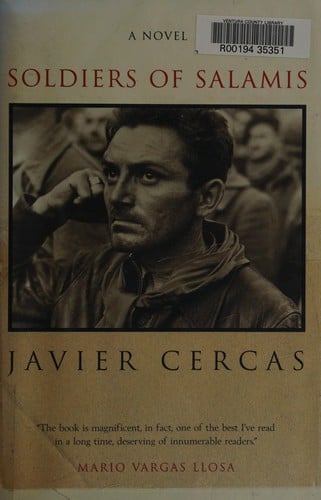
Soldiers of Salamis is widely taught in Hispanic studies and comparative literature courses as a defining text of the Spanish Civil War memory revival and of 'documentary novel' form. It is not a universal curriculum fixture across all world literature courses, but within its field — post-Franco Spanish fiction and autofiction studies — it has become a required reference point.
Challenging5.5 hours
Start this bookNo. 16 on this list. Requiem for a Spanish Peasant · Ramón J. Sender · 1953
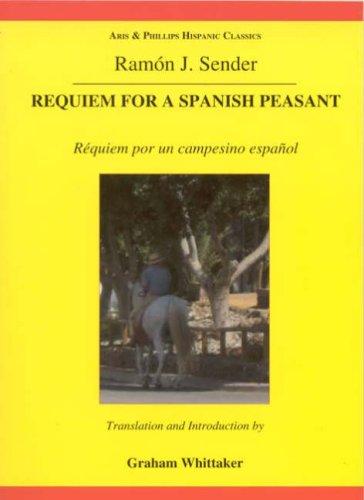
It is widely taught in Spanish literature courses as one of the central short works on the Civil War, and appears in Spanish-language curricula and in translation courses. It is less ubiquitous than the great novels.
Moderate1.6 hours
Start this bookNo. 17 on this list. The Three-Cornered Hat · Pedro Antonio de Alarcón · 1874
A standard of 19th-century Spanish literature, widely taught in Spanish courses and treated as a classic of costumbrista comedy. It is less central outside the Spanish-speaking world.
Easy2.2 hours
Start this bookNo. 18 on this list. The Four Horsemen of the Apocalypse · Vicente Blasco Ibáñez · 1916
The novel is a staple of Spanish-language and World War I reading lists and was one of the biggest international bestsellers of its decade. It is taught less often than the core modernist canon.
Easy8.8 hours
Start this bookNo. 19 on this list. The Patients of Doctor García · Almudena Grandes · 2017
The book won Spain's Premio Nacional de Narrativa in 2018 and belongs to a widely read cycle. It is taught in Spanish contemporary literature courses but is too recent to count as core canon.
Moderate14 hours
Start this bookNo. 20 on this list. Mazurka for Two Dead Men · Camilo José Cela · 1983
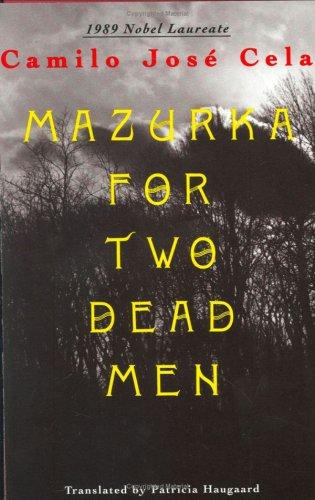
In rural Galicia, the dead of a civil war-era massacre take turns telling their stories. Cela's experimental novel fragments narrative voice to capture the weight of Spanish history and the persistence of memory in a divided land.
Challenging6.7 hours
Start this book
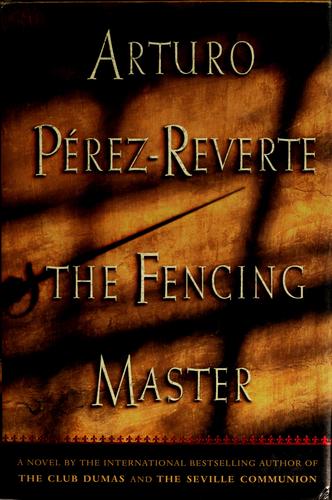
No. 21 on this list. The Fencing Master · Arturo Pérez-Reverte · 1988
A well-regarded literary thriller with a steady presence on Spanish reading lists but no canonical standing.
Challenging7.1 hours
Start this bookNo. 22 on this list. The Shadow of the Wind · Carlos Ruiz Zafón · 2001
The Shadow of the Wind is a global bestseller — translated into more than 40 languages and among the best-selling Spanish novels of the past 25 years — but it sits closer to popular Gothic fiction than to the university-syllabus canon; ReadingRate's data fetch found no syllabus or Wikipedia-language records on file for it. It appears on readers'-choice and book club lists rather than academic reading lists.
Moderate11 hours
Start this bookNo. 23 on this list. Bad Women · Marilar Aleixandre · 2022
Winner of Spain's Premio Nacional de Narrativa 2022, which brings it into discussion in Spanish and Galician literature. It is recent, so syllabus presence is still building, placing it in the emerging range, between The Road and Gone Girl.
Challenging
Start this bookNo. 24 on this list. Martinete of the Shadow King · Raúl Quinto · 2024
It won the 2024 Premio Nacional de Narrativa, Spain's National Fiction Prize, which brings immediate prominence in Spanish letters. As a very recent book, it has not yet had time to enter curricula widely.
Moderate2.3 hours
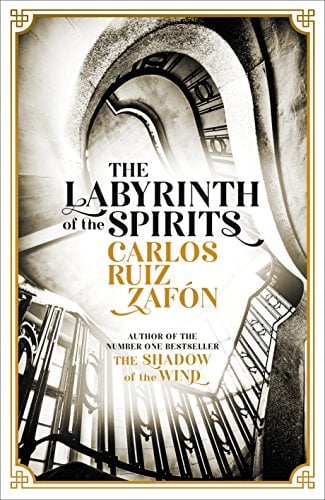
Start this bookNo. 25 on this list. The Labyrinth of the Spirits · Carlos Ruiz Zafon · 2018
A bestselling modern novel in a beloved series, popular in Spain and abroad, but not yet a fixture of university syllabi.
Moderate17 hours
Start this bookNo. 26 on this list. The Forms of Wanting · Inés Martín Rodrigo · 2022
Winner of the 2022 Premio Nadal, one of Spain's oldest literary prizes, which brings press attention and bookshop presence. As a recent novel it has not yet entered curricula in any broad way.
Easy5.4 hours
Start this bookNo. 27 on this list. Victoria · Paloma Sánchez-Garnica · 2024
Published in November 2024, the novel is too recent for syllabi, though the Premio Planeta 2024 win brings it wide attention in Spanish-language publishing. A Booket pocket edition follows the prize. It sits among popular, prize-backed commercial fiction.
Easy
Start this bookNo. 28 on this list. The Maid's Daughters · Sonsoles Ónega · 2023
A 2023 Premio Planeta winner, still too recent for syllabi, and a television adaptation brought it wider attention. It reads as a major commercial literary event rather than a taught text.
Easy
Start this bookNo. 29 on this list. Under Dry Earth · César Pérez Gellida · 2024
The book won the 2024 Premio Nadal, which brings attention in Spanish-language literary circles. It is too recent for syllabi, and as a series-opening crime novel it sits in contemporary popular fiction.
Easy7.7 hours
Start this bookNo. 30 on this list. Far from Louisiana · Luz Gabás · 2022
It won the 2022 Premio Planeta, a major commercial and prestige prize in Spanish publishing, but it is a recent popular historical novel. No syllabus presence is established, so it sits well below literary canon works such as The Remains of the Day.
Easy
Start this book
About this list
These 30 books are the highest-scoring eligible historical novels from Spain currently in the catalogue. About 291 hours of reading in all, for the 25 with measured lengths. Difficulty runs from 39 to 64 out of 100 for the middle half of the list; the summit is Tyrant Banderas at 78.
This list is ranked by literary regard, with a consistent order for equal scores. Membership follows authors and co-authors, not translators or editors. Catalogue coverage and the historical canon both limit what this list can represent, and genre labels are the catalogue’s own, gathered into broader kinds.
When we matched the Canons dataset to our catalogue in October 2026, our canonical-status scores rose with the number of school curricula, publisher series and lists in it that cite a work: the median score was 72 for books one such source cites, 84 at two, 88 at three, 92 at four and 93 at five or more. Prizes are left out of that count. Outside the state curricula, the dataset’s sources choose mostly from what has been translated into English or French, so it is a weaker check on other literatures. Source: Canons (Andrew Piper), CC BY 4.0
Questions people actually ask
- What are the best historical novels from Spain?
- By literary regard, which weighs canonical status, critical standing and influence: Don Quixote by Miguel de Cervantes Saavedra, Fuenteovejuna by Lope de Vega, Tyrant Banderas by Ramón del Valle-Inclán, The Knight of Olmedo by Lope de Vega and The Truth about the Savolta Case by Eduardo Mendoza. ReadingRate ranks 30 such books, each with a difficulty score and a reading-time estimate.
- Which historical novels from Spain should I read first?
- Start from difficulty, not from rank. The most approachable books on this list that still carry top literary regard are The Knight of Olmedo by Lope de Vega (about 1.3 hours), Fuenteovejuna by Lope de Vega and Don Quixote by Miguel de Cervantes Saavedra.
- What are the shortest of the best historical novels from Spain?
- Among the top 25, the shortest are Fuenteovejuna by Lope de Vega (about 1.2 hours), The Knight of Olmedo by Lope de Vega (about 1.3 hours) and Requiem for a Spanish Peasant by Ramón J. Sender (about 1.6 hours), at an average pace of 250 words a minute adjusted for each book's difficulty.
- Which of the best historical novels from Spain are the established classics?
- By canonical status, how firmly a book sits in curricula, anthologies and the canon: Don Quixote by Miguel de Cervantes Saavedra, Fuenteovejuna by Lope de Vega, The Knight of Olmedo by Lope de Vega, Tyrant Banderas by Ramón del Valle-Inclán and The Truth about the Savolta Case by Eduardo Mendoza.
- How long would it take to read the top ten?
- About 141 hours for the 9 with measured lengths, at an average pace of 250 words a minute adjusted for each book's difficulty: 71 days at two hours a day. Set your own pace on the page and the list's reading times change to it.
- How hard are historical novels from Spain to read?
- Most of this list sits between 39 and 64 on ReadingRate's 100-point difficulty scale, where 40 to 55 is moderate. The summit is Tyrant Banderas at 78. Every entry carries its own score, so a reader can pick a great book at a difficulty they will finish.
- How is this list ranked?
- On literary-regard data: how canonically established a work is, its critical standing, and its influence on later writing. It is not a readers’ poll, which is why recent bestsellers rarely appear. Membership follows authors and co-authors, not translators or editors. Lists by country, author, period, theme or difficulty keep to literature: fiction, poetry and drama, with no philosophy, criticism or theory. A list of a kind of book, such as philosophy, memoir or criticism, keeps every book of that kind. Every list holds at most three works by one author.