Hours at an average pace
Showing 48 books
About 163 hours for 40 of 48 books with measured lengths. Estimates use 250 words a minute, adjusted for each book's difficulty. At 2 hours a day, about 82 days for those books.
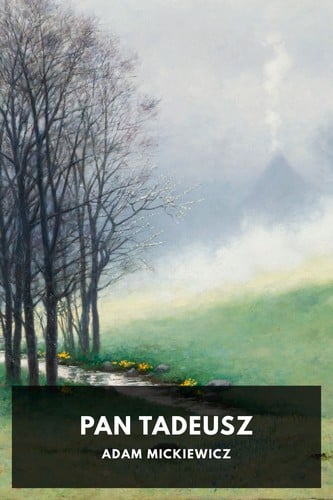
The Polish national epic, compulsory in Polish schools, and the standard reference point for Polish literature in every world-literature survey.
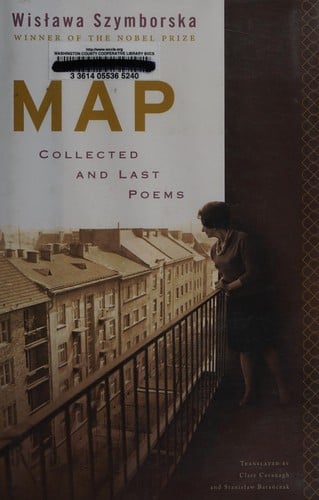
The standard complete Szymborska in English and a fixture of world-poetry syllabi since its publication.
The play is the founding work of Polish Renaissance tragedy and is taught across Polish schools and universities. Its place in world curricula is far smaller.
The cycle is a fixture of Polish school and university curricula and a defining text of Polish Romanticism. Outside Poland it is taught in Slavic literature courses and Romantic-poetry surveys.
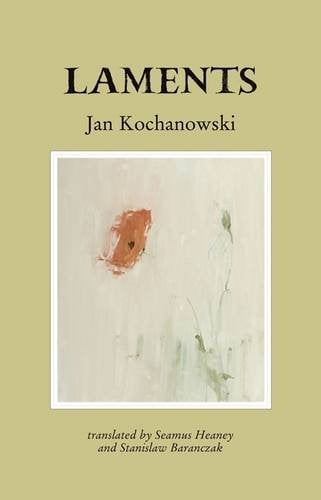
No. 5 on this list. Laments
Jan Kochanowski · 1580
Challenging21 min
Taught in schools: Lektury obowiązkowe – Polish national reading list (Poland)
Compulsory in Polish education, the founding masterpiece of Polish poetry, and standard in Renaissance literature courses.
It is a core text in Polish literature and Romantic studies, taught across Polish schools and universities. Outside Poland it is more specialized than the Russian classics.
Balladyna is a staple of Polish literature, widely taught in schools as a central Romantic drama, though less known beyond Poland.
A required text in Polish schools and a central novel of the interwar period, it anchors discussions of Polish independence. It is far less taught abroad than Crime and Punishment.
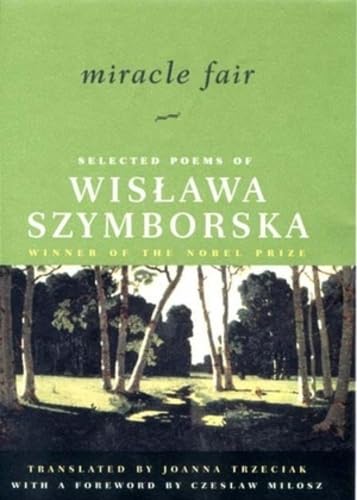
Szymborska is a staple of world poetry courses and a Nobel laureate, and this collection is the standard English edition of her work. Its place is secure, though below Hamlet or Gatsby in universal syllabus presence.
A staple of Polish school reading lists and the central novel of the Young Poland period. It is less widely taught abroad than the Russian classics.
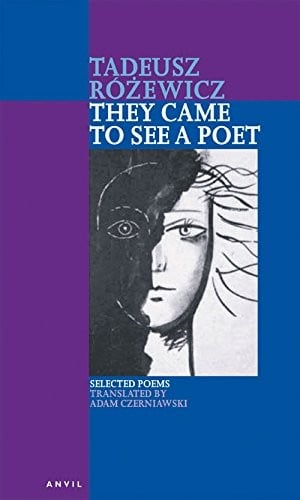
No. 11 on this list. They Came to See a Poet: Selected Poems · Tadeusz Różewicz · 1991
Compulsory in Polish education and standard in courses on postwar European poetry.
Challenging58 min
Start this bookNo. 12 on this list. Medallions · Zofia Nałkowska · 1946
Compulsory in Polish schools and a standard early text in Holocaust-literature curricula worldwide.
Challenging1.3 hours
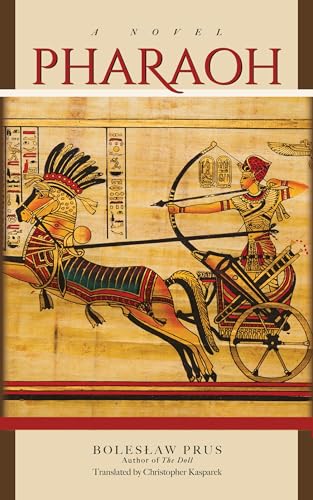
Start this bookNo. 13 on this list. Pharaoh · Bolesław Prus · 1897
Compulsory reading in Polish schools and a standard text in Central European literary study, though thinly known elsewhere.
Challenging16 hours
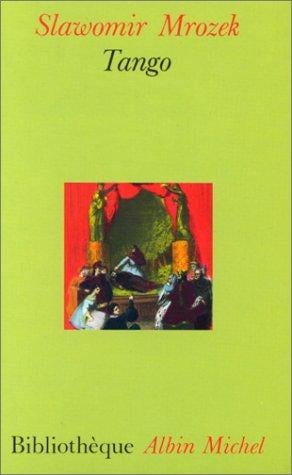
Start this bookNo. 14 on this list. Tango · Sławomir Mrożek · 1964
Taught in schools: Lektury obowiązkowe – Polish national reading list (Poland)
Standard in world-drama and absurdist-theatre curricula and compulsory reading in Polish schools.
Challenging1.6 hours
Start this bookNo. 15 on this list. The Invincible · Stanisław Lem · 1964
A standard text in Polish and European science fiction syllabi and cited constantly in swarm-robotics literature, though outside Lem's own top rank next to Solaris.
Moderate4.4 hours
Start this bookNo. 16 on this list. The Shoemakers · Stanisław Ignacy Witkiewicz · 1934
A central work of Polish modernist drama, taught in Polish literature courses and staged often in Poland. Less taught outside Poland.
Challenging2.7 hours
Start this bookNo. 17 on this list. A Memoir of the Warsaw Uprising · Miron Białoszewski · 1970
A standard text in Polish schools and in courses on war testimony and documentary prose.
Challenging6.5 hours
Start this bookNo. 18 on this list. The Maids of Wilko · Jarosław Iwaszkiewicz · 1932
A staple of twentieth-century Polish literature, taught in Polish schools and universities, and known abroad through Wajda's 1979 film adaptation. It is less central to world-literature syllabi.
Moderate2.7 hours
Start this bookNo. 19 on this list. Without End: New and Selected Poems · Adam Zagajewski · 2002
Widely taught in contemporary world-poetry courses and a standard reference for post-1968 Polish verse.
Challenging1 hours
Start this bookNo. 20 on this list. Rhymes · Mikołaj Sęp Szarzyński · 1601
Polish literature courses treat Szarzyński as the founder of Baroque poetry and a required stop between Kochanowski and later Baroque poets. Outside Poland his presence is limited.
Challenging28 min
Start this book
No. 21 on this list. A Treatise on Morals · Czesław Miłosz · 1947
It is a major work by a Nobel laureate and a key text of Polish postwar poetry, but it is taught mainly within Polish and Central European studies. It is far less assigned than Miłosz's shorter poems or The Captive Mind.
Challenging29 min
Start this bookNo. 22 on this list. Revenge · Aleksander Fredro · 1834
Compulsory in Polish schools, the most performed Polish comedy, and a source of everyday Polish proverbs.
Moderate1.2 hours
Start this bookNo. 23 on this list. Horizon · Wiesław Myśliwski · 1996
The novel won the Nike Award, Poland's leading literary prize, along with the Reymont Prize and the Gdynia Literary Prize. It is a standard title in modern Polish prose, with a smaller footprint in international curricula.
Moderate
Start this bookNo. 24 on this list. Snow White and Russian Red · Dorota Masłowska · 2002
It is a landmark of Polish twenty-first-century fiction, studied in Polish literature and translation courses, and was filmed in 2009. International syllabus presence is modest next to the established canon.
Challenging3.5 hours
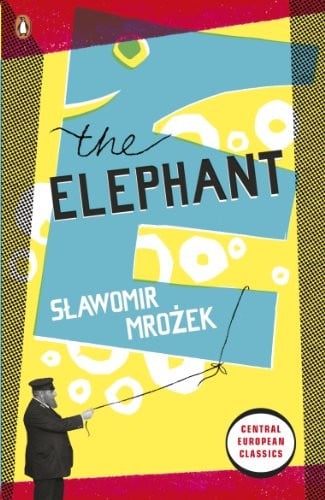
Start this bookNo. 25 on this list. The Elephant · Sławomir Mrożek · 1957
A set text in Polish schools and a standard example of Eastern European absurdism in comparative literature courses.
Moderate3.2 hours
Start this bookNo. 26 on this list. The Outpost · Bolesław Prus · 1886
A standard text of Polish positivism taught in schools, the customary companion piece to The Doll.
Moderate4.6 hours
Start this bookNo. 27 on this list. Our Class · Tadeusz Słobodzianek · 2009
A landmark of contemporary Polish theater, staged widely in Poland and abroad, and a Nike Award winner. Its presence in curricula is growing but still recent.
Moderate2 hours
Start this bookNo. 28 on this list. The Memoirs of Soplica · Henryk Rzewuski · 1839
It is a recognised work of Polish Romantic-era prose and the best-known example of the gawęda in fiction, studied in Polish literature courses. Abroad it is little taught.
Moderate9.8 hours
Start this bookNo. 29 on this list. Blood of Elves · Andrzej Sapkowski · 1994
It is a major modern fantasy text, taught mainly in Polish literature and genre studies rather than in broad core curricula. Its reach through the games and series makes it widely known.
Moderate6.2 hours
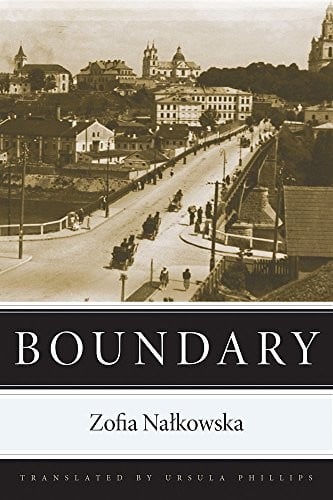
Start this bookNo. 30 on this list. Boundary · Zofia Nałkowska · 1935
A required text in the Polish secondary curriculum and a standard reference for interwar Polish realism.
Challenging7 hours
Start this book
No. 31 on this list. Colon
Wisława Szymborska · 2005
No. 32 on this list. Daybook
Urszula Kozioł · 2024
No. 33 on this list. The Mighty Angel
Jerzy Pilch · 2000
No. 34 on this list. The Eighth Day of the Week
Marek Hłasko · 1956
No. 35 on this list. Null
Szczepan Twardoch · 2026
No. 36 on this list. On Centaurs
Zuzanna Ginczanka · 1936
No. 37 on this list. A Treatise on Shelling Beans
Wiesław Myśliwski · 2006
No. 38 on this list. Madame
Antoni Libera · 1998
No. 39 on this list. Only Those with Teeth Can Smile
Zyta Rudzka · 2023
No. 40 on this list. Dark, Almost Night
Joanna Bator · 2012
No. 41 on this list. gift. from Podlasie
Justyna Kulikowska · 2022
No. 42 on this list. The Tower
Gustaw Herling-Grudziński · 1958
No. 43 on this list. Mountain View
Marcin Czerkasow · 2023
No. 44 on this list. A Big Boy Is Coming
Grzegorz Bogdał · 2024
No. 45 on this list. Castorp
Paweł Huelle · 2004
No. 46 on this list. The Road to Nowhere
Józef Mackiewicz · 1955
No. 47 on this list. Solarists
Marcin Mokry · 2026
No. 48 on this list. The Speech of Bread
Elżbieta Łapczyńska · 2025
About this list
These 48 books are the highest-scoring eligible moderately difficult books in Polish currently in the catalogue. About 163 hours of reading in all, for the 40 with measured lengths. Difficulty runs from 50 to 60 out of 100 for the middle half of the list; the summit is A Memoir of the Warsaw Uprising at 65.
This list is ranked by literary regard, with a consistent order for equal scores. Membership follows authors and co-authors, not translators or editors. Catalogue coverage and the historical canon both limit what this list can represent.
When we matched the Canons dataset to our catalogue in October 2026, our canonical-status scores rose with the number of school curricula, publisher series and lists in it that cite a work: the median score was 72 for books one such source cites, 84 at two, 88 at three, 92 at four and 93 at five or more. Prizes are left out of that count. Outside the state curricula, the dataset’s sources choose mostly from what has been translated into English or French, so it is a weaker check on other literatures. Source: Canons (Andrew Piper), CC BY 4.0
Questions people actually ask
- What are the best moderately difficult books in Polish?
- By literary regard, which weighs canonical status, critical standing and influence: Pan Tadeusz by Adam Mickiewicz, Map: Collected and Last Poems by Wisława Szymborska, The Dismissal of the Greek Envoys by Jan Kochanowski, The Crimean Sonnets by Adam Mickiewicz and Laments by Jan Kochanowski. ReadingRate ranks 48 such books, each with a difficulty score and a reading-time estimate.
- Which moderately difficult books in Polish should I read first?
- Start from difficulty, not from rank. The most approachable books on this list that still carry top literary regard are The Dismissal of the Greek Envoys by Jan Kochanowski (about 20 min), Homeless People by Stefan Żeromski and The Crimean Sonnets by Adam Mickiewicz.
- What are the shortest of the best moderately difficult books in Polish?
- Among the top 25, the shortest are The Crimean Sonnets by Adam Mickiewicz (about 14 min), Laments by Jan Kochanowski (about 21 min) and The Dismissal of the Greek Envoys by Jan Kochanowski (about 20 min), at an average pace of 250 words a minute adjusted for each book's difficulty.
- Which of the best moderately difficult books in Polish are the established classics?
- By canonical status, how firmly a book sits in curricula, anthologies and the canon: Pan Tadeusz by Adam Mickiewicz, The Dismissal of the Greek Envoys by Jan Kochanowski, Laments by Jan Kochanowski, The Coming Spring by Stefan Żeromski and Map: Collected and Last Poems by Wisława Szymborska.
- How long would it take to read the top ten?
- About 32 hours, at an average pace of 250 words a minute adjusted for each book's difficulty: 17 days at two hours a day. Set your own pace on the page and the list's reading times change to it.
- How hard are moderately difficult books in Polish to read?
- Most of this list sits between 50 and 60 on ReadingRate's 100-point difficulty scale, where 40 to 55 is moderate. The summit is A Memoir of the Warsaw Uprising at 65. Every entry carries its own score, so a reader can pick a great book at a difficulty they will finish.
- How is this list ranked?
- On literary-regard data: how canonically established a work is, its critical standing, and its influence on later writing. It is not a readers’ poll, which is why recent bestsellers rarely appear. Membership follows authors and co-authors, not translators or editors. Lists by country, author, period, theme or difficulty keep to literature: fiction, poetry and drama, with no philosophy, criticism or theory. A list of a kind of book, such as philosophy, memoir or criticism, keeps every book of that kind. Every list holds at most three works by one author.