Hours at an average pace
Showing 33 books
About 152 hours for 27 of 33 books with measured lengths. Estimates use 250 words a minute, adjusted for each book's difficulty. At 2 hours a day, about 77 days for those books.
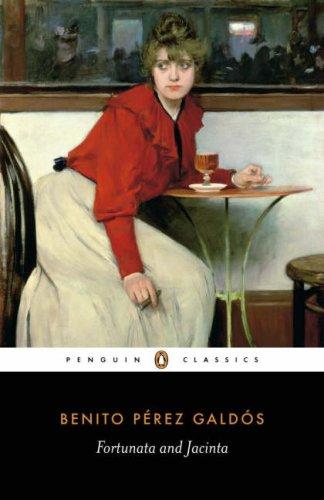
Universally recognized as the masterpiece of Spanish realism and one of the great European novels of the nineteenth century.
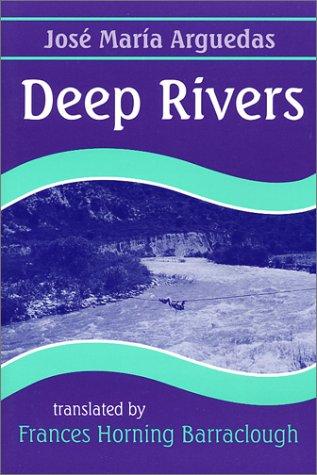
Recognized as one of the founding novels of the Latin American boom and a landmark of Peruvian literature.
Winner of the 1949 Lope de Vega Prize, it is a staple of Spanish secondary and university curricula and the standard introduction to postwar Spanish theatre. It is less taught outside the Spanish-speaking world.
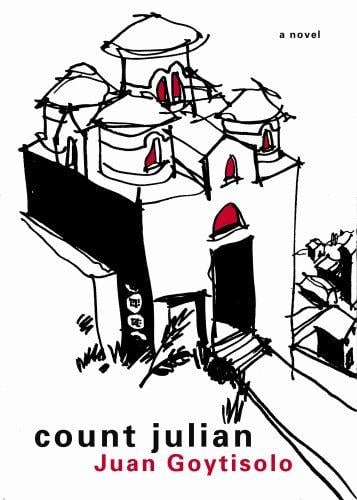
Count Julian (Reivindicación del conde don Julián, 1970), the middle novel of the trilogy begun with Marks of Identity, is a standard text in courses on the post-war Spanish novel. Banned in Franco's Spain, it is read in English in Helen Lane's translation.
No. 5 on this list. Deep Rivers
José María Arguedas · 1958
Easy4 hours
Taught in schools: UNAM Escuela Nacional Preparatoria – programas de Literatura (Mexico)
The central work of indigenist literature in Latin America and a cornerstone of Peruvian fiction.
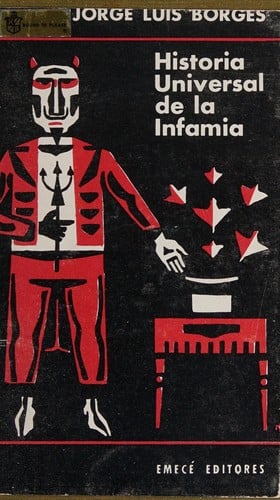
Borges's first fiction collection and the origin of his narrative method. Important in the Borges canon but overshadowed by Ficciones and The Aleph.
Moratín's best-known play, it is standard in Spanish secondary and university literature curricula and the model of Spanish neoclassical comedy. It is less taught outside the Hispanic world.
The play is a fixture of Spanish and Hispanic literature curricula and a standard of the Romantic theatre. Its annual performance around All Saints' Day makes it a national tradition.
The founding text of the Iberian chivalric romance and a fixture of Spanish medieval and Renaissance literature courses. It is read mostly in specialist and survey settings, not as a universal school text.
It is a founding text of Spanish prose fiction, standard in medieval Spanish literature courses and a fixture of anthologies of the period. It sits below Don Quixote in general school curricula but is essential in Hispanic studies.
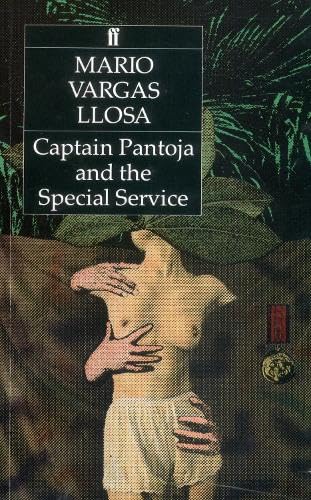
No. 11 on this list. Captain Pantoja and the Special Service · Mario Vargas Llosa · 1973
A popular and well-regarded Vargas Llosa novel, though considered minor compared to Conversation in the Cathedral or The War of the End of the World.
Moderate4.7 hours
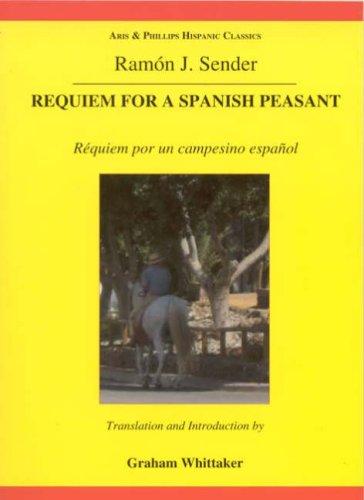
Start this bookNo. 12 on this list. Requiem for a Spanish Peasant · Ramón J. Sender · 1953
It is widely taught in Spanish literature courses as one of the central short works on the Civil War, and appears in Spanish-language curricula and in translation courses. It is less ubiquitous than the great novels.
Moderate1.6 hours
Start this bookNo. 13 on this list. The Three-Cornered Hat · Pedro Antonio de Alarcón · 1874
A standard of 19th-century Spanish literature, widely taught in Spanish courses and treated as a classic of costumbrista comedy. It is less central outside the Spanish-speaking world.
Easy2.2 hours
Start this bookNo. 14 on this list. Reeds and Mud · Vicente Blasco Ibáñez · 1902
It is among Blasco Ibáñez's best-known novels, a standard of Valencian and Spanish naturalist fiction, and was adapted for television in 1978. Its reach beyond Spanish-language courses is limited.
Easy4.9 hours
Start this bookNo. 15 on this list. Pepita Jiménez · Juan Valera · 1874
It is a standard of Spanish nineteenth-century realism, taught in Spanish literature courses and often considered Valera's best work. It is less central abroad than the major Russian or French realists.
Moderate4.2 hours
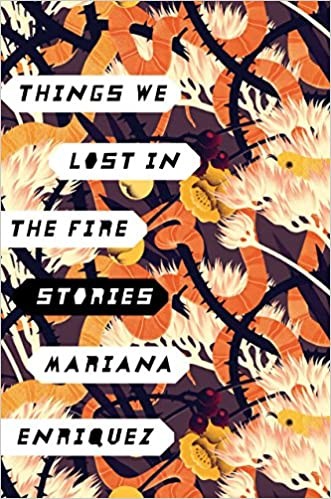
Start this bookNo. 16 on this list. Things We Lost in the Fire · Mariana Enriquez · 2016
International Booker shortlist. Widely reviewed and translated. Establishing canonical status in world literature and horror.
Easy3.6 hours
Start this bookNo. 17 on this list. The Four Horsemen of the Apocalypse · Vicente Blasco Ibáñez · 1916
The novel is a staple of Spanish-language and World War I reading lists and was one of the biggest international bestsellers of its decade. It is taught less often than the core modernist canon.
Easy8.8 hours
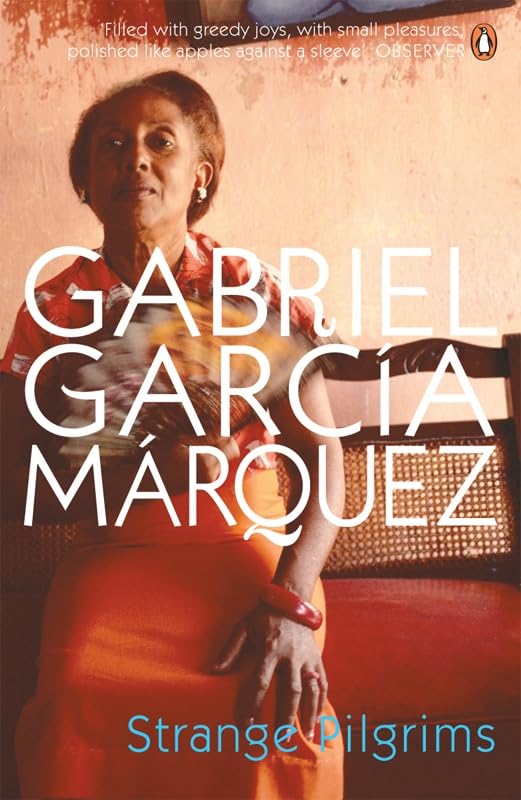
Start this bookNo. 18 on this list. Strange Pilgrims · Gabriel García Márquez · 1992
A respected collection from a Nobel laureate, though not among his most celebrated works.
Moderate3.4 hours
Start this bookNo. 19 on this list. The Patients of Doctor García · Almudena Grandes · 2017
The book won Spain's Premio Nacional de Narrativa in 2018 and belongs to a widely read cycle. It is taught in Spanish contemporary literature courses but is too recent to count as core canon.
Moderate14 hours
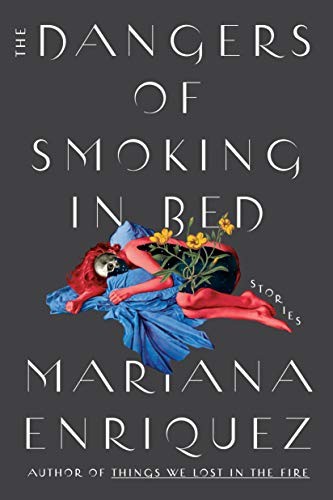
Start this bookNo. 20 on this list. The Dangers of Smoking in Bed · Mariana Enriquez · 2009
International Booker shortlist for this collection. Established Enriquez as a major voice. Growing canonical recognition in world literature.
Easy3.2 hours
Start this book
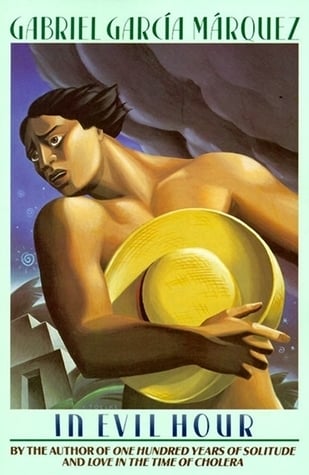
No. 21 on this list. In Evil Hour · Gabriel García Márquez · 1962
In Evil Hour is one of García Márquez's least-read novels, studied mainly as an apprentice work on the way to One Hundred Years of Solitude. It is seldom assigned outside courses on his career.
Easy3 hours
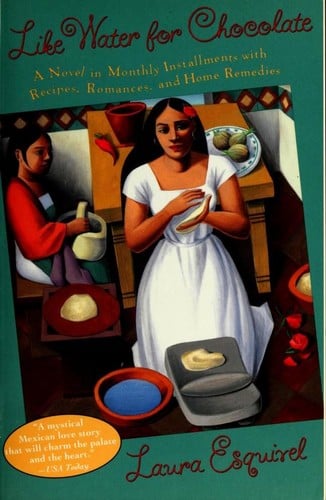
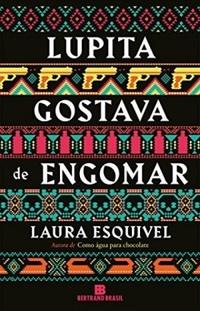
Start this bookNo. 22 on this list. Like Water for Chocolate · Laura Esquivel · 1989
Taught in schools: Literatura, Diseño Curricular – Provincia de Buenos Aires (Argentina)
Most widely read Mexican novel of its era. Acclaimed film. Global bestseller.
Very Easy2.6 hours
Start this bookNo. 23 on this list. Us · Manuel Vilas · 2023
The book won the 79th Premio Nadal in 2023, one of Spain's oldest literary prizes. It is too recent for syllabi to reflect, and no English edition exists yet.
Moderate
Start this bookNo. 24 on this list. In Praise of Hands · Jesús Carrasco · 2024
Published in 2024 and winner of the Premio Biblioteca Breve, a respected Spanish prize with a long roster of notable winners. It is too recent for syllabi, though a Booket pocket edition appeared in October 2025.
Easy4.6 hours
Start this bookNo. 25 on this list. The Forms of Wanting · Inés Martín Rodrigo · 2022
Winner of the 2022 Premio Nadal, one of Spain's oldest literary prizes, which brings press attention and bookshop presence. As a recent novel it has not yet entered curricula in any broad way.
Easy5.4 hours
Start this bookNo. 26 on this list. Victoria · Paloma Sánchez-Garnica · 2024
Published in November 2024, the novel is too recent for syllabi, though the Premio Planeta 2024 win brings it wide attention in Spanish-language publishing. A Booket pocket edition follows the prize. It sits among popular, prize-backed commercial fiction.
Easy
Start this bookNo. 27 on this list. The Maid's Daughters · Sonsoles Ónega · 2023
A 2023 Premio Planeta winner, still too recent for syllabi, and a television adaptation brought it wider attention. It reads as a major commercial literary event rather than a taught text.
Easy
Start this bookNo. 28 on this list. Under Dry Earth · César Pérez Gellida · 2024
The book won the 2024 Premio Nadal, which brings attention in Spanish-language literary circles. It is too recent for syllabi, and as a series-opening crime novel it sits in contemporary popular fiction.
Easy7.7 hours
Start this bookNo. 29 on this list. Physical Education · Rosario Villajos · 2023
A 2023 novel is too recent for syllabus presence, though the Premio Biblioteca Breve places it in a respected Spanish literary line. A French edition from Éditions Métailié in 2025 and rights listings show early international interest.
Easy
Start this bookNo. 30 on this list. Far from Louisiana · Luz Gabás · 2022
It won the 2022 Premio Planeta, a major commercial and prestige prize in Spanish publishing, but it is a recent popular historical novel. No syllabus presence is established, so it sits well below literary canon works such as The Remains of the Day.
Easy
Start this book
About this list
These 33 books are the highest-scoring eligible easy books in Spanish currently in the catalogue. About 152 hours of reading in all, for the 27 with measured lengths. Difficulty runs from 34 to 41 out of 100 for the middle half of the list; the summit is The City and the Dogs at 45.
This list is ranked by literary regard, with a consistent order for equal scores. Membership follows authors and co-authors, not translators or editors. Catalogue coverage and the historical canon both limit what this list can represent.
When we matched the Canons dataset to our catalogue in October 2026, our canonical-status scores rose with the number of school curricula, publisher series and lists in it that cite a work: the median score was 72 for books one such source cites, 84 at two, 88 at three, 92 at four and 93 at five or more. Prizes are left out of that count. Outside the state curricula, the dataset’s sources choose mostly from what has been translated into English or French, so it is a weaker check on other literatures. Source: Canons (Andrew Piper), CC BY 4.0
Questions people actually ask
- What are the best easy books in Spanish?
- By literary regard, which weighs canonical status, critical standing and influence: Fortunata and Jacinta by Benito Pérez Galdós, The City and the Dogs by Mario Vargas Llosa, The Story of a Stairway by Antonio Buero Vallejo, Count Julian by Juan Goytisolo and Deep Rivers by José María Arguedas. ReadingRate ranks 33 such books, each with a difficulty score and a reading-time estimate.
- Which easy books in Spanish should I read first?
- Start from difficulty, not from rank. The most approachable books on this list that still carry top literary regard are Count Julian by Juan Goytisolo (about 2.6 hours), The Maidens' Consent by Leandro Fernández de Moratín and Deep Rivers by José María Arguedas.
- What are the shortest of the best easy books in Spanish?
- Among the top 25, the shortest are The Maidens' Consent by Leandro Fernández de Moratín (about 58 min), The Story of a Stairway by Antonio Buero Vallejo (about 1.6 hours) and A Universal History of Infamy by Jorge Luis Borges (about 1.6 hours), at an average pace of 250 words a minute adjusted for each book's difficulty.
- Which of the best easy books in Spanish are the established classics?
- By canonical status, how firmly a book sits in curricula, anthologies and the canon: Fortunata and Jacinta by Benito Pérez Galdós, The Maidens' Consent by Leandro Fernández de Moratín, Don Juan Tenorio by José Zorrilla, The Story of a Stairway by Antonio Buero Vallejo and The City and the Dogs by Mario Vargas Llosa.
- How long would it take to read the top ten?
- About 72 hours, at an average pace of 250 words a minute adjusted for each book's difficulty: 36 days at two hours a day. Set your own pace on the page and the list's reading times change to it.
- How hard are easy books in Spanish to read?
- Most of this list sits between 34 and 41 on ReadingRate's 100-point difficulty scale, where 40 to 55 is moderate. The summit is The City and the Dogs at 45. Every entry carries its own score, so a reader can pick a great book at a difficulty they will finish.
- How is this list ranked?
- On literary-regard data: how canonically established a work is, its critical standing, and its influence on later writing. It is not a readers’ poll, which is why recent bestsellers rarely appear. Membership follows authors and co-authors, not translators or editors. Lists by country, author, period, theme or difficulty keep to literature: fiction, poetry and drama, with no philosophy, criticism or theory. A list of a kind of book, such as philosophy, memoir or criticism, keeps every book of that kind. Every list holds at most three works by one author.