Hours at an average pace
Showing 33 books
About 214 hours for 33 of 33 books with measured lengths. Estimates use 250 words a minute, adjusted for each book's difficulty. At 2 hours a day, about 107 days for those books.
The Polish national epic, compulsory in Polish schools, and the standard reference point for Polish literature in every world-literature survey.
No. 2 on this list. Lord Jim
Joseph Conrad · 1900
Challenging11 hours
Taught in schools: CSEC English B – Caribbean Examinations Council
The great novel of honor lost and sought. Jim's jump from the Patna, his redemption in Patusan, Marlow's narration—Conrad explored how one moment can define a life. Core text in modernism and British literature courses.
The standard complete Szymborska in English and a fixture of world-poetry syllabi since its publication.
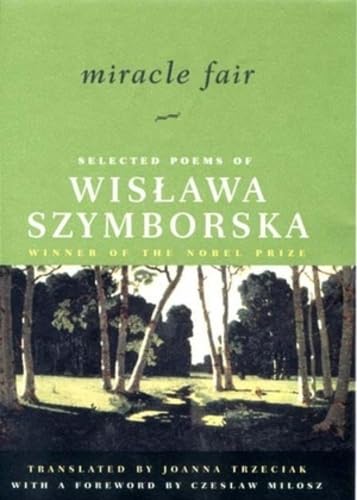
Szymborska's retrospective gathers five decades of work in what would become the definitive English collection. Her poems are deceptively simple—short, conversational, funny—while containing philosophical depths. She writes about clouds and dreams and history, about the way reality keeps being stranger than our categories. 'I am who I am. / A coincidence no less unthinkable / than any other.' She won the Nobel in 1996, and these poems show why: a voice at once modest and vast, finding wonder in ordinary things.
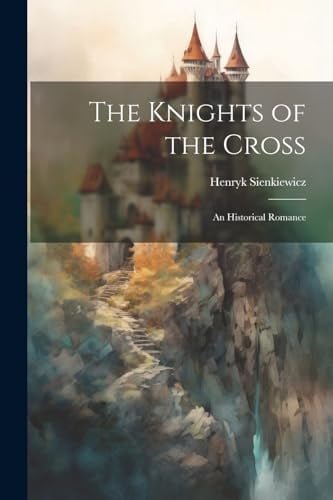
The Knights of the Cross holds major canonical status in Polish literature as one of Sienkiewicz's historical trilogy novels, widely taught in Polish schools and central to national cultural identity. The work occupies a prominent place in Slavic literary studies and 19th-century historical fiction scholarship. However, it remains less universally recognized in the broader Western canon than contemporaneous works by Tolstoy, Dostoevsky, or Flaubert, partly due to its specific focus on Polish-Teutonic conflicts and its distance from modernist aesthetics that shaped 20th-century canonicity. Still, Sienkiewicz's Nobel Prize (1905) ensures enduring international recognition.
No. 6 on this list. Laments
Jan Kochanowski · 1580
Challenging21 min
Taught in schools: Lektury obowiązkowe – Polish national reading list (Poland)
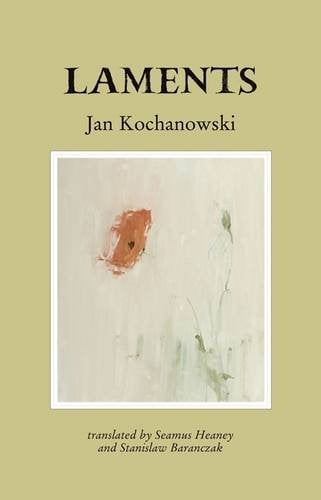
Compulsory in Polish education, the founding masterpiece of Polish poetry, and standard in Renaissance literature courses.
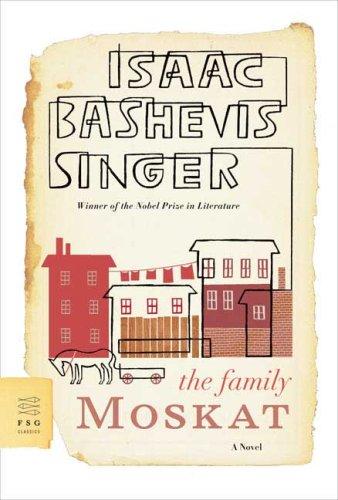
Listed in the Open Syllabus Top 500 Literature titles and published in prestige editions by both Library of America and NYRB Classics, signaling recognition among specialists. Its Wikipedia article exists in only 5 languages, reflecting limited global cultural penetration compared to Singer's better-known short stories. It occupies a place in the canon as Singer's major novel, taught in Jewish literature and 20th-century world literature courses, though less universally than works by the Nobel laureates it stands beside.
Szymborska is a staple of world poetry courses and a Nobel laureate, and this collection is the standard English edition of her work. Its place is secure, though below Hamlet or Gatsby in universal syllabus presence.
Compulsory in Polish education and standard in courses on postwar European poetry.
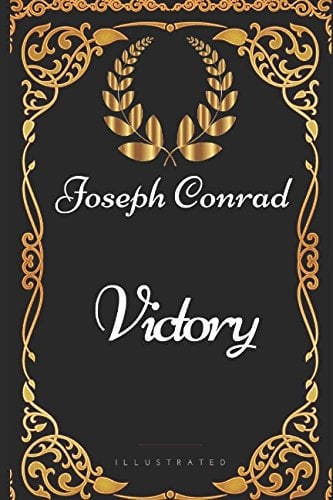
Victory appears on university syllabi in modernism and postcolonial literature courses, though less frequently than Heart of Darkness or Lord Jim, Conrad's most taught works. It is included in most major Conrad critical surveys and considered part of his mature canon. No verified Open Syllabus data was returned, but the novel's presence in the Oxford World's Classics and Penguin Modern Classics series signals sustained scholarly standing.
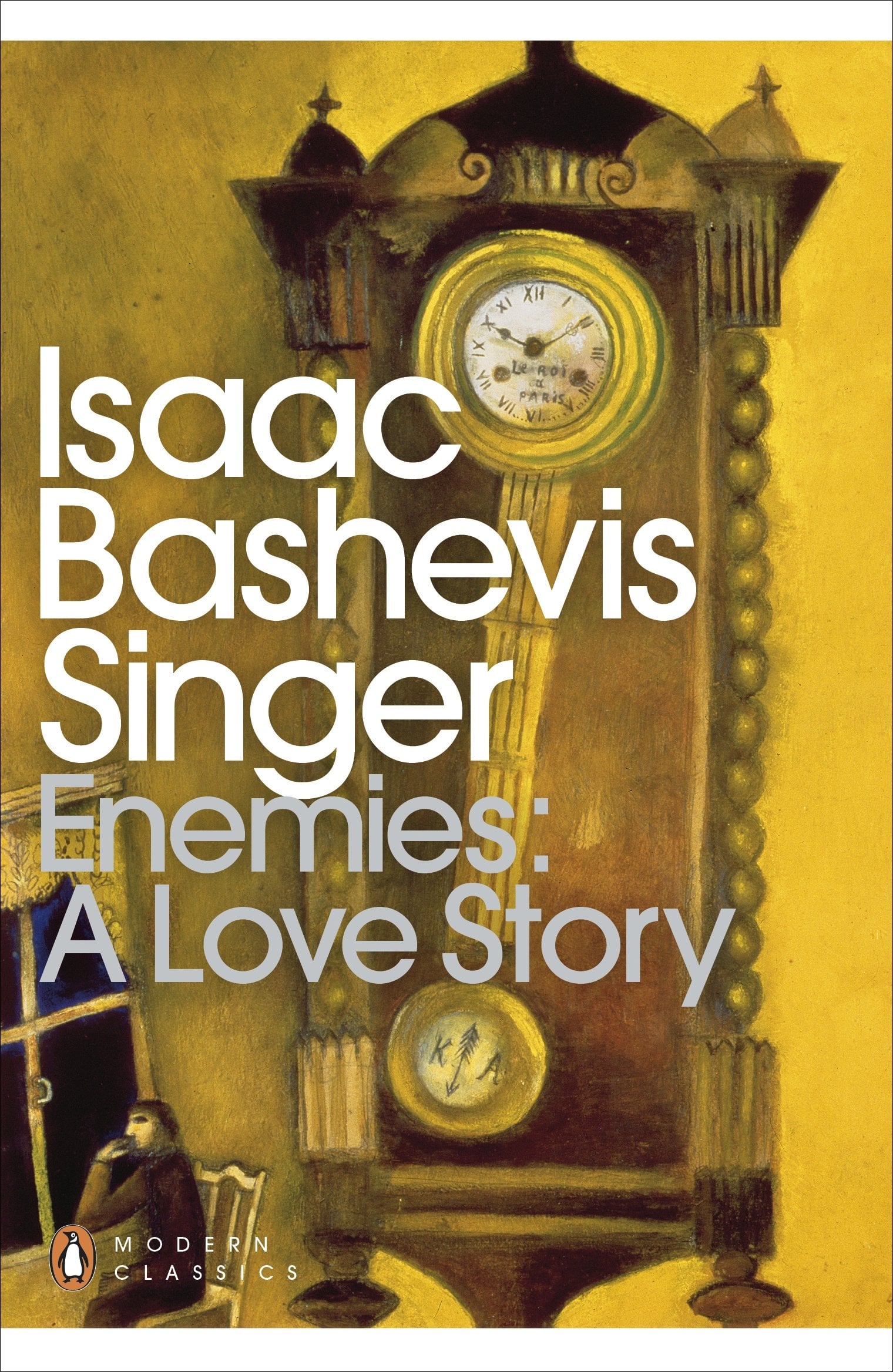
No. 11 on this list. Enemies, A Love Story · Isaac Bashevis Singer · 1966
Almost before he knows it, Herman Broder, refugee and survivor of World War II, has three wives; Yadwiga, the Polish peasant who hid him from the Nazis; Masha , his beautiful and neurotic true love; and Tamara, his first wife, miraculously returned from the dead. Astonished by each new complication, and yet resigned to a life of evasion, Herman navigates a crowded, Yiddish New York with a sense of perpetually impending doom.
Moderate5.2 hours
Start this bookNo. 12 on this list. Medallions · Zofia Nałkowska · 1946
Compulsory in Polish schools and a standard early text in Holocaust-literature curricula worldwide.
Challenging1.3 hours
Start this bookNo. 13 on this list. Pharaoh · Bolesław Prus · 1897
Compulsory reading in Polish schools and a standard text in Central European literary study, though thinly known elsewhere.
Challenging16 hours
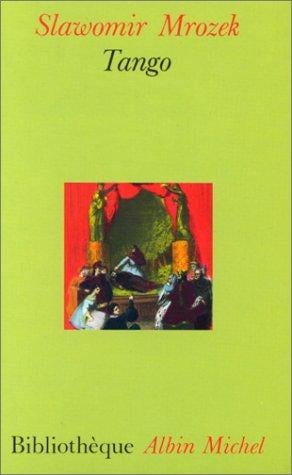
Start this bookNo. 14 on this list. Tango · Sławomir Mrożek · 1964
Taught in schools: Lektury obowiązkowe – Polish national reading list (Poland)
Standard in world-drama and absurdist-theatre curricula and compulsory reading in Polish schools.
Challenging1.6 hours
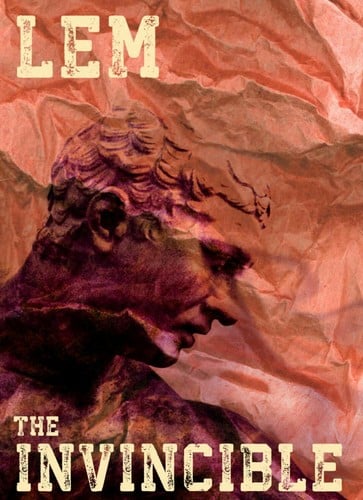
Start this bookNo. 15 on this list. The Invincible · Stanisław Lem · 1964
A standard text in Polish and European science fiction syllabi and cited constantly in swarm-robotics literature, though outside Lem's own top rank next to Solaris.
Moderate4.4 hours
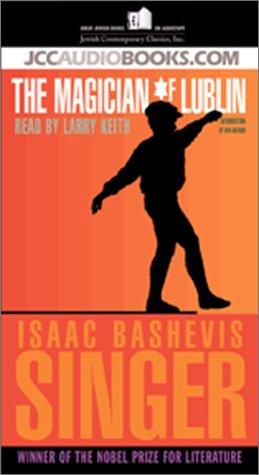
Start this bookNo. 16 on this list. The Magician of Lublin · Isaac Bashevis Singer · 1960
Singer's most taught novel after Enemies, standard in Jewish literature and world literature courses.
Moderate4.6 hours
Start this bookNo. 17 on this list. A Memoir of the Warsaw Uprising · Miron Białoszewski · 1970
A standard text in Polish schools and in courses on war testimony and documentary prose.
Challenging6.5 hours
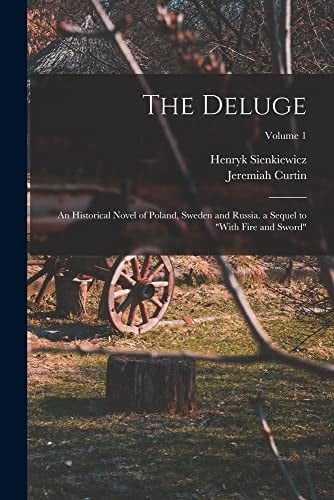
Start this bookNo. 18 on this list. The Deluge · Henryk Sienkiewicz · 1886
Taught in schools: Lektury obowiązkowe – Polish national reading list (Poland)
The second volume of Sienkiewicz's Trilogy follows Poland's struggle against Swedish invasion in the 17th century. Epic battles and romantic intrigue unfold against the backdrop of national catastrophe.
Moderate16 hours
Read nowNo. 19 on this list. With Fire and Sword · Henryk Sienkiewicz · 1884
Poland defends itself against Swedish and Cossack invasion in the 17th century. The first volume of Sienkiewicz's Trilogy celebrates Polish heroism and resistance.
Challenging22 hours
Read nowNo. 20 on this list. Without End: New and Selected Poems · Adam Zagajewski · 2002
Widely taught in contemporary world-poetry courses and a standard reference for post-1968 Polish verse.
Challenging1 hours
Start this book
No. 21 on this list. The Promised Land · Władysław Reymont · 1899
Jewish settlers build a new life in Poland, their community rising and falling with history. Reymont's novel chronicles the Polish-Jewish experience with characteristic scope and detail.
Moderate8.1 hours
Read nowNo. 22 on this list. Primeval and Other Times · Olga Tokarczuk · 1996
Appears on 22 university syllabi (33rd percentile in Open Syllabus), with Wikipedia articles in 5 languages. Not yet a fixture of world literature courses, though its visibility has increased steadily since Tokarczuk's 2018 Nobel Prize brought her backlist into English-language classrooms.
Challenging5.8 hours
Start this bookNo. 23 on this list. Revenge · Aleksander Fredro · 1834
Compulsory in Polish schools, the most performed Polish comedy, and a source of everyday Polish proverbs.
Moderate1.2 hours
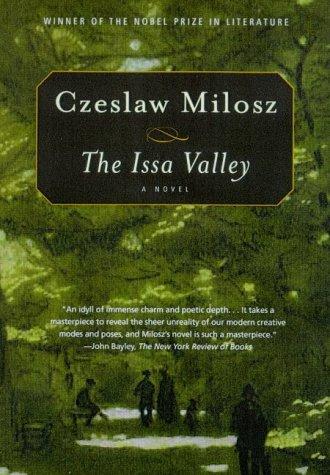
Start this bookNo. 24 on this list. The Issa Valley · Czesław Miłosz · 1955
Thomas grows up on a Lithuanian estate in the early twentieth century, learning to hunt, to observe nature, and to fear God. Miłosz's autobiographical novel recreates a lost world with hallucinatory precision—the rivers and forests of his childhood, the peasants and priests, the animals he tracked and killed. The prose moves between pastoral beauty and sudden violence, innocence and knowledge that corrupts. Thomas will become a poet; the valley will be destroyed by war and Soviet occupation. But in the novel's present, everything is still possible.
Challenging5.2 hours
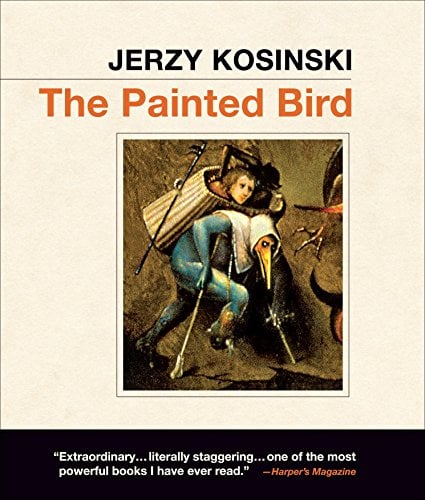
Start this bookNo. 25 on this list. The Painted Bird · Jerzy Kosinski · 1965
On TIME's All-TIME 100 Novels and found on 26 syllabi (35th percentile), with Wikipedia articles in 12 languages. It is taught in courses on Holocaust literature.
Challenging5.8 hours
Start this bookNo. 26 on this list. The Elephant · Sławomir Mrożek · 1957
A set text in Polish schools and a standard example of Eastern European absurdism in comparative literature courses.
Moderate3.2 hours
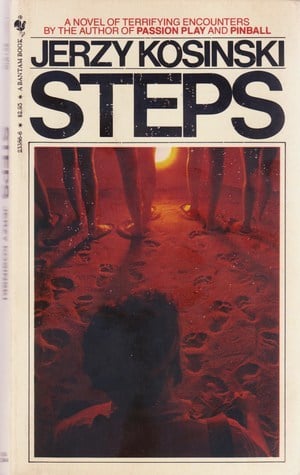
Start this bookNo. 27 on this list. Steps · Jerzy Kosinski · 1969
Steps won the National Book Award in 1969 and was widely discussed in its era, but its canonical standing has been complicated by plagiarism controversies surrounding Kosinski. It remains on many postmodern fiction reading lists and is recognized as an important example of fragmentary, parable-like fiction. However, it is less frequently taught and discussed today than 'The Painted Bird,' and its reputation has been somewhat eclipsed by the scandal around Kosinski's authorship methods. It occupies a secure but contested place in the American postmodern canon.
Challenging3.1 hours
Start this bookNo. 28 on this list. The Outpost · Bolesław Prus · 1886
A standard text of Polish positivism taught in schools, the customary companion piece to The Doll.
Moderate4.6 hours
Start this bookNo. 29 on this list. Boundary · Zofia Nałkowska · 1935
A required text in the Polish secondary curriculum and a standard reference for interwar Polish realism.
Challenging7 hours
Start this bookNo. 30 on this list. The Peasants · Władysław Reymont · 1904
Taught in schools: Lektury obowiązkowe – Polish national reading list (Poland)
The Peasants has a Wikipedia presence in only 14 languages, well below the threshold of globally canonical works, and no measurable university syllabus presence in open databases. Within Poland it is the defining literary monument of the late nineteenth century, but outside that tradition it sits at the margins of world literature curricula.
Challenging6.8 hours
Read now
About this list
These 33 books are the highest-scoring eligible moderately difficult books from Poland currently in the catalogue. By literary regard, it opens with Pan Tadeusz, Lord Jim and Map: Collected and Last Poems. About 214 hours of reading in all. Difficulty runs from 53 to 61 out of 100 for the middle half of the list; the summit is A Memoir of the Warsaw Uprising at 65.
This list is ranked by literary regard, with a consistent order for equal scores. Membership follows authors and co-authors, not translators or editors. Catalogue coverage and the historical canon both limit what this list can represent.
When we matched the Canons dataset to our catalogue in October 2026, our canonical-status scores rose with the number of school curricula, publisher series and lists in it that cite a work: the median score was 72 for books one such source cites, 84 at two, 88 at three, 92 at four and 93 at five or more. Prizes are left out of that count. Outside the state curricula, the dataset’s sources choose mostly from what has been translated into English or French, so it is a weaker check on other literatures. Source: Canons (Andrew Piper), CC BY 4.0
Questions people actually ask
- What are the best moderately difficult books from Poland?
- By literary regard, which weighs canonical status, critical standing and influence, Pan Tadeusz, Lord Jim, Map: Collected and Last Poems, Poems New and Collected and The Knights of the Cross lead. ReadingRate ranks 33 such books, each with a difficulty score and a reading-time estimate.
- Where should I start with moderately difficult books from Poland?
- Start from difficulty, not from rank. The most approachable books on this list that still carry top literary regard are Map: Collected and Last Poems by Wisława Szymborska (about 4 hours), Poems New and Collected by Wisława Szymborska and Lord Jim by Joseph Conrad.
- How hard are moderately difficult books from Poland to read?
- Most of this list sits between 53 and 61 on ReadingRate's 100-point difficulty scale, where 40 to 55 is moderate. The summit is A Memoir of the Warsaw Uprising at 65. Every entry carries its own score, so a reader can pick a great book at a difficulty they will finish.
- How is this list ranked?
- On literary-regard data: how canonically established a work is, its critical standing, and its influence on later writing. It is not a readers’ poll, which is why recent bestsellers rarely appear. Membership follows authors and co-authors, not translators or editors. A list that is not a genre list keeps to literature (fiction, poetry, drama and philosophy), with philosophy taking no more than one slot in five while there is literature left to rank; every list holds at most three works by one author.