Hours at an average pace
Showing 35 books
About 172 hours for 29 of 35 books with measured lengths. Estimates use 250 words a minute, adjusted for each book's difficulty. At 2 hours a day, about 86 days for those books.
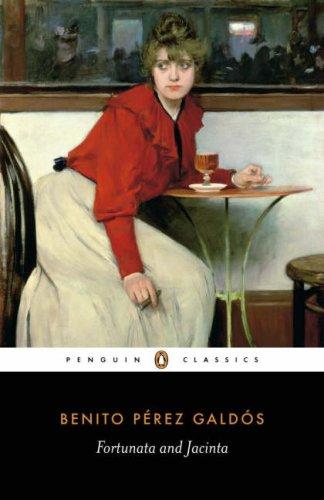
Universally recognized as the masterpiece of Spanish realism and one of the great European novels of the nineteenth century.
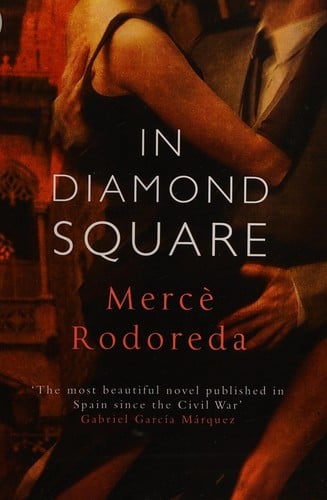
The undisputed masterpiece of twentieth-century Catalan literature. Widely translated and recognized as one of the great European novels of the postwar period.
Cantares gallegos is the founding book of modern Galician literature and is taught throughout Galician and Spanish literature courses. Galicia marks 17 May, the date of its publication, as Galician Literature Day.
Winner of the 1949 Lope de Vega Prize, it is a staple of Spanish secondary and university curricula and the standard introduction to postwar Spanish theatre. It is less taught outside the Spanish-speaking world.
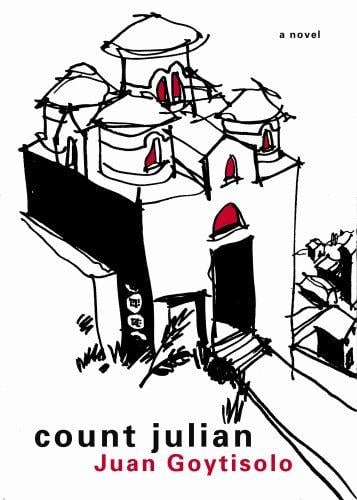
Count Julian (Reivindicación del conde don Julián, 1970), the middle novel of the trilogy begun with Marks of Identity, is a standard text in courses on the post-war Spanish novel. Banned in Franco's Spain, it is read in English in Helen Lane's translation.
Moratín's best-known play, it is standard in Spanish secondary and university literature curricula and the model of Spanish neoclassical comedy. It is less taught outside the Hispanic world.
The play is a fixture of Spanish and Hispanic literature curricula and a standard of the Romantic theatre. Its annual performance around All Saints' Day makes it a national tradition.
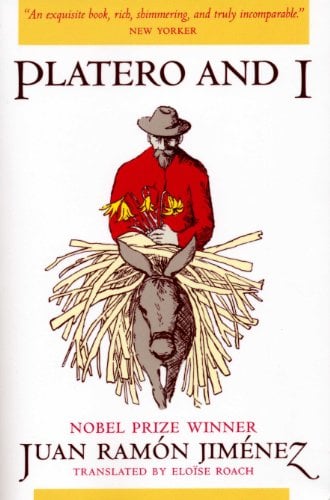
Platero y yo is a staple of Spanish-language schooling and a landmark of Spanish prose poetry, with 4 university syllabi and a Wikipedia article in 13 languages. Its Nobel-winning author lifts its standing, though its reach is narrower beyond the Hispanic world.
The founding text of the Iberian chivalric romance and a fixture of Spanish medieval and Renaissance literature courses. It is read mostly in specialist and survey settings, not as a universal school text.
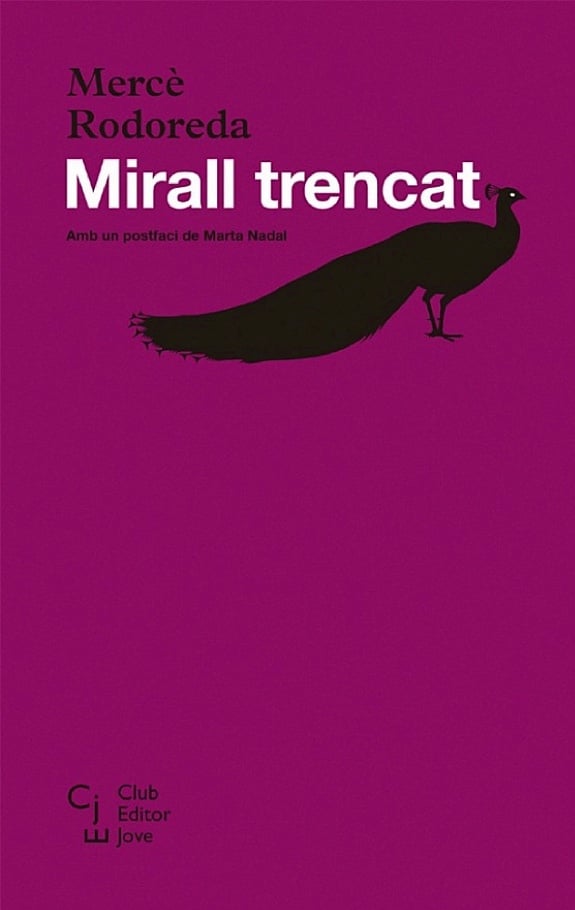
Less well known internationally than The Time of the Doves but highly regarded in Catalan literature. Increasingly recognized as Rodoreda's most ambitious work.
No. 11 on this list. Marianela · Benito Pérez Galdós
One of Galdós's best-known novels and a standard text in Spanish literature courses, though less central than his Fortunata and Jacinta.
Easy4.2 hours
Start this bookNo. 12 on this list. Count Lucanor · Don Juan Manuel · 1335
It is a founding text of Spanish prose fiction, standard in medieval Spanish literature courses and a fixture of anthologies of the period. It sits below Don Quixote in general school curricula but is essential in Hispanic studies.
Easy3.6 hours
Start this bookNo. 13 on this list. Requiem for a Spanish Peasant · Ramón J. Sender · 1953
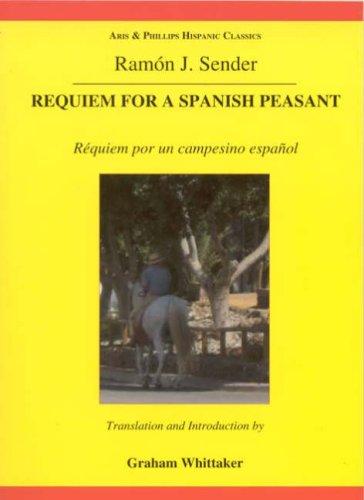
It is widely taught in Spanish literature courses as one of the central short works on the Civil War, and appears in Spanish-language curricula and in translation courses. It is less ubiquitous than the great novels.
Moderate1.6 hours
Start this bookNo. 14 on this list. The Three-Cornered Hat · Pedro Antonio de Alarcón · 1874
A standard of 19th-century Spanish literature, widely taught in Spanish courses and treated as a classic of costumbrista comedy. It is less central outside the Spanish-speaking world.
Easy2.2 hours
Start this bookNo. 15 on this list. Reeds and Mud · Vicente Blasco Ibáñez · 1902
It is among Blasco Ibáñez's best-known novels, a standard of Valencian and Spanish naturalist fiction, and was adapted for television in 1978. Its reach beyond Spanish-language courses is limited.
Easy4.9 hours
Start this bookNo. 16 on this list. Pepita Jiménez · Juan Valera · 1874
It is a standard of Spanish nineteenth-century realism, taught in Spanish literature courses and often considered Valera's best work. It is less central abroad than the major Russian or French realists.
Moderate4.2 hours
Start this bookNo. 17 on this list. The Four Horsemen of the Apocalypse · Vicente Blasco Ibáñez · 1916
The novel is a staple of Spanish-language and World War I reading lists and was one of the biggest international bestsellers of its decade. It is taught less often than the core modernist canon.
Easy8.8 hours
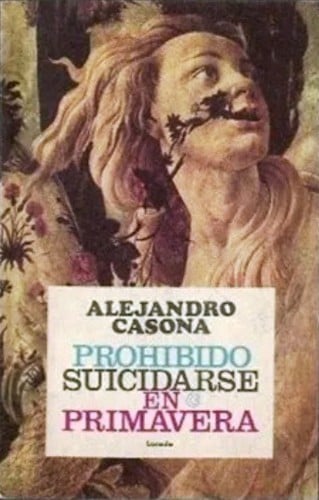
Start this bookNo. 18 on this list. Prohibido suicidarse en primavera · Alejandro Casona
A staple of Spanish-language theatre and school reading lists, Casona's best-known work after La dama del alba. It is staged and studied widely but sits below the major world canon.
Easy1.4 hours
Start this bookNo. 19 on this list. The Patients of Doctor García · Almudena Grandes · 2017
The book won Spain's Premio Nacional de Narrativa in 2018 and belongs to a widely read cycle. It is taught in Spanish contemporary literature courses but is too recent to count as core canon.
Moderate14 hours
Start this bookNo. 20 on this list. Us · Manuel Vilas · 2023
The book won the 79th Premio Nadal in 2023, one of Spain's oldest literary prizes. It is too recent for syllabi to reflect, and no English edition exists yet.
Moderate
Start this book
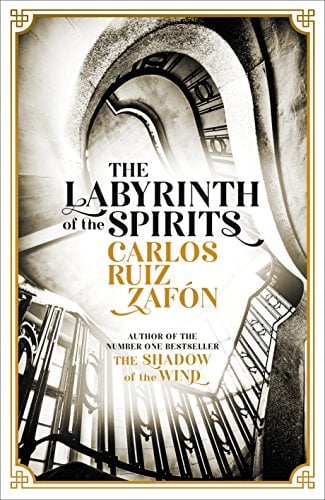
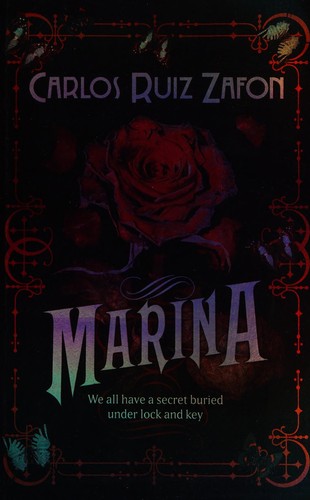
No. 21 on this list. The Labyrinth of the Spirits · Carlos Ruiz Zafon · 2018
A bestselling modern novel in a beloved series, popular in Spain and abroad, but not yet a fixture of university syllabi.
Moderate17 hours
Start this bookNo. 22 on this list. In Praise of Hands · Jesús Carrasco · 2024
Published in 2024 and winner of the Premio Biblioteca Breve, a respected Spanish prize with a long roster of notable winners. It is too recent for syllabi, though a Booket pocket edition appeared in October 2025.
Easy4.6 hours
Start this bookNo. 23 on this list. The Forms of Wanting · Inés Martín Rodrigo · 2022
Winner of the 2022 Premio Nadal, one of Spain's oldest literary prizes, which brings press attention and bookshop presence. As a recent novel it has not yet entered curricula in any broad way.
Easy5.4 hours
Start this bookNo. 24 on this list. Victoria · Paloma Sánchez-Garnica · 2024
Published in November 2024, the novel is too recent for syllabi, though the Premio Planeta 2024 win brings it wide attention in Spanish-language publishing. A Booket pocket edition follows the prize. It sits among popular, prize-backed commercial fiction.
Easy
Start this bookNo. 25 on this list. The Maid's Daughters · Sonsoles Ónega · 2023
A 2023 Premio Planeta winner, still too recent for syllabi, and a television adaptation brought it wider attention. It reads as a major commercial literary event rather than a taught text.
Easy
Start this bookNo. 26 on this list. Under Dry Earth · César Pérez Gellida · 2024
The book won the 2024 Premio Nadal, which brings attention in Spanish-language literary circles. It is too recent for syllabi, and as a series-opening crime novel it sits in contemporary popular fiction.
Easy7.7 hours
Start this bookNo. 27 on this list. Physical Education · Rosario Villajos · 2023
A 2023 novel is too recent for syllabus presence, though the Premio Biblioteca Breve places it in a respected Spanish literary line. A French edition from Éditions Métailié in 2025 and rights listings show early international interest.
Easy
Start this bookNo. 28 on this list. Far from Louisiana · Luz Gabás · 2022
It won the 2022 Premio Planeta, a major commercial and prestige prize in Spanish publishing, but it is a recent popular historical novel. No syllabus presence is established, so it sits well below literary canon works such as The Remains of the Day.
Easy
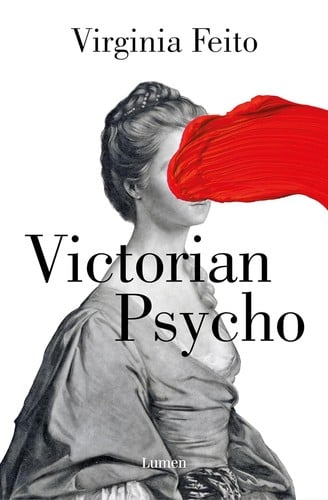
Start this bookNo. 29 on this list. Victorian Psycho · Virginia Feito · 2025
A 2025 release from Liveright with no syllabus presence yet. It belongs to contemporary gothic and literary horror and is too recent for curricula.
Moderate3.5 hours
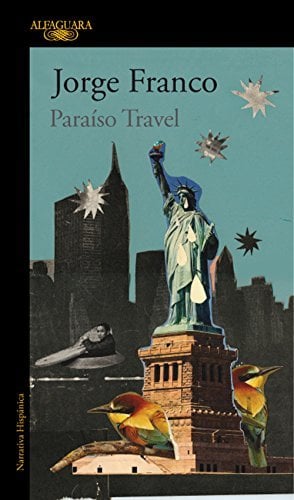
Start this bookNo. 30 on this list. Paradise Travel · Jorge Franco · 2017
Paradise Travel (Paraíso Travel, 2001) follows a young man from Medellín who loses his girlfriend on his first night as an undocumented migrant in New York. It is read in some courses on Latin American migration fiction but is not widely taught.
Moderate3.7 hours
Start this book
About this list
These 35 books are the highest-scoring eligible easy books from Spain currently in the catalogue. About 172 hours of reading in all, for the 29 with measured lengths. Difficulty runs from 34 to 42 out of 100 for the middle half of the list; the summit is Pepita Jiménez at 44.
This list is ranked by literary regard, with a consistent order for equal scores. Membership follows authors and co-authors, not translators or editors. Catalogue coverage and the historical canon both limit what this list can represent.
When we matched the Canons dataset to our catalogue in October 2026, our canonical-status scores rose with the number of school curricula, publisher series and lists in it that cite a work: the median score was 72 for books one such source cites, 84 at two, 88 at three, 92 at four and 93 at five or more. Prizes are left out of that count. Outside the state curricula, the dataset’s sources choose mostly from what has been translated into English or French, so it is a weaker check on other literatures. Source: Canons (Andrew Piper), CC BY 4.0
Questions people actually ask
- What are the best easy books from Spain?
- By literary regard, which weighs canonical status, critical standing and influence: Fortunata and Jacinta by Benito Pérez Galdós, The Time of the Doves by Mercè Rodoreda, Galician Songs by Rosalía de Castro, The Story of a Stairway by Antonio Buero Vallejo and Count Julian by Juan Goytisolo. ReadingRate ranks 35 such books, each with a difficulty score and a reading-time estimate.
- Which easy books from Spain should I read first?
- Start from difficulty, not from rank. The most approachable books on this list that still carry top literary regard are The Time of the Doves by Mercè Rodoreda (about 3 hours), Fortunata and Jacinta by Benito Pérez Galdós and Galician Songs by Rosalía de Castro.
- What are the shortest of the best easy books from Spain?
- Among the top 25, the shortest are Galician Songs by Rosalía de Castro (about 33 min), The Maidens' Consent by Leandro Fernández de Moratín (about 58 min) and Prohibido suicidarse en primavera by Alejandro Casona (about 1.4 hours), at an average pace of 250 words a minute adjusted for each book's difficulty.
- Which of the best easy books from Spain are the established classics?
- By canonical status, how firmly a book sits in curricula, anthologies and the canon: Fortunata and Jacinta by Benito Pérez Galdós, The Time of the Doves by Mercè Rodoreda, Galician Songs by Rosalía de Castro, The Maidens' Consent by Leandro Fernández de Moratín and Don Juan Tenorio by José Zorrilla.
- How long would it take to read the top ten?
- About 69 hours, at an average pace of 250 words a minute adjusted for each book's difficulty: 35 days at two hours a day. Set your own pace on the page and the list's reading times change to it.
- How hard are easy books from Spain to read?
- Most of this list sits between 34 and 42 on ReadingRate's 100-point difficulty scale, where 40 to 55 is moderate. The summit is Pepita Jiménez at 44. Every entry carries its own score, so a reader can pick a great book at a difficulty they will finish.
- How is this list ranked?
- On literary-regard data: how canonically established a work is, its critical standing, and its influence on later writing. It is not a readers’ poll, which is why recent bestsellers rarely appear. Membership follows authors and co-authors, not translators or editors. Lists by country, author, period, theme or difficulty keep to literature: fiction, poetry and drama, with no philosophy, criticism or theory. A list of a kind of book, such as philosophy, memoir or criticism, keeps every book of that kind. Every list holds at most three works by one author.