Hours at an average pace
Showing 34 books
About 281 hours for 32 of 34 books with measured lengths. Estimates use 250 words a minute, adjusted for each book's difficulty. At 2 hours a day, about 141 days for those books.
A fixture of every survey of English Romanticism and nearly every anthology of British poetry, though as a single long poem it draws less raw syllabus volume than assigned novels—closer to Beloved's discipline-specific canonicity than a mass-market fixture like Gatsby.
The title essay 'The Death of the Moth' is one of the most anthologized pieces in the English language, appearing in virtually every major collection of literary essays and countless university writing courses. Though the collection as a whole is less individually indexed than Woolf's novels, these essays — alongside 'Street Haunting' and 'Middlebrow' — are fixtures of modernist prose and creative nonfiction curricula worldwide.
Samuel Taylor Coleridge published Biographia Literaria in 1817 to settle a score with critics, explain his intellectual development, and deliver a theory of the Imagination that would ground all of English poetry on philosophical foundations. He does two of these things. The third — the promised deduction of the Primary and Secondary Imagination from Kantian and Schellingian idealism — arrives in Chapter 13 as a single dense paragraph, preceded by a letter from a friend advising Coleridge not to publish the full argument lest it overwhelm his readers. The letter is fictional. The argument was never written. What Coleridge gives instead is something stranger: a self-portrait that uses autobiography as scaffolding for philosophy, and philosophy as scaffolding for the most exacting account of Wordsworth's genius and failures produced by anyone in the 19th century. The chapters on Lyrical Ballads identify with precision which poems succeed, which fail, and why — the analysis of 'The Thorn' and 'Guilt and Sorrow' is still the most incisive criticism of early Wordsworth written. The philosophical chapters require patience with Kant, Schelling, and Hartley; the autobiographical chapters reward it with the closest thing we have to Coleridge's intellectual self-accounting. The book is the record of a mind moving at full stretch, making promises it cannot keep and keeping ones it never made.
No. 4 on this list. The Golden Notebook
Doris Lessing · 1962
Difficult28 hours
Included in: Bokklubben World Library
The Golden Notebook appears on 139 university syllabi according to the Open Syllabus Project (53rd percentile) and is listed in Open Syllabus's Top 500 Literature titles. It appears on TIME's All-TIME 100 Novels list (2005) and holds Wikipedia articles in 20 languages. It is a standard text in women's literature, postcolonial literature, and 20th-century British fiction courses, though not at the frequency of The Great Gatsby or To Kill a Mockingbird.
Homage to Catalonia is standard reading in courses on 20th-century political history, European literature, and war memoir at universities worldwide. Orwell is among the most assigned authors in English-language syllabi, and while this title is less ubiquitous than 1984 or Animal Farm, it appears consistently in political science and modern history curricula. It has been in continuous print since its 1952 reissue and features on numerous 'essential nonfiction' lists.
One morning in May 1953, Aldous Huxley swallowed four-tenths of a gram of mescalin dissolved in water and sat down to wait. What followed was not the colored geometries and visionary architectures he had expected. Instead, three flowers in a small vase — a rose, a carnation, an iris — began to shine with what he could only call their own inner light. Chair legs revealed themselves as something a Van Gogh would have painted with adoring terror. The folds in his gray flannel trousers disclosed an inexhaustible significance. Huxley's account of this eight-hour experiment is also a meditation on consciousness, perception, art, and the universal human need to escape selfhood. He draws on Vedantic philosophy, Zen Buddhism, Western art history — Vermeer, Botticelli, El Greco, Blake — and the pharmacology of adrenochrome to argue that mescalin temporarily disables the brain's reducing valve, admitting a flood of what he calls Mind at Large. The experience illuminates why the great mystics saw what they saw, why artists return obsessively to drapery, and why every culture throughout history has reached for chemical self-transcendence. The essay ends not in mystical surrender but in a pragmatic proposal: humanity needs better drugs, less toxic than alcohol, that produce changes in consciousness more genuinely valuable than mere sedation. Short enough to read in an afternoon, dense enough to reread for years.
A fixture of Romantic prose syllabi in British and American universities, paired with Hazlitt and De Quincey as the canonical triumvirate of the familiar essay tradition. Widely anthologized in surveys of English literature from the nineteenth century onward, though less frequently taught than contemporary novelists.
The Diary of Samuel Pepys is one of the most famous primary sources in the English language, taught in history, literature, and primary source methodology courses at universities worldwide. It appears on reading lists for Early Modern English history and is considered essential context for understanding the Restoration period, the Great Plague of 1665, and the Great Fire of London.
Apologia Pro Vita Sua is a fixture of Victorian literature and religious-autobiography syllabi and is routinely anthologized as one of the great English spiritual autobiographies alongside Augustine's Confessions and Bunyan's Grace Abounding. It has stayed continuously in print since 1864 in editions from Oxford World's Classics and Everyman's Library.
'Why I Write' is a fixture of composition and journalism syllabi and appears in most Orwell readers and 'best essays' anthologies, though as a short nonfiction piece it doesn't carry the syllabus weight of 1984 or Animal Farm. No syllabus or Wikipedia data was returned for this specific edition, so this score leans on its established place in essay-writing curricula.
No. 11 on this list. The Enigma of Arrival · V.S. Naipaul · 1987
Taught in postcolonial literature courses and world literature surveys, particularly in the UK and in Caribbean studies programmes. The book's Wikipedia presence covers only one language, and syllabus data shows limited penetration into broad curricula — it is a specialist canonical text rather than a universal one.
Challenging12 hours
Start this bookNo. 12 on this list. Awakenings · Oliver Sacks · 1973
Awakenings is widely regarded as one of the foundational works of narrative medicine and is frequently cited in medical humanities curricula and bioethics courses. The 1990 feature film starring Robin Williams and Robert De Niro cemented its cultural presence. It sits below the canon of classic scientific writing (Darwin, Freud) but above most contemporary science prose.
Challenging15 hours
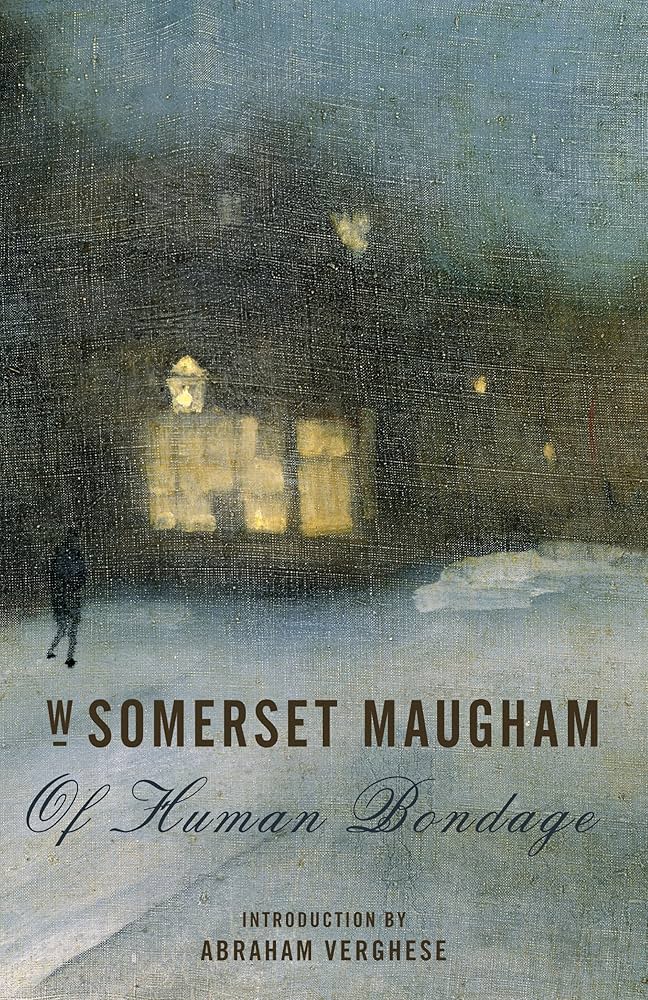
Start this bookNo. 13 on this list. Of Human Bondage · W. Somerset Maugham · 1915
On the Modern Library's 100 Best Novels and widely read as a classic bildungsroman, though it is taught less often today than the modernist novels of its era. It has stayed in print for more than a century and appears on many lists of essential twentieth-century fiction.
Moderate17 hours
Read nowNo. 14 on this list. Grace Abounding · John Bunyan · 1666
No syllabus or Wikipedia-language data was returned for this specific title, but it holds a fixed place in courses on 17th-century English literature, Puritan studies, and the history of autobiography — read as Bunyan's companion piece to Pilgrim's Progress rather than a standalone bestseller, so its classroom presence is real but narrower than the allegory that made him famous.
Moderate3.1 hours
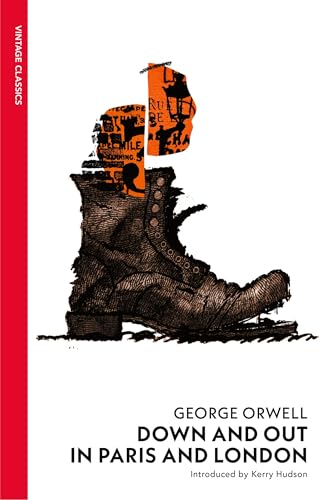
Start this bookNo. 15 on this list. Down and Out in Paris and London · George Orwell · 1933
Orwell's first book. A minor classic of immersive social reportage.
Easy2.5 hours
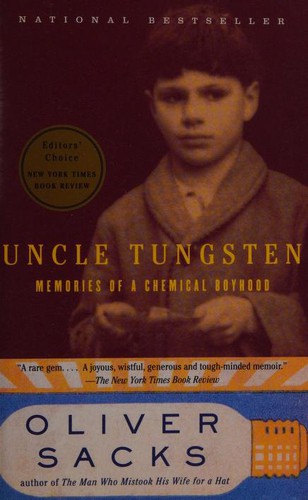
Start this bookNo. 16 on this list. Uncle Tungsten · Oliver Sacks · 2001
Uncle Tungsten does not appear on standard literary syllabi but shows up on science-and-society, history of science, and science-writing courses at a modest scale. It has a dedicated Wikipedia article available in multiple languages, appropriate for a major work by a prominent public intellectual. It does not approach the canonical status of Sacks's most famous works like The Man Who Mistook His Wife for a Hat.
Easy5.9 hours
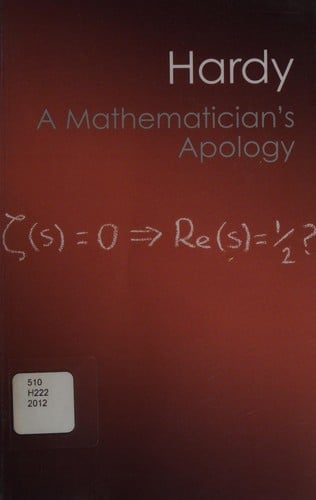
Start this bookNo. 17 on this list. A Mathematician's Apology · G.H. Hardy · 1940
Hardy's slim, melancholy essay is the most famous defense of pure mathematics ever written—and also a meditation on aging, creativity, and the decline of intellectual powers. Hardy argues that mathematics, at its best, is an art form: its patterns are beautiful, its truths are eternal, and its discoveries have a value that transcends any practical application. He distinguishes sharply between the 'real' mathematics of number theory and analysis—pursued for aesthetic rather than utilitarian reasons—and the 'trivial' mathematics used in engineering and applied science. The essay is shot through with sadness: Hardy wrote it at sixty, convinced that his best work was behind him, and his reflections on the aging mathematician's loss of creative power give the book an emotional intensity unusual in mathematical writing. C.P. Snow's biographical foreword, added in later editions, provides context for Hardy's personality and his famous collaboration with Ramanujan.
Easy1.3 hours
Start this bookNo. 18 on this list. Arabian Sands · Wilfred Thesiger · 1959
Thesiger crossed the Empty Quarter of Arabia twice between 1945 and 1950—the last great desert crossing before oil money and modernization transformed the Arabian Peninsula beyond recognition. He traveled with Bedouin companions on camelback through a landscape of sand dunes, gravel plains, and salt flats where water was measured in mouthfuls and a wrong turn meant death. The book is a record of privation that would be unbearable if Thesiger were not so obviously in love with the desert and the people who inhabit it. He documents the Bedu's extraordinary skills—tracking, navigation, survival—and their code of honor, hospitality, and raiding that had persisted for centuries. He also records his awareness that this world was ending: the oil companies were arriving, the governments were settling the nomads, and the culture he witnessed would not survive another generation. Thesiger wrote with the spare, exact prose of a man who had spent years in places where ornament was useless, and his book stands as both a masterpiece of exploration literature and an elegy for a vanished way of life.
Very Easy4 hours
Start this bookNo. 19 on this list. Real Estate · Deborah Levy · 2021
The Living Autobiography trilogy is increasingly regarded as a significant contribution to contemporary life-writing and feminist literature.
Easy2.6 hours
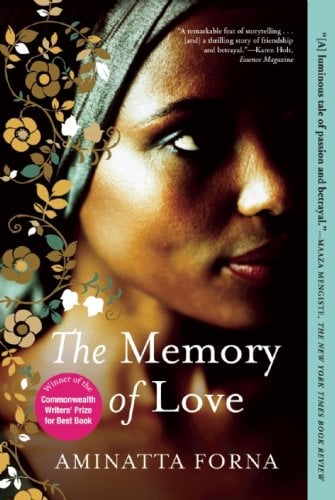
Start this bookNo. 20 on this list. The Memory of Love · Aminatta Forna · 2011
Ranked by literary regard among eligible works in the current catalogue. This position reflects the available catalogue evidence.
Moderate7.9 hours
Start this book
No. 21 on this list. The Fun Stuff: And Other Essays · James Wood · 2012
The Fun Stuff has no meaningful presence on university syllabi; where James Wood is assigned at all, it is almost always How Fiction Works, taught as a short primer on novelistic technique. This collection sits outside the classroom, read for pleasure by working writers and critics rather than assigned to students.
Moderate5.5 hours
Start this bookNo. 22 on this list. All Creatures Great and Small (All Creatures Great and Small, #1-2) · James Herriot · 1972
Beloved and enduring but not a syllabus staple; occasionally appears in courses on pastoral or animal-themed writing.
Moderate7.7 hours
Start this bookNo. 23 on this list. The Cost of Living · Deborah Levy · 2018
No syllabus appearances appear in available data, and Levy's autofiction trilogy has not entered the standard university curriculum. The book has a devoted literary readership and sustained critical attention, but it remains at the edge of canonicity rather than its centre — read by the literary-minded rather than assigned in survey courses.
Challenging2.6 hours
Start this bookNo. 24 on this list. The Nearest Thing to Life · James Wood · 2015
No syllabus or Wikipedia-language data is available for this title specifically, and it hasn't entered the curriculum the way Wood's earlier How Fiction Works has. It circulates mainly among literary readers and critics rather than as assigned reading.
Moderate2.6 hours
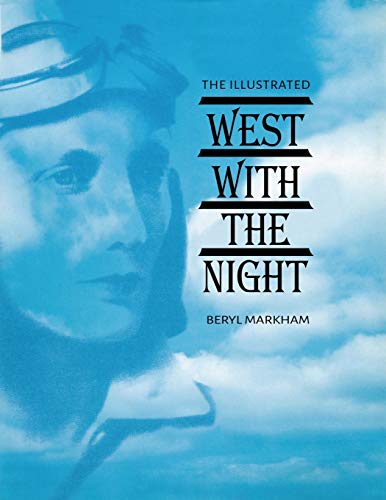
Start this bookNo. 25 on this list. West with the Night · Beryl Markham · 1942
Markham grew up in British East Africa in the early twentieth century, raised by her father and by Nandi warriors who taught her to hunt with a spear. She became a racehorse trainer, a bush pilot who scouted elephant herds from the air for wealthy hunters, and in 1936, the first person to fly solo across the Atlantic from east to west—against the prevailing winds, a feat more dangerous than Lindbergh's crossing. Her memoir, written in prose that Hemingway himself praised ('she can write rings around all of us'), moves between her childhood among the Nandi, her years training horses on the Nairobi plains, and her career as a pilot in the wild early days of African aviation. She writes about charging warthogs, midnight horse births, crash landings in the bush, and the absolute solitude of flying alone over the Atlantic at night with nothing but an altimeter and a fuel gauge. The book was forgotten for decades after its publication and rediscovered in 1982, when it became a bestseller and established Markham as one of the great prose stylists of the twentieth century.
Very Easy5.3 hours
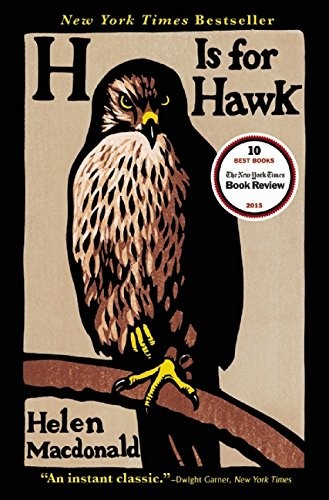
Start this bookNo. 26 on this list. H Is for Hawk · Helen Macdonald · 2014
Won the Samuel Johnson Prize and Costa Book of the Year. Already entering the canon of nature writing.
Easy4.6 hours
Start this bookNo. 27 on this list. Transcendence for Beginners · Clare Carlisle · 2025
A 2025 release has no syllabus record yet, and it sits in contemporary life-writing and philosophy rather than a curriculum canon.
Moderate
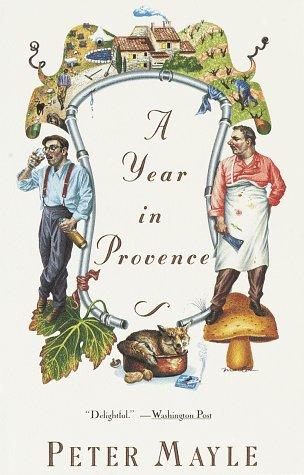
Start this bookNo. 28 on this list. A Year in Provence · Peter Mayle · 1989
Mayle and his wife left advertising careers in London and moved to a two-hundred-year-old farmhouse in the Luberon region of Provence, and this month-by-month account of their first year became one of the most successful travel memoirs ever published. January brings the cold and the plumber who never arrives; February brings the truffle market and lessons in the politics of Provencal dining; spring brings the builders who tear out walls and then vanish for weeks; summer brings tourists who peer over the garden wall; autumn brings the grape harvest and the vendange feast; and winter brings the whole cycle around again. Mayle writes about food with the reverence the French demand—a perfect goat cheese, a bouillabaisse in Marseille, the correct way to eat a fig—and about the local characters with a comic novelist's relish: the builder Monsieur Menicucci, who philosophizes while the plumbing leaks, and the neighbors who treat lunch as a three-hour sacrament. The book launched a genre of expatriate-renovation-food memoirs and turned the Luberon into a tourist destination, an irony Mayle acknowledged with good humor.
Very Easy2.9 hours
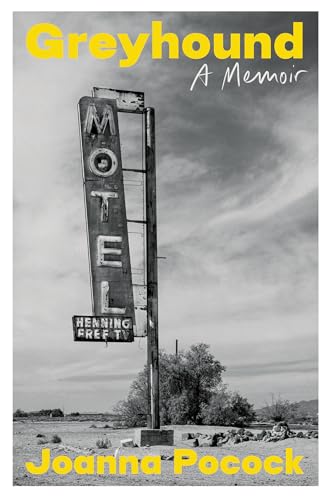
Start this bookNo. 29 on this list. Greyhound: A Memoir · Joanna Pocock · 2025
Greyhound has no Open Syllabus listings and no Wikipedia page of its own a few months after its August 2025 release, and it hasn't yet appeared on any 'best of' or essential-reading list. That's typical for narrative nonfiction from an independent press this soon after publication, not evidence against the book, but canonical status simply hasn't had time to form.
Moderate6.8 hours
Start this bookNo. 30 on this list. Notes on a Nervous Planet · Matt Haig · 2019
A bestselling contemporary self-help memoir with no recorded syllabus presence or prizes. It belongs to popular wellbeing reading rather than curricula.
Very Easy3.6 hours
Start this book
About this list
These 34 books are the highest-scoring eligible memoirs from Britain currently in the catalogue. By literary regard, it opens with The Prelude, The Death of the Moth and Other Essays and Biographia Literaria. About 281 hours of reading in all, for the 32 with measured lengths. Difficulty runs from 27 to 48 out of 100 for the middle half of the list; the summit is Biographia Literaria at 73.
This list is ranked by literary regard, with a consistent order for equal scores. Membership follows authors and co-authors, not translators or editors. Catalogue coverage and the historical canon both limit what this list can represent, and genre labels are the catalogue’s own, gathered into broader kinds.
When we matched the Canons dataset to our catalogue in October 2026, our canonical-status scores rose with the number of school curricula, publisher series and lists in it that cite a work: the median score was 72 for books one such source cites, 84 at two, 88 at three, 92 at four and 93 at five or more. Prizes are left out of that count. Outside the state curricula, the dataset’s sources choose mostly from what has been translated into English or French, so it is a weaker check on other literatures. Source: Canons (Andrew Piper), CC BY 4.0
Questions people actually ask
- What are the best memoirs from Britain?
- By literary regard, which weighs canonical status, critical standing and influence, The Prelude, The Death of the Moth and Other Essays, Biographia Literaria, The Golden Notebook and Homage to Catalonia lead. ReadingRate ranks 34 such books, each with a difficulty score and a reading-time estimate.
- Where should I start with memoirs from Britain?
- Start from difficulty, not from rank. The most approachable books on this list that still carry top literary regard are Why I Write by George Orwell (about 1 hours), The Doors of Perception by Aldous Huxley and Apologia Pro Vita Sua by John Henry Newman.
- How hard are memoirs from Britain to read?
- Most of this list sits between 27 and 48 on ReadingRate's 100-point difficulty scale, where 40 to 55 is moderate. The summit is Biographia Literaria at 73. Every entry carries its own score, so a reader can pick a great book at a difficulty they will finish.
- How is this list ranked?
- On literary-regard data: how canonically established a work is, its critical standing, and its influence on later writing. It is not a readers’ poll, which is why recent bestsellers rarely appear. Membership follows authors and co-authors, not translators or editors. A list that is not a genre list keeps to literature (fiction, poetry, drama and philosophy), with philosophy taking no more than one slot in five while there is literature left to rank; every list holds at most three works by one author.