Bregman’s Humankind — lord of the (f)lies
By Simon Stawski · · 11 min read
On Humankind: A Hopeful History by Rutger Bregman (2020)
Rutger Bregman’s Humankind takes the Cynical Canon apart study by study: Golding’s island, the Stanford prison, Milgram’s shocks, the bystanders who never were. Simon reads it as the antidote to the Nocebo effect of the news, then puts a question to Bregman himself and answers it with the Shire.
The book in numbers
- Words
- 102,431
- Difficulty
- 39.53 out of 100
- Literary regard
- 39 out of 100
- Data as of
- 25 October 2026
From ReadingRate.
First published on Substack on 7 August 2025.
At the end of my four novel slog through the chronicles of shitty men, my girlfriend gifted me this book, as she noticed how bummed out I’ve been from my reading. I needed it, and took to this book with rapturous joy, immediate and wide eyed, deeply warmed to be reading someone who wasn’t going to tell me the world is horrible along with the people in it. No wonder this book didn’t win any awards.
This was right around the same time I was starting to get uncomfortable with the state of online talks about Mental Health. What I see as a common human experience in many situations is often labeled as an autistic or ADHD experience by people in the Neurodivergent community, and an experience that they know better than Neurotypicals - which is often used as a derogatory term for Normies or anyone who doesn’t self-identify and disclose themselves as Neurodivergent. I found an article mentioning how 50% of Mental Health related content on TikTok contains misinformation, at which point I started to wonder if the Nocebo Effect is in play. Do people who are curious about their mental health find generalizations of a common human experience described as one unique to the Neurodivergent community, and then begin to wonder if they are Neurodivergent? The Nocebo effect is just as real as the Placebo effect, though it’s better known through its manifestations in Cyberchondria or Med School Syndrome.
Just two days after finishing Trust by Hernan Diaz, the last of the four books I laboured through, and coming to my own conclusions about online mental health and Nocebo Effects, I found Bregman mentioning the Nocebo effect in his book, and felt instantly vindicated and affirmed. The idea both of us share is this: if you think shitty, then shitty things happen. If you imagine pain, you’ll feel pain. Bregman also mentions the Pygmalion vs Golem Effect. In the former, if you expect the best of others, they’ll meet your expectations. In the latter, if you assume the worst, the same conclusion follows. It’s not the woo-woo of manifestation, or affirmations, but it kinda is at the same time. The way we think about the world shapes our experience of the world. Just like the junk food you consume makes you unhealthy, so too do ideas of pain and suffering lead to your own pain and suffering.
Here's what I got from Humankind: after the atrocities of WWII, writers and sociologists have been promoting the idea that humanity is fundamentally brutish and violent. “Human nature” is not connotatively positive, from the ways I’ve heard it used at least. And this discussion about the brutishness of human nature is, in some ways, a contagious meme, borne from a deeply traumatized world after witnessing the Holocaust. Many writers wrote from this place of attempted sense making, and many of their ideas have become mandatory school reading, or promoted by Malcolm Gladwell.
Bregman, aware of the bleak nature of the news, investigates the Cynical Canon, and disassembles many of the texts and ideas that have led us here.
The Debunked Studies
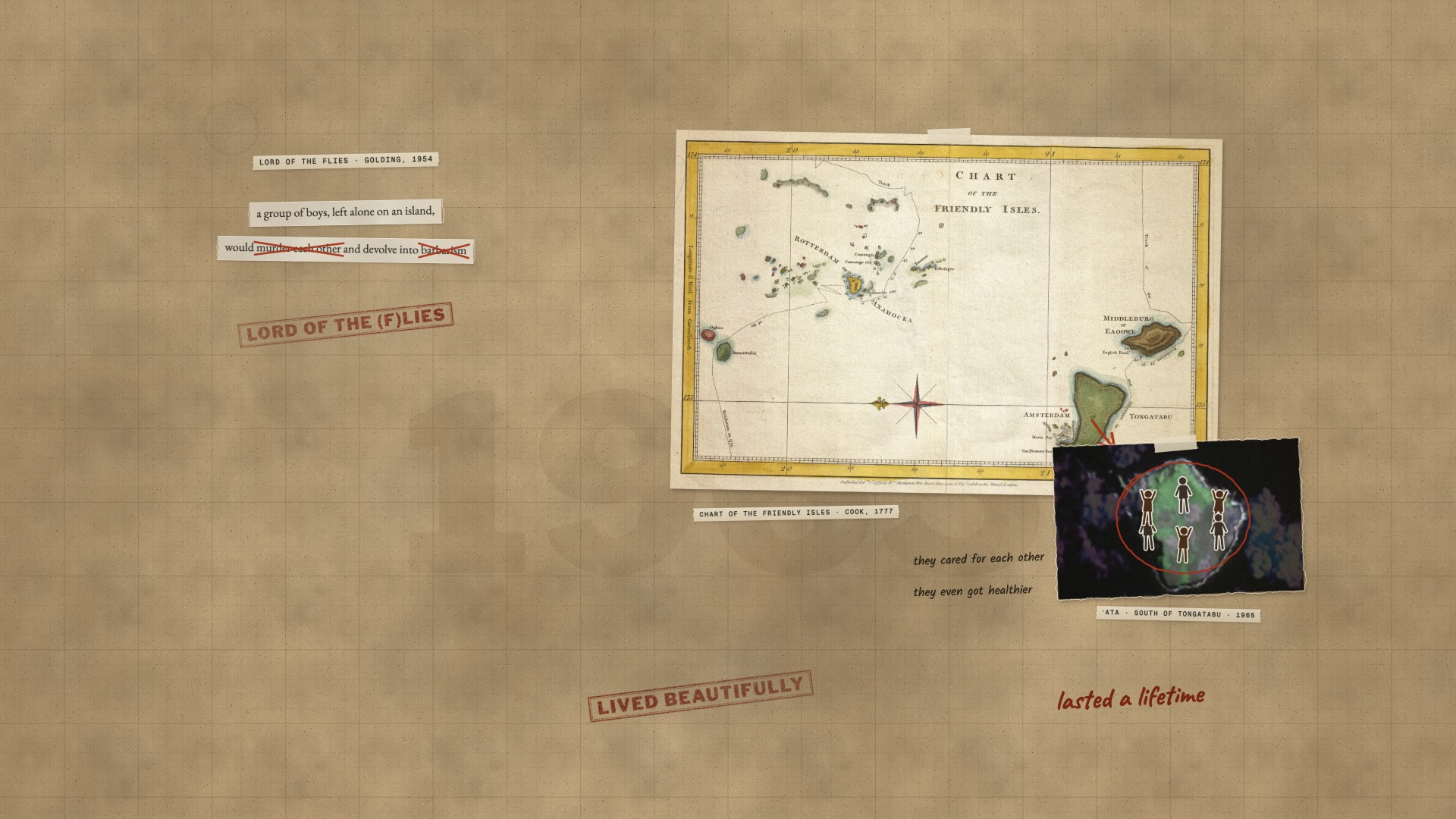
Lord of the Flies had us believe that a group of boys, left alone on an island, would murder each other and devolve into barbarism. In truth, the author William Golding was a misanthropic alcoholic school teacher who severely punished his students. In a real world example, when a group of boys were stranded on an island for over a year, they cared for each other and lived beautifully together. They even got healthier. The friendships they formed on that island lasted a lifetime.
The Stanford Prison Experiment is entirely a sham experiment, with both the prisoners and guards being coached into performing theatrics of cruelty and suffering. When the lead scientist Zimbardo was confronted with this afterwards, he wasn’t bothered, because it's the most discussed experiment of all time, one which led him to become the president of the American Psychological Association. Civilization be damned; man got paid. I'm amazed to see The Stanford Prison Experiment alluded to in the book I'm currently reading, Richard Powers' The Overstory, with the author maybe not knowing the truth about the fake experiment, as one of the characters of The Overstory is a part of the study. This profoundly warps our perception of what humanity is like, and makes us believe that anyone could naturally slip into the role of a sadistic abuser.
Stanley Milgram's experiments hid the fact that many of the participants strongly resisted administering lethal shocks to others, and many of them didn't believe they were actually shocking the participants, which has HUGE ramifications on the consequences of the experiment, and were mostly hidden by Milgram. But the world was still reeling post-Hitler, and so Milgram and Zimbardo provided an oversimplified explanation of human nature to suit people's self-loathing.
The Bystander Effect was entirely fabricated by journalists as well. Kitty, the woman who died supposedly while 30 bystanders heard her screams and did nothing, actually did so in the arms of her friend who called the police. The one person who didn't call was the only person who witnessed the attack, rather than the reported 30 people, and he didn't call because he was gay, and the police treated gay people very differently back then than how they do now. The day before, the news ran was a prominently homophobic article. And so he ran over to his friend's place, who was also friends with Kitty, and had her call. This is clearly not the same story as 30 people overhearing a murder and deferring responsibility on someone else to step up and do something. In fact, in almost all other documented cases, the Bystander Effect never happens. But, again, this was the 60s and the world was still reeling from Hitler, and the Bystander Effect served as a great explanation as to how we could allow such atrocities to happen. And, as I’m sure we all know already, sometimes journalism cares more for sales than accuracy.
Add in the facts that most people don't shoot their guns in wars, because killing people is profoundly traumatic and nobody wants to do it, and the most effective jails are those in Norway where the prisoners aren't treated inhumanely, and how the best way to fight against opposition isn't through violence, but through restorative practices, and how the Broken Windows theory is also a steaming load of crap, then you start to see how a lot of our mistanthropic view of others has a deep store of misinformation keeping it alive.
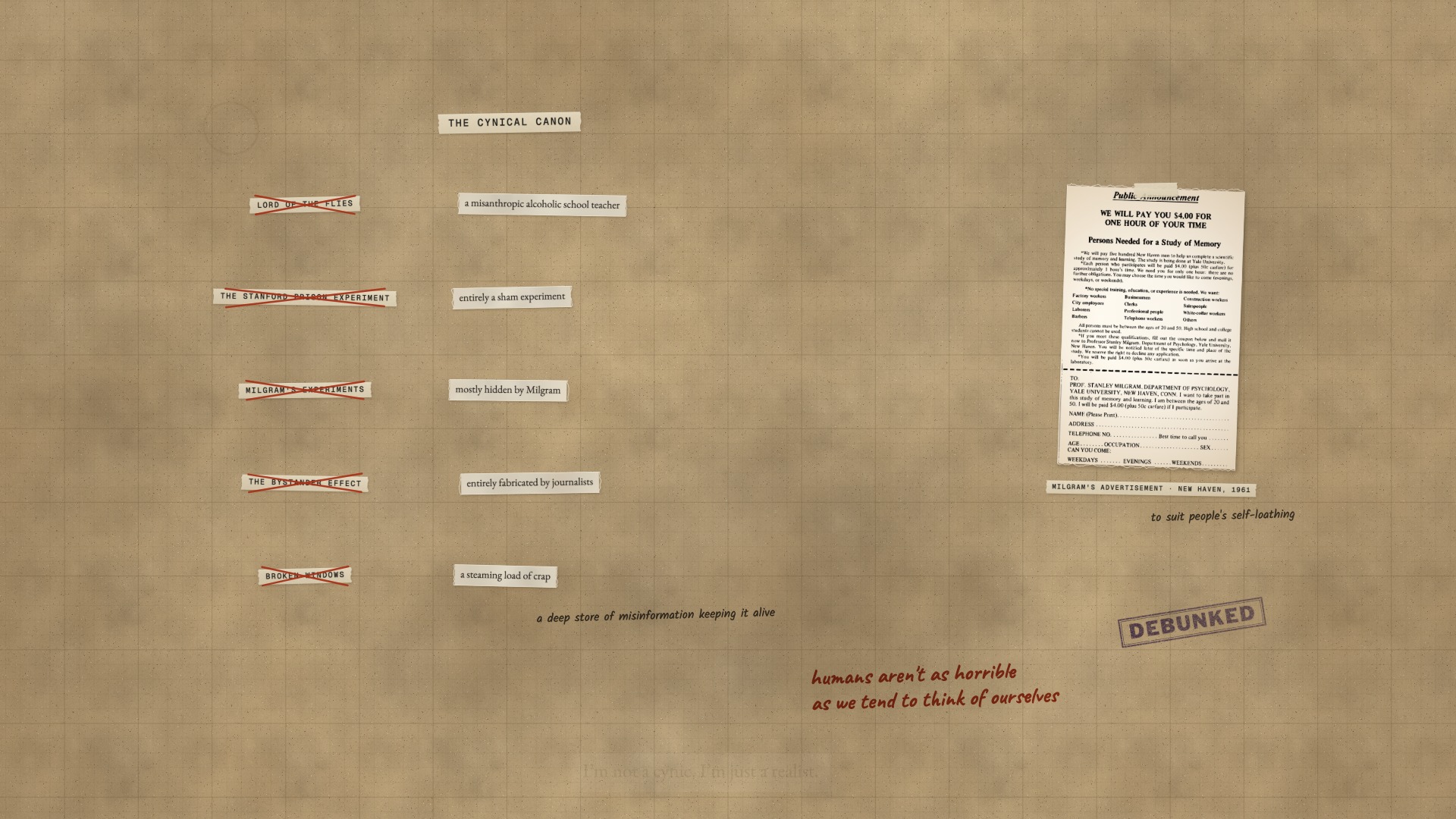
All of this (and much more in the book) suggests that humans aren't as horrible as we tend to think of ourselves. I’m sure you have a lot more evidence in your immediate experience demonstrating the kindness of others, demonstrating our cooperation with the people you interface with regularly, while your screens probably tell you a completely other experience, based on sensationalized outliers, stories of people you’ve never met in areas far from you and your communities. Yeah? And yet, we often connect with the message of fear while ignoring our felt experience of trust.
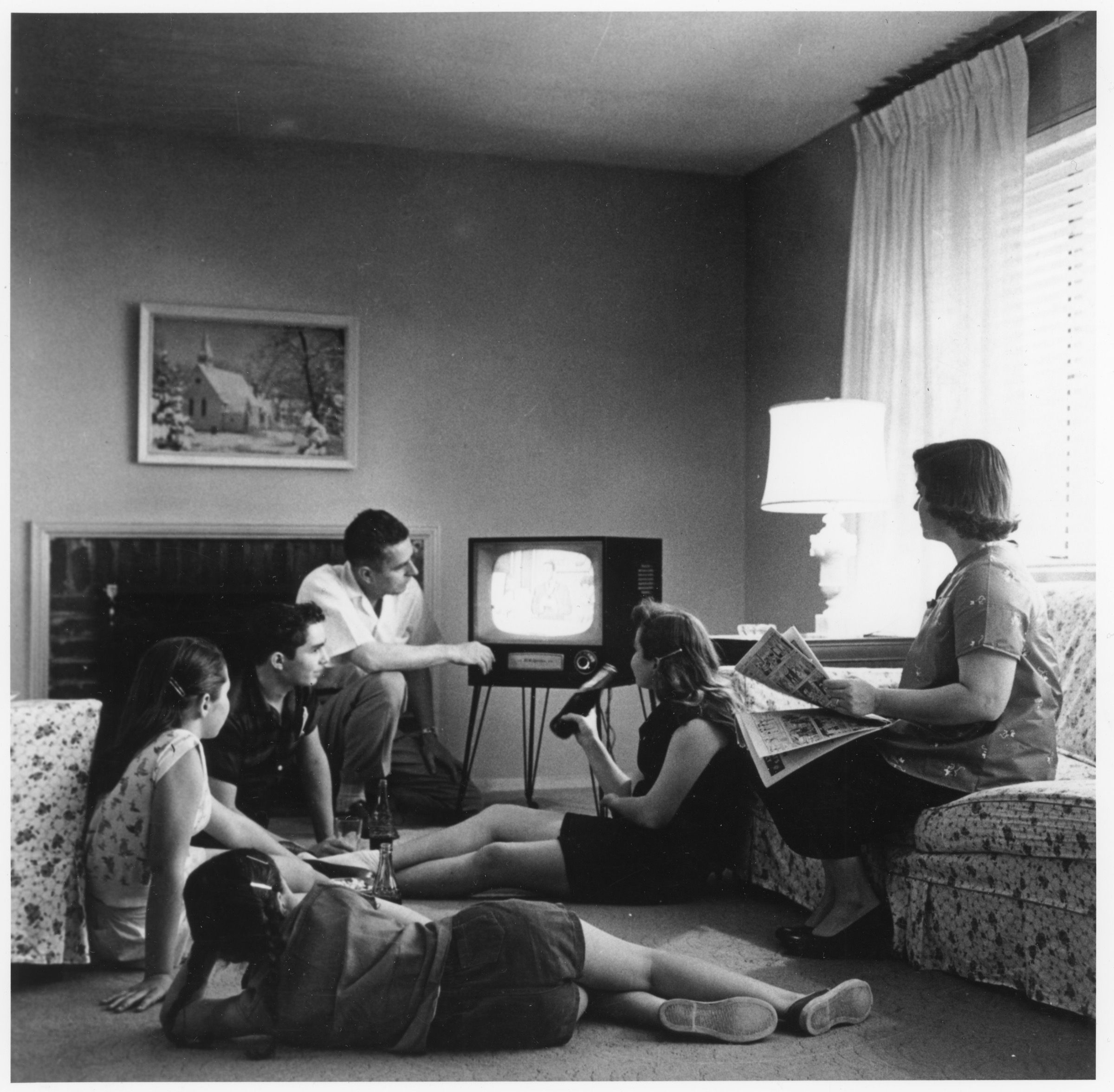

The answer, as we all know, always always know, is to get off our screens and stop watching the news. We know how one-shotted our parents' generation was with Fox News, and yet we don't see the same effect happening to us with our consumption of social media. Our seniors are vulnerable, and our kids are vulnerable too, but us? Pffft no: we're stronger than them both! Our kids need safety, but we don’t need any seatbelts, as we’re mature and discerning, right? Right???
Our Cynicism has been conditioned into us, trained into us, and especially as Postmodernism has become the central Effective Value Meme of educational institutions, then so it is that critical thinking is promoted, but mostly when we apply it to others, and not often to ourselves. With our heightened propensity to criticize everything, to keep an ironic distance from it all - which is the hallmark of Postmodernism - then our Cynicism is spoken of as Realism. I often hear “I’m not a cynic. I’m just a realist.” People are by default evil, and it's just realistic of us to think that way.
Sadly, Postmodernism stops short, in not ever being cynical of its own cynicism, in not being critical of its form of criticism. In the belief in the binaries of good and evil, we saw the people we once thought were good, criticized them, and then deemed them to be evil, and it criticizing them, deemed ourselves good. We failed to criticize the need of the labels of good vs evil at all.
So, what do we do with this understanding that a Cynical view isn’t a Realist view, understanding that cynicism has been conditioned into us, and that humans are actually kind. Where do we go from there?
My Interaction with Bregman
This brings me to my brief interaction with the author of Humankind, Rutger Bregman, over a Zoom call early this summer. He’s also the author of Moral Ambition, which is what he’s currently promoting. The elevator pitch I share with others when I talk about moral ambition runs like this: we all have financial and career ambitions. We want a certain minimum salary. We aspire to a style of housing, and an amount of travel. Our ambitions are primarily centered on ourselves and our lifestyles. We don’t really have any Moral Ambitions, though, ambitions where we put our energies into something larger than ourselves, in changing the world in a meaningful way.
After understanding that humans are fundamentally kind, more than they are cruel, the next step is to open the doors and step out of our self protective holes, our deep walls of individualism in cities where we don’t trust our neighbours or even know their names, and to get together with others around us and create something that we think can help others. Bregman built a community for the Moral Ambitious, called the School of Moral Ambition, which I’m a participating member of.
In my zeal to put my energies towards something more meaningful and impactful than my own comfort, I participated in the School of Moral Ambition's Live Q&A session, and I asked Rutger about some of the language we're using in promoting moral ambition. Namely, as you can see, I'm uncomfortable with dichotomies and binaries, especially when we talk about good vs evil, because nothing is ever entirely one or the other, and those labels offer no space for nuance.
The way I heard Rutger describing the need for us to get together and to put our energies towards combatting some of the evils of the world struck me as still trapped in old world thinking. For starters, I don't think we overcome evil by destroying it. The old war metaphors, the fantasies of the eradication of evil and achieving a 100% purity of good everywhere is fantastic bullshit. If we want to achieve change, we do so with the people we want to change, rather than against them, and we allow ourselves to be changed in doing so, too. Secondly, framing challenges as evil needed to be overcome is something I don’t think Postmodernists are going to bite. I think they're too stuck in their isolated apartments still, preaching the importance of boundaries for mental health, too steeped in irony and self-loathing to feel safe enough to dedicate themselves to a lifelong project combatting huge evils. It's easier to virtue signal and talk about the failed sincerity of others than to offer their own sincerity and build something.
I didn't say all of that in the livestream, of course, because I know it's a bit abstract. Here's what I said instead (I wrote out my question and put it on my teleprompter and read it when it was my turn):
I'm a writer and an influencer, and so this question might be a bit odd and focused on messaging, which I'm sure you thought about deeply as you're a brilliant writer. The way I hear you describe moral ambition, it seems to be framed in the language of solving problems, and seems to almost accept a Hobbesian worldview. It's not doing good for good's sake, but it's a response to evil. And I'm halfway through Humankind right now and just gobbling it up, as someone who is very aware of the Nocebo effect. If we're trying to make Moral Ambition sexy, then my concern is that we might be kneecapping ourselves, that if we keep highlighting all that's wrong then it might seem like moral ambition hinges on the slog of problem solving, of being the light in the world darkness, rather than the deep fulfilment of doing good, not as a means to an end but as an end in itself. Does that make sense?
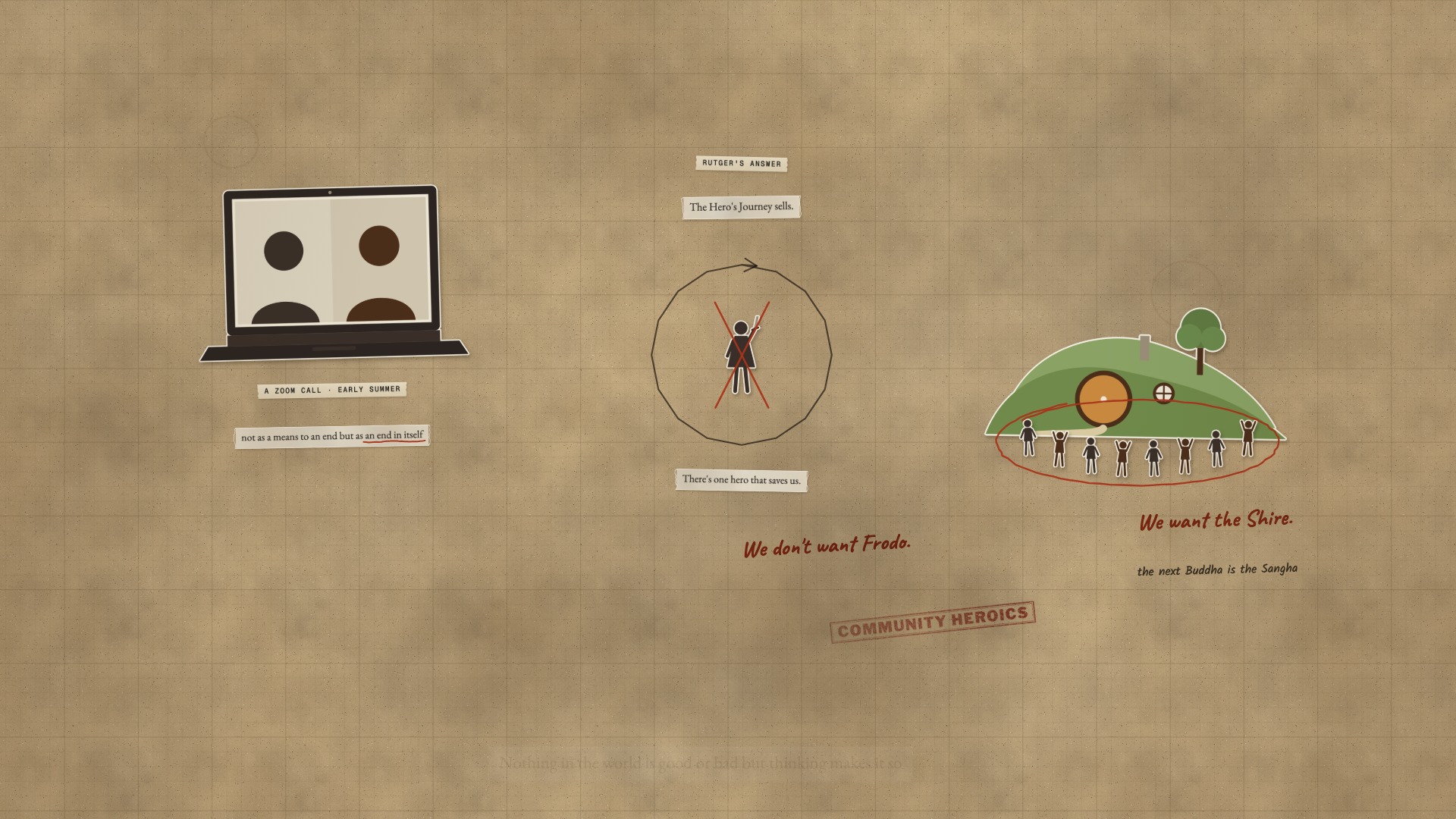
Rutger paused for a moment before he answered. Understandably. I'm questioning him about his choice of language, and tone policing in some ways, and I'd imagine it's a shitty question to experience in real time with no prep. I didn't notice any disappointment in him, though, and he gave a great answer, very eloquently, by pointing to Joseph Campbell's Hero's Journey. The Hero's Journey sells. And we can't write stories without adversaries. People can see themselves in these stories. And so, evil needs to be highlighted.
He's not wrong, by any means. But here are my objections:
Campbell was writing about literature up to the Modernist era. He didn't handle or even possibly foresee the Postmodern or Metamodern conventions storytelling and their resulting Value Memes. The Hero with a Thousand Faces was published in 1949, and so it was relevant to the narratives up until then, but story telling and tropes and values have changed since then. While the Post-Faustian and Modernist Value Meme is still around today, it might not be as relevant to Postmodern and Metamodern Value holders.
The Campbellian model depends on high egoism. There's one hero that saves us. And if the hero's quest aligns with you, then you might have some Grandiose Narcissism to check within yourself. Sadly, I don't think going down that path is going to work for Moral Ambition.
For Post and Metamodernists, the Grandiose Narratives of Heroic Narcissism don't fly. We face those with some skepticism and ironic distance. What we're looking for isn't an evil to fight, but a community to connect with. We don't want Frodo. We want the Shire. As Thich Nhat Hanh said, the next Buddha is the Sangha. A Metamodern understanding of community, and community heroics are more impactful than the actions of singular men and women.
This isn't an approach that's blind to the negatives of the world. This is an approach that is mindful of the framing. I'm aware of Hamlet's "Nothing in the world is good or bad but thinking makes it so," and I'm also aware that I have no idea what is happening in the world around me apart from what I see fed to me through my screens, the reliability of which is profoundly dubious and getting increasingly more so. A story is spun different ways depending on what thinking and speaking makes it so. We don't have access to a view from nowhere. We don't have access to reliable information about what's happening around us.
That's where Possibilism comes in. It's not Toxic Positivity, and it's also not Cynicism. It's just an awareness that our sources of information are dubious, awareness that the Nocebo effect is profound, and an understanding that we're wasting our energies with thoughts of "if I was king of the world here's what I'd change." It's a profound waste. We're mired in attention economies of talking about what's happening while staring slack jawed at our screens.
I don’t know where else I can find works as inspiring as Humankind. I just know that I’m very thankful to my girlfriend for buying this for me, and I hope I could share some of its wisdom with you, the few of you reading this newsletter.
Read the newsletter edition on Substack · Subscribe
Credits
- “Family watching television”, by Evert F. Baumgardner, about 1958, National Archives and Records Administration · Public domain · Source
- “Chart of the Friendly Isles”, by James Cook, published by William Strahan and Thomas Cadell, London, 1777; Geographicus Rare Antique Maps · Public domain · Source
- “ʻAta, Tonga, from orbit”, by NASA · Public domain · Source
- “Public Announcement: We will pay you $4.00 for one hour of your time”, by Stanley Milgram’s advertisement in a New Haven newspaper, June 1961 · Public domain · Source


