Barry’s Night Boat to Tangier — the metamodern music of noise
By Simon Stawski · · 6 min read
On Night Boat to Tangier by Kevin Barry (2019)
Kevin Barry’s Night Boat to Tangier was Simon’s rebound after Ozeki: two thugs talking through the night at a ferry terminal, in prose too gorgeous for our own good. The metamodernism he went looking for turns up in the sound of it, an alarm clock that rattles the same from beginning to end, with music hidden in the noise.
The book in numbers
- Words
- 44,997
- Difficulty
- 56.25 out of 100
- Literary regard
- 53 out of 100
- Data as of
- 25 October 2026
From ReadingRate.
First published on Substack on 4 August 2025.
I read this book over the course of four evenings. I had just finished Ruth Ozeki’s A Tale for the Time Being and quickly wanted to fill the emptiness I felt for the loss of characters I really enjoyed, and so I devoured Night Boat to Tangier while processing and writing out my grief, kinda like a rebound relationship. Does one ever fully heal from the loss of a relationship with a book before they get into another? I sometimes wonder why I don’t read books more than once, why I don’t deepen my connection with the characters, why I don’t give myself the chance to see them in another light and to love them more. Why am I such a slut for books? I’m proud of the body count I display behind me on my Zoom calls.
ChatGPT is my Tinder for books. Once I’ve ran through and discarded one book, I’ll ask ChatGPT to match me with a few more. I didn’t like the Postmodern Feminist books Chat set me up with before. We didn’t really hit it off. I was set up with lots of long rambles whinging about powerful men abusing women, the anti-Patriarchy issues that are so trendy now, but pretty boring after a while. I’m looking for something more emotionally developed and intellectually mature.
What I don’t understand about Postmodernists: if you’re so suspicious of the grand narratives of Modernism, why are you not suspicious about the grand narrative about Power? You’ve just accepted that Power and oppression are the only story in town, and reject legitimate counterfactuals to your claim, and you resist the Postmodern methods that you employed. It’s ok for you to question and undermine others, but it’s not ok for you to be questioned and undermined. That sounds like a monopoly of critical violence to me. When “Fight the Power” assumes power, then who watches the Watchers?
But that’s another story, one that I just don’t want to read about anymore. And so Chat recommended Night Boat instead, as I’m more interested in Metamodernism, and I want to focus on nuance and subtlety beyond virtue signalling.
I let my disinterest in Postmodern literature be known to Chat, and so I think it recommended Night Boat because of Barry’s Metamodernism, the Post-Postmodern ironic-sincerity oscillation. If a work can be both funny and sad at the same time, it seems to qualify to be labelled as Metamodern, but I think we need a bit more subtlety. Comic relief for serious drama has been around before Shakespeare. Metamodernism doesn’t just jump from one extreme to another. It requires a middling, balanced approach where we can hold both at once, rather than juggling one after another. It’s not Manic-modernism, after all.
And so, the Metamodernism just didn’t hit with this one. What a depressing book this was! It’s yet another example of shitty and violent (very violent) men. The Guardian calls the author Kevin Barry a “clairvoyant narrator of the male psyche” and my god I feel such resistance to that. These are two thugs that got rich from selling drugs and then got super high and drunk all the time and fucked around until they ended up in a madhouse estranged from their families, with their money dried up with their drug supply. Is that representative of the male psyche? No the fuck it isn’t. Is the way they communicate with each other a representation of the male psyche? I sure hope you don’t think so! And if it is for you, my question is, what kind of men are you spending your time with?
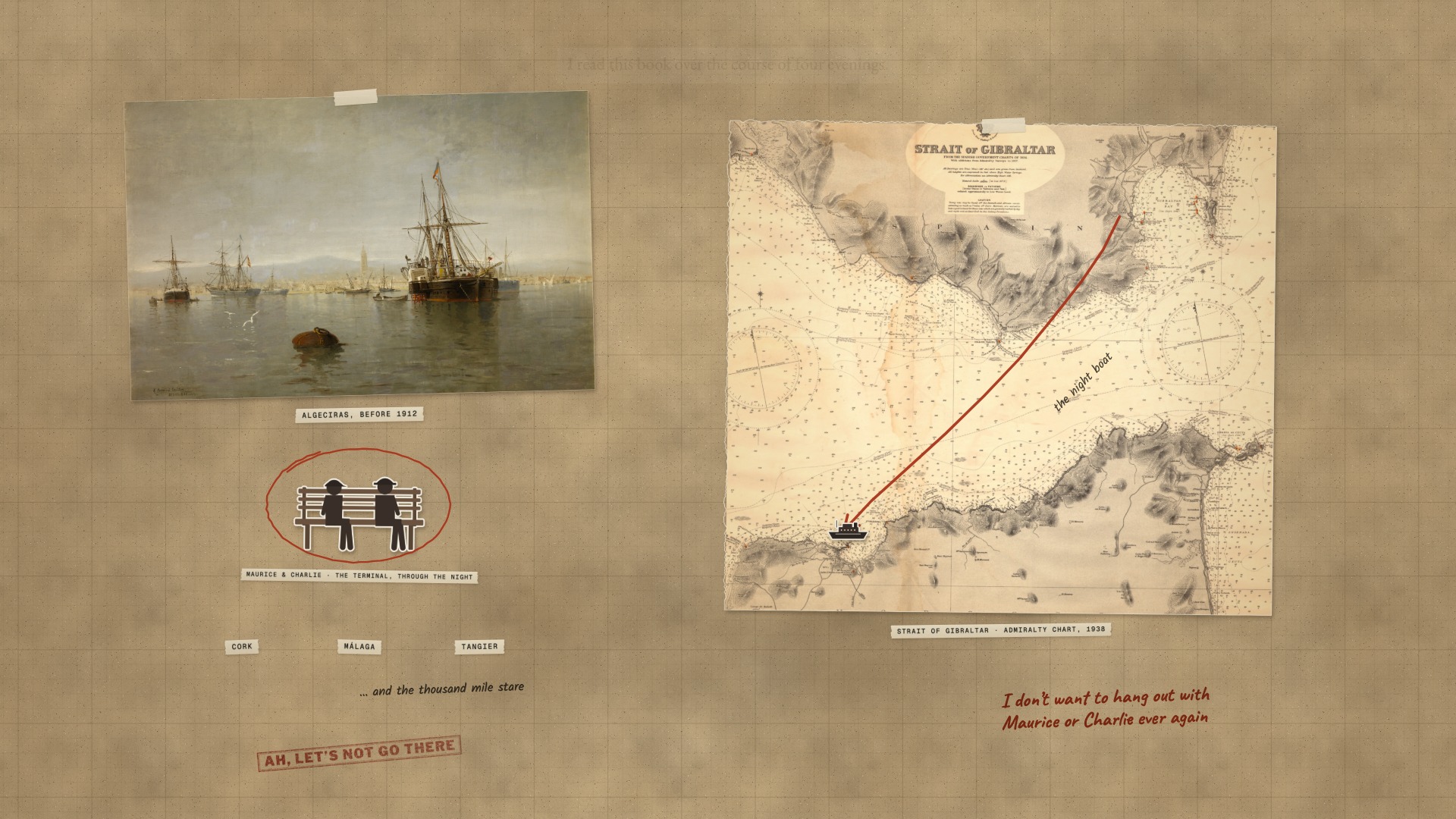
Maurice and Charlie’s ability to feed off each other, to bounce off each other quickly, is witty and entertaining, but not any representation of any male psyche that I’ve ever encountered. Maurice and Charlie never really go into depth like the men I know. They touch upon vulnerability for a bit, and then wave their hands and say “ah, let’s not go there,” which isn’t what I really want to see depicted, as we’re encouraging men to be more vulnerable as of late, but at the same time, it’s not like Maurice and Charlie had any examples of the Therapy Speak that has become common parlance now.
A lot of this book felt like the two men having a chat for a few minutes and then saying the name of a place and then giving a thousand mile stare off while they wordlessly reminisce. They never put their past into words, but the narrator does with, my god, such a fondness and generosity of language. Barry writes beautiful prose, so beautiful and compelling that I’m reminded of the Fight Club dilemma, of people admiring Tyler Durden. That’s not the point. If you have Brad Pitt at his sexiest setting a deplorable example, people will skip the lesson and follow the stud. Barry’s narration of the lives of Maurice and Charlie is too gorgeous for our own good. And while I doubt men will read this book and ponder if their next entrepreneurial step should be a startup drug empire, my complaint falls back to me not feeling a connection with these characters. I like Barry, but I don’t want to hang out with Maurice or Charlie ever again.


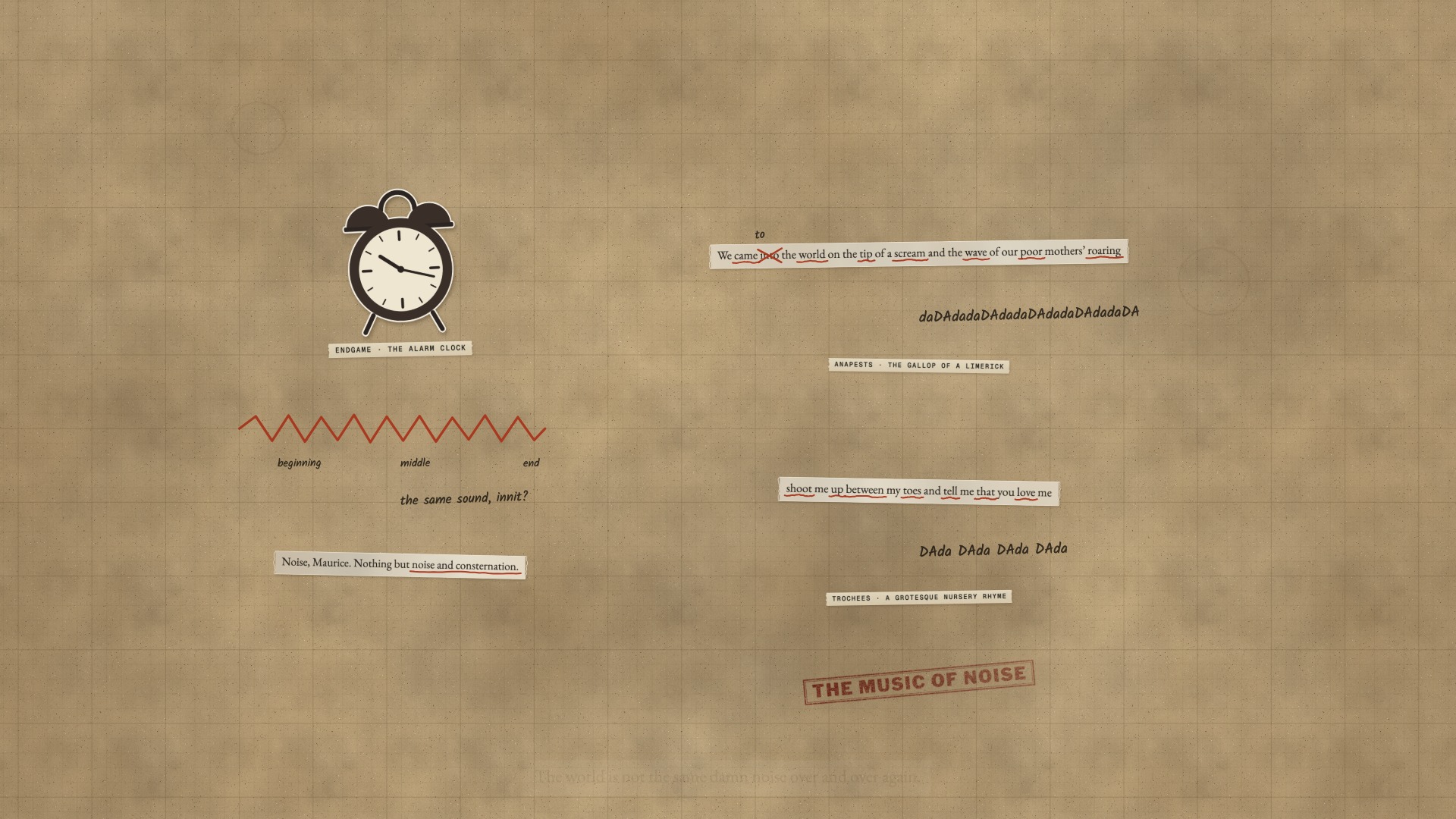
I’m reminded of Beckett’s Endgame, where Clov and Hamm wind up an alarm clock, listen to it rattling, and afterwards talk about their favorite parts. One likes the middle, and the other likes the end. But it’s just the same sound, innit? It’s just rattling noise, all the way through. Barry recreates this scene with Maurice and Charlie:
“We came into the world on the tip of a scream and the wave of our poor mothers’ roaring […] And the first thing we do? We start roaring […] And what goes in in between? Noise, Maurice. Nothing but noise and consternation”
That first line, I think, would have been better with “to” instead of “into,” to get the galloping tone of Anapests. “We came to the world on the tip of a scream and the wave of our poor mothers roaring.” daDAdadaDAdadaDAdadaDAdadaDA. There’s musicality to that, the flavor of an Irish Limerick.
I love this sense of music in the endless noise and consternation. The middle sounds no different than the end, and it’s not much different than the beginning either. But hidden in that noise does make music that some of us can appreciate. The music of noise fulfils my craving for Metamodernism.
Barry crafts words and rhythms that make some passages feel delicious. I’m reminded of a line somewhere in the book that I forgot to earmark: “shoot me up between my toes and tell me that you love me” is a line I read out loud a few times to get the feel of. It has a much softer, childish, singsong Trochee rhythm to it, almost like a most grotesque nursery rhyme, Shakespeare and slaps vein.
Overall, I appreciate Chat setting me up with Barry’s works. This first date was a bit of a fail for me, but I’m open to a second, and I’ll be more selective of where I go with him. If he has any works where his characters are more admirable, I’d be happy to hear his songs about them.
If you have any books you can recommend to me, I’m currently gorging on new books, young and fresh, in their 20s, with unbent spines, and nothing much older. I want to see where the world is heading, where art is pointing us. Postmodern writers are hysterical historians, context stripping for cliche farming, and they keep talking about the world that was, rather than the world that will be, the world that can be. I hope the Metamodernists, rare as they are, when I find them, can show me what’s imaginable. The world is not the same damn noise over and over again.
Real rebels, as far as I can see, risk disapproval. The old postmodern insurgents risked the gasp and squeal: shock, disgust, outrage, censorship, accusations of socialism, anarchism, nihilism. Today’s risks are different. The new rebels might be artists willing to risk the yawn, the rolled eyes, the cool smile, the nudged ribs, the parody of gifted ironists, the “Oh how banal.” To risk accusations of sentimentality, melodrama. Of over credulity. Of softness. Of willingness to be suckered by a world of lurkers and starers who fear gaze and ridicule above imprisonment without law.
—David Foster Wallace
Read the newsletter edition on Substack · Subscribe
Credits
- “Old alarm clock on the bookshelf”, by Nenad Stojkovic, 2020 · CC BY 2.0 · Source
- “Puerto de Algeciras”, by Ángel Cortellini Sánchez, before 1912 · Public domain · Source
- “Admiralty Chart No 142, Strait of Gibraltar, published 1938”, by United Kingdom Hydrographic Office · Public domain · Source

