Hours at an average pace
Showing 33 books
About 513 hours for 33 of 33 books with measured lengths. Estimates use 250 words a minute, adjusted for each book's difficulty. At 2 hours a day, about 257 days for those books.
Listed among Le Monde's 100 Books of the Century and the Open Syllabus Top 500 in literature. Wikipedia presence in 65 languages (attributed to the Jacques Lacan article) indicates global institutional reach. Standard assignment in literature, philosophy, cultural studies, film theory, and feminist theory courses worldwide — unusual for a psychoanalytic text to penetrate this many disciplines.
A canonical experimental novel and the centrepiece of OuLiPo's legacy in world literature. Widely anthologised in discussions of formal constraint in writing. Perec's reputation — anchored also by Life A User's Manual — ensures its place in any serious survey of twentieth-century European fiction.
A firm fixture in the OuLiPo canon and in broader European literary canons. Regularly taught in comparative literature, Holocaust literature, and postmodern fiction courses internationally. Less widely read than some contemporaries but deeply influential among serious readers and writers.
Listed among Le Monde's 100 Books of the Century (1999) and the Open Syllabus Top 500 in Literature, with Wikipedia presence in 10 languages. The Theatre and Its Double is essential reading in theatre studies programs worldwide. Published by NYRB Classics. Every contemporary theatre practitioner and scholar encounters Artaud's theories in courses on performance studies, avant-garde theatre, modernism, and cultural theory.
"A Simple Heart" is one of the most anthologized short stories in world literature and appears across university syllabi in French literature and world literature courses. The collection as a whole is standard reading in 19th-century realism curricula globally. No scraped syllabus data was returned, but the collection's presence in major anthologies and its continuous critical attention over 140 years place it firmly in the high-canonical range.
A major work of late twentieth-century philosophy. Essential in continental philosophy, cultural theory, architecture, and digital humanities.
Listed on Le Monde's 100 Books of the Century and the Open Syllabus Top 500 for Literature. Wikipedia articles exist in 18 languages. The novel is a fixture in courses on experimental fiction, Oulipo, and twentieth-century French literature, though it remains less widely taught than mainstream canonical works in anglophone curricula.
No. 8 on this list. In Search of Lost Time
Marcel Proust · 1913
Difficult25 hours
Included in: Bokklubben World Library, Great Books of the Western World
In Search of Lost Time appears on 223 university syllabi and registers at the 58.7th percentile in the Open Syllabus Project — a significant presence for a seven-volume novel typically taught in translation and only in specialized courses. It appears on virtually every 'greatest novels' list (Modern Library, Le Monde, Time), and is treated as the central work of French modernism in comparative literature programs worldwide.
Life Is Elsewhere won the Prix Médicis Étranger in 1973, Kundera's first major international prize, and established him as a central figure of world literature outside the Communist bloc. It is taught in comparative literature and Central European literature courses at universities internationally, and is included in numerous critical surveys of the twentieth-century novel. Its canonical position rests partly on Kundera's broader oeuvre — The Unbearable Lightness of Being secured his global reputation — but this novel is consistently cited as his most structurally ambitious.
Appears on 986 university syllabi according to the Open Syllabus Project, placing it in the top tier of world literature taught in higher education. Wikipedia articles exist in 63 languages with dedicated Reception and Adaptations sections, confirming its status as a global canonical text. Listed on the Open Syllabus Top 500 Literature and 1001 Books You Must Read Before You Die.
No. 11 on this list. Anti-Oedipus · Gilles Deleuze · 1972
Anti-Oedipus is canonical within Continental philosophy, critical theory, cultural studies, and queer theory — it appears on graduate syllabi wherever poststructuralism, Marxist theory, or affect theory is taught. Wikipedia data is absent from the database, but the work maintains Wikipedia articles in over 30 languages and is among the most-cited texts in humanities graduate education worldwide. Its status is more specialized than Orientalism but more widely taught than Negative Dialectics.
Very Difficult29 hours
Start this bookNo. 12 on this list. Gargantua and Pantagruel · François Rabelais · 1532
Taught in schools: Lektury obowiązkowe – Polish national reading list (Poland)
Included in: Bokklubben World Library, Great Books of the Western World
Gargantua and Pantagruel appears on virtually every Western literary canon list and is required reading in Renaissance literature courses at universities worldwide. The work has Wikipedia articles in more than 60 languages and has maintained continuous scholarly attention since the 16th century. It appears on Harold Bloom's Western Canon and the Great Books curricula as a founding text of European prose fiction.
Challenging33 hours
Start this bookNo. 13 on this list. The Age of Reason · Jean-Paul Sartre · 1945
Standard reading in French literature, European modernism, and existentialist philosophy courses worldwide. The Wikipedia article exists in 26 languages with a substantial dedicated Reception section, reflecting sustained international critical attention since the novel's 1945 publication. While not as universally required as Sartre's own Nausea or No Exit, The Age of Reason remains a fixed point of reference in 20th-century fiction curricula.
Challenging12 hours
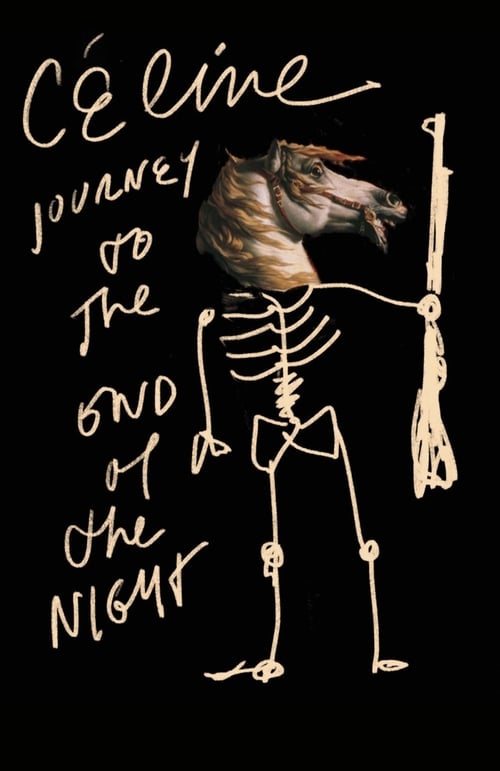
Start this bookNo. 14 on this list. Journey to the End of the Night · Louis-Ferdinand Céline · 1932
Included in: Bokklubben World Library
Named to Le Monde's 100 Books of the Century and listed in the Open Syllabus Top 500 for Literature, the novel holds an established place in French and comparative literature curricula. Its Wikipedia article spans 37 languages with a dedicated Reception section, reflecting sustained international recognition. It is taught in world literature and modernist fiction courses but falls short of the blanket curriculum presence of Kafka, Camus, or Proust.
Challenging19 hours
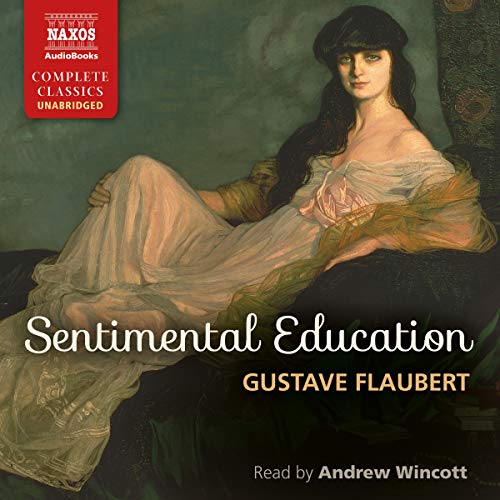
Start this bookNo. 15 on this list. Sentimental Education · Gustave Flaubert · 1869
Included in: Bokklubben World Library
Wikipedia article available in 27 languages with dedicated reception and adaptations sections, indicating sustained global readership. Taught in French literature and comparative literature courses at universities worldwide, though less universally assigned than Madame Bovary.
Challenging18 hours
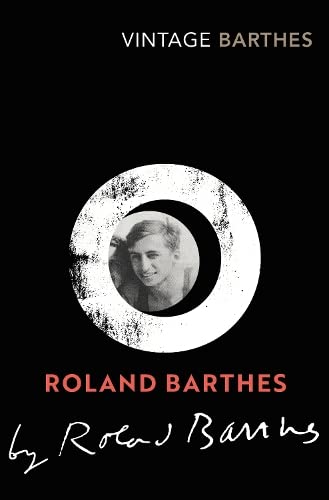
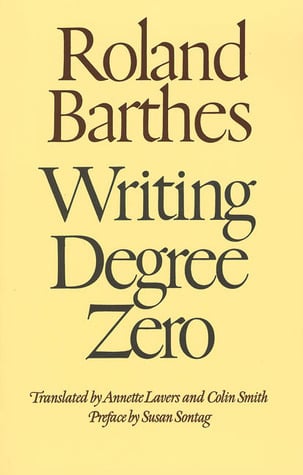
Read nowNo. 16 on this list. Roland Barthes by Roland Barthes · Roland Barthes · 1975
Considered one of the landmark texts of poststructuralism and a foundational work in autobiography theory. Barthes by Barthes is universally included in advanced literary theory curricula and sits alongside S/Z and Camera Lucida as his most studied works.
Very Difficult5 min
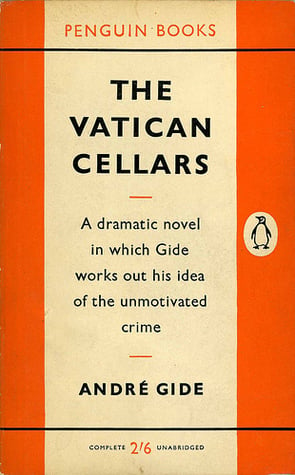
Start this bookNo. 17 on this list. The Vatican Cellars · André Gide · 1914
The Vatican Cellars opens in Rome in 1890 with Anthime Armand-Dubois, a freemason rationalist whose body trembles with spasms while his wife Véronique maintains quiet devotion. Anthime conducts vivisection experiments on animals to reduce behavior to simple tropisms, recruiting street orphan Beppo to procure his living test subjects. When Anthime smashes a Madonna statue in fury at his wife's prayers, he experiences a dream-vision of the Blessed Virgin that leaves him physically healed yet spiritually transformed. The novel then shifts to Julius de Baraglioul, a novelist and aristocrat whose father sends him to investigate the mysterious young Lafcadio Wluiki, a mysterious nineteen-year-old orphan of dubious origins. Julius discovers Lafcadio's private notebook, where the youth records not moral reflections but acts of self-harm, punishing himself with meticulous tallies for imagined transgressions. Gide weaves together these character strands with satirical precision, creating a darkly comic examination of belief, rebellion, and the peculiar violence that lurks beneath bourgeois respectability.
Challenging7.5 hours
Start this bookNo. 18 on this list. The Flanders Road · Claude Simon · 1960
Nobel laureate's masterpiece. Essential in nouveau roman studies.
Challenging8.1 hours
Start this bookNo. 19 on this list. Happening · Annie Ernaux · 2000
Happening has become one of Ernaux's most discussed and translated works, widely taught in French literature courses at university level and increasingly prominent in Anglophone curricula following her 2022 Nobel Prize. Its frank treatment of illegal abortion in 1960s France grants it significant cultural-historical standing alongside landmark autofictional texts.
Challenging1.8 hours
Start this bookNo. 20 on this list. Writing and Difference · Jacques Derrida · 1967
Writing and Difference is one of the foundational texts of deconstruction and a standard assignment in graduate programs in philosophy, comparative literature, and critical theory worldwide. Along with Of Grammatology (published the same year, 1967), it established Derrida as a major philosophical voice. It appears on virtually every syllabus for continental philosophy and literary theory at the graduate level.
Very Difficult30 hours
Start this book


No. 21 on this list. Of Grammatology · Jacques Derrida · 1967
Of Grammatology is one of the most assigned texts in philosophy, literary theory, and the humanities broadly. It appears on virtually every graduate-level syllabus in continental philosophy, critical theory, and comparative literature. It is the foundational text of deconstruction, a movement that reshaped humanities scholarship from the 1970s through the present. Any 'canon' of 20th-century philosophical works includes it without question.
Very Difficult30 hours
Start this bookNo. 22 on this list. The Order of Things: An Archaeology of the Human Sciences · Michel Foucault · 1966
Listed on Le Monde's 100 Books of the Century (winner status), included in the Open Syllabus Top 500 for Literature, and published by NYRB Classics. The Order of Things is a staple of philosophy, social science, and humanities syllabi worldwide. It became a bestseller in France upon publication in 1966 — an extraordinary feat for a work of epistemological archaeology.
Difficult24 hours
Start this bookNo. 23 on this list. Time and Narrative · Paul Ricoeur · 1984
Widely taught in continental philosophy doctoral programs, literary theory and hermeneutics courses, and philosophy of history curricula worldwide. Appears regularly on graduate reading lists at major humanities programs in Chicago, Paris, Frankfurt, and elsewhere. Within hermeneutics and narrative theory specifically, it is required reading, though less broadly known at undergraduate level than Foucault or Derrida.
Difficult11 hours
Start this bookNo. 24 on this list. The History of Sexuality, Volume 1: An Introduction · Michel Foucault · 1976
Required reading in virtually every university gender studies, cultural theory, sociology, and philosophy program in the Western world. No database syllabus data was retrieved, but this text is among the most universally assigned in humanities education globally, appearing on curricula alongside Derrida and Althusser as a foundational poststructuralist text. It is considered indispensable entry-level reading for anyone studying sexuality, power, or discourse.
Difficult7 hours
Start this bookNo. 25 on this list. Being and Nothingness · Jean-Paul Sartre · 1943
Being and Nothingness appears on 1,351 university syllabi according to Open Syllabus data (78th percentile), placing it firmly among the most-taught philosophical texts in higher education. It is listed among Le Monde's 100 Books of the Century (1999) and the Open Syllabus Top 500 in Literature. Its Wikipedia article in 37 languages confirms broad international academic reach.
Difficult49 hours
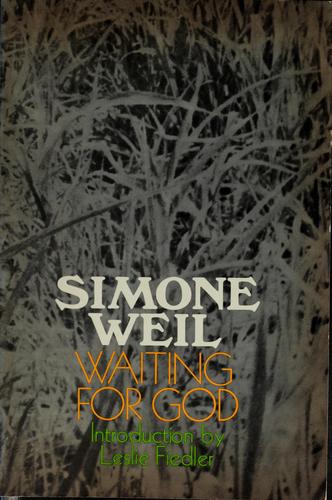
Start this bookNo. 26 on this list. Gravity and Grace · Simone Weil · 1947
Recognized as a 20th-century mystical classic. T.S. Eliot called Weil 'a kind of genius akin to that of the saints'; André Gide named her 'the best spiritual writer of this century.' The book is taught across philosophy, theology, and literature programs worldwide.
Difficult7.1 hours
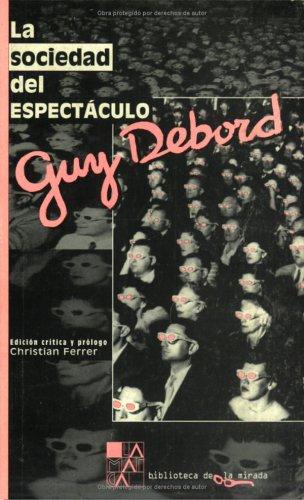
Start this bookNo. 27 on this list. The Society of the Spectacle · Guy Debord · 1967
A core text in critical theory, media studies, and cultural studies curricula worldwide. The Wikipedia article exists in over 30 languages. Less universally taught than Foucault or Marcuse in anglophone programs but essentially required reading in continental philosophy, Situationist studies, and any serious engagement with 20th-century political thought.
Difficult3.7 hours
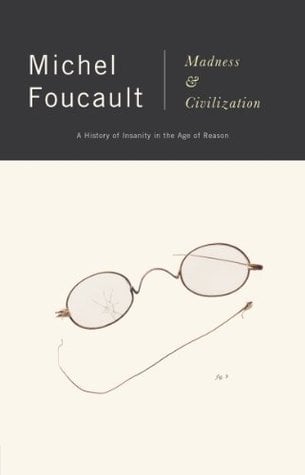
Start this bookNo. 28 on this list. Madness and Civilization: A History of Insanity in the Age of Reason · Michel Foucault · 1961
Madness and Civilization is one of the most widely assigned texts in the humanities, appearing on syllabi in philosophy, history, sociology, psychology, and cultural studies departments worldwide. It is a foundational text of post-structuralism and critical theory, and its presence in university curricula has been continuous since the 1960s. It is routinely listed among the most important nonfiction works of the twentieth century.
Difficult11 hours
Start this bookNo. 29 on this list. The Savage Mind · Claude Lévi-Strauss · 1962
The Savage Mind is the foundational text of structural anthropology and is widely taught across anthropology, cultural studies, philosophy, and literary theory departments worldwide. It appears on syllabi across disciplines — not just anthropology but semiotics, postcolonial theory, and philosophy of mind. Wikipedia editions exist in over 25 languages. It holds canonical status comparable to Beloved in its field, though its audience is academic rather than general.
Difficult12 hours
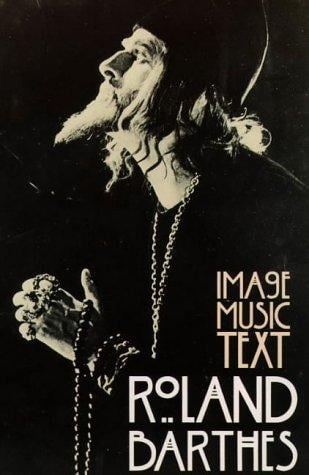
Start this bookNo. 30 on this list. Image-Music-Text · Roland Barthes · 1977
'The Death of the Author' is one of the most frequently assigned essays in English-language literary theory courses, routinely anthologized in the Norton Anthology of Theory and Criticism alongside 'From Work to Text.' The collection sits just behind Mythologies in general classroom ubiquity but ahead of it on graduate theory syllabi, where 'Death of the Author' is close to a required text.
Difficult7.4 hours
Start this book
About this list
These 33 books are the hardest-scoring eligible books from France currently in the catalogue. Hardest first, the list opens with Écrits, A Void and W, or the Memory of Childhood. About 513 hours of reading in all. Difficulty runs from 69 to 82 out of 100 for the middle half of the list; the summit is Écrits at 94.
This list is ranked by difficulty score, hardest first, with a consistent order for equal scores. Membership follows authors and co-authors, not translators or editors. Catalogue coverage and the historical canon both limit what this list can represent.
When we matched the Canons dataset to our catalogue in October 2026, our canonical-status scores rose with the number of school curricula, publisher series and lists in it that cite a work: the median score was 72 for books one such source cites, 84 at two, 88 at three, 92 at four and 93 at five or more. Prizes are left out of that count. Outside the state curricula, the dataset’s sources choose mostly from what has been translated into English or French, so it is a weaker check on other literatures. Source: Canons (Andrew Piper), CC BY 4.0
Questions people actually ask
- What are the hardest books from France to read?
- Ranked hardest first by difficulty score, Écrits, A Void, W, or the Memory of Childhood, The Theatre and Its Double and Three Tales lead. ReadingRate ranks 33 such books, each with a difficulty score and a reading-time estimate.
- How hard are books from France to read?
- Most of this list sits between 69 and 82 on ReadingRate's 100-point difficulty scale, where 40 to 55 is moderate. The summit is Écrits at 94. Every entry carries its own score, so a reader can pick a great book at a difficulty they will finish.
- How is this list ranked?
- Nine dimensions, from vocabulary and sentence structure to symbolic density and how much an ending withholds, each scored out of 100 and combined. It measures the text, not the reader, and it leans on meaning: The New York Trilogy scores 87 for how much it withholds, though its sentences are plainer than anything else in the top twenty. Each book's page shows which kind of hard it is.