Hours at an average pace
Showing 33 books
About 499 hours for 32 of 33 books with measured lengths. Estimates use 250 words a minute, adjusted for each book's difficulty. At 2 hours a day, about 250 days for those books.
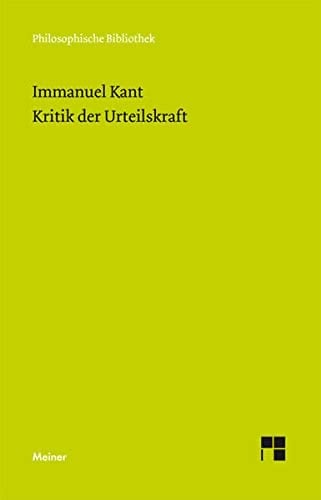
The Critique of Judgment is core curriculum in every philosophy department worldwide, foundational to the discipline of aesthetics, and required reading in the history of modern philosophy. While structured literary-syllabus data is unavailable in the database, its status as one of Kant's three Critiques—alongside the Critique of Pure Reason and Critique of Practical Reason—places it among the canonical texts of Western philosophy. It appears across thousands of university syllabi globally.
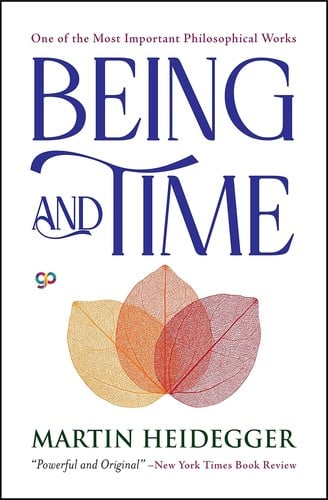
Being and Time is required reading in virtually every philosophy curriculum worldwide and stands as one of the most taught works in continental philosophy. It appears on syllabi for philosophy, phenomenology, existentialism, cultural theory, and theology, and has been translated into dozens of languages. Few 20th-century philosophical texts achieve this breadth of curricular presence.
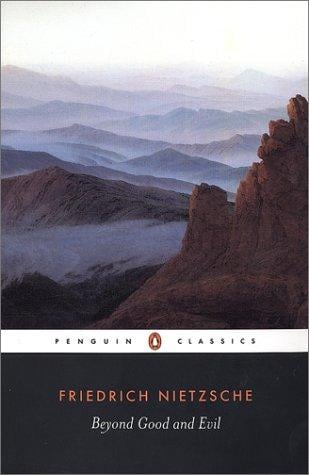
Beyond Good and Evil is standard reading in philosophy curricula worldwide and appears on virtually every serious 'books everyone should read' list. While not primarily a literature syllabus fixture, its presence in university courses across disciplines — philosophy, political theory, literary theory, cultural studies — is near-universal. No comparable work of 19th-century philosophy commands broader global readership.
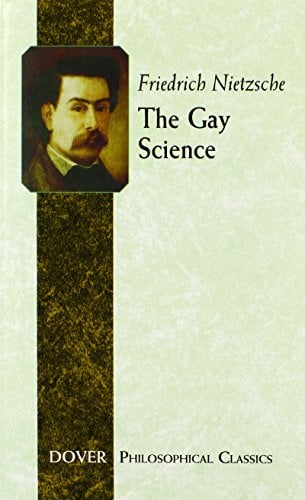
The Gay Science introduces 'God is dead' (§125), eternal recurrence (§341), and amor fati — three concepts that reshaped Western intellectual history and appear on virtually every continental philosophy syllabus worldwide. Though the database lacks syllabus count data for this work, the book's Wikipedia article exists in over 50 languages and it is assigned in philosophy, literary theory, theology, and cultural studies courses globally. Its canonical standing in philosophy exceeds most works, comparable to Descartes' Meditations or Kant's Groundwork.
Friedrich Nietzsche opens by promising a history of morality and delivers something more unsettling: a prosecution. In three linked essays, he traces where our moral concepts actually came from — not from reason or God, but from power, debt, and pain. The first essay tracks how the word 'good' belonged originally to the aristocrat who named himself that way, then watches the slave revolt in morality invert the table of values entirely, creating 'evil' as a name for the strong. The second follows the concept of guilt back to the creditor-debtor relationship, where punishment began not as justice but as the pleasure of cruelty legitimized by contract. The third anatomizes the ascetic priest — the figure who turns suffering into meaning, who wins power over the powerful by teaching them to hate themselves. Nietzsche writes in long hypotactic periods that build to sudden one-line reversals, embedding Latin phrases and German coinages into arguments that span etymology, biology, and cultural history simultaneously. The tone is the provocation: he performs the very diagnosis he conducts, and readers who take his endorsements of aristocratic violence at face value have missed the argument. This is the book that taught Foucault to ask how systems of knowledge produce what they claim merely to describe. It demands and rewards slow, combative reading.
No. 6 on this list. The Protestant Ethic and the Spirit of Capitalism
Max Weber · 1905
Challenging16 hours
One of the founding texts of sociology, taught in introductory and theory courses alongside Marx and Durkheim and assigned across history, economics and religious studies. It ranked fourth in the International Sociological Association's 1998 poll of the books of the century.
The Arcades Project is required reading in virtually every critical theory, cultural studies, and German Studies graduate program worldwide. Benjamin's concepts — the dialectical image, the flâneur, the wish-image, Jetztzeit — have become foundational vocabulary in the humanities. The book anchors syllabi in fields as disparate as architecture, urban studies, film theory, and literary criticism, making it one of the most cross-disciplinary canonical texts of the 20th century.
One of the most important works of twentieth-century philosophy and critical theory. Essential in philosophy, cultural studies, media studies, and political theory.
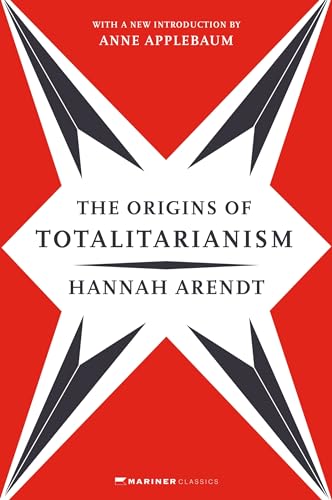
One of the most influential works of political philosophy of the twentieth century, required reading in political science, philosophy, and history curricula worldwide. Central to understanding modern political thought.
Aesthetic Theory is required reading in philosophy of art, critical theory, and aesthetics programs at universities worldwide. It appears on syllabi across art history, musicology, literary theory, and philosophy departments—taught wherever Frankfurt School critical theory is engaged seriously. The book is treated as the foundational text of 20th-century philosophical aesthetics, occupying the same curricular position in art theory that Kant's Critique of Judgment holds for earlier aesthetics.
No. 11 on this list. The Human Condition · Hannah Arendt · 1958
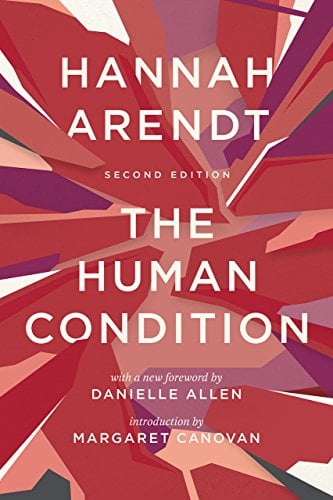
In 1957, a man-made satellite circled the earth. Hannah Arendt opened her 1958 study of the human condition with that fact, and the question it raised: what kind of creatures are we, that we celebrate escape from the very earth that made us possible? The book that follows is not a lament but a philosophical excavation — Arendt dissects the three activities that define our active life: labor, which sustains biological existence and leaves nothing permanent; work, which builds the durable world of objects and institutions; and action, which is speech and deed among equals in public space, the only activity that can produce something genuinely new. The distinction matters because modernity, Arendt argues, has collapsed them — turning everything into labor, into the endless biological cycle of production and consumption, at the expense of the political life that makes us more than animals. She moves through Aristotle, Marx, Locke, and Machiavelli with surgical precision, identifying the moment when economic man displaced political man. The book offers no remedy. It ends with the 'victory of the animal laborans' — a society of laborers who have been liberated from labor but know of nothing higher to do with their freedom. Reading Arendt requires sitting with distinctions that resist collapsing: between making and doing, between the private and the public, between mortality and natality. She returns the reader to questions that feel urgent precisely because they have no quick answers.
Difficult16 hours
Start this bookNo. 12 on this list. Eichmann in Jerusalem · Hannah Arendt · 1963
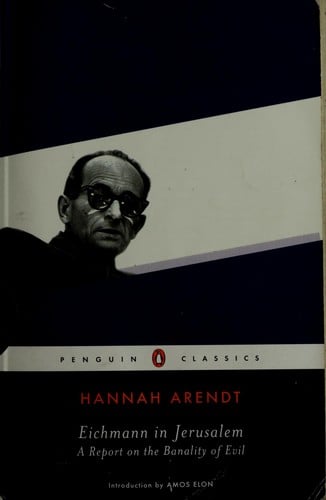
Eichmann in Jerusalem appears on syllabi across political philosophy, Holocaust studies, Jewish studies, ethics, history, and law — among the most assigned works of political non-fiction of the 20th century. It is standard reading in any course addressing totalitarianism, moral responsibility, or the Holocaust. The phrase "banality of evil" has entered the language as a fixed concept, which is the clearest measure of canonical status a non-fiction work can achieve.
Challenging9.5 hours
Start this bookNo. 13 on this list. Minima Moralia · Theodor W. Adorno · 1951
Theodor Adorno wrote Minima Moralia between 1944 and 1947, in exile from Nazi Germany, thinking in German while living in Los Angeles. The book's subtitle — Reflections from Damaged Life — is its argument: late capitalism has deformed the smallest gestures, down to the way people say goodbye, arrange furniture, or offer gifts. The 153 aphorisms each begin from some corner of daily experience and immediately turn it into evidence. Adorno watches a houseguest try to help with the dishes and ends up indicting the ideology of helpfulness itself. He watches American children at play and finds the administered society in the rules of their games. American roads, he notes, are inserted directly into landscape with no soft path at the edge — expressionless. Nothing survives without bearing the marks of what produced it. The prose enacts this method in its own syntax: sentences build through nested qualifications, invert themselves, then qualify the inversion. Reading must be slow or it produces nothing. There are no characters, no plot, no narrative — only argument conducted through observation, 153 times. The book ends on a line that has since become the most quoted sentence in German philosophy: there is no right life in the wrong one. Adorno's 300 pages are the case for that verdict, assembled from the evidence of ordinary afternoons.
Very Difficult14 hours
Start this bookNo. 14 on this list. European Literature and the Latin Middle Ages · Ernst Robert Curtius · 1948
Standard required reading in comparative literature and medieval studies graduate programs worldwide; the book coined locus amoenus as a formal critical category now used in virtually every discussion of medieval landscape description. Not mainstream undergraduate reading but indispensable for medievalists and comparatists, with continuous use since the 1953 Princeton translation.
Difficult36 hours
Start this bookNo. 15 on this list. Laocoon: An Essay on the Limits of Painting and Poetry · Gotthold Ephraim Lessing · 1766
A landmark in Western aesthetics. Taught in philosophy, art history, comparative literature, and media studies.
Challenging4.5 hours
Start this bookNo. 16 on this list. Vertigo · W.G. Sebald · 1990
A narrator wanders through northern Italy in the late 1980s, haunted by a sense that the same catastrophe keeps arriving in different costume. He sits in a Verona archive reading newspapers from 1913—the year before everything collapsed—and finds himself unable to leave. In the second section, a figure called Dr K. travels from Vienna to Venice to Riva, conducting a doomed romance with a girl from Genoa and hearing, at a sanatorium dinner table, a general's theory that battles are decided by specific gravity, not willpower. These two time periods—the narrator's present and Franz Kafka's 1913—are laid over each other until they become one.\n\nSebald writes long, unhurried paragraphs that gather subordinate clauses the way rivers gather tributaries: you are always moving forward but the channel keeps widening. Photographs appear without captions. Characters arrive and dissolve. The dead hunter Gracchus, lost between worlds because a helmsman was distracted, recurs as the book's organizing myth—a figure for anyone unable to depart this life entirely.\n\nVertigo is Sebald's first book, the one in which his method first becomes fully itself: a narrator walking through landscapes saturated with historical catastrophe, finding that the past is not behind us but slightly displaced sideways, still happening, still unresolved. The final image is Samuel Pepys's fire seen from a dream of mountain passes—the city burning, pigeons dead on the pavement, the question 'Is this the end of time?' floating unanswered.
Difficult8.1 hours
Start this bookNo. 17 on this list. The Cost of Discipleship · Dietrich Bonhoeffer · 1937
Dietrich Bonhoeffer opens with a distinction that splits the book in two. 'Cheap grace' is forgiveness sold on the cheap — grace without the cross, Christianity without Christ. 'Costly grace' is the real thing: the call that compelled Levi to leave his tax booth, that sent the disciples from their nets into unknown territory. Bonhoeffer wrote this in 1937, as a Lutheran pastor running an underground seminary while the German church bent its knee to the Nazi state. The stakes were not theoretical. What follows is a sustained reading of the Sermon on the Mount as a set of commands meant to be obeyed, not admired from a distance. The Beatitudes are not comforts for the passive; they describe what happens to people who actually follow Christ into the world. Bonhoeffer then builds outward from individual obedience to the visible church — a community that bears the form of the crucified Christ in its own body. Baptism is death. The Body of Christ is not a metaphor. The reader who expects gentle devotional prose will find instead a theologian making demands: that faith without obedience is not faith, that the church without costly commitment is not the church. The final chapters on the image of God carry the argument to its conclusion — to follow Christ means to be remade entirely, conformed to the image of the one who suffered.
Easy3.8 hours
Start this bookNo. 18 on this list. The Idea of the Holy · Rudolf Otto · 1917
A foundational text in the phenomenology of religion, cited by Eliade, Tillich, and Jung.
Challenging5.7 hours
Start this bookNo. 19 on this list. Critique of Pure Reason · Immanuel Kant · 1781
The Critique of Pure Reason is one of the most important works in the entire history of Western philosophy, universally recognized as a foundational text. It appears on virtually every list of essential philosophical works, is a required text in philosophy departments worldwide, and has been in continuous print and scholarly discussion since its publication in 1781. It is to modern philosophy what Newton's Principia is to physics—the work that redefined the field's fundamental questions and methods.
Very Difficult35 hours
Read nowNo. 20 on this list. Italian Journey · Johann Wolfgang von Goethe · 1816
The book is a standard work in German literature and Grand Tour studies and a fixture of Goethe's collected works. It is read less widely in classrooms than Faust or Werther.
Moderate9.6 hours
Start this book
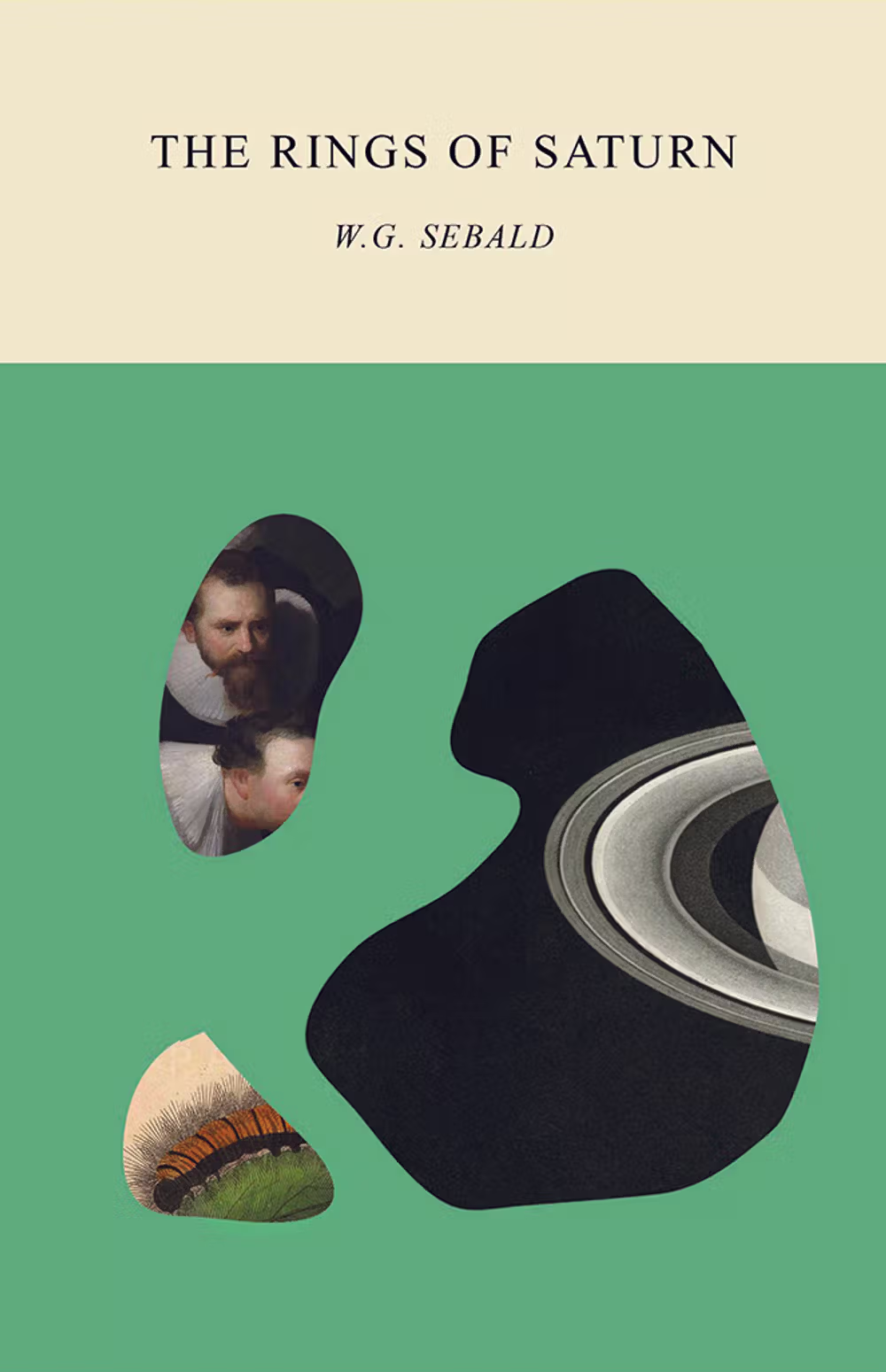
No. 21 on this list. The Rings of Saturn · W.G. Sebald · 1995
The Rings of Saturn appears regularly on graduate syllabi in contemporary literature, world literature, and postcolonial studies, and is frequently cited in lists of essential late-twentieth-century prose. It has not yet achieved the curriculum ubiquity of Beloved or The Great Gatsby, but among serious literary readers it is considered essential Sebald. Its status is rising as Sebald's reputation consolidates.
Difficult8.4 hours
Start this bookNo. 22 on this list. Race, Language, and Culture · Franz Boas · 1940
Ranked by literary regard among eligible works in the current catalogue. This position reflects the available catalogue evidence.
Challenging15 hours
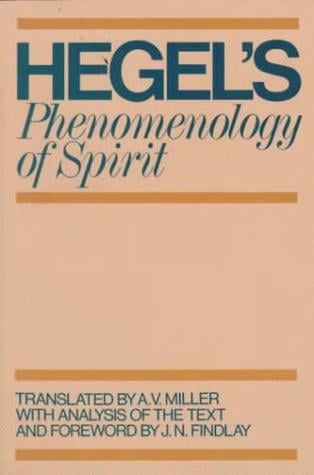
Start this bookNo. 23 on this list. The Phenomenology of Spirit · Georg Wilhelm Friedrich Hegel · 1807
Hegel's first major work traces the development of consciousness from its simplest form—'sense-certainty,' the naive belief that we directly perceive reality—through increasingly complex stages of self-awareness, social recognition, and historical understanding, until consciousness arrives at 'absolute knowing,' the point at which it recognizes itself in all of reality. The most famous section is the 'master-slave dialectic,' in which two self-consciousnesses struggle for recognition: the master appears to win but becomes dependent on the slave, while the slave, through labor and fear, achieves a deeper form of self-consciousness. This dialectic has influenced thinkers from Marx to Fanon to Kojève to Judith Butler. Hegel's prose is legendary for its difficulty—he writes in long, nested sentences that seem to contradict themselves before arriving at a synthesis. The book requires multiple readings and ideally a guide, but its central insight—that consciousness develops through a dialectical process of negation and transcendence—remains one of the most powerful ideas in philosophy.
Difficult24 hours
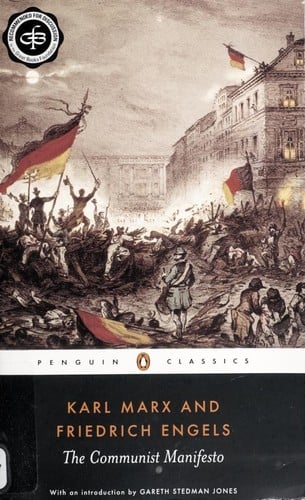
Start this bookNo. 24 on this list. The Communist Manifesto · Karl Marx · 1848
One of the most assigned texts in political science, history, economics, and philosophy courses worldwide. Wikipedia articles exist in over 100 languages. The text appears on countless syllabi from high school through graduate study, and it is one of the most widely translated secular texts in history.
Moderate45 min
Read nowNo. 25 on this list. Poetry and Truth · Johann Wolfgang von Goethe · 1811
One of the great literary autobiographies, essential for understanding Goethe and the Sturm und Drang period.
Moderate16 hours
Start this bookNo. 26 on this list. DESIGNING DATA-INTENSIVE APPLICATIONS · Martin Kleppmann · 2025
No literary prizes — it isn't award-eligible in that sense — but it has become close to required reading in graduate distributed-systems and database courses and is one of the most consistently recommended books for software engineering interview preparation and staff-engineer reading lists since its 2017 publication.
Moderate13 hours
Start this bookNo. 27 on this list. The Sociology of Secrecy and of Secret Societies · Georg Simmel · 1906
Ranked by literary regard among eligible works in the current catalogue. This position reflects the available catalogue evidence.
Challenging
Start this bookNo. 28 on this list. Deschooling Society · Ivan Illich · 1971
Illich argues that schools have become the opposite of what they claim to be: instead of liberating people through education, they create dependence on institutions, certify social hierarchies, and teach people to confuse process with substance—to believe that attending class equals learning, that a diploma equals competence, that more schooling equals more education. He extends this critique beyond education to all modern institutions: just as schools monopolize learning, hospitals monopolize health, and governments monopolize justice, producing a society of passive consumers who cannot imagine meeting their own needs. Illich proposes replacing schools with 'learning webs'—networks that connect people who want to learn with people who can teach, with tools and resources, and with peers who share their interests. Writing in 1971, he essentially described the internet's educational potential two decades before it existed. The book is short, dense, and radical: not a reform proposal but a challenge to the assumption that human development requires institutional management. Illich writes with the compressed intensity of a thinker who has thought his way to the foundation of a problem and found it rotten.
Challenging3.3 hours
Start this bookNo. 29 on this list. The Hidden Life of Trees: What They Feel, How They Communicate · Peter Wohlleben · 2016
Peter Wohlleben spent decades managing a forest in the Eifel mountains of Germany, and what he found there upended what foresters are taught to believe. Beech trees growing in undisturbed woodland keep sickly neighbors alive for centuries, pumping sugar through root grafts into stumps that have no leaves left to feed themselves. Trees release chemical alarms into the air when insects attack, warning others of the same species to raise their defenses. Underground, threads of fungus link root to root across the forest floor, carrying nutrients and information the way nerves carry a signal — what researchers call the wood wide web. Wohlleben calls this a language, and pushes further: trees, he argues, keep to a working schedule, remember drought the way a body remembers an old injury, and raise their young. Chapter by chapter he walks a beech forest and a spruce plantation side by side, showing how a tree cut off from its community and planted alone in a row for lumber dies younger and sicker than one left to grow among kin. Some biologists have pushed back hard on the language of trees 'talking' and 'feeling,' calling it more metaphor than science. But the book turned millions of readers into people who stop on a forest path and wonder what's passing, unseen, beneath their feet.
Easy4.6 hours
Start this bookNo. 30 on this list. The Invention of Nature · Andrea Wulf · 2015
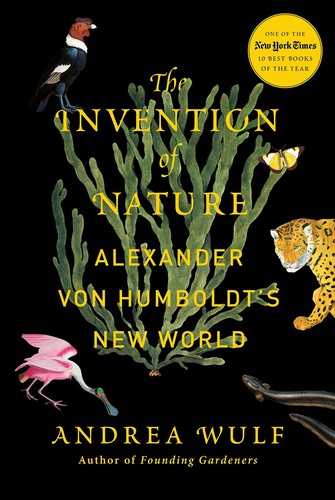
Wulf tells the story of Alexander von Humboldt—the most famous scientist in the world during his lifetime and now largely forgotten—who invented the concept of nature as an interconnected web of life. Humboldt climbed Chimborazo, explored the Orinoco, measured isotherms, identified climate zones, and conceived of the idea that cutting down forests changes the climate—in 1800. He influenced Darwin, Thoreau, John Muir, and Ernst Haeckel. Wulf follows Humboldt from Prussian mining academy to South American jungle to Siberian steppe to his final decades in Berlin, writing the five-volume Cosmos—an attempt to describe literally everything. The book argues that Humboldt deserves recognition not just as a great scientist but as the inventor of the modern concept of nature itself: the idea that the natural world is an interconnected system, not a collection of discrete objects. Wulf writes with infectious enthusiasm and a gift for making scientific ideas vivid and dramatic.
Easy6 hours
Start this book

About this list
These 33 books are the highest-scoring eligible nonfiction books from Germany currently in the catalogue. By literary regard, it opens with Critique of Judgment, Being and Time and Beyond Good and Evil. About 499 hours of reading in all, for the 32 with measured lengths. Difficulty runs from 47 to 76 out of 100 for the middle half of the list; the summit is Aesthetic Theory at 91.
This list is ranked by literary regard, with a consistent order for equal scores. Membership follows authors and co-authors, not translators or editors. Catalogue coverage and the historical canon both limit what this list can represent, and genre labels are the catalogue’s own, gathered into broader kinds.
When we matched the Canons dataset to our catalogue in October 2026, our canonical-status scores rose with the number of school curricula, publisher series and lists in it that cite a work: the median score was 72 for books one such source cites, 84 at two, 88 at three, 92 at four and 93 at five or more. Prizes are left out of that count. Outside the state curricula, the dataset’s sources choose mostly from what has been translated into English or French, so it is a weaker check on other literatures. Source: Canons (Andrew Piper), CC BY 4.0
Questions people actually ask
- What are the best nonfiction books from Germany?
- By literary regard, which weighs canonical status, critical standing and influence, Critique of Judgment, Being and Time, Beyond Good and Evil, The Gay Science and On the Genealogy of Morality lead. ReadingRate ranks 33 such books, each with a difficulty score and a reading-time estimate.
- Where should I start with nonfiction books from Germany?
- Start from difficulty, not from rank. The most approachable books on this list that still carry top literary regard are The Cost of Discipleship by Dietrich Bonhoeffer (about 3.8 hours), Italian Journey by Johann Wolfgang von Goethe and Poetry and Truth by Johann Wolfgang von Goethe.
- How hard are nonfiction books from Germany to read?
- Most of this list sits between 47 and 76 on ReadingRate's 100-point difficulty scale, where 40 to 55 is moderate. The summit is Aesthetic Theory at 91. Every entry carries its own score, so a reader can pick a great book at a difficulty they will finish.
- How is this list ranked?
- On literary-regard data: how canonically established a work is, its critical standing, and its influence on later writing. It is not a readers’ poll, which is why recent bestsellers rarely appear. Membership follows authors and co-authors, not translators or editors. A list that is not a genre list keeps to literature (fiction, poetry, drama and philosophy), with philosophy taking no more than one slot in five while there is literature left to rank; every list holds at most three works by one author.