Hours at an average pace
Showing 35 books
About 519 hours for 35 of 35 books with measured lengths. Estimates use 250 words a minute, adjusted for each book's difficulty. At 2 hours a day, about 260 days for those books.
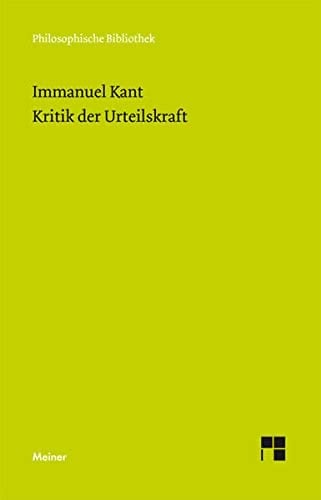
The Critique of Judgment is core curriculum in every philosophy department worldwide, foundational to the discipline of aesthetics, and required reading in the history of modern philosophy. While structured literary-syllabus data is unavailable in the database, its status as one of Kant's three Critiques—alongside the Critique of Pure Reason and Critique of Practical Reason—places it among the canonical texts of Western philosophy. It appears across thousands of university syllabi globally.
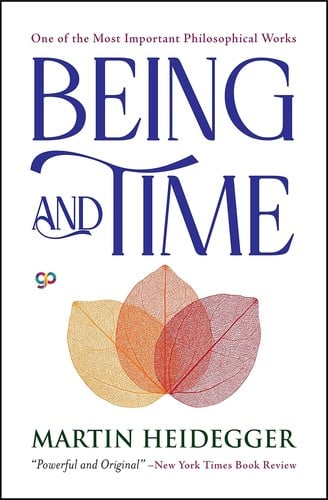
Being and Time is required reading in virtually every philosophy curriculum worldwide and stands as one of the most taught works in continental philosophy. It appears on syllabi for philosophy, phenomenology, existentialism, cultural theory, and theology, and has been translated into dozens of languages. Few 20th-century philosophical texts achieve this breadth of curricular presence.
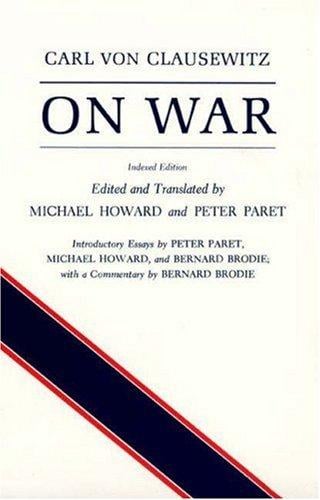
On War is the foundational text of modern strategic theory, required reading in virtually every military academy and war college worldwide for nearly two centuries. It appears across thousands of syllabi in political science, international relations, military history, and strategic studies. Wikipedia articles exist in 50+ languages, and Clausewitz's name has become synonymous with strategic thought itself.
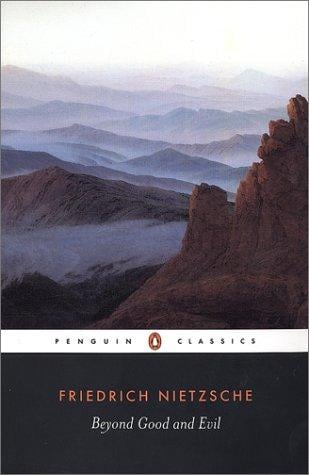
Beyond Good and Evil is standard reading in philosophy curricula worldwide and appears on virtually every serious 'books everyone should read' list. While not primarily a literature syllabus fixture, its presence in university courses across disciplines — philosophy, political theory, literary theory, cultural studies — is near-universal. No comparable work of 19th-century philosophy commands broader global readership.
The Gay Science introduces 'God is dead' (§125), eternal recurrence (§341), and amor fati — three concepts that reshaped Western intellectual history and appear on virtually every continental philosophy syllabus worldwide. Though the database lacks syllabus count data for this work, the book's Wikipedia article exists in over 50 languages and it is assigned in philosophy, literary theory, theology, and cultural studies courses globally. Its canonical standing in philosophy exceeds most works, comparable to Descartes' Meditations or Kant's Groundwork.
Three Essays on the Theory of Sexuality is a foundational text in psychology, psychoanalysis, sexuality studies, and cultural theory curricula worldwide. Listed among Le Monde's 100 Books of the Century (1999), the Open Syllabus Top 500 in Literature, and available on Wikipedia in 20 languages. Taught in psychology, philosophy, literature, gender studies, and history of science courses, it is considered inescapable for anyone studying psychoanalysis or the history of sexuality.
No. 7 on this list. The Protestant Ethic and the Spirit of Capitalism
Max Weber · 1905
Challenging16 hours
One of the founding texts of sociology, taught in introductory and theory courses alongside Marx and Durkheim and assigned across history, economics and religious studies. It ranked fourth in the International Sociological Association's 1998 poll of the books of the century.
Assigned in political theory, sociology, philosophy, and history courses at universities globally — among the most widely taught Marx texts after Capital and The Communist Manifesto. Appears on syllabi from Harvard to the London School of Economics and features in virtually every introduction to Marxist political theory. The text's influence on academic political science has kept it continuously in print for 170 years.
Illuminations is the essential anglophone introduction to Benjamin, edited and introduced by Hannah Arendt in 1968. It appears on syllabi across German Studies, Critical Theory, Media Studies, Film Studies, and Literary Theory departments worldwide. 'The Work of Art in the Age of Mechanical Reproduction' is one of the most-assigned critical essays in university education globally, and the 'Theses on the Philosophy of History' are required reading in philosophy and history programs. Canonical status approaching Beloved (85) and above Infinite Jest (78).
The Arcades Project is required reading in virtually every critical theory, cultural studies, and German Studies graduate program worldwide. Benjamin's concepts — the dialectical image, the flâneur, the wish-image, Jetztzeit — have become foundational vocabulary in the humanities. The book anchors syllabi in fields as disparate as architecture, urban studies, film theory, and literary criticism, making it one of the most cross-disciplinary canonical texts of the 20th century.
No. 11 on this list. Civilization and Its Discontents · Sigmund Freud · 1930
Civilization and Its Discontents is assigned in philosophy, psychology, political theory, literary criticism, and cultural studies courses across the world's universities. It is among the most widely taught non-fiction texts in higher education, a standard inclusion on humanities syllabi from introductory courses to graduate seminars. No significant survey of 20th-century intellectual history omits it.
Challenging3.4 hours
Start this bookNo. 12 on this list. The Birth of Tragedy · Friedrich Nietzsche · 1872
One of the most influential works in aesthetics and classical reception in Western thought.
Difficult6.1 hours
Start this bookNo. 13 on this list. Dialectic of Enlightenment · Theodor W. Adorno · 1944
One of the most important works of twentieth-century philosophy and critical theory. Essential in philosophy, cultural studies, media studies, and political theory.
Very Difficult12 hours
Start this bookNo. 14 on this list. Aesthetic Theory · Theodor W. Adorno · 1970
Aesthetic Theory is required reading in philosophy of art, critical theory, and aesthetics programs at universities worldwide. It appears on syllabi across art history, musicology, literary theory, and philosophy departments—taught wherever Frankfurt School critical theory is engaged seriously. The book is treated as the foundational text of 20th-century philosophical aesthetics, occupying the same curricular position in art theory that Kant's Critique of Judgment holds for earlier aesthetics.
Very Difficult33 hours
Start this bookNo. 15 on this list. The Historical Novel · György Lukács · 1937
The originating theoretical text for the scholarly study of historical fiction; no subsequent work on the genre can ignore it.
Difficult9.9 hours
Start this bookNo. 16 on this list. The Implied Reader: Patterns of Communication in Prose Fiction from Bunyan to Beckett · Wolfgang Iser · 1972
Canonical in reader-response theory and widely assigned in narrative theory courses.
Challenging9.7 hours
Start this bookNo. 17 on this list. The Act of Reading: A Theory of Aesthetic Response · Wolfgang Iser · 1978
The foundational text of phenomenological reader-response theory; essential for reception aesthetics and the study of reading.
Challenging19 hours
Start this bookNo. 18 on this list. Minima Moralia · Theodor W. Adorno · 1951
Theodor Adorno wrote Minima Moralia between 1944 and 1947, in exile from Nazi Germany, thinking in German while living in Los Angeles. The book's subtitle — Reflections from Damaged Life — is its argument: late capitalism has deformed the smallest gestures, down to the way people say goodbye, arrange furniture, or offer gifts. The 153 aphorisms each begin from some corner of daily experience and immediately turn it into evidence. Adorno watches a houseguest try to help with the dishes and ends up indicting the ideology of helpfulness itself. He watches American children at play and finds the administered society in the rules of their games. American roads, he notes, are inserted directly into landscape with no soft path at the edge — expressionless. Nothing survives without bearing the marks of what produced it. The prose enacts this method in its own syntax: sentences build through nested qualifications, invert themselves, then qualify the inversion. Reading must be slow or it produces nothing. There are no characters, no plot, no narrative — only argument conducted through observation, 153 times. The book ends on a line that has since become the most quoted sentence in German philosophy: there is no right life in the wrong one. Adorno's 300 pages are the case for that verdict, assembled from the evidence of ordinary afternoons.
Very Difficult14 hours
Start this bookNo. 19 on this list. European Literature and the Latin Middle Ages · Ernst Robert Curtius · 1948
Standard required reading in comparative literature and medieval studies graduate programs worldwide; the book coined locus amoenus as a formal critical category now used in virtually every discussion of medieval landscape description. Not mainstream undergraduate reading but indispensable for medievalists and comparatists, with continuous use since the 1953 Princeton translation.
Difficult36 hours
Start this bookNo. 20 on this list. Mimesis · Erich Auerbach · 1946
Mimesis appears on 2,636 university syllabi according to the Open Syllabus Project, placing it at the 85th percentile of all taught books — a remarkable figure for an academic monograph in literary criticism. Wikipedia articles in 45 languages confirm its global reach. It is the foundational text of comparative literature as an academic discipline and appears on virtually every graduate reading list in literary studies worldwide. Among academic works of literary criticism, it stands beside Northrop Frye's Anatomy of Criticism and Roland Barthes's S/Z as essential reference points.
Difficult29 hours
Start this book
No. 21 on this list. Laocoon: An Essay on the Limits of Painting and Poetry · Gotthold Ephraim Lessing · 1766
A landmark in Western aesthetics. Taught in philosophy, art history, comparative literature, and media studies.
Challenging4.5 hours
Start this bookNo. 22 on this list. Brecht on Theatre: The Development of an Aesthetic · Bertolt Brecht · 1964
Standard text in drama programs and political theatre studies worldwide.
Challenging10 hours
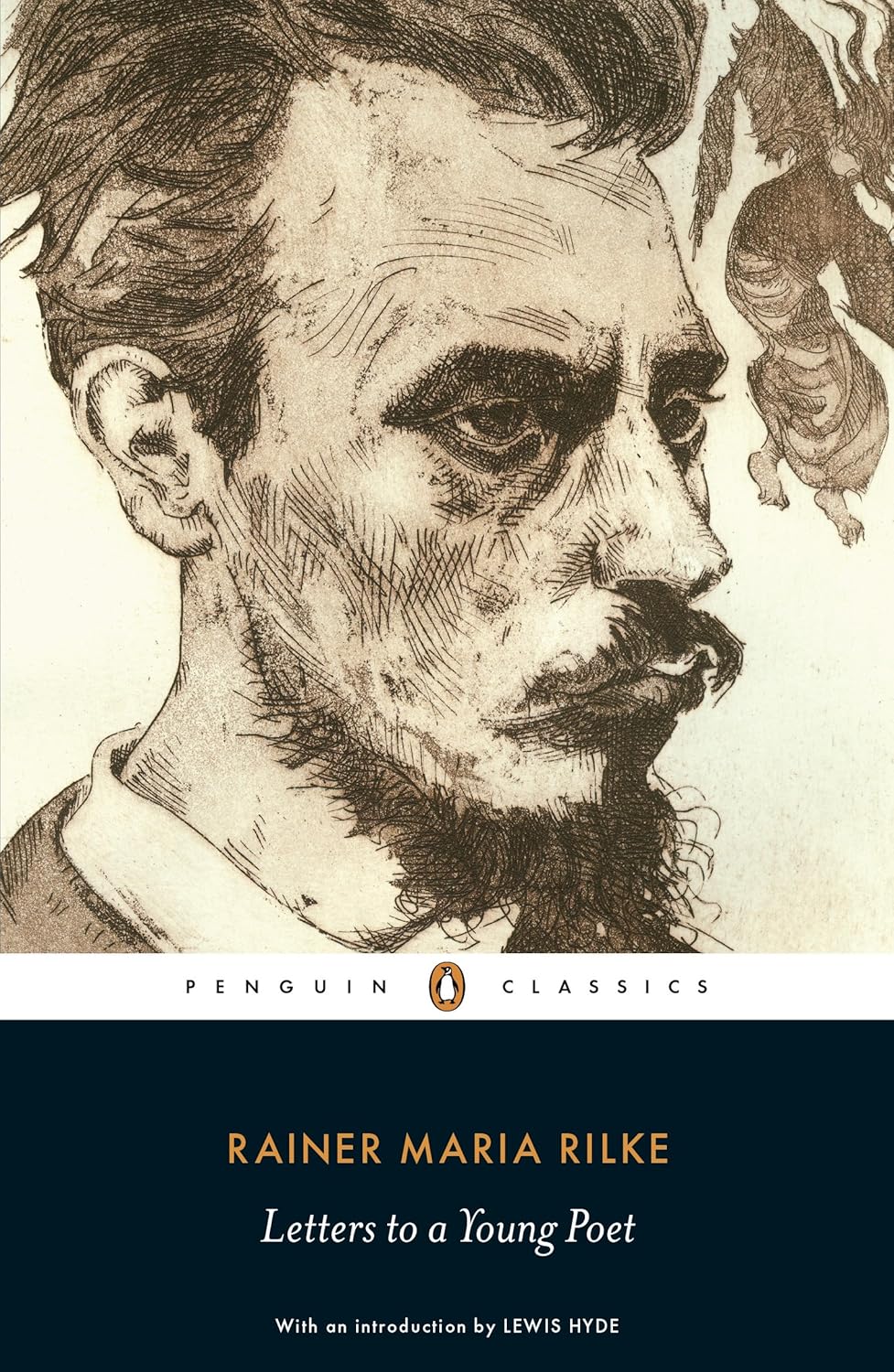
Start this bookNo. 23 on this list. Letters to a Young Poet · Rainer Maria Rilke · 1929
In February 1903, a nineteen-year-old military cadet named Franz Xaver Kappus sent his poems to Rainer Maria Rilke and asked if they were any good. Rilke sent back something else entirely. Over the next five years, across ten letters posted from Paris, Rome, Viareggio, and two Swedish ports, he gave the young man not criticism but a philosophy: go into yourself, live the questions, love your solitude, wait for what is hard to ripen. The poems Kappus sent are lost. What remains are Rilke's letters. They hold sustained meditation on the nature of creativity, God, sorrow, sexuality, and what it costs to build a life around art. Rilke at twenty-seven had already abandoned domestic stability — he and his sculptor wife, Clara Westhoff, agreed to let their daughter be raised by grandparents so each could serve their work. This is the context behind his instruction to Kappus: not advice for a hobbyist but a report from someone who paid the full price. The prose is unhurried and direct, built on long, flowing sentences that move toward aphorism. Nothing is ironic; everything is meant. The famous line — "Live the questions now" — earns its authority because every surrounding letter shows the cost of doing otherwise.
Moderate50 min
Start this bookNo. 24 on this list. The Origin of German Tragic Drama · Walter Benjamin · 1928
Benjamin's study of the German baroque Trauerspiel, withdrawn as a Habilitation thesis at Frankfurt, is now a standard text in courses on critical theory, German studies and allegory. Its 'Epistemo-Critical Prologue' is taught on its own in theory seminars.
Difficult12 hours
Start this bookNo. 25 on this list. The Theory of the Novel · Georg Lukács · 1916
The most influential philosophical theory of the novel. Essential in courses on novel theory, critical theory, and twentieth-century aesthetics.
Difficult4.6 hours
Start this bookNo. 26 on this list. The Sacred and the Profane · Mircea Eliade · 1957
Mircea Eliade begins with a stone. Not every stone is sacred — only one that strikes homo religiosus as a revelation of something that transcends it. The stone is worshipped because it is sacred, not because it is a stone. From this deceptively simple distinction, The Sacred and the Profane constructs a full account of how religious man inhabits a different universe from his secular neighbor — a universe organized around sacred centers, inhabited by cyclical time that returns to origins, suffused with a nature that is never merely natural. Eliade moves through four dimensions of existence — space, time, nature, and human life — showing in each case how the religious experience transforms it structurally. A house is not just shelter but a cosmic axis, its hearth a link between earth, sky, and underworld. The New Year is not a calendar convention but an annihilation of used-up time and a return to the moment of creation. Water does not merely wash — it dissolves and regenerates. The examples accumulate from Babylonian ritual, Vedic cosmology, Australian Aboriginal Dreamtime, Polynesian creation myths, Greek hierogamy, and dozens of other traditions, all organized around the same underlying structures. The book's argument cuts quietly against secular modernity. Desacralized man, Eliade suggests, has not escaped religion — he has merely forgotten it, and pays for the forgetting with an existence unmoored from any cosmic center. Reading Eliade requires patience with theoretical vocabulary (hierophany, axis mundi, imago mundi) but rewards it with a framework that reorganizes how religious experience across all cultures coheres.
Moderate3.2 hours
Start this bookNo. 27 on this list. The Idea of the Holy · Rudolf Otto · 1917
A foundational text in the phenomenology of religion, cited by Eliade, Tillich, and Jung.
Challenging5.7 hours
Start this bookNo. 28 on this list. Critique of Pure Reason · Immanuel Kant · 1781
The Critique of Pure Reason is one of the most important works in the entire history of Western philosophy, universally recognized as a foundational text. It appears on virtually every list of essential philosophical works, is a required text in philosophy departments worldwide, and has been in continuous print and scholarly discussion since its publication in 1781. It is to modern philosophy what Newton's Principia is to physics—the work that redefined the field's fundamental questions and methods.
Very Difficult35 hours
Read nowNo. 29 on this list. Italian Journey · Johann Wolfgang von Goethe · 1816
The book is a standard work in German literature and Grand Tour studies and a fixture of Goethe's collected works. It is read less widely in classrooms than Faust or Werther.
Moderate9.6 hours
Start this bookNo. 30 on this list. The Communist Manifesto · Karl Marx · 1848
One of the most assigned texts in political science, history, economics, and philosophy courses worldwide. Wikipedia articles exist in over 100 languages. The text appears on countless syllabi from high school through graduate study, and it is one of the most widely translated secular texts in history.
Moderate45 min
Read now
No. 31 on this list. On the Natural History of Destruction
W.G. Sebald · 1999
No. 32 on this list. A History of German Literature
Volker Meid · 1997
No. 33 on this list. Franz Kafka: A Critical Study
Wilhelm Emrich · 1976
No. 34 on this list. The Undiscovered Self
Carl Jung · 1957
No. 35 on this list. The Drama of the Gifted Child
Alice Miller · 1979
About this list
These 35 books are the highest-scoring eligible essay collections in German currently in the catalogue. By literary regard, it opens with Critique of Judgment, Being and Time and On War. About 519 hours of reading in all. Difficulty runs from 61 to 76 out of 100 for the middle half of the list; the summit is Aesthetic Theory at 91.
This list is ranked by literary regard, with a consistent order for equal scores. Membership follows authors and co-authors, not translators or editors. Catalogue coverage and the historical canon both limit what this list can represent, and genre labels are the catalogue’s own, gathered into broader kinds.
When we matched the Canons dataset to our catalogue in October 2026, our canonical-status scores rose with the number of school curricula, publisher series and lists in it that cite a work: the median score was 72 for books one such source cites, 84 at two, 88 at three, 92 at four and 93 at five or more. Prizes are left out of that count. Outside the state curricula, the dataset’s sources choose mostly from what has been translated into English or French, so it is a weaker check on other literatures. Source: Canons (Andrew Piper), CC BY 4.0
Questions people actually ask
- What are the best essay collections in German?
- By literary regard, which weighs canonical status, critical standing and influence, Critique of Judgment, Being and Time, On War, Beyond Good and Evil and The Gay Science lead. ReadingRate ranks 35 such books, each with a difficulty score and a reading-time estimate.
- Where should I start with essay collections in German?
- Start from difficulty, not from rank. The most approachable books on this list that still carry top literary regard are Italian Journey by Johann Wolfgang von Goethe (about 9.6 hours), The Communist Manifesto by Karl Marx and A History of German Literature by Volker Meid.
- How hard are essay collections in German to read?
- Most of this list sits between 61 and 76 on ReadingRate's 100-point difficulty scale, where 40 to 55 is moderate. The summit is Aesthetic Theory at 91. Every entry carries its own score, so a reader can pick a great book at a difficulty they will finish.
- How is this list ranked?
- On literary-regard data: how canonically established a work is, its critical standing, and its influence on later writing. It is not a readers’ poll, which is why recent bestsellers rarely appear. Membership follows authors and co-authors, not translators or editors. A list that is not a genre list keeps to literature (fiction, poetry, drama and philosophy), with philosophy taking no more than one slot in five while there is literature left to rank; every list holds at most three works by one author.