Hours at an average pace
Showing 30 books
About 324 hours for 29 of 30 books with measured lengths. Estimates use 250 words a minute, adjusted for each book's difficulty. At 2 hours a day, about 162 days for those books.
The Summa Theologica is required reading in virtually every Catholic seminary and philosophy of religion program globally, and is foundational in scholastic philosophy curricula. Pope Leo XIII's encyclical Aeterni Patris (1879) formally designated it the basis for Catholic philosophical and theological education worldwide. It is among the most cited texts in Western intellectual history.
The Prince is required reading in political science, philosophy, history, and humanities curricula worldwide and is among the most widely assigned non-fiction texts in higher education. It appears on every syllabus for political philosophy and political theory, from introductory undergraduate courses to graduate seminars. Few texts of any era command this breadth of curricular presence.
Niccolò Machiavelli spent the last decade of his life under house arrest, banned from Florence's political world, and wrote the Discourses on Livy as a systematic attempt to teach what he could no longer practice. Working through Titus Livy's history of Rome book by book, Machiavelli extracts from each episode a principle of republican governance — how to found a city, sustain a republic, manage armies, treat conquered peoples, handle conspiracies, and survive the inevitable corruption of institutions. The argument runs to 142 chapters across three books, each one a small essay: he states a thesis, marshals Roman examples, and delivers a verdict. Machiavelli's Rome is not an idealized past but a working laboratory. When he recommends that a new republic must sometimes execute its founding families, or that a prince should appear virtuous rather than be virtuous, he is not being provocative — he is being precise. The Discourses is the longer and more theoretically ambitious of his two major works, and the one where his commitment to republican liberty is explicit rather than implied. Readers accustomed to political philosophy as abstract theory will find this text unusual: it thinks in cases, in generals, in the specific behavior of specific tribunes during specific sieges. The Victorian translation adds a layer of archaic syntax to the Renaissance argument. What emerges is a political science conducted before the term existed — unsentimental, empirical, and still asking questions no subsequent political thinker has fully answered.
Antonio Gramsci wrote the Prison Notebooks in a fascist jail between 1929 and 1935, hiding his Marxist analysis behind the euphemism 'philosophy of praxis' to evade censors. The result is one of the twentieth century's most influential works of political theory, and one of its most difficult to read straight through. Gramsci asks why socialist revolutions succeeded in Russia but failed in Western Europe, and the answer reshapes everything. Western states, he argues, maintain power not primarily through coercion but through 'hegemony' — the active consent of the governed, manufactured through civil institutions: schools, churches, newspapers, and the accumulated common sense of a culture. Overthrowing a state requires first dismantling that consent, a long 'war of position' rather than a frontal assault. The 'organic intellectual' — not the detached scholar but the thinker who articulates a class's interests from within — is the instrument of that war. These concepts travel far beyond their original context. Stuart Hall used hegemony to analyze Thatcherism. Gayatri Spivak's subaltern studies grew from Gramsci's subaltern. Ernesto Laclau and Chantal Mouffe built post-Marxist theory on his foundations. Reading the Notebooks is not like reading an argument — it is like reading a theorist thinking, contradicting himself, circling back, leaving threads unfinished. That is both the text's difficulty and its intellectual honesty.
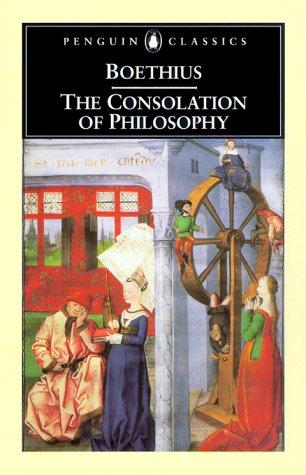
The Consolation of Philosophy was a cornerstone text of medieval European education, read and copied across centuries in monasteries and universities. It remains standard reading in philosophy, classics, and medieval studies courses worldwide, with Wikipedia articles in over 50 languages attesting to its global reach. Few works written before the print era hold such sustained pedagogical standing.
The single most influential text on poetics between Aristotle and the Romantics. Foundation of neoclassical literary theory.
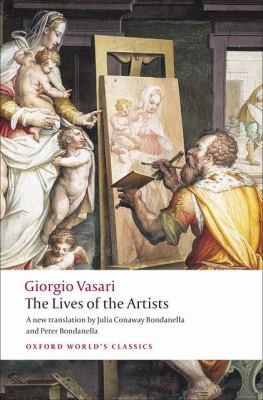
Required reading in virtually every art history curriculum worldwide, from introductory surveys to graduate seminars. Vasari's Lives appears on syllabi for Renaissance studies, Western civilization, and art historiography courses across Europe and North America. It is the foundational text of the discipline — no course on Italian Renaissance art omits it.
De Vulgari Eloquentia is required reading in medieval studies, Romance philology, and Italian literary history programs worldwide. As the founding theoretical document of the Italian literary tradition and the first systematic analysis of Romance vernaculars, it is treated as an essential primary source in any serious engagement with medieval literary theory. Its canonical status is absolute within its specialized domains, though it is less broadly assigned than the Commedia, which sits on nearly every world literature syllabus.
Taught widely in Holocaust studies, memory studies, ethics, and comparative literature courses at universities across Europe, North America, and Israel. Levi's concept of 'the gray zone' has become standard vocabulary in moral philosophy curricula. While the database returned no syllabus count, the book's standing as essential reading in its field is well established across decades of academic discourse.
Named the best science book ever written by the Royal Institution; a recognized literary masterwork.
No. 11 on this list. New Science · Giambattista Vico · 1725
New Science is a cornerstone text in the history of philosophy, assigned on graduate syllabi in philosophy, intellectual history, classics, and literary theory worldwide. Isaiah Berlin devoted a major critical study to Vico; Benedetto Croce called him the true founder of the philosophy of history. No database syllabus data is available, but its presence in Western philosophy curricula is extensive and sustained — comparable to Montaigne's Essays in specialized canonical standing.
Difficult22 hours
Start this bookNo. 12 on this list. Letters from a Stoic · Seneca · 65
Letters from a Stoic is among the most-taught classical texts in philosophy and humanities curricula worldwide. The Penguin Classics edition appears on syllabi for ancient philosophy, ethics, Latin literature, and Great Books courses at universities across North America and Europe. While the database returned no syllabus count, Seneca's letters are standard reading in any serious engagement with Stoicism and Roman prose.
Easy12 hours
Start this bookNo. 13 on this list. On Crimes and Punishments · Cesare Beccaria · 1764
The founding text of modern criminology and penal reform, assigned in law, criminology, political-theory and Enlightenment courses everywhere, and permanently in print from Cambridge and Hackett.
Moderate2.2 hours
Start this bookNo. 14 on this list. On the Sublime · Longinus · 100
On the Sublime is standard reading in classical rhetoric, literary theory, and Western aesthetic philosophy courses at universities worldwide. While no syllabus data is recorded in the database, its presence in every major anthology of classical criticism and in curricula from Renaissance schools to modern departments of English and Classics confirms its canonical status. It ranks among the handful of Greek critical texts — alongside Aristotle's Poetics and Horace's Ars Poetica — considered foundational to Western literary education.
Moderate1.9 hours
Start this bookNo. 15 on this list. The Book of the Courtier · Baldassare Castiglione · 1528
A core text of Renaissance studies and of the history of manners, taught alongside Machiavelli's Prince as its courtly counterpart, and continuously in print from Penguin Classics and Norton.
Challenging11 hours
Start this bookNo. 16 on this list. The Travels of Marco Polo · Marco Polo · 1300
The standard European source on medieval Asia, taught across world-history, travel-writing and medieval-studies courses, and permanently in print in Penguin Classics and Everyman's.
Moderate7.4 hours
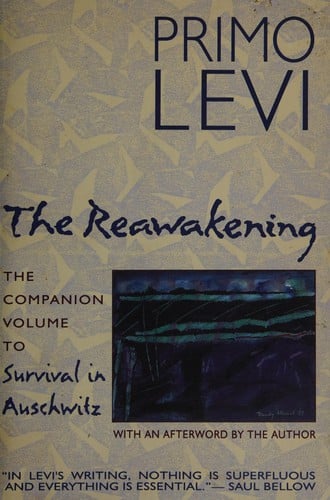
Start this bookNo. 17 on this list. The Truce · Primo Levi · 1963
"The Truce" is taught widely in Holocaust literature, Italian literature, and 20th-century European history courses at universities across Europe and North America. It is less universally assigned than "If This Is a Man" but is firmly in the canon of serious literary and testimonial writing. No syllabus data was returned by the database, but Levi's standing in academic curricula is well established independently.
Easy8.6 hours
Start this bookNo. 18 on this list. The Autobiography of Benvenuto Cellini · Benvenuto Cellini
The standard primary source for Renaissance workshop practice and patronage, assigned in art-history, Renaissance-studies and life-writing courses, and continuously in print from Penguin Classics and Oxford World's Classics.
Moderate10 hours
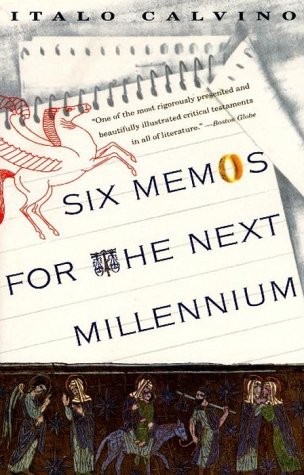
Start this bookNo. 19 on this list. Six Memos for the Next Millennium · Italo Calvino · 1988
Written for the Charles Eliot Norton Professorship of Poetry at Harvard — a chair also held by Stravinsky and Borges — the book is a fixture of creative-writing and literary-craft syllabi rather than a broad undergraduate survey text. No syllabus data is on file for this title specifically, which likely reflects the tracked dataset's fiction bias rather than the book's actual classroom use.
Moderate2.5 hours
Start this bookNo. 20 on this list. Christ Stopped at Eboli · Carlo Levi · 1945
The founding text of Italy's postwar debate on the South, standard in Italian-studies and anthropology courses, and kept in print by Penguin Classics and FSG.
Moderate6.3 hours
Start this book
No. 21 on this list. History of My Life · Giacomo Casanova
It is the central text of European memoir literature and is read in French, Italian and history courses, though less often than the novels of the period. Its place is secure but not universal.
Easy
Start this bookNo. 22 on this list. Convivio · Dante Alighieri · 1307
Important for Dante scholars and historians of Italian philosophy, but rarely read outside academic contexts.
Challenging5.2 hours
Start this bookNo. 23 on this list. De Monarchia · Dante Alighieri · 1313
Monarchia is read in courses on medieval political thought and by students of Dante, but far less than the Divine Comedy. It is a standard text for the history of church and state rather than for general readers.
Challenging2.5 hours
Read nowNo. 24 on this list. Florentine Histories · Niccolò Machiavelli · 1532
An important work of Renaissance historiography, studied by historians and political theorists but less widely read than The Prince or the Discourses.
Moderate7.7 hours
Start this bookNo. 25 on this list. Gomorrah · Roberto Saviano · 2006
Assigned in criminology, Italian-studies and literary-journalism courses across Europe and the United States, and a standard reference in the literature on the Camorra.
Challenging8.2 hours
Start this bookNo. 26 on this list. The Child · Maria Montessori · 1936
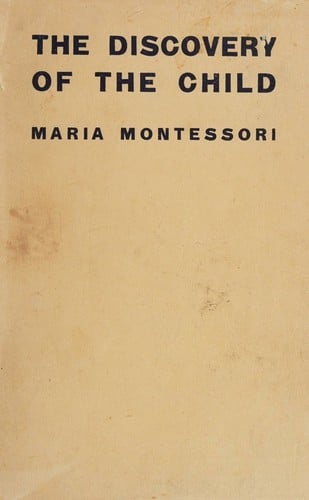
Montessori draws on decades of observing children in her schools across Europe and India to argue that the child possesses an innate developmental intelligence that adults systematically obstruct. She describes what she calls 'sensitive periods'—windows during which a child is intensely drawn to particular activities (ordering objects, learning language, refining movement)—and shows how conventional child-rearing interrupts these periods with arbitrary schedules, punishments, and adult-imposed tasks. The child who lines up shoes obsessively is not being disobedient; she is satisfying a deep developmental need for order. The toddler who insists on pouring his own milk is not being defiant; he is building the motor coordination and independence his nervous system demands. Montessori's observations are precise and her prose carries the authority of a physician who has watched thousands of children develop under conditions of freedom. She argues that the adult's role is not to teach but to prepare an environment in which the child's natural development can unfold without obstruction—a deceptively simple idea that overturns centuries of assumptions about authority, obedience, and what children are for.
Very Easy5.3 hours
Start this bookNo. 27 on this list. Frantumaglia: A Writer's Journey · Elena Ferrante · 2003
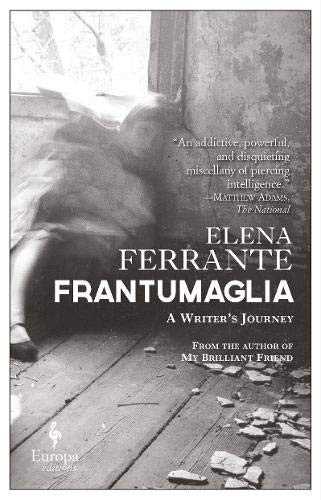
Ranked by literary regard among eligible works in the current catalogue. This position reflects the available catalogue evidence.
Moderate7.5 hours
Start this bookNo. 28 on this list. The Order of Time · Carlo Rovelli · 2017
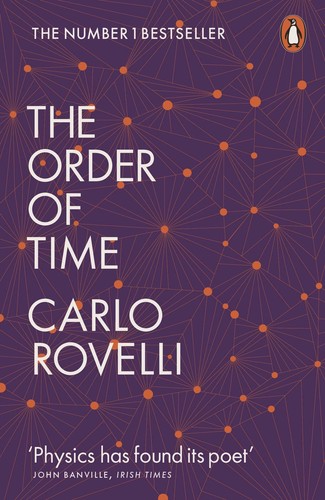
Rovelli dismantles the most fundamental assumption of human experience: that time flows uniformly from past to future. In the first part, he strips away everything we think we know. There is no single 'now' shared across the universe—simultaneity is relative. Time runs faster at higher altitudes and slower near massive objects; a person living on a mountaintop ages faster than one living at sea level. At the smallest scales, the distinction between past and future dissolves entirely: the fundamental equations of physics work the same in both directions. In the second part, Rovelli asks what remains when time is dismantled, and the answer is surprisingly rich: thermal processes, memory, the increase of entropy, the peculiar low-entropy state of the early universe that makes the arrow of time possible. In the third part, he rebuilds time as something that emerges from our perspective as macroscopic beings who cannot see the full microstate of the world. Rovelli writes with the lyricism of a novelist, quoting Proust, Horace, and the Mahabharata, and the result is a book that transforms how the reader experiences the most intimate feature of existence.
Easy2.5 hours
Start this bookNo. 29 on this list. Reality Is Not What It Seems · Carlo Rovelli · 2014
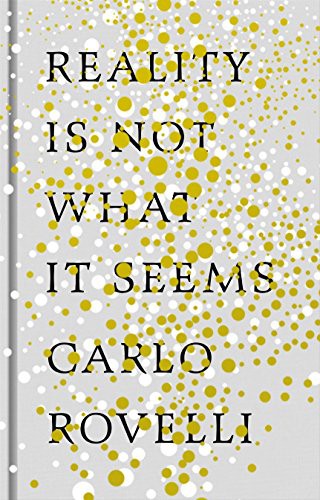
International bestseller. An important contribution to science communication.
Easy3.5 hours
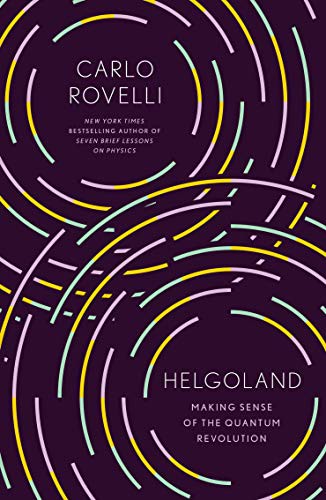
Start this bookNo. 30 on this list. Helgoland · Carlo Rovelli · 2020
International bestseller. Well-received by both physicists and general readers.
Easy3.1 hours
Start this book
About this list
These 30 books are the highest-scoring eligible nonfiction books from Italy currently in the catalogue. About 324 hours of reading in all, for the 29 with measured lengths. Difficulty runs from 38 to 58 out of 100 for the middle half of the list; the summit is Summa Theologica at 86.
This list is ranked by literary regard, with a consistent order for equal scores. Membership follows authors and co-authors, not translators or editors. Catalogue coverage and the historical canon both limit what this list can represent, and genre labels are the catalogue’s own, gathered into broader kinds.
When we matched the Canons dataset to our catalogue in October 2026, our canonical-status scores rose with the number of school curricula, publisher series and lists in it that cite a work: the median score was 72 for books one such source cites, 84 at two, 88 at three, 92 at four and 93 at five or more. Prizes are left out of that count. Outside the state curricula, the dataset’s sources choose mostly from what has been translated into English or French, so it is a weaker check on other literatures. Source: Canons (Andrew Piper), CC BY 4.0
Questions people actually ask
- What are the best nonfiction books from Italy?
- By literary regard, which weighs canonical status, critical standing and influence: Summa Theologica by Thomas Aquinas, The Prince by Niccolò Machiavelli, Discourses on Livy by Niccolò Machiavelli, Selections from the Prison Notebooks by Antonio Gramsci and The Consolation of Philosophy by Boethius. ReadingRate ranks 30 such books, each with a difficulty score and a reading-time estimate.
- Which nonfiction books from Italy should I read first?
- Start from difficulty, not from rank. The most approachable books on this list that still carry top literary regard are The Prince by Niccolò Machiavelli (about 2.9 hours), Discourses on Livy by Niccolò Machiavelli and The Travels of Marco Polo by Marco Polo.
- What are the shortest of the best nonfiction books from Italy?
- Among the top 25, the shortest are Ars Poetica by Horace (about 32 min), De Vulgari Eloquentia by Dante Alighieri (about 1.3 hours) and On the Sublime by Longinus (about 1.9 hours), at an average pace of 250 words a minute adjusted for each book's difficulty.
- Which of the best nonfiction books from Italy are the established classics?
- By canonical status, how firmly a book sits in curricula, anthologies and the canon: Summa Theologica by Thomas Aquinas, The Prince by Niccolò Machiavelli, Selections from the Prison Notebooks by Antonio Gramsci, Discourses on Livy by Niccolò Machiavelli and The Consolation of Philosophy by Boethius.
- Can I read any of these nonfiction books from Italy for free?
- 4 of the 30 open in ReadingRate's reader with a free account, from public-domain editions: The Prince, Discourses on Livy, The Consolation of Philosophy and De Monarchia.
- How long would it take to read the top ten?
- About 194 hours, at an average pace of 250 words a minute adjusted for each book's difficulty: 98 days at two hours a day. Set your own pace on the page and the list's reading times change to it.
- How hard are nonfiction books from Italy to read?
- Most of this list sits between 38 and 58 on ReadingRate's 100-point difficulty scale, where 40 to 55 is moderate. The summit is Summa Theologica at 86. Every entry carries its own score, so a reader can pick a great book at a difficulty they will finish.
- How is this list ranked?
- On literary-regard data: how canonically established a work is, its critical standing, and its influence on later writing. It is not a readers’ poll, which is why recent bestsellers rarely appear. Membership follows authors and co-authors, not translators or editors. Lists by country, author, period, theme or difficulty keep to literature (fiction, poetry, drama and philosophy), their novels, poems and plays first and their philosophy after them; a list of a kind of book, such as memoir or criticism, keeps every book of that kind. Every list holds at most three works by one author.