Hours at an average pace
Showing 34 books
About 267 hours for 34 of 34 books with measured lengths. Estimates use 250 words a minute, adjusted for each book's difficulty. At 2 hours a day, about 134 days for those books.
The Prince is required reading in political science, philosophy, history, and humanities curricula worldwide and is among the most widely assigned non-fiction texts in higher education. It appears on every syllabus for political philosophy and political theory, from introductory undergraduate courses to graduate seminars. Few texts of any era command this breadth of curricular presence.
A foundation text of Western thought, assigned across classics, history, political science and international relations, and a fixture of Great Books programs. The U.S. Naval War College has built its strategy teaching around it since the 1970s.
Published in six volumes between 1776 and 1789, it has stayed in print ever since and is a set text in courses on historiography, the Enlightenment and English prose. It appears on every major list of essential works of history in English.
Niccolò Machiavelli spent the last decade of his life under house arrest, banned from Florence's political world, and wrote the Discourses on Livy as a systematic attempt to teach what he could no longer practice. Working through Titus Livy's history of Rome book by book, Machiavelli extracts from each episode a principle of republican governance — how to found a city, sustain a republic, manage armies, treat conquered peoples, handle conspiracies, and survive the inevitable corruption of institutions. The argument runs to 142 chapters across three books, each one a small essay: he states a thesis, marshals Roman examples, and delivers a verdict. Machiavelli's Rome is not an idealized past but a working laboratory. When he recommends that a new republic must sometimes execute its founding families, or that a prince should appear virtuous rather than be virtuous, he is not being provocative — he is being precise. The Discourses is the longer and more theoretically ambitious of his two major works, and the one where his commitment to republican liberty is explicit rather than implied. Readers accustomed to political philosophy as abstract theory will find this text unusual: it thinks in cases, in generals, in the specific behavior of specific tribunes during specific sieges. The Victorian translation adds a layer of archaic syntax to the Renaissance argument. What emerges is a political science conducted before the term existed — unsentimental, empirical, and still asking questions no subsequent political thinker has fully answered.
The book that gave 'Freudian slip' to the language; among the most widely read works of psychological theory.
The Constitution is the founding document of the United States and is taught at every level of American education, in history, civics, law and political theory. It is among the most widely taught texts in the world, though this particular free edition is just one copy of it.
The Gita—a 700-verse dialogue between the warrior prince Arjuna and his charioteer Krishna, who is an avatar of God—is embedded within the Mahabharata but has been read as a standalone scripture for centuries. On the eve of a catastrophic battle, Arjuna sees his kinsmen arrayed on both sides and refuses to fight. Krishna's response unfolds the central teachings of Hindu philosophy: karma yoga (the path of selfless action), bhakti yoga (the path of devotion), and jnana yoga (the path of knowledge). Krishna argues that Arjuna must act—not because the outcome matters but because action without attachment to results is the nature of dharma. The Gita's synthesis of duty and detachment, action and renunciation, has made it the most widely read scripture in Hinduism and one of the most influential philosophical texts in world literature. Gandhi called it his 'eternal mother'; Oppenheimer quoted it upon witnessing the first nuclear explosion. Its teachings on duty, selflessness, and the nature of consciousness continue to resonate across cultures and centuries.
One of the most anthologized and assigned essays in the English language, a fixture of first-year composition, rhetoric, and journalism curricula worldwide. Its six rules and the phrase 'political language' recur in countless style guides and writing handbooks. No syllabus or Wikipedia-language data was available in our database, but its teaching presence rivals the most-taught novels.
Hiroshima is required reading in American journalism schools and widely taught in history, ethics, and literature courses across the country. NYU's journalism faculty voted it the finest piece of American journalism of the 20th century. The book has remained continuously in print since 1946 and appears on virtually every list of essential American nonfiction.
In 1776, Jean-Jacques Rousseau was sixty-four years old, exiled from France, and convinced that his former friends — Diderot, Grimm, Voltaire — had orchestrated a universal conspiracy against him. He began walking the paths around Paris with a notebook, recording his thoughts. The result is ten 'walks': part diary, part philosophical essay, part self-justification by a man who had already written the Confessions and still felt misunderstood. The Fifth Walk, written on the Île Saint-Pierre in Lake Biel, is the book's still center — Rousseau lying in a drifting boat, mind blank, aware of nothing but existing. He calls this state the only happiness fully available to him. The Seventh Walk catalogs the plants he collected with botanical precision, finding in botany a discipline free of ambition. The Fourth Walk reckons with his lifelong relationship to lying, reaching the unexpected conclusion that truth is owed only to those with a claim on us. Rousseau writes as a man who has stopped performing for an audience and is thinking on paper — the prose is direct, ruminative, sometimes self-deluding in ways he cannot see. The book breaks off mid-sentence in the Tenth Walk, which is what happened: he died. It is the founding text of the lyric essay and the template for every writer who has walked to think.

No. 11 on this list. Shooting an Elephant and Other Essays · George Orwell · 1950
Orwell's essays are standard fixtures in English literature and university composition courses worldwide. 'Shooting an Elephant' and 'Politics and the English Language' rank among the most-assigned essays in undergraduate curricula, appearing across literature, political science, and writing programs. Individual essays have been continuously reprinted since their first collection in the late 1940s.
Moderate7 hours
Start this bookNo. 12 on this list. A Theory of Justice · John Rawls · 1971
The most important work of political philosophy in the 20th century.
Easy11 hours
Start this bookNo. 13 on this list. Dawn Blossoms Plucked at Dusk · Lu Xun · 1928
Required reading in Chinese secondary schools and universities across the mainland, and a fixture in world literature courses focused on East Asian or 20th-century modernism. Less taught in Western institutions than Lu Xun's short fiction, but holds authoritative canonical status in Chinese-language education and is included in most surveys of 20th-century world literature. No syllabus or Wikipedia data was returned by automated signals, likely reflecting a scraping gap for Chinese-language titles rather than an absence of presence.
Moderate1.9 hours
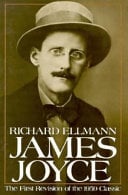
Start this bookNo. 14 on this list. James Joyce · Richard Ellmann · 1959
Our database captured no syllabus or Wikipedia signals for this title, but the book's real-world position is unambiguous: it is the standard reference for Joyce's life, cited in virtually every scholarly work on Joyce since 1959, assigned in graduate modernism courses, and named to the Modern Library's 100 Best Nonfiction list. 'Ellmann' functions as shorthand — critics cite it by the biographer's surname alone.
Moderate21 hours
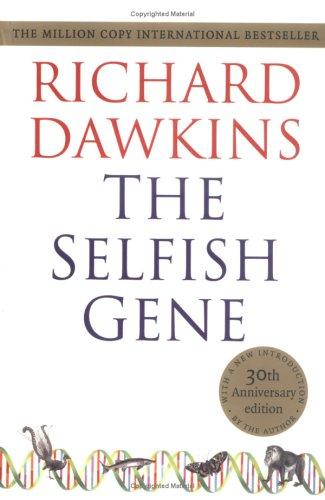
Start this bookNo. 15 on this list. The Selfish Gene · Richard Dawkins · 1976
Four billion years ago, a molecule capable of copying itself appeared in the primordial soup. Everything since — every bacterium, beetle, and human being — is a machine built by those replicators to carry them forward. Richard Dawkins published this argument in 1976, and it reorganized how biologists, philosophers, and general readers think about evolution. The unit of selection, Dawkins argues, is not the species, not the group, not even the individual organism. It is the gene. Organisms are temporary coalitions built by genes competing for spots in the next generation. Altruism, cooperation, parent-offspring conflict, and sex ratios all follow from this single reorientation of perspective. Dawkins builds his case through thirteen chapters of escalating clarity, anchoring every theoretical claim in concrete animal behavior: penguins refusing to be the first in the water, praying mantises eating their mates mid-copulation, worker bees dying to protect the hive. The book's penultimate chapter introduces the meme — a unit of cultural replication analogous to the gene — as a second kind of replicator that has emerged in human minds. Written for the general reader who has no specialized knowledge but is unwilling to be patronized, The Selfish Gene remains the most precise and readable account of Darwinian logic ever written for a non-specialist audience.
Easy6.4 hours
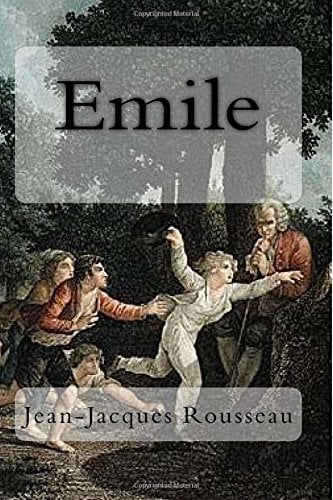
Start this bookNo. 16 on this list. Emile, or On Education · Jean-Jacques Rousseau · 1762
One of the most influential books ever written on education. A foundational text of modern pedagogy, Romantic philosophy, and political thought.
Easy12 hours
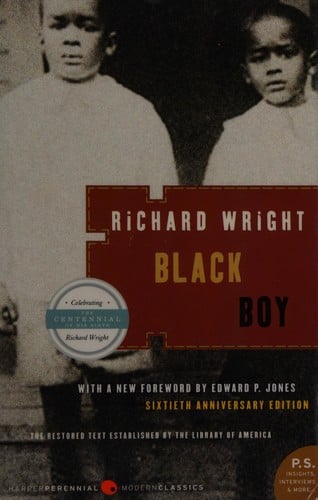
Start this bookNo. 17 on this list. Black Boy · Richard Wright · 1945
Black Boy is a fixture in American secondary and university curricula, routinely assigned in courses on African American literature, autobiography, and twentieth-century American history. It appears on widely used reading lists alongside Native Son and Frederick Douglass's Narrative. The book has maintained continuous institutional presence since its 1945 publication and Book-of-the-Month Club selection.
Easy5.3 hours
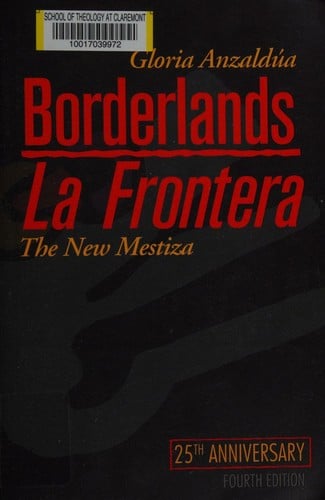
Start this bookNo. 18 on this list. Borderlands/La Frontera: The New Mestiza · Gloria Anzaldua · 1987
Foundational text of Chicana feminism, border studies, and queer theory. Universally taught in relevant fields.
Easy2.7 hours
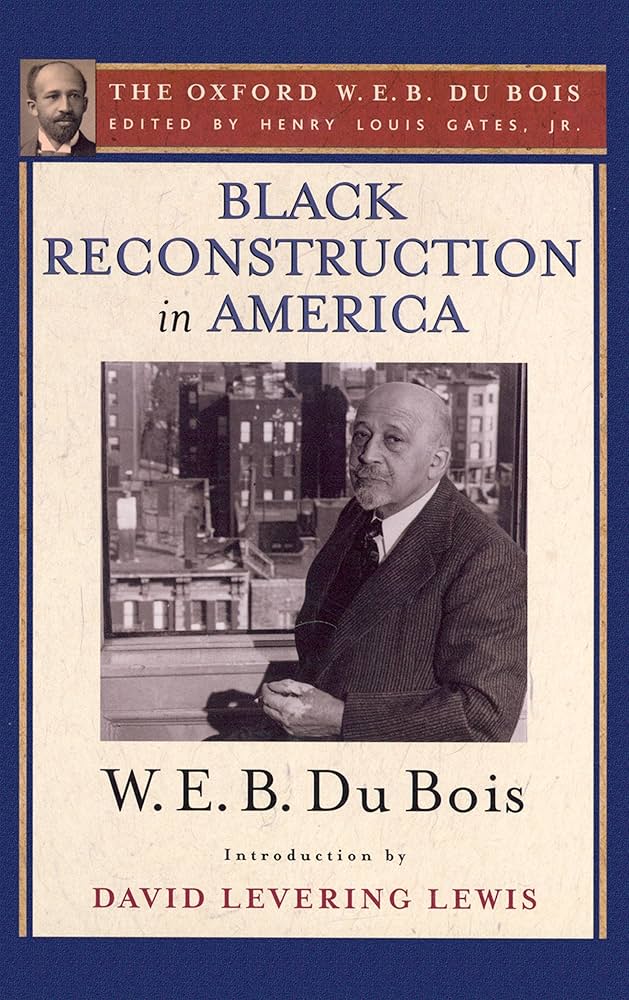
Start this bookNo. 19 on this list. Black Reconstruction in America · W. E. B. Du Bois · 1935
Now recognized as one of the most important works of American historical scholarship, foundational to modern Reconstruction studies.
Easy15 hours
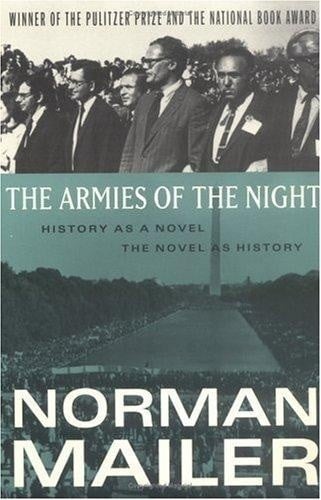
Start this bookNo. 20 on this list. The Armies of the Night · Norman Mailer · 1968
Won both the Pulitzer Prize for General Nonfiction and the National Book Award in 1969 — an extraordinarily rare double — cementing its place in the American literary canon. Taught regularly in American literature, journalism, and creative nonfiction courses. Appears on most authoritative 'great American nonfiction' lists alongside In Cold Blood and Let Us Now Praise Famous Men.
Moderate7.1 hours
Start this book
No. 21 on this list. Ain't I a Woman · bell hooks · 1981
In 1981, a 29-year-old Gloria Jean Watkins — writing under the name bell hooks — published an argument that neither the civil rights movement nor the women's movement had bothered to make: that black women in America occupied a position erased by both. hooks starts in the hold of slave ships, where African women were stripped, beaten, and raped alongside men, then sold into a system that denied them the 'femininity' white culture used to define womanhood itself. She traces this erasure forward through Reconstruction, the suffrage movement, and the rise of second-wave feminism, showing how white feminists repeatedly centered their own experience while black male activists asked black women to subordinate gender to race. The title borrows from Sojourner Truth's 1851 speech, and hooks writes with that same refusal to let anyone off the hook. Her chapters on the myth of the black matriarch and the devaluation of black womanhood remain some of the clearest articulations of how racism and sexism operate not as parallel systems but as a single interlocking machinery. The prose is direct, the anger controlled, the scholarship grounded in lived history. Readers looking for intersectional feminism before the term existed will find its intellectual foundation here.
Easy3.7 hours
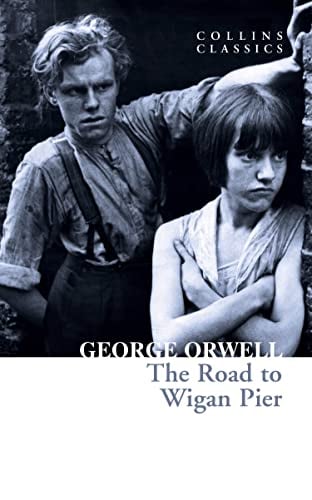
Start this bookNo. 22 on this list. The Road to Wigan Pier · George Orwell · 1937
The Road to Wigan Pier appears regularly on university syllabi in British history, political science, sociology, and documentary writing courses. It is widely regarded as a foundational text of engaged social journalism and is included in numerous lists of essential non-fiction. Orwell's reputation ensures it has never gone out of print.
Moderate4.6 hours
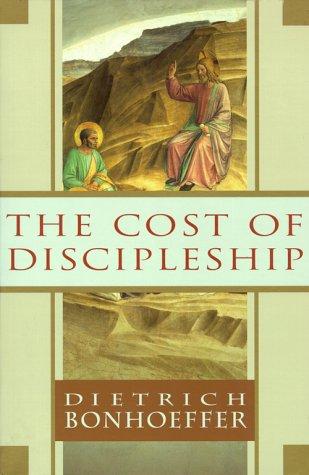
Start this bookNo. 23 on this list. The Cost of Discipleship · Dietrich Bonhoeffer · 1937
Dietrich Bonhoeffer opens with a distinction that splits the book in two. 'Cheap grace' is forgiveness sold on the cheap — grace without the cross, Christianity without Christ. 'Costly grace' is the real thing: the call that compelled Levi to leave his tax booth, that sent the disciples from their nets into unknown territory. Bonhoeffer wrote this in 1937, as a Lutheran pastor running an underground seminary while the German church bent its knee to the Nazi state. The stakes were not theoretical. What follows is a sustained reading of the Sermon on the Mount as a set of commands meant to be obeyed, not admired from a distance. The Beatitudes are not comforts for the passive; they describe what happens to people who actually follow Christ into the world. Bonhoeffer then builds outward from individual obedience to the visible church — a community that bears the form of the crucified Christ in its own body. Baptism is death. The Body of Christ is not a metaphor. The reader who expects gentle devotional prose will find instead a theologian making demands: that faith without obedience is not faith, that the church without costly commitment is not the church. The final chapters on the image of God carry the argument to its conclusion — to follow Christ means to be remade entirely, conformed to the image of the one who suffered.
Easy3.8 hours
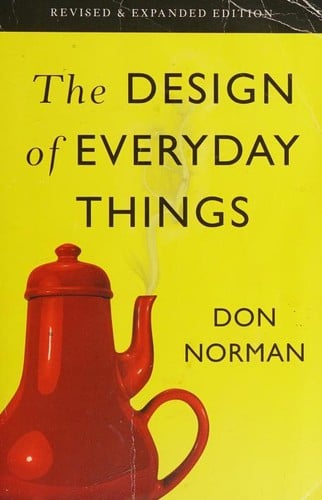
Start this bookNo. 24 on this list. The Design of Everyday Things · Don Norman · 1988
A foundational text in design education, required reading in virtually every industrial design, HCI, and UX program worldwide. The book has remained continuously in print since 1988 and appears on thousands of university syllabi across engineering, psychology, and design departments.
Easy6 hours
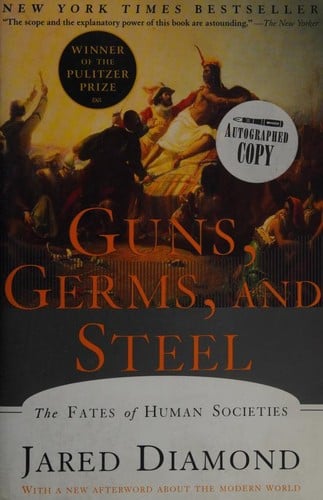
Start this bookNo. 25 on this list. Guns, Germs, and Steel · Jared Diamond · 1997
The verified data signals show no syllabus or Wikipedia entries on file for this title, but Guns, Germs, and Steel has been a fixture of introductory world-history, geography, and anthropology courses since the late 1990s and was adapted into a three-part PBS/National Geographic documentary in 2005. It sits below a literary classic like The Great Gatsby in curricular ubiquity but comfortably ahead of a work with only cult-course status.
Moderate9.2 hours
Start this bookNo. 26 on this list. Narrative of the Life of Frederick Douglass · Frederick Douglass · 1845
Frederick Douglass was born into slavery on a Maryland plantation and never knew his exact birthday. His mother, a field hand, walked twelve miles at night to lie beside him before returning to work at dawn. She died when he was seven; he felt it as a stranger's death. From this opening act of separation, Douglass traces his path from Eastern Shore plantations to Baltimore streets to the abolitionist stage -- and at each turn, the question is the same: what does slavery do to human beings, both Black and white? The book's most startling insight arrives in a Baltimore parlor, where Sophia Auld begins teaching the boy his letters. Her husband forbids it, and Douglass understands instantly: if reading makes a slave unfit for bondage, then reading is the way out. He trades bread for lessons with white children on the street. The pivotal scene comes years later, when Douglass fights the slave-breaker Covey to a standstill: 'You have seen how a man was made a slave; you shall see how a slave was made a man.' Written in 1845, while Douglass was still legally property, this is testimony with the names left in -- masters, overseers, farms, the murdered and the murderers. Every page is an act of defiance.
Very Easy2 hours
Read nowNo. 27 on this list. The Journalist and the Murderer · Janet Malcolm · 1990
The Journalist and the Murderer is a staple of journalism school curricula across North America and is widely assigned in media ethics, creative nonfiction, and literary journalism courses. Its opening sentence is among the most frequently quoted lines in American nonfiction. While it does not appear on general literary canons as broadly as major novels, within its domain — journalism studies and media ethics — it is as close to required reading as any single text.
Easy2.5 hours
Start this bookNo. 28 on this list. Embracing Defeat · John W. Dower · 1999
Embracing Defeat is standard reading in university courses on modern Japanese history, U.S. foreign policy, and the Pacific War across North America, Europe, and East Asia. It appears on syllabi at virtually every institution that teaches post-1945 Japanese history and has become the default English-language account of the American occupation. Its Wikipedia article exists in multiple languages, reflecting its reach beyond the Anglophone academy.
Easy11 hours
Start this bookNo. 29 on this list. Discourse on Inequality · Jean-Jacques Rousseau · 1755
One of the foundational texts of modern political philosophy. Required reading in political theory, anthropology, and intellectual history courses worldwide.
Moderate2.5 hours
Start this bookNo. 30 on this list. The Art of War · Sun Tzu · c. 500 BCE
One of the most widely read texts in human history, taught in military academies (West Point, Sandhurst), MBA programs, political science courses, and East Asian studies worldwide. Wikipedia articles exist in over 100 languages. Its maxims have entered common parlance across cultures, and it appears on virtually every 'great books' or 'essential nonfiction' list.
Moderate2.1 hours
Read now
About this list
These 34 books are the highest-scoring eligible nonfiction books currently in the catalogue, kept to the ones that measure as easy to read (difficulty score under 45, prose difficulty under 65, literary regard 80 or more). By literary regard, it opens with The Prince, The Peloponnesian War and The Decline and Fall of the Roman Empire. About 267 hours of reading in all. Difficulty runs from 35 to 42 out of 100 for the middle half of the list; the summit is The Armies of the Night at 44.
This list is ranked by literary regard, with a consistent order for equal scores. Membership follows authors and co-authors, not translators or editors. Catalogue coverage and the historical canon both limit what this list can represent, and genre labels are the catalogue’s own, gathered into broader kinds.
When we matched the Canons dataset to our catalogue in October 2026, our canonical-status scores rose with the number of school curricula, publisher series and lists in it that cite a work: the median score was 72 for books one such source cites, 84 at two, 88 at three, 92 at four and 93 at five or more. Prizes are left out of that count. Outside the state curricula, the dataset’s sources choose mostly from what has been translated into English or French, so it is a weaker check on other literatures. Source: Canons (Andrew Piper), CC BY 4.0
Questions people actually ask
- What are the best nonfiction books that are easy to read?
- By literary regard, which weighs canonical status, critical standing and influence, The Prince, The Peloponnesian War, The Decline and Fall of the Roman Empire, Discourses on Livy and The Psychopathology of Everyday Life lead. ReadingRate ranks 34 such books, each with a difficulty score and a reading-time estimate.
- Where should I start with nonfiction books that are easy to read?
- Start from difficulty, not from rank. The most approachable books on this list that still carry top literary regard are Narrative of the Life of Frederick Douglass by Frederick Douglass (about 2 hours), The Journalist and the Murderer by Janet Malcolm and Ain't I a Woman by bell hooks.
- How easy are the easy-to-read nonfiction books?
- Most of this list sits between 35 and 42 on ReadingRate's 100-point difficulty scale, where 40 to 55 is moderate. The summit is The Armies of the Night at 44. Every entry carries its own score, so a reader can pick a great book at a difficulty they will finish.
- How is this list ranked?
- On ranked by literary regard, with a consistent order for equal scores.