Hours at an average pace
Showing 35 books
About 217 hours for 32 of 35 books with measured lengths. Estimates use 250 words a minute, adjusted for each book's difficulty. At 2 hours a day, about 109 days for those books.
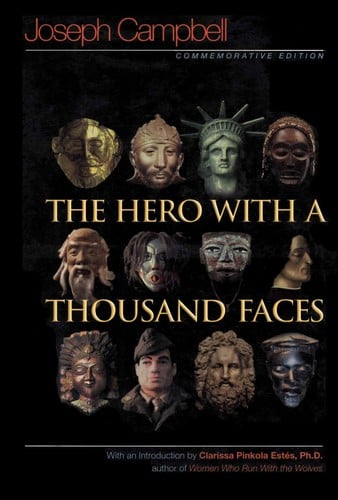
Joseph Campbell opens with a Freudian reading of an Arapaho folktale and never looks back. A woman falls through a hole in the sky while digging up a buffalo plant. An Aztec prince descends into the underworld to retrieve the bones of the dead. A Polynesian hero is swallowed by a whale. Campbell lines up hundreds of these stories from six continents and argues they are all the same story: a hero ventures from the ordinary world into a region of supernatural wonder, wins a decisive victory, and returns transformed. He calls this the monomyth — departure, initiation, return — and maps each stage with taxonomic precision: the Call to Adventure, the Belly of the Whale, the Meeting with the Goddess, the Apotheosis. The comparative method is relentless. A Navaho vision quest illuminates the Buddha's meditation under the Bo Tree, which rhymes with Christ's temptation in the desert. Campbell reads all of it through Jung and Freud, treating gods as projections of the psyche and mythic journeys as metaphors for psychological maturation. The second half widens from the individual hero to the cosmos itself — creation, virgin birth, the dissolution of worlds. The prose is mid-century academic, formal but clear, carried by the momentum of one extraordinary story after another. Readers who want to know why myths from unrelated cultures keep telling the same story will find Campbell's answer here, built from the evidence itself.
No. 2 on this list. THE HOLY BIBLE: SIGNED Pennyroyal Caxton Bible BARRY MOSER Illustrator
Barry Moser · 1999
Challenging65 hours
The King James Bible is the most widely read and taught text in English. This 1999 fine-press edition is a collectors' item, but the text it carries holds the highest canonical position.
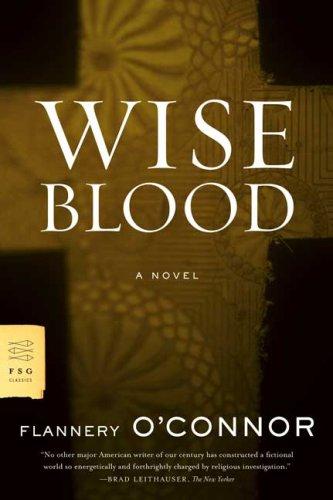
The novel is a standard in Southern Gothic and American postwar fiction courses, and O'Connor is widely taught. It sits below the great staples like Gatsby and above merely emerging contemporary novels.
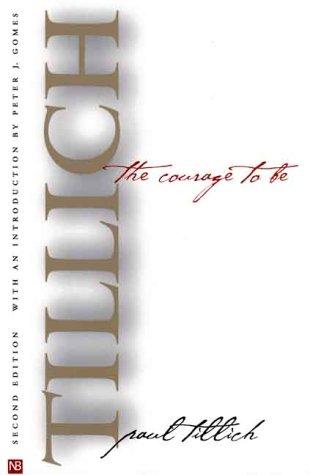
The Courage to Be is one of the most widely assigned texts in university theology, philosophy of religion, and religious studies courses worldwide, and has been in continuous print since 1952. It is considered a foundational text in 20th-century existentialist theology and appears on syllabi across North America, Europe, and beyond. Its canonical status is secure within academic theology and philosophy of religion, though it does not occupy the same cross-disciplinary position as Butler's Gender Trouble or a major literary work.
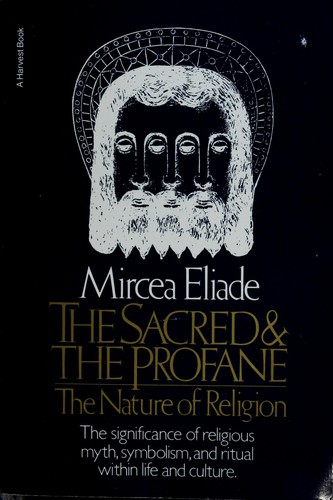
Mircea Eliade begins with a stone. Not every stone is sacred — only one that strikes homo religiosus as a revelation of something that transcends it. The stone is worshipped because it is sacred, not because it is a stone. From this deceptively simple distinction, The Sacred and the Profane constructs a full account of how religious man inhabits a different universe from his secular neighbor — a universe organized around sacred centers, inhabited by cyclical time that returns to origins, suffused with a nature that is never merely natural. Eliade moves through four dimensions of existence — space, time, nature, and human life — showing in each case how the religious experience transforms it structurally. A house is not just shelter but a cosmic axis, its hearth a link between earth, sky, and underworld. The New Year is not a calendar convention but an annihilation of used-up time and a return to the moment of creation. Water does not merely wash — it dissolves and regenerates. The examples accumulate from Babylonian ritual, Vedic cosmology, Australian Aboriginal Dreamtime, Polynesian creation myths, Greek hierogamy, and dozens of other traditions, all organized around the same underlying structures. The book's argument cuts quietly against secular modernity. Desacralized man, Eliade suggests, has not escaped religion — he has merely forgotten it, and pays for the forgetting with an existence unmoored from any cosmic center. Reading Eliade requires patience with theoretical vocabulary (hierophany, axis mundi, imago mundi) but rewards it with a framework that reorganizes how religious experience across all cultures coheres.
No. 6 on this list. The New England Mind: The Seventeenth Century
Perry Miller · 1939
Challenging22 hours
It is a founding text of American Puritan studies and long a staple of American intellectual history and colonial literature courses. It is a scholarly classic rather than a general-curriculum work.
Errand into the Wilderness is a founding text of American Studies, assigned throughout graduate and undergraduate programs in American history, religion, and literature. It is not a syllabus fixture outside that field the way a canonical novel would be, but within it the book sits closer to required reading than supplementary.
Annie Dillard goes to Mass and keeps imagining herself on a polar ice floe. This is the logic of the title essay 'An Expedition to the Pole,' which braids the disasters of Franklin, Scott, and Nansen with the small absurdities of Catholic liturgy—the singing group called Wildflowers, a baby named Oswaldo in blue tennis shoes, a priest whose knees crack like fine church music. The pivot is Dillard's actual question: why do churchgoers seem like cheerful tourists on a packaged tour of the Absolute? The Franklin expedition carried sterling silver flatware and a backgammon board into the Arctic and died. What are we carrying? The other essays are pitched at the same edge. 'Life on the Rocks: The Galápagos' opens with a sea lion resting its muzzle on Dillard's arm and ends with the continents riding their crustal plates like boys on dolphins. 'The Deer at Providencia' watches a deer die on a rope while Dillard eats lunch, then asks quietly what exactly surprises the men around her. Dillard writes as a natural historian trained by mystics: every fact about polar deaths or Darwin's finches is also an argument about what it means to be alive and failing to understand it. The reading experience is quiet, demanding, and luminous—a book that asks hard questions and refuses to answer them on your behalf.
William James delivered these twenty lectures at the University of Edinburgh in 1901 and 1902 with a declared method: study religion not through theology or institutional history, but through the private testimony of individuals who have felt it acutely. He wanted the raw material—George Fox walking barefoot through Lichfield in winter, crying 'Wo to the bloody city!'; Saint Teresa's account of her visions; anonymous correspondents describing the sudden loss of a felt connection to something larger than themselves. The organizing argument is a defense of religious experience against what James calls medical materialism—the habit of dismissing mystical states by pointing to their neurological origins, as though epilepsy explained Saint Paul's vision on the Damascus road. James counters that all mental states, including scientific ones, have organic causes; the question of value must be answered on different grounds. His criterion: by their fruits, not their roots. The book maps varieties of religious consciousness—the healthy-minded who see goodness everywhere, the sick souls who cannot; conversion as psychological transformation; the mystical state as a genus with recognizable features across traditions. James treats Buddhist, Christian, Stoic, and New Thought testimonies as data points in the same inquiry. The prose is formal Victorian academic English, long-sentenced and densely qualified, but James keeps pulling back toward concrete cases. This is philosophy that takes human experience seriously enough to quote it at length.
Holy the Firm appears regularly on MFA creative nonfiction syllabi and in courses on the lyric essay, American nature writing, and spiritual literature, though it is far less broadly assigned than Pilgrim at Tinker Creek. It is not a K-12 canonical text. The Open Syllabus database shows no appearances in this database, likely a data gap rather than absence — the book is widely anthologized in essay collections and taught at graduate level. Its status as a touchstone of the lyric essay form is secure in literary circles.
No. 11 on this list. All Desire is a Desire for Being · René Girard · 2023
A selection from a body of work taught across literature, anthropology and theology.
Challenging
Start this bookNo. 12 on this list. The Snow Leopard · Peter Matthiessen · 1978
In 1973, Matthiessen accompanied the field biologist George Schaller on a trek through the Himalayas of Nepal to study the Himalayan blue sheep and, if extraordinarily lucky, to glimpse the snow leopard—one of the rarest and most elusive animals on earth. But the book is less about the leopard than about what Matthiessen brought to the mountains: the recent death of his wife Deborah from cancer, his practice of Zen Buddhism, and his need to find some way to live with loss. The journey takes two months on foot through terrain above 15,000 feet, in conditions of extreme cold and isolation, and Matthiessen records it in prose of crystalline precision—the light on snow, the flight of lammergeiers, the sound of wind through a defile. He weaves Buddhist philosophy throughout, not as doctrine but as a way of attending to what is present rather than grasping at what is gone. Whether the snow leopard appears becomes a koan: the search matters more than the finding, and the willingness to see clearly—even when what you see is absence—is itself a form of illumination.
Very Easy3.4 hours
Start this bookNo. 13 on this list. Be Here Now · Ram Dass · 1971
Rarely taught as literature, but a defining document of its moment and continuously in print since 1971.
Moderate1.9 hours
Start this bookNo. 14 on this list. Jefferson Bible: The Life and Morals of Jesus of Nazareth · Thomas Jefferson
It is a well-known document in American religious and intellectual history and is often cited in discussions of Jefferson's faith. It is read in courses on the Founders and church and state more than in literature courses.
Easy1.5 hours
Start this bookNo. 15 on this list. Mystical Languages of Unsaying · Michael A. Sells · 1994
Standard graduate reading in mysticism and religious studies.
Difficult11 hours
Start this bookNo. 16 on this list. The Secret of the Golden Flower by Thomas Cleary(1905-07-04) · Thomas Cleary · 2004
The text holds a place in Western reception of Chinese spirituality through Wilhelm and Jung. Cleary's edition is a specialist translation in the field, with no syllabus data to show wider teaching.
Moderate
Start this bookNo. 17 on this list. The Wisdom of Insecurity: A Message for an Age of Anxiety · Alan Watts · 1951
Not a set text, but continuously in print for seventy years.
Challenging
Start this bookNo. 18 on this list. Islamic Reform: Politics and Social Change in Late Ottoman Syria · David Dean Commins · 1990
The book is a specialist monograph from Oxford University Press, used in Middle East history courses but not a general canonical text. It is a standard citation on Syrian Salafism.
Moderate3.5 hours
Start this bookNo. 19 on this list. The Benedict Option · Rod Dreher · 2017
The New York Times columnist David Brooks called it 'the most discussed and most important religious book of the decade', and it remains a reference point in debates about Christianity and American public life. It appears in seminary and religion-and-politics courses but is too recent for settled canonical status.
Moderate5 hours
Start this bookNo. 20 on this list. The Formation of Islam 1ed · Jonathan P. Berkey · 2003
Part of Cambridge's Themes in Islamic History series, and the American Historical Review calls it a vital aid for advanced students. It serves as a course text in Islamic history rather than a canonical work.
Moderate5.2 hours
Start this book



No. 21 on this list. The Varieties of Scientific Experience · Carl Sagan · 2006
Sagan's Gifford Lectures on Natural Theology, delivered in 1985 and published posthumously, present his case for a scientific worldview that is simultaneously awestruck and skeptical. He surveys the evidence for and against the existence of God—cosmological arguments, the anthropic principle, near-death experiences, extraterrestrial intelligence—with the rigor of a scientist and the wonder of a poet. His central argument is that the universe revealed by science is more beautiful, more complex, and more worthy of reverence than any traditional religious conception. He does not mock religious belief but insists that the same standards of evidence we apply to other claims should apply to claims about God. The lectures capture Sagan at his most eloquent, bringing the same infectious enthusiasm that made Cosmos a cultural phenomenon to questions that humans have asked since they first looked at the stars.
Very Easy3.6 hours
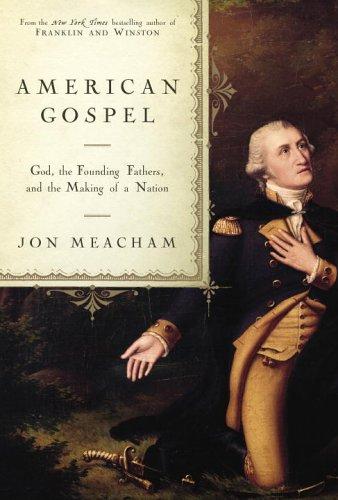
Start this bookNo. 22 on this list. American Gospel: God, the Founding Fathers, and the Making of a Nation · Jon Meacham · 2006
A popular work of presidential and religious history by a well-known author, used in some courses on religion and politics. Not a canonical text.
Easy6.1 hours
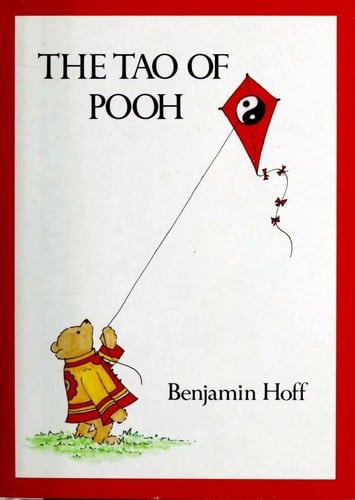
Start this bookNo. 23 on this list. The Tao of Pooh · Benjamin Hoff · 1982
Ranked by literary regard among eligible works in the current catalogue. This position reflects the available catalogue evidence.
Moderate2.7 hours
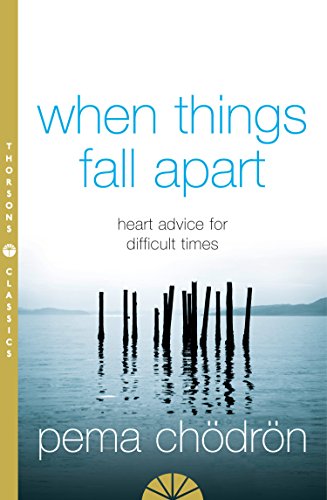
Start this bookNo. 24 on this list. When Things Fall Apart · Pema Chödrön · 1997
Chödrön, an American-born Tibetan Buddhist nun, writes about suffering not as something to be fixed or overcome but as a gateway to awakening. Drawing on Tibetan Buddhist teachings about impermanence, groundlessness, and compassion, she argues that our instinct to flee from pain—through distraction, denial, aggression, or addiction—is itself the source of most suffering. The book offers an alternative: staying present with discomfort, learning to relax into uncertainty, and discovering that the ground we thought we were standing on was always an illusion. Chödrön writes with warmth, humor, and the hard-won wisdom of someone who became a nun after her second marriage ended. Her prose is simple and direct—deliberately so, as she believes that spiritual teaching should be as accessible as a conversation. The book has sold millions of copies and become one of the most widely read Buddhist texts in the English-speaking world, not because it promises to make things better but because it teaches readers to be present with things as they are.
Very Easy2.3 hours
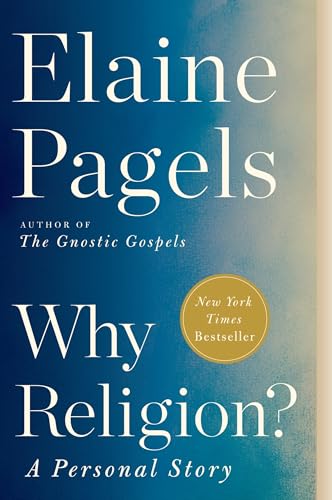
Start this bookNo. 25 on this list. Why Religion? A Personal Story · Elaine Pagels · 2018
Elaine Pagels has spent her career excavating Christianity's buried texts — the Gnostic gospels, the Gospel of Judas, the Book of Revelation — but this book begins with something she couldn't study her way out of. Her six-year-old son Mark died of pulmonary hypertension. A year later, her husband Heinz slipped on a hiking trail in the Shawangunks and was gone. Pagels, one of Princeton's most distinguished religion scholars, found herself walking into an Episcopal church not because she believed its doctrines but because she needed somewhere to go. 'Why Religion?' is her attempt to answer the question she'd spent decades asking as a historian and now had to answer as a human being: what does religion actually do for people when it isn't about metaphysical conviction? The memoir moves between grief and scholarship, between her childhood conversion in a California evangelical church and her decades among ancient manuscripts, between the deaths that broke her open and the texts that gave her language for what she found there. Pagels writes without sentiment and without pretense — she's a scholar who knows exactly how these traditions were constructed, and chooses them anyway. The result is a book about grief, meaning, and the strange uses of the sacred, written by someone uniquely positioned to see all three clearly.
Moderate3.8 hours
Start this bookNo. 26 on this list. The Earth Path: Grounding Your Spirit in the Rhythms of Nature · Starhawk · 2005
The book is a popular spirituality and ecology title with no recorded syllabus presence. It circulates among Pagan, permaculture and activist communities rather than in standard curricula.
Easy3.3 hours
Start this bookNo. 27 on this list. Camp Damascus · Chuck Tingle · 2023
Ranked by literary regard among eligible works in the current catalogue. This position reflects the available catalogue evidence.
Moderate4.3 hours
Start this bookNo. 28 on this list. The Road Less Traveled: A New Psychology of Love, Traditional Values and Spiritual Growth · M. Scott Peck · 1978
ReadingRate's signals check returned no syllabus or Wikipedia data for this edition, but the book is a fixture of the self-help and pastoral-counseling canon rather than the academic literary one — it occasionally appears on psychology-of-religion and pastoral care reading lists, without the university literature-syllabus footprint of a book like Beloved.
Easy5.3 hours
Start this bookNo. 29 on this list. Wild at Heart · John Eldredge · 2001
A fixture of evangelical men's ministry for more than two decades, used in church small groups and retreats and reissued in revised editions. It has no presence on academic syllabi outside studies of American evangelicalism and gender.
Very Easy3.3 hours
Start this bookNo. 30 on this list. Tech Agnostic: How Technology Became the World's Most Powerful Religion, and Why It Desperately Needs a Reformation · Greg Epstein · 2024
A 2024 trade book with no syllabi presence yet recorded, so it has no established place in curricula. Its MIT Press imprint and its author's campus role suggest some classroom potential.
Easy5.8 hours
Start this book

No. 31 on this list. Buddhism Plain & Simple
Steve Hagen · 1999
No. 32 on this list. Wearing the Lion
John Wiswell · 2025
No. 33 on this list. Toning: The Creative Power of the Voice
Laurel Elizabeth Keyes · 1973
No. 34 on this list. A Hebrew Christian looks at Israel
Zola Levitt · 1975
No. 35 on this list. In the Wave Lies the Secret of Creation
Walter Russell · 1995
About this list
These 35 books are the highest-scoring eligible books on religion and spirituality from the United States currently in the catalogue. About 217 hours of reading in all, for the 32 with measured lengths. Difficulty runs from 29 to 55 out of 100 for the middle half of the list; the summit is Mystical Languages of Unsaying at 77.
This list is ranked by literary regard, with a consistent order for equal scores. Membership follows authors and co-authors, not translators or editors. Catalogue coverage and the historical canon both limit what this list can represent, and genre labels are the catalogue’s own, gathered into broader kinds.
When we matched the Canons dataset to our catalogue in October 2026, our canonical-status scores rose with the number of school curricula, publisher series and lists in it that cite a work: the median score was 72 for books one such source cites, 84 at two, 88 at three, 92 at four and 93 at five or more. Prizes are left out of that count. Outside the state curricula, the dataset’s sources choose mostly from what has been translated into English or French, so it is a weaker check on other literatures. Source: Canons (Andrew Piper), CC BY 4.0
Questions people actually ask
- What are the best books on religion and spirituality from the United States?
- By literary regard, which weighs canonical status, critical standing and influence: The Hero with a Thousand Faces by Joseph Campbell, THE HOLY BIBLE: SIGNED Pennyroyal Caxton Bible BARRY MOSER Illustrator by Barry Moser, Wise Blood by Flannery O'Connor, The Courage to Be by Paul Tillich and The Sacred and the Profane by Mircea Eliade. ReadingRate ranks 35 such books, each with a difficulty score and a reading-time estimate.
- Which books on religion and spirituality from the United States should I read first?
- Start from difficulty, not from rank. The most approachable books on this list that still carry top literary regard are The Hero with a Thousand Faces by Joseph Campbell (about 8.5 hours), Wise Blood by Flannery O'Connor and The Courage to Be by Paul Tillich.
- What are the shortest of the best books on religion and spirituality from the United States?
- Among the top 25, the shortest are Holy the Firm by Annie Dillard (about 53 min), Be Here Now by Ram Dass (about 1.9 hours) and Jefferson Bible: The Life and Morals of Jesus of Nazareth by Thomas Jefferson (about 1.5 hours), at an average pace of 250 words a minute adjusted for each book's difficulty.
- Which of the best books on religion and spirituality from the United States are the established classics?
- By canonical status, how firmly a book sits in curricula, anthologies and the canon: The Hero with a Thousand Faces by Joseph Campbell, THE HOLY BIBLE: SIGNED Pennyroyal Caxton Bible BARRY MOSER Illustrator by Barry Moser, The Courage to Be by Paul Tillich, The Sacred and the Profane by Mircea Eliade and Wise Blood by Flannery O'Connor.
- Can I read any of these books on religion and spirituality from the United States for free?
- 1 of the 35 opens in ReadingRate's reader with a free account, from public-domain editions: The Varieties of Religious Experience.
- How long would it take to read the top ten?
- About 129 hours, at an average pace of 250 words a minute adjusted for each book's difficulty: 65 days at two hours a day. Set your own pace on the page and the list's reading times change to it.
- How hard are books on religion and spirituality from the United States to read?
- Most of this list sits between 29 and 55 on ReadingRate's 100-point difficulty scale, where 40 to 55 is moderate. The summit is Mystical Languages of Unsaying at 77. Every entry carries its own score, so a reader can pick a great book at a difficulty they will finish.
- How is this list ranked?
- On literary-regard data: how canonically established a work is, its critical standing, and its influence on later writing. It is not a readers’ poll, which is why recent bestsellers rarely appear. Membership follows authors and co-authors, not translators or editors. Lists by country, author, period, theme or difficulty keep to literature (fiction, poetry, drama and philosophy), their novels, poems and plays first and their philosophy after them; a list of a kind of book, such as memoir or criticism, keeps every book of that kind. Every list holds at most three works by one author.