Hours at an average pace
Showing 30 books
About 236 hours for 30 of 30 books with measured lengths. Estimates use 250 words a minute, adjusted for each book's difficulty. At 2 hours a day, about 118 days for those books.
The Duino Elegies appear on virtually every 20th-century world poetry and comparative literature syllabus internationally. Rilke is the central figure in German-language modernist poetry and the Elegies are his culminating work, regularly paired with The Waste Land and Four Quartets as the defining lyric sequences of the modernist era. The sequence has been translated into every major European language and dozens beyond.
Three Essays on the Theory of Sexuality is a foundational text in psychology, psychoanalysis, sexuality studies, and cultural theory curricula worldwide. Listed among Le Monde's 100 Books of the Century (1999), the Open Syllabus Top 500 in Literature, and available on Wikipedia in 20 languages. Taught in psychology, philosophy, literature, gender studies, and history of science courses, it is considered inescapable for anyone studying psychoanalysis or the history of sexuality.
No. 3 on this list. The Metamorphosis
Franz Kafka · 1915
Moderate1.4 hours
Taught in schools: Common Core text exemplars (Appendix B) (US), Lithuanian literature curriculum (lietuvių kalba ir literatūra)
Included in: Great Books of the Western World
The Metamorphosis appears in Wikipedia across 70 languages and has been in continuous print for over a century via Penguin Modern Classics and dozens of other prestige publishers. It is taught in comparative literature, modernism, and world literature courses at universities globally. The Open Syllabus data (0 appearances) likely reflects the novella being assigned within collected editions rather than as a standalone text.
Kafka's short fiction is taught in university literature courses worldwide, and 'A Hunger Artist' is among his most frequently anthologized works. It appears in virtually every Kafka collection and features in major short story anthologies. The work has sustained academic and pedagogical attention since its posthumous publication in 1922.
No. 5 on this list. The Trial
Franz Kafka · 1925
Difficult9.2 hours
Taught in schools: Lektury obowiązkowe – Polish national reading list (Poland)
Included in: Bokklubben World Library
Appears on Le Monde's 100 Books of the Century, the Open Syllabus Top 500 Literature list, and 1001 Books You Must Read Before You Die, with Wikipedia articles in 59 languages. Taught globally in comparative literature, philosophy, and political theory courses. The word 'Kafkaesque' entering the dictionary signals how completely the novel has entered Western cultural bedrock.
In February 1922, Rainer Maria Rilke retreated to Chateau de Muzot in Switzerland and composed fifty-five sonnets in three weeks. He addressed them to Orpheus — the Greek poet-god who descended into death to reclaim Eurydice and was torn apart by the Maenads for refusing them. The occasion was the recent death of Vera Knoop, a nineteen-year-old dancer Rilke barely knew; her death opened something. A tree ascends in the first line. Animals cluster around it in silence, listening. What Rilke is after is the premise that true song is not desire or communication but reality — breath as invisible poem, the moment when inner and outer stop being distinct. Orpheus moves through the cycle not as a character but as a principle: he is already dead, he already belongs to both realms, and because of this he can praise everything, including loss. The Sonnets instruct readers to will transformation, to be ahead of all parting, to whisper 'I am flowing' to the earth. They do not resolve their questions about death and being; they teach acceptance of irresolution as the condition of consciousness. Reading them asks for slow, repeated attention — each poem is compact and dense, and the cycle's meaning accumulates across all fifty-five. This is poetry as philosophical practice, the lyric at maximum pressure.
Jelinek is a Nobel Prize winner (2004), and Lust is among her most-discussed novels, central to courses in feminist literature, Austrian literature, and avant-garde fiction. The Wikipedia article on Lust exists in 58 languages, indicating significant global recognition. However, the novel is not a fixture of general literary survey courses in the way that Jelinek's work as a whole is taught — it is a specialist text, assigned where Jelinek is the focus or feminist radical fiction is the subject. Its explicit content limits its classroom reach. Canonical within feminist literary studies; less so in general world literature curricula.
No. 8 on this list. The Notebooks of Malte Laurids Brigge
Rainer Maria Rilke · 1910
Challenging6 hours
Die Aufzeichnungen des Malte Laurids Brigge is on Le Monde's 100 Books of the Century, with Wikipedia articles in 14 languages. It is taught as a founding text of modernist prose in German and comparative literature courses.
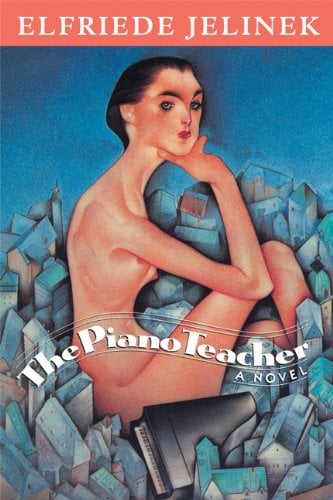
The Piano Teacher is widely taught in European universities — particularly in German-language literature, feminist literary criticism, and comparative literature courses — though this database captures 0 syllabus appearances and only a stub Wikipedia article. The novel's canonical standing in German-language and feminist literary studies is well established; its international profile is significant but narrower than Anglophone canonical texts at the same level of critical regard.
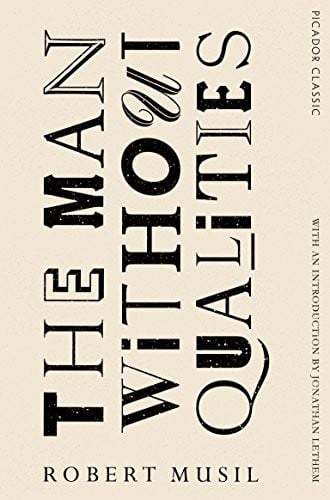
No. 10 on this list. The Man Without Qualities
Robert Musil · 1930
Difficult50 hours
Included in: Bokklubben World Library
A cornerstone of European modernism, taught in world literature courses alongside Proust and Joyce. Essential reading for study of the novel form, Austrian literature, and philosophical fiction, though less universally assigned than Ulysses due to its length and incompleteness.
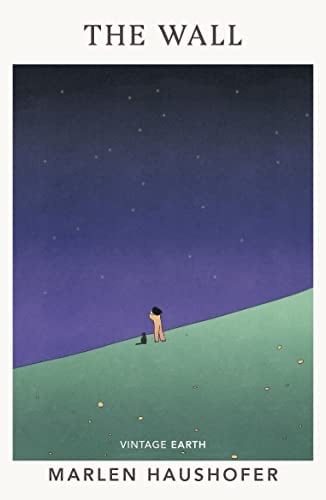
No. 11 on this list. The Wall · Marlen Haushofer · 1963
Recognized as a masterpiece of Austrian literature and feminist writing, taught in German literature courses and increasingly included in world literature curricula as an essential post-war text.
Challenging6.6 hours
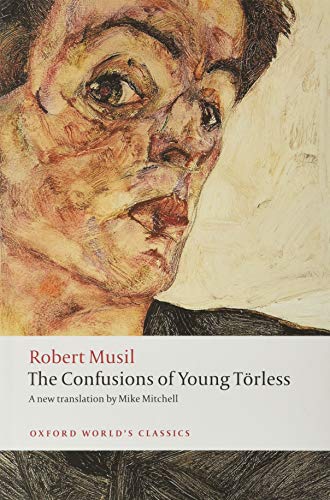
Start this bookNo. 12 on this list. Young Törless · Robert Musil · 1906
Young Törless is a fixture of European Modernism syllabi and is regularly taught in courses on the Bildungsroman, Austrian literature, and the literature of adolescence. It lacks the universal English-language curriculum presence of Kafka or Mann but maintains steady academic assignment in comparative literature programs worldwide. Wikipedia articles exist in approximately 25 languages, indicating solid international scholarly recognition if not mass cultural presence.
Challenging6.1 hours
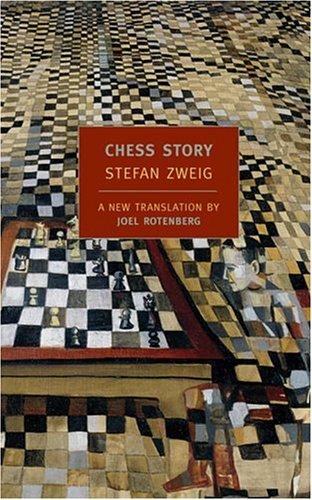
Start this bookNo. 13 on this list. Chess Story · Stefan Zweig · 1942
Widely taught as a short introduction to interwar European fiction.
Moderate2.2 hours
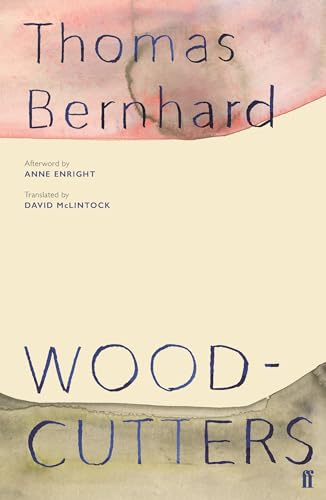
Start this bookNo. 14 on this list. Woodcutters · Thomas Bernhard · 1984
It is a significant work by a major Austrian author, part of a trilogy with The Loser and Old Masters, and is published by Suhrkamp and Knopf. It is taught in German and world literature courses but is not a universal staple.
Challenging4.3 hours
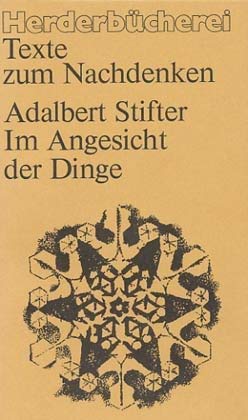
Start this bookNo. 15 on this list. Indian Summer · Adalbert Stifter · 1857
A landmark of Austrian literature, revered by some (Nietzsche, Thomas Mann) and dismissed by others. Occupies a unique and contested place in the German canon.
Easy14 hours
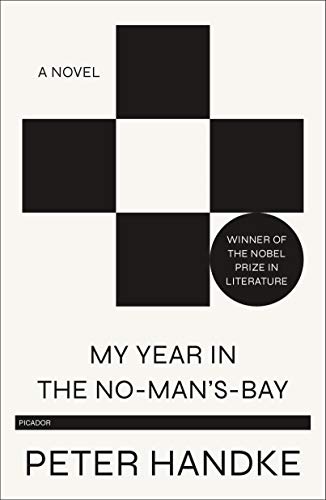
Start this bookNo. 16 on this list. My Year in the No-Man's-Bay · Peter Handke · 1994
A writer retreats to a house on the outskirts of Paris, observing the surrounding landscape through a year of seasons and isolation. Handke's meditative novel finds profound meaning in the ordinary, creating a portrait of consciousness and place.
Challenging12 hours
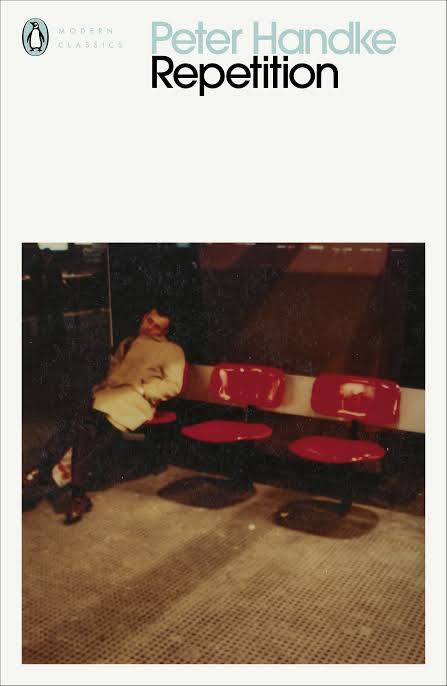
Start this bookNo. 17 on this list. Repetition · Peter Handke · 1986
Filip Kobal is twenty years old and has just passed his final school examination when he crosses from Austria into Yugoslavia on the trail of his missing brother Gregor, who vanished years earlier. Carrying Gregor's Slovene-German agricultural dictionary and an enormous handkerchief that belonged to him, Filip walks the Karst plateau and the river valleys of Slovenia, less searching than learning — to see, to name, to belong somewhere. Handke builds no conventional plot. The novel is an act of attention: a border guard explains that 'Kobal' means a person standing with legs outspread; a roadmender paints a sign with such deliberation that the village beneath him becomes a kingdom; a parasol mushroom at the edge of a wood weighs less than a wafer and is run toward like a king. The brother is never found. What Filip recovers instead is a way of being in the world — a method of perception taught by Gregor's dictionary, which lists the Slovene names of field tools and plants that have since ceased to exist. Written in long Proustian sentences that coil through memory and return to the present, Repetition reads like a philosophical diary composed in the conditional tense. The title comes from Kierkegaard: not mere recurrence, but the act of going forward to recover what has been lost. This is a novel for readers who want prose that slows time down.
Challenging6.3 hours
Start this bookNo. 18 on this list. Confusion of Feelings · Stefan Zweig · 1927
Included in Le Monde's 100 Books of the Century, a list built on French readers' votes, where Zweig has a large following. It has Wikipedia articles in 11 languages but is seldom taught in English-language courses.
Moderate1.8 hours
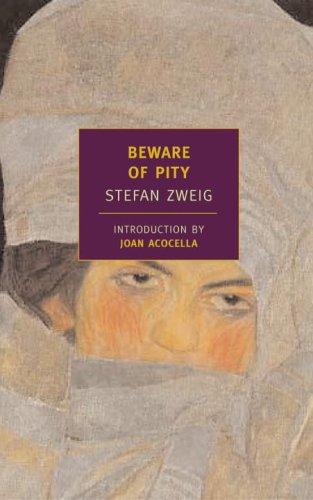
Start this bookNo. 19 on this list. Beware of Pity · Stefan Zweig · 1939
Zweig's only completed novel is widely read in German literature and translated worldwide, and it has seen a strong revival through New York Review Books editions. It is taught less than his novellas and less than major canon works.
Moderate6.2 hours
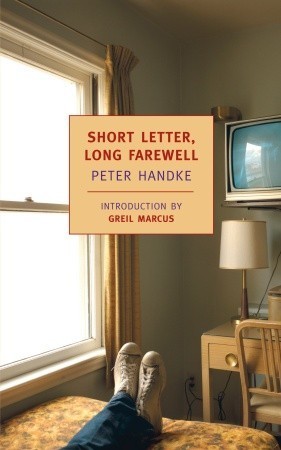
Start this bookNo. 20 on this list. Short Letter, Long Farewell · Peter Handke · 1972
Appears on 8 university syllabi (Open Syllabus) and has Wikipedia articles in only 3 languages — a minor canonical footprint. The novel is read primarily in German-language literature and comparative literature courses rather than being a curriculum fixture. Handke's Nobel in 2019 may increase its reach, but as of 2026 this remains a specialist text.
Moderate3.2 hours
Start this book
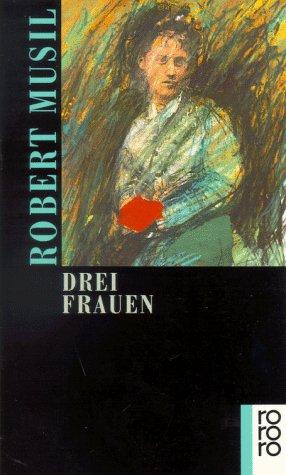
No. 21 on this list. Three Women · Robert Musil · 1924
Recognized as significant works in Musil's oeuvre and in the German-language novella tradition, though overshadowed by The Man Without Qualities.
Moderate2.7 hours
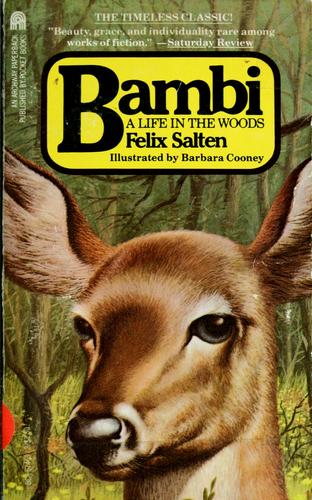
Start this bookNo. 22 on this list. Bambi: A Life in the Woods · Felix Salten
The novel is a staple of children's literature and widely read in translation. It is less often taught in university literature courses.
Easy2.9 hours
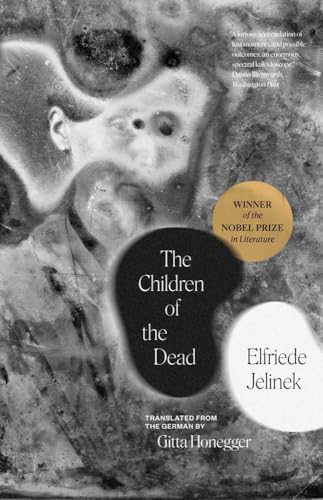
Start this bookNo. 23 on this list. The Children of the Dead · Elfriede Jelinek · 1995
The dead of Austria confront the living in Jelinek's experimental, incantatory novel. The ghosts of history—Nazi perpetrators, their victims—speak in Jelinek's characteristic voice of rage and lament.
Difficult13 hours
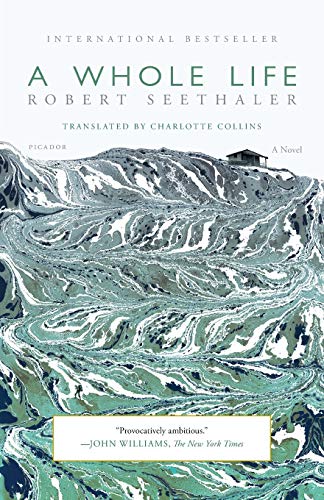
Start this bookNo. 24 on this list. A Whole Life · Robert Seethaler · 2016
A Whole Life appears on 12 university syllabi according to Open Syllabus, a modest presence reflecting its relatively recent translation into English (2015). It has not yet entered the standard curriculum for European or world literature courses, though its brevity and thematic clarity make it a candidate for future adoption.
Moderate2.3 hours
Start this bookNo. 25 on this list. Perfume & Pain · Anna Dorn · 2024
A 2024 release with no recorded syllabi presence. It belongs with recent commercial and trade fiction, like Beach Read.
Easy4.5 hours
Start this bookNo. 26 on this list. Correction · Thomas Bernhard · 2003
No prizes, syllabus counts or Wikipedia reach are recorded for this entry. With no evidence of teaching or wide recognition, it scores low, near commercial and recent titles like Beach Read.
Moderate4.3 hours
Start this bookNo. 27 on this list. Philosophical Investigations · Ludwig Wittgenstein · 1953
Philosophical Investigations is required reading in virtually every anglophone philosophy department and appears on syllabi for philosophy of language, philosophy of mind, and analytic philosophy courses worldwide. Wikipedia carries a detailed article available in over 50 languages. It is consistently listed among the most important books of the 20th century across disciplinary surveys.
Challenging18 hours
Start this bookNo. 28 on this list. Civilization and Its Discontents · Sigmund Freud · 1930
Civilization and Its Discontents is assigned in philosophy, psychology, political theory, literary criticism, and cultural studies courses across the world's universities. It is among the most widely taught non-fiction texts in higher education, a standard inclusion on humanities syllabi from introductory courses to graduate seminars. No significant survey of 20th-century intellectual history omits it.
Challenging3.4 hours
Start this bookNo. 29 on this list. Tractatus Logico-Philosophicus · Ludwig Wittgenstein · 1921
The Tractatus appears on virtually every analytic philosophy syllabus worldwide and is required reading in philosophy of language, logic, and 20th-century philosophy courses at every major university. It is the foundational text of logical positivism and the picture theory of meaning — a text that any philosophy student encounters, typically more than once. Its Wikipedia article exists in over 60 language editions, indicating its global reach as a canonical philosophical work.
Easy1.7 hours
Read nowNo. 30 on this list. Against Method · Paul Feyerabend · 1975
Against Method is standard required reading in philosophy of science courses at universities worldwide. The database shows no syllabus count or Wikipedia language data, which reflects a data gap rather than the book's actual status — it is foundational within the philosophy of science curriculum and appears on course syllabi across the English-speaking world and beyond. Its canonical position within academic philosophy is secure, though it does not reach the breadth of literary canons.
Challenging9.4 hours
Start this book
About this list
These 30 books are the highest-scoring eligible books from Austria currently in the catalogue. About 236 hours of reading in all. Difficulty runs from 51 to 69 out of 100 for the middle half of the list; the summit is Lust at 78.
This list is ranked by literary regard, with a consistent order for equal scores. Membership follows authors and co-authors, not translators or editors. Catalogue coverage and the historical canon both limit what this list can represent.
When we matched the Canons dataset to our catalogue in October 2026, our canonical-status scores rose with the number of school curricula, publisher series and lists in it that cite a work: the median score was 72 for books one such source cites, 84 at two, 88 at three, 92 at four and 93 at five or more. Prizes are left out of that count. Outside the state curricula, the dataset’s sources choose mostly from what has been translated into English or French, so it is a weaker check on other literatures. Source: Canons (Andrew Piper), CC BY 4.0
Questions people actually ask
- What are the best books from Austria?
- By literary regard, which weighs canonical status, critical standing and influence: Duino Elegies by Rainer Maria Rilke, Three Essays on the Theory of Sexuality by Sigmund Freud, The Metamorphosis by Franz Kafka, A Hunger Artist by Franz Kafka and The Trial by Franz Kafka. ReadingRate ranks 30 such books, each with a difficulty score and a reading-time estimate.
- Which books from Austria should I read first?
- Start from difficulty, not from rank. The most approachable books on this list that still carry top literary regard are The Metamorphosis by Franz Kafka (about 1.4 hours), The Notebooks of Malte Laurids Brigge by Rainer Maria Rilke and The Trial by Franz Kafka.
- What are the shortest of the best books from Austria?
- Among the top 25, the shortest are The Metamorphosis by Franz Kafka (about 1.4 hours), Duino Elegies by Rainer Maria Rilke (about 2.9 hours) and The Sonnets to Orpheus by Rainer Maria Rilke (about 2.8 hours), at an average pace of 250 words a minute adjusted for each book's difficulty.
- Which of the best books from Austria are the established classics?
- By canonical status, how firmly a book sits in curricula, anthologies and the canon: Duino Elegies by Rainer Maria Rilke, Philosophical Investigations by Ludwig Wittgenstein, Three Essays on the Theory of Sexuality by Sigmund Freud, The Metamorphosis by Franz Kafka and Civilization and Its Discontents by Sigmund Freud.
- Can I read any of these books from Austria for free?
- 3 of the 30 open in ReadingRate's reader with a free account, from public-domain editions: The Metamorphosis, The Trial and Tractatus Logico-Philosophicus.
- How long would it take to read the top ten?
- About 110 hours, at an average pace of 250 words a minute adjusted for each book's difficulty: 55 days at two hours a day. Set your own pace on the page and the list's reading times change to it.
- How hard are books from Austria to read?
- Most of this list sits between 51 and 69 on ReadingRate's 100-point difficulty scale, where 40 to 55 is moderate. The summit is Lust at 78. Every entry carries its own score, so a reader can pick a great book at a difficulty they will finish.
- How is this list ranked?
- On literary-regard data: how canonically established a work is, its critical standing, and its influence on later writing. It is not a readers’ poll, which is why recent bestsellers rarely appear. Membership follows authors and co-authors, not translators or editors. Lists by country, author, period, theme or difficulty keep to literature (fiction, poetry, drama and philosophy), their novels, poems and plays first and their philosophy after them; a list of a kind of book, such as memoir or criticism, keeps every book of that kind. Every list holds at most three works by one author.