Hours at an average pace
Showing 30 books
About 259 hours for 30 of 30 books with measured lengths. Estimates use 250 words a minute, adjusted for each book's difficulty. At 2 hours a day, about 130 days for those books.
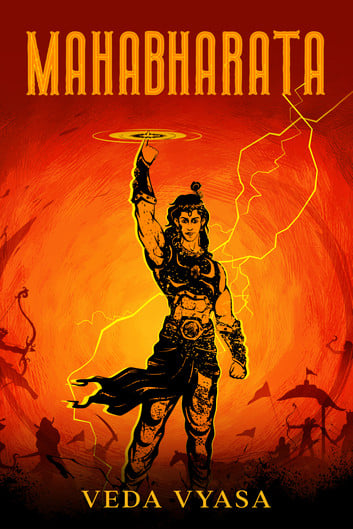
At roughly 1.8 million words, the Mahabharata is the longest poem ever composed, and it earns its length: a dynastic war becomes the scaffold for a complete philosophy of duty, cosmic law, and the impossibility of righteous action in a fallen world. The Bhagavad Gita is embedded within it as a single episode, which gives some measure of its ambition.
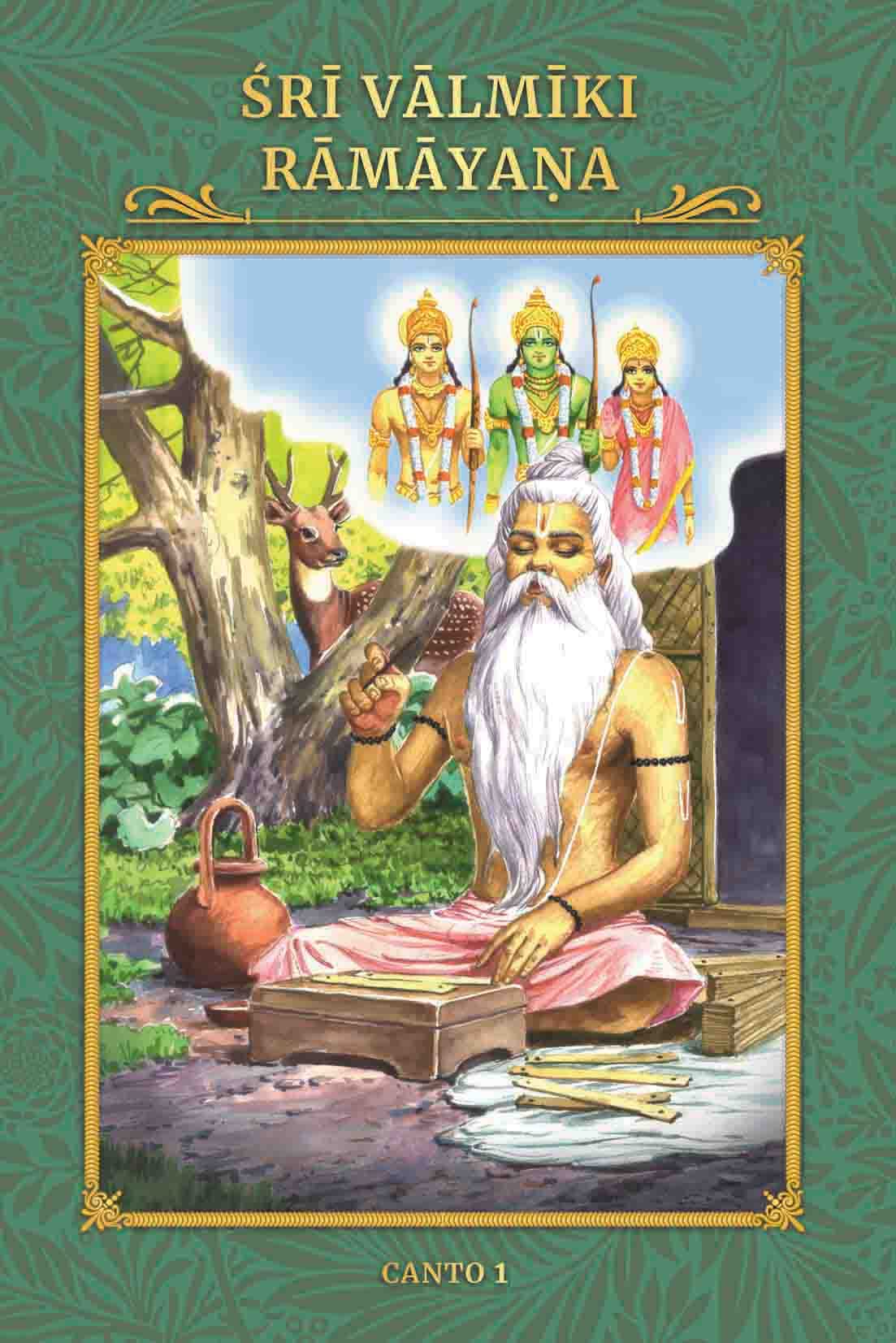
Valmiki's poem established the archetype of the righteous exile — a prince who surrenders his kingdom, rescues his wife from a demon king, and returns to rule — and in doing so provided South and Southeast Asia with a moral and narrative grammar that has shaped religion, theater, sculpture, and statecraft for over two millennia.
Kalidasa's best-known lyric is central to Sanskrit literature curricula and the model for the duta-kavya genre, translated widely across Indian languages and the world.
Supreme Sanskrit drama; first Indian text to reach European audience.
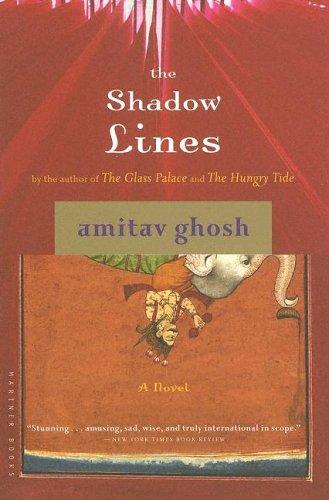
The Shadow Lines won the Sahitya Akademi Award and is standard on postcolonial fiction syllabuses globally. It is consistently ranked among the defining novels of South Asian Anglophone literature alongside Midnight's Children. Its treatment of Partition and communal violence has made it a touchstone for academic and general literary discourse about South Asia.
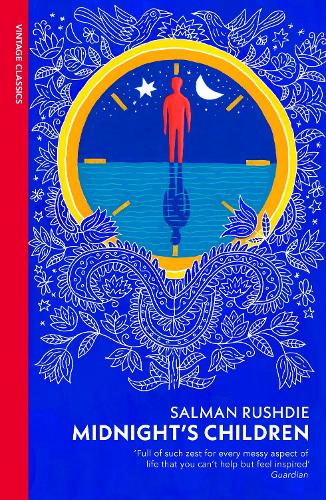
No. 6 on this list. Midnight's Children
Salman Rushdie · 1981
Challenging21 hours
Included in: Bokklubben World Library
Appears on 781 university syllabi according to Open Syllabus (72nd percentile), with a Wikipedia article in 40 languages. Required reading in postcolonial literature courses worldwide. Won the Booker Prize (1981), then the Booker of Bookers in both 1993 and 2008—the prize committee's pick for the best Booker winner across 25 and 40 years respectively. Listed on TIME All-TIME 100 Novels, Modern Library 100 Best Novels, and Le Monde's 100 Books of the Century.
Godaan is the central text of modern Hindi literature and a staple of Indian university and school curricula. It is widely studied in world and South Asian literature courses and translated into many languages.
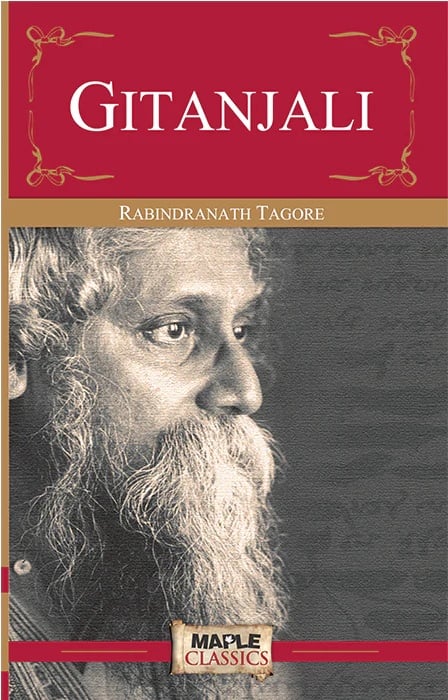
No. 8 on this list. Gitanjali
Rabindranath Tagore · 1910
Moderate1 hours
Included in: UNESCO Collection of Representative Works
Gitanjali won the Nobel Prize in Literature in 1913, making Tagore the first non-European laureate. The work established Bengali literature on the world stage and remains required reading in Indian schools. Its influence on English-language spiritual poetry endures through its absorption into wedding readings, meditation anthologies, and political speeches (poem XXXV became a patriotic touchstone in India).
The Home and the World is one of Tagore's most celebrated novels and a staple of postcolonial literature syllabi worldwide. Written by the first non-European Nobel laureate, it occupies a significant position in the global literary canon, particularly in discussions of Indian literature, nationalism, and modernity. Satyajit Ray's 1984 film adaptation further cemented its cultural status. It appears in 7 Wikipedia languages and has remained continuously in print for over a century.
No. 10 on this list. Gora
Rabindranath Tagore · 1910
Challenging12 hours
Taught in schools: Turkish edebiyat curriculum (Turkey)
Included in: UNESCO Collection of Representative Works
Gora is a cornerstone of Bengali and Indian literature, widely taught in South Asian studies programs at universities worldwide and considered essential reading within the Indian literary tradition. No Open Syllabus data is available in the database, but the novel's status as Tagore's defining prose work guarantees its presence on Indian literature syllabi globally. Its canonical standing within South Asia is comparable to that of Tolstoy's novels within Russian literature.
No. 11 on this list. Childhood's End · Arthur C. Clarke · 1953
Childhood's End is a cornerstone of the science fiction canon and appears consistently on 'best SF novels' lists, including Modern Library reader polls and multiple 'essential SF' curricula. It is less universally taught than literary fiction staples but holds a foundational place in SF education and is widely cited as required reading for understanding the genre's golden age.
Challenging5.9 hours
Start this bookNo. 12 on this list. The Guide · R.K. Narayan · 1958
Taught in schools: CSEC English B – Caribbean Examinations Council
The Guide is the central text of Indian English fiction before Rushdie and appears regularly in postcolonial, South Asian, and world literature courses. It was the first novel in English to win the Sahitya Akademi Award, India's national literary prize. Wikipedia articles in multiple languages; the 1965 Bollywood film adaptation signals deep cultural penetration within India.
Challenging7 hours
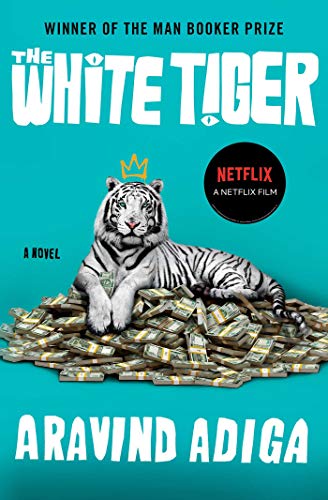
Start this bookNo. 13 on this list. The White Tiger · Aravind Adiga · 2008
The White Tiger appears on university syllabuses in postcolonial literature, South Asian studies, and contemporary fiction courses — 369 appearances in the Open Syllabus Project places it in the upper-middle tier of contemporary novels. It is not yet part of a settled Western canon, but its Booker win and steady presence in academic and secondary curricula give it genuine staying power beyond its initial reception. Its position is comparable to other Booker winners that have achieved syllabus permanence without yet reaching the canonical status of older prize winners.
Difficult8.5 hours
Start this bookNo. 14 on this list. മതിലുകള് | Mathilukal · Vaikom Muhammad Basheer · 1983
Mathilukal is a staple of Malayalam literature courses in Kerala and was adapted into a well-known film by Adoor Gopalakrishnan. Outside Malayalam studies it is less often taught.
Easy1 hours
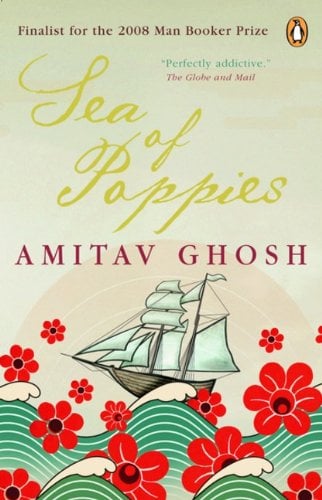
Start this bookNo. 15 on this list. Sea of Poppies · Amitav Ghosh · 2008
Appears on 253 university syllabi according to the Open Syllabus Project, placing it in the 60th percentile — taught regularly in postcolonial literature and South Asian studies courses but not a fixture of general literature curricula. Wikipedia coverage exists in only 2 languages, indicating limited global canonical reach compared to works like Midnight's Children or A Suitable Boy.
Challenging14 hours
Start this bookNo. 16 on this list. The Vendor of Sweets · R.K. Narayan · 1967
One of Narayan's most admired novels and a standard text in Indian literature courses, though less internationally famous than The Guide.
Easy2.3 hours
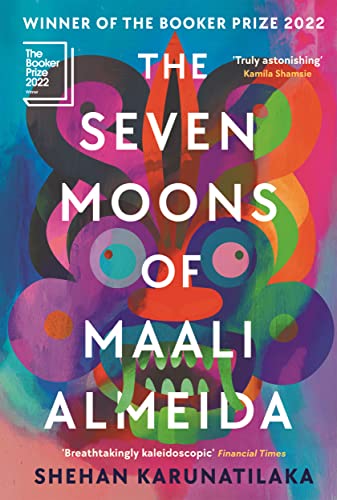
Start this bookNo. 17 on this list. The Seven Moons of Maali Almeida · Shehan Karunatilaka · 2022
A Sri Lankan photographer, recently murdered, has seven moons to solve his own death and find peace. Karunatilaka's Booker-winning novel uses dark comedy and supernatural elements to explore Sri Lanka's civil war.
Challenging12 hours
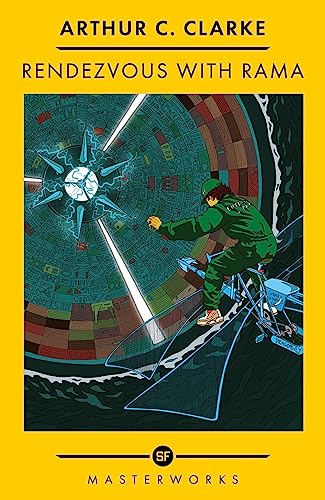
Start this bookNo. 18 on this list. Rendezvous with Rama · Arthur C. Clarke · 1973
Rendezvous with Rama occupies a firm canonical position within science fiction but rarely appears on university literature syllabi outside dedicated SF courses. It consistently places on 'greatest science fiction novels' lists—the Science Fiction and Fantasy Writers of America named it to its Classics list—and holds a definitive place in any serious accounting of the genre. Its influence on hard SF is widely acknowledged, though the literary mainstream has not absorbed it into the standard curriculum.
Moderate4.6 hours
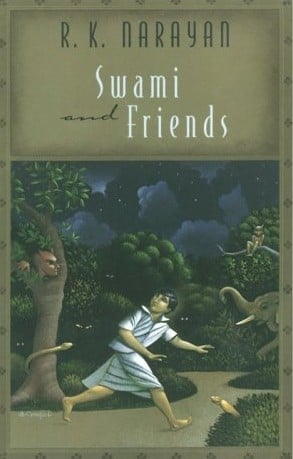
Start this bookNo. 19 on this list. Swami and Friends · R.K. Narayan · 1935
Swami and Friends is regularly taught in postcolonial literature and world fiction courses as a foundational text of Indian English fiction. It established the fictional town of Malgudi, which anchors Narayan's entire career, and appears on syllabi across South Asian literature programs. Its canonical standing is strong within Indian English literature but narrower than Narayan's more celebrated later works like The Guide.
Moderate3.2 hours
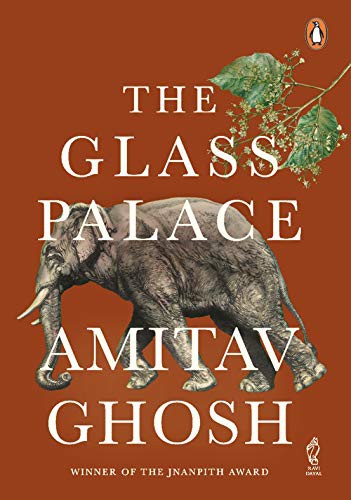
Start this bookNo. 20 on this list. The Glass Palace · Amitav Ghosh · 2000
Regularly taught in postcolonial literature and South Asian studies courses at the university level, though it lacks the broad curriculum presence of canonical British or American texts. No database syllabus data was found, but the novel appears on recommended reading lists for colonial history courses internationally.
Moderate12 hours
Start this book
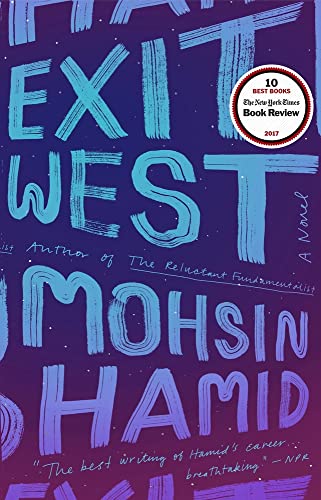
No. 21 on this list. Exit West · Mohsin Hamid · 2017
Exit West appears on 720 university syllabi according to the Open Syllabus Project, placing it firmly in active academic circulation for a novel less than a decade old. It has become a standard text in contemporary fiction and migration literature courses. Its long-term canonical standing is still accruing, but its institutional foothold is already substantial.
Difficult5.3 hours
Start this bookNo. 22 on this list. The City and the Stars · Arthur C. Clarke · 1956
The City and the Stars appears on many 'essential science fiction' lists and is widely recognized as a genre classic, but no university syllabus data is available and it has limited presence outside SF circles. It holds a firm place in the SF canon without the broad institutional adoption of literary fiction taught in humanities courses.
Moderate6.2 hours
Start this bookNo. 23 on this list. The Reluctant Fundamentalist · Mohsin Hamid · 2007
Taught in schools: OCR GCSE and A-level English Literature (UK)
The Reluctant Fundamentalist appears on 977 university syllabi, placing it in the 74.7th percentile by the Open Syllabus Project — a strong showing for a 2007 novella, reflecting its consistent adoption in postcolonial literature, South Asian diaspora, and post-9/11 fiction courses. Its Wikipedia article exists in only 4 languages, suggesting limited reach outside Anglophone literary culture. It is taught regularly but not a curriculum fixture in the way of Beloved or Things Fall Apart.
Challenging3.7 hours
Start this bookNo. 24 on this list. The Golden Gate · Vikram Seth · 1986
The Golden Gate is the best-known modern novel in verse in English and a regular example in discussions and courses on verse narrative. It is better known to poets and critics than to general readers.
Challenging4.3 hours
Start this bookNo. 25 on this list. A Case of Exploding Mangoes · Mohammed Hanif · 2008
Ali Shigri, a junior officer at Pakistan's air force academy, is plotting to assassinate General Zia ul-Haq, the country's military dictator. His father, a distinguished air vice marshal, was found hanging in a cell under suspicious circumstances, and Ali is certain Zia ordered the murder. He acquires a gun, plans his approach, and waits for the right moment. Meanwhile, Zia himself grows increasingly paranoid. A crow appears at his window—trained, he learns, by a blind woman whose son was tortured to death. His food taster falls ill after sampling a crate of mangoes. A holy man discovers a worm-infested Quran in the presidential mosque. American officials hover nearby with their own agendas. Hanif sets these conspiracies spinning like plates, each one absurd yet rooted in Pakistan's brutal political machinery. The novel's comedy is black as tar: soldiers conduct interrogations while debating the finer points of torture technique, bureaucrats draft memos about divine intervention, and Zia consults both his generals and his astrologer. The prose moves fast, cutting between Ali's murderous preparation and Zia's mounting dread, all building toward the real historical catastrophe—the plane crash that killed the dictator, his top brass, and the American ambassador in August 1988.
Moderate6.9 hours
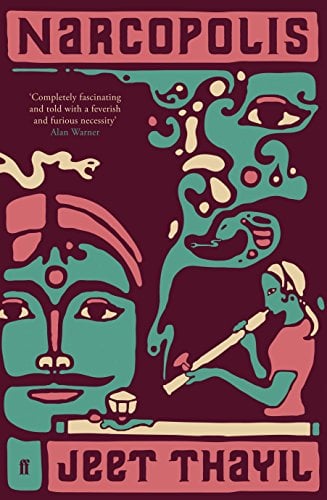
Start this bookNo. 26 on this list. Narcopolis · Jeet Thayil · 2012
Narcopolis (2012) is read in courses on contemporary Indian writing in English and on fiction about Bombay. It is a well-known recent Indian novel rather than a standard text on general reading lists.
Challenging5.3 hours
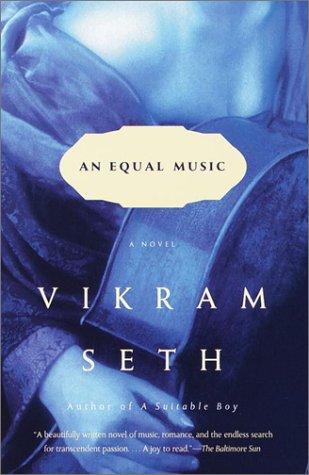
Start this bookNo. 27 on this list. An Equal Music · Vikram Seth · 1999
An Equal Music does not appear significantly on university syllabi and has no Wikipedia article in the data signals, indicating limited academic adoption. While Vikram Seth is a known literary figure, this novel occupies a respected but niche position in the contemporary literary canon, taught occasionally in postcolonial or contemporary fiction courses but far from a curriculum fixture.
Challenging14 hours
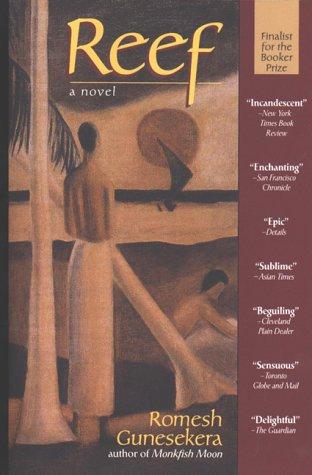
Start this bookNo. 28 on this list. Reef · Romesh Gunesekera · 1994
Shortlisted for the Booker Prize in 1994 but does not appear on university syllabi in the Open Syllabus data. Known within postcolonial literature courses but far from a curriculum staple, occupying a niche in Sri Lankan diaspora writing rather than the broader canon.
Moderate3 hours
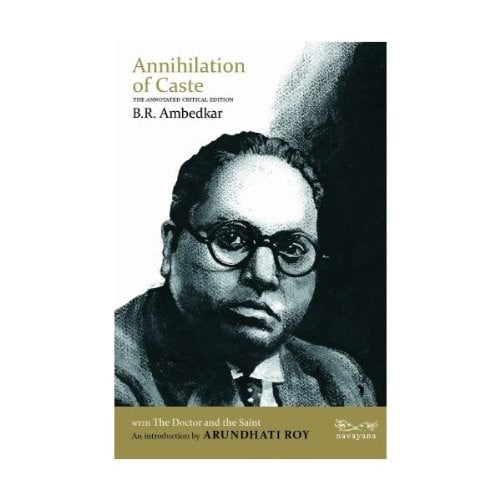
Start this bookNo. 29 on this list. Annihilation of Caste · B.R. Ambedkar · 1936
The foundational text of Dalit political thought, taught across sociology, political theory, and South Asian studies worldwide.
Challenging2.3 hours
Start this bookNo. 30 on this list. The Way of the Bodhisattva · Śāntideva · 2003
No syllabus or Wikipedia data came back in ReadingRate's own signals check, but this is one of the core texts of the Tibetan Geshe curriculum, studied continuously in Nalanda-tradition monastic colleges for over a millennium, and it anchors university Buddhist Studies and Asian philosophy courses worldwide through standard translations from Oxford World's Classics, Shambhala, and Snow Lion. Its canonical standing within the Buddhist tradition is comparable to a foundational scriptural commentary rather than a novel on a 'great books' list.
Moderate1.7 hours
Start this book
About this list
These 30 books are the highest-scoring eligible books from South Asia by men currently in the catalogue. About 259 hours of reading in all. Difficulty runs from 49 to 63 out of 100 for the middle half of the list; the summit is The Shadow Lines at 79.
This list is ranked by literary regard, with a consistent order for equal scores. Membership follows authors and co-authors, not translators or editors. A book is here when ReadingRate files it under South Asian Literature as one of its primary reading domains. Catalogue coverage and the historical canon both limit what this list can represent.
When we matched the Canons dataset to our catalogue in October 2026, our canonical-status scores rose with the number of school curricula, publisher series and lists in it that cite a work: the median score was 72 for books one such source cites, 84 at two, 88 at three, 92 at four and 93 at five or more. Prizes are left out of that count. Outside the state curricula, the dataset’s sources choose mostly from what has been translated into English or French, so it is a weaker check on other literatures. Source: Canons (Andrew Piper), CC BY 4.0
Questions people actually ask
- What are the best books from South Asia by men?
- By literary regard, which weighs canonical status, critical standing and influence: Mahabharata by Vyasa, Ramayana by Valmiki, Meghaduta by Kalidasa, Shakuntala by Kalidasa and The Shadow Lines by Amitav Ghosh. ReadingRate ranks 30 such books, each with a difficulty score and a reading-time estimate.
- Which books from South Asia by men should I read first?
- Start from difficulty, not from rank. The most approachable books on this list that still carry top literary regard are Godaan by Premchand (about 8.6 hours), Shakuntala by Kalidasa and The Way of the Bodhisattva by Śāntideva.
- What are the shortest of the best books from South Asia by men?
- Among the top 25, the shortest are Meghaduta by Kalidasa (about 26 min), Gitanjali by Rabindranath Tagore (about 1 hours) and മതിലുകള് | Mathilukal by Vaikom Muhammad Basheer (about 1 hours), at an average pace of 250 words a minute adjusted for each book's difficulty.
- Which of the best books from South Asia by men are the established classics?
- By canonical status, how firmly a book sits in curricula, anthologies and the canon: Mahabharata by Vyasa, Ramayana by Valmiki, Annihilation of Caste by B.R. Ambedkar, Meghaduta by Kalidasa and Shakuntala by Kalidasa.
- Can I read any of these books from South Asia by men for free?
- 4 of the 30 open in ReadingRate's reader with a free account, from public-domain editions: Mahabharata, Ramayana, Gitanjali and The Home and the World.
- How long would it take to read the top ten?
- About 135 hours, at an average pace of 250 words a minute adjusted for each book's difficulty: 68 days at two hours a day. Set your own pace on the page and the list's reading times change to it.
- How hard are books from South Asia by men to read?
- Most of this list sits between 49 and 63 on ReadingRate's 100-point difficulty scale, where 40 to 55 is moderate. The summit is The Shadow Lines at 79. Every entry carries its own score, so a reader can pick a great book at a difficulty they will finish.
- How is this list ranked?
- On literary-regard data: how canonically established a work is, its critical standing, and its influence on later writing. It is not a readers’ poll, which is why recent bestsellers rarely appear. Membership follows authors and co-authors, not translators or editors. Lists by country, author, period, theme or difficulty keep to literature (fiction, poetry, drama and philosophy), their novels, poems and plays first and their philosophy after them; a list of a kind of book, such as memoir or criticism, keeps every book of that kind. Every list holds at most three works by one author. A book is here when ReadingRate files it under South Asian Literature as one of its primary reading domains.