Hours at an average pace
Showing 31 books
About 103 hours for 29 of 31 books with measured lengths. Estimates use 250 words a minute, adjusted for each book's difficulty. At 2 hours a day, about 52 days for those books.
No. 1 on this list. Coming of Age in Samoa: A Psychological Study of Primitive Youth for Western Civilisation
Margaret Mead · 2001
Easy4.5 hours
Widely assigned in anthropology and gender-studies courses, and a standard case in debates over method. Its place is secured as much by the Freeman controversy as by the text.
Ranked by literary regard among eligible works in the current catalogue. This position reflects the available catalogue evidence.
Highly regarded among readers of literary journalism. Less widely known than The Journalist and the Murderer but considered by some critics to be Malcolm's finest book.
Montessori draws on decades of observing children in her schools across Europe and India to argue that the child possesses an innate developmental intelligence that adults systematically obstruct. She describes what she calls 'sensitive periods'—windows during which a child is intensely drawn to particular activities (ordering objects, learning language, refining movement)—and shows how conventional child-rearing interrupts these periods with arbitrary schedules, punishments, and adult-imposed tasks. The child who lines up shoes obsessively is not being disobedient; she is satisfying a deep developmental need for order. The toddler who insists on pouring his own milk is not being defiant; he is building the motor coordination and independence his nervous system demands. Montessori's observations are precise and her prose carries the authority of a physician who has watched thousands of children develop under conditions of freedom. She argues that the adult's role is not to teach but to prepare an environment in which the child's natural development can unfold without obstruction—a deceptively simple idea that overturns centuries of assumptions about authority, obedience, and what children are for.
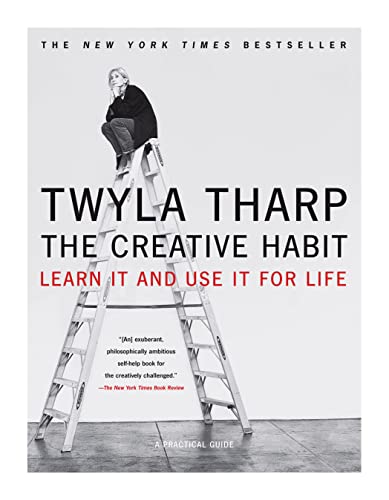
The Creative Habit holds no place in the literary canon but has become a standard text within the creativity and self-help genre, widely read by practitioners across the arts and business. It is not assigned in literary syllabi but appears regularly on recommended reading lists in design schools, MFA programs, and creative industries.
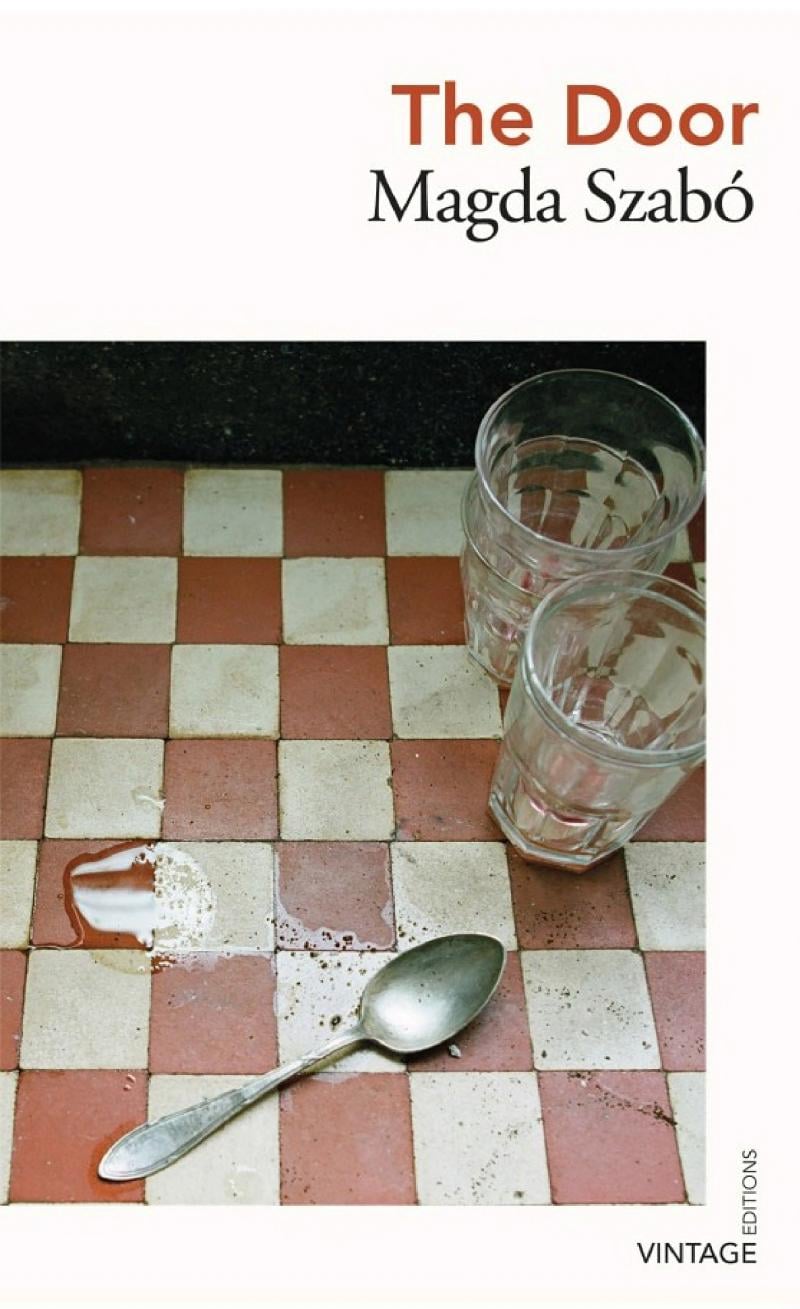
Taught in world-literature courses since its English rediscovery.
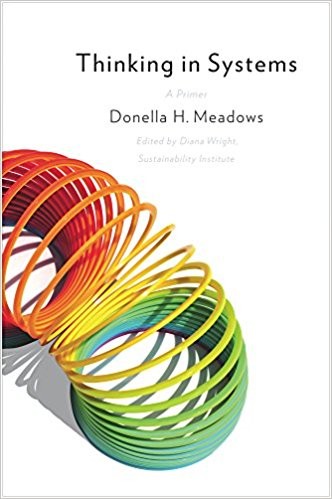
Meadows, one of the lead authors of The Limits to Growth, wrote this posthumously published primer as an introduction to systems thinking—the discipline of seeing the world in terms of interconnected feedback loops rather than linear cause and effect. She explains stocks, flows, feedback loops, delays, and leverage points with simple, vivid examples: bathtubs filling and draining, thermostats, rabbit populations, and national economies. The book's central argument is that most policy failures result from attempting to fix complex systems with linear thinking—addressing symptoms rather than understanding the system's structure. Meadows identifies twelve leverage points for intervening in systems, from the least effective (adjusting parameters) to the most powerful (changing the system's goals or paradigm). Written with extraordinary clarity and illustrated with hand-drawn diagrams, the book makes complex systems theory accessible to anyone willing to think carefully about how the world actually works.
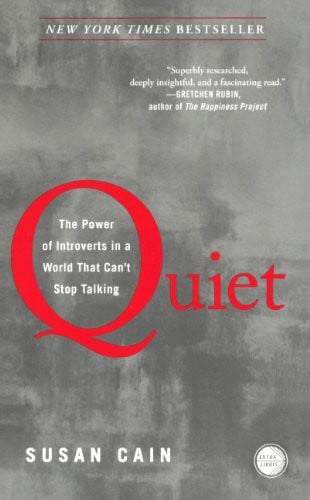
No. 8 on this list. Quiet: The Power of Introverts in a World That Can't Stop Talking
Susan Cain · 2012
Easy5 hours
A cultural touchstone that changed the conversation about introversion. Widely read and cited.
No. 9 on this list. On Grief: Love, Loss, Memory (Atlantic Editions)
Jennifer Senior · 2023
Very Easy1 hours
A 2023 standalone reissue of a magazine feature, which has not yet entered syllabi. Its place in journalism courses is likely but still emerging, and it is not part of a literary canon.
Chödrön, an American-born Tibetan Buddhist nun, writes about suffering not as something to be fixed or overcome but as a gateway to awakening. Drawing on Tibetan Buddhist teachings about impermanence, groundlessness, and compassion, she argues that our instinct to flee from pain—through distraction, denial, aggression, or addiction—is itself the source of most suffering. The book offers an alternative: staying present with discomfort, learning to relax into uncertainty, and discovering that the ground we thought we were standing on was always an illusion. Chödrön writes with warmth, humor, and the hard-won wisdom of someone who became a nun after her second marriage ended. Her prose is simple and direct—deliberately so, as she believes that spiritual teaching should be as accessible as a conversation. The book has sold millions of copies and become one of the most widely read Buddhist texts in the English-speaking world, not because it promises to make things better but because it teaches readers to be present with things as they are.

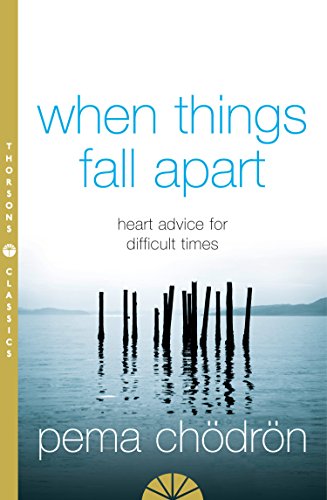
No. 11 on this list. Atlas of the Heart: Mapping Meaningful Connection and the Language of Human Experience · Brené Brown
Ranked by literary regard among eligible works in the current catalogue. This position reflects the available catalogue evidence.
Easy
Start this bookNo. 12 on this list. The Delusions of Certainty · Siri Hustvedt · 2017
Ranked by literary regard among eligible works in the current catalogue. This position reflects the available catalogue evidence.
Challenging9.8 hours
Start this bookNo. 13 on this list. Bird by Bird · Anne Lamott · 1994
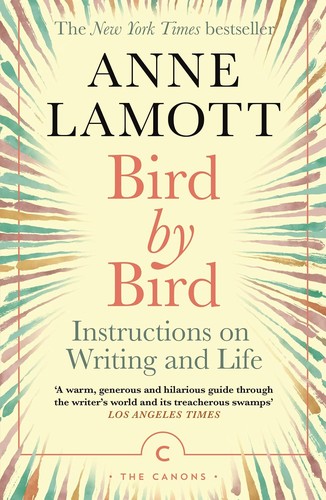
Lamott's guide to writing—and to the emotional life of writers—is built around the story that gives it its title: her ten-year-old brother, paralyzed by a school report on birds that was due the next day, was told by their father, 'Just take it bird by bird, buddy.' That advice—break the impossible into manageable pieces—animates the entire book. Lamott writes about shitty first drafts (her term, and she insists they are essential), about jealousy and self-doubt, about the importance of writing groups and of paying attention to the world. She is funnier than most writing guides allow themselves to be, and more honest about the difficulty of the writing life: the rejection, the financial insecurity, the near-certainty that publication will not make you happy. The book endures because it treats writing not as a career strategy but as a spiritual practice, a way of paying attention to the world that makes life more bearable.
Very Easy2.3 hours
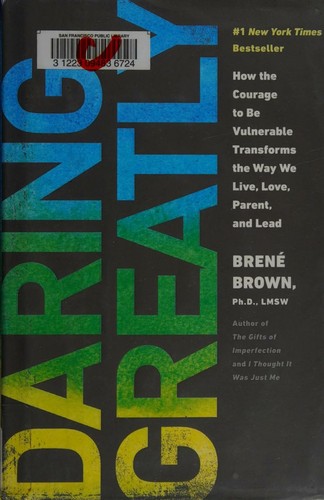
Start this bookNo. 14 on this list. Daring Greatly: How the Courage to Be Vulnerable Transforms the Way We Live, Love, Parent, and Lead · Brené Brown · 2012
It is a bestselling popular psychology and self-help title, widely read in workplaces and book clubs, and not a fixture of literature curricula. It sits with commercial nonfiction rather than syllabus staples.
Very Easy3.6 hours
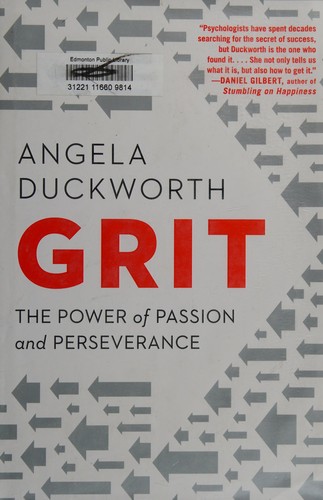
Start this bookNo. 15 on this list. Grit · Angela Duckworth · 2016
Duckworth, a psychologist at the University of Pennsylvania, argues that the secret to outstanding achievement is not talent but grit: the combination of passion (a consistent, long-term interest) and perseverance (the stamina to keep working through setbacks). She studied West Point cadets, National Spelling Bee finalists, rookie teachers in tough schools, and salespeople, and found that grit predicted success more reliably than IQ, SAT scores, or physical fitness. She traces her own path from a childhood in which her father told her she was 'no genius' to a MacArthur Fellowship, and she interviews world-class performers—swimmers, musicians, businesspeople—to identify the common patterns: they chose a direction, they practiced deliberately, they developed a sense of purpose beyond self-interest, and they maintained hope through failures. Duckworth grounds each claim in research and handles the obvious objection—that grit is just privilege in disguise—by examining how grit interacts with opportunity. The book became a cultural phenomenon, entering the vocabulary of educators, coaches, and parents, though critics debated whether grit was truly distinct from conscientiousness.
Very Easy3.5 hours
Start this bookNo. 16 on this list. The Earth Path: Grounding Your Spirit in the Rhythms of Nature · Starhawk · 2005
The book is a popular spirituality and ecology title with no recorded syllabus presence. It circulates among Pagan, permaculture and activist communities rather than in standard curricula.
Easy3.3 hours
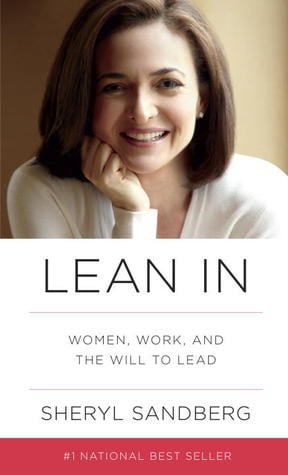
Start this bookNo. 17 on this list. Lean In · Sheryl Sandberg · 2013
Sandberg, then COO of Facebook, argues that women hold themselves back in their careers through a combination of internalized self-doubt, fear of being disliked, and the tendency to 'leave before they leave'—scaling back ambitions in anticipation of future family commitments. She draws on social science research, her own experience at Google and Facebook, and anecdotes from women across industries to argue that women should 'lean in' to their careers: negotiate harder, take risks, seek mentorship, and stop apologizing. The book launched a global conversation about women in leadership and a nonprofit organization, but it was also criticized for placing the burden of change on individual women rather than on the systemic structures—workplace policies, unequal domestic labor, discrimination—that hold women back.
Very Easy2.9 hours
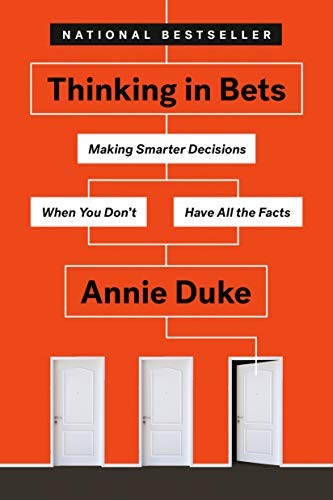
Start this bookNo. 18 on this list. Thinking in Bets · Annie Duke · 2018
Duke, a former professional poker player turned decision scientist, argues that the quality of a decision should be judged by its process, not its outcome. In poker, you can play a hand perfectly and still lose—and you can play terribly and win. She calls this 'resulting': the tendency to judge decisions by their outcomes rather than by whether they were rational given the information available. Duke provides a framework for better decision-making under uncertainty: think in probabilities rather than certainties, create a 'decision group' that challenges your assumptions, and conduct premortem analyses to anticipate failure. The book is practical and engaging, drawing on poker strategy, behavioral economics, and Duke's own experience of making decisions with millions of dollars at stake. Her central insight—that every decision is a bet on the future, and that acknowledging uncertainty improves rather than paralyzes decision-making—applies to everything from business to personal life.
Very Easy3.7 hours
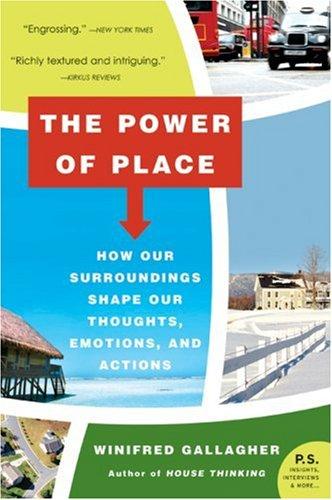
Start this bookNo. 19 on this list. The Power of Place · Winifred Gallagher · 1993
Well-regarded in environmental psychology. Less known in general public.
Easy4.5 hours
Start this bookNo. 20 on this list. Dopamine Nation: Finding Balance in the Age of Indulgence · Anna Lembke · 2021
No syllabus data is available in the database, and the book has no Wikipedia article on record. As a recent popular science and self-help title published in 2021, it has not yet entered academic literary or humanities curricula. Its canonical standing in medical education or public health contexts is separate from literary canonization.
Easy3.2 hours
Start this book

No. 21 on this list. The Empowerment Manual: A Guide for Collaborative Groups · Starhawk · 2011
A niche practical guide for organizers with no syllabus or prize evidence. It circulates in activist and community-building circles rather than literature courses.
Very Easy4.1 hours
Start this bookNo. 22 on this list. I Want to Die But I Want to Eat Tteokbokki · Baek Se-hee · 2022
The book is a contemporary bestseller with no recorded syllabi presence. It circulates as popular self-reflective nonfiction rather than a course text.
Very Easy2.4 hours
Start this bookNo. 23 on this list. El Secreto (The Secret) · Rhonda Byrne · 2007
Taught as a case study in publishing, popular spirituality and pseudoscience critique rather than as literature. It sits near the popular-commercial end alongside The Da Vinci Code.
Very Easy1.7 hours
Start this bookNo. 24 on this list. Untamed · Glennon Doyle · 2020
Untamed is a bestselling memoir and self-help book, much discussed in book clubs and on social media. It is not taught as literature.
Very Easy3.2 hours
Start this bookNo. 25 on this list. When the Ache Remains · Lisa Olivera · 2026
A 2026 release with no syllabi presence and no prizes. It sits in commercial self-help like Beach Read in romance.
Very Easy2.4 hours
Start this bookNo. 26 on this list. You Are a Badass · Jen Sincero · 2013
It is a commercial self-help bestseller and does not appear on literary syllabi. It is a cultural phenomenon in popular publishing rather than a curriculum text, like Beach Read.
Very Easy2.3 hours
Start this bookNo. 27 on this list. How to Be a Bawse: A Guide to Conquering Life · Lilly Singh · 2017
The book is a commercial bestseller with no recorded syllabus presence or academic canon status. It belongs to popular self-help rather than literary curricula.
Very Easy3.6 hours
Start this bookNo. 28 on this list. Badass Habits · Jen Sincero · 2020
This is a commercial self-help title from 2020 with no syllabus presence recorded and no prizes. It belongs to popular-market reading rather than any curriculum.
Very Easy2.5 hours
Start this bookNo. 29 on this list. Grace's Guide: The Art of Pretending to Be a Grown-up · Grace Helbig
A celebrity humor handbook from 2014, it has no recorded syllabus presence and sits firmly in popular commercial publishing. It belongs to the same category as Beach Read, a commercial title unlikely to be taught as literature.
Very Easy2.1 hours
Start this bookNo. 30 on this list. Grace & Style: The Art of Pretending You Have It · Grace Helbig
A 2016 celebrity humor and style book from Touchstone, with no syllabi or prestige editions recorded. It belongs to popular commercial publishing like Beach Read.
Very Easy
Start this book



About this list
These 31 books are the highest-scoring eligible psychology books by women currently in the catalogue. About 103 hours of reading in all, for the 29 with measured lengths. Difficulty runs from 15 to 30 out of 100 for the middle half of the list; the summit is The Delusions of Certainty at 63.
This list is ranked by literary regard, with a consistent order for equal scores. Membership follows authors and co-authors, not translators or editors. Catalogue coverage and the historical canon both limit what this list can represent, and genre labels are the catalogue’s own, gathered into broader kinds.
When we matched the Canons dataset to our catalogue in October 2026, our canonical-status scores rose with the number of school curricula, publisher series and lists in it that cite a work: the median score was 72 for books one such source cites, 84 at two, 88 at three, 92 at four and 93 at five or more. Prizes are left out of that count. Outside the state curricula, the dataset’s sources choose mostly from what has been translated into English or French, so it is a weaker check on other literatures. Source: Canons (Andrew Piper), CC BY 4.0
Questions people actually ask
- What are the best psychology books by women?
- By literary regard, which weighs canonical status, critical standing and influence: Coming of Age in Samoa: A Psychological Study of Primitive Youth for Western Civilisation by Margaret Mead, Growing Up in New Guinea by Margaret Mead, In the Freud Archives by Janet Malcolm, The Child by Maria Montessori and The Creative Habit: Learn It and Use It for Life by Twyla Tharp. ReadingRate ranks 31 such books, each with a difficulty score and a reading-time estimate.
- Which psychology books by women should I read first?
- Start from difficulty, not from rank. The most approachable books on this list that still carry top literary regard are Coming of Age in Samoa: A Psychological Study of Primitive Youth for Western Civilisation by Margaret Mead (about 4.5 hours), In the Freud Archives by Janet Malcolm and Growing Up in New Guinea by Margaret Mead.
- What are the shortest of the best psychology books by women?
- Among the top 25, the shortest are On Grief: Love, Loss, Memory (Atlantic Editions) by Jennifer Senior (about 1 hours), El Secreto (The Secret) by Rhonda Byrne (about 1.7 hours) and When Things Fall Apart by Pema Chödrön (about 2.3 hours), at an average pace of 250 words a minute adjusted for each book's difficulty.
- Which of the best psychology books by women are the established classics?
- By canonical status, how firmly a book sits in curricula, anthologies and the canon: Coming of Age in Samoa: A Psychological Study of Primitive Youth for Western Civilisation by Margaret Mead, In the Freud Archives by Janet Malcolm, Growing Up in New Guinea by Margaret Mead, The Child by Maria Montessori and The Door by Magda Szabo by Magda Szabó.
- How long would it take to read the top ten?
- About 40 hours, at an average pace of 250 words a minute adjusted for each book's difficulty: 21 days at two hours a day. Set your own pace on the page and the list's reading times change to it.
- How hard are psychology books by women to read?
- Most of this list sits between 15 and 30 on ReadingRate's 100-point difficulty scale, where 40 to 55 is moderate. The summit is The Delusions of Certainty at 63. Every entry carries its own score, so a reader can pick a great book at a difficulty they will finish.
- How is this list ranked?
- On literary-regard data: how canonically established a work is, its critical standing, and its influence on later writing. It is not a readers’ poll, which is why recent bestsellers rarely appear. Membership follows authors and co-authors, not translators or editors. Lists by country, author, period, theme or difficulty keep to literature (fiction, poetry, drama and philosophy), their novels, poems and plays first and their philosophy after them; a list of a kind of book, such as memoir or criticism, keeps every book of that kind. Every list holds at most three works by one author.