Hours at an average pace
Showing 32 books
About 215 hours for 32 of 32 books with measured lengths. Estimates use 250 words a minute, adjusted for each book's difficulty. At 2 hours a day, about 108 days for those books.
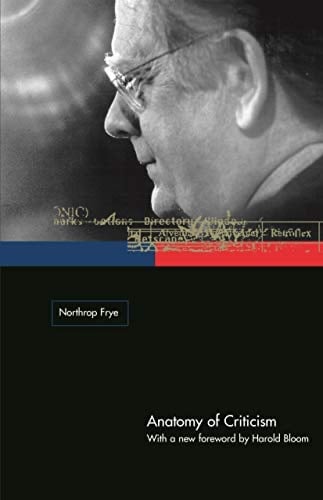
Anatomy of Criticism is standard required reading in graduate English programs throughout the anglophone world and has been since its publication in 1957. It appears on nearly every foundational course in literary theory and criticism alongside Barthes, Derrida, and Said. No formal syllabus data was retrieved, but its presence in the curriculum is comparable to Beloved (85) or stronger — it is the foundational text of archetypal criticism.
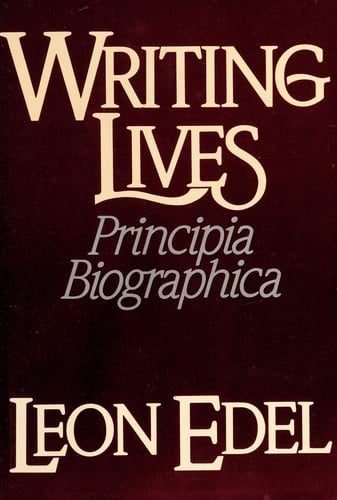
The principal statement of psychobiographical method; assigned in biography seminars for forty years.
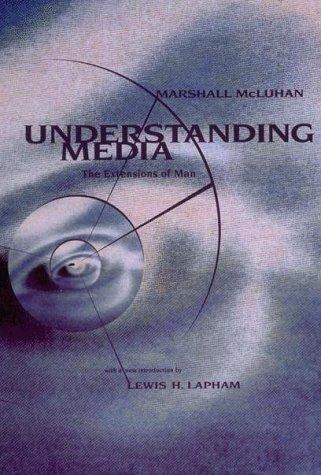
It is the foundational text of media theory, assigned across communication, media studies, cultural studies and sociology. It is less widely taught as literature than the great novels but a fixture of its field.
Standard in narrative medicine curricula and widely read in medical humanities courses.
No. 5 on this list. The Licensing Act of 1737 and the Staging of the Eighteenth-Century Essay
Margaret Anne Doody · 1996
Challenging17 hours
The major revisionist challenge to Watt; essential in any account of the novel's origins.
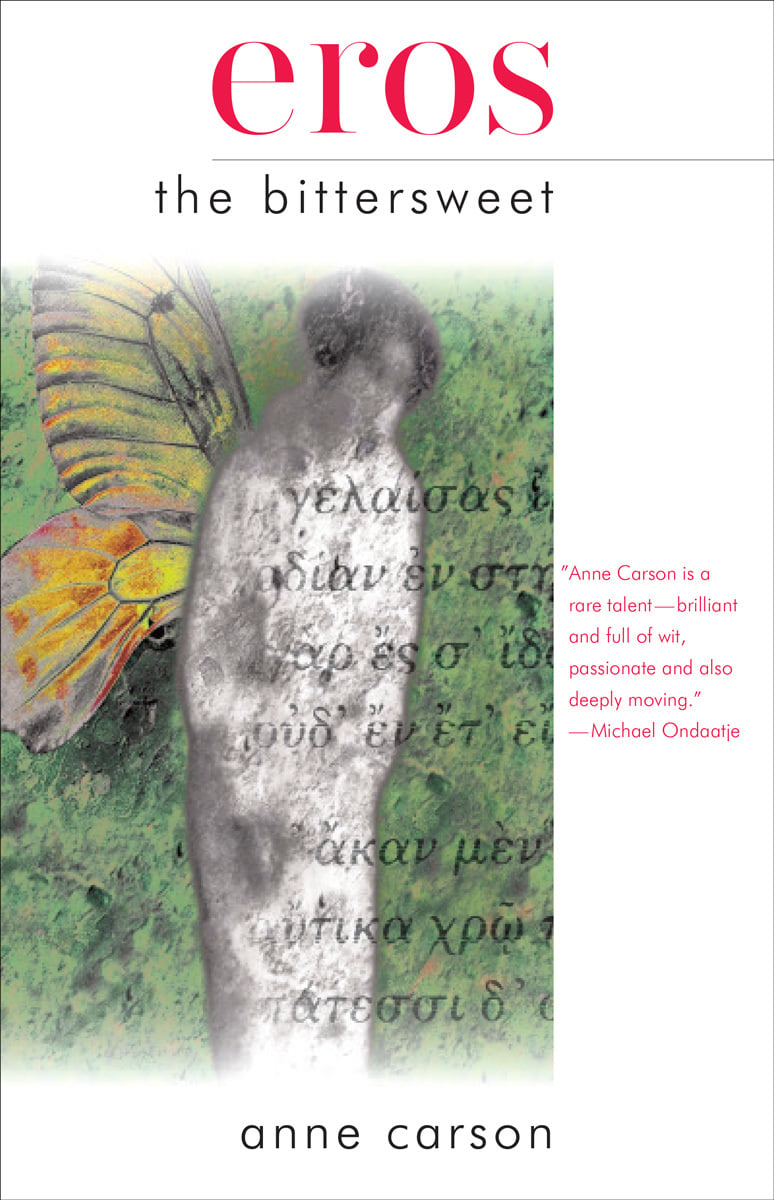
Carson's first book, which grew out of her doctoral work on Sappho and Greek lyric and was published by Princeton University Press in 1986, has become a standard text in courses on classics, poetics and the literature of desire. It has stayed in print for four decades and is widely taught in poetry programmes.
No. 7 on this list. A Poetics of Postmodernism: History, Theory, Fiction
Linda Hutcheon · 1988
Challenging11 hours
A Poetics of Postmodernism is a widely cited foundational text in postmodern literary studies, assigned in graduate programs in literary theory and cultural studies throughout the 1990s and 2000s. While no verified syllabus count or Wikipedia data is available in the database, Hutcheon's coinage of 'historiographic metafiction' entered the critical lexicon as a standard term. It is canonical within its specialized field but not broadly taught outside literary theory courses.
Carson's Nobel Prize in Literature lifts the standing of her major early collection, and The Glass Essay is widely anthologized and taught in contemporary poetry courses. It remains newer to syllabi than established canon works.
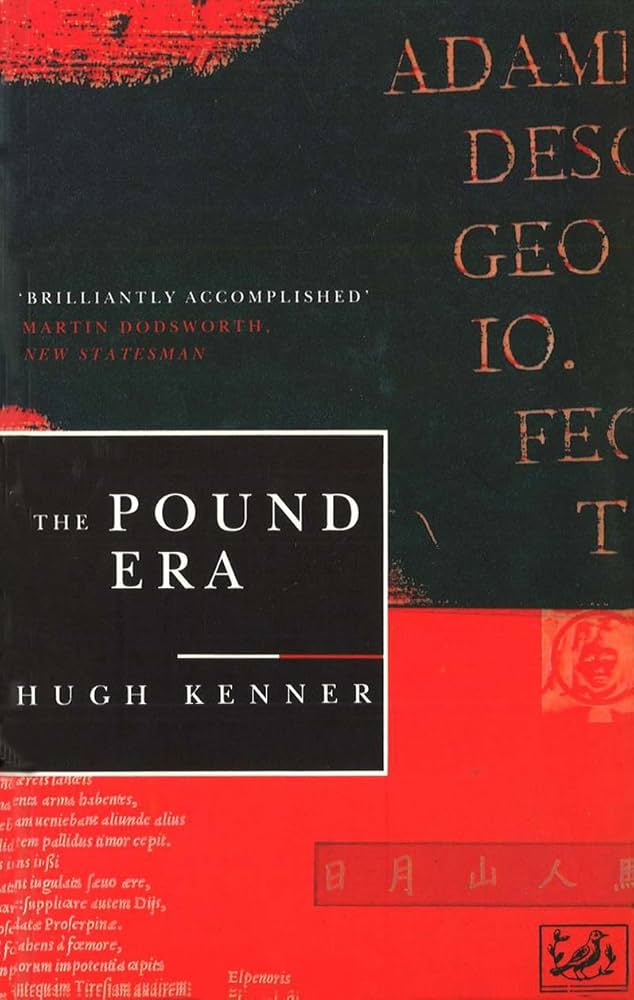
Widely assigned in graduate courses on Anglo-American modernism and standard reading in Pound and Eliot scholarship. Not a mainstream undergraduate text, but canonical within modernist studies — appearing on virtually every PhD reading list in the field. The book lacks the data-signal breadth of broadly taught works but occupies an uncontested position in its domain.
The founding theoretical work of academic science fiction studies and a standard text on graduate and specialist syllabi in the field. Outside SF studies it is taught mainly in courses on genre and utopia.

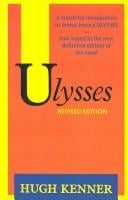
No. 11 on this list. Ulysses · Hugh Kenner · 1980
A compact critical study written for the Unwin Critical Library and revised in 1987, it is a frequent recommendation on Joyce course reading lists. It is used as a companion to the novel rather than read as an independent classic.
Difficult8 hours
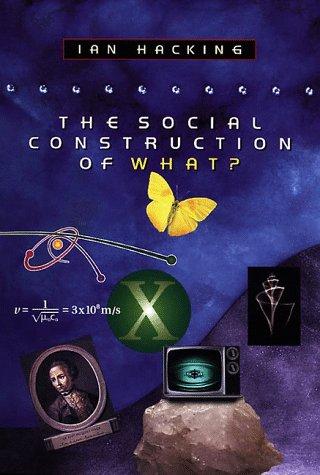
Start this bookNo. 12 on this list. The Social Construction of What? · Ian Hacking · 1999
Standard reading in philosophy of science and science studies.
Challenging7.5 hours
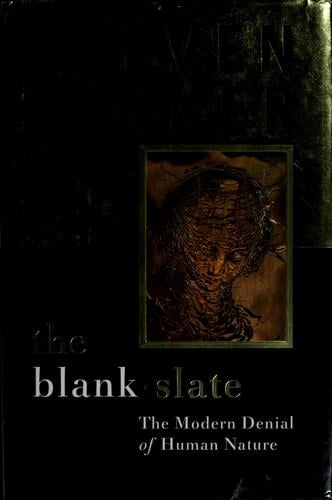
Start this bookNo. 13 on this list. The Blank Slate · Steven Pinker · 2002
The Blank Slate is a standard text in courses on psychology, evolutionary thought and science-and-society debates. It is widely assigned and cited, but it is a popular-science work and has not reached the status of a canonical classic.
Moderate14 hours
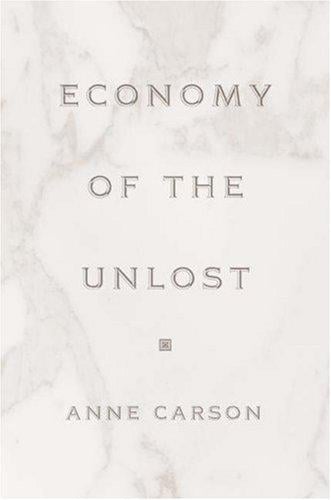
Start this bookNo. 14 on this list. Economy of the Unlost · Anne Carson · 1999
As a specialist study in comparative literature, it is taught in classics and poetics courses rather than as a general text. Its standing grows with Carson's reputation, including a Nobel Prize in Literature in 2026.
Challenging3.8 hours
Start this bookNo. 15 on this list. The Wounded Storyteller · Arthur W. Frank · 1995
The Wounded Storyteller is a standard text in medical humanities, narrative medicine, and health communication curricula at universities across North America and Europe. Published by the University of Chicago Press, it appears on hundreds of graduate syllabi in sociology, nursing, and literature-and-medicine programs. It has not achieved the broad undergraduate reach of sociological classics like Goffman's Stigma, but holds firm canonical status within its specialized field.
Moderate4.9 hours
Start this bookNo. 16 on this list. The Weird and the Eerie · Mark Fisher · 2017
Ranked by literary regard among eligible works in the current catalogue. This position reflects the available catalogue evidence.
Challenging3.1 hours
Start this bookNo. 17 on this list. Negotiating with the Dead: A Writer on Writing · Margaret Atwood · 2002
Our database captured no syllabus signals, but the book is a staple of the writers-on-writing shelf, assigned in creative writing programs and cited steadily in Atwood scholarship. It sits beside King's On Writing and Lamott's Bird by Bird in reputation while being the most literary of the three.
Moderate3.8 hours
Start this bookNo. 18 on this list. Magical Realism and the Fantastic: Resolved versus Unresolved Antinomy · Amaryll Chanady · 1985
Foundational theoretical text for distinguishing magical realism from neighboring literary modes.
Challenging5.3 hours
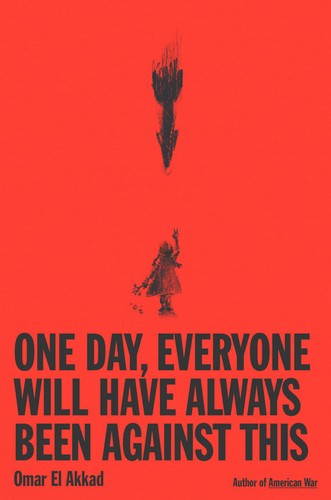
Start this bookNo. 19 on this list. One Day, Everyone Will Have Always Been Against This · Omar El Akkad · 2025
The book appeared in 2025, so it has had little time to enter curricula. Its National Book Award for Nonfiction will bring it attention in contemporary and political writing courses.
Easy3.2 hours
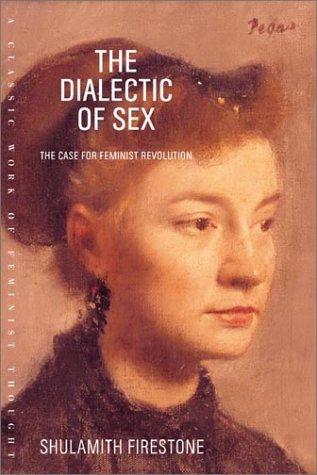
Start this bookNo. 20 on this list. The Dialectic of Sex · Shulamith Firestone · 1970
One of the key texts of radical feminism. Experiencing a scholarly revival.
Challenging4.5 hours
Start this book
No. 21 on this list. The Sense of Style · Steven Pinker · 2014
The Sense of Style has become a fixture on writing-course syllabi and "recommended style guides" lists as a modern counterpart to Strunk and White, but it competes in a crowded field of contemporary craft books rather than occupying settled canonical territory. No syllabus or Wikipedia-language data was returned for this title in ReadingRate's signal set, so this score rests on its visible standing in composition and journalism curricula rather than measured data.
Easy5.2 hours
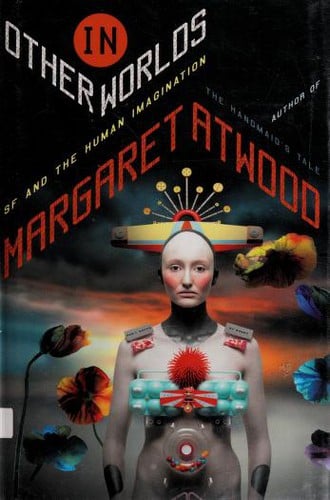
Start this bookNo. 22 on this list. In Other Worlds: SF and the Human Imagination · Margaret Atwood · 2011
In Other Worlds is not widely taught as a standalone text in university curricula; SF studies and genre criticism courses occasionally assign individual essays, but it lacks the syllabus presence of Atwood's major novels. No database signals for recognitions, syllabus appearances, or Wikipedia coverage were found for this title specifically. Its canonical standing is modest relative to Atwood's fiction.
Moderate4.5 hours
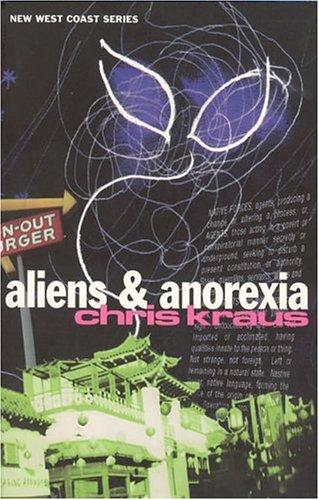
Start this bookNo. 23 on this list. Aliens & Anorexia · Chris Kraus · 2000
A cult text of 2000s experimental writing, published by Semiotext(e), with no syllabus data to show wide teaching. It reads as niche, not canonical, and sits well below Beach Read's commercial neighbors in prestige but far from the major canon.
Challenging6.4 hours
Start this bookNo. 24 on this list. Survival: A Thematic Guide to Canadian Literature · Margaret Atwood · 1972
The founding document of Canadian literary nationalism; taught in virtually every Canadian literature course.
Easy4 hours
Start this bookNo. 25 on this list. The Bush Garden: Essays on the Canadian Imagination · Northrop Frye · 1971
The second founding document of Canadian literary criticism, alongside Atwood's Survival.
Moderate5 hours
Start this bookNo. 26 on this list. A Reader's Manifesto · B.R. Myers · 2002
No syllabus or Wikipedia signal is tracked for this title in our database, and as a polemical essay it doesn't compete for curriculum slots with novels or standard critical texts. It survives instead as a famous episode — a rallying cry cited in debates over literary pretension, MFA prose, and the clarity-versus-difficulty question — rather than as assigned reading.
Easy2.2 hours
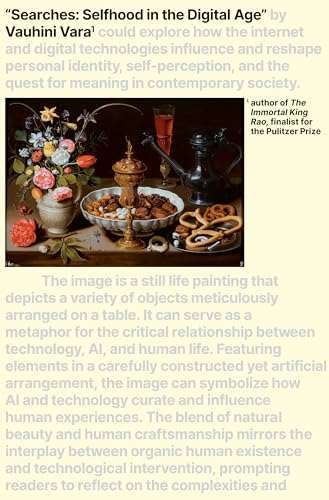
Start this bookNo. 27 on this list. Searches: Selfhood in the Digital Age · Vauhini Vara · 2025
From the author of The Immortal King Rao, finalist for the Pulitzer Prize, a personal exploration of how technology companies have both fulfilled and exploited the human desire for understanding and connection A Most Anticipated Book from The New York Times and more! • One of Esquire’s Best Books of the Year (So Far) • One of Vanity Fair's Best Books to Kick Off Your Summer Reading • A Belletrist Book Club Pick "I cannot imagine a better guide through the infuriating, labyrinthine underworld of technology than Vauhini Vara."—Carmen Maria Machado, author of In the Dream House “Smart, funny, honest.”—The New Yorker • "Seamless blend of personal narrative and systemic critique."—The Atlantic • "Beautifully written and profoundly researched." —Kirkus • "At once genre-defying and gripping.”—The Washington Post When it was released to the public in November 2022, ChatGPT awakened the world to a secretive project: teaching AI-powered machines to write. Its creators had a sweeping ambition—to build machines that not only could communicate but also could do all kinds of other activities, and better than humans ever could. But was this goal actually achievable? And if reached, would it lead to our liberation or our subjugation? Vauhini Vara, an award-winning tech journalist and editor, had long been grappling with these questions. In 2021, she asked a predecessor of ChatGPT to write about her sister’s death, resulting in an essay that was both more moving and more disturbing than she could have imagined. It quickly went viral. The experience, revealing both the power and the danger of corporate-owned technologies, forced Vara to interrogate how these technologies have influenced her understanding of herself and the world around her—from discovering online chat rooms as a preteen to using social media as The Wall Street Journal’s first Facebook reporter to asking ChatGPT for writing advice—while compelling her to add to the trove of human-created material exploited for corporate financial gain. Interspersed throughout this investigation are her own Google searches, Amazon reviews, and the other raw material of internet life—including the viral AI experiment that started it all. Searches illuminates how technological capitalism is both shaping and exploiting human existence while proposing that by harnessing the collective creativity that makes humans unique, we might imagine a freer, more empowered relationship with our machines and, ultimately, with one another.
Moderate6.7 hours
Start this bookNo. 28 on this list. Postcolonialism and the Literary Imagination of Canada · Diana Brydon · 2008
A key reference for postcolonial approaches to Canadian literary studies.
Moderate6 hours
Start this bookNo. 29 on this list. Butterfly on Rock: A Study of Themes and Images in Canadian Literature · D.G. Jones · 1970
An important precursor to the thematic tradition in Canadian criticism; widely taught.
Moderate4.5 hours
Start this bookNo. 30 on this list. The Village Effect: How Face-to-Face Contact Can Make Us Healthier, Happier, and Smarter · Susan Pinker · 2014
No syllabus data or Wikipedia presence was found in the database. Popular science books about social connection rarely enter university reading lists, and this title has not established the kind of curriculum presence associated with canonical nonfiction works.
Moderate7.6 hours
Start this book
About this list
These 32 books are the highest-scoring eligible essay collections from Canada currently in the catalogue. By literary regard, it opens with Anatomy of Criticism: Four Essays, Writing Lives and Understanding Media. About 215 hours of reading in all. Difficulty runs from 42 to 66 out of 100 for the middle half of the list; the summit is Ulysses at 85.
This list is ranked by literary regard, with a consistent order for equal scores. Membership follows authors and co-authors, not translators or editors. Catalogue coverage and the historical canon both limit what this list can represent, and genre labels are the catalogue’s own, gathered into broader kinds.
When we matched the Canons dataset to our catalogue in October 2026, our canonical-status scores rose with the number of school curricula, publisher series and lists in it that cite a work: the median score was 72 for books one such source cites, 84 at two, 88 at three, 92 at four and 93 at five or more. Prizes are left out of that count. Outside the state curricula, the dataset’s sources choose mostly from what has been translated into English or French, so it is a weaker check on other literatures. Source: Canons (Andrew Piper), CC BY 4.0
Questions people actually ask
- What are the best essay collections from Canada?
- By literary regard, which weighs canonical status, critical standing and influence, Anatomy of Criticism: Four Essays, Writing Lives, Understanding Media, At the Will of the Body and The Licensing Act of 1737 and the Staging of the Eighteenth-Century Essay lead. ReadingRate ranks 32 such books, each with a difficulty score and a reading-time estimate.
- Where should I start with essay collections from Canada?
- Start from difficulty, not from rank. The most approachable books on this list that still carry top literary regard are On Writing and Failure by Stephen Marche (about 1 hours), Survival: A Thematic Guide to Canadian Literature by Margaret Atwood and One Day, Everyone Will Have Always Been Against This by Omar El Akkad.
- How hard are essay collections from Canada to read?
- Most of this list sits between 42 and 66 on ReadingRate's 100-point difficulty scale, where 40 to 55 is moderate. The summit is Ulysses at 85. Every entry carries its own score, so a reader can pick a great book at a difficulty they will finish.
- How is this list ranked?
- On literary-regard data: how canonically established a work is, its critical standing, and its influence on later writing. It is not a readers’ poll, which is why recent bestsellers rarely appear. Membership follows authors and co-authors, not translators or editors. A list that is not a genre list keeps to literature (fiction, poetry, drama and philosophy), with philosophy taking no more than one slot in five while there is literature left to rank; every list holds at most three works by one author.