Hours at an average pace
Showing 30 books
About 219 hours for 30 of 30 books with measured lengths. Estimates use 250 words a minute, adjusted for each book's difficulty. At 2 hours a day, about 110 days for those books.
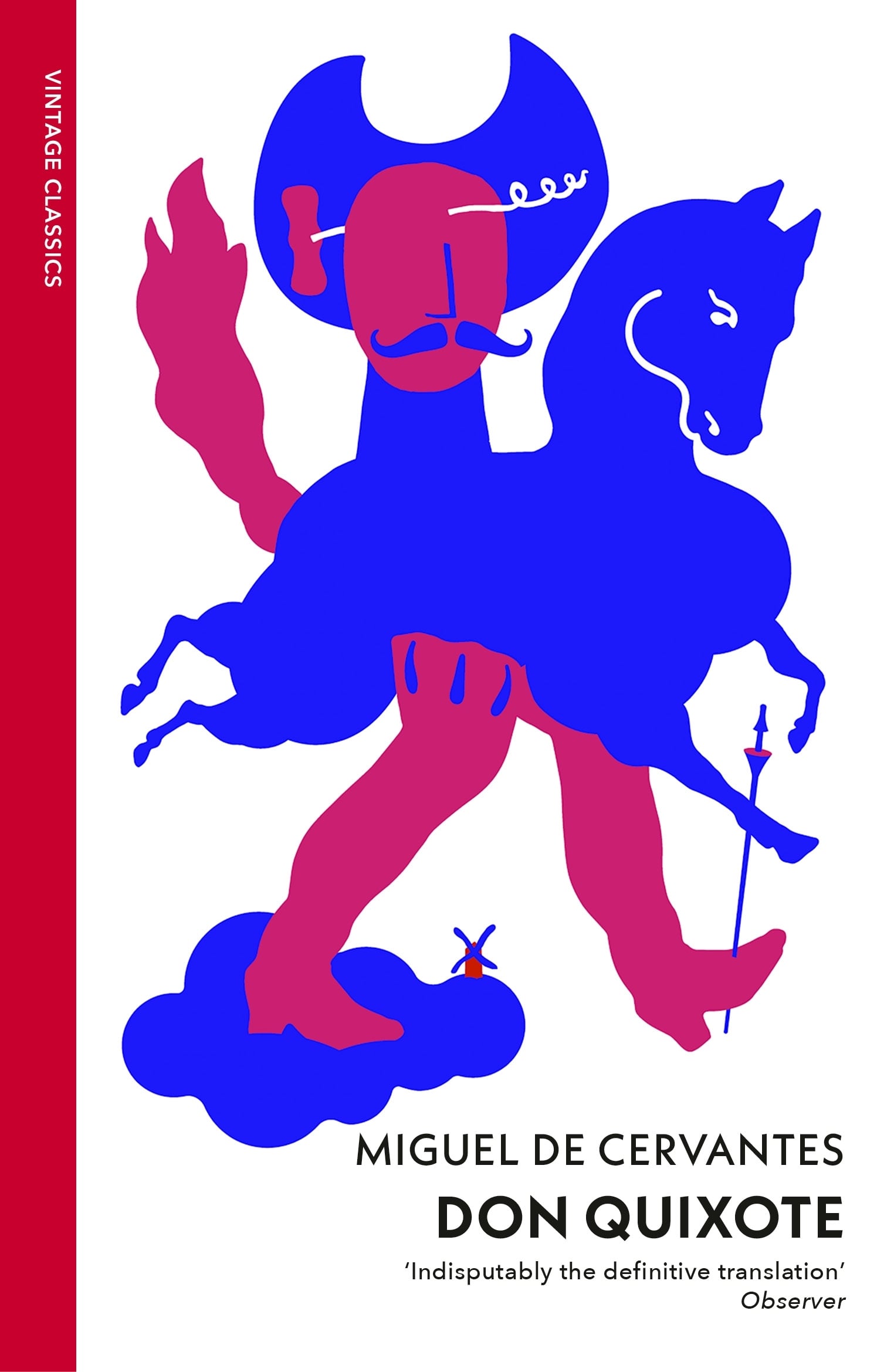
No. 1 on this list. Don Quixote
Miguel de Cervantes · 1605
Challenging31 hours
Taught in schools: Hungarian literature curriculum (magyar nyelv és irodalom) (Hungary), Literatura, Diseño Curricular – Provincia de Buenos Aires (Argentina), Montenegrin literature curriculum (crnogorski jezik i književnost) (Montenegro)
Included in: Bokklubben World Library, Great Books of the Western World
271 syllabus appearances (60.8th percentile) undersells its actual canonical weight. Don Quixote appears on virtually every Western canon list ever compiled, from Harold Bloom's to university core curricula worldwide. It is routinely called the first modern novel and the foundational work of Western fiction. Its relatively lower syllabus count likely reflects the novel's 900+ page length making it harder to assign in survey courses.
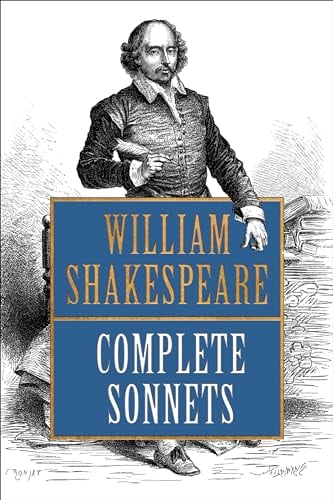
The single most important sonnet sequence in English and among the most celebrated poems ever written.
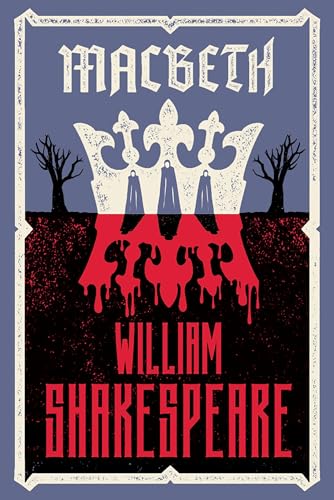
No. 3 on this list. Macbeth
William Shakespeare · 1606
Challenging1.4 hours
Taught in schools: WBCHSE English and Alternative English syllabuses (India)
Included in: Great Books of the Western World
Shakespeare compressed an entire arc of political ambition, guilt, and psychological disintegration into his shortest tragedy, giving English its most visceral portrait of how a single murderous act can unravel a mind. Lady Macbeth's sleepwalking and Macbeth's "tomorrow and tomorrow" soliloquy remain the benchmarks for dramatizing a conscience that cannot escape itself.
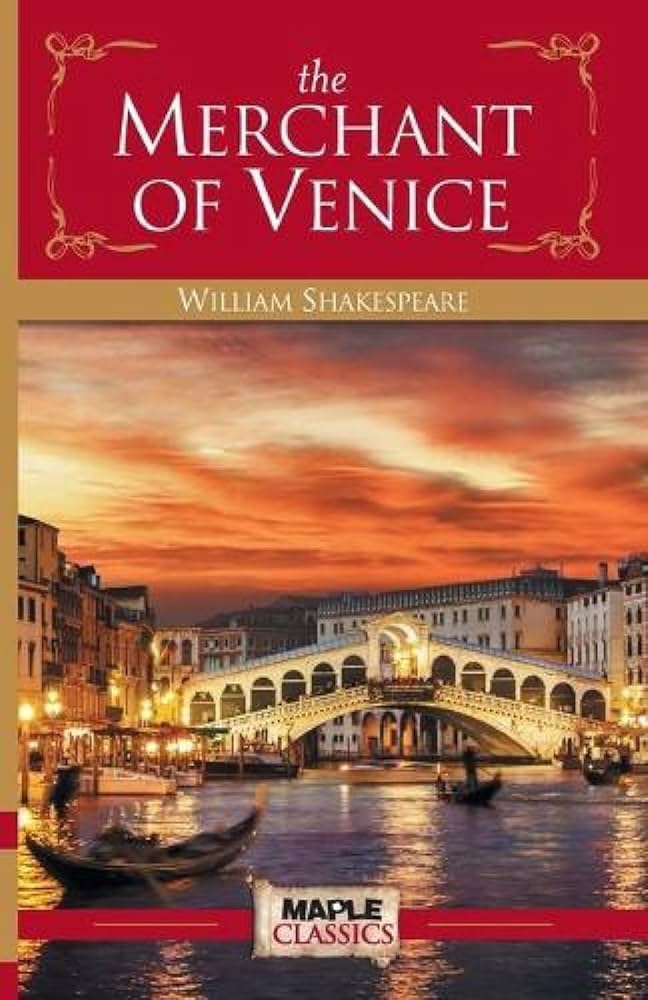
No. 4 on this list. The Merchant of Venice
William Shakespeare · 1600
Challenging3.9 hours
Taught in schools: Pacific Senior Secondary Certificate – English, Pearson Edexcel GCSE and A-level English Literature (UK)
Included in: Great Books of the Western World
The Merchant of Venice appears on university syllabi worldwide in courses on Shakespeare, Renaissance drama, and — increasingly — courses on race, religion, antisemitism, and law and literature. It is a permanent fixture in secondary school curricula across the English-speaking world. The figure of Shylock has made it one of the most discussed and ethically contested plays in the canon.
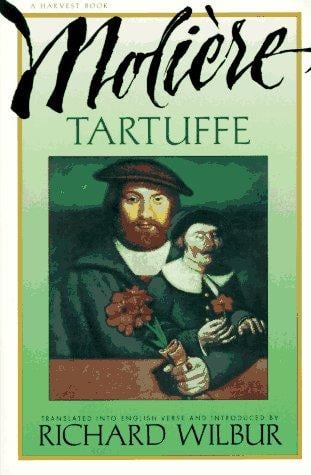
No. 5 on this list. Tartuffe
Molière · 1669
Moderate1.3 hours
Taught in schools: Hungarian literature curriculum (magyar nyelv és irodalom) (Hungary)
Included in: Great Books of the Western World
Tartuffe is required reading in French literature, comparative literature, and theater history courses at virtually every major university. It is among the most-performed French plays internationally and appears on nearly all canonical drama reading lists alongside Racine and Corneille. The play has been in continuous repertoire since 1669 and is central to any study of Western comedy.
No. 6 on this list. Lycidas
John Milton · 1638
Moderate6 min
Included in: Great Books of the Western World
A fixture of the Norton Anthology and of every Milton and Renaissance poetry course, and the standard example of the English pastoral elegy. Its place in anthologies and survey courses has been secure since the eighteenth century.
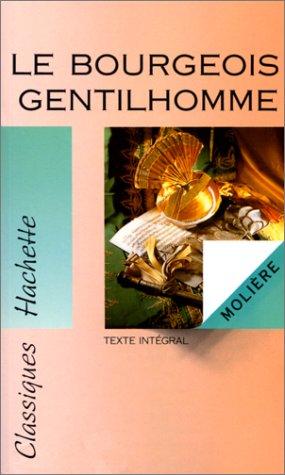
No. 7 on this list. The Bourgeois Gentleman
Molière · 1670
Moderate1.2 hours
Included in: Great Books of the Western World
Le Bourgeois Gentilhomme is required reading in French literature courses worldwide and appears in virtually every major world drama anthology. Commissioned by Louis XIV for the royal court in 1670, it has remained one of Molière's most performed plays for over three and a half centuries, cementing its place among the indispensable works of European theater.
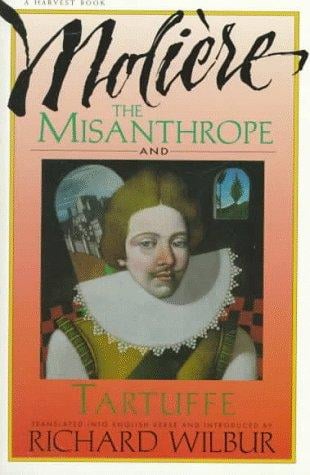
The Misanthrope is a cornerstone of university curricula in French literature, comparative literature, and theatre studies worldwide. No database records were returned, but by knowledge it appears on thousands of syllabi globally and has Wikipedia articles across dozens of languages. It is considered essential reading for any serious study of European classical drama.
The King James Bible is the most widely distributed text in Western civilization and the single most influential book in the English literary tradition. The Book of Job appears on virtually every humanities syllabus touching religion, philosophy, or literature, and has been central to theology, literary study, and philosophical discourse for two millennia. Milton, Blake, Keats, Tennyson, Dostoevsky, Kafka, and Toni Morrison have all engaged directly with Job; the 1611 KJV translation shaped English prose style for four centuries.
No. 10 on this list. Le Cid
Pierre Corneille · 1637
Moderate1.2 hours
Taught in schools: Hungarian literature curriculum (magyar nyelv és irodalom) (Hungary)
Included in: UNESCO Collection of Representative Works
Rodrigue has just killed a man in a duel. The man was the father of Chimène, the woman he loves. Now Chimène must demand his execution — and she does, publicly, before the king, even as she still loves him. This is the central knot of Corneille's 1637 tragicomedy, and he never loosens it: honor requires each of them to destroy the other, yet neither stops loving the other for a moment. Set in medieval Seville, Le Cid moves with the brisk efficiency of classical French theater — five acts, a single crisis, no wasted scenes. Rodrigue kills Count Gormaz to avenge his father's humiliation. He then defeats a Moorish invasion almost as an afterthought, becoming a national hero just as Chimène presses her case against him. The king delays, the Infanta nurses her own secret love for Rodrigue, and the play ends not with resolution but with a promise: wait a year, let time do its work. What makes Le Cid endure is the Cornelian dilemma at its core — the forced choice between love and duty, where doing the right thing is also the most brutal thing. Corneille gives both Rodrigue and Chimène equal moral weight. Neither is wrong. The alexandrine verse they speak is formal, even stiff to modern ears, but underneath it two people are trying to hold themselves together while being torn apart.
No. 11 on this list. Samson Agonistes · John Milton · 1671
Included in: Great Books of the Western World
Samson Agonistes is required reading in virtually every English Renaissance and early modern literature course at the university level, paired with Paradise Lost and Paradise Regained as the triad of Milton's major late works. It appears on countless syllabi and is included in every major anthology of English literature. While less universally taught than Paradise Lost, it holds a firm place in the upper tier of the seventeenth-century canon.
Challenging1.1 hours
Start this bookNo. 12 on this list. Clarissa · Samuel Richardson · 1748
Clarissa is a founding text of the English novel, appearing on virtually every 18th-century literature syllabus and in English doctoral programs worldwide. It features on the Modern Library and TIME All-TIME 100 lists and is treated as essential reading alongside Tom Jones and Robinson Crusoe. While database signals show no recorded syllabus appearances, this reflects data gaps rather than the book's actual canonical position — it is among the most studied British novels of any century.
Challenging8.5 hours
Start this bookNo. 13 on this list. Life Is a Dream · Pedro Calderon de la Barca · 1635
This is the defining play of the Spanish Golden Age and a staple of world drama and Spanish literature courses. It stands beside Hamlet as a meditation on action under uncertainty, though it is taught less universally in English-language curricula.
Challenging1.6 hours
Start this bookNo. 14 on this list. Doctor Faustus · Christopher Marlowe · 1604
A fixture of English Renaissance drama syllabi and 'great books' surveys, taught as the essential counterpart to Shakespeare's tragedies in any survey of Elizabethan theater. No syllabus or Wikipedia data was available in this pass, but four centuries of continuous curricular presence place it well above genre or contemporary fiction.
Moderate1.5 hours
Start this bookNo. 15 on this list. Paradise Regained · John Milton · 1671
Satan has fallen from Heaven, and Christ has been baptized in the Jordan. What comes next, in Milton's 1671 brief epic, is forty days in the wilderness and the most compressed philosophical argument in English verse. Satan does not simply offer bread and kingdoms. He offers Rome, with its full imperial apparatus; Athens, with its entire philosophical tradition from Socrates through Plato; and glory, defined in every form human ambition has devised. Christ refuses each in turn — not from weakness but from a clear-eyed account of what power, learning, and reputation are actually worth. The poem turns on a question Milton considered his career's central problem: what does true heroism look like, if it is not military conquest, political dominion, or classical education? His answer is patience, reason, and the rejection of everything Satan can plausibly offer. Written as a 'brief epic' in four books, Paradise Regained is spare where Paradise Lost is vast — no war in Heaven, no garden, no catastrophe. The drama is entirely verbal: two interlocutors debating the nature of kingship in a desert, one of them lying. The blank verse is the most concentrated Milton ever wrote. Each refusal Christ delivers is also a definition of the new heroism Milton believed the English Revolution had failed to produce.
Moderate1.1 hours
Read nowNo. 16 on this list. Britannicus · Jean Racine · 1669
Rome, 55 AD. Nero has been emperor for three years, and his mother Agrippine is beginning to suspect she has lost control of the monster she made. At the center of the court's intrigues stands Britannicus — Claudius's son, the throne's legitimate heir, and Nero's stepbrother — in love with Junie, whom Nero has just abducted and wants for himself. Racine compresses an entire education in tyranny into five acts and a single palace room. We watch Nero not as a tyrant already formed, but in the exact hours he chooses to become one: forcing Junie to reject Britannicus to his face while Nero watches from the shadows, reconciling with his mother with a warmth that masks a murder already decided. The verse is Alexandrine — formal, interlocked, each line balanced against the next — and the effect is of a world where every word is weighed because words are the only weapons left. Britannicus is a study in how power corrupts through small surrenders rather than single dramatic breaks. By the final scene, Nero has poisoned his rival at a feast, and Racine's epilogue tells us what history confirms: this was only the beginning.
Moderate1 hours
Start this bookNo. 17 on this list. Persian Letters · Montesquieu · 1721
Taught in schools: Hungarian literature curriculum (magyar nyelv és irodalom) (Hungary)
Persian Letters appears on university syllabi across French literature, Enlightenment history, and political philosophy courses worldwide. It is consistently anthologized as a founding text of the French Enlightenment and one of the first major works of sociological and political satire in the European tradition.
Challenging8.5 hours
Start this bookNo. 18 on this list. Moll Flanders · Daniel Defoe · 1722
Moll Flanders is taught in virtually every 18th-century British literature and novel origins course, recognized as one of the first English novels alongside Robinson Crusoe. No syllabus data is available in the database, but Defoe's foundational status in the novel's history ensures widespread academic presence. Wikipedia articles exist in dozens of languages, reflecting its global canonical recognition.
Moderate9.1 hours
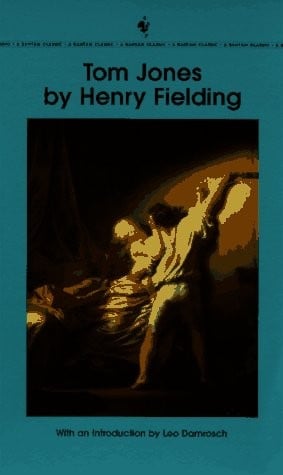
Start this bookNo. 19 on this list. Tom Jones · Henry Fielding · 1749
Included in: Great Books of the Western World
Tom Jones is a foundling, discovered as an infant in the bed of the wealthy Somerset squire Allworthy, who raises him alongside the scheming Blifil. Tom grows up handsome, generous, impulsive, and entirely unsuited to the careful management of reputation—which in 18th-century England is fatal. He loves Sophia Western, the spirited daughter of his neighbor, but his illegitimate birth and his talent for getting into trouble conspire against him. Expelled from Allworthy's estate, he sets out across England, stumbling through inns and battlefields and drawing rooms, pursued by Sophia, who is fleeing her own forced marriage. Fielding narrates all of this with a wit that never lets you forget he's in the room. Each book opens with a chapter of authorial commentary—on writing, morality, criticism, the reader's expectations—before he returns to the story. The effect is of a novelist who has invented the form and wants you to watch him think about it. Beneath the comedy, the novel asks a serious question: whether goodness of heart can survive a world that rewards calculation. Tom's answer, delivered across 900 pages of mishap and delight, is stubbornly, improbably yes.
Moderate23 hours
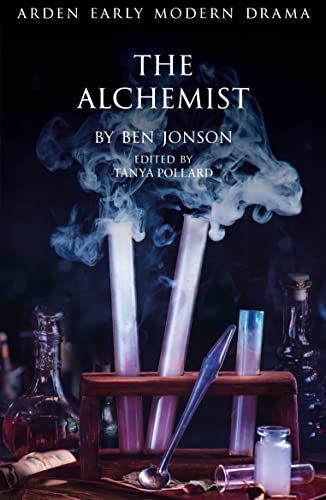
Start this bookNo. 20 on this list. The Alchemist · Ben Jonson · 1610
The Alchemist is one of the most taught comedies of the English Renaissance outside Shakespeare and a standard text in university courses on Jacobean drama. It is regularly revived by companies such as the Royal Shakespeare Company.
Challenging1.9 hours
Start this book
No. 21 on this list. Athalie · Jean Racine · 1691
Athalie occupies a firm position in the French literary canon as Racine's acknowledged masterpiece and one of the defining works of 17th-century classical theater. Taught in French lycées and universities as a foundational text, it stands alongside the greatest works of Corneille and Molière in the triumvirate of French classical drama. No database syllabus entries are recorded, but its canonical status within Francophone literary education is well established.
Moderate1.2 hours
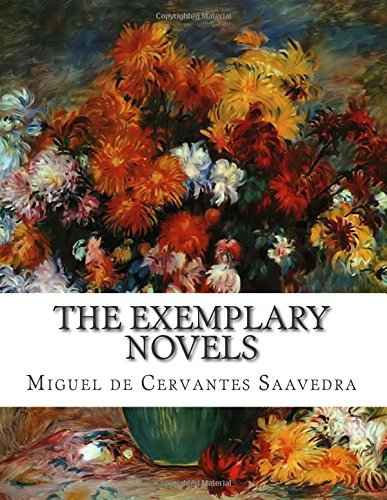
Start this bookNo. 22 on this list. Exemplary Novels · Miguel de Cervantes · 1613
The foundational collection of original short fiction in Spanish and a major work by the author of Don Quixote.
Moderate7.9 hours
Read nowNo. 23 on this list. The Knight of Olmedo · Lope de Vega · 1641
A central play of the Spanish Golden Age and standard in Spanish literature courses worldwide, regularly staged and anthologized, though less taught in English-language curricula than Hamlet.
Moderate1.3 hours
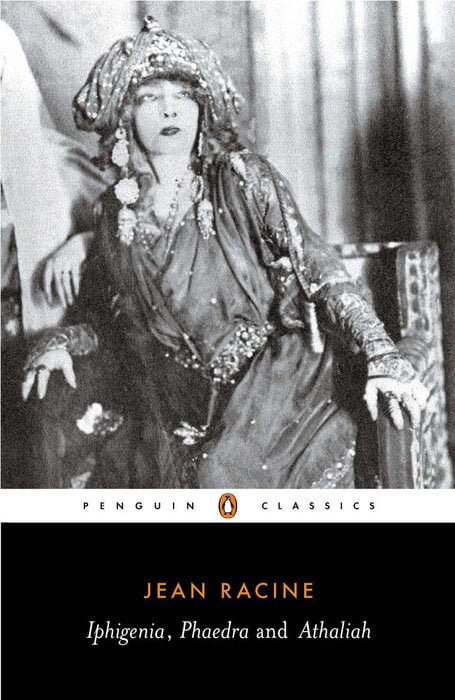
Start this bookNo. 24 on this list. Iphigenia · Jean Racine · 1674
Iphigénie is a staple of French classical literature courses at secondary and university level, particularly in France and the francophone world, where Racine's tragedies form the backbone of the literary canon. No syllabus data was found in the database, but the play's status as one of Racine's five major tragedies ensures it is routinely assigned alongside Phèdre and Andromaque. Its roots in Euripides give it a place in comparative drama courses as well.
Moderate5.4 hours
Start this bookNo. 25 on this list. Simplicius Simplicissimus · Hans Jakob Christoffel von Grimmelshausen · 1668
The foundational German novel of the Baroque and a fixture of German literature courses and of studies of the Thirty Years' War and the picaresque. Less universal in English-language curricula, though it is the German tradition's key early novel.
Moderate14 hours
Start this bookNo. 26 on this list. The Peach Blossom Fan · Kong Shangren · 1699
The play is a landmark of Chinese classical drama, taught in Chinese literature courses and ranked beside The Peony Pavilion. Western curricula teach it as a major work of late imperial literature.
Challenging7.7 hours
Start this bookNo. 27 on this list. The Duchess of Malfi · John Webster · 1614
Taught in schools: WJEC/Eduqas GCSE and A-level English Literature (UK)
Standard text in Renaissance and Jacobean drama survey courses and a fixture of English-literature anthologies, second in the period's tragic canon only to Shakespeare. Regularly revived by companies like the RSC and National Theatre, and adapted for BBC television and opera.
Challenging1.9 hours
Start this bookNo. 28 on this list. Volpone · Ben Jonson · 1606
Volpone is a fixture of Renaissance drama anthologies and early modern survey courses, though no syllabus or Wikipedia data was returned for this work in our dataset. It remains one of the two or three Jonson plays routinely taught alongside The Alchemist, sitting below Beloved's Nobel-author canonicity (85) and above genre-studies-only works.
Moderate1.8 hours
Start this bookNo. 29 on this list. Rhymes · Mikołaj Sęp Szarzyński · 1601
Polish literature courses treat Szarzyński as the founder of Baroque poetry and a required stop between Kochanowski and later Baroque poets. Outside Poland his presence is limited.
Challenging28 min
Start this bookNo. 30 on this list. The Travails of Persiles and Sigismunda · Miguel de Cervantes · 1617
Los trabajos de Persiles y Sigismunda is studied by Hispanists and in courses on Cervantes, but it is far less read than Don Quixote or the Exemplary Novels. General readers seldom meet it outside specialist settings.
Moderate11 hours
Start this book
About this list
These 30 books are the highest-scoring eligible moderately difficult early modern books currently in the catalogue. About 219 hours of reading in all. Difficulty runs from 48 to 58 out of 100 for the middle half of the list; the summit is Persian Letters at 63.
This list is ranked by literary regard, with a consistent order for equal scores. Membership follows authors and co-authors, not translators or editors. A book is here when ReadingRate files it under Early Modern Literature as one of its primary reading domains, and only when its author’s lifetime places it in the period. Catalogue coverage and the historical canon both limit what this list can represent.
When we matched the Canons dataset to our catalogue in October 2026, our canonical-status scores rose with the number of school curricula, publisher series and lists in it that cite a work: the median score was 72 for books one such source cites, 84 at two, 88 at three, 92 at four and 93 at five or more. Prizes are left out of that count. Outside the state curricula, the dataset’s sources choose mostly from what has been translated into English or French, so it is a weaker check on other literatures. Source: Canons (Andrew Piper), CC BY 4.0
Questions people actually ask
- What are the best moderately difficult early modern books?
- By literary regard, which weighs canonical status, critical standing and influence: Don Quixote by Miguel de Cervantes, Sonnets by William Shakespeare, Macbeth by William Shakespeare, The Merchant of Venice by William Shakespeare and Tartuffe by Molière. ReadingRate ranks 30 such books, each with a difficulty score and a reading-time estimate.
- Which moderately difficult early modern books should I read first?
- Start from difficulty, not from rank. The most approachable books on this list that still carry top literary regard are The Bourgeois Gentleman by Molière (about 1.2 hours), Exemplary Novels by Miguel de Cervantes and Moll Flanders by Daniel Defoe.
- What are the shortest of the best moderately difficult early modern books?
- Among the top 25, the shortest are Lycidas by John Milton (about 6 min), Samson Agonistes by John Milton (about 1.1 hours) and Britannicus by Jean Racine (about 1 hours), at an average pace of 250 words a minute adjusted for each book's difficulty.
- Which of the best moderately difficult early modern books are the established classics?
- By canonical status, how firmly a book sits in curricula, anthologies and the canon: King James Bible by Anonymous, Sonnets by William Shakespeare, Don Quixote by Miguel de Cervantes, Macbeth by William Shakespeare and Tartuffe by Molière.
- Can I read any of these moderately difficult early modern books for free?
- 6 of the 30 open in ReadingRate's reader with a free account, from public-domain editions: Sonnets, Macbeth, The Merchant of Venice, Lycidas, Paradise Regained and 1 more.
- How long would it take to read the top ten?
- About 108 hours, at an average pace of 250 words a minute adjusted for each book's difficulty: 55 days at two hours a day. Set your own pace on the page and the list's reading times change to it.
- How hard are moderately difficult early modern books to read?
- Most of this list sits between 48 and 58 on ReadingRate's 100-point difficulty scale, where 40 to 55 is moderate. The summit is Persian Letters at 63. Every entry carries its own score, so a reader can pick a great book at a difficulty they will finish.
- How is this list ranked?
- On literary-regard data: how canonically established a work is, its critical standing, and its influence on later writing. It is not a readers’ poll, which is why recent bestsellers rarely appear. Membership follows authors and co-authors, not translators or editors. Lists by country, author, period, theme or difficulty keep to literature: fiction, poetry and drama, with no philosophy, criticism or theory. A list of a kind of book, such as philosophy, memoir or criticism, keeps every book of that kind. Every list holds at most three works by one author. A book is here when ReadingRate files it under Early Modern Literature as one of its primary reading domains, and only when its author’s lifetime places it in the period.