Hours at an average pace
Showing 37 books
About 132 hours for 35 of 37 books with measured lengths. Estimates use 250 words a minute, adjusted for each book's difficulty. At 2 hours a day, about 67 days for those books.
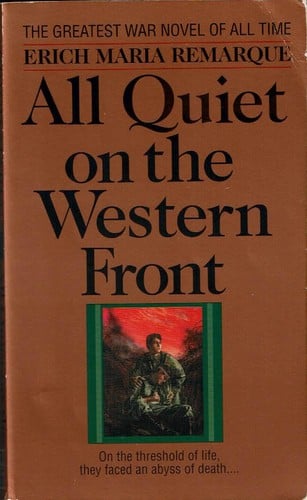
No. 1 on this list. All Quiet on the Western Front
Erich Maria Remarque · 1987
Easy4.3 hours
Taught in schools: AQA GCSE and A-level English Literature (UK)
One of the essential WWI novels, taught in literature and history courses worldwide.
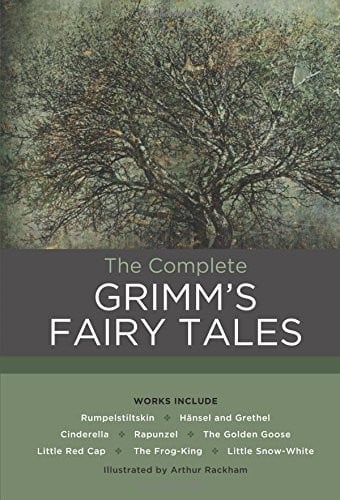
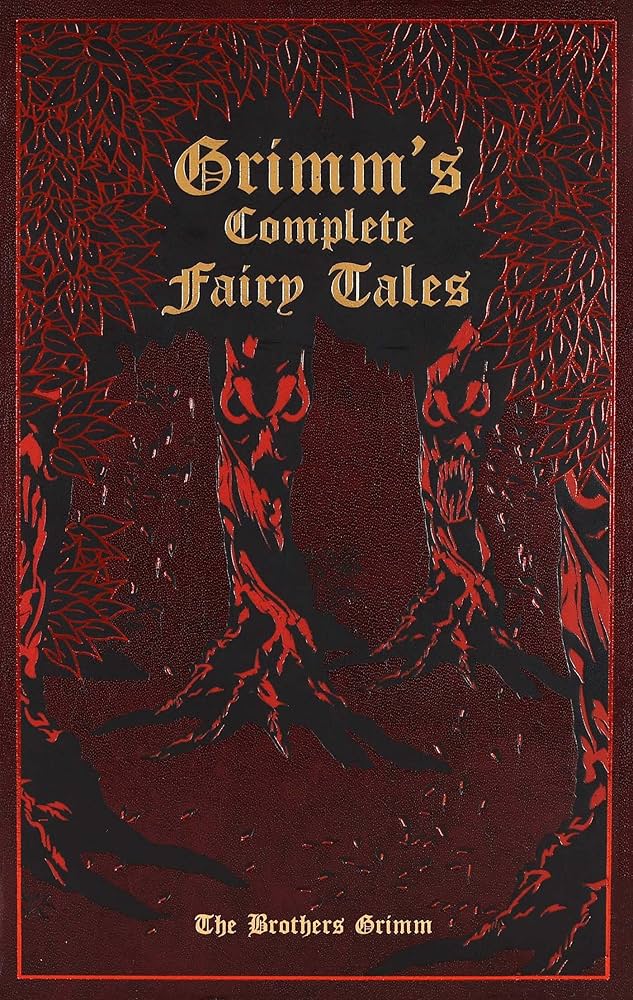
The Grimm tales are among the most widely taught and anthologized texts in the Western world, and they anchor folklore, children's literature, and German studies courses. Cinderella, Snow White, and Hansel and Gretel are cultural touchstones, though the edition itself is more of a reading text than a syllabus staple.
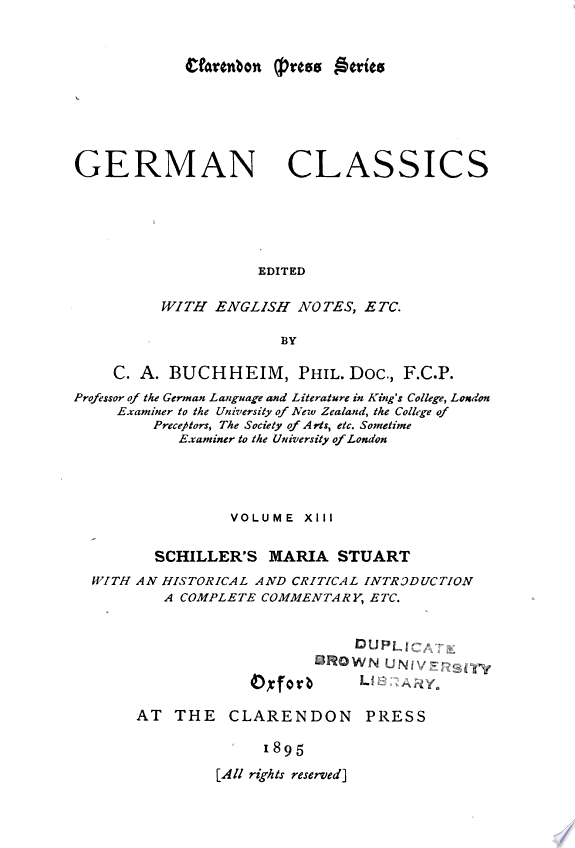
A foundation of the German classical canon, staple of German schools and theaters, and the Swiss national myth in dramatic form. It is taught widely in German-language curricula and translated into dozens of languages.
Jacob and Wilhelm Grimm collected Cinderella, Rapunzel, Hansel and Gretel, Snow White, and Rumpelstiltskin from oral sources and fixed them in print, giving Western childhood its permanent mythology. The collection launched the discipline of folklore studies and remains the most influential story anthology ever published.
One of the foundations of German theatre and Sturm und Drang, staple of German literature curricula, and regularly staged. Its place in world-drama courses is less universal than Hamlet's.
A central work of German classical drama, staple of German school and university curricula and a regular on European stages. It is less ubiquitous in English-language courses than Hamlet or Gatsby.
This is a cornerstone of Weimar Classicism and a standard text in German literature courses and school curricula. It is less widely taught in English-speaking courses than Faust.
The diary is a fixture of secondary education worldwide and appears in 72 Wikipedia language editions — on par with The Great Gatsby — reflecting its global canonical reach. Its 133 Open Syllabus appearances (53rd percentile) undercount its true presence, as it is taught most heavily at the pre-university level. Le Monde named it one of the 100 Books of the Century in 1999.
It is a staple of German literature curricula and the foundational German comedy, taught in schools and universities across the German-speaking world. Lessing's place in the Enlightenment canon keeps it on stage and on syllabi.
One of the masterpieces of German Romanticism and Hoffmann's most celebrated tale. Widely studied in German literature courses.
No. 11 on this list. Egmont · Johann Wolfgang von Goethe · 1788
Egmont is a staple of German literature syllabi and school curricula, and Beethoven's incidental music keeps it in concert programs. It ranks below Faust and Werther among Goethe's works in global teaching.
Moderate1.7 hours
Start this bookNo. 12 on this list. The Stechlin · Theodor Fontane · 1898
Highly regarded in German literature as Fontane's most experimental work. Less widely known internationally than Effi Briest but increasingly appreciated by scholars.
Moderate7.6 hours
Start this bookNo. 13 on this list. Tonio Kröger · Thomas Mann · 1903
One of Mann's most beloved early works and a key text in the literature of the artist's self-understanding.
Moderate1.3 hours
Read nowNo. 14 on this list. Memoirs of a Good-for-Nothing · Joseph von Eichendorff · 1826
It is the best-known German Romantic novella and a staple of German literature courses and school reading lists. English-language syllabi use it less, which keeps it below the world-literature giants.
Easy2.1 hours
Start this bookNo. 15 on this list. The Seventh Cross · Anna Seghers · 1942
It is a central text of German exile literature and anti-fascist writing, widely taught in German-language curricula and read in translation as an early depiction of the camps. It lacks the universal reach of the standard Western canon.
Moderate6.9 hours
Start this bookNo. 16 on this list. Stories · Heinrich Böll · 1950
Böll is a staple of postwar German literature teaching, and these early stories are part of that canon. This particular volume is less taught than his novels, and later collections largely replaced it in English.
Moderate
Start this bookNo. 17 on this list. Beneath the Wheel · Hermann Hesse · 1906
Hesse's best-known school novel, widely read in German classrooms and among young readers worldwide, though it is taught less than Siddhartha or Steppenwolf in Anglophone courses.
Easy3 hours
Start this bookNo. 18 on this list. The Rats · Gerhart Hauptmann · 1911
Hauptmann's best-known naturalist plays such as The Weavers are German-curriculum staples. The Rats is less widely taught, but it is a standard in German drama courses and was staged by major houses.
Moderate1.6 hours
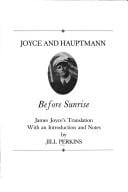
Start this bookNo. 19 on this list. Before Sunrise · Gerhart Hauptmann · 1930
Hauptmann's play follows a young socialist who arrives in a Silesian village and falls in love with the daughter of a rich farmer. The father drinks; the family's prosperity is built on exploitation; the socialist talks of revolution but cannot act. The play premiered in 1889, shocking audiences with its naturalistic portrayal of alcoholism and rural poverty. Hauptmann was not yet thirty, already at the center of German theater. The play's ending offers no resolution—the drunk father stumbles off, the lovers part, the system grinds on.
Moderate3.5 hours
Start this bookNo. 20 on this list. The Fury · Paul Heyse
Heyse was Germany's most popular short story writer in the nineteenth century, master of the Novelle form that required a turning point, a specific 'silhouette.' This collection exemplifies his craft: stories of love and betrayal set in Italy and Germany, each building toward its decisive moment. He won the Nobel Prize in 1910, the first German laureate, for a body of work now largely forgotten. The stories are elegant, their morality conventional, their technique still instructive.
Moderate1.1 hours
Start this book
No. 21 on this list. The Oppermanns · Lion Feuchtwanger · 1933
It is a standard text of German exile literature and a well-known Nazi-era novel, taught in German studies and Holocaust literature courses. It is less universal on syllabi than the major canon.
Easy9 hours
Start this bookNo. 22 on this list. Peter Camenzind · Hermann Hesse · 1904
A young man leaves his Swiss village for the city, where bohemian life and romantic disappointment lead him back to nature and art. Hesse's early novel already displays his themes of self-discovery, artistic vocation, and the conflict between society and the individual spirit.
Moderate3 hours
Read nowNo. 23 on this list. Tschick · Wolfgang Herrndorf · 2010
Tschick is a staple of German school reading lists and was a major bestseller in German-speaking countries, and it has been widely staged and filmed. Its international syllabus presence is smaller.
Easy3.8 hours
Start this bookNo. 24 on this list. Knulp · Hermann Hesse · 1988
Part of Hesse's well-known body of work and read in German-language contexts, but far less taught than Siddhartha or Steppenwolf.
Easy2.1 hours
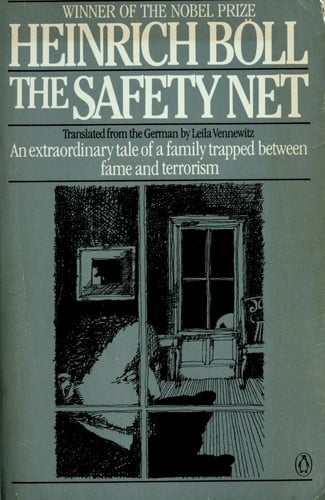
Start this bookNo. 25 on this list. The Safety Net · Heinrich Böll · 1979
A significant late Böll novel, respected but less widely read than The Clown or Katharina Blum. Important in the context of German literature of the 1970s.
Moderate5.2 hours
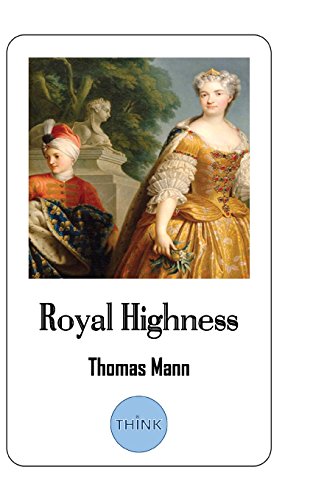
Start this bookNo. 26 on this list. Royal Highness · Thomas Mann · 1909
Mann's least-discussed major novel, though it illuminates his central themes. A minor work by a major writer.
Moderate6 hours
Read nowNo. 27 on this list. The Black Swan · Thomas Mann · 1953
A minor late work by Mann, known to scholars and Mann enthusiasts but rarely anthologized or taught.
Moderate1.9 hours
Start this bookNo. 28 on this list. Peninsula · Kristine Bilkau · 2025
Winner of the Preis der Leipziger Buchmesse 2025 in fiction, which brings it into German literary conversation. Published in 2025, it is too recent to be an established teaching text.
Easy3.2 hours
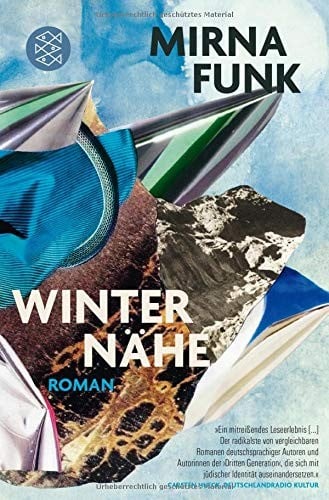
Start this bookNo. 29 on this list. Winternähe · Mirna Funk · 2015
The 2015 debut has no recorded syllabus presence and is a recent contemporary German novel. Its theme of Jewish identity in Germany gives it some use in German studies, but it is far from a canonical text.
Easy5.5 hours
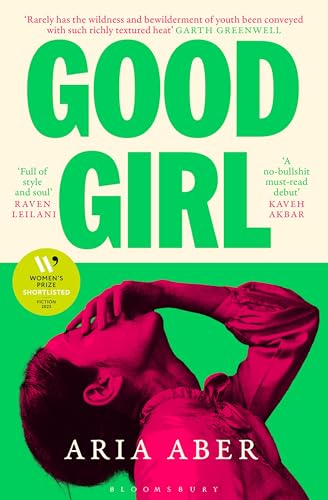
Start this bookNo. 30 on this list. Good Girl · Aria Aber · 2025
Good Girl (2025), Aria Aber's first novel, follows the daughter of Afghan refugees through Berlin's techno clubs. It is too recent to be taught, though its prize run put it on many readers' lists in its first year.
Moderate5.9 hours
Start this book
No. 31 on this list. In Plüschgewittern
Wolfgang Herrndorf · 2008
No. 32 on this list. Die Rosenbaum-Doktrin und andere Texte
Wolfgang Herrndorf · 2017
No. 33 on this list. der schuss
Christian Linker · 2017
No. 34 on this list. Kälter
Andreas Pflüger · 2025
No. 35 on this list. Rubinrot
Kerstin Gier · 2009
No. 36 on this list. 22 Bahnen
Caroline Wahl · 2023
No. 37 on this list. Windstärke 17
Caroline Wahl · 2024



About this list
These 37 books are the highest-scoring eligible easy books from Germany currently in the catalogue. About 132 hours of reading in all, for the 35 with measured lengths. Difficulty runs from 32 to 42 out of 100 for the middle half of the list; the summit is Peter Camenzind at 45.
This list is ranked by literary regard, with a consistent order for equal scores. Membership follows authors and co-authors, not translators or editors. Catalogue coverage and the historical canon both limit what this list can represent.
When we matched the Canons dataset to our catalogue in October 2026, our canonical-status scores rose with the number of school curricula, publisher series and lists in it that cite a work: the median score was 72 for books one such source cites, 84 at two, 88 at three, 92 at four and 93 at five or more. Prizes are left out of that count. Outside the state curricula, the dataset’s sources choose mostly from what has been translated into English or French, so it is a weaker check on other literatures. Source: Canons (Andrew Piper), CC BY 4.0
Questions people actually ask
- What are the best easy books from Germany?
- By literary regard, which weighs canonical status, critical standing and influence: All Quiet on the Western Front by Erich Maria Remarque, The Complete Grimm's Fairy Tales by Jacob Grimm, William Tell by Friedrich Schiller, Grimm's Fairy Tales by Brothers Grimm and The Robbers by Friedrich Schiller. ReadingRate ranks 37 such books, each with a difficulty score and a reading-time estimate.
- Which easy books from Germany should I read first?
- Start from difficulty, not from rank. The most approachable books on this list that still carry top literary regard are The Complete Grimm's Fairy Tales by Jacob Grimm (about 12 hours), The Diary of a Young Girl by Anne Frank and All Quiet on the Western Front by Erich Maria Remarque.
- What are the shortest of the best easy books from Germany?
- Among the top 25, the shortest are The Fury by Paul Heyse (about 1.1 hours), Iphigenia in Tauris by Johann Wolfgang von Goethe (about 1.3 hours) and Tonio Kröger by Thomas Mann (about 1.3 hours), at an average pace of 250 words a minute adjusted for each book's difficulty.
- Which of the best easy books from Germany are the established classics?
- By canonical status, how firmly a book sits in curricula, anthologies and the canon: All Quiet on the Western Front by Erich Maria Remarque, William Tell by Friedrich Schiller, Grimm's Fairy Tales by Brothers Grimm, The Diary of a Young Girl by Anne Frank and The Complete Grimm's Fairy Tales by Jacob Grimm.
- Can I read any of these easy books from Germany for free?
- 3 of the 37 open in ReadingRate's reader with a free account, from public-domain editions: Tonio Kröger, Peter Camenzind and Royal Highness.
- How long would it take to read the top ten?
- About 39 hours, at an average pace of 250 words a minute adjusted for each book's difficulty: 20 days at two hours a day. Set your own pace on the page and the list's reading times change to it.
- How hard are easy books from Germany to read?
- Most of this list sits between 32 and 42 on ReadingRate's 100-point difficulty scale, where 40 to 55 is moderate. The summit is Peter Camenzind at 45. Every entry carries its own score, so a reader can pick a great book at a difficulty they will finish.
- How is this list ranked?
- On literary-regard data: how canonically established a work is, its critical standing, and its influence on later writing. It is not a readers’ poll, which is why recent bestsellers rarely appear. Membership follows authors and co-authors, not translators or editors. Lists by country, author, period, theme or difficulty keep to literature: fiction, poetry and drama, with no philosophy, criticism or theory. A list of a kind of book, such as philosophy, memoir or criticism, keeps every book of that kind. Every list holds at most three works by one author.