Hours at an average pace
Showing 31 books
About 644 hours for 31 of 31 books with measured lengths. Estimates use 250 words a minute, adjusted for each book's difficulty. At 2 hours a day, about 323 days for those books.
Discipline and Punish is required reading in sociology, criminology, philosophy, cultural studies, history, and literary theory courses worldwide. It appears on thousands of university syllabi across disciplines, making it comparable in canonical weight to the most taught works of 20th-century thought. It is considered foundational for understanding modern social institutions across every field of the humanities and social sciences.
No. 2 on this list. The History of Sexuality, Volume 1: An Introduction
Michel Foucault · 1976
Difficult7 hours
Required reading in virtually every university gender studies, cultural theory, sociology, and philosophy program in the Western world. No database syllabus data was retrieved, but this text is among the most universally assigned in humanities education globally, appearing on curricula alongside Derrida and Althusser as a foundational poststructuralist text. It is considered indispensable entry-level reading for anyone studying sexuality, power, or discourse.
No. 3 on this list. Madness and Civilization: A History of Insanity in the Age of Reason
Michel Foucault · 1961
Difficult11 hours
Madness and Civilization is one of the most widely assigned texts in the humanities, appearing on syllabi in philosophy, history, sociology, psychology, and cultural studies departments worldwide. It is a foundational text of post-structuralism and critical theory, and its presence in university curricula has been continuous since the 1960s. It is routinely listed among the most important nonfiction works of the twentieth century.
The foundation of Chinese historiography, required in Chinese secondary education and standard in world-history and classical-literature curricula.
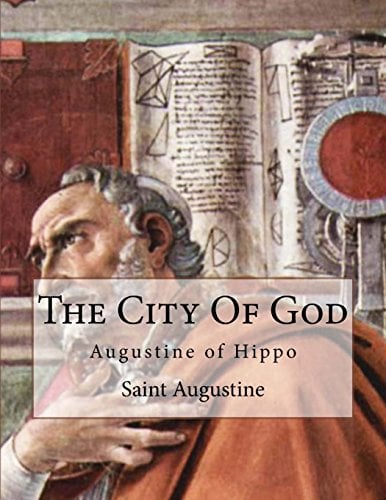
No. 5 on this list. City of God
Augustine of Hippo · 426
Challenging40 hours
Included in: Great Books of the Western World
City of God is foundational to Western civilization, taught in every university theology, philosophy, and medieval studies program globally. It appears on syllabi across disciplines—history, political theory, religious studies, philosophy—and has been continuously in print and in commentary since the 5th century. The Wikipedia data showing only 5 languages likely reflects a disambiguation page rather than the work's actual encyclopedic presence.
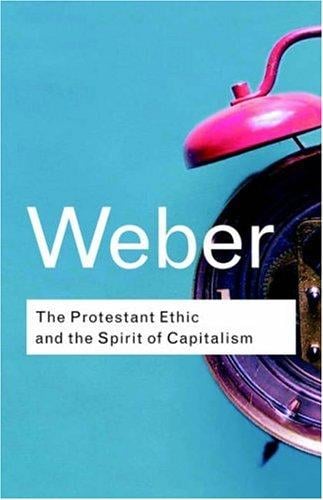
No. 6 on this list. The Protestant Ethic and the Spirit of Capitalism
Max Weber · 1905
Challenging16 hours
One of the founding texts of sociology, taught in introductory and theory courses alongside Marx and Durkheim and assigned across history, economics and religious studies. It ranked fourth in the International Sociological Association's 1998 poll of the books of the century.
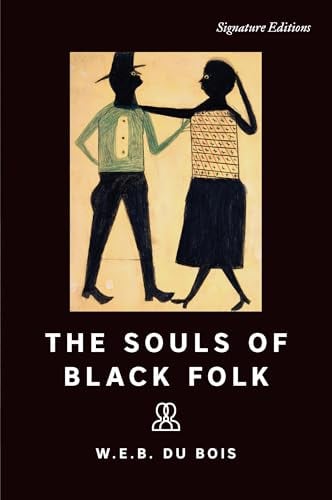
Required reading in American universities across sociology, African American studies, history, and literature departments, appearing on more syllabi than almost any other work of American nonfiction. Continuously in print since 1903, it appears on virtually every list of essential American books and is considered foundational to American intellectual history.
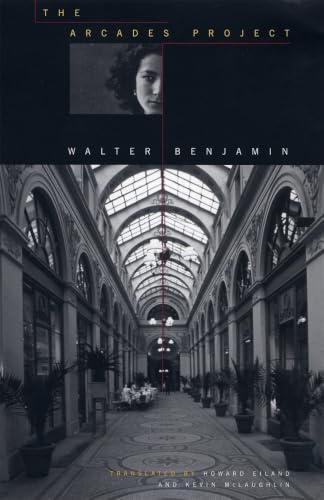
The Arcades Project is required reading in virtually every critical theory, cultural studies, and German Studies graduate program worldwide. Benjamin's concepts — the dialectical image, the flâneur, the wish-image, Jetztzeit — have become foundational vocabulary in the humanities. The book anchors syllabi in fields as disparate as architecture, urban studies, film theory, and literary criticism, making it one of the most cross-disciplinary canonical texts of the 20th century.
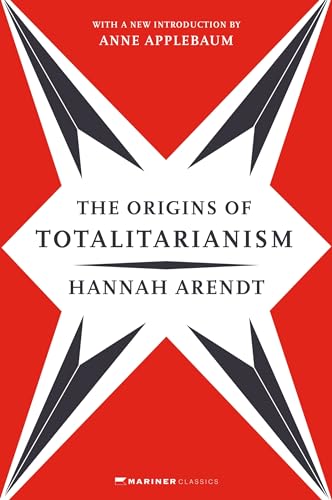
One of the most influential works of political philosophy of the twentieth century, required reading in political science, philosophy, and history curricula worldwide. Central to understanding modern political thought.
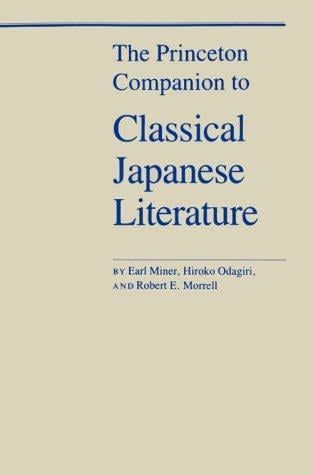
No. 10 on this list. The Princeton Companion to Classical Japanese Literature
Earl Miner · 1985
Challenging18 hours
The standard English-language reference for classical Japanese literature; no comparable work has appeared since publication.
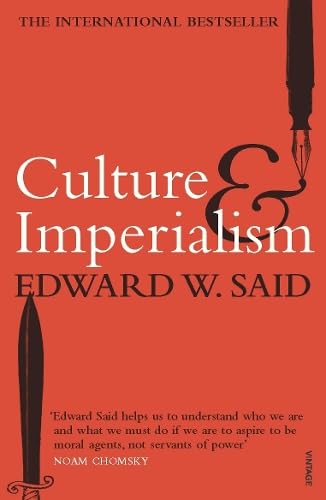
No. 11 on this list. Culture and Imperialism · Edward Said · 1993
Edward Said opens with a premise most literary critics had refused: that the great novels of English and French culture did not merely reflect empire from a safe distance but actively participated in it. Jane Austen's Mansfield Park depends on the Antigua plantation Sir Thomas Bertram owns; Conrad's Marlow shapes the darkness of the Congo in his own image before he even arrives; Kipling's Kim turns imperial intelligence into a boy's game. Said reads these texts with full appreciation of their craft and then insists the appreciation cannot stop there. Culture and Imperialism moves through the nineteenth-century novel, opera, travel writing, and painting to map the cultural infrastructure that made empire livable and even admirable to its participants. In the second half, Said turns to the resistance — Yeats, Fanon, C.L.R. James, Achebe — writers who appropriated the forms of empire and redirected them. His method, which he calls contrapuntal reading, asks readers to hold both the imperial text and its suppressed counterpoint in mind at once. This is demanding work: Said writes in long, accumulating sentences that qualify and complicate as they proceed, and he assumes familiarity with Gramsci, Foucault, and a wide range of literary history. The reward is a framework that makes it impossible to read Mansfield Park or Heart of Darkness the same way again.
Challenging15 hours
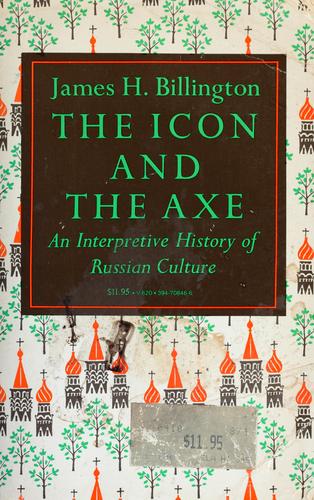
Start this bookNo. 12 on this list. The Icon and the Axe: An Interpretive History of Russian Culture · James Billington · 1966
Standard reference for Russian cultural history in English-language scholarship.
Challenging24 hours
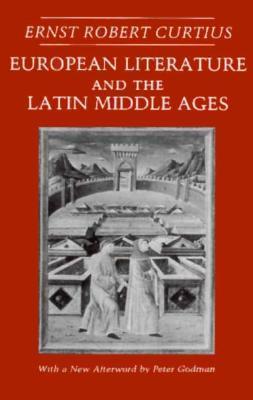
Start this bookNo. 13 on this list. European Literature and the Latin Middle Ages · Ernst Robert Curtius · 1948
Standard required reading in comparative literature and medieval studies graduate programs worldwide; the book coined locus amoenus as a formal critical category now used in virtually every discussion of medieval landscape description. Not mainstream undergraduate reading but indispensable for medievalists and comparatists, with continuous use since the 1953 Princeton translation.
Difficult36 hours
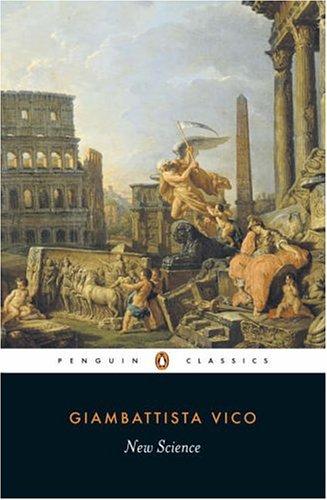
Start this bookNo. 14 on this list. New Science · Giambattista Vico · 1725
New Science is a cornerstone text in the history of philosophy, assigned on graduate syllabi in philosophy, intellectual history, classics, and literary theory worldwide. Isaiah Berlin devoted a major critical study to Vico; Benedetto Croce called him the true founder of the philosophy of history. No database syllabus data is available, but its presence in Western philosophy curricula is extensive and sustained — comparable to Montaigne's Essays in specialized canonical standing.
Difficult22 hours
Start this bookNo. 15 on this list. The Cambridge History of Russian Literature · Charles Moser · 1989
The standard comprehensive reference for Russian literary history in English.
Challenging33 hours
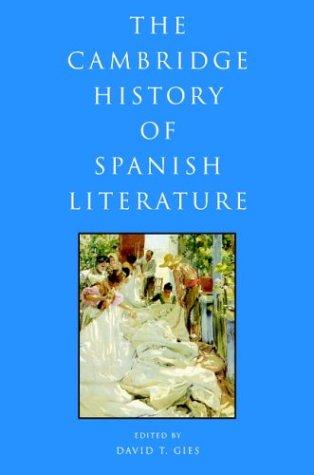
Start this bookNo. 16 on this list. The Cambridge History of Spanish Literature · David Thatcher Gies · 2004
The standard Cambridge History coverage of Spanish literature, widely used in graduate syllabi.
Challenging32 hours
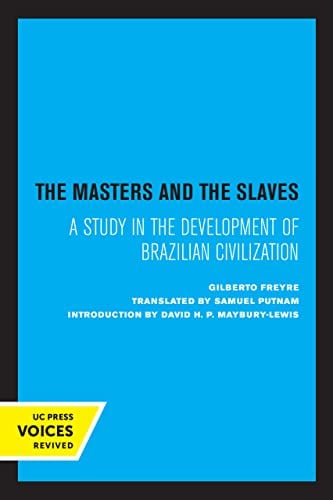
Start this bookNo. 17 on this list. The Masters and the Slaves: A Study in the Development of Brazilian Civilization · Gilberto Freyre · 1933
Casa-grande & senzala is one of the founding interpretations of Brazilian society, required reading in Brazil and standard in Latin American and Atlantic history courses abroad. It is routinely named among the most important Brazilian books of the twentieth century.
Challenging19 hours
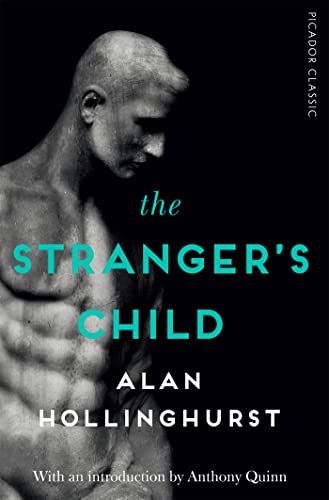
Start this bookNo. 18 on this list. The Stranger's Child · Alan Hollinghurst · 2011
Published in 2011, The Stranger's Child has secured Hollinghurst's place as Britain's preeminent novelist of gay experience and class. While not yet canonical in the sense of Ulysses or The Great Gatsby, it's widely taught in contemporary British fiction courses and regarded as his most ambitious work, positioning it for long-term scholarly attention.
Challenging16 hours
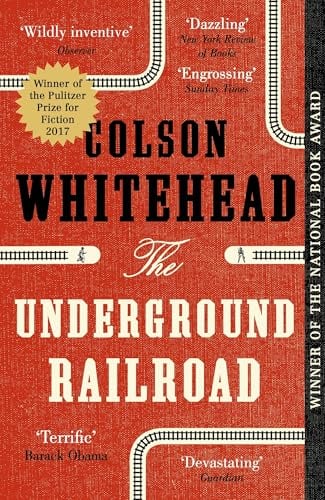
Start this bookNo. 19 on this list. The Underground Railroad · Colson Whitehead · 2016
Taught in schools: Leaving Certificate English – NCCA / State Examinations Commission (Ireland)
Appears on 438 university syllabi (66th percentile by Open Syllabus), with a Wikipedia article in 43 languages and a substantial 161,000-character entry. The novel has entered American literature curricula rapidly since its 2016 publication, though it has not yet reached the multi-decade saturation of older canonical works like Beloved.
Challenging8.1 hours
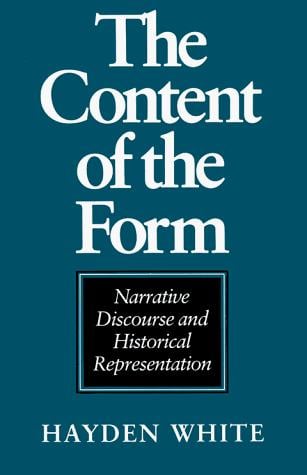
Start this bookNo. 20 on this list. The Content of the Form: Narrative Discourse and Historical Representation · Hayden White · 1987
Standard reading in graduate historiography, philosophy of history, and literary theory courses worldwide. Less widely assigned than White's Metahistory (1973) but essential in any curriculum addressing the narrative turn in the humanities. Data signals show no formal recognitions, likely a gap in coverage rather than an absence of academic stature.
Difficult6.8 hours
Start this book
No. 21 on this list. The Anatomy of a Moment · Javier Cercas · 2009
Widely used in Spanish history and journalism courses and treated as the standard literary account of 23-F.
Difficult15 hours
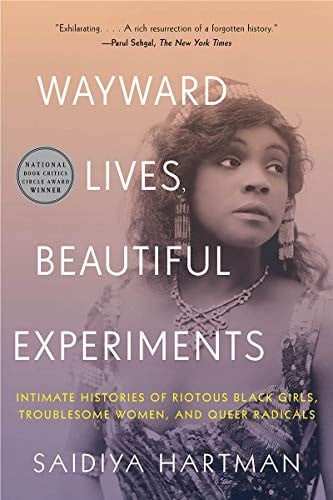
Start this bookNo. 22 on this list. Wayward Lives, Beautiful Experiments: Intimate Histories of Riotous Black Girls, Troublesome Women, and Queer Radicals · Saidiya Hartman · 2020
Ranked by literary regard among eligible works in the current catalogue. This position reflects the available catalogue evidence.
Challenging13 hours
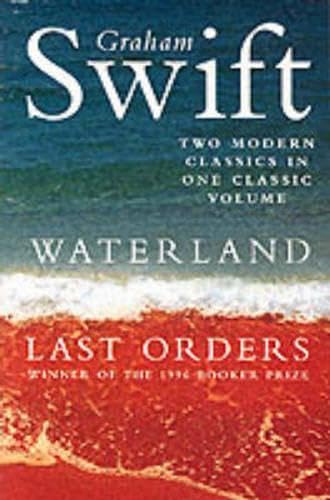
Start this bookNo. 23 on this list. Waterland · Graham Swift · 1983
Taught in schools: AQA GCSE and A-level English Literature (UK)
Appears on 188 university syllabi (56th percentile in the Open Syllabus Project), placing it firmly in the taught-in-universities tier without reaching the curriculum-fixture status of Beloved or Gatsby. Wikipedia presence in 44 languages signals international recognition but falls short of the 70+ languages that mark truly canonical works. It is standard reading in British contemporary fiction and postmodern literature courses.
Difficult13 hours
Start this bookNo. 24 on this list. My Century · Aleksander Wat · 1977
A standard source in Soviet and Central European intellectual history, though rarely assigned as literature.
Difficult22 hours
Start this bookNo. 25 on this list. The Ecology of Freedom: The Emergence and Dissolution of Hierarchy · Murray Bookchin · 1982
Ranked by literary regard among eligible works in the current catalogue. This position reflects the available catalogue evidence.
Challenging14 hours
Start this bookNo. 26 on this list. Envisioning Power: Ideologies of Dominance and Crisis · Eric R. Wolf · 1999
A recognised late work by a major anthropologist, taught in theory courses.
Challenging8.4 hours
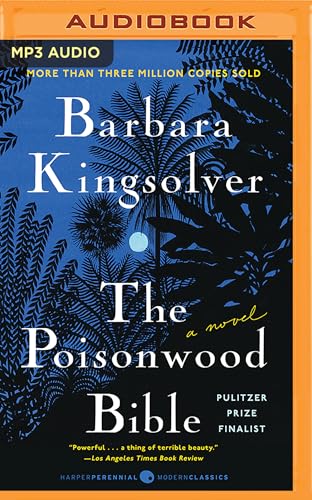
Start this bookNo. 27 on this list. The Poisonwood Bible · Barbara Kingsolver · 1999
Appears on 365 university syllabi (64th percentile in the Open Syllabus Project), placing it in regular rotation for postcolonial literature and American fiction courses. Its Wikipedia article covers 3 languages and includes dedicated reception and adaptations sections, indicating sustained cultural presence. Well-taught but not in the tier of perennial curriculum fixtures like Beloved or Their Eyes Were Watching God.
Challenging17 hours
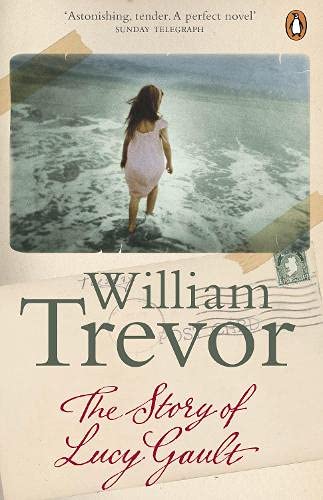
Start this bookNo. 28 on this list. The Story of Lucy Gault · William Trevor · 2002
No syllabus appearances recorded in the Open Syllabus Project, and Wikipedia coverage exists in only 3 languages. Trevor's short stories hold stronger canonical status than his novels; this particular work, while well-received, has not entered the standard curriculum for Irish or British literature courses.
Difficult7.8 hours
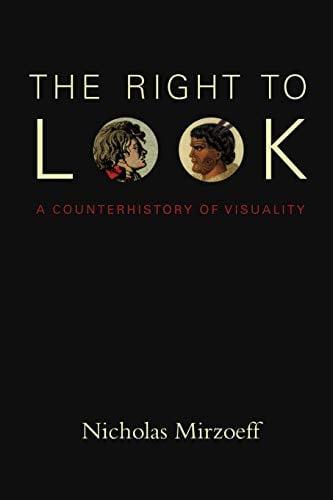
Start this bookNo. 29 on this list. The Right to Look: A Counterhistory of Visuality · Nicholas Mirzoeff · 2011
Ranked by literary regard among eligible works in the current catalogue. This position reflects the available catalogue evidence.
Difficult13 hours
Start this bookNo. 30 on this list. How Soon Is Now?: Medieval Texts, Amateur Readers, and the Queerness of Time · Carolyn Dinshaw · 2012
Ranked by literary regard among eligible works in the current catalogue. This position reflects the available catalogue evidence.
Challenging7.3 hours
Start this book
About this list
These 31 books are the highest-scoring eligible challenging history books currently in the catalogue. By literary regard, it opens with Discipline and Punish, The History of Sexuality, Volume 1: An Introduction and Madness and Civilization: A History of Insanity in the Age of Reason. About 644 hours of reading in all. Difficulty runs from 67 to 72 out of 100 for the middle half of the list; the summit is The Arcades Project at 87.
This list is ranked by literary regard, with a consistent order for equal scores. Membership follows authors and co-authors, not translators or editors. Catalogue coverage and the historical canon both limit what this list can represent, and genre labels are the catalogue’s own, gathered into broader kinds.
When we matched the Canons dataset to our catalogue in October 2026, our canonical-status scores rose with the number of school curricula, publisher series and lists in it that cite a work: the median score was 72 for books one such source cites, 84 at two, 88 at three, 92 at four and 93 at five or more. Prizes are left out of that count. Outside the state curricula, the dataset’s sources choose mostly from what has been translated into English or French, so it is a weaker check on other literatures. Source: Canons (Andrew Piper), CC BY 4.0
Questions people actually ask
- What are the best challenging history books?
- By literary regard, which weighs canonical status, critical standing and influence, Discipline and Punish, The History of Sexuality, Volume 1: An Introduction, Madness and Civilization: A History of Insanity in the Age of Reason, Records of the Grand Historian and City of God lead. ReadingRate ranks 31 such books, each with a difficulty score and a reading-time estimate.
- How hard are challenging history books to read?
- Most of this list sits between 67 and 72 on ReadingRate's 100-point difficulty scale, where 40 to 55 is moderate. The summit is The Arcades Project at 87. Every entry carries its own score, so a reader can pick a great book at a difficulty they will finish.
- How is this list ranked?
- On literary-regard data: how canonically established a work is, its critical standing, and its influence on later writing. It is not a readers’ poll, which is why recent bestsellers rarely appear. Membership follows authors and co-authors, not translators or editors. A list that is not a genre list keeps to literature (fiction, poetry, drama and philosophy), with philosophy taking no more than one slot in five while there is literature left to rank; every list holds at most three works by one author.