Hours at an average pace
Showing 35 books
About 370 hours for 35 of 35 books with measured lengths. Estimates use 250 words a minute, adjusted for each book's difficulty. At 2 hours a day, about 185 days for those books.
Discipline and Punish is required reading in sociology, criminology, philosophy, cultural studies, history, and literary theory courses worldwide. It appears on thousands of university syllabi across disciplines, making it comparable in canonical weight to the most taught works of 20th-century thought. It is considered foundational for understanding modern social institutions across every field of the humanities and social sciences.
No. 2 on this list. The History of Sexuality, Volume 1: An Introduction
Michel Foucault · 1976
Difficult7 hours
Required reading in virtually every university gender studies, cultural theory, sociology, and philosophy program in the Western world. No database syllabus data was retrieved, but this text is among the most universally assigned in humanities education globally, appearing on curricula alongside Derrida and Althusser as a foundational poststructuralist text. It is considered indispensable entry-level reading for anyone studying sexuality, power, or discourse.
One of the foundational texts of postcolonial theory and the phenomenology of race; essential reading in multiple fields.
Anti-Oedipus is canonical within Continental philosophy, critical theory, cultural studies, and queer theory — it appears on graduate syllabi wherever poststructuralism, Marxist theory, or affect theory is taught. Wikipedia data is absent from the database, but the work maintains Wikipedia articles in over 30 languages and is among the most-cited texts in humanities graduate education worldwide. Its status is more specialized than Orientalism but more widely taught than Negative Dialectics.
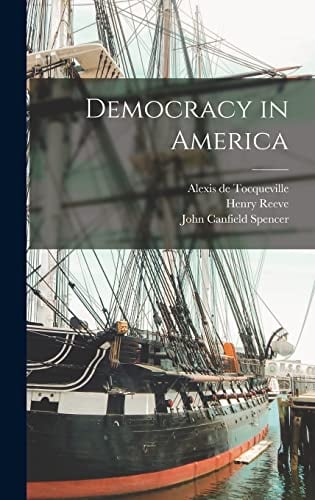
Required reading in virtually every political theory, American history, and comparative politics curriculum worldwide. The book has never left print since 1835 and is foundational to democratic theory in political science, sociology, and history departments alike. With Wikipedia articles in over 80 languages and presence on thousands of university syllabi across disciplines, it ranks among the most institutionally canonical works of political thought.
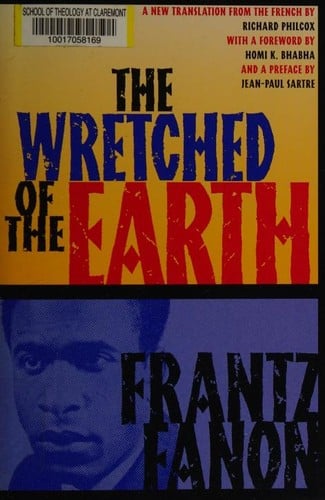
The Wretched of the Earth appears on syllabi in postcolonial studies, African studies, political philosophy, sociology, and literary theory programs worldwide — among the most-assigned theoretical texts of the 20th century. Its Wikipedia article exists in over 40 languages. It is routinely listed alongside Fanon's Black Skin, White Masks as required reading for anyone working in fields touching on race, colonialism, or global politics.
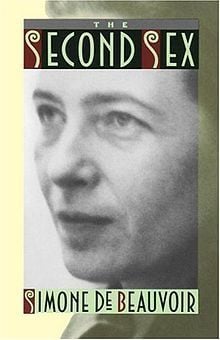
Appears on 563 university syllabi (Open Syllabus percentile: 68.8%), making it a fixture of gender studies, philosophy, and feminist theory curricula worldwide. Named to Le Monde's 100 Books of the Century and recognized in 50 Wikipedia languages — signaling global canonical reach. Essential reading in feminist and existentialist philosophy, though not as universally taught as Shakespeare or Frankenstein.
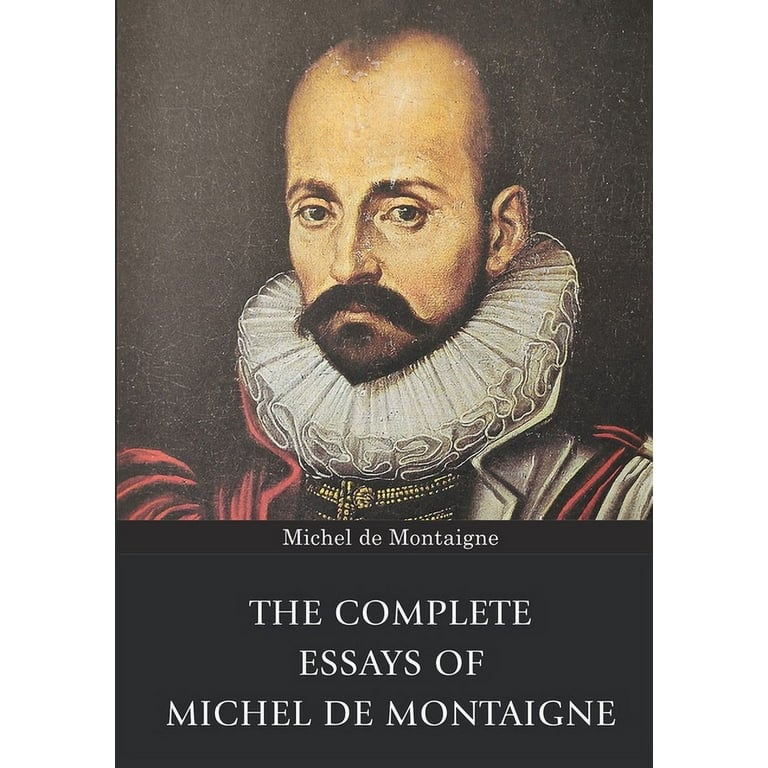
Michel de Montaigne retired to his tower library in 1571 and began writing short prose pieces he called 'essais' -- attempts, trials, tests of his own judgment. Over the next twenty years he produced 107 of them, ranging from a few pages to the book-length 'Apology for Raymond Sebond,' revising and expanding relentlessly through three editions. The subject announced on every page is himself: his kidney stones, his reading habits, his fear of death, his sexual life, his distaste for cruelty, his unreliable memory. But Montaigne's self-portrait is a Trojan horse. By examining one particular human specimen with ruthless honesty, he builds a case about the species. Custom, he shows, governs nearly everything we call morality. Reason is a tool that can argue any side of any question. The senses deceive, memory distorts, and certainty -- on any matter beyond immediate experience -- is unavailable to human beings. What remains after this demolition is not despair but a kind of freedom: permission to live attentively within the limits of what one person can actually know. The Essays move by association rather than argument, circling through classical anecdote, personal confession, and philosophical speculation in a voice that sounds, across four centuries, like someone thinking aloud in real time. Montaigne quotes Seneca and Plutarch on every other page, but the governing intelligence is unmistakably his own -- skeptical, humane, amused by his own contradictions, and unwilling to pretend that writing about virtue is the same as practicing it.
Rousseau opens with a declaration that has never been made before or since: he will show himself to the world in full, hiding nothing, and dares anyone to say they were better. What follows is 500 pages of his life from Geneva childhood to middle age in France — apprenticeships, theft, wandering, patrons, lovers, music, literary fame, and the slow accumulation of paranoia he couldn't stop. The incidents are specific and strange. He steals a ribbon from a household and, when caught, accuses a servant girl named Marion of the theft. She is dismissed. He carries the guilt for decades. He sends all five of his children to a foundling home. He explains at length why this was reasonable. The gap between his self-justification and the reader's judgment is where the book lives. This is autobiography as philosophical project. Rousseau believes humans are born good and corrupted by society; his life is the evidence. Every anecdote serves the argument, every embarrassment becomes a data point for his theory of natural goodness. The text invented the modern genre of confessional writing and taught Goethe, Wordsworth, and every memoirist after that private life was worth recording in full. Reading it means holding two things at once: sympathy for a man examining himself honestly, and skepticism about whether he sees himself at all.
In 1776, Jean-Jacques Rousseau was sixty-four years old, exiled from France, and convinced that his former friends — Diderot, Grimm, Voltaire — had orchestrated a universal conspiracy against him. He began walking the paths around Paris with a notebook, recording his thoughts. The result is ten 'walks': part diary, part philosophical essay, part self-justification by a man who had already written the Confessions and still felt misunderstood. The Fifth Walk, written on the Île Saint-Pierre in Lake Biel, is the book's still center — Rousseau lying in a drifting boat, mind blank, aware of nothing but existing. He calls this state the only happiness fully available to him. The Seventh Walk catalogs the plants he collected with botanical precision, finding in botany a discipline free of ambition. The Fourth Walk reckons with his lifelong relationship to lying, reaching the unexpected conclusion that truth is owed only to those with a claim on us. Rousseau writes as a man who has stopped performing for an audience and is thinking on paper — the prose is direct, ruminative, sometimes self-deluding in ways he cannot see. The book breaks off mid-sentence in the Tenth Walk, which is what happened: he died. It is the founding text of the lyric essay and the template for every writer who has walked to think.
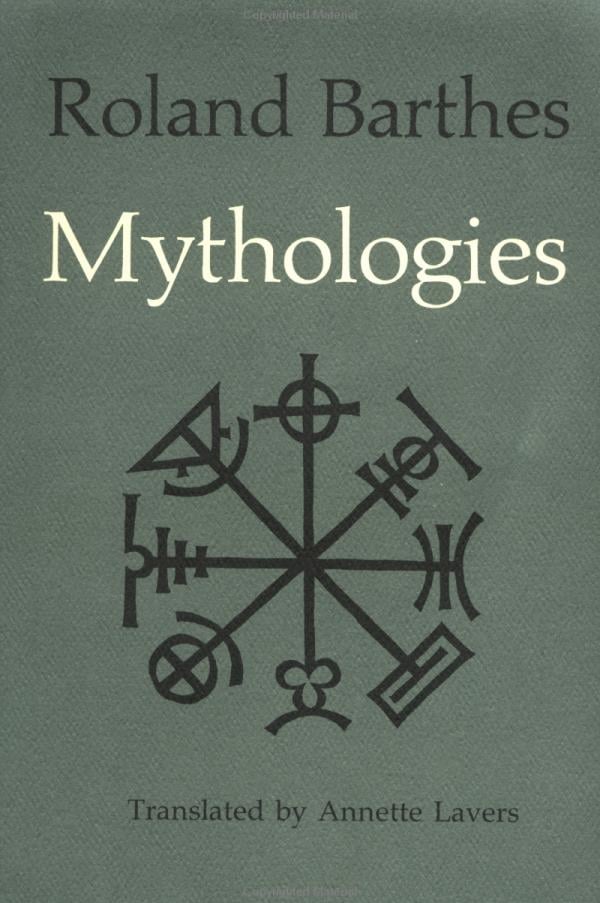
No. 11 on this list. Mythologies · Roland Barthes · 1957
Mythologies is standard reading in media studies, cultural studies, semiology, and critical theory curricula worldwide. It appears in virtually every undergraduate Cultural Studies syllabus and most graduate programs in literary theory, communications, and sociology. The book's two-part structure — accessible cultural vignettes plus rigorous theoretical essay — makes it one of the most commonly assigned works of French critical theory in Anglophone universities, comparable in syllabus presence to Saussure's Course in General Linguistics.
Challenging4.3 hours
Start this bookNo. 12 on this list. The Savage Mind · Claude Lévi-Strauss · 1962
The Savage Mind is the foundational text of structural anthropology and is widely taught across anthropology, cultural studies, philosophy, and literary theory departments worldwide. It appears on syllabi across disciplines — not just anthropology but semiotics, postcolonial theory, and philosophy of mind. Wikipedia editions exist in over 25 languages. It holds canonical status comparable to Beloved in its field, though its audience is academic rather than general.
Difficult12 hours
Start this bookNo. 13 on this list. Preface to Cromwell · Victor Hugo · 1827
The founding manifesto of French Romantic drama. Essential in French literature courses and comparative Romanticism studies.
Moderate1.7 hours
Start this bookNo. 14 on this list. Gravity and Grace · Simone Weil · 1947
Recognized as a 20th-century mystical classic. T.S. Eliot called Weil 'a kind of genius akin to that of the saints'; André Gide named her 'the best spiritual writer of this century.' The book is taught across philosophy, theology, and literature programs worldwide.
Difficult7.1 hours
Start this bookNo. 15 on this list. Emile, or On Education · Jean-Jacques Rousseau · 1762
One of the most influential books ever written on education. A foundational text of modern pedagogy, Romantic philosophy, and political thought.
Easy12 hours
Start this bookNo. 16 on this list. A Thousand Plateaus · Gilles Deleuze · 1980
A major work of late twentieth-century philosophy. Essential in continental philosophy, cultural theory, architecture, and digital humanities.
Very Difficult35 hours
Start this bookNo. 17 on this list. Waiting for God · Simone Weil · 1950
One of the most important spiritual works written in the 20th century.
Challenging7.9 hours
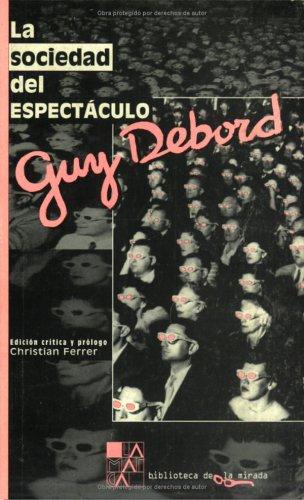
Start this bookNo. 18 on this list. The Society of the Spectacle · Guy Debord · 1967
A core text in critical theory, media studies, and cultural studies curricula worldwide. The Wikipedia article exists in over 30 languages. Less universally taught than Foucault or Marcuse in anglophone programs but essentially required reading in continental philosophy, Situationist studies, and any serious engagement with 20th-century political thought.
Difficult3.7 hours
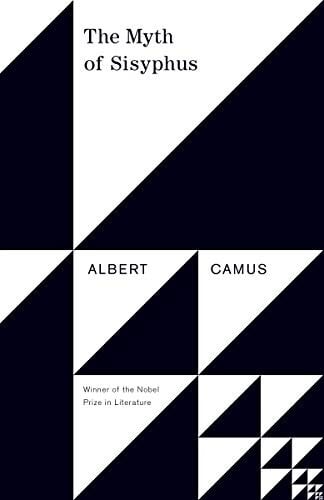
Start this bookNo. 19 on this list. The Myth of Sisyphus · Albert Camus · 1942
The Myth of Sisyphus is required reading in philosophy and existentialism courses worldwide, appearing on syllabi alongside Sartre's Being and Nothingness and Heidegger's Being and Time. It has entered the cultural vocabulary — 'the absurd,' 'philosophical suicide,' 'one must imagine Sisyphus happy' are quoted far beyond academic circles. Wikipedia articles exist in over 50 languages, indicating global canonical reach.
Challenging4.6 hours
Start this bookNo. 20 on this list. Poetics of Relation · Édouard Glissant · 1990
Increasingly recognized as one of the most important works of postcolonial philosophy. Essential in Caribbean studies, francophone literature, and theories of globalization.
Difficult9.1 hours
Start this book

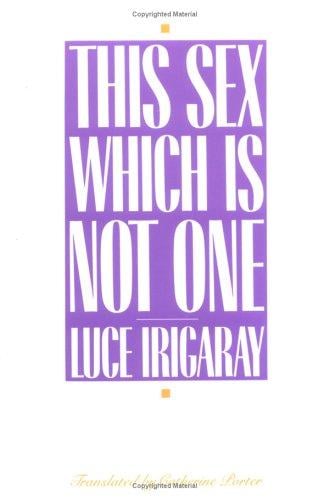
No. 21 on this list. This Sex Which Is Not One · Luce Irigaray · 1977
A foundational text of French feminist philosophy and literary theory. Essential in feminist theory and continental philosophy courses.
Difficult8.5 hours
Start this bookNo. 22 on this list. Capital in the Twenty-First Century · Thomas Piketty · 2013
Capital in the Twenty-First Century has become required reading across economics, political science, sociology, and public policy programs worldwide. Within five years of its English translation, it appeared on syllabi at Harvard, MIT, Berkeley, LSE, Sciences Po, and virtually every major university with an economics or inequality studies program. It is the rare economics book that crossed into general education and interdisciplinary curricula. It has not yet had the multi-generational canonical staying power of Smith's Wealth of Nations or Keynes's General Theory, but its syllabi presence is extraordinary for a book published in 2013.
Challenging19 hours
Start this bookNo. 23 on this list. The Elementary Forms of Religious Life · Emile Durkheim · 1912
Founding text of the sociology of religion. Required reading in every sociology program.
Easy8.9 hours
Start this bookNo. 24 on this list. The Need for Roots · Simone Weil · 1949
The Need for Roots is taught regularly in philosophy departments, political theory courses, and religious studies programs — particularly those covering 20th-century French thought, Christian social ethics, and communitarianism. It occupies a significant position in the French intellectual canon and in Catholic social thought. Less universally assigned than Beloved (85) but more central than niche cult works; it appears in most syllabi covering Simone Weil, whose work is standard in continental philosophy curricula.
Challenging7.4 hours
Start this bookNo. 25 on this list. Empire of Signs · Roland Barthes · 1970
An important text in Barthes's oeuvre and in the history of cultural criticism. Widely read in semiotics and cultural studies courses.
Moderate2 hours
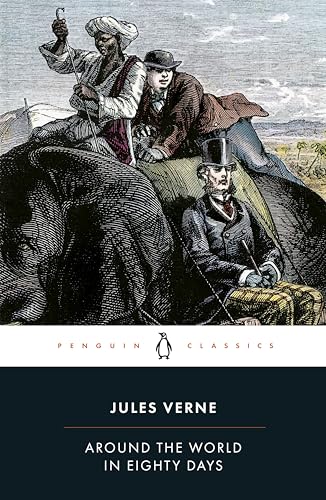
Start this bookNo. 26 on this list. Around the World in Eighty Days · Jules Verne · 1872
Taught in schools: CSEC English B – Caribbean Examinations Council
Around the World in Eighty Days is a recognized classic of world literature, appearing on recommended reading lists across many countries and taught in world literature and adventure fiction courses globally. The novel has been continuously in print since 1873 and has been translated into dozens of languages, cementing its place in the literary canon — though it sits below the most academically studied texts like Gatsby or Ulysses.
Easy3.6 hours
Start this bookNo. 27 on this list. The Experimental Novel · Émile Zola · 1880
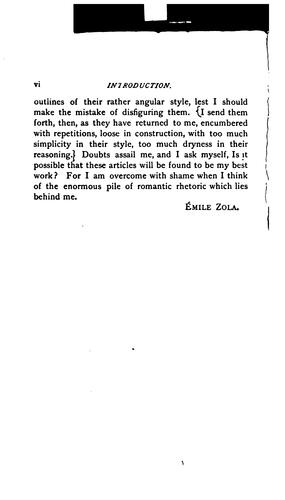
In 1880, Émile Zola published a set of provocations dressed as a literary program. The title essay borrows its framework wholesale from Claude Bernard's Introduction to the Study of Experimental Medicine: the novelist, Zola argues, is simply a scientist who runs experiments on human beings. Heredity and environment determine character; the novelist's job is to set up the conditions and observe what happens. Imagination is a distraction. The sense of reality — the ability to see life as it actually is and render it exactly — is everything. The book is a collection of essays, not a novel, and it reads like one side of a long argument conducted in public. Zola attacks the romantic school for trafficking in beautiful lies, defends naturalism against charges of obscenity, explains what distinguishes a writer with personal expression from one who merely produces correct prose, and measures the distance between Balzac's phantasmatography and his genius. The polemical register is consistent: Zola announces his conclusions, marshals his evidence, and anticipates the objections of enemies he names without pleasure. Readers come away understanding exactly what Zola believed the novel could become, and why he thought sentiment without science was a form of cowardice. The prose is direct, the argument repetitive by design, and the conviction absolute. This is the theoretical engine behind Nana, Germinal, and L'Assommoir — the blueprint read alongside the buildings it produced.
Moderate1.3 hours
Start this bookNo. 28 on this list. Mourning Diary · Roland Barthes · 2009
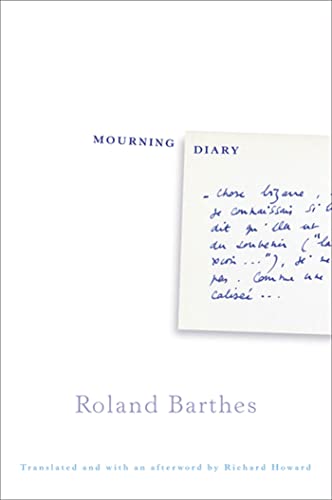
Mourning Diary is taught in grief memoir, autofiction, and theory of autobiography courses, but it is less central to Barthes syllabi than Camera Lucida, S/Z, or Mythologies. Its posthumous publication in 2009 limited its decades of academic circulation. It is known and respected in literary-critical circles without having reached the syllabi saturation of Barthes's major theoretical works.
Easy49 min
Start this bookNo. 29 on this list. Persepolis · Marjane Satrapi · 2000
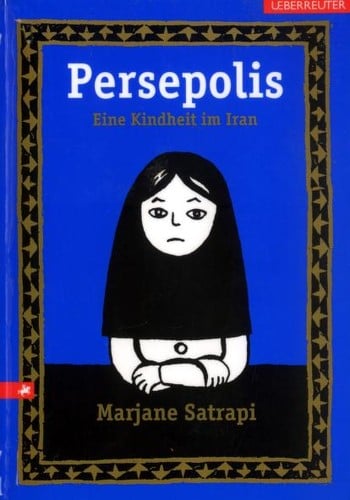
One of the most important graphic novels ever published. Widely taught in universities.
Easy2.2 hours
Start this bookNo. 30 on this list. Simulacra and Simulation · Jean Baudrillard · 1981
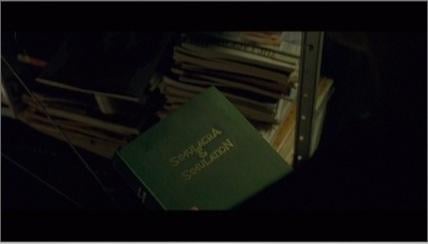
Baudrillard argues that in postmodern culture, representations have replaced reality—we no longer distinguish between the real and the simulated because the simulated has become more real than the real. He traces four stages of the image: the image reflects reality, then masks reality, then masks the absence of reality, and finally bears no relation to reality at all—it is 'its own pure simulacrum.' Disneyland, he argues, exists to convince Americans that the rest of America is real, when in fact the entire culture has become a simulation. The Gulf War, he later argued, 'did not take place'—not that people didn't die, but that the media spectacle of the war replaced the actual events. The book is famous beyond philosophy because it appears in The Matrix—Neo hides a disc inside a copy of Simulacra and Simulation. Baudrillard's style is aphoristic, provocative, and deliberately destabilizing: he wants readers to question not just media representations but the very concept of representation.
Difficult6.1 hours
Start this book

About this list
These 35 books are the highest-scoring eligible nonfiction books in French currently in the catalogue. By literary regard, it opens with Discipline and Punish, The History of Sexuality, Volume 1: An Introduction and Black Skin, White Masks. About 370 hours of reading in all. Difficulty runs from 46 to 72 out of 100 for the middle half of the list; the summit is A Thousand Plateaus at 93.
This list is ranked by literary regard, with a consistent order for equal scores. Membership follows authors and co-authors, not translators or editors. Catalogue coverage and the historical canon both limit what this list can represent, and genre labels are the catalogue’s own, gathered into broader kinds.
When we matched the Canons dataset to our catalogue in October 2026, our canonical-status scores rose with the number of school curricula, publisher series and lists in it that cite a work: the median score was 72 for books one such source cites, 84 at two, 88 at three, 92 at four and 93 at five or more. Prizes are left out of that count. Outside the state curricula, the dataset’s sources choose mostly from what has been translated into English or French, so it is a weaker check on other literatures. Source: Canons (Andrew Piper), CC BY 4.0
Questions people actually ask
- What are the best nonfiction books in French?
- By literary regard, which weighs canonical status, critical standing and influence, Discipline and Punish, The History of Sexuality, Volume 1: An Introduction, Black Skin, White Masks, Anti-Oedipus and Democracy in America lead. ReadingRate ranks 35 such books, each with a difficulty score and a reading-time estimate.
- Where should I start with nonfiction books in French?
- Start from difficulty, not from rank. The most approachable books on this list that still carry top literary regard are Reveries of the Solitary Walker by Jean-Jacques Rousseau (about 3 hours), Emile, or On Education by Jean-Jacques Rousseau and Essays by Michel de Montaigne.
- How hard are nonfiction books in French to read?
- Most of this list sits between 46 and 72 on ReadingRate's 100-point difficulty scale, where 40 to 55 is moderate. The summit is A Thousand Plateaus at 93. Every entry carries its own score, so a reader can pick a great book at a difficulty they will finish.
- How is this list ranked?
- On literary-regard data: how canonically established a work is, its critical standing, and its influence on later writing. It is not a readers’ poll, which is why recent bestsellers rarely appear. Membership follows authors and co-authors, not translators or editors. A list that is not a genre list keeps to literature (fiction, poetry, drama and philosophy), with philosophy taking no more than one slot in five while there is literature left to rank; every list holds at most three works by one author.