Hours at an average pace
Showing 32 books
About 135 hours for 30 of 32 books with measured lengths. Estimates use 250 words a minute, adjusted for each book's difficulty. At 2 hours a day, about 68 days for those books.
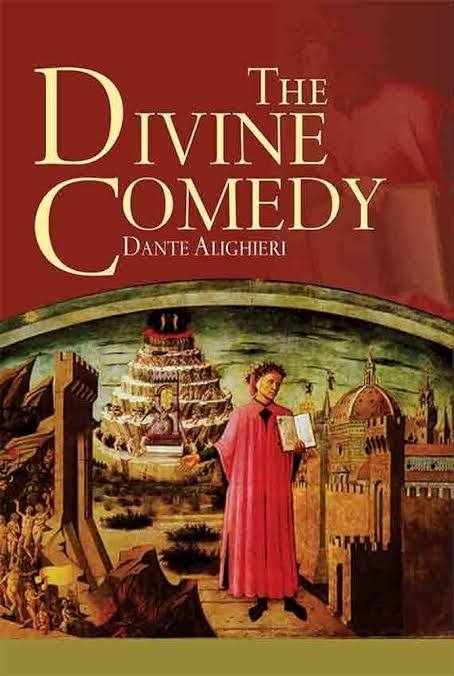
No. 1 on this list. Divine Comedy
Dante Alighieri · 1320
Challenging11 hours
Taught in schools: Armenian secondary literature, Lektury obowiązkowe – Polish national reading list (Poland), UNAM Escuela Nacional Preparatoria – programas de Literatura (Mexico)
Included in: Bokklubben World Library, Great Books of the Western World, UNESCO Collection of Representative Works
Dante built a complete architecture of the afterlife so precise you can map it, then populated it with real people he knew. The result fused theology, politics, and autobiography into a single narrative structure that no poem has matched in ambition or execution.
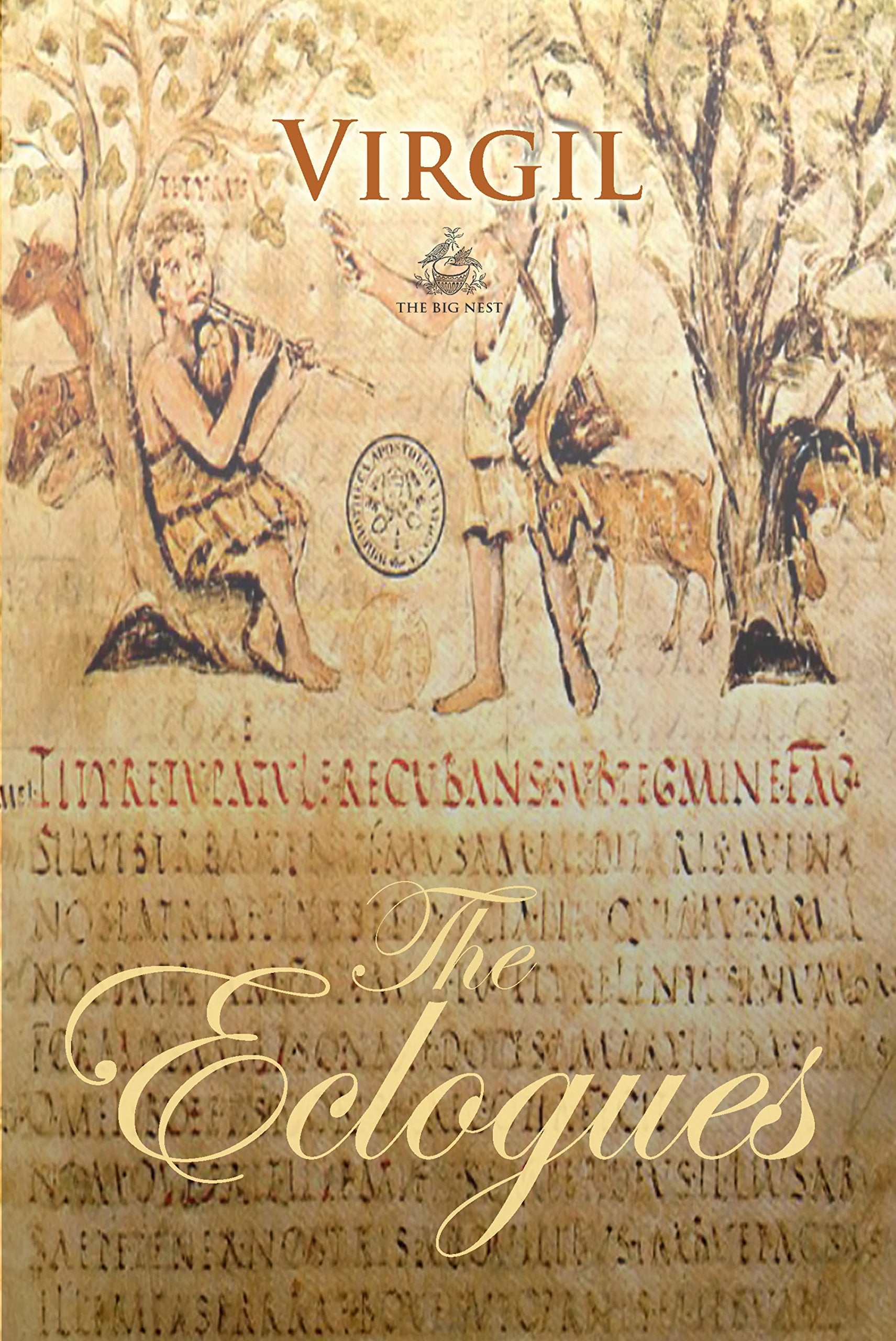
No. 2 on this list. Eclogues
Virgil · c. 37 BCE
Challenging58 min
Included in: Great Books of the Western World
The Eclogues are required reading in classical studies curricula worldwide, appearing on thousands of university syllabi in Latin, comparative literature, and humanities courses. They are among the most translated and discussed poems from antiquity, with Wikipedia articles in over 50 languages and continuous scholarly attention spanning two millennia. Eclogue IV alone has generated centuries of theological and literary debate.
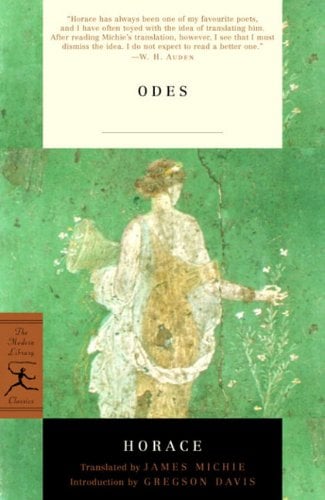
Horace's Odes have been required reading in classical curricula for over two thousand years without interruption — studied in Rome, medieval monasteries, Renaissance courts, and modern universities alike. The phrase 'carpe diem' originates in Odes I.11 and has entered every major world language. The Wikipedia article appears in only 1 language in the current database, but this reflects a data gap: the Odes are among the most-taught texts in any Western classics or humanities program, with presence on thousands of university syllabi globally.
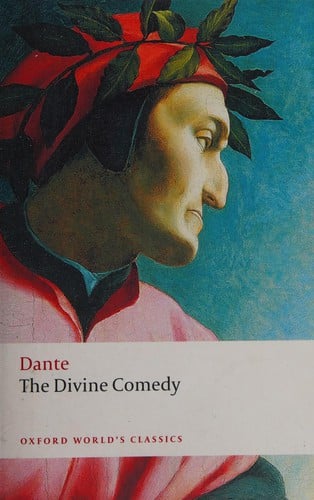
The Divine Comedy is a pillar of Western literature, taught across world literature courses and read in every major language. This 2013 edition of 36,300 words inherits that standing as an adaptation of the original.
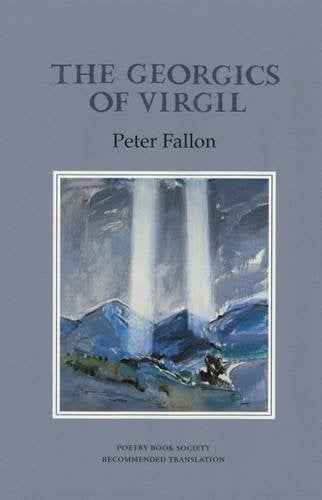
No. 5 on this list. Georgics
Virgil · c. 29 BCE
Moderate1.6 hours
Included in: Great Books of the Western World
The Georgics is a cornerstone of Western classical education, appearing on university syllabi worldwide wherever Latin literature, pastoral poetry, or the history of agriculture is taught. It stands alongside the Aeneid and Eclogues as the essential Virgilian triad; no serious study of Latin poetry omits it. Its influence on English poets from Dryden through Seamus Heaney has kept it continuously present in anglophone literary education as well.
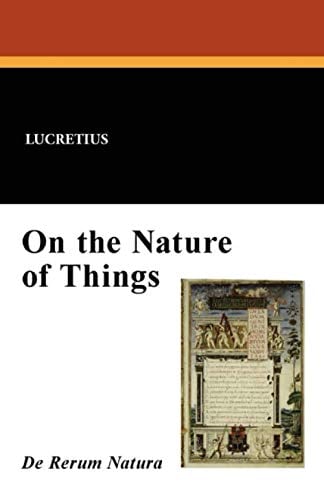
No. 6 on this list. On the Nature of Things
Lucretius · c. 55 BCE
Moderate5.5 hours
Included in: Great Books of the Western World
De Rerum Natura is one of the most significant surviving texts from antiquity, taught in classics, philosophy, and history of science programs at universities worldwide. It represents the fullest extant exposition of Epicurean atomism in any language and appears on virtually every list of essential classical works. Its rediscovery by Poggio Bracciolini in 1417 is credited with catalyzing Renaissance intellectual culture.
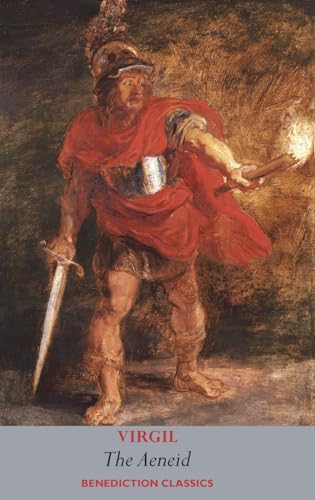
No. 7 on this list. Aeneid
Virgil · c. 19 BCE
Challenging9.4 hours
Included in: Bokklubben World Library, Great Books of the Western World
Virgil reverse-engineered Homer to give Rome a founding myth that justified empire, pietas, and destiny — and in the process invented the idea that a national epic could be a deliberate literary construction rather than an inherited oral tradition. Dante, Milton, and every poet who tried to write a civilization into existence started here.
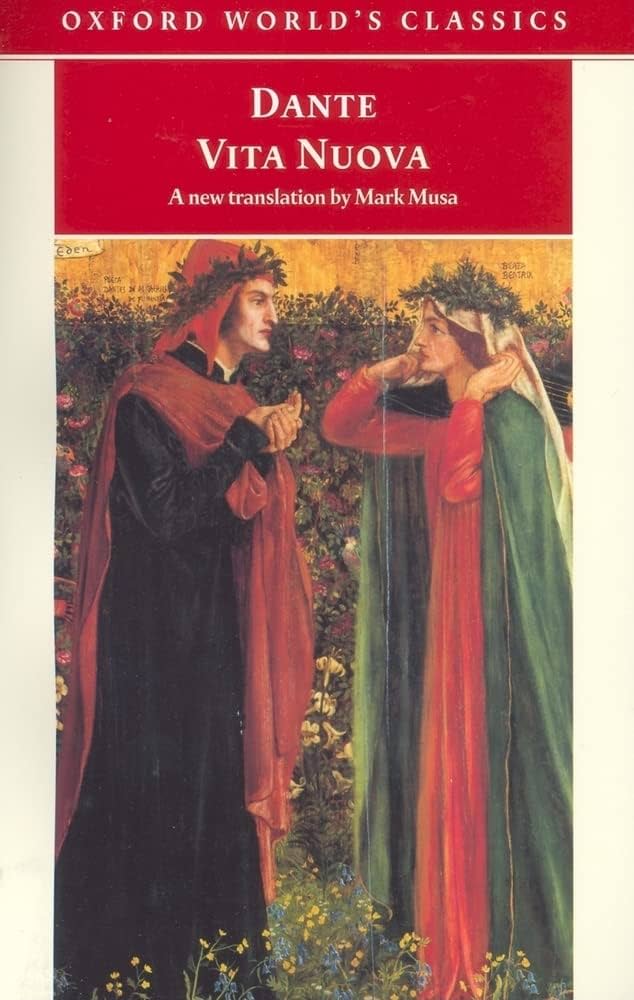
Vita Nuova is taught in virtually every medieval Italian literature program worldwide and appears in most comparative literature and Romance philology curricula. It is the foundational text of the dolce stil novo movement and the biographical prologue to the Divine Comedy, one of the most studied works in Western literary history. Wikipedia entries exist in more than 80 languages, and the work has been continuously in print and commentary since Boccaccio's 14th-century biography of Dante.
No. 9 on this list. Canzoniere
Petrarch · 1374
Difficult4.2 hours
Taught in schools: Montenegrin literature curriculum (crnogorski jezik i književnost) (Montenegro)
The foundation text of the European lyric tradition, taught in every survey of Renaissance and comparative literature, and in print in facing-page editions from Harvard, Oxford and Penguin.
No. 10 on this list. Metamorphoses
Ovid · 8
Challenging11 hours
Taught in schools: Hungarian literature curriculum (magyar nyelv és irodalom) (Hungary)
Included in: Bokklubben World Library
Ovid's Metamorphoses, composed around 8 CE, stands as one of the supreme achievements of classical literature—a sprawling epic in fifteen books (this edition presents Books I-VII) that weaves together approximately 250 Greek and Roman myths united by the theme of transformation. Written in elegant Latin hexameters and here rendered into English prose by Henry T. Riley (1851), the work traces a chronological arc from the creation of the cosmos through the deification of Julius Caesar, creating what Ovid called "a perpetual song" of bodies changed into new forms. The narrative moves with extraordinary fluidity between tales of divine passion and punishment, mortal hubris and heroism, featuring such iconic episodes as Apollo's pursuit of Daphne, Phaethon's disastrous ride in the sun-chariot, Perseus's rescue of Andromeda, and Medea's terrible vengeance. Ovid demonstrates remarkable psychological acuity in depicting emotional states—love, jealousy, rage, grief—and their transformative power. His treatment often subverts traditional heroic narratives, giving voice to victims and exploring the darker aspects of divine behavior with irony and pathos. The work serves simultaneously as mythological compendium, artistic showcase, and subtle political commentary. Its influence on Western culture proves immeasurable: it has served as the primary source for classical mythology across centuries, inspiring masterworks of visual art, literature, music, and drama from the medieval period through modernity. This translation includes extensive scholarly apparatus with historical context, geographical notes, and interpretive commentary, making the complex mythological material accessible while preserving the work's literary power and enduring relevance to questions of identity, change, and the human condition.
No. 11 on this list. L'allegria · Giuseppe Ungaretti · 1931
L'Allegria is a founding text of twentieth-century Italian poetry, taught in every Italian school and university, and its lines such as 'Mattina' and 'Soldati' are known by heart across the country. It is a pillar of the Italian canon, and abroad is taught in modern poetry and war literature courses.
Challenging22 min
Start this bookNo. 12 on this list. Cuttlefish Bones · Eugenio Montale · 1925
Montale's 1925 debut collection presents a Mediterranean landscape fractured into discrete, observed moments. The poems inhabit a stark geography of cliffs, withered gardens, and coastal stone—Liguria rendered as both literal place and emotional correlative. Images accumulate without resolution: a cuttlebone washed ashore, lizards on parched earth, the "harsh grating" of cicadas. The speaker moves through this terrain with precise attention but no explanatory frame, registering sensory data without interpretive commentary. Verb tenses shift; temporal progression collapses. A wall of cactus resists metaphor, remains simply wall. This refusal of ornament distinguishes Montale from his Romantic predecessors. The collection enacts a poetics of negative capability—what remains unstated carries more weight than declaration. Individual poems accumulate like the book's governing image: bones on a beach, fragments of form, stripped of context yet demanding attention. The work's sparse diction and angular syntax establish modernism's austere aesthetic while maintaining connection to observable reality. Death, absence, and the incompleteness of human understanding pervade the collection, not as abstract philosophy but as the texture of looking at a specific landscape.
Challenging5.1 hours
Start this bookNo. 13 on this list. The Poems of Catullus · Catullus
Catullus is a staple of Latin curricula and a standard author in Roman poetry courses, read alongside Horace and Virgil. Poems 5, 85 and 101 are among the most anthologised lines of Latin verse. Translations by many poets keep him on world-literature lists.
Challenging1.2 hours
Start this bookNo. 14 on this list. Ars Poetica · Horace · c. 19 BCE
The single most influential text on poetics between Aristotle and the Romantics. Foundation of neoclassical literary theory.
Moderate32 min
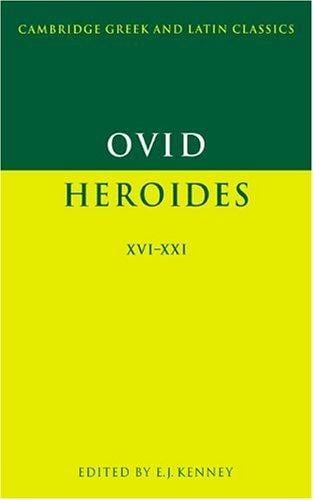
Start this bookNo. 15 on this list. Heroides · Ovid · c. 15 BCE
Penelope has been waiting twenty years. She writes to Odysseus — still missing, still silent — and the letter is not a love note but a legal brief. She catalogs what she has lost, what she has endured, and what she expects in return. Ovid's Heroides gives the floor to the women Greek and Roman epic left waiting in the margins: Medea, Ariadne, Dido, Briseis, Phaedra — each in her own verse letter, each making her case to the man who abandoned her. The text works as a systematic rebuttal of the heroic tradition. Aeneas's piety looks different from Dido's cartilage; Jason's glory looks different from Medea's exile. Where Virgil and Homer judge these women by the needs of the hero, Ovid hands them the pen and lets them judge the heroes back. The letters are arguments as much as laments — rhetorical performances full of evidence, precedent, and accusation. The reader encounters mythological density on every page: the Symplegades, the fleece, the earth-born warriors, the labyrinth. These are not ornaments but proof. Reading Heroides demands classical literacy and rewards it with a complete inversion of the tradition — twenty-one letters that, taken together, constitute one of the ancient world's sharpest critiques of heroic self-justification.
Moderate2.5 hours
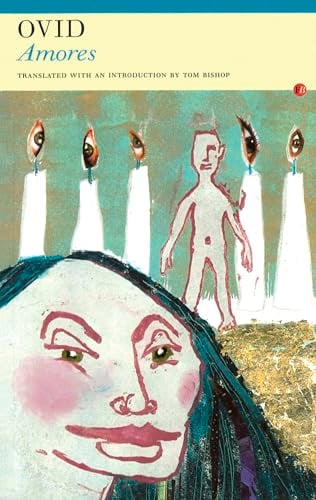
Start this bookNo. 16 on this list. Amores · Ovid · c. 16 BCE
Ovid is twenty years old and Corinna will not open her door. So begins the Amores — forty-nine love elegies written in the 20s BCE by a Roman poet who understood, from the first poem, that wit is more powerful than sincerity. Cupid, he explains in Elegy I, stole a foot from his heroic hexameter and turned his epic into love poetry against his will. This is Ovid's characteristic move: mock complaint that reveals total mastery. The Amores catalogues an affair with the unnamed mistress Corinna — bribing her doorkeeper, watching her comb her ruined hair, mourning her parrot with the same hyperbolic grief he'd spend on a person, catching her in adultery and immediately forgiving her because she denied it too beautifully. Each poem is a rhetorical performance: Ovid argues, apostrophizes, invokes mythology, reverses himself, and lands a final turn with the timing of a practised comedian. He invented the mode of the suffering lover who is too articulate to suffer. Reading the Amores is to watch the cleverest poet in Rome construct the template that Petrarch would use a millennium later, and that has governed love poetry ever since — which is to say, Ovid built the room everyone else still lives in.
Moderate2 hours
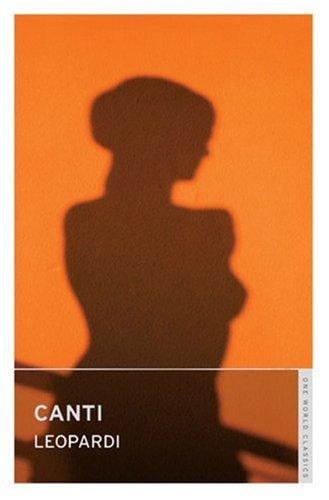
Read nowNo. 17 on this list. Canti · Giacomo Leopardi · 1835
Compulsory reading in Italian schools, standard in European Romanticism courses, and in print in facing-page editions from FSG, Penguin and Oxford.
Difficult2.5 hours
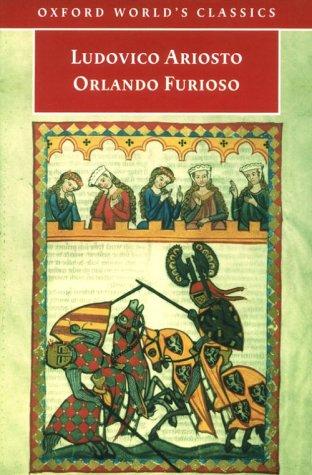
Start this bookNo. 18 on this list. Orlando Furioso · Ludovico Ariosto · 1516
Taught in schools: UNAM Escuela Nacional Preparatoria – programas de Literatura (Mexico)
Orlando Furioso stands as one of the defining works of Italian Renaissance literature, a fixture in Italian university curricula and comparative literature courses worldwide. Its influence on Spenser, Milton, Shakespeare, Cervantes, and Voltaire makes it indispensable to the study of early modern literature. While less taught in English-language universities than Greek and Roman epic, it appears on virtually every world literature and Renaissance literature syllabus.
Challenging22 hours
Start this bookNo. 19 on this list. Satires · Juvenal
Juvenal sits beside Horace and Persius in every course on Roman satire and Latin literature. His phrases "bread and circuses" and "who guards the guards" are part of common English, though few readers meet the full text.
Moderate2 hours
Start this bookNo. 20 on this list. The Storm and Other Things · Eugenio Montale · 1956
Taught across Italian literature courses and anthologized widely as central to twentieth-century European poetry. Its place in the Italian canon is firm, though its reach in English-language curricula is narrower than the major novels.
Difficult2.1 hours
Start this book
No. 21 on this list. Of Tombs · Ugo Foscolo · 1807
Dei Sepolcri is a fixture of Italian school and university curricula and the central text of Italian neoclassical and Romantic poetry. Beyond Italy it is taught chiefly in Italian studies.
Challenging10 min
Start this bookNo. 22 on this list. Myricae · Giovanni Pascoli · 1891
Pascoli's poems, especially 'X Agosto', 'Lavandare' and 'L'assiuolo', are standard fare in Italian schools and in every history of Italian literature. Outside Italy it is mainly a specialist and Italian-studies text.
Moderate1 hours
Start this bookNo. 23 on this list. Jerusalem Delivered · Torquato Tasso · 1581
Gerusalemme liberata (1581) is a cornerstone of Italian literature, taught in Italian schools and in courses on Renaissance epic beside Ariosto's Orlando Furioso. Outside Italy it is read less widely today than the epics of Virgil, Dante or Milton.
Moderate9.1 hours
Start this bookNo. 24 on this list. Aminta · Torquato Tasso · 1573
Aminta is a landmark of Italian Renaissance literature and the model of the pastoral drama. It is taught in Italian literature courses and in surveys of Renaissance theater, though it is less often read outside specialist courses than Tasso's Gerusalemme liberata.
Moderate46 min
Start this bookNo. 25 on this list. Epigrams · Martial
Martial is a standard author in Latin curricula and a staple of Roman satire courses, read alongside Juvenal and Catullus. He is less central to general world-literature syllabi than Virgil or Ovid.
Moderate3.7 hours
Start this bookNo. 26 on this list. The Canzoniere · Umberto Saba · 1921
The Canzoniere is central to twentieth-century Italian poetry and is taught across Italian literature courses. Its reach outside Italy is more modest than that of Montale's or Ungaretti's work.
Moderate2.9 hours
Start this bookNo. 27 on this list. And Suddenly It's Evening · Salvatore Quasimodo · 1942
Quasimodo's poems are short and devastating, each one a compression of loss. 'Everyone stands alone at the heart of the world, / pierced by a ray of sun, / and suddenly it's evening.' The images are Mediterranean—stone, salt, light—and the feeling is ancient, Sicilian, weighted with history. Quasimodo was a hermetic poet before the war, obscure and allusive; afterward, his work turned more direct, more political, though never less musical. He won the Nobel Prize in 1959, though the poems have never found the English audience they deserve.
Moderate18 min
Start this bookNo. 28 on this list. Alcyone · Gabriele D'Annunzio · 1903
'La pioggia nel pineto' is one of the most anthologised Italian poems and is taught across Italian schools and universities. Alcyone is a core text of Italian Decadentism, though it is taught less widely outside Italy than the great novels.
Challenging1.5 hours
Start this bookNo. 29 on this list. Orlando Innamorato · Matteo Maria Boiardo · 1483
A foundational Italian Renaissance epic, taught in Italian literature courses and read mainly as the source for Ariosto's Orlando Furioso. It is not as widely taught as Eugene Onegin in its own tradition.
Challenging24 hours
Start this bookNo. 30 on this list. Odi barbare · Giosuè Carducci · 1877
Odi barbare appears on 26 university syllabi according to Open Syllabus, placing it at the 35th percentile — a solid presence in Italian literature courses but far from the most-taught works globally. Within Italy, the collection holds a secure place in the literary canon as Carducci's masterwork and a landmark of post-Unification poetry. Outside Italian departments, however, it is rarely assigned, limited by its deep embeddedness in Italian language, metrics, and national history.
Challenging1 hours
Start this book
About this list
These 32 books are the highest-scoring eligible poetry collections from Italy currently in the catalogue. About 135 hours of reading in all, for the 30 with measured lengths. Difficulty runs from 50 to 60 out of 100 for the middle half of the list; the summit is The Storm and Other Things at 73.
This list is ranked by literary regard, with a consistent order for equal scores. Membership follows authors and co-authors, not translators or editors. Catalogue coverage and the historical canon both limit what this list can represent, and genre labels are the catalogue’s own, gathered into broader kinds.
When we matched the Canons dataset to our catalogue in October 2026, our canonical-status scores rose with the number of school curricula, publisher series and lists in it that cite a work: the median score was 72 for books one such source cites, 84 at two, 88 at three, 92 at four and 93 at five or more. Prizes are left out of that count. Outside the state curricula, the dataset’s sources choose mostly from what has been translated into English or French, so it is a weaker check on other literatures. Source: Canons (Andrew Piper), CC BY 4.0
Questions people actually ask
- What are the best poetry collections from Italy?
- By literary regard, which weighs canonical status, critical standing and influence: Divine Comedy by Dante Alighieri, Eclogues by Virgil, Odes by Horace, The Devine Comedy by Dante Alighieri and Georgics by Virgil. ReadingRate ranks 32 such books, each with a difficulty score and a reading-time estimate.
- Which poetry collections from Italy should I read first?
- Start from difficulty, not from rank. The most approachable books on this list that still carry top literary regard are Amores by Ovid (about 2 hours), Heroides by Ovid and Ars Poetica by Horace.
- What are the shortest of the best poetry collections from Italy?
- Among the top 25, the shortest are Of Tombs by Ugo Foscolo (about 10 min), L'allegria by Giuseppe Ungaretti (about 22 min) and Ars Poetica by Horace (about 32 min), at an average pace of 250 words a minute adjusted for each book's difficulty.
- Which of the best poetry collections from Italy are the established classics?
- By canonical status, how firmly a book sits in curricula, anthologies and the canon: Divine Comedy by Dante Alighieri, Eclogues by Virgil, Odes by Horace, The Devine Comedy by Dante Alighieri and Aeneid by Virgil.
- Can I read any of these poetry collections from Italy for free?
- 6 of the 32 open in ReadingRate's reader with a free account, from public-domain editions: Divine Comedy, Eclogues, Aeneid, Vita Nuova, Metamorphoses and 1 more.
- How long would it take to read the top ten?
- About 50 hours, at an average pace of 250 words a minute adjusted for each book's difficulty: 25 days at two hours a day. Set your own pace on the page and the list's reading times change to it.
- How hard are poetry collections from Italy to read?
- Most of this list sits between 50 and 60 on ReadingRate's 100-point difficulty scale, where 40 to 55 is moderate. The summit is The Storm and Other Things at 73. Every entry carries its own score, so a reader can pick a great book at a difficulty they will finish.
- How is this list ranked?
- On literary-regard data: how canonically established a work is, its critical standing, and its influence on later writing. It is not a readers’ poll, which is why recent bestsellers rarely appear. Membership follows authors and co-authors, not translators or editors. Lists by country, author, period, theme or difficulty keep to literature: fiction, poetry and drama, with no philosophy, criticism or theory. A list of a kind of book, such as philosophy, memoir or criticism, keeps every book of that kind. Every list holds at most three works by one author.