Hours at an average pace
Showing 31 books
About 334 hours for 30 of 31 books with measured lengths. Estimates use 250 words a minute, adjusted for each book's difficulty. At 2 hours a day, about 168 days for those books.
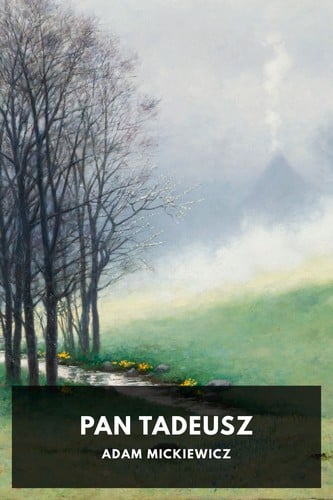
The Polish national epic, compulsory in Polish schools, and the standard reference point for Polish literature in every world-literature survey.
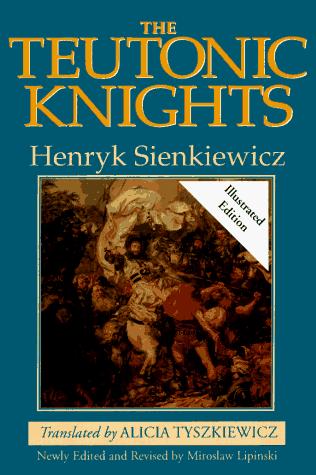
The Knights of the Cross holds major canonical status in Polish literature as one of Sienkiewicz's historical trilogy novels, widely taught in Polish schools and central to national cultural identity. The work occupies a prominent place in Slavic literary studies and 19th-century historical fiction scholarship. However, it remains less universally recognized in the broader Western canon than contemporaneous works by Tolstoy, Dostoevsky, or Flaubert, partly due to its specific focus on Polish-Teutonic conflicts and its distance from modernist aesthetics that shaped 20th-century canonicity. Still, Sienkiewicz's Nobel Prize (1905) ensures enduring international recognition.
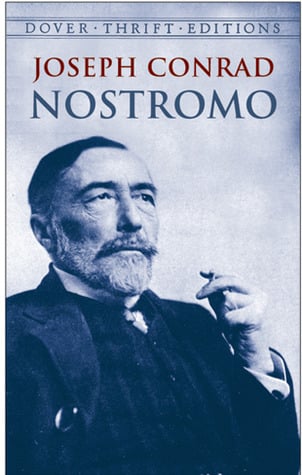
No. 3 on this list. Nostromo
Joseph Conrad · 1904
Challenging18 hours
Included in: Bokklubben World Library
Listed on the Modern Library's 100 Best Novels (1998), Nostromo holds a secure place in the critical canon even as it is taught less frequently than Heart of Darkness due to its length and structural difficulty. Wikipedia documents the novel in 19 languages with a dedicated adaptations section. It appears consistently on 'greatest English novels' lists compiled by critics and scholars.
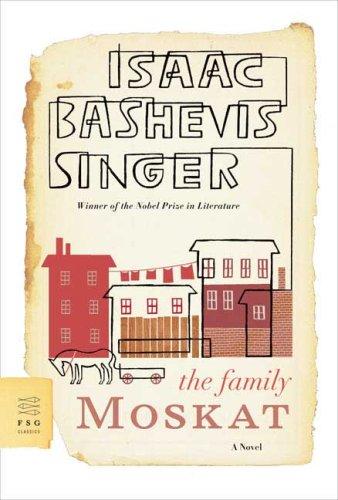
Listed in the Open Syllabus Top 500 Literature titles and published in prestige editions by both Library of America and NYRB Classics, signaling recognition among specialists. Its Wikipedia article exists in only 5 languages, reflecting limited global cultural penetration compared to Singer's better-known short stories. It occupies a place in the canon as Singer's major novel, taught in Jewish literature and 20th-century world literature courses, though less universally than works by the Nobel laureates it stands beside.
It is a core text in Polish literature and Romantic studies, taught across Polish schools and universities. Outside Poland it is more specialized than the Russian classics.
A required text in Polish schools and a central novel of the interwar period, it anchors discussions of Polish independence. It is far less taught abroad than Crime and Punishment.
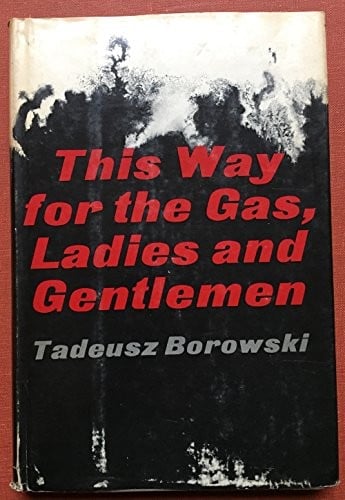
No. 7 on this list. This Way for the Gas, Ladies and Gentlemen
Tadeusz Borowski · 1948
Challenging5.3 hours
A standard text in Holocaust-literature curricula worldwide and compulsory reading in Polish schools.
A staple of Polish school reading lists and the central novel of the Young Poland period. It is less widely taught abroad than the Russian classics.
Nad Niemnem is a core Polish school text and widely regarded as one of the central Polish novels of the 19th century. Its reach beyond Poland is smaller, which keeps it below the world canon's top rank.
Compulsory in Polish schools and a standard early text in Holocaust-literature curricula worldwide.
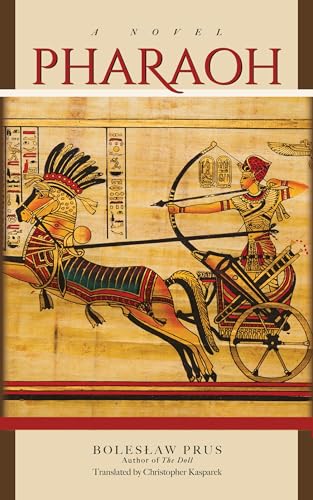
No. 11 on this list. Pharaoh · Bolesław Prus · 1897
Compulsory reading in Polish schools and a standard text in Central European literary study, though thinly known elsewhere.
Challenging16 hours
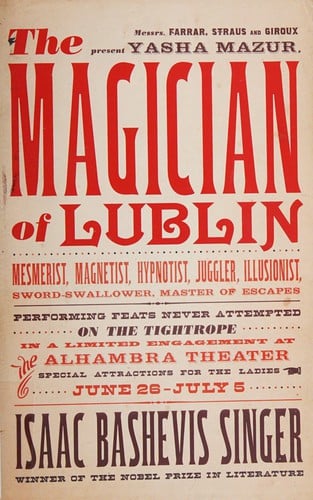
Start this bookNo. 12 on this list. The Magician of Lublin · Isaac Bashevis Singer · 1960
Singer's most taught novel after Enemies, standard in Jewish literature and world literature courses.
Moderate4.6 hours
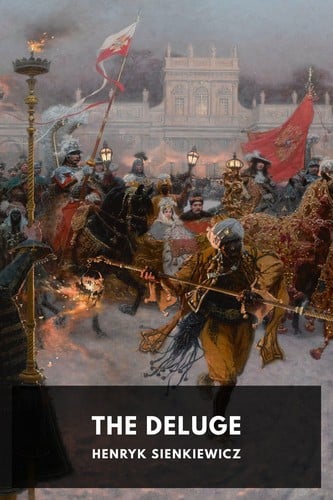
Start this bookNo. 13 on this list. The Deluge · Henryk Sienkiewicz · 1886
Taught in schools: Lektury obowiązkowe – Polish national reading list (Poland)
The second volume of Sienkiewicz's Trilogy follows Poland's struggle against Swedish invasion in the 17th century. Epic battles and romantic intrigue unfold against the backdrop of national catastrophe.
Moderate16 hours
Read nowNo. 14 on this list. Nights and Days · Maria Dąbrowska · 1932
It is a central twentieth-century Polish novel, long taught in Polish schools and universities, and it was adapted into a celebrated film and television series. It is less widely taught outside Poland.
Moderate34 hours
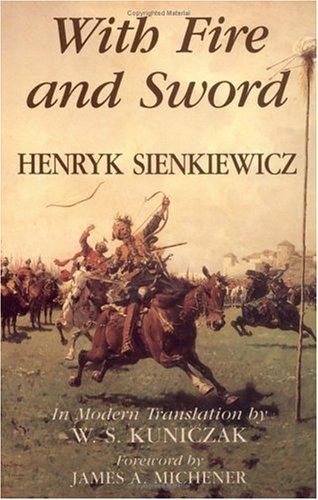
Start this bookNo. 15 on this list. With Fire and Sword · Henryk Sienkiewicz · 1884
Poland defends itself against Swedish and Cossack invasion in the 17th century. The first volume of Sienkiewicz's Trilogy celebrates Polish heroism and resistance.
Challenging22 hours
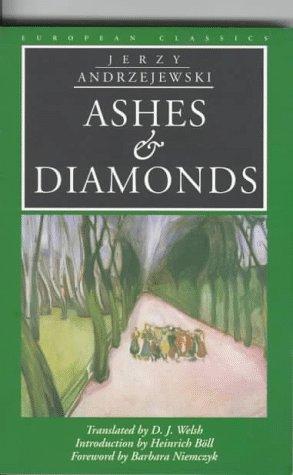
Read nowNo. 16 on this list. Ashes and Diamonds · Jerzy Andrzejewski · 1948
Compulsory in Polish schools and a standard reference for the literature and cinema of the Communist takeover.
Challenging9 hours
Start this bookNo. 17 on this list. The Promised Land · Władysław Reymont · 1899
Jewish settlers build a new life in Poland, their community rising and falling with history. Reymont's novel chronicles the Polish-Jewish experience with characteristic scope and detail.
Moderate8.1 hours
Read nowNo. 18 on this list. An Ancient Tale · Józef Ignacy Kraszewski · 1876
Stara baśń is a fixture of Polish literature and school reading as the founding novel of the Piast legend, but it is little taught outside Poland.
Easy7.9 hours
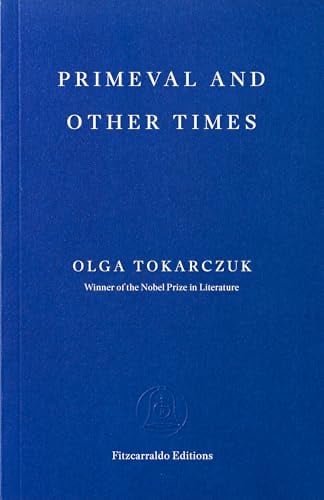
Start this bookNo. 19 on this list. Primeval and Other Times · Olga Tokarczuk · 1996
Appears on 22 university syllabi (33rd percentile in Open Syllabus), with Wikipedia articles in 5 languages. Not yet a fixture of world literature courses, though its visibility has increased steadily since Tokarczuk's 2018 Nobel Prize brought her backlist into English-language classrooms.
Challenging5.8 hours
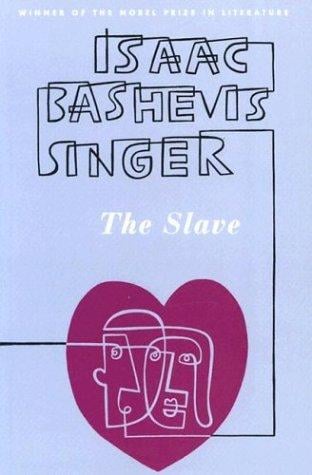
Start this bookNo. 20 on this list. The Slave · Isaac Bashevis Singer · 1962
Jacob, a scholar from Josefov, survives the Chmielnicki massacres of 1648 that kill his wife and children, and is sold as a slave to peasants in a Polish mountain village. He herds cattle, scratches the commandments he can remember onto a rock, and struggles to remain a Jew with no book, no calendar, no minyan — only memory. Then there is Wanda, his master's widowed daughter, who brings him bread and loves him. The Law forbids her to him absolutely; he wants her anyway. When Jacob is ransomed and returned to his people, he cannot stay away: he goes back for Wanda, who converts in secret — a crime punishable by death in seventeenth-century Poland — and must pose as Sarah the mute, because her Yiddish would betray her Gentile birth. Singer tells their story in prose as plain as a folktale and as heavy as scripture: love against Law, faith after catastrophe, a good man asking why God permits what He permits. The ending, arriving decades later, has the shape of legend. Written in Yiddish and published in 1962, this is Singer at his most direct — a love story his own characters would call impossible, told as if it were the oldest story in the world.
Challenging17 hours
Start this book
No. 21 on this list. The Outpost · Bolesław Prus · 1886
A standard text of Polish positivism taught in schools, the customary companion piece to The Doll.
Moderate4.6 hours
Start this bookNo. 22 on this list. Our Class · Tadeusz Słobodzianek · 2009
A landmark of contemporary Polish theater, staged widely in Poland and abroad, and a Nike Award winner. Its presence in curricula is growing but still recent.
Moderate2 hours
Start this bookNo. 23 on this list. The Memoirs of Soplica · Henryk Rzewuski · 1839
It is a recognised work of Polish Romantic-era prose and the best-known example of the gawęda in fiction, studied in Polish literature courses. Abroad it is little taught.
Moderate9.8 hours
Start this bookNo. 24 on this list. The Books of Jacob · Olga Tokarczuk · 2014
Appears on 12 university syllabi so far (27th percentile) and has a Wikipedia article in 11 languages — modest numbers that reflect how recently the English translation arrived (2021) rather than a lack of stature. Its Nobel-winning author and 2022 International Booker win are already pulling it onto world-literature syllabi.
Challenging32 hours
Start this bookNo. 25 on this list. The Peasants · Władysław Reymont · 1904
Taught in schools: Lektury obowiązkowe – Polish national reading list (Poland)
The Peasants has a Wikipedia presence in only 14 languages, well below the threshold of globally canonical works, and no measurable university syllabus presence in open databases. Within Poland it is the defining literary monument of the late nineteenth century, but outside that tradition it sits at the margins of world literature curricula.
Challenging6.8 hours
Read nowNo. 26 on this list. The Seizure of Power · Czesław Miłosz · 1953
Less widely known than The Captive Mind, which covers similar ground in essay form. Important in Polish literary history but rarely taught in world literature courses.
Moderate4.3 hours
Start this bookNo. 27 on this list. A Treatise on Shelling Beans · Wiesław Myśliwski · 2006
The book won Poland's Nike Literary Award in 2007 and sits in Archipelago Books' translated list, but no syllabi or lists record it. It is established in Polish letters and niche in English-language curricula.
Moderate9.4 hours
Start this bookNo. 28 on this list. The Crusaders · Zofia Kossak-Szczucka · 1935
A well-known Polish historical novel of the interwar period, read mainly in Polish literature contexts and in Catholic circles. It has little presence in wider world-literature syllabi.
Easy10 hours
Start this bookNo. 29 on this list. The Beautiful Mrs. Seidenman · Andrzej Szczypiorski · 1986
Published in Polish as Początek (The Beginning), the novel is one of the best-known Polish novels about the occupation of Warsaw. Outside Poland it is read mainly in courses on Holocaust and Central European fiction rather than on general reading lists.
Difficult8.7 hours
Start this bookNo. 30 on this list. Castorp · Paweł Huelle · 2004
Shortlisted for the 2008 Independent Foreign Fiction Prize, but a relatively recent work with limited visible teaching presence. It is known mainly to readers of Polish literature and of Mann.
Moderate
Start this book
About this list
These 31 books are the highest-scoring eligible historical novels from Poland currently in the catalogue. About 334 hours of reading in all, for the 30 with measured lengths. Difficulty runs from 48 to 61 out of 100 for the middle half of the list; the summit is The Beautiful Mrs. Seidenman at 75.
This list is ranked by literary regard, with a consistent order for equal scores. Membership follows authors and co-authors, not translators or editors. Catalogue coverage and the historical canon both limit what this list can represent, and genre labels are the catalogue’s own, gathered into broader kinds.
When we matched the Canons dataset to our catalogue in October 2026, our canonical-status scores rose with the number of school curricula, publisher series and lists in it that cite a work: the median score was 72 for books one such source cites, 84 at two, 88 at three, 92 at four and 93 at five or more. Prizes are left out of that count. Outside the state curricula, the dataset’s sources choose mostly from what has been translated into English or French, so it is a weaker check on other literatures. Source: Canons (Andrew Piper), CC BY 4.0
Questions people actually ask
- What are the best historical novels from Poland?
- By literary regard, which weighs canonical status, critical standing and influence: Pan Tadeusz by Adam Mickiewicz, The Knights of the Cross by Henryk Sienkiewicz, Nostromo by Joseph Conrad, The Family Moskat by Isaac Bashevis Singer and Konrad Wallenrod by Adam Mickiewicz. ReadingRate ranks 31 such books, each with a difficulty score and a reading-time estimate.
- Which historical novels from Poland should I read first?
- Start from difficulty, not from rank. The most approachable books on this list that still carry top literary regard are On the Niemen by Eliza Orzeszkowa (about 14 hours), Homeless People by Stefan Żeromski and The Magician of Lublin by Isaac Bashevis Singer.
- What are the shortest of the best historical novels from Poland?
- Among the top 25, the shortest are Konrad Wallenrod by Adam Mickiewicz (about 1.2 hours), Medallions by Zofia Nałkowska (about 1.3 hours) and Our Class by Tadeusz Słobodzianek (about 2 hours), at an average pace of 250 words a minute adjusted for each book's difficulty.
- Which of the best historical novels from Poland are the established classics?
- By canonical status, how firmly a book sits in curricula, anthologies and the canon: Pan Tadeusz by Adam Mickiewicz, The Knights of the Cross by Henryk Sienkiewicz, The Coming Spring by Stefan Żeromski, This Way for the Gas, Ladies and Gentlemen by Tadeusz Borowski and Homeless People by Stefan Żeromski.
- Can I read any of these historical novels from Poland for free?
- 6 of the 31 open in ReadingRate's reader with a free account, from public-domain editions: The Knights of the Cross, Nostromo, The Deluge, With Fire and Sword, The Promised Land and 1 more.
- How long would it take to read the top ten?
- About 96 hours, at an average pace of 250 words a minute adjusted for each book's difficulty: 48 days at two hours a day. Set your own pace on the page and the list's reading times change to it.
- How hard are historical novels from Poland to read?
- Most of this list sits between 48 and 61 on ReadingRate's 100-point difficulty scale, where 40 to 55 is moderate. The summit is The Beautiful Mrs. Seidenman at 75. Every entry carries its own score, so a reader can pick a great book at a difficulty they will finish.
- How is this list ranked?
- On literary-regard data: how canonically established a work is, its critical standing, and its influence on later writing. It is not a readers’ poll, which is why recent bestsellers rarely appear. Membership follows authors and co-authors, not translators or editors. Lists by country, author, period, theme or difficulty keep to literature: fiction, poetry and drama, with no philosophy, criticism or theory. A list of a kind of book, such as philosophy, memoir or criticism, keeps every book of that kind. Every list holds at most three works by one author.