Hours at an average pace
Showing 30 books
About 184 hours for 30 of 30 books with measured lengths. Estimates use 250 words a minute, adjusted for each book's difficulty. At 2 hours a day, about 93 days for those books.
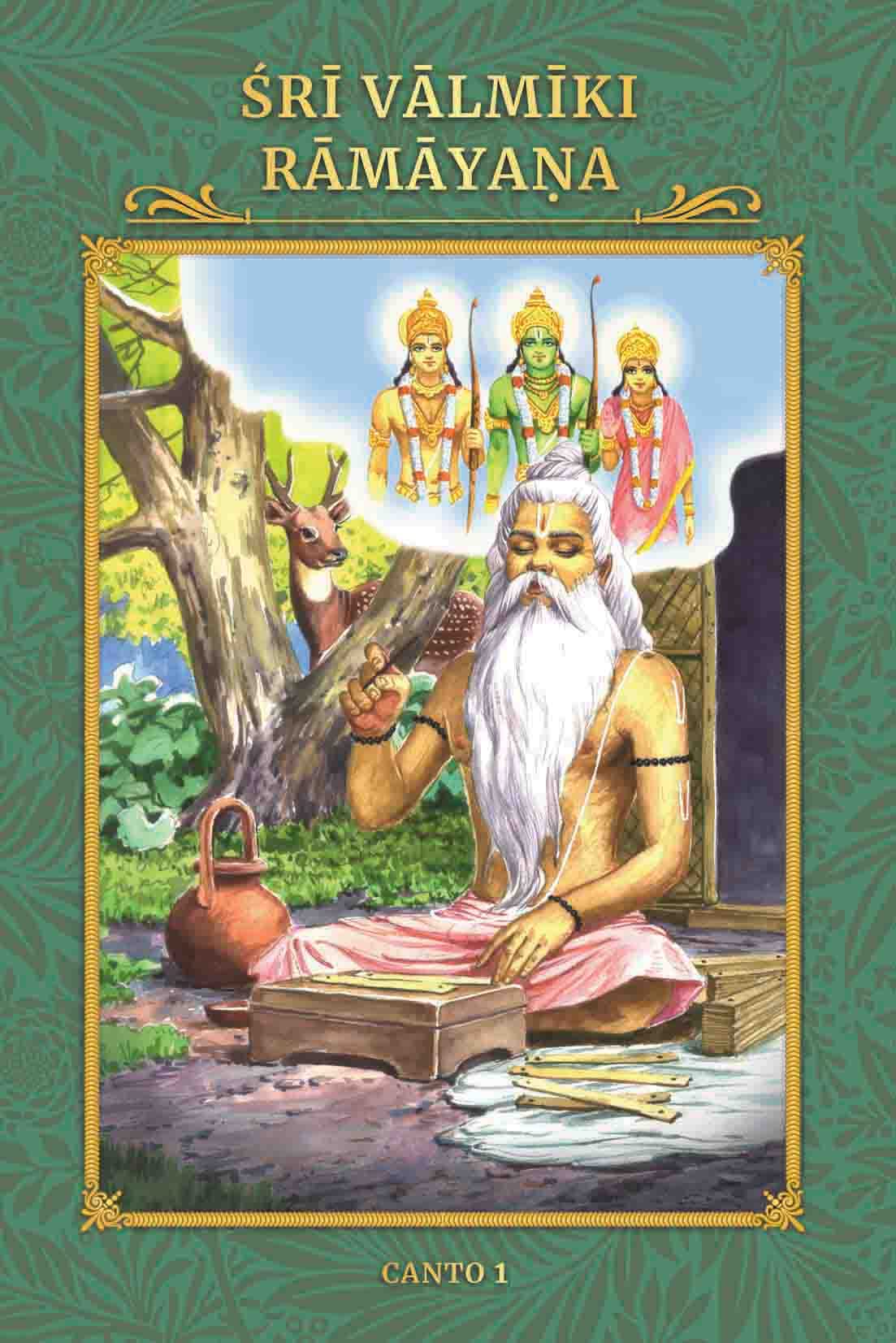
Valmiki's poem established the archetype of the righteous exile — a prince who surrenders his kingdom, rescues his wife from a demon king, and returns to rule — and in doing so provided South and Southeast Asia with a moral and narrative grammar that has shaped religion, theater, sculpture, and statecraft for over two millennia.
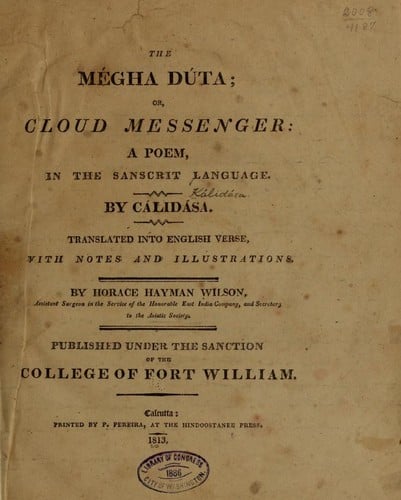
Kalidasa's best-known lyric is central to Sanskrit literature curricula and the model for the duta-kavya genre, translated widely across Indian languages and the world.
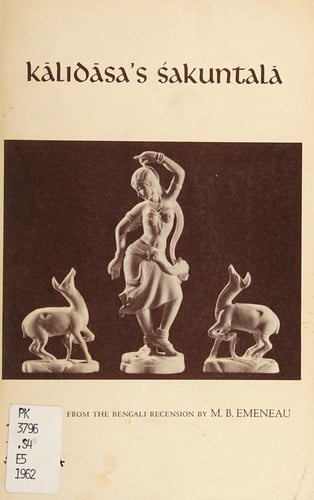
Supreme Sanskrit drama; first Indian text to reach European audience.
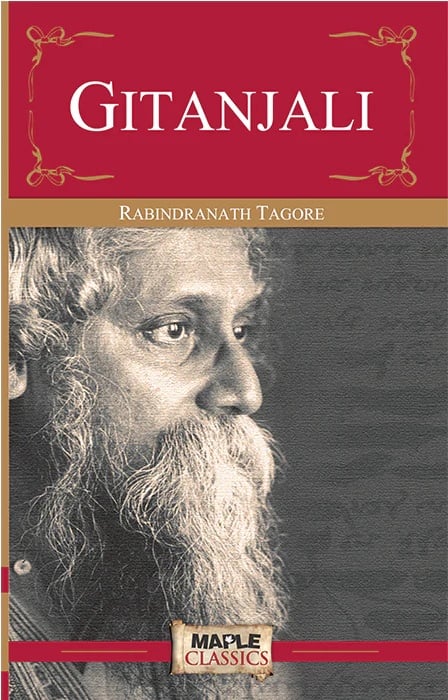
No. 4 on this list. Gitanjali
Rabindranath Tagore · 1910
Moderate1 hours
Included in: UNESCO Collection of Representative Works
Gitanjali won the Nobel Prize in Literature in 1913, making Tagore the first non-European laureate. The work established Bengali literature on the world stage and remains required reading in Indian schools. Its influence on English-language spiritual poetry endures through its absorption into wedding readings, meditation anthologies, and political speeches (poem XXXV became a patriotic touchstone in India).
The Home and the World is one of Tagore's most celebrated novels and a staple of postcolonial literature syllabi worldwide. Written by the first non-European Nobel laureate, it occupies a significant position in the global literary canon, particularly in discussions of Indian literature, nationalism, and modernity. Satyajit Ray's 1984 film adaptation further cemented its cultural status. It appears in 7 Wikipedia languages and has remained continuously in print for over a century.
No. 6 on this list. The God of Small Things
Arundhati Roy · 1997
Challenging8.1 hours
Taught in schools: AQA GCSE and A-level English Literature (UK)
The God of Small Things achieved rapid canonical recognition following its 1997 publication and Booker Prize victory. It became a staple of contemporary literary curricula and global literature syllabi, particularly notable as the first novel by an Indian author to win the Booker in the award's history. Its canonical position reflects both literary merit and cultural significance.
No. 7 on this list. Gora
Rabindranath Tagore · 1910
Challenging12 hours
Taught in schools: Turkish edebiyat curriculum (Turkey)
Included in: UNESCO Collection of Representative Works
Gora is a cornerstone of Bengali and Indian literature, widely taught in South Asian studies programs at universities worldwide and considered essential reading within the Indian literary tradition. No Open Syllabus data is available in the database, but the novel's status as Tagore's defining prose work guarantees its presence on Indian literature syllabi globally. Its canonical standing within South Asia is comparable to that of Tolstoy's novels within Russian literature.
Childhood's End is a cornerstone of the science fiction canon and appears consistently on 'best SF novels' lists, including Modern Library reader polls and multiple 'essential SF' curricula. It is less universally taught than literary fiction staples but holds a foundational place in SF education and is widely cited as required reading for understanding the genre's golden age.
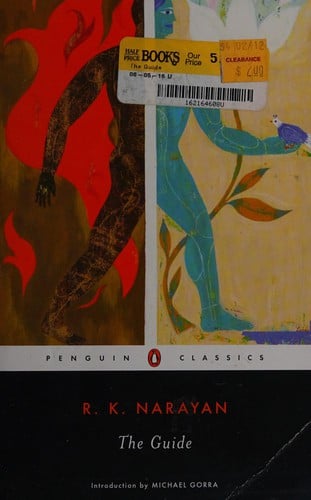
No. 9 on this list. The Guide
R.K. Narayan · 1958
Challenging7 hours
Taught in schools: CSEC English B – Caribbean Examinations Council
The Guide is the central text of Indian English fiction before Rushdie and appears regularly in postcolonial, South Asian, and world literature courses. It was the first novel in English to win the Sahitya Akademi Award, India's national literary prize. Wikipedia articles in multiple languages; the 1965 Bollywood film adaptation signals deep cultural penetration within India.
Appears on 253 university syllabi according to the Open Syllabus Project, placing it in the 60th percentile — taught regularly in postcolonial literature and South Asian studies courses but not a fixture of general literature curricula. Wikipedia coverage exists in only 2 languages, indicating limited global canonical reach compared to works like Midnight's Children or A Suitable Boy.
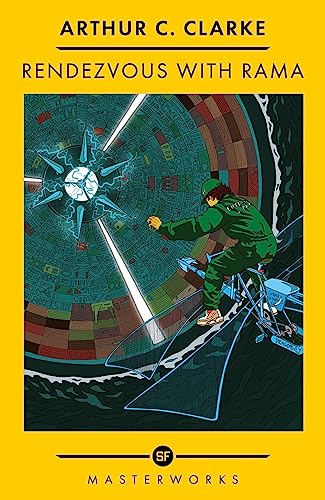
No. 11 on this list. Rendezvous with Rama · Arthur C. Clarke · 1973
Rendezvous with Rama occupies a firm canonical position within science fiction but rarely appears on university literature syllabi outside dedicated SF courses. It consistently places on 'greatest science fiction novels' lists—the Science Fiction and Fantasy Writers of America named it to its Classics list—and holds a definitive place in any serious accounting of the genre. Its influence on hard SF is widely acknowledged, though the literary mainstream has not absorbed it into the standard curriculum.
Moderate4.6 hours
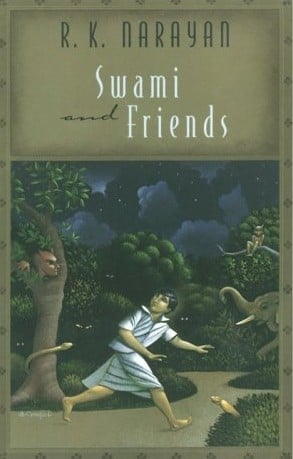
Start this bookNo. 12 on this list. Swami and Friends · R.K. Narayan · 1935
Swami and Friends is regularly taught in postcolonial literature and world fiction courses as a foundational text of Indian English fiction. It established the fictional town of Malgudi, which anchors Narayan's entire career, and appears on syllabi across South Asian literature programs. Its canonical standing is strong within Indian English literature but narrower than Narayan's more celebrated later works like The Guide.
Moderate3.2 hours
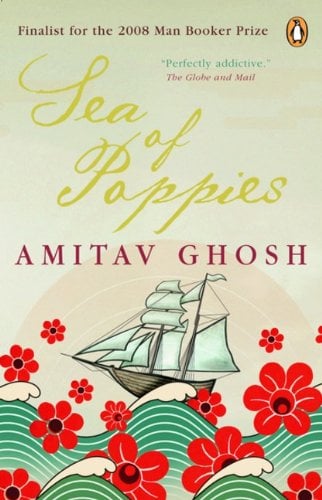
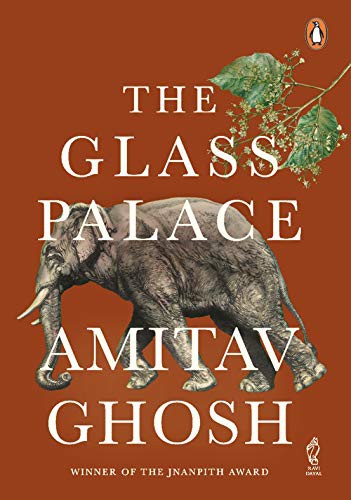
Start this bookNo. 13 on this list. The Glass Palace · Amitav Ghosh · 2000
Regularly taught in postcolonial literature and South Asian studies courses at the university level, though it lacks the broad curriculum presence of canonical British or American texts. No database syllabus data was found, but the novel appears on recommended reading lists for colonial history courses internationally.
Moderate12 hours
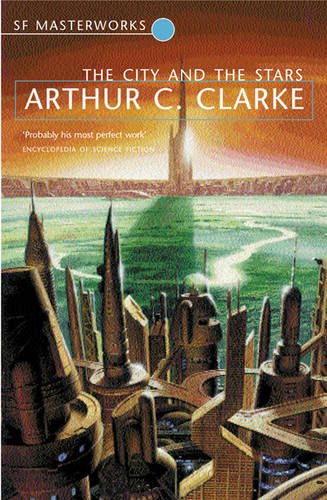
Start this bookNo. 14 on this list. The City and the Stars · Arthur C. Clarke · 1956
The City and the Stars appears on many 'essential science fiction' lists and is widely recognized as a genre classic, but no university syllabus data is available and it has limited presence outside SF circles. It holds a firm place in the SF canon without the broad institutional adoption of literary fiction taught in humanities courses.
Moderate6.2 hours
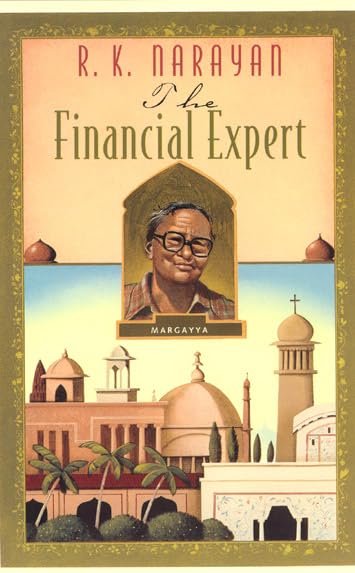
Start this bookNo. 15 on this list. The Financial Expert · R.K. Narayan · 1952
No syllabus data available in the database, but Narayan's Malgudi novels — including The Financial Expert — appear regularly in postcolonial literature, world literature, and Indian English literature university courses. The book is published in Penguin Modern Classics, signaling its canonical standing, though it ranks below The Guide among Narayan's most-taught works.
Challenging4.3 hours
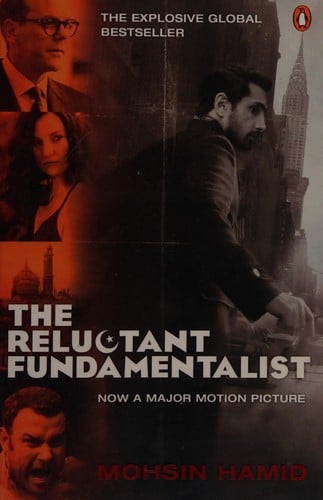
Start this bookNo. 16 on this list. The Reluctant Fundamentalist · Mohsin Hamid · 2007
Taught in schools: OCR GCSE and A-level English Literature (UK)
The Reluctant Fundamentalist appears on 977 university syllabi, placing it in the 74.7th percentile by the Open Syllabus Project — a strong showing for a 2007 novella, reflecting its consistent adoption in postcolonial literature, South Asian diaspora, and post-9/11 fiction courses. Its Wikipedia article exists in only 4 languages, suggesting limited reach outside Anglophone literary culture. It is taught regularly but not a curriculum fixture in the way of Beloved or Things Fall Apart.
Challenging3.7 hours
Start this bookNo. 17 on this list. Burnt Shadows · Kamila Shamsie · 2009
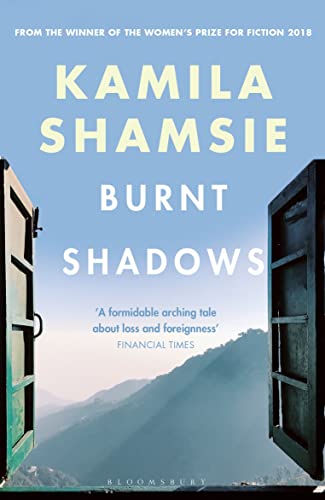
A powerful, sweeping epic crossing generations, cultures and continentsIn a prison cell in the US, a man stands trembling, naked, fearfully waiting to be shipped to Guantanamo Bay. How did it come to this? he wonders...August 9th, 1945, Nagasaki. Hiroko Tanaka steps out onto her veranda, taking in the view of the terraced slopes leading up to the sky. Wrapped in a kimono with three black cranes swooping across the back, she is twenty-one, in love with the man she is to marry, Konrad Weiss.In a split second, the world turns white. In the next, it explodes with the sound of fire and the horror of realisation. In the numbing aftermath of a bomb that obliterates everything she has known, all that remains are the bird-shaped burns on her back, an indelible reminder of the world she has lost.In search of new beginnings, she travels to Delhi two years later. There she walks into the lives of Konrad’s half-sister, Elizabeth, her husband James Burton, and their employee Sajjad Ashraf, from whom she starts to learn Urdu. As the years unravel, new homes replace those left behind and old wars are seamlessly usurped by new conflicts. But the shadows of history – personal, political – are cast over the entwined worlds of the Burtons, Ashrafs and the Tanakas as they are transported from Pakistan to New York, and in the novel’s astonishing climax, to Afghanistan in the immediate wake of 9/11. The ties that have bound them together over decades and generations are tested to the extreme, with unforeseeable consequences.Sweeping in its scope and mesmerising in its evocation of time and place, Burnt Shadows is an epic narrative of disasters evaded and confronted, loyalties offered and repaid, and loves rewarded and betrayed.
Moderate6.5 hours
Start this bookNo. 18 on this list. Clear Light of Day · Anita Desai · 1980
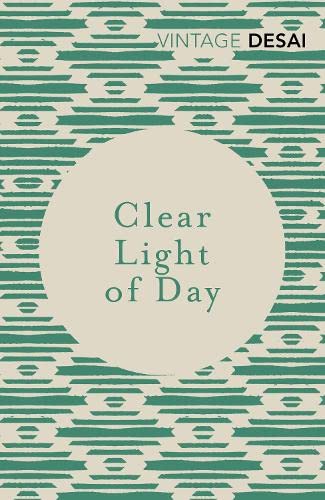
Set in India's Old Delhi, CLEAR LIGHT OF DAY is Anita Desai's tender, warm, and compassionate novel about family scars, the ability to forgive and forget, and the trials and tribulations of familial love. At the novel's heart are the moving relationships between the members of the Das family, who have grown apart from each other. Bimla is a dissatisfied but ambitious teacher at a women's college who lives in her childhood home, where she cares for her mentally challenged brother, Baba. Tara is her younger, unambitious, estranged sister, married and with children of her own. Raja is their popular, brilliant, and successful brother. When Tara returns for a visit with Bimla and Baba, old memories and tensions resurface and blend into a domestic drama that is intensely beautiful and leads to profound self-understanding.
Moderate6.1 hours
Start this bookNo. 19 on this list. Home Fire · Kamila Shamsie · 2017
Taught in schools: Pearson Edexcel GCSE and A-level English Literature (UK)
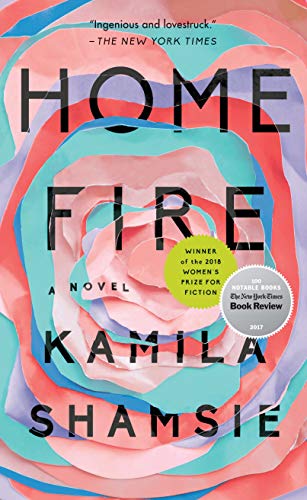
Isma, Aneeka, and Parvaiz are siblings in London, children of a dead jihadi father. When Parvaiz follows his father's path to Syria, his sisters must choose between love and country. Shamsie retells Antigone in the age of ISIS and surveillance states, her prose tight and propulsive, each character's perspective revealing new angles on the same catastrophe. The novel won the Women's Prize for its refusal to simplify—terrorism is both comprehensible and monstrous, love is both admirable and dangerous. The ending is classical tragedy updated, the state's cruelty as terrible as any individual's.
Moderate4.9 hours
Start this bookNo. 20 on this list. The Golden Gate · Vikram Seth · 1986
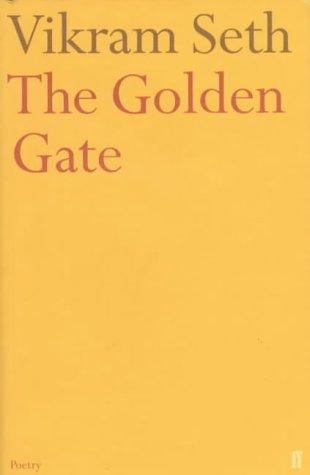
The Golden Gate is the best-known modern novel in verse in English and a regular example in discussions and courses on verse narrative. It is better known to poets and critics than to general readers.
Challenging4.3 hours
Start this book
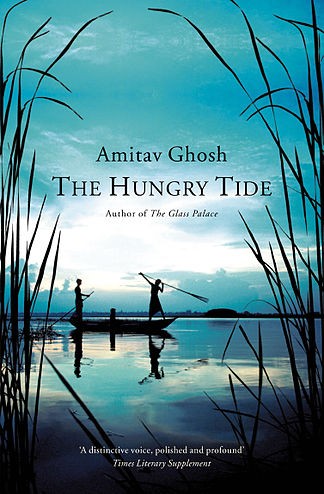
No. 21 on this list. The Hungry Tide · Amitav Ghosh · 2004
The Hungry Tide appears regularly on South Asian literature, postcolonial fiction, and ecocriticism syllabi at universities across the English-speaking world, but has not achieved the universal curriculum presence of Ghosh's own The Shadow Lines or the canonical postcolonial texts of Rushdie and Achebe. It occupies a respected but specialist position in world literature courses.
Moderate9.2 hours
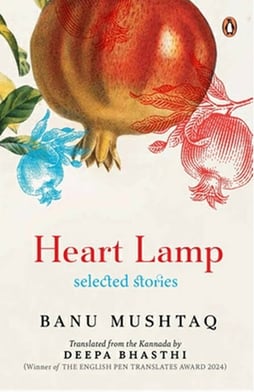
Start this bookNo. 22 on this list. Heart Lamp: Selected Stories · Banu Mushtaq · 2025
In the evocative pages of "Heart Lamp: Selected Stories", Banu Mushtaq weaves a tapestry of memories, desires, and everyday moments that whisper secrets of the human experience. Set against the rich backdrop of South Asia, these stories delve into the intimate territories of family, love, and longing, where the familiar and the unknown entwine. Mushtaq's writing is characterized by delicate precision, illuminating the subtle textures of life with a nuanced sensitivity. Through the lives of their characters, the stories explore the intersections of memory, desire, and the mundane, revealing the intricate patterns that shape our lives. The tone is contemplative, inviting readers to immerse themselves in the quiet depths of the human heart. This collection is ideal for readers who appreciate character-driven narratives and are drawn to the subtle, lyrical qualities of literary fiction. With its introspective pace and poignant themes, "Heart Lamp" is a book that rewards close attention and reflection. As the 2025 winner of the Intl Booker, this collection has already garnered international recognition for its literary merit, making it a compelling choice for readers seeking new voices and perspectives.
Moderate3.7 hours
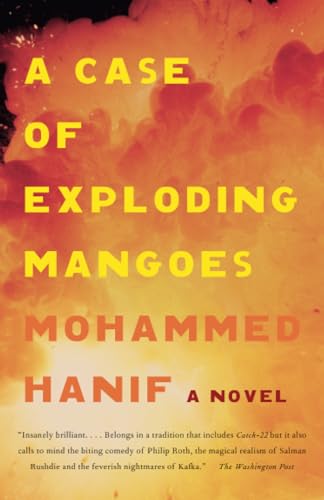
Start this bookNo. 23 on this list. A Case of Exploding Mangoes · Mohammed Hanif · 2008
Ali Shigri, a junior officer at Pakistan's air force academy, is plotting to assassinate General Zia ul-Haq, the country's military dictator. His father, a distinguished air vice marshal, was found hanging in a cell under suspicious circumstances, and Ali is certain Zia ordered the murder. He acquires a gun, plans his approach, and waits for the right moment. Meanwhile, Zia himself grows increasingly paranoid. A crow appears at his window—trained, he learns, by a blind woman whose son was tortured to death. His food taster falls ill after sampling a crate of mangoes. A holy man discovers a worm-infested Quran in the presidential mosque. American officials hover nearby with their own agendas. Hanif sets these conspiracies spinning like plates, each one absurd yet rooted in Pakistan's brutal political machinery. The novel's comedy is black as tar: soldiers conduct interrogations while debating the finer points of torture technique, bureaucrats draft memos about divine intervention, and Zia consults both his generals and his astrologer. The prose moves fast, cutting between Ali's murderous preparation and Zia's mounting dread, all building toward the real historical catastrophe—the plane crash that killed the dictator, his top brass, and the American ambassador in August 1988.
Moderate6.9 hours
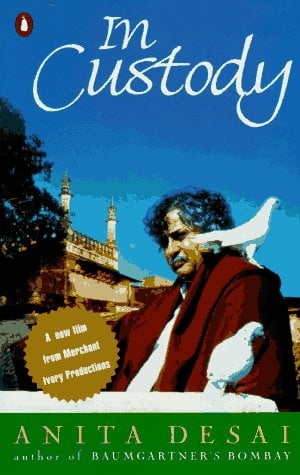
Start this bookNo. 24 on this list. In Custody · Anita Desai · 1984
The book 'In Custody" , shortlisted for booker prize, is contemplated with various concerning issues of the World specifically India. These themes are status of Urdu Language in India, psychological and sociological elements of Indians and their traditions, the Scheming World , etc. Deven Sharma , a lecturer in a college, is the hero without heroism in the book. Murad and Mr.Jain are specifically the examples of a scheming World. Imtiaz Begum as a new woman, a genuine example of growing Feminism.
Moderate3.4 hours
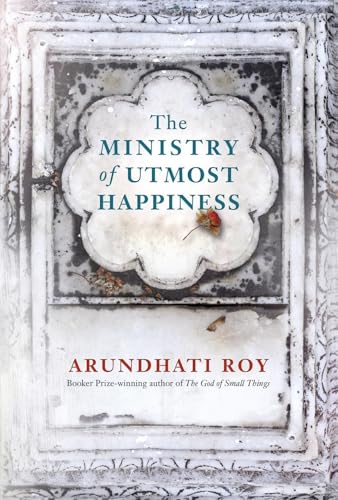
Start this bookNo. 25 on this list. The Ministry of Utmost Happiness · Arundhati Roy · 2017
In the sprawling streets of Old Delhi, a cast of characters converges, each carrying their own secrets and stories. At the heart of The Ministry of Utmost Happiness is a tale of love, loss, and resilience, woven together by the enigmatic Anjum, a hijra who has lived a life of quiet defiance. As the narrative unfolds, the boundaries between past and present, public and private, begin to blur, revealing the intricate tapestry of Indian society. Through her lyrical prose, Arundhati Roy explores themes of identity, community, and the search for belonging in a world marked by violence and upheaval. The writing is characterized by its poetic intensity, conjuring the vibrant colors, sounds, and scents of the Indian subcontinent. As the story navigates the complexities of human experience, it raises essential questions about the nature of love, family, and social justice. This novel is suited for readers who appreciate complex, character-driven fiction and are willing to immerse themselves in a richly detailed world. While categorized as a romance, The Ministry of Utmost Happiness defies easy genre classification, incorporating elements of social commentary, historical fiction, and magical realism. With its dense, evocative language, this book may appeal to readers who enjoy literary fiction and are looking for a challenging, thought-provoking experience. Longlisted for the 2017 Booker Prize, The Ministry of Utmost Happiness is a testament to Arundhati Roy's innovative storytelling and her ability to craft a narrative that is both deeply personal and expansively political.
Challenging12 hours
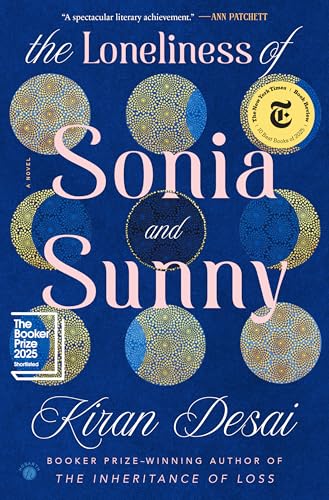
Start this bookNo. 26 on this list. The Loneliness of Sonia and Sunny · Kiran Desai · 2025
When Sonia and Sunny first glimpse each other on an overnight train, they are immediately captivated yet also embarrassed by the fact that their grandparents had once tried to matchmake them, a clumsy meddling that served only to drive Sonia and Sunny apart. Sonia, an aspiring novelist who recently completed her studies in the snowy mountains of Vermont, has returned to her family in India. She fears that she is haunted by a dark spell cast by an artist to whom she had once turned for intimacy and inspiration. Sunny, a struggling journalist resettled in New York City, is attempting to flee his imperious mother and the violence of his warring clan. Uncertain of their future, Sonia and Sunny embark on a search for happiness together as they confront the many alienations of our modern world.
Moderate13 hours
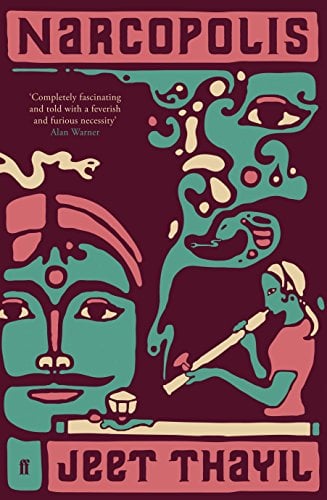
Start this bookNo. 27 on this list. Narcopolis · Jeet Thayil · 2012
Narcopolis (2012) is read in courses on contemporary Indian writing in English and on fiction about Bombay. It is a well-known recent Indian novel rather than a standard text on general reading lists.
Challenging5.3 hours
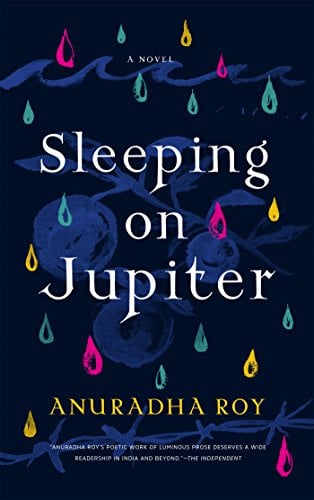
Start this bookNo. 28 on this list. Sleeping on Jupiter · Anuradha Roy · 2015
Sleeping on Jupiter (2015) has a place in discussion of contemporary Indian fiction in English but is not a standard text on courses or reading lists. Anuradha Roy's earlier An Atlas of Impossible Longing remains more widely read.
Challenging4.7 hours
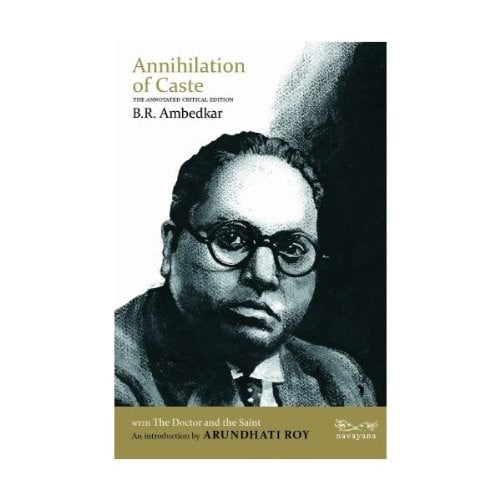
Start this bookNo. 29 on this list. Annihilation of Caste · B.R. Ambedkar · 1936
The foundational text of Dalit political thought, taught across sociology, political theory, and South Asian studies worldwide.
Challenging2.3 hours
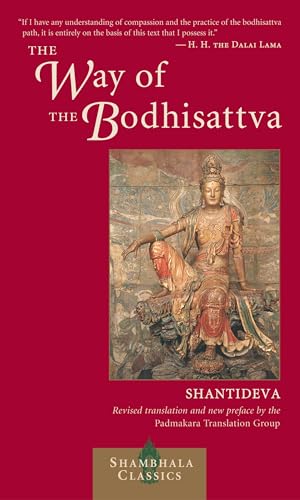
Start this bookNo. 30 on this list. The Way of the Bodhisattva · Śāntideva · 2003
No syllabus or Wikipedia data came back in ReadingRate's own signals check, but this is one of the core texts of the Tibetan Geshe curriculum, studied continuously in Nalanda-tradition monastic colleges for over a millennium, and it anchors university Buddhist Studies and Asian philosophy courses worldwide through standard translations from Oxford World's Classics, Shambhala, and Snow Lion. Its canonical standing within the Buddhist tradition is comparable to a foundational scriptural commentary rather than a novel on a 'great books' list.
Moderate1.7 hours
Start this book
About this list
These 30 books are the highest-scoring eligible moderately difficult books from South Asia currently in the catalogue. About 184 hours of reading in all. Difficulty runs from 50 to 59 out of 100 for the middle half of the list; the summit is The Financial Expert at 63.
This list is ranked by literary regard, with a consistent order for equal scores. Membership follows authors and co-authors, not translators or editors. A book is here when ReadingRate files it under South Asian Literature as one of its primary reading domains. Catalogue coverage and the historical canon both limit what this list can represent.
When we matched the Canons dataset to our catalogue in October 2026, our canonical-status scores rose with the number of school curricula, publisher series and lists in it that cite a work: the median score was 72 for books one such source cites, 84 at two, 88 at three, 92 at four and 93 at five or more. Prizes are left out of that count. Outside the state curricula, the dataset’s sources choose mostly from what has been translated into English or French, so it is a weaker check on other literatures. Source: Canons (Andrew Piper), CC BY 4.0
Questions people actually ask
- What are the best moderately difficult books from South Asia?
- By literary regard, which weighs canonical status, critical standing and influence: Ramayana by Valmiki, Meghaduta by Kalidasa, Shakuntala by Kalidasa, Gitanjali by Rabindranath Tagore and The Home and the World by Rabindranath Tagore. ReadingRate ranks 30 such books, each with a difficulty score and a reading-time estimate.
- Which moderately difficult books from South Asia should I read first?
- Start from difficulty, not from rank. The most approachable books on this list that still carry top literary regard are Shakuntala by Kalidasa (about 4.5 hours), The Way of the Bodhisattva by Śāntideva and Gitanjali by Rabindranath Tagore.
- What are the shortest of the best moderately difficult books from South Asia?
- Among the top 25, the shortest are Meghaduta by Kalidasa (about 26 min), Gitanjali by Rabindranath Tagore (about 1 hours) and The Reluctant Fundamentalist by Mohsin Hamid (about 3.7 hours), at an average pace of 250 words a minute adjusted for each book's difficulty.
- Which of the best moderately difficult books from South Asia are the established classics?
- By canonical status, how firmly a book sits in curricula, anthologies and the canon: Ramayana by Valmiki, Annihilation of Caste by B.R. Ambedkar, Meghaduta by Kalidasa, Shakuntala by Kalidasa and The Way of the Bodhisattva by Śāntideva.
- Can I read any of these moderately difficult books from South Asia for free?
- 3 of the 30 open in ReadingRate's reader with a free account, from public-domain editions: Ramayana, Gitanjali and The Home and the World.
- How long would it take to read the top ten?
- About 66 hours, at an average pace of 250 words a minute adjusted for each book's difficulty: 33 days at two hours a day. Set your own pace on the page and the list's reading times change to it.
- How hard are moderately difficult books from South Asia to read?
- Most of this list sits between 50 and 59 on ReadingRate's 100-point difficulty scale, where 40 to 55 is moderate. The summit is The Financial Expert at 63. Every entry carries its own score, so a reader can pick a great book at a difficulty they will finish.
- How is this list ranked?
- On literary-regard data: how canonically established a work is, its critical standing, and its influence on later writing. It is not a readers’ poll, which is why recent bestsellers rarely appear. Membership follows authors and co-authors, not translators or editors. Lists by country, author, period, theme or difficulty keep to literature (fiction, poetry, drama and philosophy), their novels, poems and plays first and their philosophy after them; a list of a kind of book, such as memoir or criticism, keeps every book of that kind. Every list holds at most three works by one author. A book is here when ReadingRate files it under South Asian Literature as one of its primary reading domains.