Hours at an average pace
Showing 43 books
About 290 hours for 43 of 43 books with measured lengths. Estimates use 250 words a minute, adjusted for each book's difficulty. At 2 hours a day, about 146 days for those books.
The book is a cornerstone of biology, history of science and Victorian studies, assigned across disciplines worldwide. It is among the most widely taught scientific texts ever written.
No. 2 on this list. The Essential Darwin: On the Origins of Species/The Descent of Man
Challenging3.7 hours
Selections centred on On the Origin of Species — among the most taught and cited works in the history of science.
The Logic of Scientific Discovery is required reading in virtually every philosophy of science course at the university level and appears widely on syllabi in history and philosophy of science programs globally. It is not a literary canonical text but holds the equivalent position within its discipline — a foundational text that practitioners of science and philosophy are expected to know.
Four billion years ago, a molecule capable of copying itself appeared in the primordial soup. Everything since — every bacterium, beetle, and human being — is a machine built by those replicators to carry them forward. Richard Dawkins published this argument in 1976, and it reorganized how biologists, philosophers, and general readers think about evolution. The unit of selection, Dawkins argues, is not the species, not the group, not even the individual organism. It is the gene. Organisms are temporary coalitions built by genes competing for spots in the next generation. Altruism, cooperation, parent-offspring conflict, and sex ratios all follow from this single reorientation of perspective. Dawkins builds his case through thirteen chapters of escalating clarity, anchoring every theoretical claim in concrete animal behavior: penguins refusing to be the first in the water, praying mantises eating their mates mid-copulation, worker bees dying to protect the hive. The book's penultimate chapter introduces the meme — a unit of cultural replication analogous to the gene — as a second kind of replicator that has emerged in human minds. Written for the general reader who has no specialized knowledge but is unwilling to be patronized, The Selfish Gene remains the most precise and readable account of Darwinian logic ever written for a non-specialist audience.
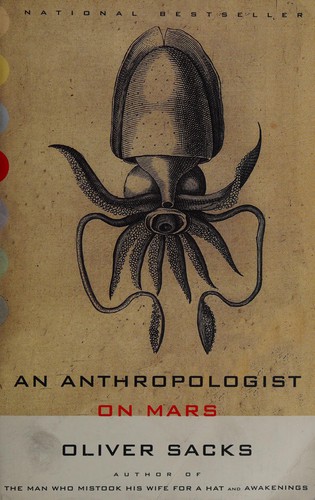
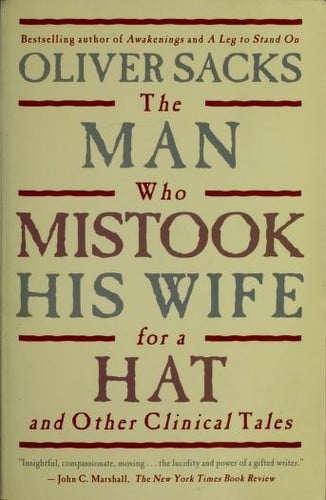
Widely taught in medical humanities, disability studies, and philosophy of mind courses at university level. Appears consistently on syllabi alongside Sacks's earlier work 'The Man Who Mistook His Wife for a Hat.' Not a fixture of traditional literary canons but firmly established in the overlapping domains of science writing, medical ethics, and neurohumanities.
A fixture on neuroscience, psychology, philosophy of mind, and medical humanities syllabi at universities worldwide. Not part of the traditional literary canon, but treated as essential reading across multiple disciplines. Widely referenced in discussions of consciousness, selfhood, and the ethics of clinical medicine.
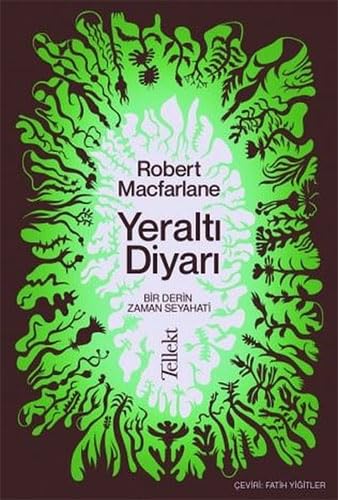
Robert Macfarlane descends into the earth. In Underland, he explores nine underground spaces across a decade of travel: the limestone caves of Somerset where Pleistocene bear bones protrude from the walls, the Parisian catacombs stacked with six million dead, Slovenian karst caves whose speleothems grow one millimeter per century, a Finnish repository being carved into granite bedrock to contain nuclear waste for 100,000 years. Each place is a different relationship to time — to what the earth keeps, hides, or slowly destroys. Macfarlane writes with geological precision and elegiac intensity. His sentences carry the weight of deep time: they accumulate clause upon clause the way sediment accumulates, then break open into image. He walks through mycorrhizal forests where trees communicate through fungal networks threading the soil; he stands at the edge of a glacial meltwater shaft in Greenland and watches pale blue water spiral into blackness. The book's central question — what do we owe to humans living 100,000 years from now? — is never answered. It sits inside the Onkalo repository chapter like the waste itself: sealed, pressurized, waiting. Organized as a literal and mythological descent, Underland draws on Orpheus, Dante, and Roger Deakin to frame a reckoning with the Anthropocene. It ends not with consolation but with ice.
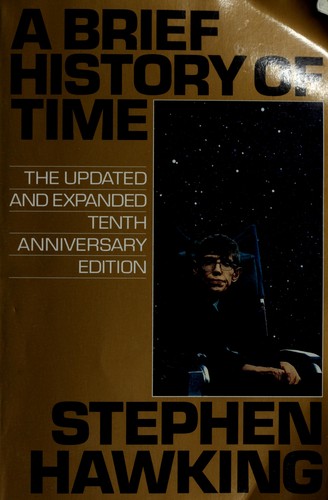
A Brief History of Time is one of the most recognizable popular science books ever published, referenced across science communication courses and appearing on virtually every 'best popular science' reading list for decades. Its cultural recognition globally exceeds most literary novels. It lacks the literary canonical status of fiction that appears on university literature syllabi, but it is taught in history of science and science communication courses worldwide.
Awakenings is widely regarded as one of the foundational works of narrative medicine and is frequently cited in medical humanities curricula and bioethics courses. The 1990 feature film starring Robin Williams and Robert De Niro cemented its cultural presence. It sits below the canon of classic scientific writing (Darwin, Freud) but above most contemporary science prose.
Forster's Clark Lectures at Cambridge—delivered when he was already the author of A Passage to India—remain the most readable introduction to the craft of fiction. He distinguishes between story ('The king died and then the queen died') and plot ('The king died and then the queen died of grief'), between flat characters (who can be summed up in a sentence) and round characters (who surprise convincingly), and between prophecy and fantasy. The distinction between flat and round characters has become so widely used that most readers encounter it without knowing its source. Forster writes with a novelist's wit and informality—he treats the great novelists as colleagues, not monuments—and his opinions are refreshingly direct: he considers Scott clumsy, Meredith pretentious, and James too concerned with pattern at the expense of life. The lectures are held together by his conviction that the novel's great virtue is its ability to show us the inner life of other people.
No. 11 on this list. The Blind Watchmaker · Richard Dawkins · 1986
One of the most important popular science books. Foundational to evolution communication.
Easy6.6 hours
Start this bookNo. 12 on this list. Catching Fire · Richard W. Wrangham · 2009
Popular science rather than canon, though widely assigned in undergraduate courses.
Moderate5.7 hours
Start this bookNo. 13 on this list. The Orphan Master's Son · Adam Johnson · 2013
The Orphan Master's Son won the 2013 Pulitzer Prize for Fiction, which guarantees it a place in American literary discussions for decades. Wikipedia articles exist in 6 languages, indicating moderate global reach. The novel has not yet achieved deep syllabus penetration -- it is too recent and too specifically focused on North Korea to appear in standard survey courses -- but it turns up in contemporary fiction and Asian-American literature courses. Its canonical trajectory is upward but still early.
Challenging14 hours
Start this bookNo. 14 on this list. The Good Terrorist · Doris Lessing · 1985
Not widely taught in university courses — no appearances in the Open Syllabus database, and the Wikipedia article exists in only 10 languages. Lessing's The Golden Notebook dominates syllabi; The Good Terrorist remains a secondary title in her bibliography, read more for its political moment than as a curricular staple.
Challenging18 hours
Start this bookNo. 15 on this list. The Politics of Life Itself: Biomedicine, Power, and Subjectivity in the Twenty-First Century · Nikolas Rose · 2007
Ranked by literary regard among eligible works in the current catalogue. This position reflects the available catalogue evidence.
Challenging9.7 hours
Start this bookNo. 16 on this list. A Mathematician's Apology · G.H. Hardy · 1940
Hardy's slim, melancholy essay is the most famous defense of pure mathematics ever written—and also a meditation on aging, creativity, and the decline of intellectual powers. Hardy argues that mathematics, at its best, is an art form: its patterns are beautiful, its truths are eternal, and its discoveries have a value that transcends any practical application. He distinguishes sharply between the 'real' mathematics of number theory and analysis—pursued for aesthetic rather than utilitarian reasons—and the 'trivial' mathematics used in engineering and applied science. The essay is shot through with sadness: Hardy wrote it at sixty, convinced that his best work was behind him, and his reflections on the aging mathematician's loss of creative power give the book an emotional intensity unusual in mathematical writing. C.P. Snow's biographical foreword, added in later editions, provides context for Hardy's personality and his famous collaboration with Ramanujan.
Easy1.3 hours
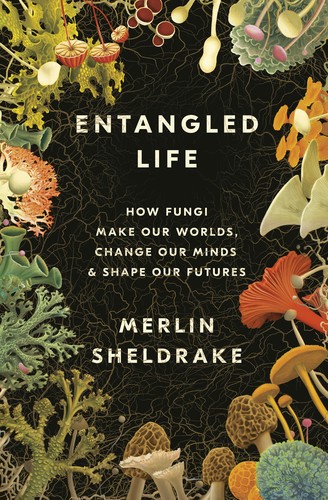
Start this bookNo. 17 on this list. Entangled Life · Merlin Sheldrake · 2020
No syllabus appearances or Wikipedia language data are on file for this title, and being published in 2020 it hasn't had time to enter university curricula. It circulates heavily on general 'best nature writing' and popular-science lists rather than academic ones, well behind established syllabus fixtures like The Selfish Gene or Silent Spring.
Moderate5.7 hours
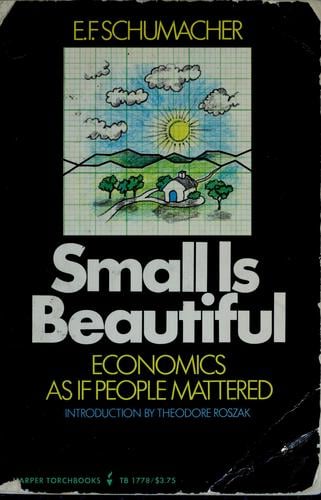
Start this bookNo. 18 on this list. Small Is Beautiful · E.F. Schumacher · 1973
Named one of the 100 most influential books since WWII by the TLS.
Easy3.9 hours
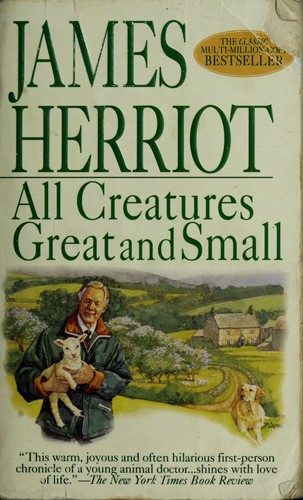
Start this bookNo. 19 on this list. All Creatures Great and Small (All Creatures Great and Small, #1-2) · James Herriot · 1972
Beloved and enduring but not a syllabus staple; occasionally appears in courses on pastoral or animal-themed writing.
Moderate7.7 hours
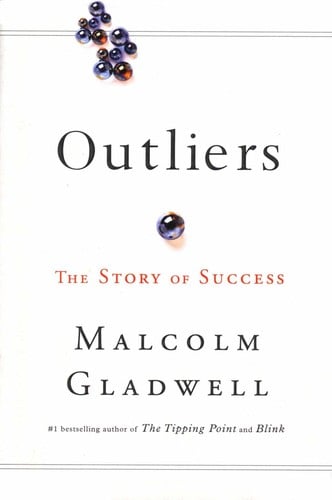
Start this bookNo. 20 on this list. Outliers: The Story of Success · Malcolm Gladwell · 2008
Outliers has no meaningful presence in the literary canon and only a modest academic footprint — it turns up more often on intro psychology, education, or business-school reading lists as a discussion prompt than as a syllabus fixture. Its real reach is commercial: a #1 New York Times bestseller that has sold in the millions and stayed in print continuously since 2008.
Easy3.6 hours
Start this book
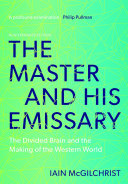
No. 21 on this list. The Master and His Emissary The Divided Brain and the Making of the Western World · Iain McGilchrist · 2009
A new edition of the bestselling classic – published with a special introduction to mark its 10th anniversary This pioneering account sets out to understand the structure of the human brain – the place where mind meets matter. Until recently, the left hemisphere of our brain has been seen as the ‘rational’ side, the superior partner to the right. But is this distinction true? Drawing on a vast body of experimental research, Iain McGilchrist argues while our left brain makes for a wonderful servant, it is a very poor master. As he shows, it is the right side which is the more reliable and insightful. Without it, our world would be mechanistic – stripped of depth, colour and value.
Challenging17 hours
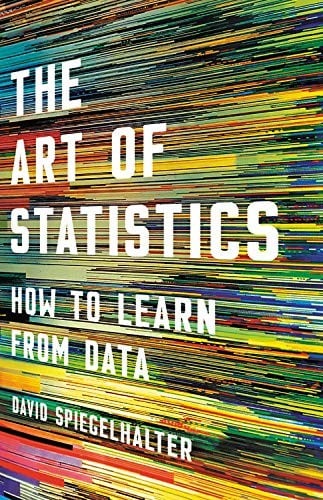
Start this bookNo. 22 on this list. The Art of Statistics: Learning from Data · David Spiegelhalter · 2020
The Art of Statistics has no meaningful presence in the literary canon, but it has become a common recommendation on introductory statistics and data-science reading lists as an accessible entry point before the technical textbooks. Its reach is closer to a respected professional recommendation than a syllabus fixture.
Easy5.2 hours
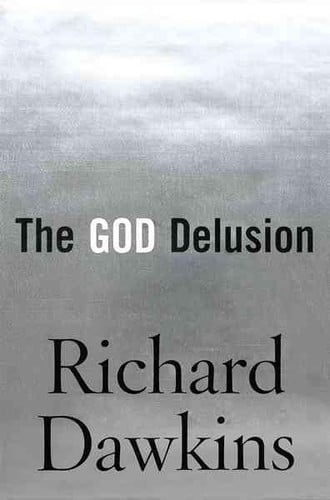
Start this bookNo. 23 on this list. The God Delusion · Richard Dawkins · 2006
Dawkins makes the case for atheism with the rhetorical force and intellectual rigor that characterized his earlier science writing. He argues that a supernatural creator almost certainly does not exist, that religion is not necessary for morality, that the 'God hypothesis' should be treated as a scientific hypothesis and found wanting, and that the privileged position of religion in public life is unjustified. Dawkins engages systematically with the arguments for God's existence—the cosmological argument, the argument from design, the argument from personal experience—and dismantles each with evidence and logic. The book also examines the psychological roots of religious belief (the misfiring of evolved cognitive modules), the moral dangers of faith-based reasoning, and the consolations that science offers in place of religion. The God Delusion became a publishing phenomenon, selling millions of copies and establishing Dawkins as the most prominent voice of the 'New Atheism' movement, admired for his clarity and criticized for his combativeness.
Easy5.9 hours
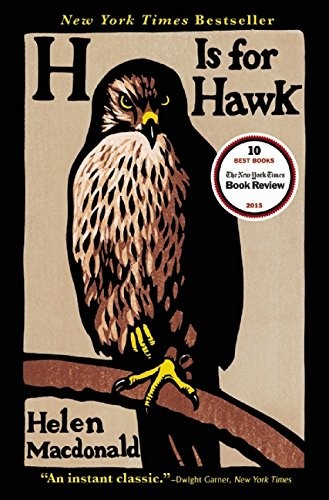
Start this bookNo. 24 on this list. H Is for Hawk · Helen Macdonald · 2014
Won the Samuel Johnson Prize and Costa Book of the Year. Already entering the canon of nature writing.
Easy4.6 hours
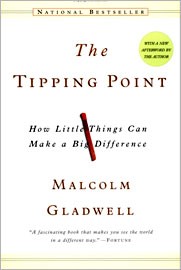
Start this bookNo. 25 on this list. The Tipping Point · Malcolm Gladwell · 2000
Culturally significant bestseller that coined a widely used concept.
Very Easy3.6 hours
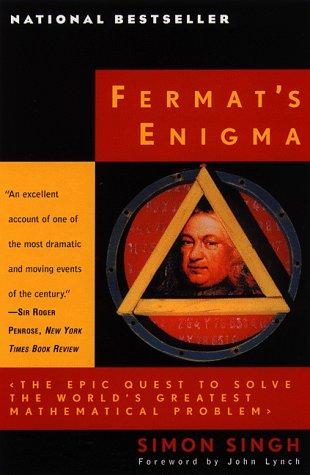
Start this bookNo. 26 on this list. Fermat's Enigma · Simon Singh · 1997
Singh tells the story of Andrew Wiles's proof of Fermat's Last Theorem—the most famous unsolved problem in mathematics, which had defeated the world's greatest mathematicians for 358 years. The narrative spans from Fermat's marginal note in 1637 ('I have discovered a truly marvelous proof of this, which this margin is too narrow to contain') through centuries of partial progress to Wiles's secret seven-year obsession in his attic study. Singh makes higher mathematics feel like a thriller by focusing on the human drama: the obsession, the setbacks, the moment when Wiles's proof collapsed publicly and the year of despair before he fixed it. The book explains the mathematics well enough for non-specialists to understand why the problem is hard and why the solution is beautiful, without requiring any mathematical background beyond basic algebra.
Easy3.9 hours
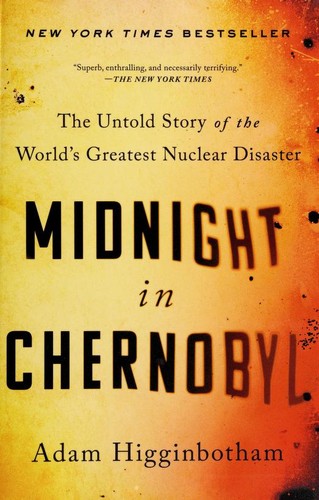
Start this bookNo. 27 on this list. Midnight in Chernobyl · Adam Higginbotham · 2019
Andrew Carnegie Medal winner. Widely regarded as the definitive Chernobyl account.
Very Easy6.6 hours
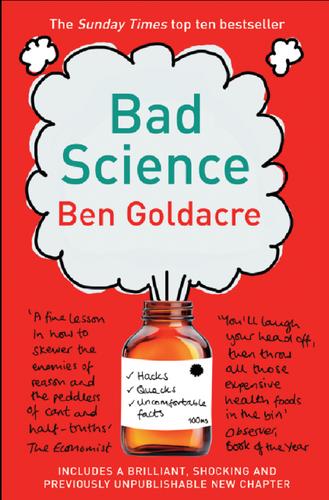
Start this bookNo. 28 on this list. Bad Science · Ben Goldacre · 2008
Goldacre, a British physician and epidemiologist, dismantles pseudoscience, quackery, and misrepresented research with the glee of someone who enjoys being right and the rigor of someone who can prove it. His targets include homeopathy (water memory is nonsense), nutritionists (Gillian McKeith's PhD is from a non-accredited institution), cosmetics companies (their 'science' is marketing), and the pharmaceutical industry (publication bias distorts what doctors know about drugs). But the book's deepest target is the media, which systematically misrepresents scientific research through cherry-picking, false balance, and statistical illiteracy. Goldacre teaches readers how to evaluate health claims by understanding randomized controlled trials, the placebo effect, regression to the mean, and the difference between relative and absolute risk. The prose is angry, funny, and rigorously documented, making Bad Science both a manual for critical thinking about health and a polemic against an information ecosystem that puts lives at risk.
Easy4.5 hours
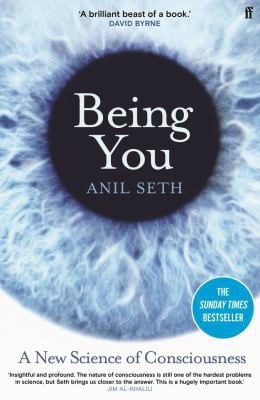
Start this bookNo. 29 on this list. Being You: A New Science of Consciousness · Anil Seth · 2020
Published in September 2021, Being You is still too recent for the kind of decades-long syllabus adoption that defines high canonical status, and no syllabus or citation data has been captured for it yet. It's beginning to surface on consciousness-studies and philosophy-of-mind reading lists on the strength of Seth's academic standing, but sits well short of established textbook status.
Moderate5.4 hours
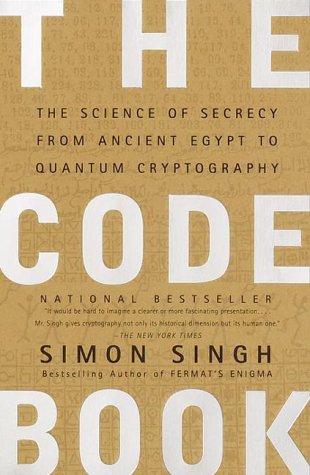
Start this bookNo. 30 on this list. The Code Book · Simon Singh · 1999
Singh traces the history of codes and ciphers from the hieroglyphic scribes of ancient Egypt through the Enigma machine to the quantum cryptography of the future, revealing cryptography as a secret war between codemakers and codebreakers that has shaped the course of history. He shows how Mary Queen of Scots was executed because her cipher was cracked, how the Allies won World War II partly through breaking German codes, and how modern internet commerce depends on encryption that would take a conventional computer longer than the age of the universe to crack. Singh writes with a mathematician's precision and a storyteller's sense of drama, making the technical details of frequency analysis, public-key encryption, and quantum computing genuinely thrilling. The book is that rare achievement: a history of mathematics that reads like a spy novel.
Easy5.5 hours
Start this book
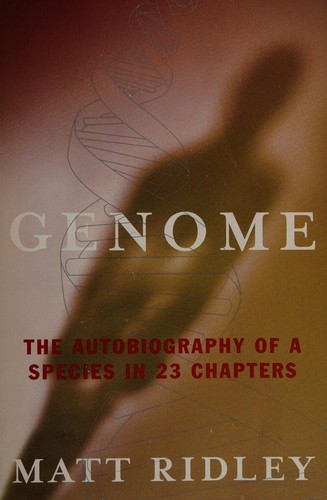
No. 31 on this list. Genome
Matt Ridley · 1999
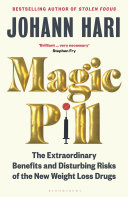
No. 32 on this list. Stolen Focus: Why You Can't Pay Attention—and How to Think Deeply Again
Johann Hari · 2022
No. 33 on this list. Algorithms to Live By
Tom Griffiths · 2016
No. 34 on this list. The Last Hundred Days
Patrick McGuinness · 2011
No. 35 on this list. Why We Sleep
Matthew Walker · 2017
No. 36 on this list. Prophecy: Prediction, Power, and the Fight for the Future, from Ancient Oracles to AI
Carissa Véliz · 2026
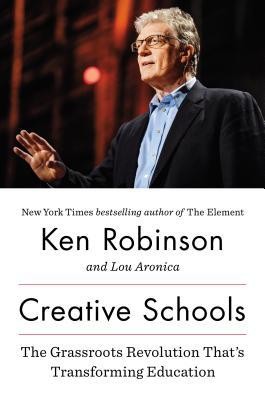
No. 37 on this list. Creative Schools
Ken Robinson · 2015
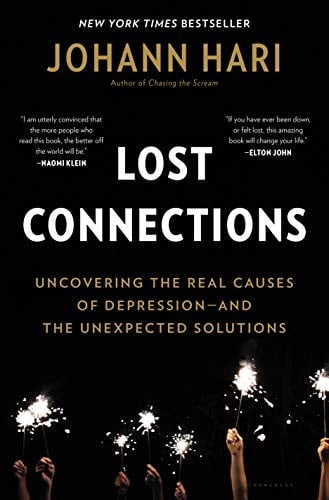
No. 38 on this list. Lost Connections: Why You're Depressed and How to Find Hope
Johann Hari · 2018
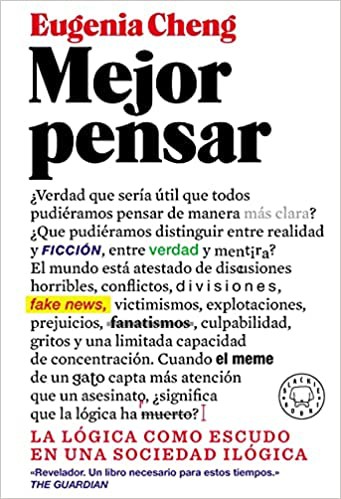
No. 39 on this list. The Art of Logic in an Illogical World
Eugenia Cheng · 2018
No. 40 on this list. Ways of Attending: How Our Divided Brain Constructs the World
Iain McGilchrist · 2018
About this list
These 43 books are the highest-scoring eligible science books from Britain currently in the catalogue. By literary regard, it opens with The Origin of Species, The Essential Darwin: On the Origins of Species/The Descent of Man and The Logic of Scientific Discovery. About 290 hours of reading in all. Difficulty runs from 30 to 54 out of 100 for the middle half of the list; the summit is The Last Hundred Days at 71.
This list is ranked by literary regard, with a consistent order for equal scores. Membership follows authors and co-authors, not translators or editors. Catalogue coverage and the historical canon both limit what this list can represent, and genre labels are the catalogue’s own, gathered into broader kinds.
When we matched the Canons dataset to our catalogue in October 2026, our canonical-status scores rose with the number of school curricula, publisher series and lists in it that cite a work: the median score was 72 for books one such source cites, 84 at two, 88 at three, 92 at four and 93 at five or more. Prizes are left out of that count. Outside the state curricula, the dataset’s sources choose mostly from what has been translated into English or French, so it is a weaker check on other literatures. Source: Canons (Andrew Piper), CC BY 4.0
Questions people actually ask
- What are the best science books from Britain?
- By literary regard, which weighs canonical status, critical standing and influence, The Origin of Species, The Essential Darwin: On the Origins of Species/The Descent of Man, The Logic of Scientific Discovery, The Selfish Gene and An Anthropologist on Mars lead. ReadingRate ranks 43 such books, each with a difficulty score and a reading-time estimate.
- Where should I start with science books from Britain?
- Start from difficulty, not from rank. The most approachable books on this list that still carry top literary regard are The Selfish Gene by Richard Dawkins (about 6.4 hours), A Brief History of Time by Stephen Hawking and The Origin of Species by Charles Darwin.
- How hard are science books from Britain to read?
- Most of this list sits between 30 and 54 on ReadingRate's 100-point difficulty scale, where 40 to 55 is moderate. The summit is The Last Hundred Days at 71. Every entry carries its own score, so a reader can pick a great book at a difficulty they will finish.
- How is this list ranked?
- On literary-regard data: how canonically established a work is, its critical standing, and its influence on later writing. It is not a readers’ poll, which is why recent bestsellers rarely appear. Membership follows authors and co-authors, not translators or editors. A list that is not a genre list keeps to literature (fiction, poetry, drama and philosophy), with philosophy taking no more than one slot in five while there is literature left to rank; every list holds at most three works by one author.