Hours at an average pace
Showing 40 books
About 84 hours for 34 of 40 books with measured lengths. Estimates use 250 words a minute, adjusted for each book's difficulty. At 2 hours a day, about 42 days for those books.
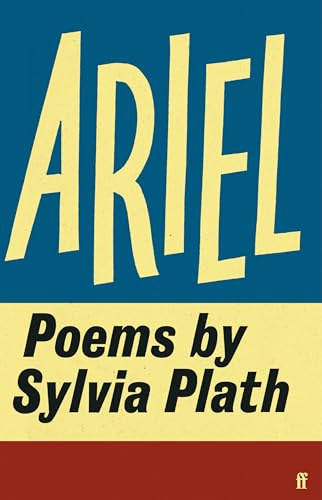
No. 1 on this list. Ariel
Sylvia Plath · 1965
Difficult2.4 hours
Taught in schools: AQA GCSE and A-level English Literature (UK)
Ariel is standard reading across American and British university literature and women's studies curricula, appearing on thousands of syllabi. The collection is included on virtually every 'essential 20th century poetry' list and occupies a permanent position in the confessional poetry canon. Its Wikipedia article exists in over 30 languages, and it has been continuously in print since its 1965 publication.
Sappho is a foundation of Greek lyric poetry and of Western poetry courses, ranked among the Nine Lyric Poets of antiquity. She is taught widely in classics, women's studies, and world literature classes. Ancient critics called her the Poetess, just as Homer was the Poet.
No. 3 on this list. Requiem
Anna Akhmatova · 1963
Difficult1.5 hours
Taught in schools: Russian FGOS literature standard
Requiem appears on syllabi in virtually every university course covering 20th-century Russian literature, genocide and testimony studies, and modernist poetry globally. Akhmatova's Wikipedia entry exists in over 80 languages. The work is consistently listed among the defining literary documents of Stalinist terror alongside Solzhenitsyn's Gulag Archipelago and Nadezhda Mandelstam's memoirs. It has been continuously in print since its 1987 Soviet publication and in Western translation since 1964.
Requiem and Poem Without a Hero are canonical texts of 20th-century Russian literature and essential documents of Stalinist-era witness poetry — required reading in Russian literature courses worldwide. No database records appear for this English translation's syllabus presence, but the works are universally taught in courses on Soviet literature, women's writing, and poetry of witness. The Wikipedia absence in this database likely reflects a data gap rather than actual obscurity: Akhmatova's works are foundational to Russian studies curricula.
Geography III is among the most taught American poetry collections of the postwar era, with poems like 'One Art' and 'In the Waiting Room' appearing on countless university syllabi. Though the database shows no syllabus entries — likely a data gap — the collection is a fixture in American poetry surveys and is included on numerous 'essential American poetry' reading lists. It won the 1976 National Book Critics Circle Award, one of American letters' most respected honors.
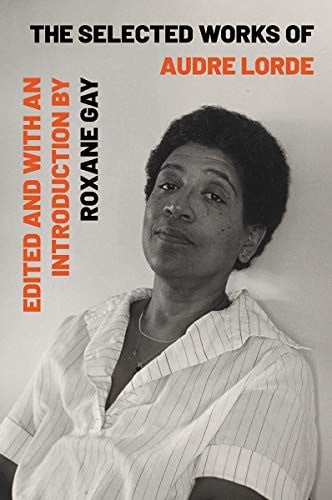
Lorde is taught across literature, gender studies and Black studies.
Foundational text of Chicana feminism, border studies, and queer theory. Universally taught in relevant fields.
Tsvetaeva is firmly established as one of the four great Russian poets of the twentieth century, alongside Akhmatova, Mandelstam, and Pasternak.
It is a staple of contemporary poetry and queer literature courses and widely taught as a landmark of the verse novel. Carson's 2026 Nobel Prize in Literature lifts its standing further.
The title poem appears in virtually every major American poetry anthology and is standard reading in feminist literature, American poetry, and contemporary poetry courses. The collection sits firmly in the literary canon, comparable to Beloved (85) in academic reach if not in the broadest syllabi. No database data was returned, but Rich's place in American poetry curricula is well established.
No. 11 on this list. Map: Collected and Last Poems · Wisława Szymborska · 2015
The standard complete Szymborska in English and a fixture of world-poetry syllabi since its publication.
Challenging4 hours
Start this bookNo. 12 on this list. Poems New and Collected · Wisława Szymborska · 1998
Szymborska's retrospective gathers five decades of work in what would become the definitive English collection. Her poems are deceptively simple—short, conversational, funny—while containing philosophical depths. She writes about clouds and dreams and history, about the way reality keeps being stranger than our categories. 'I am who I am. / A coincidence no less unthinkable / than any other.' She won the Nobel in 1996, and these poems show why: a voice at once modest and vast, finding wonder in ordinary things.
Challenging2.7 hours
Start this bookNo. 13 on this list. Citizen: An American Lyric · Claudia Rankine · 2014
Citizen has become required reading across university courses in American literature, race studies, creative writing, and cultural criticism within a decade of its 2014 publication—a speed of canonization rarely seen in contemporary poetry. It appears on hundreds of syllabi and on nearly every 'essential American poetry' list of the 2010s. Its Wikipedia article exists in multiple languages, and the book is cited in academic work across disciplines from legal theory to art history.
Difficult1.7 hours
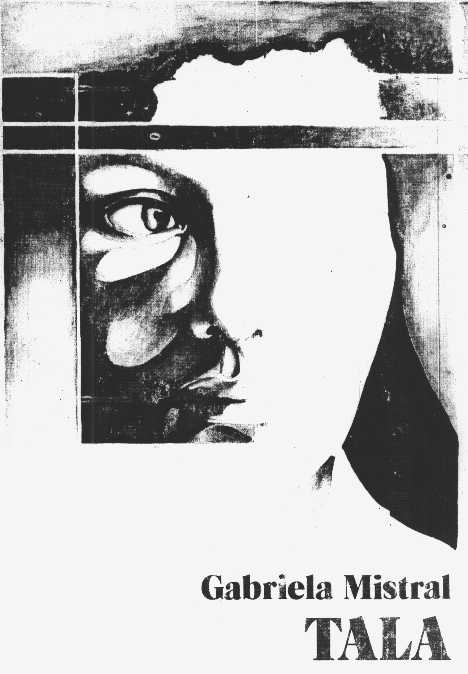
Start this bookNo. 14 on this list. Tala · Gabriela Mistral · 1938
Gabriela Mistral published Tala in 1938, donating the Chilean royalties to Basque refugee children. The book begins with her mother's death and never fully recovers from it. The speaker travels from that private grief outward — through the Andes, across indigenous cosmologies, into devotional prayer — without finding a resting place. The poems name things from the Andean and Pacific world with the precision of someone recording what might disappear: the chirimoya, the quetzal, the salt flats, the bones of the desert. Mistral fuses Catholic liturgical language with Quechua and Nahuatl mythological figures, treating the Virgin Mary and Coatlicue as companions in the same devotional space. The effect is a religious poetry unlike any European model — the grief is too large for any single tradition to hold. Reading Tala requires tolerance for the lyric's essential withholding: these poems don't explain themselves, and the grief doesn't resolve. What accumulates is a voice of extraordinary authority, grieving in several languages at once, in exile from a country she would not return to for years. Mistral won the Nobel Prize in 1945 — the first Latin American to do so — and Tala is the collection that most fully earns it.
Challenging6 hours
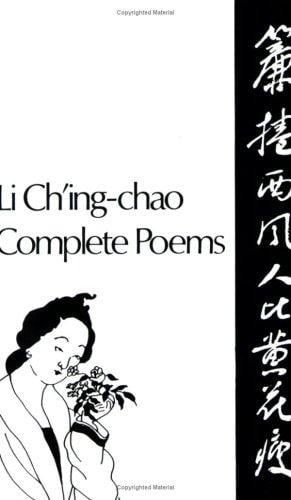
Start this bookNo. 15 on this list. The Complete Poems of Li Qingzhao · Li Qingzhao · 1155
The standard woman poet of the Chinese canon, memorised in schools and present in every anthology of world poetry by women.
Moderate1.3 hours
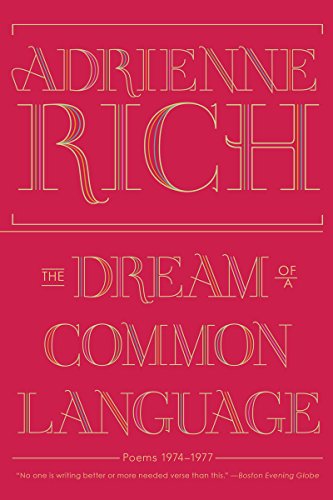
Start this bookNo. 16 on this list. The Dream of a Common Language · Adrienne Rich · 1978
The Dream of a Common Language is taught widely in feminist literary studies, women's poetry, and American poetry courses at the university level. It has no dedicated Wikipedia article in the database but Rich herself is a foundational figure in the canon of late twentieth-century American poetry, and this collection is consistently cited as central to her legacy and to the feminist poetry movement of the 1970s.
Challenging1.1 hours
Start this bookNo. 17 on this list. Obras Completas de Sor Juana Ines de la Cruz · Sister Juana Inés de la Cruz
Sor Juana is a foundational author in Spanish-language and Latin American literature courses, and this edition is regarded as the authoritative text. Its standing as a reference edition lifts it, though it is taught less as a single work.
Challenging
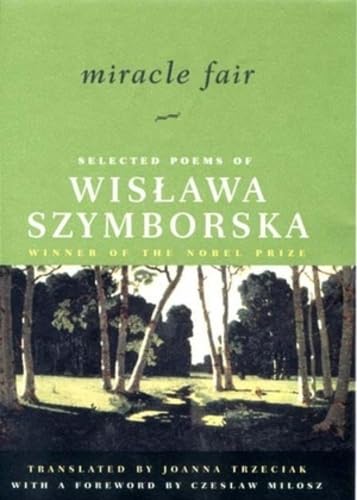
Start this bookNo. 18 on this list. Selected Poems of Wisława Szymborska · Wisława Szymborska · 1998
Szymborska is a staple of world poetry courses and a Nobel laureate, and this collection is the standard English edition of her work. Its place is secure, though below Hamlet or Gatsby in universal syllabus presence.
Moderate2.4 hours
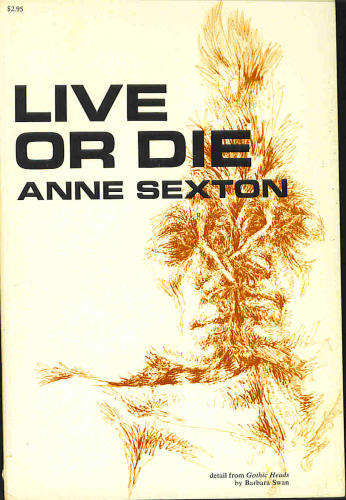
Start this bookNo. 19 on this list. Live or Die · Anne Sexton · 1966
Anne Sexton arranged these thirty-three poems in the order she wrote them — January 1962 to February 1966 — and called the result 'a fever chart for a bad case of melancholy.' Each poem arrives with a date at the bottom, evidence rather than ornament. The collection opens with her father, a wool salesman who drank in his bedroom and died on the road; within pages she has checked herself into a psychiatric ward, addressed Sylvia Plath's corpse ('Thief!— how did you crawl into, crawl down alone into the death I wanted so badly'), mourned a son she never had, and watched her daughter call on God instead of her mother when a horse crushes her foot. Sexton's language stays in the body. She counts out eight pharmaceutical capsules each night, arranges them 'as in the laying on of hands or the black sacrament.' Suicides, she observes, 'have a special language. Like carpenters they want to know which tools. They never ask why build.' The hospital and the suburban kitchen share equal authority. God appears, and Mary, and Judas, and Sylvia, and none of them offer adequate answers. The final poem, 'Live,' turns the collection's entire argument on its axis. Eight Dalmatian puppies survive the pails of water that waited to drown them. 'I am not what I expected. Not an Eichmann. The poison just didn't take.' The fever chart ends with a temperature that isn't, finally, fatal. This is the Pulitzer Prize-winning collection that defined confessional poetry as a form capable of sustaining both unbearable honesty and survival.
Easy43 min
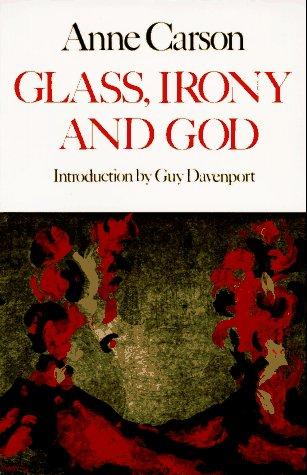
Start this bookNo. 20 on this list. Glass, Irony and God · Anne Carson · 1995
Carson's Nobel Prize in Literature lifts the standing of her major early collection, and The Glass Essay is widely anthologized and taught in contemporary poetry courses. It remains newer to syllabi than established canon works.
Challenging1.9 hours
Start this book
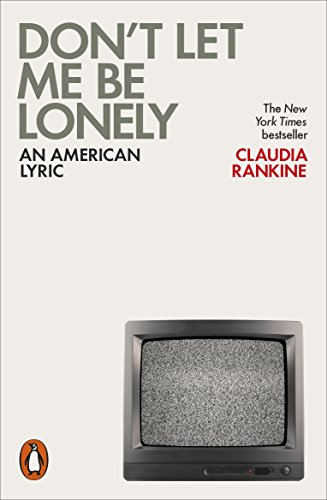
No. 21 on this list. Don't Let Me Be Lonely · Claudia Rankine · 2004
Don't Let Me Be Lonely is taught widely in contemporary American poetry courses, hybrid-genre writing seminars, and courses on race and American literature, though no syllabus data was returned by the database. Rankine's later book Citizen eclipsed it in mainstream visibility, but this volume is recognized as the formal and thematic origin of her "American Lyric" project. It occupies a firm position in serious literary syllabi without approaching the ubiquity of canonical novels.
Difficult2.7 hours
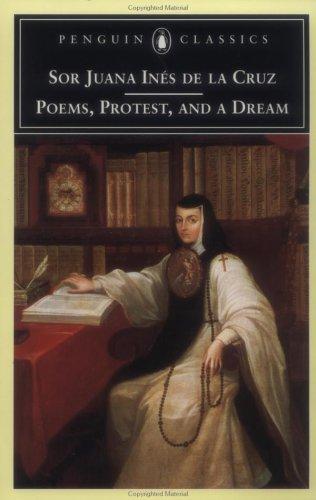
Start this bookNo. 22 on this list. Poems, Protest, and a Dream · Sister Juana Ines de la Cruz
Penguin Classics presents the selection as a standard English-language entry point to Latin America's leading baroque poet. Stavans calls the Respuesta a cornerstone of Hispanic-American identity, and Sor Juana is a fixture of Latin American and colonial literature courses.
Challenging
Start this bookNo. 23 on this list. Storyteller · Leslie Marmon Silko · 1981
Storyteller appears on hundreds of university syllabi in Native American literature, American literature, and women's studies courses, making it required reading in its subfield. It is consistently cited among the essential works of Indigenous American writing and is included in major survey anthologies of American literature. While not at the saturation level of Beloved (85) or The Great Gatsby (95), it is a fixture in any serious Native American literature curriculum.
Challenging4.9 hours
Start this bookNo. 24 on this list. Beside the River Sar · Rosalía de Castro · 1884
Central to Galician and Spanish literary curricula, and a foundational text for the study of nineteenth-century women poets in Spanish.
Challenging1.1 hours
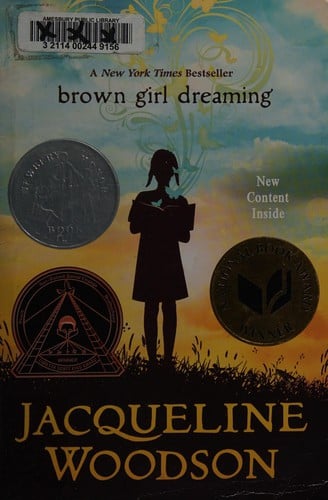
Start this bookNo. 25 on this list. Brown Girl Dreaming · Jacqueline Woodson · 2014
Brown Girl Dreaming is standard reading in American middle school and high school curricula, particularly in units on memoir, poetry, and Civil Rights-era literature. It appears on numerous recommended reading lists for young adults and is included in many school districts' required reading programs. Its canonical status is strong within YA and middle-grade education but has not yet reached the broader university literary canon.
Easy1.9 hours
Start this bookNo. 26 on this list. Nox · Anne Carson · 2010
Nox has become a touchstone of contemporary poetry and book-art courses, and Carson's Nobel Prize in Literature in 2026 raises its standing further. It remains a niche text compared with the major canon.
Moderate
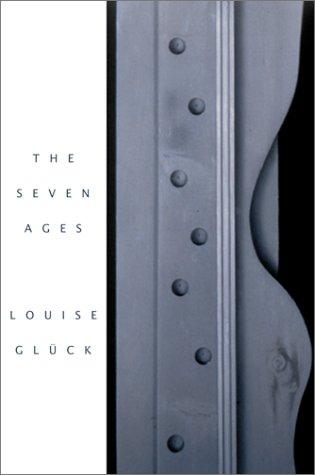
Start this bookNo. 27 on this list. The Seven Ages · Louise Glück · 2001
Taught as part of a body of work that is thoroughly canonical.
Challenging1.6 hours
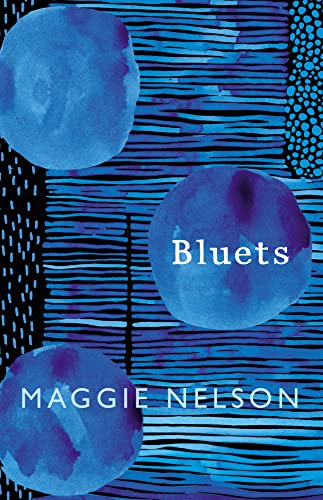
Start this bookNo. 28 on this list. Bluets · Maggie Nelson · 2009
Bluets is a fixture on MFA poetry and creative nonfiction syllabi and appears regularly in lyric essay and experimental prose anthologies. No data signals in the database reflect its syllabus presence, but its standing in contemporary poetics courses is strong. It has not entered secondary education curricula and remains outside mainstream literary canon lists, placing it well below Beloved (85) but above cult-following works like Infinite Jest (78) on different axes.
Challenging1.8 hours
Start this bookNo. 29 on this list. Devotions · Mary Oliver · 2017
Mary Oliver appears regularly on undergraduate syllabi in American poetry surveys, creative writing programs, and environmental humanities courses. She is not a high school curriculum fixture at the level of Frost or Whitman, but Devotions is a standard course text. No syllabus data was returned from the database, but her presence in higher education is well documented.
Easy2.2 hours
Start this bookNo. 30 on this list. Crazy Brave: A Memoir · Joy Harjo · 2012
Crazy Brave appears on Native American literature and creative nonfiction syllabi but lacks broad curricular penetration outside those contexts. Harjo's poetry collections, especially She Had Some Horses, are more commonly assigned. The memoir's teaching presence is modest compared to canonical personal narratives.
Easy2.4 hours
Start this book
No. 31 on this list. Dream Work
Mary Oliver · 1986
No. 32 on this list. Clap When You Land
Elizabeth Acevedo · 2020
No. 33 on this list. Just Us
Claudia Rankine · 2020
No. 34 on this list. Diary of a Wave Outside the Sea
Dunya Mikhail · 2009
No. 35 on this list. Good Girl
Aria Aber · 2025
No. 36 on this list. The Sun and Her Flowers
Rupi Kaur · 2017
No. 37 on this list. Milk and honey
Rupi Kaur · 2014
No. 38 on this list. My Voice Sought the Wind
Susan Abulhawa · 2013
No. 39 on this list. Goblinhood: Goblin As A Mode
Jen Calleja · 2024
No. 40 on this list. Not Hungry
Kate Karyus Quinn · 2019
About this list
These 40 books are the highest-scoring eligible poetry collections by women currently in the catalogue. About 84 hours of reading in all, for the 34 with measured lengths. Difficulty runs from 39 to 64 out of 100 for the middle half of the list; the summit is Poem Without a Hero at 81.
This list is ranked by literary regard, with a consistent order for equal scores. Membership follows authors and co-authors, not translators or editors. Catalogue coverage and the historical canon both limit what this list can represent, and genre labels are the catalogue’s own, gathered into broader kinds.
When we matched the Canons dataset to our catalogue in October 2026, our canonical-status scores rose with the number of school curricula, publisher series and lists in it that cite a work: the median score was 72 for books one such source cites, 84 at two, 88 at three, 92 at four and 93 at five or more. Prizes are left out of that count. Outside the state curricula, the dataset’s sources choose mostly from what has been translated into English or French, so it is a weaker check on other literatures. Source: Canons (Andrew Piper), CC BY 4.0
Questions people actually ask
- What are the best poetry collections by women?
- By literary regard, which weighs canonical status, critical standing and influence: Ariel by Sylvia Plath, The Poems of Sappho by Sappho, Requiem by Anna Akhmatova, Poem Without a Hero by Anna Akhmatova and Geography III by Elizabeth Bishop. ReadingRate ranks 40 such books, each with a difficulty score and a reading-time estimate.
- Which poetry collections by women should I read first?
- Start from difficulty, not from rank. The most approachable books on this list that still carry top literary regard are Borderlands/La Frontera: The New Mestiza by Gloria Anzaldua (about 2.7 hours), Selected Poems of Marina Tsvetaeva by Marina Tsvetaeva and The Poems of Sappho by Sappho.
- What are the shortest of the best poetry collections by women?
- Among the top 25, the shortest are Geography III by Elizabeth Bishop (about 37 min), Diving into the Wreck by Adrienne Rich (about 47 min) and The Dream of a Common Language by Adrienne Rich (about 1.1 hours), at an average pace of 250 words a minute adjusted for each book's difficulty.
- Which of the best poetry collections by women are the established classics?
- By canonical status, how firmly a book sits in curricula, anthologies and the canon: Ariel by Sylvia Plath, The Poems of Sappho by Sappho, Requiem by Anna Akhmatova, The Complete Poems of Li Qingzhao by Li Qingzhao and Poem Without a Hero by Anna Akhmatova.
- How long would it take to read the top ten?
- About 23 hours, at an average pace of 250 words a minute adjusted for each book's difficulty: 12 days at two hours a day. Set your own pace on the page and the list's reading times change to it.
- How hard are poetry collections by women to read?
- Most of this list sits between 39 and 64 on ReadingRate's 100-point difficulty scale, where 40 to 55 is moderate. The summit is Poem Without a Hero at 81. Every entry carries its own score, so a reader can pick a great book at a difficulty they will finish.
- How is this list ranked?
- On literary-regard data: how canonically established a work is, its critical standing, and its influence on later writing. It is not a readers’ poll, which is why recent bestsellers rarely appear. Membership follows authors and co-authors, not translators or editors. Lists by country, author, period, theme or difficulty keep to literature: fiction, poetry and drama, with no philosophy, criticism or theory. A list of a kind of book, such as philosophy, memoir or criticism, keeps every book of that kind. Every list holds at most three works by one author.