Hours at an average pace
Showing 39 books
About 193 hours for 39 of 39 books with measured lengths. Estimates use 250 words a minute, adjusted for each book's difficulty. At 2 hours a day, about 97 days for those books.
Required reading in environmental science, ecology, American history, and science writing courses worldwide. Regularly listed among the most important books of the 20th century by Le Monde, Modern Library, and TIME. Its influence extends far beyond literary circles into science, law, and public policy.
Winner of the 1975 Pulitzer Prize for General Nonfiction, widely taught in creative nonfiction workshops and environmental literature courses across American universities. A fixture on nature writing syllabi and 'best nonfiction' lists, though it falls short of universal required-reading status outside its genre.
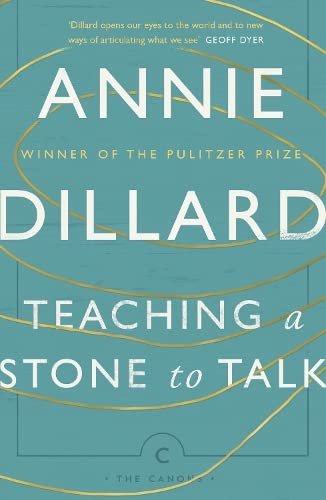
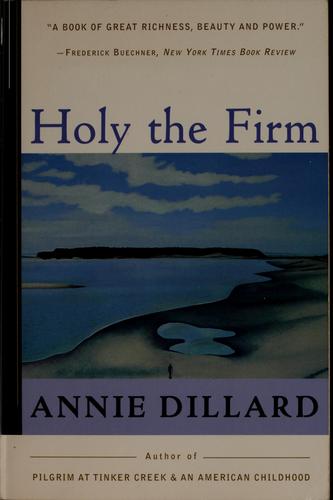
Annie Dillard goes to Mass and keeps imagining herself on a polar ice floe. This is the logic of the title essay 'An Expedition to the Pole,' which braids the disasters of Franklin, Scott, and Nansen with the small absurdities of Catholic liturgy—the singing group called Wildflowers, a baby named Oswaldo in blue tennis shoes, a priest whose knees crack like fine church music. The pivot is Dillard's actual question: why do churchgoers seem like cheerful tourists on a packaged tour of the Absolute? The Franklin expedition carried sterling silver flatware and a backgammon board into the Arctic and died. What are we carrying? The other essays are pitched at the same edge. 'Life on the Rocks: The Galápagos' opens with a sea lion resting its muzzle on Dillard's arm and ends with the continents riding their crustal plates like boys on dolphins. 'The Deer at Providencia' watches a deer die on a rope while Dillard eats lunch, then asks quietly what exactly surprises the men around her. Dillard writes as a natural historian trained by mystics: every fact about polar deaths or Darwin's finches is also an argument about what it means to be alive and failing to understand it. The reading experience is quiet, demanding, and luminous—a book that asks hard questions and refuses to answer them on your behalf.
Ranked by literary regard among eligible works in the current catalogue. This position reflects the available catalogue evidence.
Holy the Firm appears regularly on MFA creative nonfiction syllabi and in courses on the lyric essay, American nature writing, and spiritual literature, though it is far less broadly assigned than Pilgrim at Tinker Creek. It is not a K-12 canonical text. The Open Syllabus database shows no appearances in this database, likely a data gap rather than absence — the book is widely anthologized in essay collections and taught at graduate level. Its status as a touchstone of the lyric essay form is secure in literary circles.
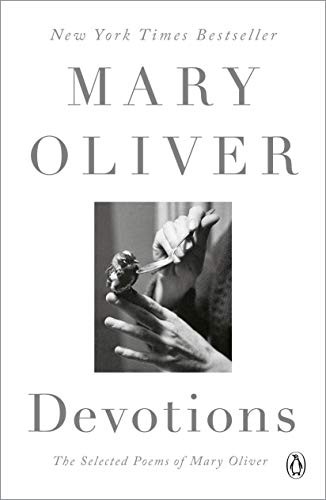
Mary Oliver appears regularly on undergraduate syllabi in American poetry surveys, creative writing programs, and environmental humanities courses. She is not a high school curriculum fixture at the level of Frost or Whitman, but Devotions is a standard course text. No syllabus data was returned from the database, but her presence in higher education is well documented.
Sontag, diagnosed with breast cancer in 1975, wrote this essay to demolish the metaphors that surround serious illness—the idea that cancer reveals something about the patient's character, that it is caused by repressed emotions, or that it is a 'battle' the patient must 'fight.' She traces a parallel history of tuberculosis in the nineteenth century and cancer in the twentieth, showing how each disease attracted a mythology that blamed the patient and mystified the illness. TB was romanticized as the disease of sensitive artists; cancer was demonized as the disease of repression and conformity. Both mythologies, she argues, add unnecessary suffering to the already terrible experience of being sick. The essay is a masterpiece of intellectual polemic: tight, angry, and precisely argued, with no wasted words.
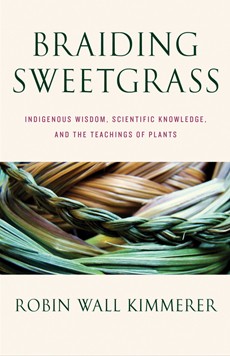
No. 8 on this list. Braiding Sweetgrass: Indigenous Wisdom, Scientific Knowledge, and the Teachings of Plants
Robin Wall Kimmerer · 2013
Moderate6.1 hours
Braiding Sweetgrass has become essential reading in environmental humanities, Indigenous studies, and ecology courses across North America. It appears on syllabi in environmental studies, ecology, and Native American studies programs and is frequently cited as a transformative text. No formal database data was available, but its adoption in higher education is broadly documented.
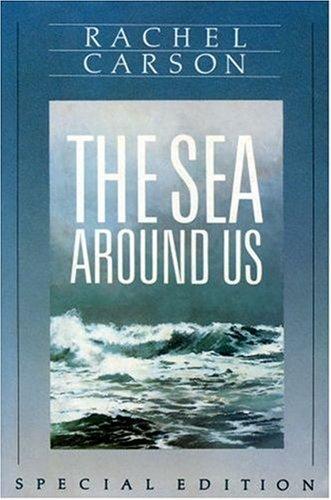
Carson's lyrical exploration of the ocean predates her more famous Silent Spring by a decade, but it established her reputation as a prose stylist of the highest order. She describes the formation of the oceans, the life of the deep sea floor, the mechanics of tides and currents, the migration of eels, and the geological history of island formation with a combination of scientific precision and literary beauty that had no precedent in nature writing. Carson makes the reader feel the immensity of geological time—continents forming and breaking apart, species evolving and vanishing over millions of years—while keeping the prose intimate and human-scaled. The book won the National Book Award and became a bestseller, introducing millions of readers to marine biology. Reading it now, knowing what Carson would go on to write about pesticides and what has since happened to the oceans, adds a layer of melancholy to her celebration of the sea's vast, indifferent beauty.
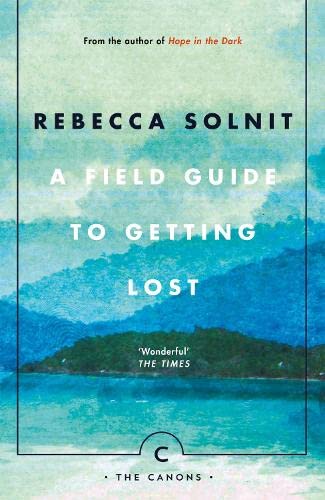
No formal syllabus data was returned, but 'A Field Guide to Getting Lost' is widely taught in creative nonfiction MFA programs and frequently cited on 'essential essay collections' lists. It holds significant cultural presence among literary readers and is considered a definitive example of the braided personal essay form. Its reach is real but narrower than curriculum-wide canonical texts.
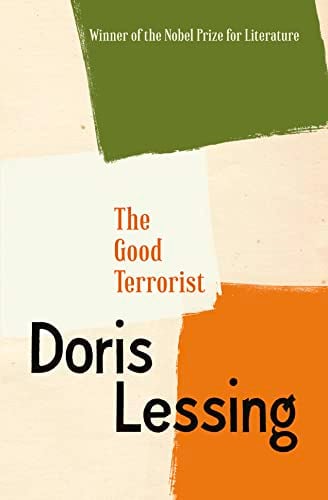
No. 11 on this list. The Good Terrorist · Doris Lessing · 1985
Not widely taught in university courses — no appearances in the Open Syllabus database, and the Wikipedia article exists in only 10 languages. Lessing's The Golden Notebook dominates syllabi; The Good Terrorist remains a secondary title in her bibliography, read more for its political moment than as a curricular staple.
Challenging18 hours
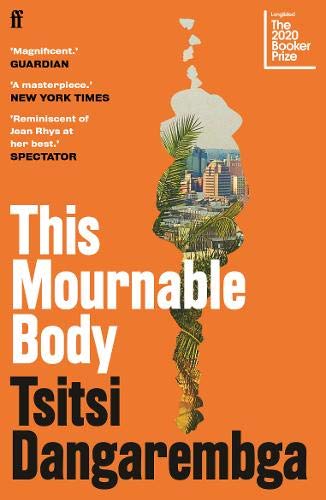
Start this bookNo. 12 on this list. This Mournable Body · Tsitsi Dangarembga · 2020
Tambudzai Sigauke is the protagonist of Nervous Conditions, now middle-aged and failing. She loses her job, her room, her dignity, drifting through Harare's hostels and homesteads, her education and ambition counting for nothing. Dangarembga's sequel is written in second person, the 'you' both accusation and intimacy. The prose is spare and relentless, the postcolonial promise of independence revealed as lie. The novel was shortlisted for the Booker Prize for its unsparing portrait of what happens when a country forgets its women.
Challenging6.9 hours
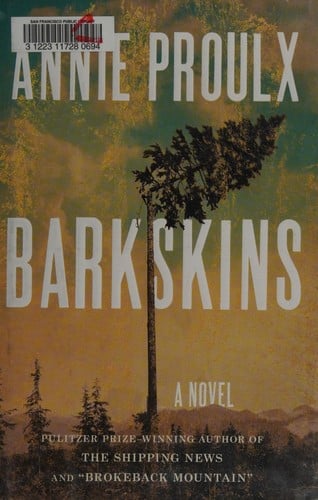
Start this bookNo. 13 on this list. Barkskins · Annie Proulx · 2016
Late masterwork by a Pulitzer laureate. Major environmental historical novel.
Moderate12 hours
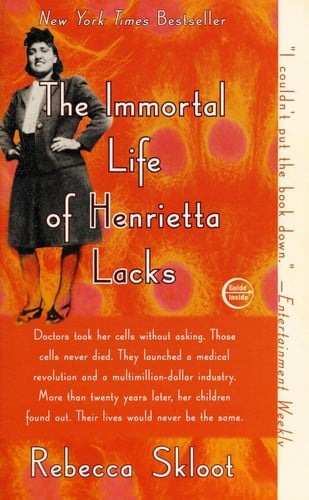
Start this bookNo. 14 on this list. The Immortal Life of Henrietta Lacks · Rebecca Skloot · 2010
Widely taught in universities and high schools. A defining work of narrative nonfiction in the 21st century.
Easy6.4 hours
Start this bookNo. 15 on this list. Upstream · Mary Oliver · 2016
Well-known among Oliver's readers and nature writing enthusiasts. Less widely taught or critically discussed than her poetry.
Very Easy2.1 hours
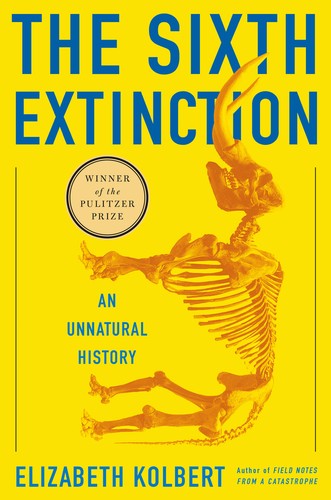
Start this bookNo. 16 on this list. The Sixth Extinction · Elizabeth Kolbert · 2014
Kolbert travels to vanishing coral reefs, decimated bat caves, and the acidifying oceans to document what scientists call the sixth mass extinction—the first caused not by an asteroid or volcanic eruption but by a single species: us. Each chapter focuses on a different species—the Panamanian golden frog, the Sumatran rhino, the great auk—using its decline or disappearance to illustrate a different mechanism of extinction: habitat destruction, ocean acidification, invasive species, climate change. Kolbert writes with the precision of a science reporter and the moral weight of someone who understands that what she is documenting is irreversible. The book won the Pulitzer Prize for General Nonfiction, and its achievement lies not in the novelty of its argument—scientists have been warning about mass extinction for decades—but in the cumulative, devastating force of its evidence. By the end, the reader understands that we are living through one of the great catastrophes in the history of life on Earth.
Easy4.5 hours
Start this bookNo. 17 on this list. Flight Behavior · Barbara Kingsolver · 2012
Major Kingsolver novel. Widely taught in environmental literature courses.
Easy6.1 hours
Start this bookNo. 18 on this list. Prodigal Summer · Barbara Kingsolver · 2000
Major Kingsolver novel. Important early text in ecological literary fiction.
Easy5.6 hours
Start this bookNo. 19 on this list. Thinking in Systems · Donella H. Meadows · 2008
Meadows, one of the lead authors of The Limits to Growth, wrote this posthumously published primer as an introduction to systems thinking—the discipline of seeing the world in terms of interconnected feedback loops rather than linear cause and effect. She explains stocks, flows, feedback loops, delays, and leverage points with simple, vivid examples: bathtubs filling and draining, thermostats, rabbit populations, and national economies. The book's central argument is that most policy failures result from attempting to fix complex systems with linear thinking—addressing symptoms rather than understanding the system's structure. Meadows identifies twelve leverage points for intervening in systems, from the least effective (adjusting parameters) to the most powerful (changing the system's goals or paradigm). Written with extraordinary clarity and illustrated with hand-drawn diagrams, the book makes complex systems theory accessible to anyone willing to think carefully about how the world actually works.
Easy3 hours
Start this bookNo. 20 on this list. The Age of Surveillance Capitalism · Shoshana Zuboff · 2019
The definitive theoretical account of tech surveillance capitalism.
Easy13 hours
Start this book
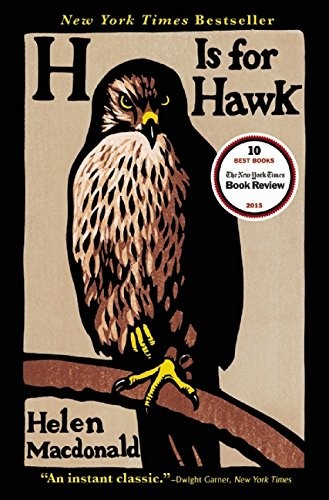
No. 21 on this list. H Is for Hawk · Helen Macdonald · 2014
Won the Samuel Johnson Prize and Costa Book of the Year. Already entering the canon of nature writing.
Easy4.6 hours
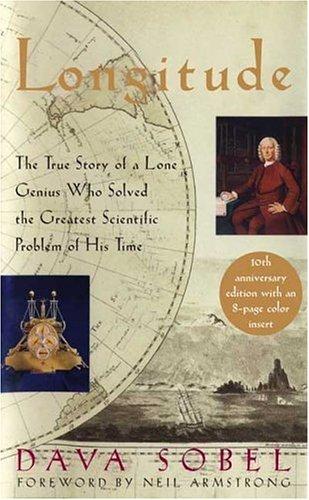
Start this bookNo. 22 on this list. Longitude · Dava Sobel · 1995
Sobel tells the story of John Harrison, an eighteenth-century clockmaker who spent forty years building a series of increasingly precise marine chronometers to solve the longitude problem—the inability of sailors to determine their east-west position at sea, which caused thousands of shipwrecks and deaths. The book's drama lies in the resistance Harrison faced from the scientific establishment, particularly the Royal Astronomer Nevil Maskelyne, who favored an astronomical solution and used his position on the Board of Longitude to deny Harrison the £20,000 prize. Sobel writes with crystalline clarity about both the science of timekeeping and the politics of scientific institutions, showing how Harrison's mechanical genius was nearly defeated by institutional bias. The book, at just 184 pages, is a model of compression: it covers decades of history, explains complex horological engineering, and tells a gripping human story without a wasted sentence.
Very Easy2.3 hours
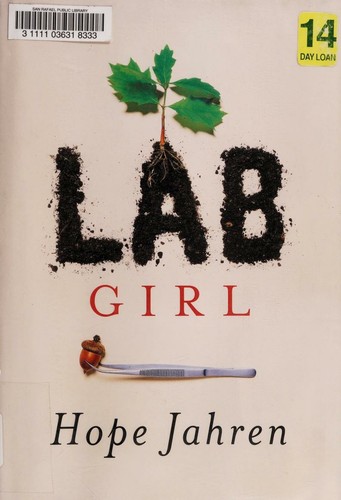
Start this bookNo. 23 on this list. Lab Girl · Hope Jahren · 2016
Jahren's memoir interweaves the story of her life as a geobiologist with lyrical meditations on the inner lives of plants—how trees communicate through underground fungal networks, how seeds wait decades for the right conditions to germinate, how leaves perform the chemical miracle of photosynthesis. The parallel structure creates an unexpected resonance: Jahren's account of building a laboratory from salvaged equipment, surviving on meager grants, and struggling with bipolar disorder gains depth from the plant passages, which suggest that the natural world's strategies for survival—patience, adaptation, symbiosis—mirror her own. Jahren writes about science with a poet's attention to language and a comedian's timing, making soil chemistry as compelling as her stories about her long friendship with her lab partner Bill, a brilliant misfit who followed her across the country for decades. The book won the National Book Critics Circle Award and introduced a new voice in science writing: personal, funny, precise, and unafraid of emotion.
Very Easy3.2 hours
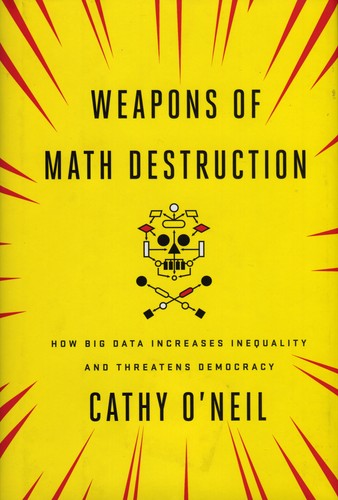
Start this bookNo. 24 on this list. Weapons of Math Destruction · Cathy O'Neil · 2016
O'Neil, a mathematician who left Wall Street disillusioned, exposes how algorithms—opaque, unaccountable, and often discriminatory—are making consequential decisions about people's lives. She shows how mathematical models used in criminal sentencing, college admissions, hiring, insurance, and policing encode the biases of their creators, punish the poor, and reinforce inequality while hiding behind a veneer of mathematical objectivity. Her examples are specific and damning: recidivism algorithms that predict future crime based on zip code, teacher evaluation models that fire effective teachers, and targeted advertising that preys on the vulnerable. O'Neil calls these 'weapons of math destruction' because they are opaque, scalable, and destructive—the opposite of good models, which are transparent and subject to correction. The book was prescient about algorithmic bias before it became a mainstream concern.
Easy3.8 hours
Start this bookNo. 25 on this list. This Changes Everything · Naomi Klein · 2014
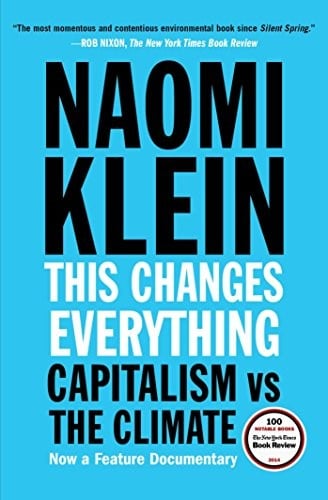
Klein argues that the climate crisis cannot be addressed within the existing framework of deregulated capitalism—that solving it requires not just technological innovation but a fundamental restructuring of the global economy. She shows how the same ideology that promotes free trade, deregulation, and privatization has systematically blocked climate action, and argues that the environmental movement must become an economic justice movement. Klein reports from frontlines around the world: indigenous communities fighting pipelines, communities battling fracking, cities experimenting with public energy systems. Her central argument—that climate change is not just an environmental issue but a challenge to the entire economic model—has been embraced by the climate justice movement and criticized by those who believe that technology and markets can solve the problem within the existing system.
Easy8.2 hours
Start this bookNo. 26 on this list. The Invention of Nature · Andrea Wulf · 2015
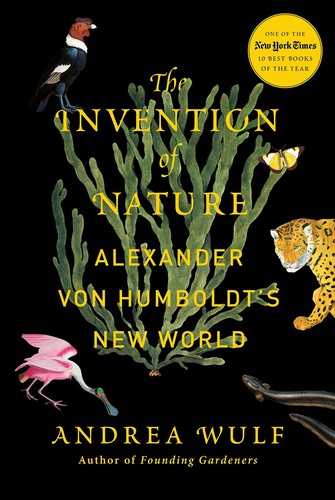
Wulf tells the story of Alexander von Humboldt—the most famous scientist in the world during his lifetime and now largely forgotten—who invented the concept of nature as an interconnected web of life. Humboldt climbed Chimborazo, explored the Orinoco, measured isotherms, identified climate zones, and conceived of the idea that cutting down forests changes the climate—in 1800. He influenced Darwin, Thoreau, John Muir, and Ernst Haeckel. Wulf follows Humboldt from Prussian mining academy to South American jungle to Siberian steppe to his final decades in Berlin, writing the five-volume Cosmos—an attempt to describe literally everything. The book argues that Humboldt deserves recognition not just as a great scientist but as the inventor of the modern concept of nature itself: the idea that the natural world is an interconnected system, not a collection of discrete objects. Wulf writes with infectious enthusiasm and a gift for making scientific ideas vivid and dramatic.
Easy6 hours
Start this bookNo. 27 on this list. Under a White Sky · Elizabeth Kolbert · 2021
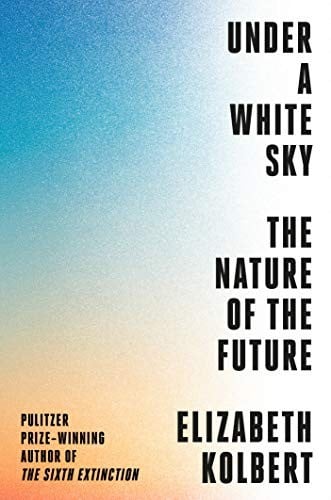
Kolbert examines humanity's increasingly desperate attempts to fix the environmental problems it has created—engineering solutions to engineering disasters. She visits the Chicago Sanitary and Ship Canal, where electrified barriers try to prevent Asian carp from invading the Great Lakes; Hawaii, where scientists are attempting to evolve heat-resistant coral; and Louisiana, where the Army Corps of Engineers tries to reverse decades of wetland destruction. The book's title refers to the possibility of geoengineering—spraying particles into the stratosphere to reflect sunlight and cool the planet—which would literally turn the sky white. Kolbert writes with her characteristic blend of scientific clarity and mordant wit, observing that humans are now trying to control the consequences of their attempts to control nature, in a recursive spiral that may have no exit. The book is shorter and more focused than The Sixth Extinction but equally unsettling, asking whether the human impulse to engineer everything is the source of our problems or our only hope.
Easy2.8 hours
Start this bookNo. 28 on this list. Stiff · Mary Roach · 2003
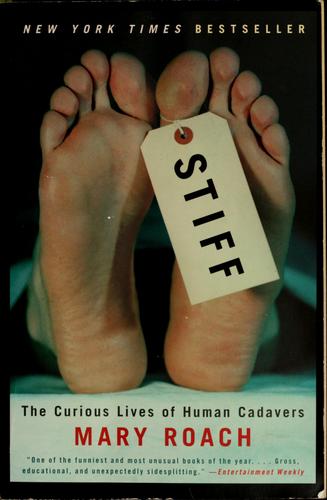
Roach investigates what happens to the human body after death—not philosophically, but practically. She visits a medical school dissection lab where first-year students cut into donated cadavers, a body farm in Tennessee where corpses decompose in the sun so forensic scientists can study the timeline of decay, a crash-test facility where cadavers are strapped into cars and slammed into walls to make automobiles safer for the living, and a surgical workshop where surgeons practice face-lifts on severed heads. She traces the history of body-snatching, the development of embalming (originally a Civil War technology for shipping soldiers home), and the surprisingly recent invention of organ transplantation. Roach handles her subject with neither reverence nor ghoulishness but with the cheerful, relentless curiosity of a writer who finds everything interesting and refuses to look away. The result is a book that makes you think differently about your own body—not as a vessel for the soul but as a remarkably useful object that can continue serving humanity long after you are done with it.
Very Easy3 hours
Start this bookNo. 29 on this list. The Delusions of Certainty · Siri Hustvedt · 2017
Ranked by literary regard among eligible works in the current catalogue. This position reflects the available catalogue evidence.
Challenging9.8 hours
Start this bookNo. 30 on this list. Bird by Bird · Anne Lamott · 1994
Lamott's guide to writing—and to the emotional life of writers—is built around the story that gives it its title: her ten-year-old brother, paralyzed by a school report on birds that was due the next day, was told by their father, 'Just take it bird by bird, buddy.' That advice—break the impossible into manageable pieces—animates the entire book. Lamott writes about shitty first drafts (her term, and she insists they are essential), about jealousy and self-doubt, about the importance of writing groups and of paying attention to the world. She is funnier than most writing guides allow themselves to be, and more honest about the difficulty of the writing life: the rejection, the financial insecurity, the near-certainty that publication will not make you happy. The book endures because it treats writing not as a career strategy but as a spiritual practice, a way of paying attention to the world that makes life more bearable.
Very Easy2.3 hours
Start this book
No. 31 on this list. Wild
Cheryl Strayed · 2012
No. 32 on this list. Why Fish Don't Exist: A Story of Loss, Love, and the Hidden Order of Life
Lulu Miller · 2021
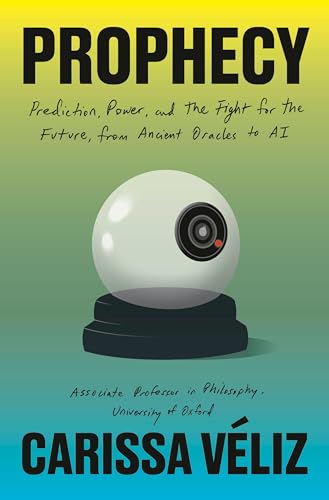
No. 33 on this list. Prophecy: Prediction, Power, and the Fight for the Future, from Ancient Oracles to AI
Carissa Véliz · 2026
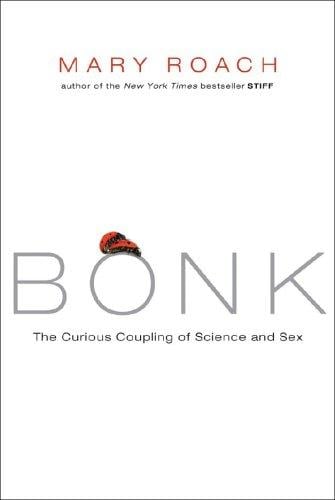
No. 34 on this list. Bonk
Mary Roach · 2008
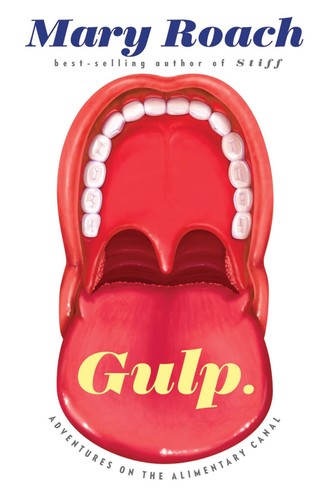
No. 35 on this list. Gulp
Mary Roach · 2013
No. 36 on this list. The Power of Place
Winifred Gallagher · 1993
No. 37 on this list. The Quickening
Rhiannon Haynes · 2022
No. 38 on this list. Turning to Birds: The Power and Beauty of Noticing
Lili Taylor · 2025
No. 39 on this list. Staffordshire Bull Terriers
Anna Katherine Nicholas · 1994
About this list
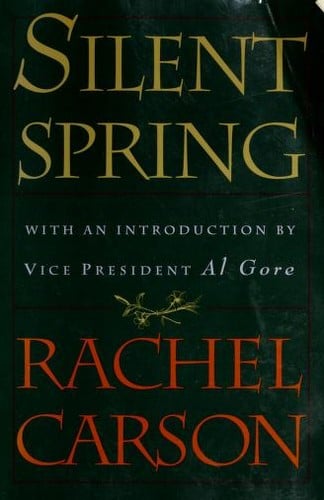
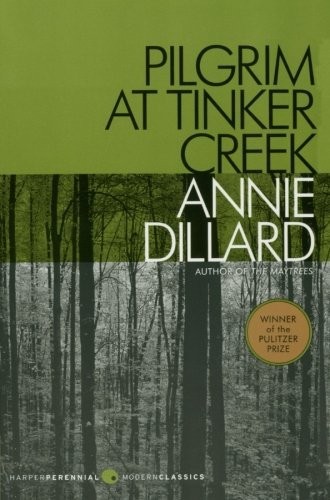
These 39 books are the highest-scoring eligible science books by women currently in the catalogue. By literary regard, it opens with Silent Spring, Pilgrim at Tinker Creek and Teaching a Stone to Talk. About 193 hours of reading in all. Difficulty runs from 25 to 47 out of 100 for the middle half of the list; the summit is The Delusions of Certainty at 63.
This list is ranked by literary regard, with a consistent order for equal scores. Membership follows authors and co-authors, not translators or editors. Catalogue coverage and the historical canon both limit what this list can represent, and genre labels are the catalogue’s own, gathered into broader kinds.
When we matched the Canons dataset to our catalogue in October 2026, our canonical-status scores rose with the number of school curricula, publisher series and lists in it that cite a work: the median score was 72 for books one such source cites, 84 at two, 88 at three, 92 at four and 93 at five or more. Prizes are left out of that count. Outside the state curricula, the dataset’s sources choose mostly from what has been translated into English or French, so it is a weaker check on other literatures. Source: Canons (Andrew Piper), CC BY 4.0
Questions people actually ask
- What are the best science books by women?
- By literary regard, which weighs canonical status, critical standing and influence, Silent Spring, Pilgrim at Tinker Creek, Teaching a Stone to Talk, Growing Up in New Guinea and Holy the Firm lead. ReadingRate ranks 39 such books, each with a difficulty score and a reading-time estimate.
- Where should I start with science books by women?
- Start from difficulty, not from rank. The most approachable books on this list that still carry top literary regard are Staffordshire Bull Terriers by Anna Katherine Nicholas (about 2.6 hours), Bird by Bird by Anne Lamott and Bonk by Mary Roach.
- How hard are science books by women to read?
- Most of this list sits between 25 and 47 on ReadingRate's 100-point difficulty scale, where 40 to 55 is moderate. The summit is The Delusions of Certainty at 63. Every entry carries its own score, so a reader can pick a great book at a difficulty they will finish.
- How is this list ranked?
- On literary-regard data: how canonically established a work is, its critical standing, and its influence on later writing. It is not a readers’ poll, which is why recent bestsellers rarely appear. Membership follows authors and co-authors, not translators or editors. A list that is not a genre list keeps to literature (fiction, poetry, drama and philosophy), with philosophy taking no more than one slot in five while there is literature left to rank; every list holds at most three works by one author.