Hours at an average pace
Showing 36 books
About 352 hours for 35 of 36 books with measured lengths. Estimates use 250 words a minute, adjusted for each book's difficulty. At 2 hours a day, about 176 days for those books.
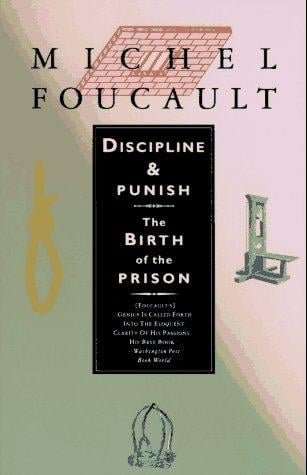
Discipline and Punish is required reading in sociology, criminology, philosophy, cultural studies, history, and literary theory courses worldwide. It appears on thousands of university syllabi across disciplines, making it comparable in canonical weight to the most taught works of 20th-century thought. It is considered foundational for understanding modern social institutions across every field of the humanities and social sciences.
No. 2 on this list. The Protestant Ethic and the Spirit of Capitalism
Max Weber · 1905
Challenging16 hours
One of the founding texts of sociology, taught in introductory and theory courses alongside Marx and Durkheim and assigned across history, economics and religious studies. It ranked fourth in the International Sociological Association's 1998 poll of the books of the century.
No. 3 on this list. Gender Trouble: Feminism and the Subversion of Identity
Judith Butler · 1990
Difficult9.7 hours
Gender Trouble is taught on virtually every gender studies, feminist theory, and queer theory syllabus globally, appearing widely in sociology, philosophy, cultural studies, and political science courses. Butler's text has been described by scholars as one of the most influential academic books of the 20th century and is as close to canonical as any work in the humanities published after 1980. Its position on university reading lists across North America, Europe, and beyond is unambiguous — a status granted to very few academic monographs.
Morrison sent a young Black man on a mythic quest through four generations of his family's buried history, fusing African-American folklore, biblical allusion, and the cadences of blues and gospel into a narrative structure no American novel had attempted before. The novel proved that flight — literal and metaphorical — could carry the full weight of Black American experience from slavery to self-knowledge.
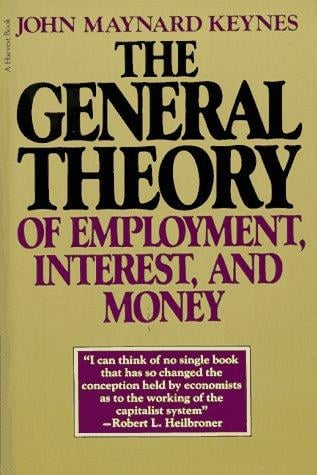
No. 5 on this list. The General Theory of Employment, Interest and Money
John Maynard Keynes · 1936
Challenging12 hours
The founding text of macroeconomics, the General Theory is standard reading in economics and history of economic thought courses and is assigned in politics and history courses on the Depression and the postwar settlement. It appears on most lists of the most important books of the twentieth century.
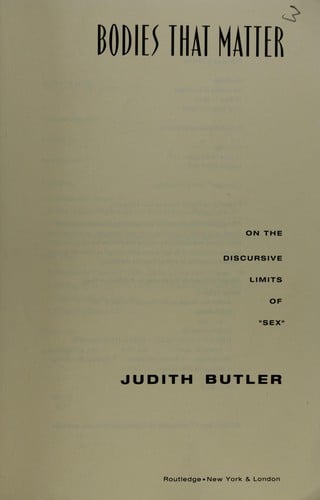
Bodies That Matter is a foundational text of queer theory and gender studies, assigned in virtually every graduate curriculum in those fields worldwide alongside Gender Trouble. It is one of the defining theoretical works of the 1990s in the humanities and remains a live reference in current scholarship.
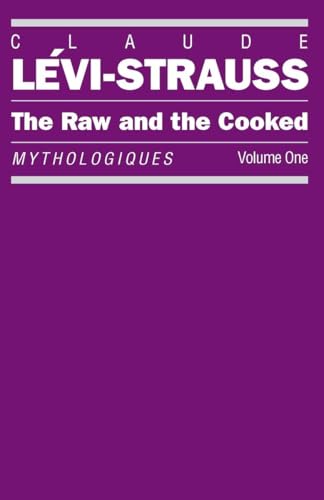
The Savage Mind is the foundational text of structural anthropology and is widely taught across anthropology, cultural studies, philosophy, and literary theory departments worldwide. It appears on syllabi across disciplines — not just anthropology but semiotics, postcolonial theory, and philosophy of mind. Wikipedia editions exist in over 25 languages. It holds canonical status comparable to Beloved in its field, though its audience is academic rather than general.
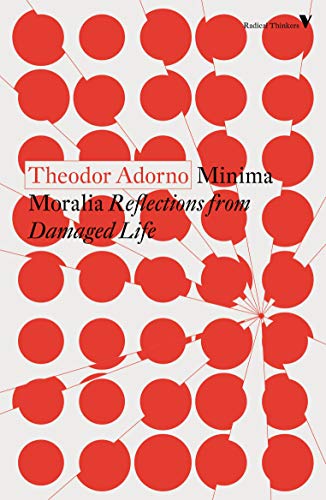
Theodor Adorno wrote Minima Moralia between 1944 and 1947, in exile from Nazi Germany, thinking in German while living in Los Angeles. The book's subtitle — Reflections from Damaged Life — is its argument: late capitalism has deformed the smallest gestures, down to the way people say goodbye, arrange furniture, or offer gifts. The 153 aphorisms each begin from some corner of daily experience and immediately turn it into evidence. Adorno watches a houseguest try to help with the dishes and ends up indicting the ideology of helpfulness itself. He watches American children at play and finds the administered society in the rules of their games. American roads, he notes, are inserted directly into landscape with no soft path at the edge — expressionless. Nothing survives without bearing the marks of what produced it. The prose enacts this method in its own syntax: sentences build through nested qualifications, invert themselves, then qualify the inversion. Reading must be slow or it produces nothing. There are no characters, no plot, no narrative — only argument conducted through observation, 153 times. The book ends on a line that has since become the most quoted sentence in German philosophy: there is no right life in the wrong one. Adorno's 300 pages are the case for that verdict, assembled from the evidence of ordinary afternoons.
A core text in critical theory, media studies, and cultural studies curricula worldwide. The Wikipedia article exists in over 30 languages. Less universally taught than Foucault or Marcuse in anglophone programs but essentially required reading in continental philosophy, Situationist studies, and any serious engagement with 20th-century political thought.
Jelinek is a Nobel Prize winner (2004), and Lust is among her most-discussed novels, central to courses in feminist literature, Austrian literature, and avant-garde fiction. The Wikipedia article on Lust exists in 58 languages, indicating significant global recognition. However, the novel is not a fixture of general literary survey courses in the way that Jelinek's work as a whole is taught — it is a specialist text, assigned where Jelinek is the focus or feminist radical fiction is the subject. Its explicit content limits its classroom reach. Canonical within feminist literary studies; less so in general world literature curricula.

No. 11 on this list. The Bloody Chamber · Angela Carter · 1979
Taught in schools: OCR GCSE and A-level English Literature (UK)
The Bloody Chamber is among the most-taught works of feminist fiction in British and American university literature programs, appearing on A-level and undergraduate syllabi across the English-speaking world for over four decades. It anchors feminist fairy tale criticism as a field and appears on most 20th-century fiction retrospective lists. Its canonical standing exceeds Infinite Jest (78) in terms of institutional adoption.
Difficult7.2 hours
Start this bookNo. 12 on this list. One-Dimensional Man · Herbert Marcuse · 1964
One-Dimensional Man appears on thousands of graduate and undergraduate syllabi in sociology, philosophy, political science, and cultural studies worldwide. It is considered essential reading within the Frankfurt School tradition and for understanding New Left politics, and it figures on virtually every critical theory reading list. The book has been continuously in print since 1964 and is widely available in translation across major languages.
Difficult10 hours
Start this bookNo. 13 on this list. This Sex Which Is Not One · Luce Irigaray · 1977
A foundational text of French feminist philosophy and literary theory. Essential in feminist theory and continental philosophy courses.
Difficult8.5 hours
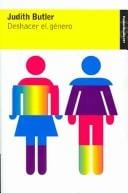
Start this bookNo. 14 on this list. Undoing Gender · Judith Butler · 2004
Undoing Gender occupies a foundational position in queer theory, trans studies, and feminist philosophy syllabi, widely assigned in gender studies, philosophy, sociology, and cultural studies programs internationally. It consolidated Butler's central role in these fields while extending her arguments into new domains.
Difficult12 hours
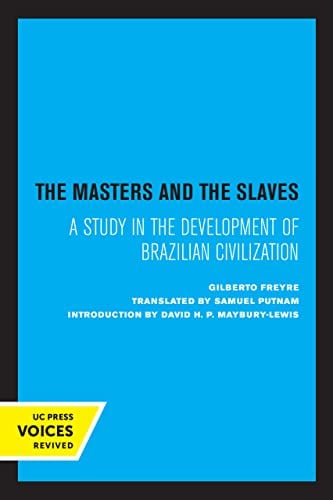
Start this bookNo. 15 on this list. The Masters and the Slaves: A Study in the Development of Brazilian Civilization · Gilberto Freyre · 1933
Casa-grande & senzala is one of the founding interpretations of Brazilian society, required reading in Brazil and standard in Latin American and Atlantic history courses abroad. It is routinely named among the most important Brazilian books of the twentieth century.
Challenging19 hours
Start this bookNo. 16 on this list. Cassandra · Christa Wolf · 1983
Cassandra is required reading in German literature curricula across European universities and is a standard text in courses on feminist rewritings of classical myth. The data signals return no syllabus figures, but Wolf's status as the defining literary voice of the GDR and her international recognition ensure the book appears on World Literature, Women's Writing, and Postwar European Fiction syllabi consistently. It is not a fixture of Anglophone undergraduate curricula in the way Beloved or The Great Gatsby is, placing it below 80 on canonical status.
Difficult5.7 hours
Start this bookNo. 17 on this list. Female Masculinity · Jack Halberstam · 1998
Ranked by literary regard among eligible works in the current catalogue. This position reflects the available catalogue evidence.
Challenging9.3 hours
Start this bookNo. 18 on this list. Epistemic Injustice: Power and the Ethics of Knowing · Miranda Fricker · 2007
Standard reading across epistemology, ethics and political philosophy.
Challenging5.1 hours
Start this bookNo. 19 on this list. The Mushroom at the End of the World: On the Possibility of Life in Capitalist Ruins · Anna Lowenhaupt Tsing · 2015
Ranked by literary regard among eligible works in the current catalogue. This position reflects the available catalogue evidence.
Challenging8.9 hours
Start this bookNo. 20 on this list. I Love Dick · Chris Kraus · 1997
Widely taught in courses on autofiction and feminist writing.
Challenging7.3 hours
Start this book
No. 21 on this list. Queer Phenomenology: Orientations, Objects, Others · Sara Ahmed · 2006
Ranked by literary regard among eligible works in the current catalogue. This position reflects the available catalogue evidence.
Difficult6.6 hours
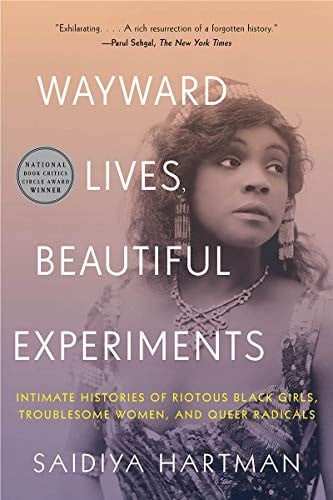
Start this bookNo. 22 on this list. Wayward Lives, Beautiful Experiments: Intimate Histories of Riotous Black Girls, Troublesome Women, and Queer Radicals · Saidiya Hartman · 2020
Ranked by literary regard among eligible works in the current catalogue. This position reflects the available catalogue evidence.
Challenging13 hours
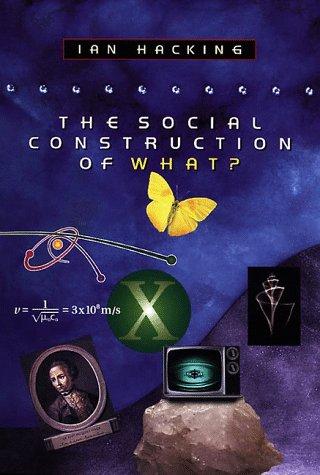
Start this bookNo. 23 on this list. The Social Construction of What? · Ian Hacking · 1999
Standard reading in philosophy of science and science studies.
Challenging7.5 hours
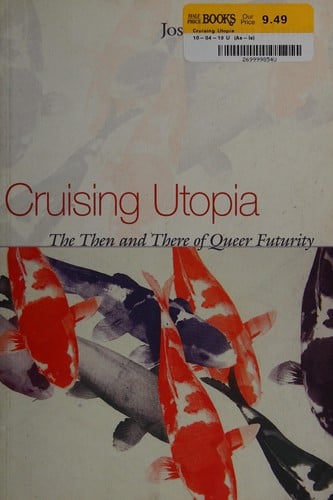
Start this bookNo. 24 on this list. Cruising Utopia: The Then and There of Queer Futurity · José Esteban Muñoz · 2009
Standard graduate reading in queer theory and performance studies.
Difficult7.1 hours
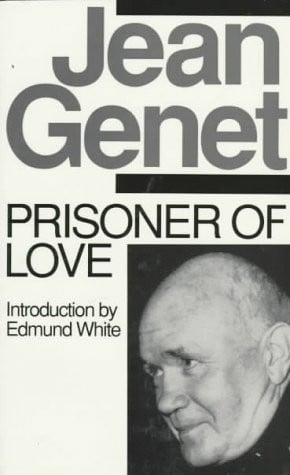
Start this bookNo. 25 on this list. Prisoner of Love · Jean Genet · 1986
Ranked by literary regard among eligible works in the current catalogue. This position reflects the available catalogue evidence.
Difficult12 hours
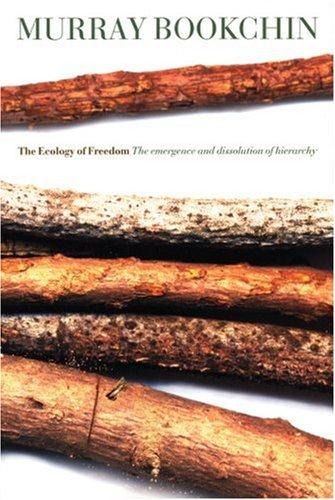
Start this bookNo. 26 on this list. The Ecology of Freedom: The Emergence and Dissolution of Hierarchy · Murray Bookchin · 1982
Ranked by literary regard among eligible works in the current catalogue. This position reflects the available catalogue evidence.
Challenging14 hours
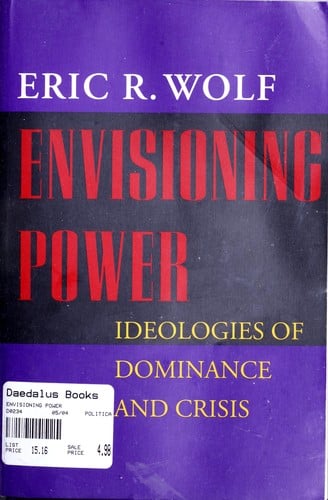
Start this bookNo. 27 on this list. Envisioning Power: Ideologies of Dominance and Crisis · Eric R. Wolf · 1999
A recognised late work by a major anthropologist, taught in theory courses.
Challenging8.4 hours
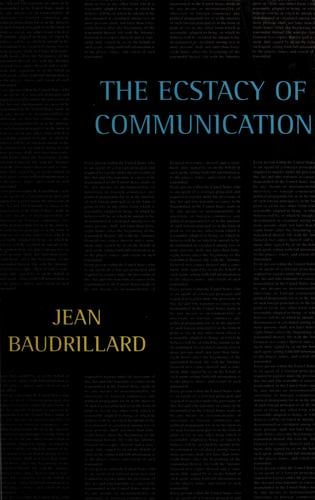
Start this bookNo. 28 on this list. The Ecstasy of Communication · Jean Baudrillard · 1987
Ranked by literary regard among eligible works in the current catalogue. This position reflects the available catalogue evidence.
Difficult3.8 hours
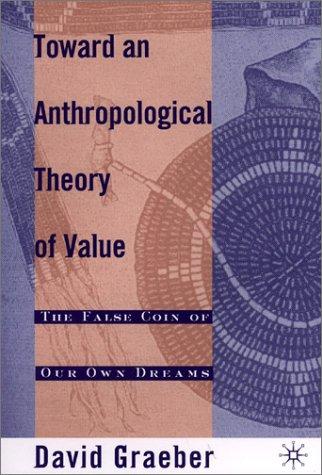
Start this bookNo. 29 on this list. Toward an Anthropological Theory of Value: The False Coin of Our Own Dreams · David Graeber · 2001
A standard reference in economic anthropology graduate reading.
Challenging10 hours
Start this bookNo. 30 on this list. Contingency, Hegemony, Universality: Contemporary Dialogues on the Left · Slavoj Žižek · 2000
Ranked by literary regard among eligible works in the current catalogue. This position reflects the available catalogue evidence.
Difficult13 hours
Start this book
No. 31 on this list. The Politics of Life Itself: Biomedicine, Power, and Subjectivity in the Twenty-First Century
Nikolas Rose · 2007
No. 32 on this list. Time Binds: Queer Temporalities, Queer Histories
Elizabeth Freeman · 2010
No. 33 on this list. The Right to Look: A Counterhistory of Visuality
Nicholas Mirzoeff · 2011
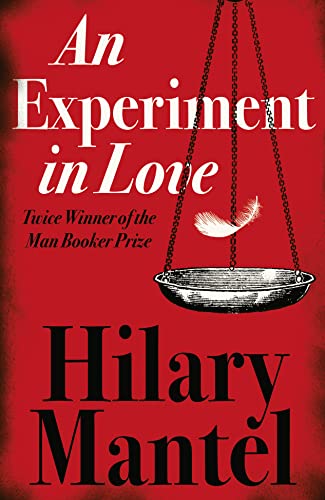
No. 34 on this list. An Experiment in Love
Hilary Mantel · 1996
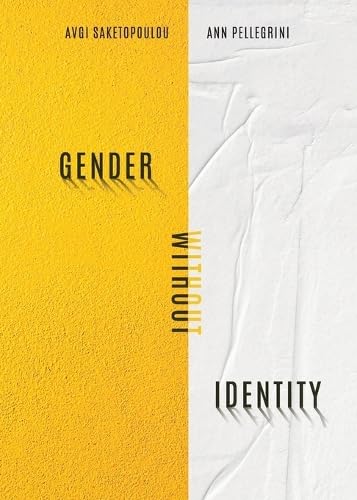
No. 35 on this list. Gender Without Identity
Avgi Saketopoulou · 2023
No. 36 on this list. Magical Realism in West African Fiction: Seeing with a Third Eye
Brenda Cooper · 1998
About this list
These 36 books are the highest-scoring eligible challenging books on politics and society currently in the catalogue. By literary regard, it opens with Discipline and Punish, The Protestant Ethic and the Spirit of Capitalism and Gender Trouble: Feminism and the Subversion of Identity. About 352 hours of reading in all, for the 35 with measured lengths. Difficulty runs from 68 to 74 out of 100 for the middle half of the list; the summit is Minima Moralia at 85.
This list is ranked by literary regard, with a consistent order for equal scores. Membership follows authors and co-authors, not translators or editors. Catalogue coverage and the historical canon both limit what this list can represent, and genre labels are the catalogue’s own, gathered into broader kinds.
When we matched the Canons dataset to our catalogue in October 2026, our canonical-status scores rose with the number of school curricula, publisher series and lists in it that cite a work: the median score was 72 for books one such source cites, 84 at two, 88 at three, 92 at four and 93 at five or more. Prizes are left out of that count. Outside the state curricula, the dataset’s sources choose mostly from what has been translated into English or French, so it is a weaker check on other literatures. Source: Canons (Andrew Piper), CC BY 4.0
Questions people actually ask
- What are the best challenging books on politics and society?
- By literary regard, which weighs canonical status, critical standing and influence, Discipline and Punish, The Protestant Ethic and the Spirit of Capitalism, Gender Trouble: Feminism and the Subversion of Identity, Song of Solomon and The General Theory of Employment, Interest and Money lead. ReadingRate ranks 36 such books, each with a difficulty score and a reading-time estimate.
- How hard are challenging books on politics and society to read?
- Most of this list sits between 68 and 74 on ReadingRate's 100-point difficulty scale, where 40 to 55 is moderate. The summit is Minima Moralia at 85. Every entry carries its own score, so a reader can pick a great book at a difficulty they will finish.
- How is this list ranked?
- On literary-regard data: how canonically established a work is, its critical standing, and its influence on later writing. It is not a readers’ poll, which is why recent bestsellers rarely appear. Membership follows authors and co-authors, not translators or editors. A list that is not a genre list keeps to literature (fiction, poetry, drama and philosophy), with philosophy taking no more than one slot in five while there is literature left to rank; every list holds at most three works by one author.