Hours at an average pace
Showing 36 books
About 187 hours for 30 of 36 books with measured lengths. Estimates use 250 words a minute, adjusted for each book's difficulty. At 2 hours a day, about 94 days for those books.
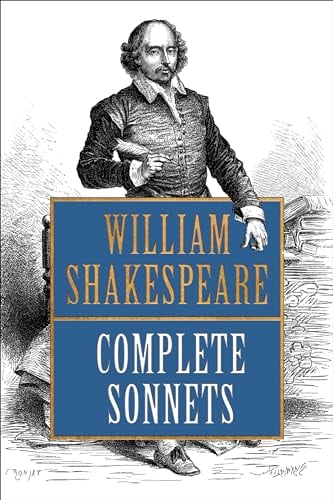
The single most important sonnet sequence in English and among the most celebrated poems ever written.
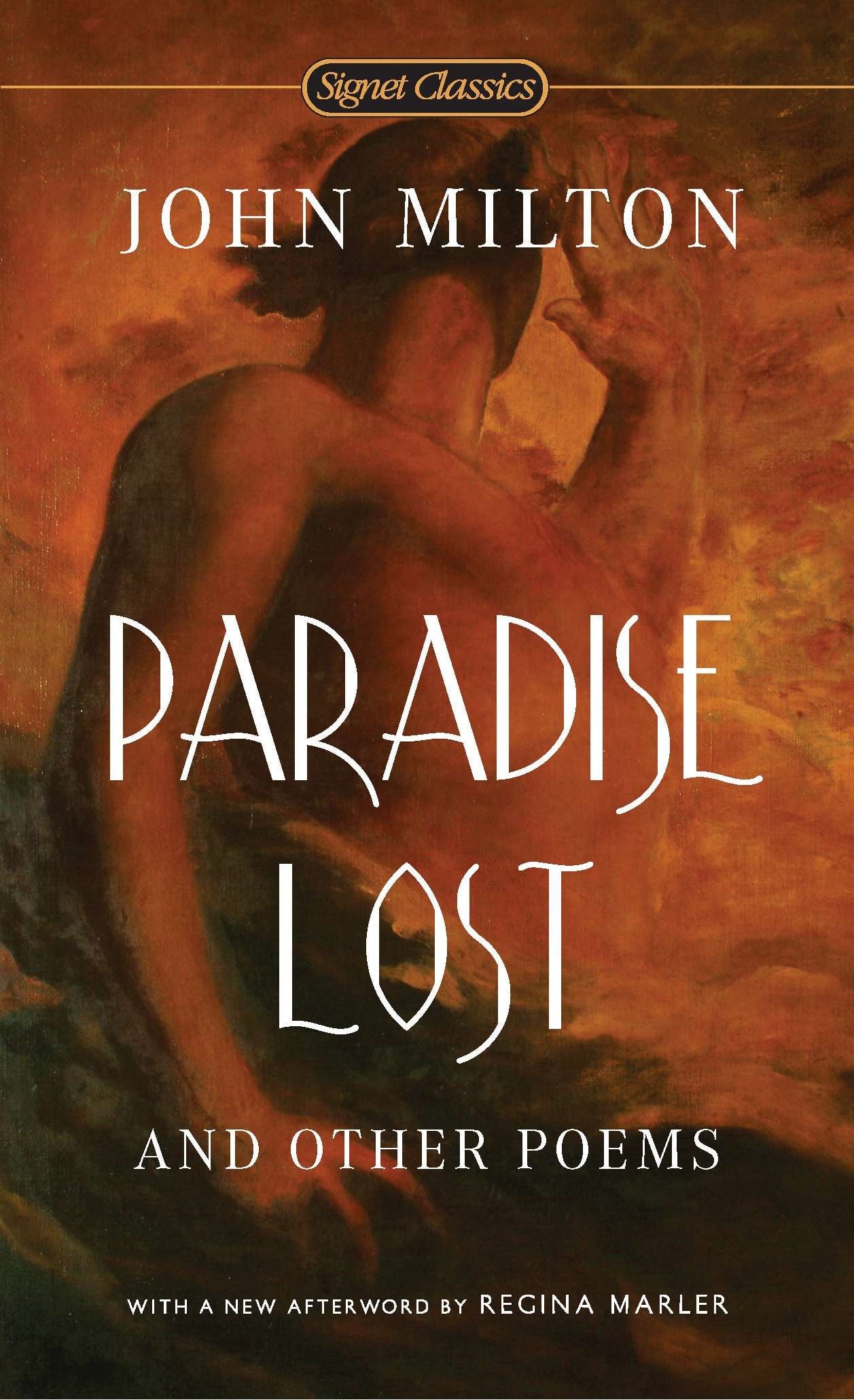
No. 2 on this list. Paradise Lost
John Milton · 1667
Challenging8.6 hours
Taught in schools: AQA GCSE and A-level English Literature (UK), WJEC/Eduqas GCSE and A-level English Literature (UK)
Included in: Great Books of the Western World
Milton retold the fall of man in blank verse of such muscular grandeur that Satan became the most charismatic figure in English poetry — not because Milton failed, but because he understood that rebellion requires eloquence. The poem reshaped the English language's sense of what a long sentence could do.
The First Folio is the foundational text of Shakespeare, the most taught author in English. Hamlet anchors Western curricula, and this edition is a standard scholarly reference through its line numbering.
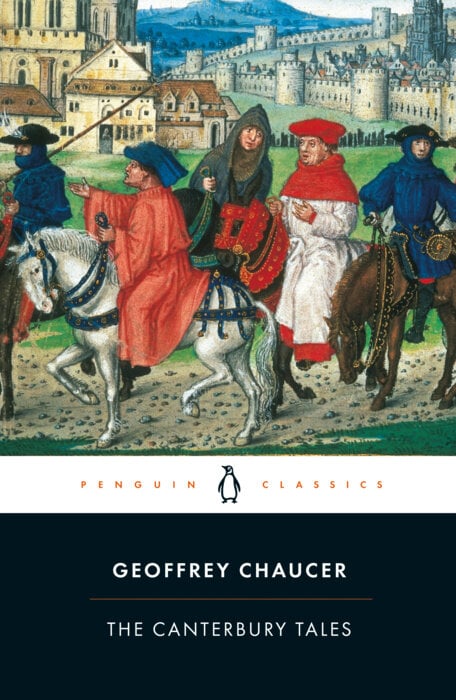
No. 4 on this list. The Canterbury Tales
Geoffrey Chaucer · 1400
Challenging22 hours
Taught in schools: UNAM Escuela Nacional Preparatoria – programas de Literatura (Mexico)
Included in: Bokklubben World Library, Great Books of the Western World
Chaucer assembled a cross-section of fourteenth-century English society — knight, pardoner, wife, miller — and let each tell a tale in a voice so particular that the frame story became a laboratory for vernacular English prose and poetry. He proved that the language of London could carry the literary weight that had belonged to Latin and French.
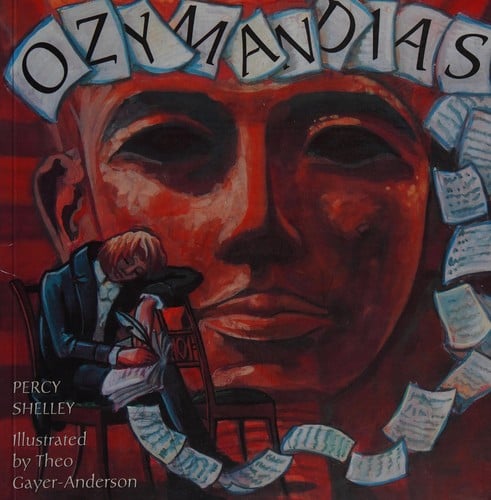
Ozymandias is among the most anthologized poems in the English language, a fixture of high school and university poetry units on Romanticism. No syllabus or Wikipedia-language data was available in ReadingRate's database for this entry, but its presence in virtually every major poetry anthology and British Romanticism syllabus puts it near the top of the canon regardless.
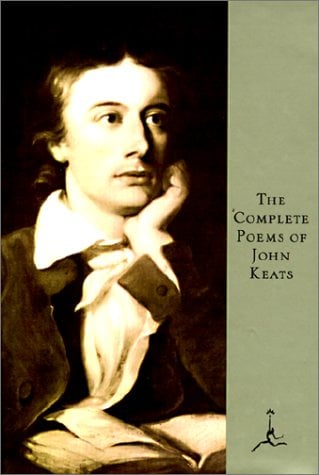
No modern syllabus or award-tracking data applies to a poet who died in 1821, but Keats's odes are among the most anthologized and taught poems in the English language, a fixture of every survey of Romantic and British literature. His Wikipedia presence is extensive and translated into dozens of languages, on par with the other major Romantics.
No. 7 on this list. Lycidas
John Milton · 1638
Moderate6 min
Included in: Great Books of the Western World
A fixture of the Norton Anthology and of every Milton and Renaissance poetry course, and the standard example of the English pastoral elegy. Its place in anthologies and survey courses has been secure since the eighteenth century.
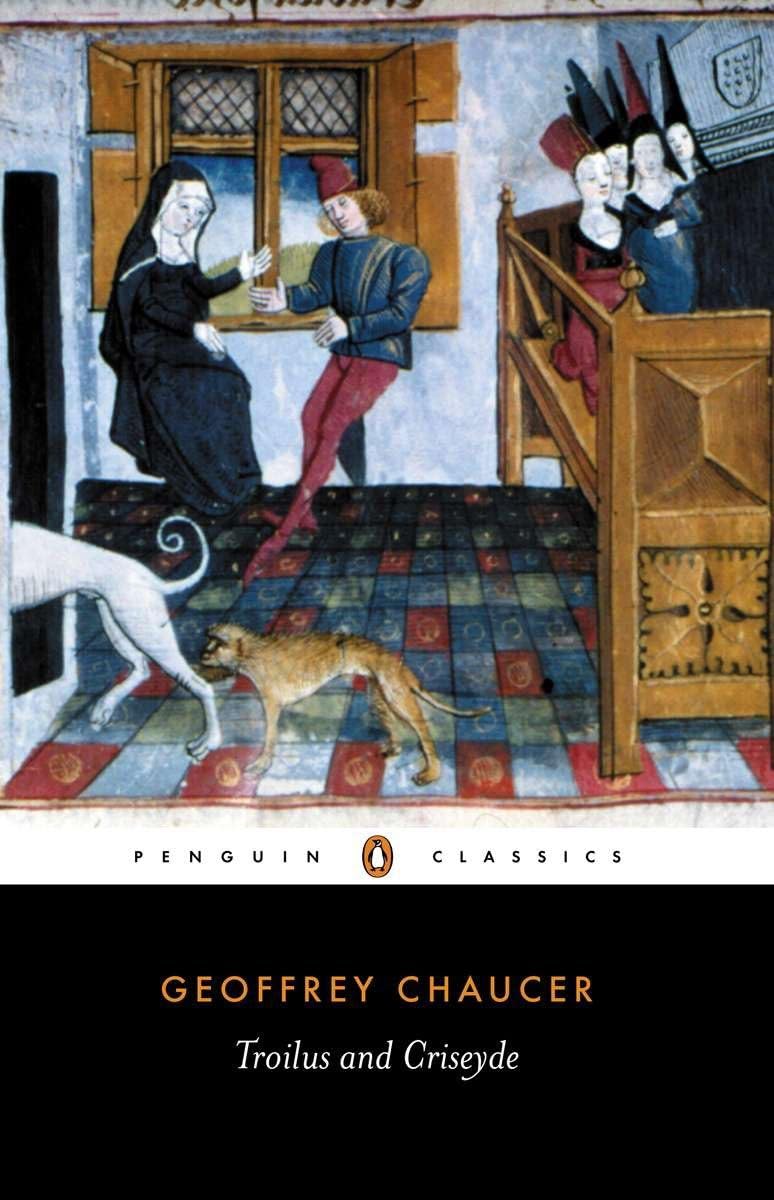
No. 8 on this list. Troilus and Criseyde
Geoffrey Chaucer · 1385
Difficult9.3 hours
Included in: Great Books of the Western World
Required reading in virtually every medieval English literature curriculum, taught across English, Comparative Literature, and Medieval Studies programs at universities worldwide. Though Open Syllabus data is unavailable here, Chaucer courses built around this text are standard at every major university with an English department. It holds a place among the most-studied long poems in the English language.
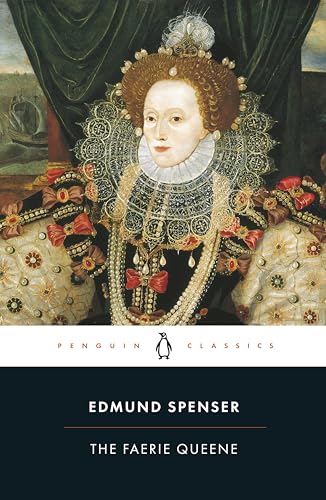
The Faerie Queene appears in virtually every English Renaissance literature syllabus globally and is one of the most taught long poems in university English departments worldwide. It anchors the canon between Chaucer and Milton and is central to every history of the English literary tradition. Absence from the Open Syllabus database reflects data gaps, not actual classroom presence.
The oldest surviving long poem in Old English transforms a Scandinavian hero's monster-fights into a meditation on the transience of glory and the duty of a leader to spend his life for his people. Its recovery from a single fire-damaged manuscript preserved the founding work of English-language literary tradition.
No. 11 on this list. The major works · William Wordsworth
Wordsworth anchors every survey of Romantic poetry, and the Lyrical Ballads and The Prelude are standard in English literature courses. Oxford World's Classics, with Gill's edition described by reviewers as a landmark, is a standard teaching text.
Moderate
Start this bookNo. 12 on this list. Le Morte d'Arthur · Thomas Malory · 1485
Le Morte d'Arthur is the standard English telling of the Arthurian legend and a fixture of courses on medieval and early modern English literature. It is the source most English-language readers know for Arthur, Lancelot, Guinevere and the Grail quest.
Moderate29 hours
Start this bookNo. 13 on this list. The Prelude · William Wordsworth · 1850
A fixture of every survey of English Romanticism and nearly every anthology of British poetry, though as a single long poem it draws less raw syllabus volume than assigned novels—closer to Beloved's discipline-specific canonicity than a mass-market fixture like Gatsby.
Challenging4.6 hours
Start this bookNo. 14 on this list. Venus and Adonis · William Shakespeare · 1593
Shakespeare's first published work (1593), personally overseen and dedicated to the Earl of Southampton, went through more than a dozen editions in his lifetime — making it the most reprinted English poem of the Elizabethan era. It appears on virtually all Renaissance literature and Shakespeare syllabi and features in every serious account of early modern English poetry.
Challenging45 min
Read nowNo. 15 on this list. Songs of Innocence and of Experience · William Blake · 1794
Taught in schools: AQA GCSE and A-level English Literature (UK)
Blake etched, printed, and hand-colored each plate himself, fusing lyric poetry with visual art in a form no one had attempted before. The paired "Lamb" and "Tyger" compress an entire theology into forty-four lines: innocence asks who made you; experience asks how dare He.
Challenging30 min
Read nowNo. 16 on this list. Samson Agonistes · John Milton · 1671
Included in: Great Books of the Western World
Samson Agonistes is required reading in virtually every English Renaissance and early modern literature course at the university level, paired with Paradise Lost and Paradise Regained as the triad of Milton's major late works. It appears on countless syllabi and is included in every major anthology of English literature. While less universally taught than Paradise Lost, it holds a firm place in the upper tier of the seventeenth-century canon.
Challenging1.1 hours
Start this bookNo. 17 on this list. Don Juan · Lord Byron · 1824
Byron's sixteen-thousand-line ottava rima epic turns the legendary seducer into a passive, charming boy buffeted across Europe by women, wars, and shipwrecks. The digressions—on English hypocrisy, the nature of fame, the stupidity of war—are the point, making it the first great poem that reads like a novel.
Challenging11 hours
Read nowNo. 18 on this list. Sir Gawain and the Green Knight · The Pearl Poet · 1375
Required reading in virtually every medieval and Middle English literature course at anglophone universities. The poem appears on thousands of syllabi and features in Great Books curricula worldwide. Tolkien and E.V. Gordon's 1925 scholarly edition set the standard text; Simon Armitage's 2007 translation reached mainstream audiences. The poem occupies the same canonical tier as Chaucer's Canterbury Tales for the period it represents.
Challenging2.1 hours
Start this bookNo. 19 on this list. The Book of the Duchess · Geoffrey Chaucer · 1368
A narrator who cannot sleep reads the Ovidian story of Ceyx and Alcyone to pass the night, then falls into a dream. He follows a hunt through a forest, enters a painted chamber depicting the fall of Troy, and finds a young man dressed entirely in black sitting against an oak tree, composing a lament. The man has lost his queen, he says — Fortune took her in a game of chess. The narrator asks him to say what he means directly. The man does: his lady, White, is dead. Chaucer wrote the poem around 1368 to commemorate Blanche of Lancaster, who died in the plague. The elegiac purpose is an open secret — the Black Knight is John of Gaunt, 'lady White' is Blanche, and the poem's consolatory argument runs through the dream rather than around it. Chaucer drew the form from French predecessors, particularly Machaut and Froissart, and adapted it into the first major English dream vision elegy. The language is Middle English, which means modern readers face a foreign vocabulary on nearly every page: 'soth,' 'wight,' 'ywis,' 'certes,' and 'eek' appear constantly, and the syntax involves regular inversion that demands slow, attentive reading. Classical allusions — Morpheus, Juno, Alcyone, Troilus — accumulate densely in a short poem of roughly 1,334 lines. A good glossary is essential. What it offers in return is one of the clearest windows into how a 14th-century poet thought about grief, consolation, and the work of art.
Moderate40 min
Start this bookNo. 20 on this list. The major works · Lord Byron
Byron is a fixture of Romantic literature courses, and Don Juan, Childe Harold and Manfred are standard texts. This Oxford World's Classics edition with a leading scholar's apparatus serves that teaching use, though Byron sits a little below Wordsworth and Keats in many syllabi.
Challenging
Start this book
No. 21 on this list. The Dunciad · Alexander Pope · 1728
Included in: Oxford World's Classics
The Dunciad is a standard text in courses on eighteenth-century literature and satire, and is excerpted in major anthologies of English literature. Its closing lines on universal darkness are among the most quoted in Augustan poetry.
Challenging1.7 hours
Start this bookNo. 22 on this list. Collected Poems · Dylan Thomas · 1971
Thomas is a fixture of twentieth-century poetry anthologies and school curricula, and 'Do not go gentle into that good night' is one of the most taught poems in English.
Challenging4.2 hours
Start this bookNo. 23 on this list. Mac Flecknoe · John Dryden · 1682
Mac Flecknoe is a fixture of Restoration and eighteenth-century poetry courses and appears in the Norton Anthology of English Literature. It is the standard example of English mock-heroic verse before Pope.
Moderate8 min
Start this bookNo. 24 on this list. Robert Browning's Poetry · Robert Browning
Browning is a major Victorian poet, and a Norton Critical Edition is a standard classroom format. The edition's scholarly editors and its place in the Norton series point to wide teaching use.
Challenging
Start this bookNo. 25 on this list. The Major Works · Samuel Taylor Coleridge
Coleridge is a staple of Romantic literature courses, and this Oxford World's Classics volume collects all his major poems in a widely stocked series. The edition itself is a standard teaching text rather than a landmark work.
Challenging
Start this bookNo. 26 on this list. Childe Roland to the Dark Tower Came · Robert Browning · 1855
A fixture of Victorian poetry surveys and Browning units in university curricula, regularly anthologized in collections like the Norton Anthology of English Literature. No syllabus or Wikipedia data was returned by the database for this work, so this score rests on its well-documented standing as one of Browning's most consistently taught single poems, short of universal fixtures like Hamlet or Gatsby.
Challenging11 min
Start this bookNo. 27 on this list. Prometheus Unbound · Percy Bysshe Shelley · 1820
Prometheus Unbound is Shelley's most ambitious work and a standard text in university courses on Romantic poetry. Its length and difficulty mean it is studied more in excerpts than read whole.
Challenging2.1 hours
Start this bookNo. 28 on this list. Idylls of the King · Alfred Tennyson · 1859
Idylls of the King is a standard text in Victorian poetry courses and the best-known modern English retelling of the Arthurian legend, though today it is read in selection more often than whole. It is less central to the curriculum than In Memoriam or Tennyson's shorter lyrics.
Moderate5.6 hours
Start this bookNo. 29 on this list. Hyperion · John Keats · 1818
Hyperion is a fixture of university Romanticism syllabi and every major Keats anthology, though it's taught less often than the great odes or The Eve of St. Agnes. It's essential reading for anyone studying Keats's engagement with Milton, but it isn't a general-education staple the way Gatsby or Mockingbird are.
Challenging36 min
Start this bookNo. 30 on this list. Epipsychidion · Percy Bysshe Shelley · 1821
Epipsychidion is read in Romanticism courses and complete Shelley editions but is far less taught than Ozymandias, Ode to the West Wind or Prometheus Unbound. It is a well-known poem among specialists rather than a general classic.
Challenging24 min
Start this book
No. 31 on this list. The Dynasts
Thomas Hardy · 1908
No. 32 on this list. Deor
No. 33 on this list. The Summer We Crossed Europe in the Rain: Lyrics for Stacey Kent
Kazuo Ishiguro · 2024
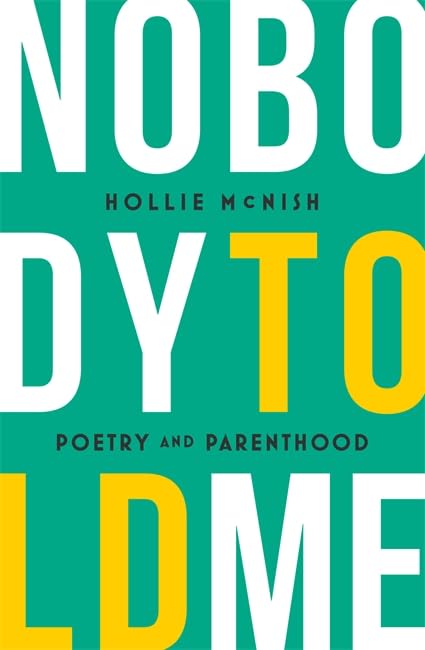
No. 34 on this list. Nobody Told Me: Poetry and Parenthood
Hollie McNish · 2016
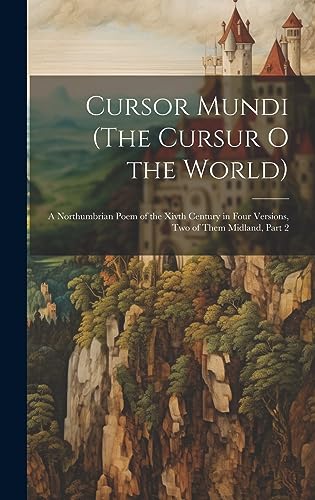
No. 35 on this list. Cursor Mundi
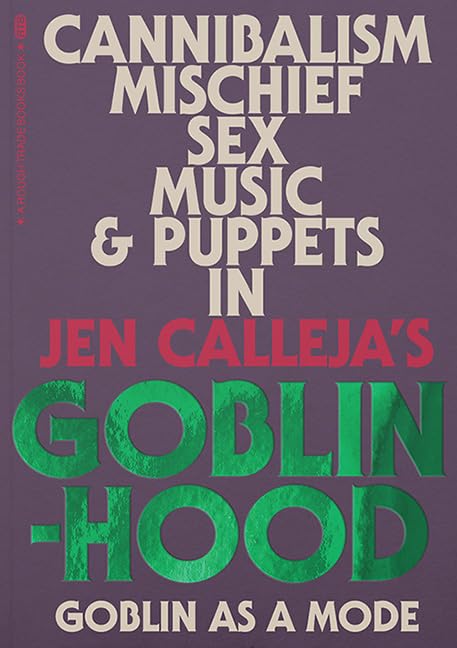
No. 36 on this list. Goblinhood: Goblin As A Mode
Jen Calleja · 2024
About this list
These 36 books are the highest-scoring eligible poetry collections from Britain currently in the catalogue. About 187 hours of reading in all, for the 30 with measured lengths. Difficulty runs from 54 to 63 out of 100 for the middle half of the list; the summit is Troilus and Criseyde at 79.
This list is ranked by literary regard, with a consistent order for equal scores. Membership follows authors and co-authors, not translators or editors. Catalogue coverage and the historical canon both limit what this list can represent, and genre labels are the catalogue’s own, gathered into broader kinds.
When we matched the Canons dataset to our catalogue in October 2026, our canonical-status scores rose with the number of school curricula, publisher series and lists in it that cite a work: the median score was 72 for books one such source cites, 84 at two, 88 at three, 92 at four and 93 at five or more. Prizes are left out of that count. Outside the state curricula, the dataset’s sources choose mostly from what has been translated into English or French, so it is a weaker check on other literatures. Source: Canons (Andrew Piper), CC BY 4.0
Questions people actually ask
- What are the best poetry collections from Britain?
- By literary regard, which weighs canonical status, critical standing and influence: Sonnets by William Shakespeare, Paradise Lost by John Milton, The Norton Facsimile of the First Folio of Shakespeare by William Shakespeare, The Canterbury Tales by Geoffrey Chaucer and Ozymandias by Percy Bysshe Shelley. ReadingRate ranks 36 such books, each with a difficulty score and a reading-time estimate.
- Which poetry collections from Britain should I read first?
- Start from difficulty, not from rank. The most approachable books on this list that still carry top literary regard are The Book of the Duchess by Geoffrey Chaucer (about 40 min), The major works by William Wordsworth and Le Morte d'Arthur by Thomas Malory.
- What are the shortest of the best poetry collections from Britain?
- Among the top 25, the shortest are Ozymandias by Percy Bysshe Shelley (about 1 min), Lycidas by John Milton (about 6 min) and Mac Flecknoe by John Dryden (about 8 min), at an average pace of 250 words a minute adjusted for each book's difficulty.
- Which of the best poetry collections from Britain are the established classics?
- By canonical status, how firmly a book sits in curricula, anthologies and the canon: Sonnets by William Shakespeare, Paradise Lost by John Milton, Ozymandias by Percy Bysshe Shelley, Beowulf by Anonymous and The Norton Facsimile of the First Folio of Shakespeare by William Shakespeare.
- Can I read any of these poetry collections from Britain for free?
- 9 of the 36 open in ReadingRate's reader with a free account, from public-domain editions: Sonnets, Paradise Lost, The Canterbury Tales, Lycidas, Troilus and Criseyde and 4 more.
- How long would it take to read the top ten?
- About 80 hours for the 9 with measured lengths, at an average pace of 250 words a minute adjusted for each book's difficulty: 41 days at two hours a day. Set your own pace on the page and the list's reading times change to it.
- How hard are poetry collections from Britain to read?
- Most of this list sits between 54 and 63 on ReadingRate's 100-point difficulty scale, where 40 to 55 is moderate. The summit is Troilus and Criseyde at 79. Every entry carries its own score, so a reader can pick a great book at a difficulty they will finish.
- How is this list ranked?
- On literary-regard data: how canonically established a work is, its critical standing, and its influence on later writing. It is not a readers’ poll, which is why recent bestsellers rarely appear. Membership follows authors and co-authors, not translators or editors. Lists by country, author, period, theme or difficulty keep to literature: fiction, poetry and drama, with no philosophy, criticism or theory. A list of a kind of book, such as philosophy, memoir or criticism, keeps every book of that kind. Every list holds at most three works by one author.