Hours at an average pace
Showing 31 books
About 150 hours for 31 of 31 books with measured lengths. Estimates use 250 words a minute, adjusted for each book's difficulty. At 2 hours a day, about 76 days for those books.
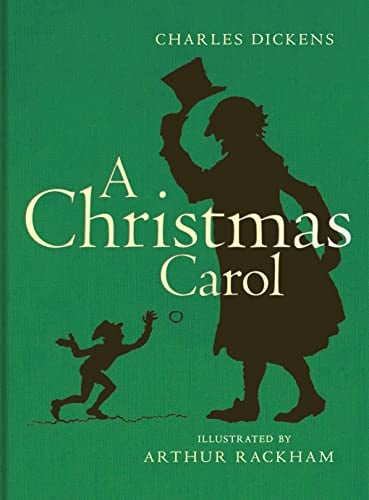
No. 1 on this list. A Christmas Carol
Charles Dickens · 1843
Easy1.7 hours
Taught in schools: AQA GCSE and A-level English Literature (UK), CSEC English B – Caribbean Examinations Council, OCR GCSE and A-level English Literature (UK)
A Christmas Carol is among the most widely taught Victorian texts in the English-speaking world, a fixture on secondary and university literature curricula in the UK, US, and Commonwealth nations. Its Wikipedia article exists in over 60 languages, and it appears on virtually every canonical list of Victorian prose. No other work of comparable length has achieved the same degree of curricular permanence.
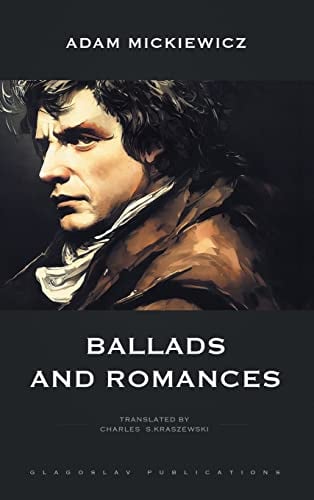
Taught in every Polish school and regarded as the founding text of Polish Romanticism. It sits near Eugene Onegin in its place within a national literary tradition, though less widely taught beyond Poland.
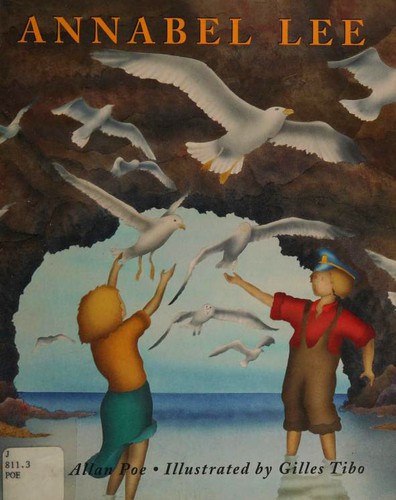
One of the most anthologised poems in American literature and a standard school text.
A foundation of the German classical canon, staple of German schools and theaters, and the Swiss national myth in dramatic form. It is taught widely in German-language curricula and translated into dozens of languages.
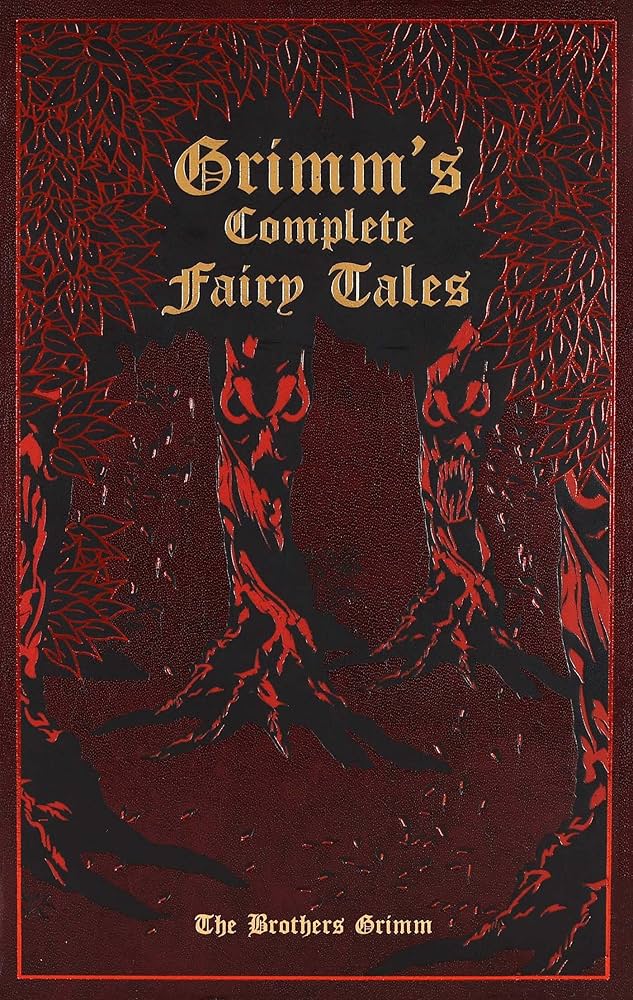
Jacob and Wilhelm Grimm collected Cinderella, Rapunzel, Hansel and Gretel, Snow White, and Rumpelstiltskin from oral sources and fixed them in print, giving Western childhood its permanent mythology. The collection launched the discipline of folklore studies and remains the most influential story anthology ever published.
No. 6 on this list. The Tell-Tale Heart
Edgar Allan Poe · 1843
Moderate32 min
Taught in schools: Pacific Senior Secondary Certificate – English
It is recommended reading in the Pacific Senior Secondary Certificate English curriculum and is among the most widely taught American short stories in schools worldwide, comparable to Gatsby's classroom ubiquity in its own form.
The Captain's Daughter anchors the Russian literary canon alongside Eugene Onegin. It appears in virtually every Russian literature survey course worldwide, is part of the secondary school curriculum in Russia, and has been continuously in print since 1836. No syllabus data was returned from the database, but its foundational status in Slavic studies is unambiguous.
One of the most widely taught early American short stories, regularly anthologized in school and college readers. It sits beside Rip Van Winkle as a foundation of American literature.
Ivanhoe is a fixture of British Romantic literature curricula and appears on virtually every survey of the historical novel as the genre's foundational text in English. While syllabus data was not captured in the database, the novel's Wikipedia article spans well over 50 languages and it remains one of the most recognized works of 19th-century British fiction. It gave the English language the cultural template for medieval chivalry — the Crusades, Normans vs. Saxons, Robin Hood — that persists in popular imagination today.
Taught widely in American literature courses as the founding frontier romance, though its racial attitudes complicate its classroom status. It stands slightly below the staples such as Gatsby.
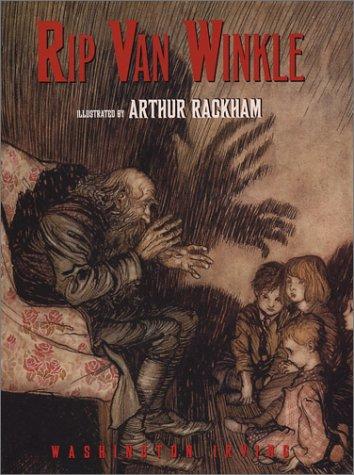
No. 11 on this list. Rip Van Winkle · Washington Irving · 1819
Rip Van Winkle is a staple of American literature anthologies and school curricula, the founding American short story alongside 'The Legend of Sleepy Hollow'. It is taught more widely than most short fiction, though less than Gatsby.
Easy58 min
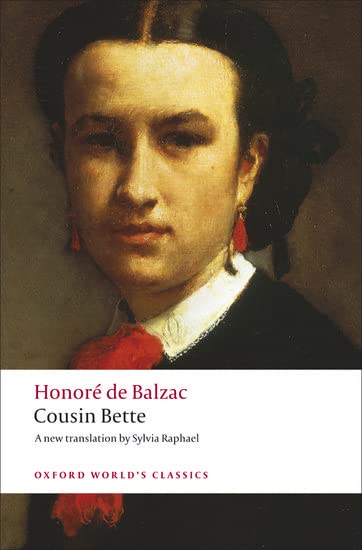
Start this bookNo. 12 on this list. Cousin Bette · Honoré de Balzac · 1846
Included in: Great Books of the Western World
Cousin Bette is central to the Balzac canon and widely taught in French university courses across Europe; it appears on numerous syllabi as his finest late novel and as a cornerstone of European realism. Its Anglophone classroom presence is smaller than in France, but it features in world literature survey courses and Victorian-comparative programs.
Easy10 hours
Start this bookNo. 13 on this list. The Last Letters of Jacopo Ortis · Ugo Foscolo · 1802
This is the first modern Italian epistolary novel and a staple of Italian literature curricula, studied in Italian schools and universities as a foundational Risorgimento text. Outside Italy it is read mostly in Italian studies.
Moderate3.4 hours
Start this bookNo. 14 on this list. Woe from Wit · Alexander Griboyedov · 1825
The play is a core text in Russian school curricula and Russian literature courses worldwide. Its lines are quoted as proverbs in everyday Russian. It stands at the base of the nineteenth-century canon next to Eugene Onegin and Dead Souls.
Moderate1.3 hours
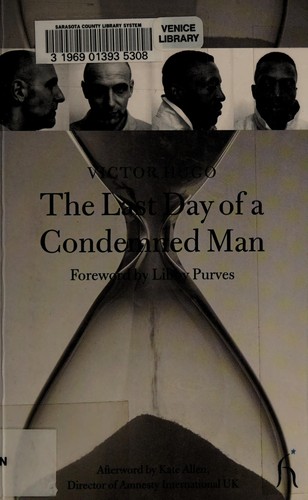
Start this bookNo. 15 on this list. The Last Day of a Condemned Man · Victor Hugo · 1829
A staple of French literature and widely read in translation, it is a key text in debates on the death penalty. It is less taught than Hugo's Les Misérables.
Easy1.8 hours
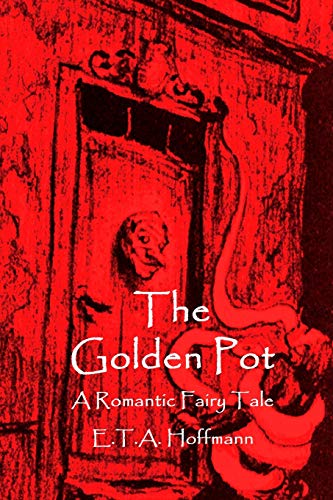
Start this bookNo. 16 on this list. The Golden Pot · E.T.A. Hoffmann · 1814
One of the masterpieces of German Romanticism and Hoffmann's most celebrated tale. Widely studied in German literature courses.
Moderate1.9 hours
Start this bookNo. 17 on this list. The Maidens' Consent · Leandro Fernández de Moratín · 1806
Moratín's best-known play, it is standard in Spanish secondary and university literature curricula and the model of Spanish neoclassical comedy. It is less taught outside the Hispanic world.
Easy58 min
Start this bookNo. 18 on this list. Waverley · Walter Scott · 1814
Waverley is taught in virtually every British Romantic and Victorian literature survey course as the founding text of the historical novel genre. While not as universally assigned as Shakespeare or Dickens, it appears regularly on syllabi in British literature, Scottish studies, and 19th-century fiction courses worldwide. The novel's foundational status in literary history ensures its continuous presence in academic curricula, though its classroom reach has narrowed from its 19th-century peak.
Moderate12 hours
Start this bookNo. 19 on this list. Don Juan Tenorio · José Zorrilla · 1844
The play is a fixture of Spanish and Hispanic literature curricula and a standard of the Romantic theatre. Its annual performance around All Saints' Day makes it a national tradition.
Easy1.7 hours
Start this bookNo. 20 on this list. Maidens' Vows · Aleksander Fredro · 1833
A standard of Polish school curricula and the national theatre repertoire, central to the tradition of Polish comedy. It is less taught outside Poland.
Easy48 min
Start this book
No. 21 on this list. The Old Curiosity Shop · Charles Dickens · 1841
The Old Curiosity Shop appears in every major Dickens collected edition (Penguin Classics, Oxford World's Classics, Chapman and Hall) and is taught in Victorian literature courses at universities worldwide. Nell's death was one of the most discussed literary events of the 19th century, with contemporary accounts of readers in tears on both sides of the Atlantic. It sits below Oliver Twist and Great Expectations in the teaching hierarchy but is a firm fixture of the Dickens canon.
Moderate13 hours
Read nowNo. 22 on this list. Memoirs of a Good-for-Nothing · Joseph von Eichendorff · 1826
It is the best-known German Romantic novella and a staple of German literature courses and school reading lists. English-language syllabi use it less, which keeps it below the world-literature giants.
Easy2.1 hours
Start this bookNo. 23 on this list. White Nights · Fyodor Dostoevsky · 1848
White Nights is a standard entry in Russian literature survey courses and a common first Dostoevsky assignment precisely because of its brevity and accessibility, but it doesn't carry the curricular weight of Crime and Punishment or The Brothers Karamazov. It appears reliably in anthologies of Dostoevsky's short fiction and 19th-century Russian literature courses. No syllabus or Wikipedia-language data was available in the database for this specific title.
Moderate1.2 hours
Start this bookNo. 24 on this list. Mary Barton · Elizabeth Gaskell · 1848
Mary Barton appears regularly on university syllabi in Victorian literature, social fiction, and labor history courses in both British and American universities. While no syllabus count data is available, it holds a recognized place in the Victorian canon alongside Dickens and George Eliot, particularly as a foundational text of the industrial novel.
Moderate10 hours
Start this bookNo. 25 on this list. La Reine Margot · Alexandre Dumas · 1845
A staple of French literature and of Dumas's Valois romances, widely read and adapted, though less often taught than The Three Musketeers. Standard in classic adventure and historical fiction reading.
Easy9.9 hours
Start this bookNo. 26 on this list. Agnes Grey · Anne Brontë · 1847
Agnes Grey appears regularly on university syllabi in Victorian literature and women's writing courses, though it is taught far less frequently than Jane Eyre or Wuthering Heights. Its Wikipedia presence spans over 40 languages, reflecting broad international recognition as a significant Victorian novel. It is considered required reading primarily in specialist Brontë and women's literature contexts rather than general literary canons.
Easy4.2 hours
Start this bookNo. 27 on this list. Redburn · Herman Melville · 1849
A readable, underrated Melville novel, studied by scholars but rarely taught outside specialized courses.
Easy5 hours
Read nowNo. 28 on this list. The Vicomte de Bragelonne · Alexandre Dumas · 1847
The Vicomte de Bragelonne is widely recognized as a classic of French popular literature and the concluding volume of Dumas's d'Artagnan Romances. No syllabus data was found in the database, consistent with its status as beloved popular fiction rather than a fixture of university literature courses. The embedded narrative of The Man in the Iron Mask has nonetheless maintained continuous cultural presence across generations.
Moderate12 hours
Start this bookNo. 29 on this list. Omoo · Herman Melville · 1847
A minor Melville novel, read mainly by scholars and completists, though valued for its Polynesian observations.
Easy4.3 hours
Start this bookNo. 30 on this list. Valperga · Mary Shelley · 1823
Largely unknown outside Shelley scholarship. Beginning to receive more attention from Romantic and feminist scholars.
Moderate9.3 hours
Read now
About this list
These 31 books are the highest-scoring eligible easy books of the Romantic era currently in the catalogue. About 150 hours of reading in all. Difficulty runs from 35 to 41 out of 100 for the middle half of the list; the summit is The Tell-Tale Heart at 44.
This list is ranked by literary regard, with a consistent order for equal scores. Membership follows authors and co-authors, not translators or editors. A book is here when ReadingRate files it under Romantic Era Literature as one of its primary reading domains, and only when its author’s lifetime places it in the period. Catalogue coverage and the historical canon both limit what this list can represent.
When we matched the Canons dataset to our catalogue in October 2026, our canonical-status scores rose with the number of school curricula, publisher series and lists in it that cite a work: the median score was 72 for books one such source cites, 84 at two, 88 at three, 92 at four and 93 at five or more. Prizes are left out of that count. Outside the state curricula, the dataset’s sources choose mostly from what has been translated into English or French, so it is a weaker check on other literatures. Source: Canons (Andrew Piper), CC BY 4.0
Questions people actually ask
- What are the best easy books of the Romantic era?
- By literary regard, which weighs canonical status, critical standing and influence: A Christmas Carol by Charles Dickens, Ballads and Romances by Adam Mickiewicz, Annabel Lee by Edgar Allan Poe, William Tell by Friedrich Schiller and Grimm's Fairy Tales by Brothers Grimm. ReadingRate ranks 31 such books, each with a difficulty score and a reading-time estimate.
- Which easy books of the Romantic era should I read first?
- Start from difficulty, not from rank. The most approachable books on this list that still carry top literary regard are The Captain's Daughter by Alexander Pushkin (about 2.5 hours), Rip Van Winkle by Washington Irving and Grimm's Fairy Tales by Brothers Grimm.
- What are the shortest of the best easy books of the Romantic era?
- Among the top 25, the shortest are Annabel Lee by Edgar Allan Poe (about 24 min), The Tell-Tale Heart by Edgar Allan Poe (about 32 min) and Ballads and Romances by Adam Mickiewicz (about 45 min), at an average pace of 250 words a minute adjusted for each book's difficulty.
- Which of the best easy books of the Romantic era are the established classics?
- By canonical status, how firmly a book sits in curricula, anthologies and the canon: A Christmas Carol by Charles Dickens, Annabel Lee by Edgar Allan Poe, William Tell by Friedrich Schiller, Grimm's Fairy Tales by Brothers Grimm and The Tell-Tale Heart by Edgar Allan Poe.
- Can I read any of these easy books of the Romantic era for free?
- 5 of the 31 open in ReadingRate's reader with a free account, from public-domain editions: A Christmas Carol, The Old Curiosity Shop, Redburn, Valperga and Lodore.
- How long would it take to read the top ten?
- About 36 hours, at an average pace of 250 words a minute adjusted for each book's difficulty: 18 days at two hours a day. Set your own pace on the page and the list's reading times change to it.
- How hard are easy books of the Romantic era to read?
- Most of this list sits between 35 and 41 on ReadingRate's 100-point difficulty scale, where 40 to 55 is moderate. The summit is The Tell-Tale Heart at 44. Every entry carries its own score, so a reader can pick a great book at a difficulty they will finish.
- How is this list ranked?
- On literary-regard data: how canonically established a work is, its critical standing, and its influence on later writing. It is not a readers’ poll, which is why recent bestsellers rarely appear. Membership follows authors and co-authors, not translators or editors. Lists by country, author, period, theme or difficulty keep to literature: fiction, poetry and drama, with no philosophy, criticism or theory. A list of a kind of book, such as philosophy, memoir or criticism, keeps every book of that kind. Every list holds at most three works by one author. A book is here when ReadingRate files it under Romantic Era Literature as one of its primary reading domains, and only when its author’s lifetime places it in the period.