Hours at an average pace
Showing 51 books
About 580 hours for 51 of 51 books with measured lengths. Estimates use 250 words a minute, adjusted for each book's difficulty. At 2 hours a day, about 290 days for those books.
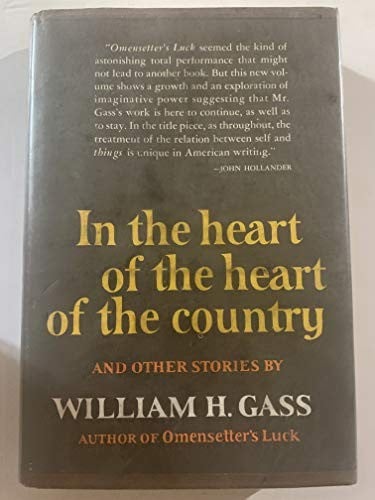
No. 1 on this list. In the Heart of the Heart of the Country
William Gass · 1968
Very Difficult13 hours
In the Heart of the Heart of the Country was first published in 1968 and immediately positioned Gass — alongside Barth, Pynchon, and Coover — as a founding figure of American postmodern fiction. The NYRB Classics reprint with an introduction by Joanna Scott confirms its place in the American literary canon. It is taught in graduate programs in literary fiction and cited in essays on American experimental prose. Its canonical position is more secure in academic contexts than in general readership, placing it below Invisible Man or Blood Meridian but above most of its experimental contemporaries.
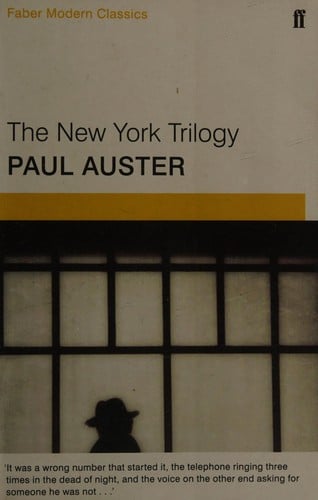
The New York Trilogy stands as the defining work of American postmodern noir and one of the most influential experimental novels of the 1980s. It appears consistently on syllabi for postmodern fiction, metafiction, and American literature courses, and is cited as a foundational text in discussions of the detective genre's literary transformation. Published in the US by Penguin Books (1987 combined edition), it has remained continuously in print for four decades. It appears on numerous "greatest novels" lists and is central to critical discourse on identity, authorship, and the limitations of language in contemporary fiction.
How It Is appears on advanced modernism and postmodernism syllabi but rarely in broad undergraduate curricula — it is a specialist's Beckett text rather than the entry point (Waiting for Godot or Endgame fill that role). Wikipedia records the work in 6 languages with a 7,787-character article, indicating solid scholarly documentation but not wide popular reach. Among Beckett scholars it is considered essential; among general readers it is largely unknown.
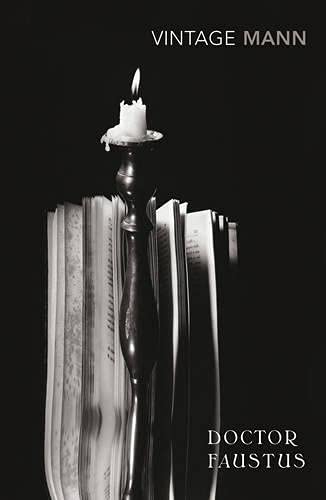
Routinely cited as Mann magnum opus and the great novel of German catastrophe. Taught as essential modernist text.
An old woman lives alone in a stone cabin at the edge of a formless landscape. She watches Venus rise and the moon whiten the stones. She makes her slow way to a tomb bearing flowers. Twelve figures linger always in the distance — still, or receding — and she never sees one come toward her. A narrating eye watches her, reports what it sees, then immediately doubts its own report. 'Ill seen' is both title and method: Beckett spent his late career stripping the novel to whatever cannot be further removed, and Ill Seen Ill Said is among the most extreme results. There is no plot and almost no character in the usual sense — only perception failing to fix its object, language circling what it cannot say. The woman seems to be dying, or has always been dying, or is a figment the narrator cannot quite relinquish. A buttonhook trembles on its nail throughout; the stones encroach on the pastures year by year; and at the last a voice says: 'Know happiness.' At eighty-odd pages this is Beckett at his most concentrated — difficult, beautiful, and utterly unlike anything else.
Harmonium appears on thousands of university poetry syllabi and is a fixture of American modernism courses. It is regularly listed among the foundational texts of American poetry, alongside Whitman's Leaves of Grass and Eliot's Prufrock — despite the database showing no captured syllabus appearances, Stevens's place in the academic canon is among the most secure of any twentieth-century American poet.
A canonical experimental novel and the centrepiece of OuLiPo's legacy in world literature. Widely anthologised in discussions of formal constraint in writing. Perec's reputation — anchored also by Life A User's Manual — ensures its place in any serious survey of twentieth-century European fiction.
Requiem and Poem Without a Hero are canonical texts of 20th-century Russian literature and essential documents of Stalinist-era witness poetry — required reading in Russian literature courses worldwide. No database records appear for this English translation's syllabus presence, but the works are universally taught in courses on Soviet literature, women's writing, and poetry of witness. The Wikipedia absence in this database likely reflects a data gap rather than actual obscurity: Akhmatova's works are foundational to Russian studies curricula.
No. 9 on this list. The Unnamable
Samuel Beckett · 1953
Difficult27 hours
Included in: Bokklubben World Library
The Unnamable is taught in advanced modernism, postmodernism, and philosophy-of-language courses at universities worldwide, though less universally than Waiting for Godot. It anchors the Beckett Trilogy, which is among the canonical texts of twentieth-century literature in English and French. The Wikipedia and syllabus data signals appear underreported for this work.
The database shows no syllabus appearances or Wikipedia data for this entry, but Spring and All is a well-known fixture in American modernist poetry courses and anthologies. It is regularly taught alongside Eliot's The Waste Land as the opposing American response to European modernism. The book's canonical poem so much depends upon a red wheel barrow is one of the most anthologized passages in twentieth-century American poetry.
No. 11 on this list. Paterson · William Carlos Williams · 1963
Paterson is anthologized in every major American poetry collection (Norton, Heath, Library of America) and taught in American modernism, long poem, and 20th-century poetry courses at virtually every research university. It is one of the defining long poems of the American century, alongside The Waste Land, The Cantos, and Four Quartets. While less widely taught than Shakespeare or Fitzgerald, it occupies a canonical position in American literary studies comparable to Beloved (85).
Difficult10 hours
Start this bookNo. 12 on this list. Lust · Elfriede Jelinek · 1989
Jelinek is a Nobel Prize winner (2004), and Lust is among her most-discussed novels, central to courses in feminist literature, Austrian literature, and avant-garde fiction. The Wikipedia article on Lust exists in 58 languages, indicating significant global recognition. However, the novel is not a fixture of general literary survey courses in the way that Jelinek's work as a whole is taught — it is a specialist text, assigned where Jelinek is the focus or feminist radical fiction is the subject. Its explicit content limits its classroom reach. Canonical within feminist literary studies; less so in general world literature curricula.
Difficult9.3 hours
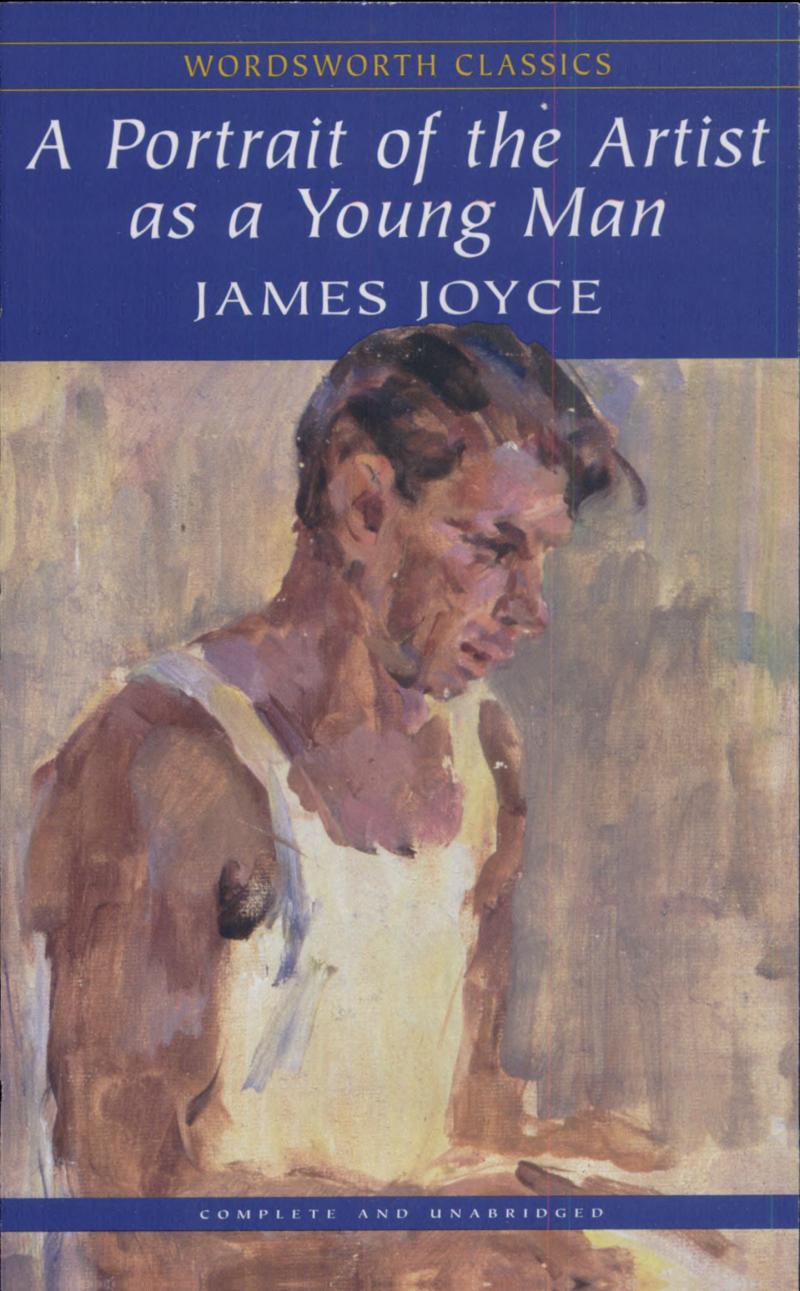
Start this bookNo. 13 on this list. A Portrait of the Artist as a Young Man · James Joyce · 1916
Included in: Great Books of the Western World
Appears on 3,243 university syllabi according to the Open Syllabus Project (87.8th percentile), placing it in the company of the most-taught literary novels in English. Featured on the Modern Library 100 Best Novels, 1001 Books You Must Read Before You Die, and available in 40 Wikipedia languages — a global footprint that confirms its standing as a fixture of the Anglo-Irish modernist curriculum.
Difficult11 hours
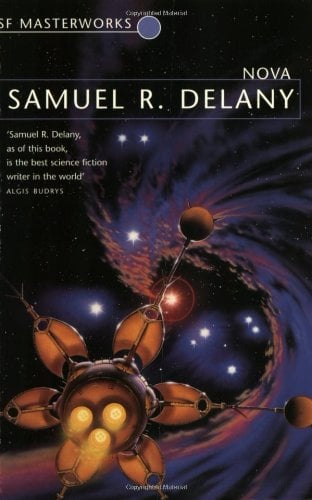
Read nowNo. 14 on this list. Nova · Samuel R. Delany · 1968
Nova holds a firm place in the SF literary canon, included in the SF Masterworks series and cited as a defining text of the New Wave movement. Its standing is strong within genre criticism but has not fully crossed into mainstream literary canonization.
Difficult9.9 hours
Start this bookNo. 15 on this list. The Emigrants · W.G. Sebald · 1992
The Emigrants is widely taught in contemporary world literature, post-WWII German literature, and Holocaust literature courses, though it lacks the mass-curriculum presence of more canonical texts. It appears regularly on 'best novels of the 20th century' lists — including The Guardian's 100 Best Novels in English — and is considered essential reading in serious literary circles. Its canonical status is high within literary academia but limited compared to texts like Beloved or One Hundred Years of Solitude.
Difficult7.6 hours
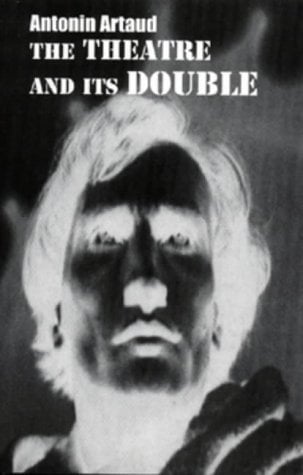
Start this bookNo. 16 on this list. The Theatre and Its Double · Antonin Artaud · 1938
Listed among Le Monde's 100 Books of the Century (1999) and the Open Syllabus Top 500 in Literature, with Wikipedia presence in 10 languages. The Theatre and Its Double is essential reading in theatre studies programs worldwide. Published by NYRB Classics. Every contemporary theatre practitioner and scholar encounters Artaud's theories in courses on performance studies, avant-garde theatre, modernism, and cultural theory.
Difficult11 hours
Start this bookNo. 17 on this list. Selected Poems of Osip Mandelstam · Osip Mandelstam
Mandelstam's poetry is taught in world literature and comparative modernism courses globally, and he appears in virtually every anthology of 20th-century poetry. This specific 2022 bilingual edition by Ian Probstein (Academic Studies Press) is a scholarly translation with narrower syllabus presence than the poet's overall reputation warrants. The work as an anthology of Mandelstam's selected poems sits at the center of the Russian modernist canon.
Difficult5.6 hours
Start this bookNo. 18 on this list. Cronopios and Famas · Julio Cortázar · 1962
Taught in schools: Literatura, Diseño Curricular – Provincia de Buenos Aires (Argentina), UNAM Escuela Nacional Preparatoria – programas de Literatura (Mexico)
Julio Cortázar divides humanity into three species. The Famas are prudent, meticulous, and thorough — when traveling, one fama inspects the hotel, one files a report with the police, one copies the list of emergency doctors. The Cronopios are wet, green, disordered, and joyful — they find all hotels full, miss every train, and dream that huge parties are being given in the city to which they are invited. The Esperanzas wait for things to come to them. In sixty-odd miniatures, Cortázar demonstrates what happens when these types collide: a cronopio appointed Director General of Radio Diffusion immediately translates all broadcasts into Romanian; a fama who wants wood chops down a eucalyptus tree without noticing it screams. Before the creature taxonomy begins, an 'Instruction Manual' opens the book with deadpan procedural guides — how to cry, how to sing, how to be afraid — that use the earnest register of a technical manual to make observations about alienation and habit. 'Instructions on How to Climb a Staircase' explains in meticulous detail how to lift one foot, then the other, as if this has never been done before. The writing is compact and funny and strange, each piece its own sealed logic, ending on the precisely wrong note. Cortázar invented a form here that nobody else has quite replicated: philosophical comedy delivered in the voice of a very serious bureaucrat who has gone slightly mad.
Difficult3.1 hours
Start this bookNo. 19 on this list. A Hunger Artist · Franz Kafka · 1924
Kafka's short fiction is taught in university literature courses worldwide, and 'A Hunger Artist' is among his most frequently anthologized works. It appears in virtually every Kafka collection and features in major short story anthologies. The work has sustained academic and pedagogical attention since its posthumous publication in 1922.
Difficult12 hours
Start this bookNo. 20 on this list. Life A User's Manual · Georges Perec · 1978
Listed on Le Monde's 100 Books of the Century and the Open Syllabus Top 500 for Literature. Wikipedia articles exist in 18 languages. The novel is a fixture in courses on experimental fiction, Oulipo, and twentieth-century French literature, though it remains less widely taught than mainstream canonical works in anglophone curricula.
Difficult21 hours
Start this book
No. 21 on this list. Água Viva · Clarice Lispector · 1973
The unnamed narrator of Água Viva is a painter who has turned to words — not to tell a story but to capture the precise texture of the present moment before it slips away. She writes to an unnamed 'you': about caves lined with bats, about a rose that lasted a week because it felt admired, about wild horses in mountain meadows, about the body as a typewriter that demands and demands. There are no chapters, no plot, no characters other than this voice and its recipient. What accumulates instead is a philosophy of the instant: Lispector's attempt to seize the 'is' of things, the 'it' that exists just below language, just beyond thought. The sentences move from fragments to long meditative surges, from declarations of joy to confessions of terror to sudden hallelujahs. Reading it feels less like following a narrative and more like listening to someone think out loud with total commitment and no safety net. It is one of the strangest books in the Brazilian canon — neither novel nor essay nor prose poem but all three at once, vibrating at the frequency of consciousness itself.
Difficult3.2 hours
Start this bookNo. 22 on this list. Diving into the Wreck · Adrienne Rich · 1973
The title poem appears in virtually every major American poetry anthology and is standard reading in feminist literature, American poetry, and contemporary poetry courses. The collection sits firmly in the literary canon, comparable to Beloved (85) in academic reach if not in the broadest syllabi. No database data was returned, but Rich's place in American poetry curricula is well established.
Difficult47 min
Start this bookNo. 23 on this list. The Sonnets to Orpheus · Rainer Maria Rilke · 1923
In February 1922, Rainer Maria Rilke retreated to Chateau de Muzot in Switzerland and composed fifty-five sonnets in three weeks. He addressed them to Orpheus — the Greek poet-god who descended into death to reclaim Eurydice and was torn apart by the Maenads for refusing them. The occasion was the recent death of Vera Knoop, a nineteen-year-old dancer Rilke barely knew; her death opened something. A tree ascends in the first line. Animals cluster around it in silence, listening. What Rilke is after is the premise that true song is not desire or communication but reality — breath as invisible poem, the moment when inner and outer stop being distinct. Orpheus moves through the cycle not as a character but as a principle: he is already dead, he already belongs to both realms, and because of this he can praise everything, including loss. The Sonnets instruct readers to will transformation, to be ahead of all parting, to whisper 'I am flowing' to the earth. They do not resolve their questions about death and being; they teach acceptance of irresolution as the condition of consciousness. Reading them asks for slow, repeated attention — each poem is compact and dense, and the cycle's meaning accumulates across all fifty-five. This is poetry as philosophical practice, the lyric at maximum pressure.
Difficult2.8 hours
Start this bookNo. 24 on this list. In Search of Lost Time · Marcel Proust · 1913
Included in: Bokklubben World Library, Great Books of the Western World
In Search of Lost Time appears on 223 university syllabi and registers at the 58.7th percentile in the Open Syllabus Project — a significant presence for a seven-volume novel typically taught in translation and only in specialized courses. It appears on virtually every 'greatest novels' list (Modern Library, Le Monde, Time), and is treated as the central work of French modernism in comparative literature programs worldwide.
Difficult25 hours
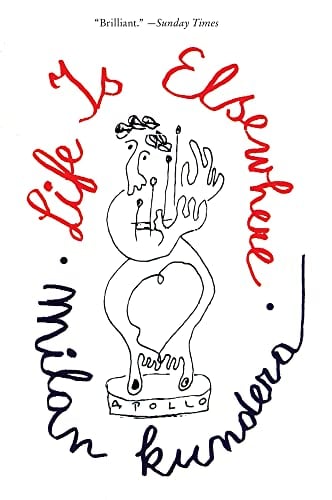
Read nowNo. 25 on this list. Life Is Elsewhere · Milan Kundera · 1973
Life Is Elsewhere won the Prix Médicis Étranger in 1973, Kundera's first major international prize, and established him as a central figure of world literature outside the Communist bloc. It is taught in comparative literature and Central European literature courses at universities internationally, and is included in numerous critical surveys of the twentieth-century novel. Its canonical position rests partly on Kundera's broader oeuvre — The Unbearable Lightness of Being secured his global reputation — but this novel is consistently cited as his most structurally ambitious.
Difficult10 hours
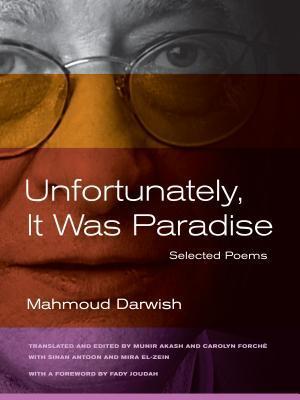
Start this bookNo. 26 on this list. Unfortunately, It Was Paradise · Mahmoud Darwish · 2003
No syllabus data was found in the database for this English translation, but the Arabic originals anchor Darwish as the most-taught Arab poet in world literature and comparative literature courses globally. This collection, published by University of California Press and with a foreword by poet Fady Joudah, is the only comprehensive selected poems in English spanning his entire career. It is widely assigned in Middle Eastern studies, postcolonial literature, and translation studies programs.
Difficult3.8 hours
Start this bookNo. 27 on this list. Our Mutual Friend · Charles Dickens · 1865
Our Mutual Friend is a fixture of Victorian literature courses at universities worldwide, typically assigned alongside Great Expectations and Bleak House in advanced English studies. Wikipedia articles for the novel exist in dozens of languages, reflecting its global canonical standing. It consistently appears on critics' lists of Dickens's greatest works and in syllabi covering 19th-century social fiction.
Difficult35 hours
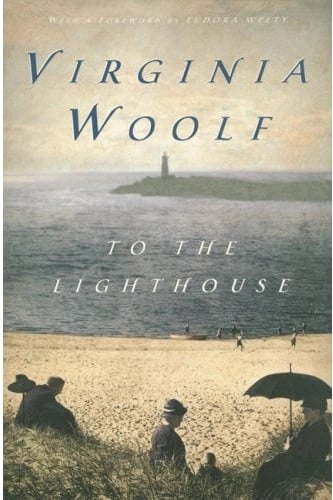
Read nowNo. 28 on this list. To the Lighthouse · Virginia Woolf · 1927
Included in: Bokklubben World Library, Great Books of the Western World
To the Lighthouse appears on 2,429 university syllabi according to Open Syllabus (84.6th percentile), placing it in the same tier as Beloved (85th). It holds places on the Modern Library 100 Best Novels (1998), TIME's All-TIME 100 Novels (2005), 1001 Books You Must Read Before You Die (2006), and is published by both Everyman's Library and Penguin Modern Classics. Wikipedia articles exist in 35 languages.
Difficult7.4 hours
Read nowNo. 29 on this list. Death in Venice · Thomas Mann · 1912
Included in: Great Books of the Western World
Death in Venice appears on virtually every German literature, European modernism, and queer theory university syllabus taught in the English-speaking world. It is a standard text in comparative literature programs alongside Kafka's Metamorphosis and Rilke's Duino Elegies. Wikipedia maintains articles on the novella in over 50 languages, and it features on most 'essential modern literature' lists.
Challenging11 hours
Read nowNo. 30 on this list. Collected Poems of W.B. Yeats · William Butler Yeats · 1933
Yeats is on virtually every Anglophone university literature syllabus. 'The Second Coming,' 'Easter 1916,' 'Sailing to Byzantium,' and 'The Lake Isle of Innisfree' are among the most widely anthologized and taught poems in the English language. The Collected Poems is treated as an essential text in Irish, British, and American literary curricula alike, with sustained presence in over a century of anthologies.
Challenging10 hours
Start this book
No. 31 on this list. Peer Gynt
Henrik Ibsen · 1867
No. 32 on this list. The Savage Detectives
Roberto Bolaño · 1998
Taught in schools: UNAM Escuela Nacional Preparatoria – programas de Literatura (Mexico)
No. 33 on this list. Antony and Cleopatra
William Shakespeare · 1607
Taught in schools: WJEC/Eduqas GCSE and A-level English Literature (UK)
Included in: Great Books of the Western World
No. 34 on this list. Eclogues
Virgil · c. 37 BCE
Included in: Great Books of the Western World
No. 35 on this list. Coriolanus
William Shakespeare · 1608
Included in: Great Books of the Western World
No. 36 on this list. The Axion Esti
Odysseas Elytis · 1959
No. 37 on this list. Sixty Stories
Donald Barthelme · 1981
No. 38 on this list. The Good Soldier
Ford Madox Ford · 1915
No. 39 on this list. Écrits
Jacques Lacan · 1966
No. 40 on this list. Roland Barthes by Roland Barthes
Roland Barthes · 1975
No. 41 on this list. Writing and Difference
Jacques Derrida · 1967
No. 42 on this list. This Sex Which Is Not One
Luce Irigaray · 1977
No. 43 on this list. The Order of Things: An Archaeology of the Human Sciences
Michel Foucault · 1966
No. 44 on this list. The Origin of German Tragic Drama
Walter Benjamin · 1928
No. 45 on this list. Natyashastra
Bharata Muni · c. 200 BCE
No. 46 on this list. New Science
Giambattista Vico · 1725
No. 47 on this list. Myth and Archive: A Theory of Latin American Narrative
Roberto González Echevarría · 1990
No. 48 on this list. Illuminations
Walter Benjamin · 1955
No. 49 on this list. Marxism and Literature
Raymond Williams · 1977
No. 50 on this list. De Vulgari Eloquentia
Dante Alighieri · 1304

About this list
These 51 books are the hardest-scoring eligible books about art and creativity currently in the catalogue. About 580 hours of reading in all. Difficulty runs from 70 to 81 out of 100 for the middle half of the list; the summit is Écrits at 94.
This list is ranked by difficulty score, hardest first, with a consistent order for equal scores. Membership follows authors and co-authors, not translators or editors. A book is here when ReadingRate files it under Art & Creativity as one of its primary reading domains, at a confidence of 0.8 or more. Catalogue coverage and the historical canon both limit what this list can represent.
When we matched the Canons dataset to our catalogue in October 2026, our canonical-status scores rose with the number of school curricula, publisher series and lists in it that cite a work: the median score was 72 for books one such source cites, 84 at two, 88 at three, 92 at four and 93 at five or more. Prizes are left out of that count. Outside the state curricula, the dataset’s sources choose mostly from what has been translated into English or French, so it is a weaker check on other literatures. Source: Canons (Andrew Piper), CC BY 4.0
Questions people actually ask
- What are the hardest books about art and creativity to read?
- Ranked hardest first by difficulty score: In the Heart of the Heart of the Country by William Gass, The New York Trilogy by Paul Auster, How It Is by Samuel Beckett, Doctor Faustus by Thomas Mann and Ill Seen Ill Said by Samuel Beckett. ReadingRate ranks 51 such books, each with a difficulty score and a reading-time estimate.
- Can I read any of these books about art and creativity for free?
- 9 of the 51 open in ReadingRate's reader with a free account, from public-domain editions: A Portrait of the Artist as a Young Man, In Search of Lost Time, Our Mutual Friend, To the Lighthouse, Death in Venice and 4 more.
- How long would it take to read the top ten?
- About 134 hours, at an average pace of 250 words a minute adjusted for each book's difficulty: 67 days at two hours a day. Set your own pace on the page and the list's reading times change to it.
- How hard are the hardest books about art and creativity?
- Most of this list sits between 70 and 81 on ReadingRate's 100-point difficulty scale, where 40 to 55 is moderate. The summit is Écrits at 94. Every entry carries its own score, so a reader can pick a great book at a difficulty they will finish.
- How is this list ranked?
- Nine dimensions, from vocabulary and sentence structure to symbolic density and how much an ending withholds, each scored out of 100 and combined. It measures the text, not the reader, and it leans on meaning: The New York Trilogy scores 87 for how much it withholds, though its sentences are plainer than anything else in the top twenty. Each book's page shows which kind of hard it is. A book is here when ReadingRate files it under Art & Creativity as one of its primary reading domains, at a confidence of 0.8 or more.