
Hours at an average pace
Showing 86 books
About 649 hours for 78 of 86 books with measured lengths. Estimates use 250 words a minute, adjusted for each book's difficulty. At 2 hours a day, about 325 days for those books.
The Divine Comedy is a cornerstone of world literature and appears in curricula everywhere. This anthology is a standard classroom edition.
The Summa Theologica is required reading in virtually every Catholic seminary and philosophy of religion program globally, and is foundational in scholastic philosophy curricula. Pope Leo XIII's encyclical Aeterni Patris (1879) formally designated it the basis for Catholic philosophical and theological education worldwide. It is among the most cited texts in Western intellectual history.
Augustine's Confessions is a core text of Western literature, philosophy and theology, set in great-books and religious studies courses around the world. It is widely regarded as the first autobiography in the Western tradition.
No. 4 on this list. Theogony
Hesiod · c. 700 BCE
Moderate38 min
Taught in schools: Hungarian literature curriculum (magyar nyelv és irodalom) (Hungary)
The Theogony is the foundational text of Greek mythology and Western cosmogony, required reading in classics, comparative literature, and religious studies curricula worldwide. Available in 62 Wikipedia languages, it represents one of the most extensively studied works of ancient literature. Alongside Homer's Iliad and Odyssey, it constitutes the primary textual record of ancient Greek religious belief — no understanding of Western literary tradition is complete without it.
Ethics is a cornerstone of Western rationalism, read beside Descartes and Leibniz in philosophy curricula worldwide. It appears constantly in courses on early modern philosophy, metaphysics and ethics.
It is the most widely read Hindu scripture, a central text in religion and world literature courses, and widely translated. It is read worldwide as a standalone work.
No. 7 on this list. City of God
Augustine of Hippo · 426
Challenging40 hours
Included in: Great Books of the Western World
City of God is foundational to Western civilization, taught in every university theology, philosophy, and medieval studies program globally. It appears on syllabi across disciplines—history, political theory, religious studies, philosophy—and has been continuously in print and in commentary since the 5th century. The Wikipedia data showing only 5 languages likely reflects a disambiguation page rather than the work's actual encyclopedic presence.
No. 8 on this list. The Protestant Ethic and the Spirit of Capitalism
Max Weber · 1905
Challenging16 hours
One of the founding texts of sociology, taught in introductory and theory courses alongside Marx and Durkheim and assigned across history, economics and religious studies. It ranked fourth in the International Sociological Association's 1998 poll of the books of the century.
No. 9 on this list. Prometheus Bound
Aeschylus · c. 430 BCE
Challenging47 min
Included in: Great Books of the Western World
Prometheus Bound is standard curriculum in classics departments, Western civilization courses, and world literature programs at universities globally. It appears on virtually every 'foundations of Western literature' syllabus alongside Homer and Sophocles. Though the database shows no tracked syllabus entries, the work has 2,500 years of unbroken canonical transmission.
No. 10 on this list. Hippolytus
Euripides · c. 428 BCE
Challenging2.3 hours
Included in: Great Books of the Western World
Hippolytus is a cornerstone of classical literature curricula worldwide, appearing in virtually every Greek tragedy anthology and university drama syllabus. It is one of only 17 surviving plays by Euripides and is consistently featured in courses on Western drama, classical antiquity, and the history of theatre. No direct Open Syllabus data was available, but its canonical presence in the Western literary tradition is unambiguous.

No. 11 on this list. Tao Te Ching · Laozi
The Tao Te Ching is one of the most translated texts in human history — second only to the Bible in total translations, with over 250 English versions alone. It anchors courses in world philosophy, comparative religion, East Asian studies, and literature at virtually every major university. Its Wikipedia article exists in over 80 languages.
Challenging2.3 hours
Read nowNo. 12 on this list. Thus Spake Zarathustra · Friedrich Nietzsche · 1883
It is a staple of philosophy and German literature courses worldwide and Nietzsche's best-known work, translated into dozens of languages. It is taught as primary text on both sides of the literary and philosophical divide.
Challenging10 hours
Start this bookNo. 13 on this list. The Sickness Unto Death · Søren Kierkegaard · 1849
The Sickness unto Death appears on philosophy and theology syllabi at universities worldwide and is consistently listed among the essential texts of existentialism. It is among the most-taught works in continental philosophy, philosophy of religion, and existentialist theology — a standard fixture in any curriculum covering 19th-century thought. Wikipedia articles exist in over 40 languages, confirming global reach across academic traditions.
Difficult7.7 hours
Start this bookNo. 14 on this list. Analects · Confucius · c. 479 BCE
Confucius's students recorded his sayings on ritual, filial piety, and the gentleman-scholar in terse dialogues that became the moral operating system for East Asian civilization. The examination system built on this text selected China's governing class for over a thousand years.
Moderate2 hours
Read nowNo. 15 on this list. Pensées · Blaise Pascal · 1670
Included in: Great Books of the Western World, UNESCO Collection of Representative Works
One of the masterpieces of French prose and a foundational text of modern religious philosophy. Read continuously since the seventeenth century.
Moderate6.5 hours
Start this bookNo. 16 on this list. Fear and Trembling · Søren Kierkegaard · 1843
It is standard in philosophy of religion, existentialism and ethics courses, and one of Kierkegaard's most-assigned works. It is read across theology and philosophy curricula worldwide.
Challenging4.2 hours
Start this bookNo. 17 on this list. Theogony/Works and Days · Hesiod
Hesiod's poems are core texts in classics courses and Greek mythology curricula worldwide. They stand beside Homer as the foundation of Greek literature.
Moderate2.4 hours
Start this bookNo. 18 on this list. Theological-Political Treatise · Baruch Spinoza · 1670
The Theological-Political Treatise is a standard text in early modern philosophy, political theory and religious studies courses, and it is central to the history of biblical criticism and the Enlightenment. Spinoza's Ethics is more widely taught as a whole.
Challenging9 hours
Start this bookNo. 19 on this list. Samson Agonistes · John Milton · 1671
Included in: Great Books of the Western World
Samson Agonistes is required reading in virtually every English Renaissance and early modern literature course at the university level, paired with Paradise Lost and Paradise Regained as the triad of Milton's major late works. It appears on countless syllabi and is included in every major anthology of English literature. While less universally taught than Paradise Lost, it holds a firm place in the upper tier of the seventeenth-century canon.
Challenging1.1 hours
Start this bookNo. 20 on this list. Gita Govinda · Jayadeva · 1200
Included in: UNESCO Collection of Representative Works
A required text in Sanskrit literature, Indian religious studies, and the history of dance, and part of daily ritual at the Jagannath temple in Puri.
Challenging1.1 hours
Start this book

No. 21 on this list. Paradise Regained · John Milton · 1671
Satan has fallen from Heaven, and Christ has been baptized in the Jordan. What comes next, in Milton's 1671 brief epic, is forty days in the wilderness and the most compressed philosophical argument in English verse. Satan does not simply offer bread and kingdoms. He offers Rome, with its full imperial apparatus; Athens, with its entire philosophical tradition from Socrates through Plato; and glory, defined in every form human ambition has devised. Christ refuses each in turn — not from weakness but from a clear-eyed account of what power, learning, and reputation are actually worth. The poem turns on a question Milton considered his career's central problem: what does true heroism look like, if it is not military conquest, political dominion, or classical education? His answer is patience, reason, and the rejection of everything Satan can plausibly offer. Written as a 'brief epic' in four books, Paradise Regained is spare where Paradise Lost is vast — no war in Heaven, no garden, no catastrophe. The drama is entirely verbal: two interlocutors debating the nature of kingship in a desert, one of them lying. The blank verse is the most concentrated Milton ever wrote. Each refusal Christ delivers is also a definition of the new heroism Milton believed the English Revolution had failed to produce.
Moderate1.1 hours
Read nowNo. 22 on this list. KIERKEGAARD'S CONCLUDING UNSCIENTIFIC POSTSCRIPT. Translated from the Danish by David F. Swenson. Completed after his death and provided with Introduction and Notes by Walter Lowrie. · Kierkegaard
Central to existentialism and philosophy of religion courses, and a standard text in Kierkegaard studies, though less assigned than his shorter works such as Fear and Trembling.
Difficult
Start this bookNo. 23 on this list. The Hero with a Thousand Faces · Joseph Campbell · 1949
Joseph Campbell opens with a Freudian reading of an Arapaho folktale and never looks back. A woman falls through a hole in the sky while digging up a buffalo plant. An Aztec prince descends into the underworld to retrieve the bones of the dead. A Polynesian hero is swallowed by a whale. Campbell lines up hundreds of these stories from six continents and argues they are all the same story: a hero ventures from the ordinary world into a region of supernatural wonder, wins a decisive victory, and returns transformed. He calls this the monomyth — departure, initiation, return — and maps each stage with taxonomic precision: the Call to Adventure, the Belly of the Whale, the Meeting with the Goddess, the Apotheosis. The comparative method is relentless. A Navaho vision quest illuminates the Buddha's meditation under the Bo Tree, which rhymes with Christ's temptation in the desert. Campbell reads all of it through Jung and Freud, treating gods as projections of the psyche and mythic journeys as metaphors for psychological maturation. The second half widens from the individual hero to the cosmos itself — creation, virgin birth, the dissolution of worlds. The prose is mid-century academic, formal but clear, carried by the momentum of one extraordinary story after another. Readers who want to know why myths from unrelated cultures keep telling the same story will find Campbell's answer here, built from the evidence itself.
Moderate8.5 hours
Start this bookNo. 24 on this list. The Way of the Bodhisattva · Śāntideva · 2003
No syllabus or Wikipedia data came back in ReadingRate's own signals check, but this is one of the core texts of the Tibetan Geshe curriculum, studied continuously in Nalanda-tradition monastic colleges for over a millennium, and it anchors university Buddhist Studies and Asian philosophy courses worldwide through standard translations from Oxford World's Classics, Shambhala, and Snow Lion. Its canonical standing within the Buddhist tradition is comparable to a foundational scriptural commentary rather than a novel on a 'great books' list.
Moderate1.7 hours
Start this bookNo. 25 on this list. THE HOLY BIBLE: SIGNED Pennyroyal Caxton Bible BARRY MOSER Illustrator · Barry Moser · 1999
The King James Bible is the most widely read and taught text in English. This 1999 fine-press edition is a collectors' item, but the text it carries holds the highest canonical position.
Challenging65 hours
Start this bookNo. 26 on this list. Treasury of the True Dharma Eye · Dōgen · 1253
The Shobogenzo is the foundational text of Soto Zen and a staple of Japanese philosophy and Buddhist studies courses worldwide. It is taught alongside Zen classics, with a wide choice of English translations, though less universally than the great Western canon.
Difficult35 hours
Start this bookNo. 27 on this list. The Cost of Discipleship · Dietrich Bonhoeffer · 1937
Dietrich Bonhoeffer opens with a distinction that splits the book in two. 'Cheap grace' is forgiveness sold on the cheap — grace without the cross, Christianity without Christ. 'Costly grace' is the real thing: the call that compelled Levi to leave his tax booth, that sent the disciples from their nets into unknown territory. Bonhoeffer wrote this in 1937, as a Lutheran pastor running an underground seminary while the German church bent its knee to the Nazi state. The stakes were not theoretical. What follows is a sustained reading of the Sermon on the Mount as a set of commands meant to be obeyed, not admired from a distance. The Beatitudes are not comforts for the passive; they describe what happens to people who actually follow Christ into the world. Bonhoeffer then builds outward from individual obedience to the visible church — a community that bears the form of the crucified Christ in its own body. Baptism is death. The Body of Christ is not a metaphor. The reader who expects gentle devotional prose will find instead a theologian making demands: that faith without obedience is not faith, that the church without costly commitment is not the church. The final chapters on the image of God carry the argument to its conclusion — to follow Christ means to be remade entirely, conformed to the image of the one who suffered.
Easy3.8 hours
Start this bookNo. 28 on this list. The Courage to Be · Paul Tillich · 1952
The Courage to Be is one of the most widely assigned texts in university theology, philosophy of religion, and religious studies courses worldwide, and has been in continuous print since 1952. It is considered a foundational text in 20th-century existentialist theology and appears on syllabi across North America, Europe, and beyond. Its canonical status is secure within academic theology and philosophy of religion, though it does not occupy the same cross-disciplinary position as Butler's Gender Trouble or a major literary work.
Challenging4.4 hours
Start this bookNo. 29 on this list. The Sacred and the Profane · Mircea Eliade · 1957
Mircea Eliade begins with a stone. Not every stone is sacred — only one that strikes homo religiosus as a revelation of something that transcends it. The stone is worshipped because it is sacred, not because it is a stone. From this deceptively simple distinction, The Sacred and the Profane constructs a full account of how religious man inhabits a different universe from his secular neighbor — a universe organized around sacred centers, inhabited by cyclical time that returns to origins, suffused with a nature that is never merely natural. Eliade moves through four dimensions of existence — space, time, nature, and human life — showing in each case how the religious experience transforms it structurally. A house is not just shelter but a cosmic axis, its hearth a link between earth, sky, and underworld. The New Year is not a calendar convention but an annihilation of used-up time and a return to the moment of creation. Water does not merely wash — it dissolves and regenerates. The examples accumulate from Babylonian ritual, Vedic cosmology, Australian Aboriginal Dreamtime, Polynesian creation myths, Greek hierogamy, and dozens of other traditions, all organized around the same underlying structures. The book's argument cuts quietly against secular modernity. Desacralized man, Eliade suggests, has not escaped religion — he has merely forgotten it, and pays for the forgetting with an existence unmoored from any cosmic center. Reading Eliade requires patience with theoretical vocabulary (hierophany, axis mundi, imago mundi) but rewards it with a framework that reorganizes how religious experience across all cultures coheres.
Moderate3.2 hours
Start this bookNo. 30 on this list. The New England Mind: The Seventeenth Century · Perry Miller · 1939
It is a founding text of American Puritan studies and long a staple of American intellectual history and colonial literature courses. It is a scholarly classic rather than a general-curriculum work.
Challenging22 hours
Start this book
No. 31 on this list. Fasti
Ovid · 8
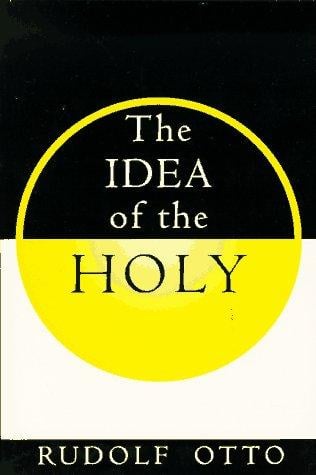
No. 32 on this list. The Idea of the Holy
Rudolf Otto · 1917
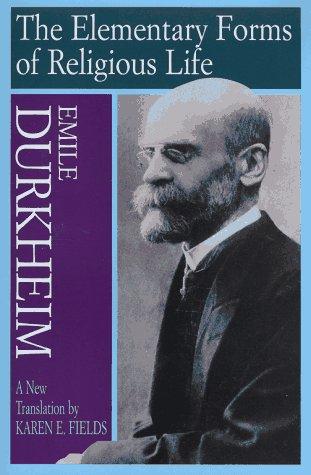
No. 33 on this list. The Elementary Forms of Religious Life
Emile Durkheim · 1912
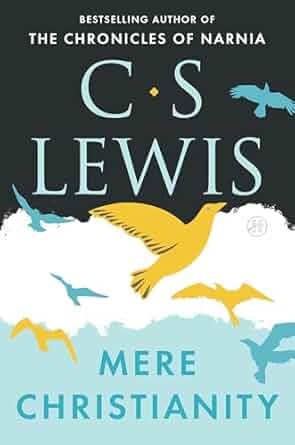
No. 34 on this list. Mere Christianity
C.S. Lewis · 1952
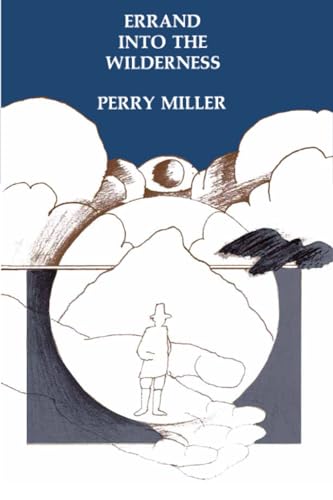
No. 35 on this list. Errand into the Wilderness
Perry Miller · 1956
No. 36 on this list. The Antichrist
Friedrich Nietzsche · 1895
No. 37 on this list. Zen Mind, Beginner's Mind
Shunryu Suzuki · 1970
No. 38 on this list. Prometheus Unbound
Percy Bysshe Shelley · 1820
No. 39 on this list. The Sandman
Neil Gaiman · 1989
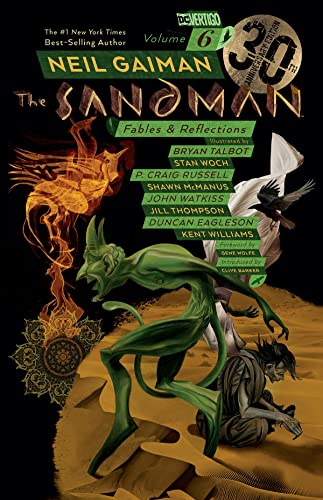
No. 40 on this list. The Sandman Vol. 6: Fables & Reflections
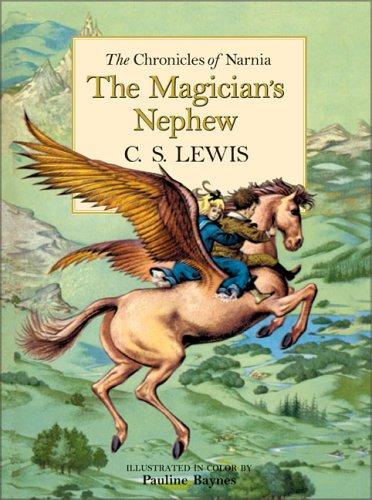
No. 41 on this list. The Magician’s Nephew
C.S. Lewis · 1955
No. 42 on this list. Ethics
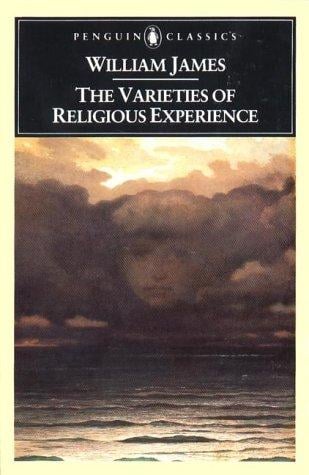
No. 43 on this list. The Varieties of Religious Experience
William James · 1902
No. 44 on this list. Hyperion
John Keats · 1818
No. 45 on this list. The Age of Reason
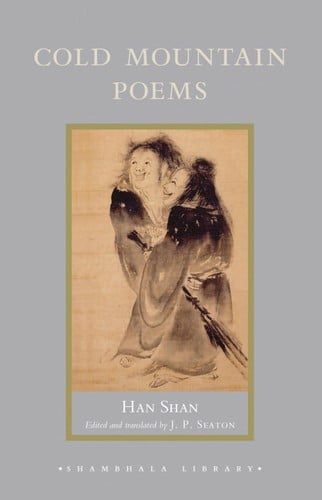
No. 46 on this list. Cold Mountain Poems
Hanshan · 800
No. 47 on this list. The Last Battle
C.S. Lewis · 1956
No. 48 on this list. The Embodied Mind
Francisco J. Varela · 1991
No. 49 on this list. The Snow Leopard
Peter Matthiessen · 1978
No. 50 on this list. Being and Having


No. 51 on this list. The Orginal I Ching Oracle
Rudolph Ritsema · 2018
No. 52 on this list. Enheduana: The Complete Poems of the World's First Author
No. 53 on this list. Jefferson Bible: The Life and Morals of Jesus of Nazareth
No. 54 on this list. THE UPANISHADS: complete 4-volume boxed set
Nikhilananda · 1959
No. 55 on this list. The Upanishads: A New Translation, 4 Volumes.
Nikhilananda · 1977
No. 56 on this list. Muhammad His Life Based on the Earliest Sources
Martin Lings · 1991
No. 57 on this list. Light on Yoga: The Definitive Guide to Yoga Practice
B.K.S. Iyengar · 2001
No. 58 on this list. The Secret of the Golden Flower by Thomas Cleary(1905-07-04)
Thomas Cleary · 2004
No. 59 on this list. The Septuagint with Apocrypha in English: The Sir Lancelot C. L. Brenton 1851 Translation
Joseph B. Lumpkin · 2015
No. 60 on this list. The Invention of Ancient Israel: The Silencing of Palestinian History
Keith W. Whitelam · 2000




No. 61 on this list. The God Delusion
Richard Dawkins · 2006
No. 62 on this list. Letters To A Spiritual Seeker
No. 63 on this list. To a Mountain in Tibet
Colin Thubron · 2011
No. 64 on this list. Islamic Reform: Politics and Social Change in Late Ottoman Syria
David Dean Commins · 1990
No. 65 on this list. The Benedict Option
Rod Dreher · 2017
No. 66 on this list. The Formation of Islam 1ed
Jonathan P. Berkey · 2003
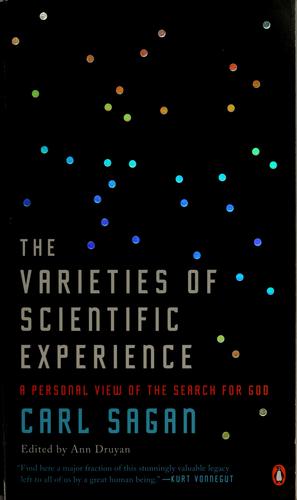
No. 67 on this list. The Varieties of Scientific Experience
Carl Sagan · 2006
No. 68 on this list. Islam View from Edge
Richard Bulliet · 1995
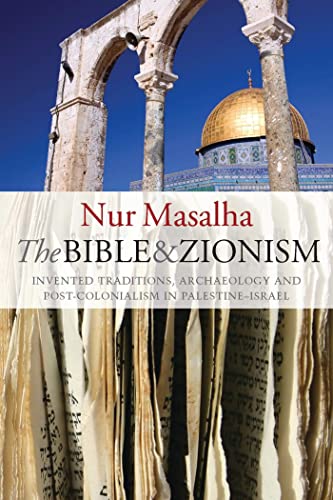
No. 69 on this list. The Bible and Zionism: Invented Traditions, Archaeology and Post-Colonialism in Palestine-Israel
Nur Masalha · 2006
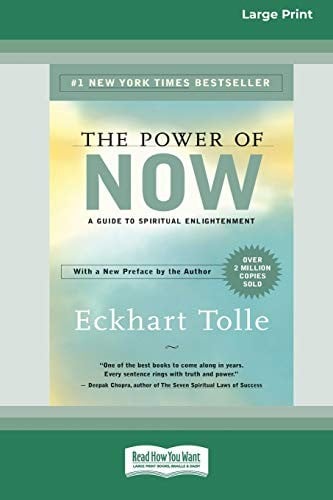
No. 70 on this list. The Power of Now: A Guide to Spiritual Enlightenment
Eckhart Tolle · 2004



No. 71 on this list. Verses of the Senior Nuns: A Translation of Therīgāthā
Bhikkhu Sujato · 2019
No. 72 on this list. The Participatory Mind: A New Theory of Knowledge and of the Universe
Henryk Skolimowski · 2019
No. 73 on this list. AS A MAN THINKETH Deluxe Collection of Five Favorite James Allen Works [Annotated & Unabridged]: Includes BONUS Entire AUDIOBOOK Narration
No. 74 on this list. How to Walk
Thích Nhất Hạnh · 2015
No. 75 on this list. The Power of Now
Eckhart Tolle · 1997
No. 76 on this list. Camp Damascus
Chuck Tingle · 2023
No. 77 on this list. Meditations for Mortals: Four Weeks to Embrace Your Limitations and Finally Make Time for What Counts
Oliver Burkeman · 2025
No. 78 on this list. The Island: An Anthology of the Buddha's Teachings on Nibbana
Ajahn Amaro · 2009
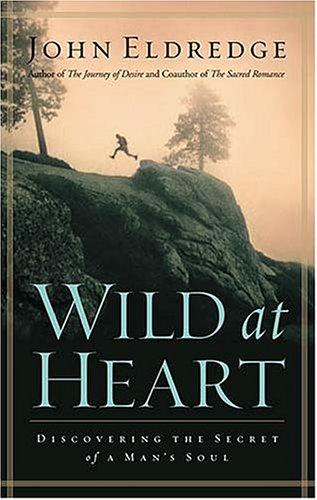
No. 79 on this list. Wild at Heart
John Eldredge · 2001
No. 80 on this list. The Fragments of Celsus
Celsus · 2018


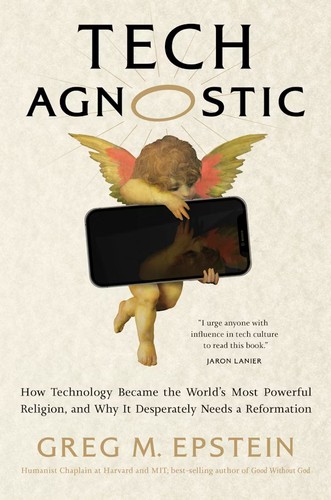
No. 81 on this list. Tech Agnostic: How Technology Became the World's Most Powerful Religion, and Why It Desperately Needs a Reformation
Greg Epstein · 2024
No. 82 on this list. Buddhism Plain & Simple
Steve Hagen · 1999
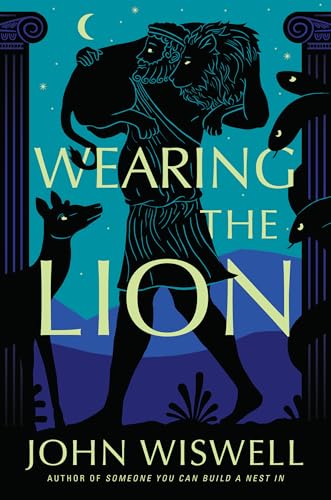
No. 83 on this list. Wearing the Lion
John Wiswell · 2025
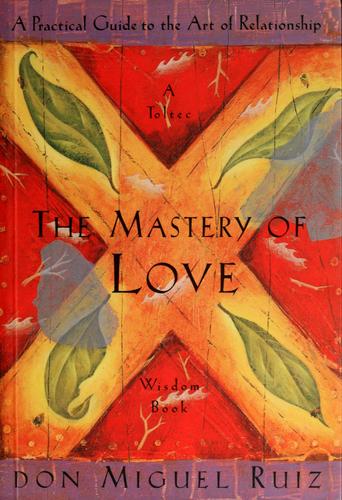
No. 84 on this list. The Mastery of Love: A Practical Guide to the Art of Relationship: A Toltec Wisdom Book
Miguel Ruiz · 2002
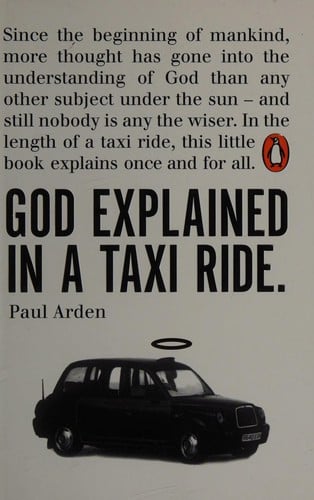
No. 85 on this list. God Explained in a Taxi Ride
Paul Arden · 2008
No. 86 on this list. A Hebrew Christian looks at Israel
Zola Levitt · 1975
About this list
These 86 books are the highest-scoring eligible books on religion and spirituality by men currently in the catalogue. About 649 hours of reading in all, for the 78 with measured lengths. Difficulty runs from 36 to 59 out of 100 for the middle half of the list; the summit is Summa Theologica at 86.
This list is ranked by literary regard, with a consistent order for equal scores. Membership follows authors and co-authors, not translators or editors. Catalogue coverage and the historical canon both limit what this list can represent, and genre labels are the catalogue’s own, gathered into broader kinds.
When we matched the Canons dataset to our catalogue in October 2026, our canonical-status scores rose with the number of school curricula, publisher series and lists in it that cite a work: the median score was 72 for books one such source cites, 84 at two, 88 at three, 92 at four and 93 at five or more. Prizes are left out of that count. Outside the state curricula, the dataset’s sources choose mostly from what has been translated into English or French, so it is a weaker check on other literatures. Source: Canons (Andrew Piper), CC BY 4.0
Questions people actually ask
- What are the best books on religion and spirituality by men?
- By literary regard, which weighs canonical status, critical standing and influence: The Portable Dante by Dante Alighieri, Summa Theologica by Thomas Aquinas, Confessions by Augustine of Hippo, Theogony by Hesiod and Ethics by Baruch Spinoza. ReadingRate ranks 86 such books, each with a difficulty score and a reading-time estimate.
- Which books on religion and spirituality by men should I read first?
- Start from difficulty, not from rank. The most approachable books on this list that still carry top literary regard are The Cost of Discipleship by Dietrich Bonhoeffer (about 3.8 hours), Theogony/Works and Days by Hesiod and The Hero with a Thousand Faces by Joseph Campbell.
- What are the shortest of the best books on religion and spirituality by men?
- Among the top 25, the shortest are Prometheus Bound by Aeschylus (about 47 min), Theogony by Hesiod (about 38 min) and Gita Govinda by Jayadeva (about 1.1 hours), at an average pace of 250 words a minute adjusted for each book's difficulty.
- Which of the best books on religion and spirituality by men are the established classics?
- By canonical status, how firmly a book sits in curricula, anthologies and the canon: Summa Theologica by Thomas Aquinas, The Portable Dante by Dante Alighieri, Confessions by Augustine of Hippo, Theogony by Hesiod and Tao Te Ching by Laozi.
- Can I read any of these books on religion and spirituality by men for free?
- 7 of the 86 open in ReadingRate's reader with a free account, from public-domain editions: Confessions, The Protestant Ethic and the Spirit of Capitalism, Tao Te Ching, Analects, Paradise Regained and 2 more.
- How long would it take to read the top ten?
- About 216 hours, at an average pace of 250 words a minute adjusted for each book's difficulty: 108 days at two hours a day. Set your own pace on the page and the list's reading times change to it.
- How hard are books on religion and spirituality by men to read?
- Most of this list sits between 36 and 59 on ReadingRate's 100-point difficulty scale, where 40 to 55 is moderate. The summit is Summa Theologica at 86. Every entry carries its own score, so a reader can pick a great book at a difficulty they will finish.
- How is this list ranked?
- On literary-regard data: how canonically established a work is, its critical standing, and its influence on later writing. It is not a readers’ poll, which is why recent bestsellers rarely appear. Membership follows authors and co-authors, not translators or editors. Lists by country, author, period, theme or difficulty keep to literature (fiction, poetry, drama and philosophy), their novels, poems and plays first and their philosophy after them; a list of a kind of book, such as memoir or criticism, keeps every book of that kind. Every list holds at most three works by one author.