Hours at an average pace
Showing 35 books
About 491 hours for 31 of 35 books with measured lengths. Estimates use 250 words a minute, adjusted for each book's difficulty. At 2 hours a day, about 246 days for those books.
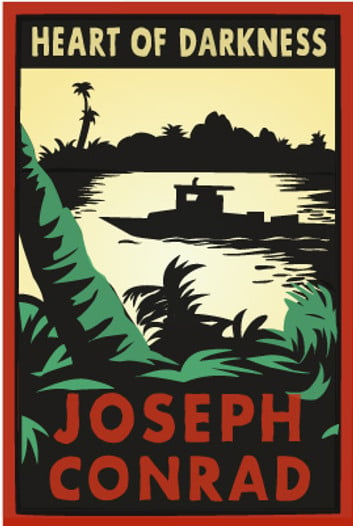
No. 1 on this list. Heart of Darkness
Joseph Conrad · 1899
Challenging3.7 hours
Taught in schools: Pacific Senior Secondary Certificate – English, Pearson Edexcel GCSE and A-level English Literature (UK)
Included in: Great Books of the Western World
Appears on 5,515 university syllabi according to Open Syllabus (93.5th percentile), placing it above The Great Gatsby in teaching frequency. Listed on the Modern Library 100 Best Novels (1998) and consistently featured on 'essential reading' lists. Wikipedia articles exist in 49 languages, reflecting global canonical reach.
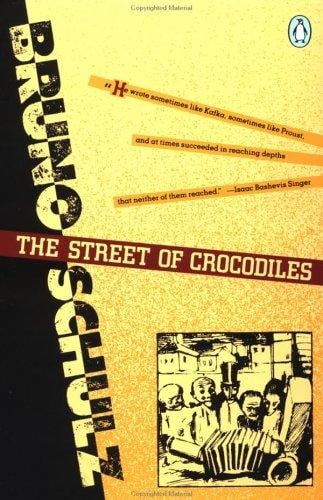
No. 2 on this list. The Street of Crocodiles
Bruno Schulz · 1934
Difficult7.1 hours
Taught in schools: Lektury obowiązkowe – Polish national reading list (Poland)
A standard text in world-literature and modernism syllabi and the central work of Polish literary modernism after Gombrowicz.
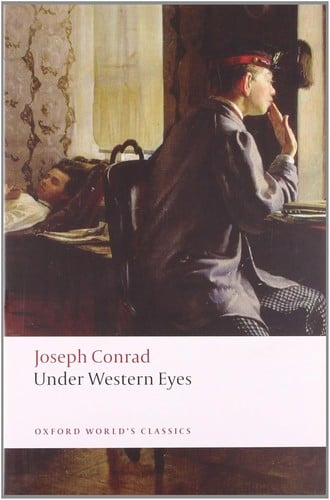
Under Western Eyes holds a secure place in the Conrad canon — studied in university courses alongside Nostromo, The Secret Agent, and Lord Jim, and consistently discussed in critical accounts of Conrad's major work. Leavis included Conrad among the great tradition of English novelists, and the novel's treatment of guilt, betrayal, and political despotism has kept it on syllabi across literature and political thought programmes. Its standing is below Heart of Darkness and Lord Jim in frequency of assignment but firmly canonical within the Conrad corpus.
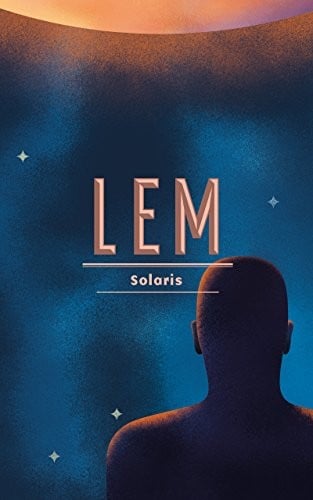
Solaris is the most canonically recognized work of Eastern European science fiction, taught in SF studies, philosophy of science, and world literature courses at universities across Europe, North America, and East Asia. Its Wikipedia article exists in over 50 languages. The Tarkovsky film adaptation (1972) cemented its cultural standing. Within speculative fiction it holds a position equivalent to Ulysses in modernist literature — the work against which all philosophical SF is measured.
Conrad's major works, especially Heart of Darkness, are staples of English and postcolonial curricula, though a bargain compilation is itself not a canonical text. The score reflects the author's core works gathered here.
Wikipedia article exists in 22 languages, indicating substantial global reach, and Krasznahorkai's 2025 Nobel Prize in Literature will accelerate institutional attention to the novel. Syllabus appearances are currently negligible — the recent Nobel has not yet translated into widespread university adoption. The novel occupies a firm place in the contemporary European literary canon without yet achieving the fixture status of earlier Nobel laureates.
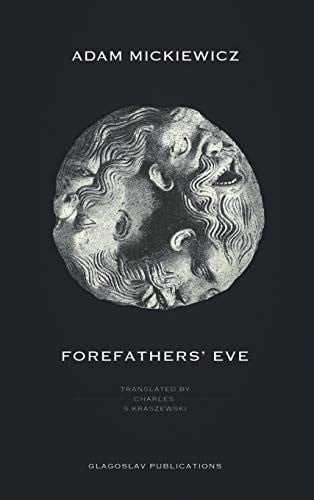
No. 7 on this list. Forefathers' Eve
Adam Mickiewicz · 1832
Difficult5.8 hours
Taught in schools: Lektury obowiązkowe – Polish national reading list (Poland)
Compulsory in Polish education and the most politically charged text in the Polish canon, though little known outside Slavic studies.
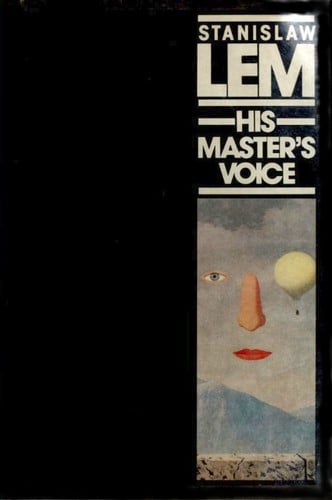
His Master's Voice holds a firm canonical position within science fiction studies and Eastern European literature curricula, though it remains outside the mainstream Western literary canon. No syllabus data appears in the database, but the novel is consistently cited in SF critical histories as one of Lem's three or four most important works alongside Solaris and The Cyberiad. It appears in translations across at least 20 languages and features on 'essential SF' lists compiled by critics, not algorithms.
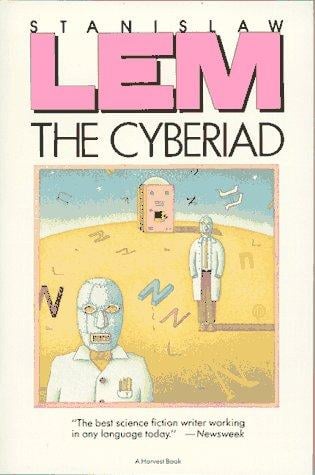
Trurl and Klapaucius are constructors — engineers of impossible things — who travel the universe building machines that write poetry, create dragons out of probability, and kidnap kings using algorithms. In the opening story, Trurl builds a machine that can make anything starting with the letter N. When it begins making Nothing — not ordinary nothing, but dynamic, aggressive Nothingness — it starts erasing the world one item at a time: the gruncheons go, then the pritons, then the zits, and the sky acquires holes that have never healed. Stanisław Lem writes fairy tales about robots, but the fairy tales are philosophical arguments in disguise. Each of the fifteen linked adventures runs a thought experiment: what happens when collective intelligence exceeds the scale at which militarism makes sense? Can a machine write great poetry if civilization wrote the poet? What does it mean to exist inside a simulation you cannot distinguish from reality? The deadpan fable narrator treats catastrophe and cosmic comedy with identical gravity, and the gap between that voice and what is actually happening is where all the meaning lives. The Cyberiad reads as slapstick adventure on the surface — Trurl escaping dungeon after dungeon with improbable ingenuity — and as philosophy underneath, where questions about consciousness, creation, and the purpose of intelligence are never resolved. Lem gives you both pleasures at once, and the math jokes are genuine.
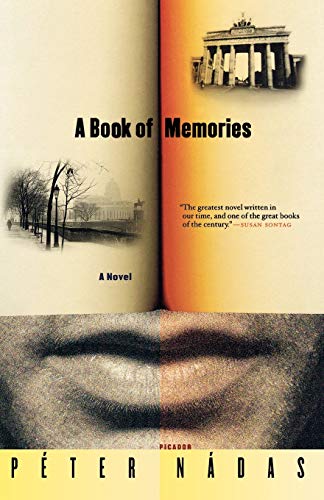
Widely regarded as one of the greatest Hungarian novels and one of the major European novels of the twentieth century. Susan Sontag called it 'the greatest novel written in our time.'
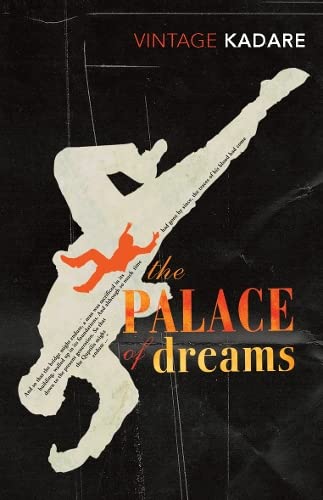
No. 11 on this list. The Palace of Dreams · Ismail Kadare · 1981
Mark-Alem Quprili wakes one morning to begin his first day at the Tabir Sarrail — the Palace of Dreams — where the Ottoman State collects, sorts, and interprets every dream dreamed by every subject across the Empire, searching for the one divine signal that might save or doom the Sultan. His family, the great Quprili dynasty that has given the Empire five Grand Viziers and as many imprisoned or decapitated members, arranged the appointment. The building swallows him whole: labyrinthine corridors, blue-green files stacked floor to ceiling, clerks bent over thousands of nightly visions from Kustendil to the European borders. Kadare wrote this novel in 1981 as allegory, the Ottoman machinery standing in for communist Albania under Enver Hoxha. The Palace of Dreams does not merely observe its citizens — it harvests their unconscious, processing the darker side of the population's inner life as raw material for state power. Mark-Alem, caught between his family's grandeur and the bureaucracy's anonymous terror, learns to alter dream interpretations to avoid culpability, to keep his head down while the system grinds. At dinner, his uncle Kurt speaks with reckless brilliance about the Tabir as the only institution where the masses make direct contact with the state. Nobody changes the subject in time. This is a Kafkaesque novel that knows exactly what it is doing with Kafka — the dreamworld is not metaphor but administrative fact, and the dread is the dread of the functionary who understands, too late, that he has become part of the machine.
Challenging5.4 hours
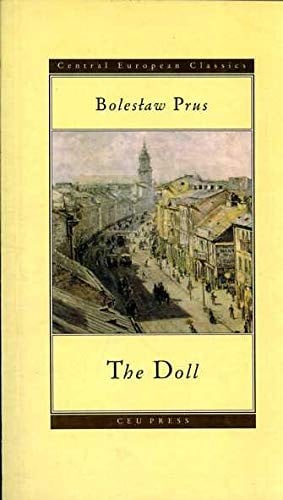
Start this bookNo. 12 on this list. The Doll · Bolesław Prus · 1890
Included in: UNESCO Collection of Representative Works
Compulsory in Polish schools and voted the greatest Polish novel in a 2015 national poll, though less known outside Central Europe.
Challenging28 hours
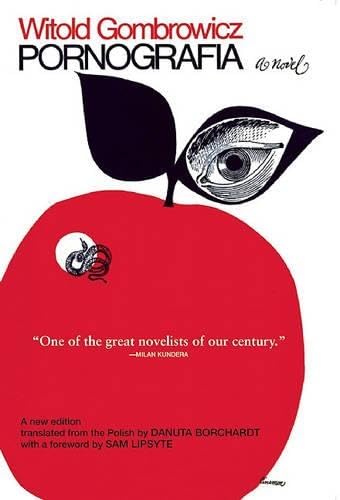
Start this bookNo. 13 on this list. Pornografia · Witold Gombrowicz · 1960
Pornografia is widely taught in European and Latin American literature courses and appears on world literature syllabi, though its presence in English-language curricula is more limited than Gombrowicz's Ferdydurke. No syllabus data was available in the database, and no Wikipedia article was indexed, but the novel is broadly recognized as a major work of 20th-century European fiction and appears on multiple 'greatest novels' lists.
Difficult6.2 hours
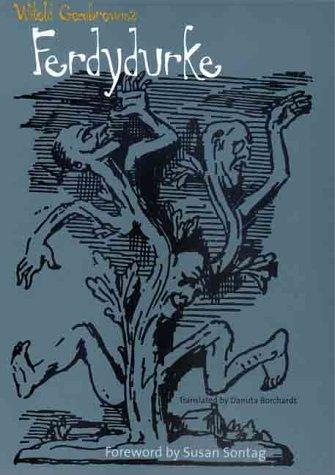
Start this bookNo. 14 on this list. Ferdydurke · Witold Gombrowicz · 1937
Taught in schools: Lektury obowiązkowe – Polish national reading list (Poland)
Ferdydurke is essential reading in Polish literature curricula and widely included in European modernism and world literature survey courses. Its English-language standing was significantly elevated by the 2000 Yale University Press translation with Susan Sontag's foreword. Less universally taught than Kafka or Borges in Anglophone institutions, but its canonical status in Eastern European and comparative literature contexts is strong.
Difficult13 hours
Start this bookNo. 15 on this list. Parallel Stories · László Nádas · 2005
Regarded as one of the major European novels of the twenty-first century, frequently compared to Proust and Musil in scope and ambition.
Challenging46 hours
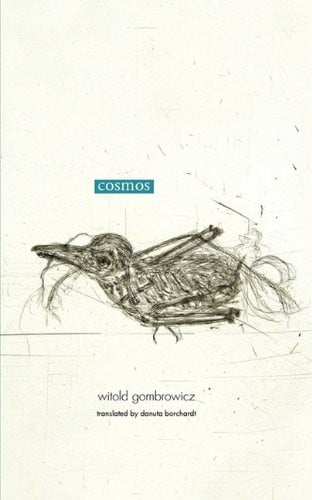
Start this bookNo. 16 on this list. Cosmos · Witold Gombrowicz · 1965
Standard in courses on the European experimental novel and central to Gombrowicz's international curricular presence.
Difficult8.9 hours
Start this bookNo. 17 on this list. Flights · Olga Tokarczuk · 2007
Flights won the International Booker Prize in 2018, placing it in the conversation for essential contemporary world literature. The Wikipedia article data appears matched to a disambiguation page (13 languages), suggesting the novel's own article has broader reach. Its experimental structure limits adoption in introductory syllabi, but it appears consistently in world literature and contemporary fiction courses at graduate level.
Challenging12 hours
Start this bookNo. 18 on this list. The Encyclopedia of the Dead · Danilo Kiš · 1983
Considered alongside A Tomb for Boris Davidovich as Kiš's two major later works; this collection was his final prose before his death in 1989. Well-established on European literature syllabi and in Eastern European literary studies. Less universally cited than Boris Davidovich internationally but arguably more emotionally resonant and formally varied. The title story is frequently anthologized as one of the great short fictions of the century.
Challenging6 hours
Start this bookNo. 19 on this list. Baron Wenckheim's Homecoming · László Krasznahorkai · 2016
Baron Wenckheim's Homecoming has not yet achieved wide syllabus presence and remains a niche text even within contemporary world literature courses. It is Krasznahorkai's final novel in a tetralogy, and while respected, it does not appear on standard reading lists. Its canonical potential rises with Krasznahorkai's 2025 Nobel Prize, but institutional adoption lags behind critical recognition.
Difficult28 hours
Start this bookNo. 20 on this list. The Trilogy · Henryk Sienkiewicz
Sienkiewicz's Trilogy (With Fire and Sword, The Deluge and Pan Michael, 1884-1888) is a pillar of Polish school reading and national culture. Outside Poland it is far less taught, and it is known chiefly through translation and film.
Difficult128 hours
Start this book
No. 21 on this list. Kaddish for an Unborn Child · Imre Kertész · 1990
Addressed to the child he will never have, a Holocaust survivor interrogates his own refusal to bring life into a world that produced Auschwitz. Kertész's philosophical monologue circles around trauma, continuity, and the ethics of existence after the camps. A devastating companion to Fatelessness.
Challenging5.1 hours
Start this bookNo. 22 on this list. The Successor · Ismail Kadare · 2003
Kadare is the pre-eminent Albanian writer and The Successor appears on world literature and comparative literature syllabi, though Albanian literature remains a niche in anglophone curricula. The novel is published by Canongate in the UK and Arcade in the US and available in over 40 language translations but does not feature heavily on large-volume English-language syllabi datasets. Its canonical status sits between 2666 (65) and Gone Girl (45) — a recognized work of international literary fiction without mass-curriculum penetration.
Difficult4.9 hours
Start this bookNo. 23 on this list. Liquidation · Imre Kertész · 2003
Liquidation is taught in Holocaust literature and Central European fiction courses, but the canonical Kertész text remains Fatelessness. Published immediately after his 2002 Nobel Prize, it received wide European attention but has not established the independent syllabus presence of his trilogy. Its standing is tied to his Nobel reputation rather than to independent canonical status.
Difficult3.4 hours
Start this bookNo. 24 on this list. The World Goes On · László Krasznahorkai · 2018
Twenty-one stories circle obsessively around decay, beauty's impossibility, and consciousness trapped in observation. The title story follows the narrator through encounters with a Japanese translator, a young Turkish woman, and various chance meetings that loop back without resolution. In 'Bankers,' an architect named Bengazza obsesses over the Acropolis while planning hotels, unable to reconcile beauty with commerce. 'Universal Theseus' presents a consciousness spiraling through philosophical speculation about ships, identity, and replacement. Krasznahorkai's sentences stretch across pages without periods, each one accumulating clauses and observations in relentless forward momentum. A recurring narrator wanders through ruined buildings, abandoned cities, and rain-soaked landscapes, cataloging deterioration while meditating on existence's futility. The prose moves through Kyoto gardens, Greek ruins, New York streets, and Magyar villages, always returning to the same questions about beauty, time, and meaning. Characters speak in monologues that blend seamlessly with the narrative voice, creating a unified consciousness that observes the world's persistence despite human understanding's failure. The collection's architecture mirrors its themes: fragments that connect through obsession rather than plot, stories that end by beginning again, a structure that embodies the eternal return its title promises.
Challenging9.8 hours
Start this bookNo. 25 on this list. The Card Index · Tadeusz Różewicz · 1960
The Card Index is a landmark of postwar Polish drama, taught in Polish literature and theatre courses and staged widely. Its place in world curricula is narrower than that of the major Western absurdists.
Challenging1.5 hours
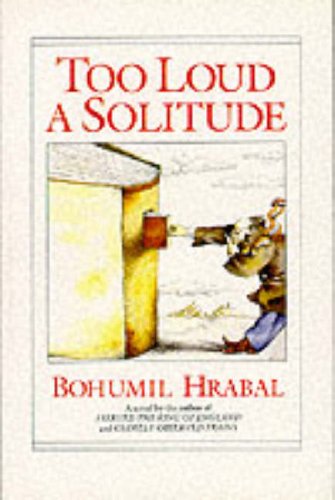
Start this bookNo. 26 on this list. Too Loud a Solitude · Bohumil Hrabal · 1976
Too Loud a Solitude is considered Hrabal's masterwork and is taught in Eastern European literature, comparative literature, and censorship-and-literature courses at the university level. No Wikipedia article was found in the database, likely a data gap: the book is widely covered in literary encyclopedias and has been translated into dozens of languages. It holds a firm place in the Central European canon but has not penetrated general Western syllabi the way Kafka's work has.
Challenging2.8 hours
Start this bookNo. 27 on this list. Meadow · Bolesław Leśmian · 1920
Leśmian is now taught as one of Poland's greatest poets, but this second collection sits behind his later Napój cienisty in the canon. It is read mainly in Polish literature and Symbolist-period courses.
Challenging
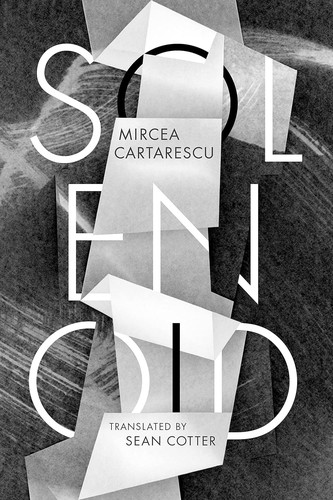
Start this bookNo. 28 on this list. Solenoid · Mircea Cărtărescu · 2025
Published in Romanian in 2015 and translated into English in 2022, Solenoid has rapidly established itself as a major work of contemporary European literature. It appears on international prize shortlists and receives serious critical attention in major literary publications. However, its canonical status is still emerging—it lacks the decades of academic institutionalization that defines established canonical works. Its inclusion in global literary conversations is growing as translations reach wider audiences, positioning it as a likely candidate for future canonical status.
Challenging22 hours
Start this bookNo. 29 on this list. The Books of Jacob · Olga Tokarczuk · 2014
Appears on 12 university syllabi so far (27th percentile) and has a Wikipedia article in 11 languages — modest numbers that reflect how recently the English translation arrived (2021) rather than a lack of stature. Its Nobel-winning author and 2022 International Booker win are already pulling it onto world-literature syllabi.
Challenging32 hours
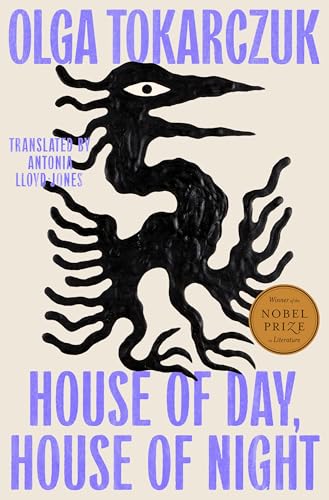
Start this bookNo. 30 on this list. House of Day, House of Night · Olga Tokarczuk · 1998
Appears on 8 university syllabi (22.5th percentile) and has a Wikipedia article in 6 languages with a reception section — modest reach for this specific title. Tokarczuk's Nobel Prize (2018) has elevated her entire body of work, but House of Day, House of Night remains less taught than Flights or Drive Your Plow. It sits in the tier of significant Nobel-author works that specialists read rather than general curriculum fixtures.
Difficult11 hours
Start this book
No. 31 on this list. Birthday
Weronika Murek · 2026
No. 32 on this list. Myśliwice, Myśliwice
Krzysztof Bartnicki · 2022
No. 33 on this list. there is such a little horse
Wojciech Kopeć · 2024
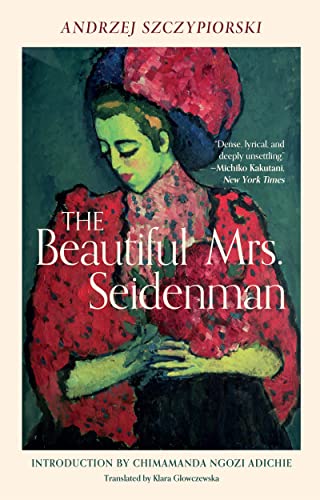
No. 34 on this list. The Beautiful Mrs. Seidenman
Andrzej Szczypiorski · 1986
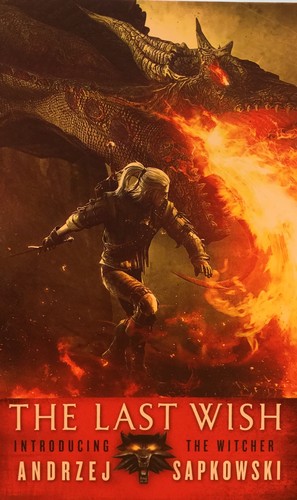
No. 35 on this list. The Last Wish
Andrzej Sapkowski · 1993
About this list
These 35 books are the highest-scoring eligible challenging books from Eastern Europe currently in the catalogue. About 491 hours of reading in all, for the 31 with measured lengths. Difficulty runs from 67 to 75 out of 100 for the middle half of the list; the summit is Cosmos at 82.
This list is ranked by literary regard, with a consistent order for equal scores. Membership follows authors and co-authors, not translators or editors. A book is here when ReadingRate files it under Eastern European Literature as one of its primary reading domains. Catalogue coverage and the historical canon both limit what this list can represent.
When we matched the Canons dataset to our catalogue in October 2026, our canonical-status scores rose with the number of school curricula, publisher series and lists in it that cite a work: the median score was 72 for books one such source cites, 84 at two, 88 at three, 92 at four and 93 at five or more. Prizes are left out of that count. Outside the state curricula, the dataset’s sources choose mostly from what has been translated into English or French, so it is a weaker check on other literatures. Source: Canons (Andrew Piper), CC BY 4.0
Questions people actually ask
- What are the best challenging books from Eastern Europe?
- By literary regard, which weighs canonical status, critical standing and influence: Heart of Darkness by Joseph Conrad, The Street of Crocodiles by Bruno Schulz, Under Western Eyes by Joseph Conrad, Solaris by Stanisław Lem and Joseph Conrad: The Complete Collection by Joseph Conrad. ReadingRate ranks 35 such books, each with a difficulty score and a reading-time estimate.
- Which challenging books from Eastern Europe should I read first?
- Start from difficulty, not from rank. The most approachable books on this list that still carry top literary regard are The Palace of Dreams by Ismail Kadare (about 5.4 hours), The Doll by Bolesław Prus and Flights by Olga Tokarczuk.
- What are the shortest of the best challenging books from Eastern Europe?
- Among the top 25, the shortest are The Card Index by Tadeusz Różewicz (about 1.5 hours), Liquidation by Imre Kertész (about 3.4 hours) and Heart of Darkness by Joseph Conrad (about 3.7 hours), at an average pace of 250 words a minute adjusted for each book's difficulty.
- Which of the best challenging books from Eastern Europe are the established classics?
- By canonical status, how firmly a book sits in curricula, anthologies and the canon: Heart of Darkness by Joseph Conrad, Forefathers' Eve by Adam Mickiewicz, The Doll by Bolesław Prus, The Street of Crocodiles by Bruno Schulz and Under Western Eyes by Joseph Conrad.
- Can I read any of these challenging books from Eastern Europe for free?
- 1 of the 35 opens in ReadingRate's reader with a free account, from public-domain editions: Heart of Darkness.
- How long would it take to read the top ten?
- About 94 hours for the 9 with measured lengths, at an average pace of 250 words a minute adjusted for each book's difficulty: 47 days at two hours a day. Set your own pace on the page and the list's reading times change to it.
- How hard are challenging books from Eastern Europe to read?
- Most of this list sits between 67 and 75 on ReadingRate's 100-point difficulty scale, where 40 to 55 is moderate. The summit is Cosmos at 82. Every entry carries its own score, so a reader can pick a great book at a difficulty they will finish.
- How is this list ranked?
- On literary-regard data: how canonically established a work is, its critical standing, and its influence on later writing. It is not a readers’ poll, which is why recent bestsellers rarely appear. Membership follows authors and co-authors, not translators or editors. Lists by country, author, period, theme or difficulty keep to literature: fiction, poetry and drama, with no philosophy, criticism or theory. A list of a kind of book, such as philosophy, memoir or criticism, keeps every book of that kind. Every list holds at most three works by one author. A book is here when ReadingRate files it under Eastern European Literature as one of its primary reading domains.