Hours at an average pace
Showing 35 books
About 233 hours for 35 of 35 books with measured lengths. Estimates use 250 words a minute, adjusted for each book's difficulty. At 2 hours a day, about 117 days for those books.
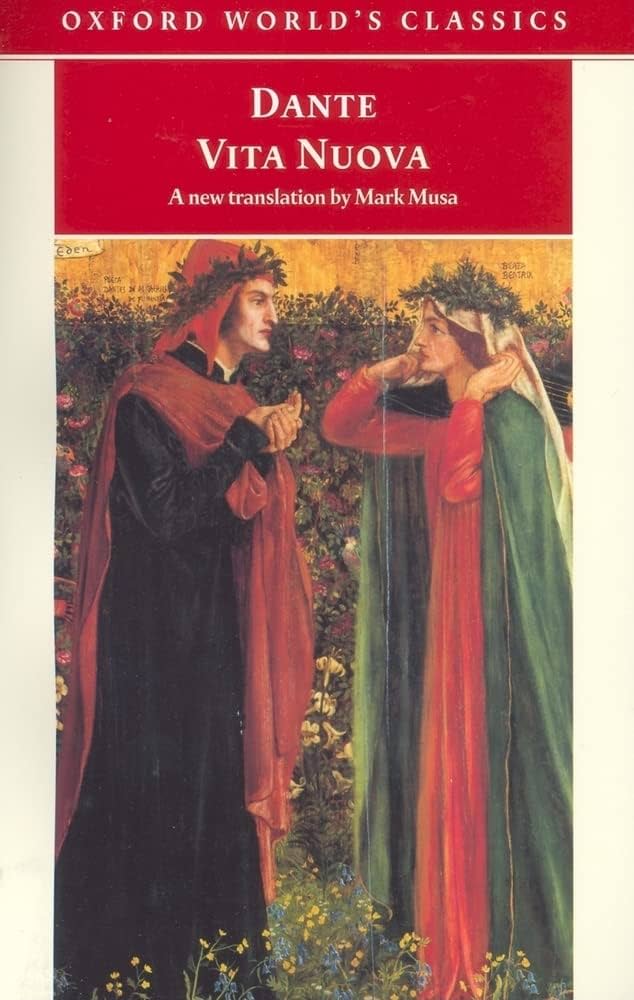
Vita Nuova is taught in virtually every medieval Italian literature program worldwide and appears in most comparative literature and Romance philology curricula. It is the foundational text of the dolce stil novo movement and the biographical prologue to the Divine Comedy, one of the most studied works in Western literary history. Wikipedia entries exist in more than 80 languages, and the work has been continuously in print and commentary since Boccaccio's 14th-century biography of Dante.
No. 2 on this list. The Decameron
Giovanni Boccaccio · 1353
Moderate20 hours
Included in: Bokklubben World Library
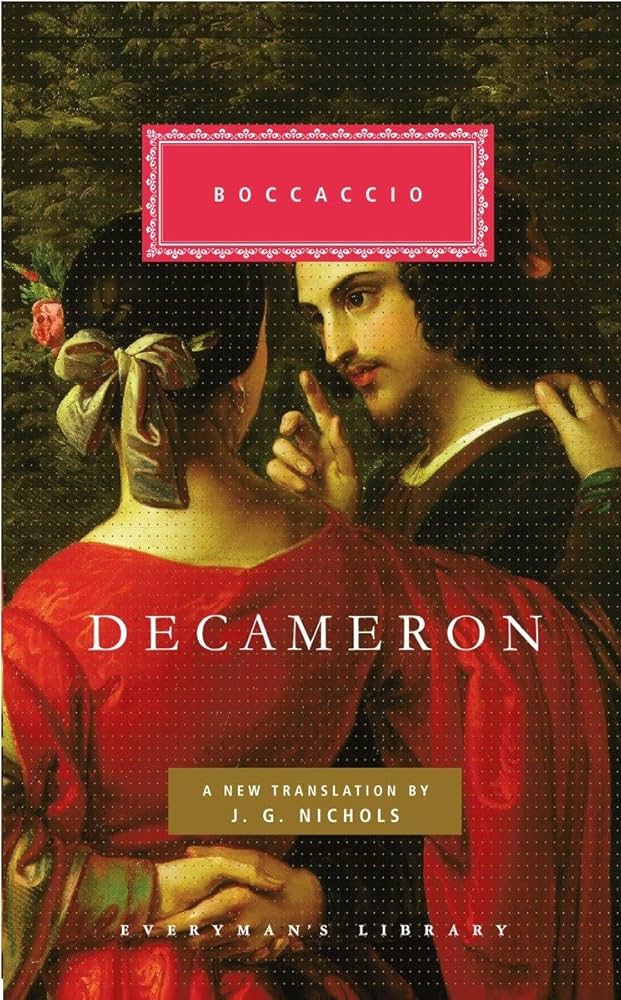
Ten young Florentines flee the Black Death and tell a hundred stories—bawdy, tragic, satirical—that give prose fiction its first great architecture. Chaucer borrowed from it, and the frame-narrative technique Boccaccio perfected here became the scaffolding for centuries of European storytelling.
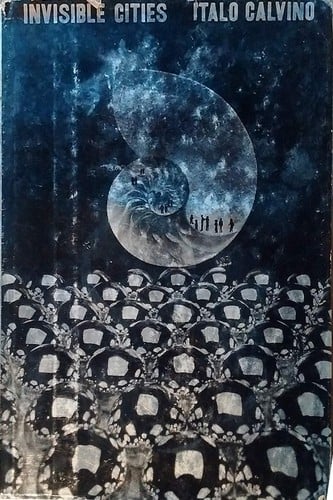
Marco Polo sits before Kublai Khan and describes cities he has visited — or perhaps invented. Despina can be approached by land or by sea, and looks entirely different depending on which direction you come from. Valdrada was built above a lake so that every action of its inhabitants would be doubled in the water below; the city and its mirror have learned to hate each other. Zobeide was constructed by men who all dreamed the same woman and built a city to trap her, but the woman never appeared. Calvino arranges 55 such cities across 11 categories — Cities & Memory, Cities & Desire, Thin Cities — in a mathematical grid that wears the clothing of fiction. The cities are not places. They are states of mind, arguments about time and loss, meditations on the difference between a map and the territory it claims to represent. Between the vignettes, Marco Polo and the Khan conduct dialogues about language, empire, and whether it is possible to describe anything that exists. The prose is precise and dreaming at once — a short paragraph can hold more compressed thought than a chapter of conventional fiction. This is a book that accumulates rather than progresses, and what it accumulates is a complete philosophy of how cities, and perhaps consciousness itself, work.
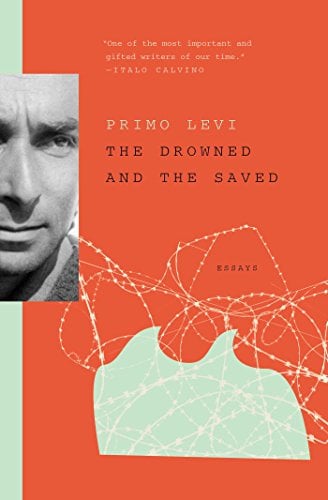
Taught widely in Holocaust studies, memory studies, ethics, and comparative literature courses at universities across Europe, North America, and Israel. Levi's concept of 'the gray zone' has become standard vocabulary in moral philosophy curricula. While the database returned no syllabus count, the book's standing as essential reading in its field is well established across decades of academic discourse.
A fixture on world-literature and modern-European syllabi, in print in Everyman's and Vintage Classics, and the standard text for the Risorgimento in literature courses. Visconti's 1963 film, Palme d'Or winner, kept it in general circulation.
No. 6 on this list. Orlando Furioso
Ludovico Ariosto · 1516
Challenging22 hours
Taught in schools: UNAM Escuela Nacional Preparatoria – programas de Literatura (Mexico)
Orlando Furioso stands as one of the defining works of Italian Renaissance literature, a fixture in Italian university curricula and comparative literature courses worldwide. Its influence on Spenser, Milton, Shakespeare, Cervantes, and Voltaire makes it indispensable to the study of early modern literature. While less taught in English-language universities than Greek and Roman epic, it appears on virtually every world literature and Renaissance literature syllabus.
I Promessi Sposi is the foundational novel of Italian literature, required reading in every Italian school for over 150 years. It appears on syllabi worldwide in Italian literature, European Romanticism, and world literature courses. Wikipedia articles exist in over 60 languages, and it is consistently cited as the single most important work of Italian prose fiction.
Widely taught in comparative literature and semiotics courses; appears on numerous 'greatest novels' lists (Le Monde's 100, Guardian's 100 Best Novels); studied as exemplar of postmodern historical fiction. Translated into over 50 languages with millions of copies sold.
Mr. Palomar appears on comparative literature and Italian literature syllabi globally, though less frequently than Invisible Cities or Calvino's earlier work. It features on specialist lists of postmodern fiction and philosophical novels, and is cited among Calvino's major works in virtually every critical study of his career. Its canonical standing is strong within literary circles but narrower than the author's most-taught titles.
A core text of Renaissance studies and of the history of manners, taught alongside Machiavelli's Prince as its courtly counterpart, and continuously in print from Penguin Classics and Norton.
No. 11 on this list. The Day of the Owl · Leonardo Sciascia · 1961
The standard first text on the Mafia in literature, taught in Italian and comparative crime-fiction courses, and continuously in print in NYRB Classics and Granta editions.
Challenging3.5 hours
Start this bookNo. 12 on this list. The Autobiography of Benvenuto Cellini · Benvenuto Cellini
The standard primary source for Renaissance workshop practice and patronage, assigned in art-history, Renaissance-studies and life-writing courses, and continuously in print from Penguin Classics and Oxford World's Classics.
Moderate10 hours
Start this bookNo. 13 on this list. The House by the Medlar Tree · Giovanni Verga · 1881
Widely taught in Italian literature and comparative literature courses internationally, 'I Malavoglia' is foundational to understanding Italian verismo and the development of the modern Italian novel. It appears prominently in European literature curricula and is consistently cited in 'essential works of world literature' lists. Less prominent in Anglophone syllabi than in Italian and continental European programs.
Challenging6.2 hours
Start this bookNo. 14 on this list. The Garden of the Finzi-Continis · Giorgio Bassani · 1962
A standard text on Holocaust-literature and modern-Italian syllabi, in Penguin Modern Classics and Everyman's, and included in 1001 Books You Must Read Before You Die.
Challenging6 hours
Start this bookNo. 15 on this list. Christ Stopped at Eboli · Carlo Levi · 1945
The founding text of Italy's postwar debate on the South, standard in Italian-studies and anthropology courses, and kept in print by Penguin Classics and FSG.
Moderate6.3 hours
Start this bookNo. 16 on this list. Those Who Leave and Those Who Stay · Elena Ferrante · 2013
The Neapolitan Novels have become required reading in contemporary fiction and world literature courses across Europe and North America, and the series as a whole appears on hundreds of university syllabi. This third volume is less commonly assigned as a standalone text than the series opener, but no major literary conversation about contemporary Italian fiction or female friendship narratives omits it. The series' Wikipedia presence spans 30+ languages, signaling genuine global reach.
Challenging12 hours
Start this bookNo. 17 on this list. The Cloven Viscount · Italo Calvino · 1952
Widely taught as the entry point to Calvino and to modern fable, in print in Vintage and Penguin as part of Our Ancestors, and a fixture of Italian school reading.
Challenging2.1 hours
Start this bookNo. 18 on this list. The Conformist · Alberto Moravia · 1951
Standard on courses about literature and fascism, in print in NYRB and Penguin editions, and included in 1001 Books You Must Read Before You Die.
Challenging7.2 hours
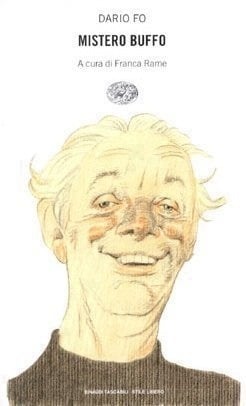
Start this bookNo. 19 on this list. Mistero Buffo · Dario Fo · 1969
With 131 syllabus appearances at the 52.9th percentile, Mistero Buffo is a genuine course text in theatre, Italian literature, and political drama curricula, though not a universal fixture. Wikipedia coverage in 9 languages signals regional rather than global canonical reach. The work is widely taught in Italian theatre contexts and European political performance courses but does not occupy the same stratum as Beckett's Waiting for Godot or Brecht's The Caucasian Chalk Circle internationally.
Challenging4.8 hours
Start this bookNo. 20 on this list. Pereira Maintains · Antonio Tabucchi · 1994
A fixture of contemporary Italian syllabi and of courses on literature under dictatorship, in print in Canongate and NYRB-adjacent editions in a dozen languages.
Challenging3.6 hours
Start this book
No. 21 on this list. The Tartar Steppe · Dino Buzzati · 1940
Il deserto dei Tartari is 29th on Le Monde's 100 Books of the Century, with Wikipedia articles in 27 languages and an NYRB Classics edition. It is taught in Italian and European literature courses.
Challenging5.8 hours
Start this bookNo. 22 on this list. Bread and Wine · Ignazio Silone · 1936
A standard text on anti-fascist literature and political-fiction syllabi, translated into more than forty languages and long a staple of European secondary curricula.
Challenging8.5 hours
Start this bookNo. 23 on this list. The Ballad of the Salty Sea · Hugo Pratt · 1967
Una ballata del mare salato is on Le Monde's 100 Books of the Century and is regarded as a founding work of the European graphic novel. Academic attention is concentrated in comics studies.
Moderate1 hours
Start this bookNo. 24 on this list. Convivio · Dante Alighieri · 1307
Important for Dante scholars and historians of Italian philosophy, but rarely read outside academic contexts.
Challenging5.2 hours
Start this bookNo. 25 on this list. Two Women · Alberto Moravia · 1957
Included in the 1001 Books list and taught in courses on Italian neorealism and the literature of the Second World War. It is less studied than The Time of Indifference or The Conformist.
Moderate6.3 hours
Start this bookNo. 26 on this list. The Days of Abandonment · Elena Ferrante · 2002
Recognized as one of Ferrante's finest novels, widely taught and discussed. Sometimes overshadowed by the Neapolitan Quartet but valued by critics as her most concentrated work.
Challenging4.9 hours
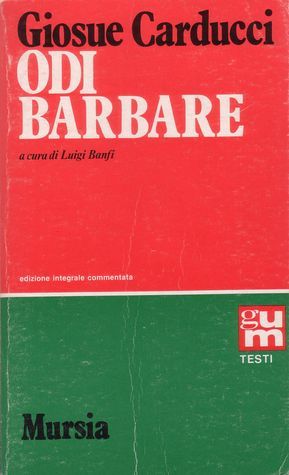
Start this bookNo. 27 on this list. Odi barbare · Giosuè Carducci · 1877
Odi barbare appears on 26 university syllabi according to Open Syllabus, placing it at the 35th percentile — a solid presence in Italian literature courses but far from the most-taught works globally. Within Italy, the collection holds a secure place in the literary canon as Carducci's masterwork and a landmark of post-Unification poetry. Outside Italian departments, however, it is rarely assigned, limited by its deep embeddedness in Italian language, metrics, and national history.
Challenging1 hours
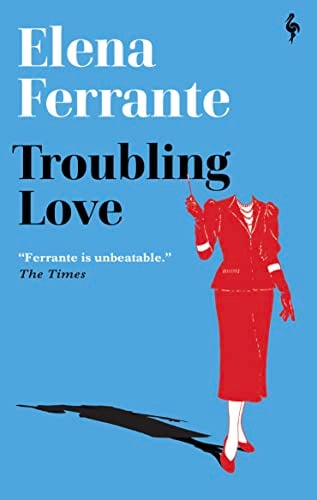
Start this bookNo. 28 on this list. Troubling Love · Elena Ferrante · 1992
Troubling Love is Ferrante's debut novel and appears on graduate and undergraduate syllabi in Italian literature, women's writing, and contemporary European fiction courses, though it has not achieved the curriculum fixture status of the Neapolitan Quartet. No syllabus data is available in the database, but the novel's critical reputation positions it well above genre fiction. It is essential reading for students of Ferrante but has not yet entered the broadest canonical consensus.
Challenging4.1 hours
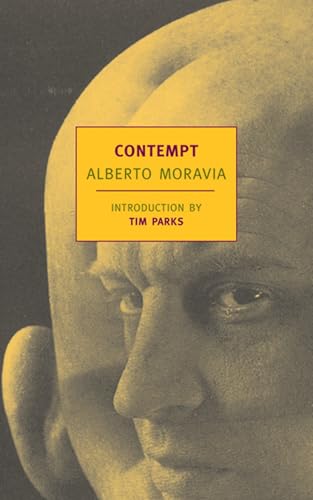
Start this bookNo. 29 on this list. Contempt · Alberto Moravia · 1954
Il disprezzo is on Le Monde's 100 Books of the Century and in print as an NYRB Classic, with Wikipedia articles in 29 languages. It is taught in Italian literature courses and, more often, alongside Godard's film.
Moderate3.7 hours
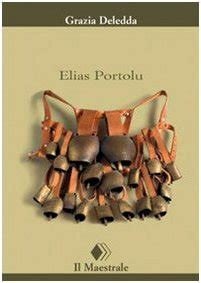
Start this bookNo. 30 on this list. Elias Portolu · Grazia Deledda · 1903
Elias Portolu is taught in Italian literature and world literature courses, particularly where Grazia Deledda's Nobel Prize draws attention. Its canonical status outside Italian-speaking contexts is limited — no syllabus data was found in the Open Syllabus Project, and no Wikipedia article was detected, suggesting it remains a specialist text rather than a global curriculum fixture.
Challenging3.5 hours
Read now
About this list
These 35 books are the highest-scoring eligible moderately difficult books in Italian currently in the catalogue. By literary regard, it opens with Vita Nuova, The Decameron and Invisible Cities. About 233 hours of reading in all. Difficulty runs from 54 to 61 out of 100 for the middle half of the list; the summit is The Leopard at 64.
This list is ranked by literary regard, with a consistent order for equal scores. Membership follows authors and co-authors, not translators or editors. Catalogue coverage and the historical canon both limit what this list can represent.
When we matched the Canons dataset to our catalogue in October 2026, our canonical-status scores rose with the number of school curricula, publisher series and lists in it that cite a work: the median score was 72 for books one such source cites, 84 at two, 88 at three, 92 at four and 93 at five or more. Prizes are left out of that count. Outside the state curricula, the dataset’s sources choose mostly from what has been translated into English or French, so it is a weaker check on other literatures. Source: Canons (Andrew Piper), CC BY 4.0
Questions people actually ask
- What are the best moderately difficult books in Italian?
- By literary regard, which weighs canonical status, critical standing and influence, Vita Nuova, The Decameron, Invisible Cities, The Drowned and the Saved and The Leopard lead. ReadingRate ranks 35 such books, each with a difficulty score and a reading-time estimate.
- Where should I start with moderately difficult books in Italian?
- Start from difficulty, not from rank. The most approachable books on this list that still carry top literary regard are The Decameron by Giovanni Boccaccio (about 20 hours), Vita Nuova by Dante Alighieri and Mr. Palomar by Italo Calvino.
- How hard are moderately difficult books in Italian to read?
- Most of this list sits between 54 and 61 on ReadingRate's 100-point difficulty scale, where 40 to 55 is moderate. The summit is The Leopard at 64. Every entry carries its own score, so a reader can pick a great book at a difficulty they will finish.
- How is this list ranked?
- On literary-regard data: how canonically established a work is, its critical standing, and its influence on later writing. It is not a readers’ poll, which is why recent bestsellers rarely appear. Membership follows authors and co-authors, not translators or editors. A list that is not a genre list keeps to literature (fiction, poetry, drama and philosophy), with philosophy taking no more than one slot in five while there is literature left to rank; every list holds at most three works by one author.