Hours at an average pace
Showing 30 books
About 277 hours for 30 of 30 books with measured lengths. Estimates use 250 words a minute, adjusted for each book's difficulty. At 2 hours a day, about 139 days for those books.
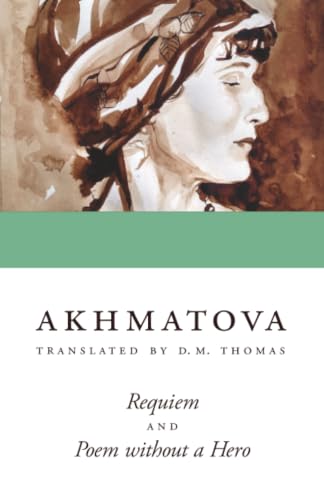
No. 1 on this list. Requiem
Anna Akhmatova · 1963
Difficult1.5 hours
Taught in schools: Russian FGOS literature standard
Requiem appears on syllabi in virtually every university course covering 20th-century Russian literature, genocide and testimony studies, and modernist poetry globally. Akhmatova's Wikipedia entry exists in over 80 languages. The work is consistently listed among the defining literary documents of Stalinist terror alongside Solzhenitsyn's Gulag Archipelago and Nadezhda Mandelstam's memoirs. It has been continuously in print since its 1987 Soviet publication and in Western translation since 1964.
Requiem and Poem Without a Hero are canonical texts of 20th-century Russian literature and essential documents of Stalinist-era witness poetry — required reading in Russian literature courses worldwide. No database records appear for this English translation's syllabus presence, but the works are universally taught in courses on Soviet literature, women's writing, and poetry of witness. The Wikipedia absence in this database likely reflects a data gap rather than actual obscurity: Akhmatova's works are foundational to Russian studies curricula.
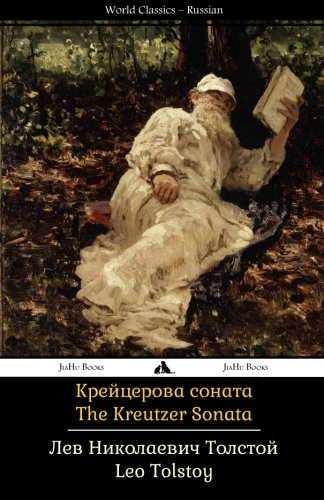
The Kreutzer Sonata holds a firm place in university curricula for Russian literature, world literature, and gender studies courses. While less taught than Anna Karenina or War and Peace, it appears consistently as required reading in Tolstoy surveys and 19th-century European fiction courses. Its inclusion in countless 'essential Tolstoy' and world literature reading lists reflects its canonical standing.
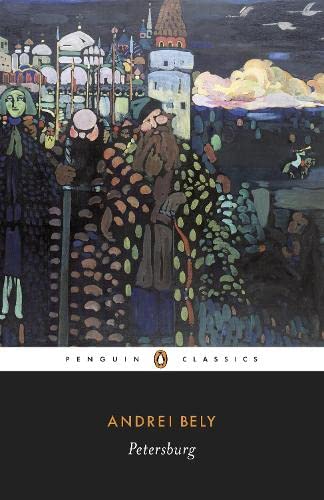
Vladimir Nabokov named Petersburg one of the four greatest novels of the twentieth century, alongside Ulysses, Kafka's The Metamorphosis, and In Search of Lost Time. It is foundational to university syllabi in Slavic studies and comparative modernism globally, and appears on major world literature lists. Its canonical standing is high within literary circles and academia, though it reaches fewer general curricula than English-language modernist counterparts.
The Twelve is the central poem of the Russian Revolution and is taught in Russian and world literature courses on Symbolism and the Silver Age. It is a standard text, though less widely taught in the West than the great novels.
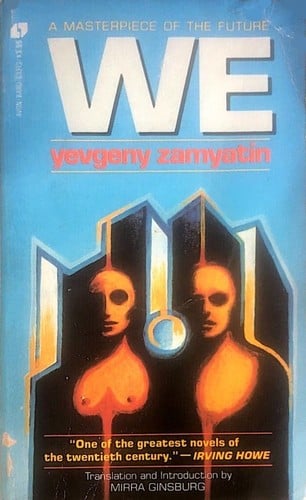
No. 6 on this list. We
Yevgeny Zamyatin · 1924
Challenging5.9 hours
Taught in schools: Russian FGOS literature standard
We is recognized as the founding text of the dystopian novel genre, directly influencing Aldous Huxley's Brave New World and, through Orwell's own acknowledgment, 1984. It appears regularly in syllabi covering 20th-century fiction, dystopian literature, and Russian modernism. Despite suppression in the Soviet Union for decades, the novel has been widely republished in prestige editions and is considered essential reading in comparative literature courses.
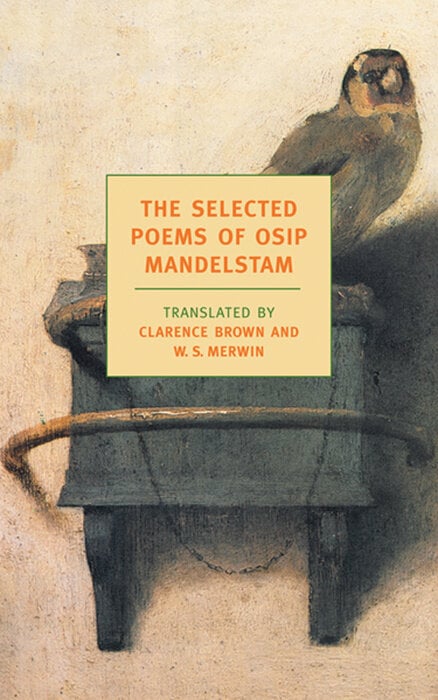
Mandelstam's poetry is taught in world literature and comparative modernism courses globally, and he appears in virtually every anthology of 20th-century poetry. This specific 2022 bilingual edition by Ian Probstein (Academic Studies Press) is a scholarly translation with narrower syllabus presence than the poet's overall reputation warrants. The work as an anthology of Mandelstam's selected poems sits at the center of the Russian modernist canon.
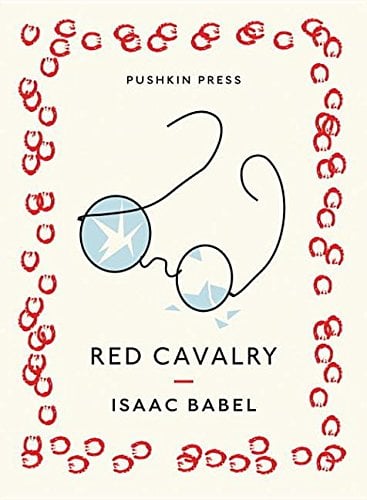
Isaac Babel spent six weeks riding with Budyonny's First Cavalry Army during the 1920 Polish-Soviet War and came back with thirty-five stories that read like dispatches from a world being destroyed while it still believes itself alive. The narrator, Lyutov — a bespectacled Jewish intellectual from Odessa — rides with Cossacks who slaughter without hesitation and then sleep soundly, and he watches them with a hunger he never admits and a horror he never names. In 'My First Goose,' Lyutov kills a goose to prove himself worthy of his billet; the act costs him something the story refuses to specify. In 'The Rabbi's Son,' a young Hasidic revolutionary dies clutching manuscripts of Hebrew poetry alongside Communist pamphlets. Babel writes in sentences so compressed they feel pressurized — the lyrical and the brutal occupy the same clause without canceling each other out. A dying horse, a looted synagogue, a father shot by his son: each image arrives exact and then Babel moves on, leaving the weight for the reader to carry. The collection refuses to resolve whether the revolution justified its violence, whether Lyutov ever earned his place among the Cossacks, or whether the Jewish civilization being trampled deserved to survive. Babel was arrested in 1939 and shot in 1940. These stories are what he left.
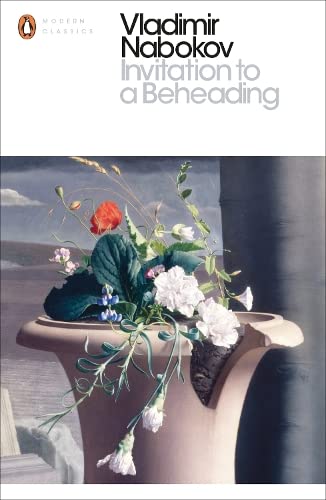
Invitation to a Beheading is consistently included in surveys of essential 20th-century European fiction and appears in Russian literature and modernist fiction courses worldwide. It features on Modern Library's lists and is considered one of Nabokov's major pre-American works; while less universally assigned than Lolita or Pale Fire, it is firmly inside the literary canon's second tier.
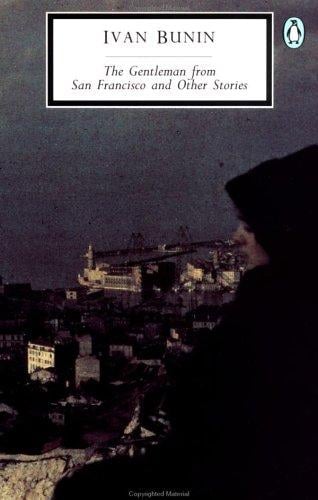
No. 10 on this list. The Gentleman from San Francisco
Ivan Bunin · 1915
Challenging55 min
Taught in schools: Russian FGOS literature standard
Widely anthologized in world literature and modern short fiction courses; appears alongside Chekhov, Mann's 'Death in Venice,' and Conrad in comparative literature syllabi internationally. The story is a fixture of Russian literature curricula and appears in major English-language world literature anthologies (Norton, Penguin Classics). Not at the mass-curriculum level of Hamlet or Gatsby but firmly positioned as essential reading in its genre.
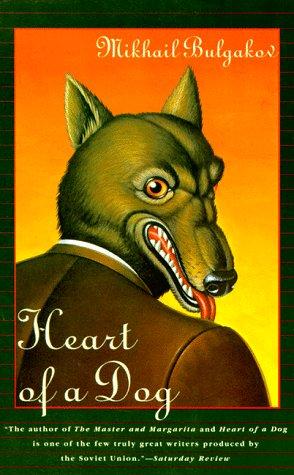
No. 11 on this list. Heart of a Dog · Mikhail Bulgakov · 1925
Heart of a Dog is a fixture in world literature and Russian literature courses at universities across Europe, North America, and beyond. Suppressed in the Soviet Union until 1987, its belated publication intensified its canonical status as an essential document of Soviet-era dissent. It appears in dozens of Wikipedia languages and on syllabi covering 20th-century European fiction and political satire.
Difficult3.8 hours
Start this bookNo. 12 on this list. Cancer Ward · Aleksandr Solzhenitsyn · 1968
Appears on 73 university syllabi (46.58th percentile), indicating solid but not widespread adoption in curricula. With Wikipedia articles in 18 languages and a 18,714-character article, it has meaningful international recognition but falls well below the canonical tier occupied by works like The Trial or Beloved. It is taught in Soviet literature and 20th-century world literature courses but is not a fixture in general humanities programs.
Difficult22 hours
Start this bookNo. 13 on this list. The Slynx · Tatyana Tolstaya · 2000
The Slynx is a significant work in contemporary Russian literature and has been translated into over a dozen languages. It appears in courses on post-Soviet fiction, Russian satire, and dystopian literature but has not achieved the wide curricular presence of classics. In Russia, its reception has been mixed — praised by some as the most important Russian novel of the post-Soviet era, critiqued by others as too familiar in its anti-utopian framework. Its canonical status is still consolidating two decades after publication.
Very Difficult16 hours
Start this bookNo. 14 on this list. The History of a Town · Mikhail Saltykov-Shchedrin · 1870
It is the central satirical text of Russian literature and a staple of Russian curricula. Outside Russia it is taught mainly in Russian-literature courses.
Challenging7.9 hours
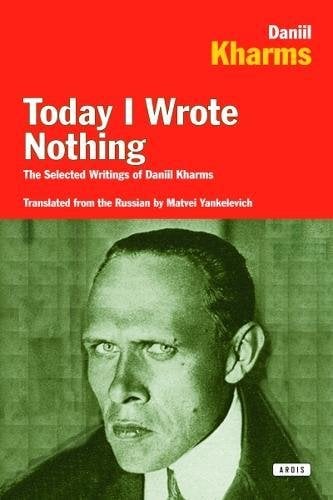
Start this bookNo. 15 on this list. Today I Wrote Nothing · Daniil Kharms
Kharms appears on university syllabi in Russian literature, 20th-century avant-garde, and experimental fiction courses, though not as widely as canonical Soviet-era figures. No syllabus data was returned for this specific anthology. His work has entered secondary anthologies of world literature and avant-garde studies, securing a specialized but not mainstream canonical position.
Difficult6.6 hours
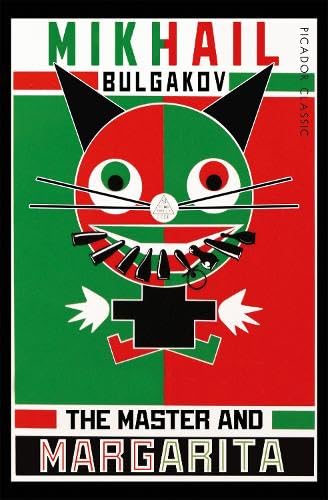
Start this bookNo. 16 on this list. The Master and Margarita · Mikhail Bulgakov · 1967
Taught in schools: Hungarian literature curriculum (magyar nyelv és irodalom) (Hungary), Lektury obowiązkowe – Polish national reading list (Poland), Lithuanian literature curriculum (lietuvių kalba ir literatūra)
Le Monde 100 Books of the Century, Penguin Modern Classics, NYRB Classics, Open Syllabus Top 500. Widely taught in university literature courses worldwide; central to Russian and world literature curricula.
Difficult17 hours
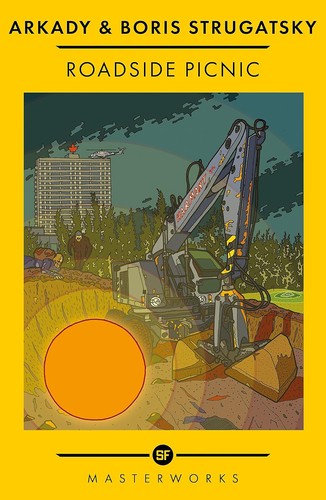
Start this bookNo. 17 on this list. Roadside Picnic · Arkady Strugatsky · 1972
Roadside Picnic is required reading within science fiction and speculative fiction courses and appears on virtually every critical list of essential SF novels. The 2012 University of Chicago retranslation by Olena Balla brought renewed mainstream literary attention. It is not taught widely in general literature syllabi, but within its genre it holds unambiguous canonical status — the foundational text of the stalker subgenre.
Difficult6.5 hours
Start this bookNo. 18 on this list. Lady Macbeth of Mtsensk · Nikolai Leskov · 1865
Taught in schools: Russian FGOS literature standard
"Lady Macbeth of Mtsensk" is taught regularly in Russian and Slavic literature courses at universities worldwide and appears on most curated lists of essential Russian fiction. No syllabus data was found in the database, but the work's prominence in Slavic studies is well established. The Shostakovich opera adaptation has kept the novella in continuous cultural circulation since its 1934 premiere.
Challenging16 hours
Start this bookNo. 19 on this list. Pushkin House · Andrei Bitov · 1978
The book is regarded as the first Russian postmodern novel and appears in Russian and Slavic literature courses in translation. It is less universal than Bulgakov or Pasternak.
Difficult17 hours
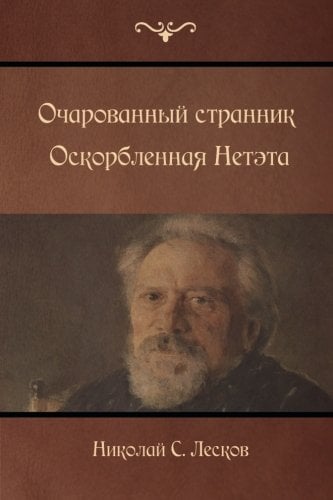
Start this bookNo. 20 on this list. The Enchanted Wanderer · Nikolai Leskov · 1873
Taught in schools: Russian FGOS literature standard
The Enchanted Wanderer is a cornerstone of Russian literature instruction within Russia and is regularly included in world literature anthologies abroad. It appears in comparative literature and 19th-century Russian fiction courses internationally, though its global syllabus penetration falls well below Tolstoy and Dostoevsky. Leskov's work experienced a revival in Russian scholarly interest during the Soviet era and retains strong canonical standing in Slavic studies.
Difficult9.4 hours
Start this book
No. 21 on this list. A School for Fools · Sasha Sokolov · 1976
It is the central work of late Soviet-era Russian experimental prose and is taught in Russian literature and emigre writing courses. It is less taught than Nabokov or Bulgakov but a firm presence in Russian studies.
Difficult9.1 hours
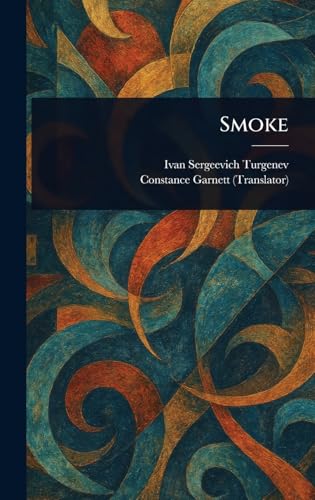
Start this bookNo. 22 on this list. Smoke · Ivan Turgenev · 1867
Grigory Litvinov arrives at the fashionable German spa town of Baden-Baden in the summer of 1862 expecting to collect his fiancée Tatyana and return home to Russia to farm his estate. Instead he runs into Irina, the woman he loved ten years earlier in Moscow, who broke off their engagement to marry into the aristocracy and has since become exactly the glittering, hollow figure he might have predicted. Within days he has told Tatyana he cannot marry her and declared himself entirely Irina's. Turgenev surrounds this collapse of a man's will with a panorama of Russians abroad — generals who made fortunes selling diluted vodka, radicals who discuss the peasantry over expensive wine, reactionaries who have never set foot on their own estates. Potugin, a sardonic figure who haunts the edges of the novel, delivers Turgenev's verdict on all of it: smoke. Everything Russia produces — its arguments, its movements, its passions — rises and disperses and leaves nothing. The satire made Dostoyevsky furious and Herzen furious, which suggests Turgenev aimed at something real. What lingers is the portrait of Litvinov watching his own life's plan evaporate and being unable to stop it.
Difficult7.2 hours
Start this bookNo. 23 on this list. Чапаев и Пустота · Viktor Pelevin · 2015
Chapayev and Void is a fixture of post-Soviet literary syllabi in Russia and a touchstone of 1990s Russian postmodernism. It does not appear in Western university curricula or the Open Syllabus Project. Wikipedia coverage exists in Russian and several other languages but not at the global scale of canonical world literature. Within Russian-language literary culture, it functions as a generational marker — the novel everyone read in the late 1990s.
Difficult13 hours
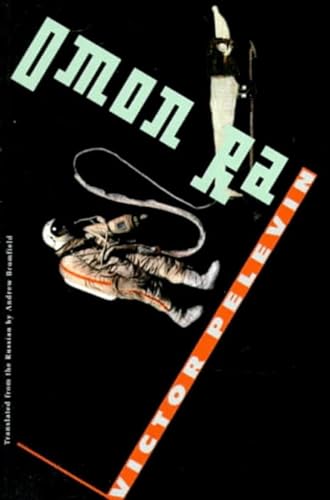
Start this bookNo. 24 on this list. Omon Ra · Viktor Pelevin · 1992
Omon Ra is regularly taught in post-Soviet Russian literature courses and appears on syllabi covering contemporary Russian fiction, though no syllabus data appears in the database. It is a canonical text within Russian literary studies and in courses on Soviet-era satire, but has not achieved the broad Western academic circulation of Bulgakov or Dostoevsky. It is considered Pelevin's breakthrough work and the essential entry point to his oeuvre.
Challenging2.9 hours
Start this bookNo. 25 on this list. Morphine · Mikhail Bulgakov · 1927
Morphine is a well-regarded work within Russian literature courses and Bulgakov studies, though it occupies a secondary position behind The Master and Margarita. No syllabus data is available in the database, but the novella appears in Russian and world literature curricula as part of Bulgakov's early prose cycle. It does not approach the canonical status of Bulgakov's masterwork.
Difficult1.2 hours
Start this bookNo. 26 on this list. Generation P · Viktor Pelevin · 1999
Generation P is required reading in post-Soviet Russian literature courses at Russian and Eastern European universities, and widely assigned in Russian cultural studies programs internationally. It has no significant presence on Western syllabi and does not appear in Open Syllabus Project data, limiting its canonical reach primarily to Russian-language and area-studies contexts.
Difficult7.1 hours
Start this bookNo. 27 on this list. Spring Torrents · Ivan Turgenev · 1872
Spring Torrents is a respected but secondary entry in Turgenev's canon, overshadowed by Fathers and Sons and A Sportsman's Sketches in university curricula. No syllabus data is available, and Wikipedia coverage is limited; the novella appears occasionally in world literature and Russian literature survey courses, but rarely anchors a syllabus on its own.
Challenging8.6 hours
Start this bookNo. 28 on this list. The Big Green Tent · Ludmila Ulitskaya · 2010
No syllabus appearances are recorded in the database, and no Wikipedia data is available for this work, reflecting its limited penetration into English-language academic curricula. In Russian literary circles, however, it is considered Ulitskaya's defining novel — the book that secured her reputation as the foremost chronicler of the Soviet intelligentsia. Its canonical standing is regional and cultural rather than globally institutionalized.
Difficult22 hours
Start this bookNo. 29 on this list. Glory · NoViolet Bulawayo · 2022
Published in 2022, Glory has not yet entered university curricula. Its Wikipedia presence spans 24 languages, reflecting international visibility driven by its Booker shortlisting rather than established canonical standing. Too recent to gauge long-term pedagogical adoption.
Difficult14 hours
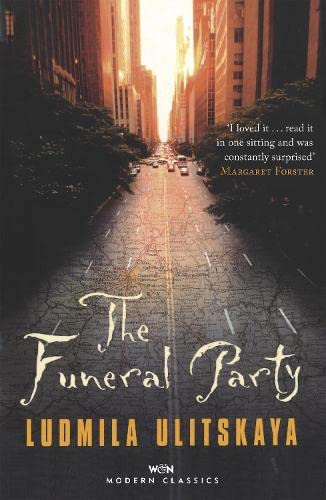
Start this bookNo. 30 on this list. The Funeral Party · Ludmila Ulitskaya · 1997
The Funeral Party has no recorded syllabus appearances and no Wikipedia article in the data signals, indicating minimal presence in formal academic curricula. In the West, it appears occasionally in Slavic studies and diaspora literature courses but has not become a fixture in broader literary canons. Its reputation is stronger in Russian literary circles than in English-language academic settings.
Difficult4.1 hours
Start this book
About this list
These 30 books are the highest-scoring eligible challenging books in Russian currently in the catalogue. About 277 hours of reading in all. Difficulty runs from 69 to 74 out of 100 for the middle half of the list; the summit is Petersburg at 85.
This list is ranked by literary regard, with a consistent order for equal scores. Membership follows authors and co-authors, not translators or editors. Catalogue coverage and the historical canon both limit what this list can represent.
When we matched the Canons dataset to our catalogue in October 2026, our canonical-status scores rose with the number of school curricula, publisher series and lists in it that cite a work: the median score was 72 for books one such source cites, 84 at two, 88 at three, 92 at four and 93 at five or more. Prizes are left out of that count. Outside the state curricula, the dataset’s sources choose mostly from what has been translated into English or French, so it is a weaker check on other literatures. Source: Canons (Andrew Piper), CC BY 4.0
Questions people actually ask
- What are the best challenging books in Russian?
- By literary regard, which weighs canonical status, critical standing and influence: Requiem by Anna Akhmatova, Poem Without a Hero by Anna Akhmatova, The Kreutzer Sonata by Leo Tolstoy, Petersburg by Andrei Bely and The Twelve by Alexander Blok. ReadingRate ranks 30 such books, each with a difficulty score and a reading-time estimate.
- Which challenging books in Russian should I read first?
- Start from difficulty, not from rank. The most approachable books on this list that still carry top literary regard are We by Yevgeny Zamyatin (about 5.9 hours), Red Cavalry by Isaac Babel and The Twelve by Alexander Blok.
- What are the shortest of the best challenging books in Russian?
- Among the top 25, the shortest are The Twelve by Alexander Blok (about 9 min), The Gentleman from San Francisco by Ivan Bunin (about 55 min) and Morphine by Mikhail Bulgakov (about 1.2 hours), at an average pace of 250 words a minute adjusted for each book's difficulty.
- Which of the best challenging books in Russian are the established classics?
- By canonical status, how firmly a book sits in curricula, anthologies and the canon: Requiem by Anna Akhmatova, The Twelve by Alexander Blok, Poem Without a Hero by Anna Akhmatova, The Kreutzer Sonata by Leo Tolstoy and Petersburg by Andrei Bely.
- Can I read any of these challenging books in Russian for free?
- 1 of the 30 opens in ReadingRate's reader with a free account, from public-domain editions: The Kreutzer Sonata.
- How long would it take to read the top ten?
- About 65 hours, at an average pace of 250 words a minute adjusted for each book's difficulty: 33 days at two hours a day. Set your own pace on the page and the list's reading times change to it.
- How hard are challenging books in Russian to read?
- Most of this list sits between 69 and 74 on ReadingRate's 100-point difficulty scale, where 40 to 55 is moderate. The summit is Petersburg at 85. Every entry carries its own score, so a reader can pick a great book at a difficulty they will finish.
- How is this list ranked?
- On literary-regard data: how canonically established a work is, its critical standing, and its influence on later writing. It is not a readers’ poll, which is why recent bestsellers rarely appear. Membership follows authors and co-authors, not translators or editors. Lists by country, author, period, theme or difficulty keep to literature: fiction, poetry and drama, with no philosophy, criticism or theory. A list of a kind of book, such as philosophy, memoir or criticism, keeps every book of that kind. Every list holds at most three works by one author.