Hours at an average pace
Showing 30 books
About 95 hours for 23 of 30 books with measured lengths. Estimates use 250 words a minute, adjusted for each book's difficulty. At 2 hours a day, about 48 days for those books.
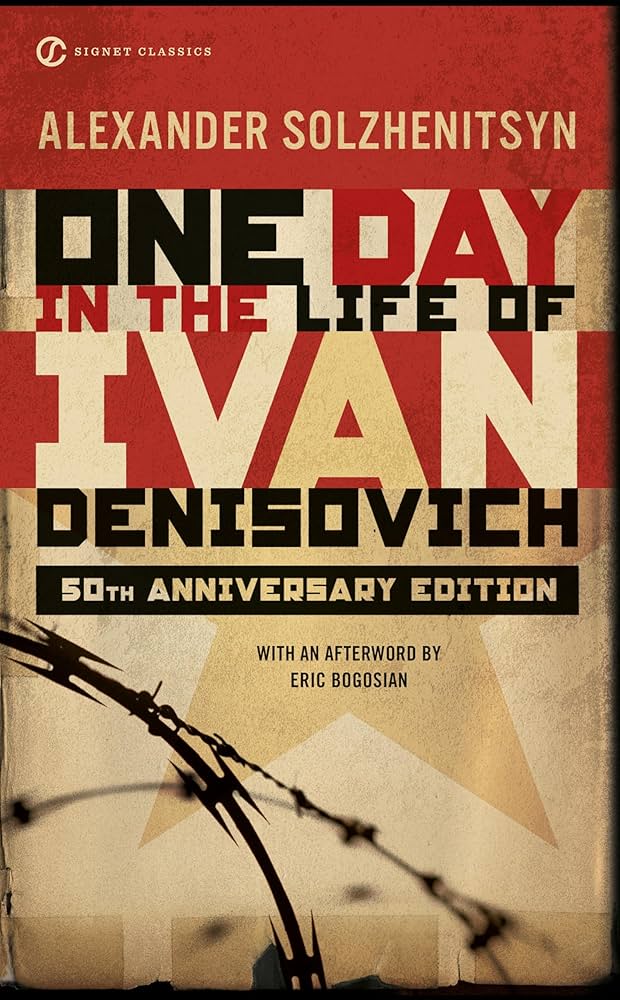
No. 1 on this list. One Day in the Life of Ivan Denisovich
Aleksandr Solzhenitsyn · 1962
Easy2.9 hours
A single January day in a Soviet labor camp in the early 1950s, told through the eyes of Ivan Denisovich Shukhov, a peasant ten years into a trumped-up sentence for treason. Solzhenitsyn structures the novel as a minute-by-minute account: the pre-dawn wake-up, the roll call in −30° cold, the march to the construction site, the bricklaying in the wind, the return, the thin soup, and lights out. The genius of the book is its scale — one man, one day — and the moral universe Shukhov navigates within it. He is not heroic in any conventional sense; he calculates how to get an extra bowl of gruel, how to pocket a useful piece of metal, how to avoid the guards' notice. Yet these calculations constitute a form of dignity. Published in 1962 in the Soviet literary journal Novy Mir under Khrushchev's brief thaw, the novella hit Soviet readers like a physical shock: the Gulag had existed for decades, but naming it in print was new. In the West it became the first credible inside account of the camp system, a document as much as a novel. Solzhenitsyn's prose is close-grained and unsentimental, the voice tuned to Shukhov's practical intelligence. The cold is not metaphorical; the bread is not symbolic. The facts speak.
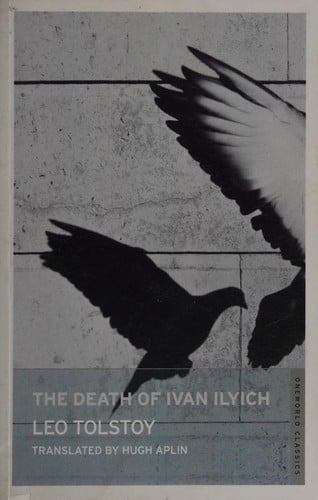
No. 2 on this list. The Death of Ivan Ilyich
Leo Tolstoy · 1886
Moderate1.2 hours
Taught in schools: Hungarian literature curriculum (magyar nyelv és irodalom) (Hungary), Russian FGOS literature standard
Included in: Bokklubben World Library
Universally regarded as one of the greatest novellas ever written. Studied across literature and philosophy courses.
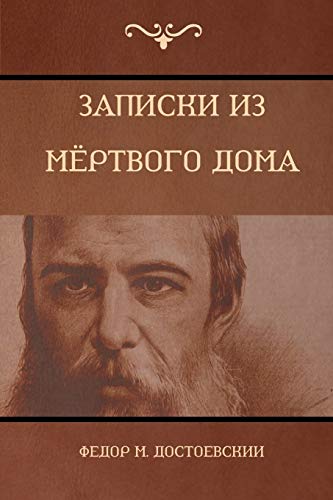
Fyodor Dostoevsky spent four years in a Siberian prison camp after the tsar commuted his death sentence at the last moment. He came out a different writer. The House of the Dead channels that experience through Alexander Petrovich Goryanchikov, a nobleman convicted of murdering his wife, who records the daily life of the katorga — the forced labor camp — with the precision of a naturalist and the unease of someone who cannot stop looking. The other prisoners steal, scheme, perform folk plays, and occasionally show flashes of unexpected grace. Goryanchikov watches all of it without rendering verdicts. The book does not explain what prison does to men; it shows men inside prison, and lets the accumulated detail do the work. Dostoevsky writes with a clinical restraint unusual for him — no murder plots, no philosophical speeches, no epileptic crises. What remains is a documentary of degradation that refuses to moralize, which is exactly what makes the moral weight so heavy. Readers expecting Dostoevsky's trademark feverish psychology will find something quieter here: a sustained act of witness.
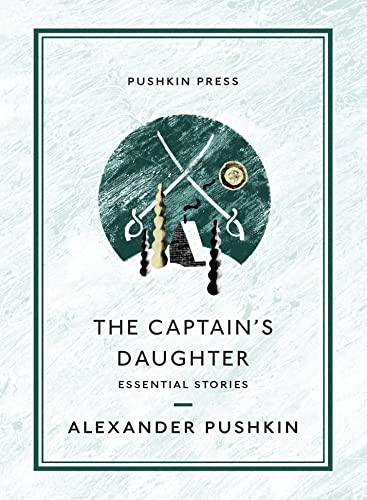
The Captain's Daughter anchors the Russian literary canon alongside Eugene Onegin. It appears in virtually every Russian literature survey course worldwide, is part of the secondary school curriculum in Russia, and has been continuously in print since 1836. No syllabus data was returned from the database, but its foundational status in Slavic studies is unambiguous.
Standard in Russian literature courses and a fixture of Russian theatre repertoire. Janáček's opera Káťa Kabanová keeps it before an international audience.
The play is a core text in Russian school curricula and Russian literature courses worldwide. Its lines are quoted as proverbs in everyday Russian. It stands at the base of the nineteenth-century canon next to Eugene Onegin and Dead Souls.
Recognized as one of the definitive literary works about the Soviet Gulag and a masterpiece of twentieth-century short fiction.
No. 8 on this list. The Unwomanly Face of War
Svetlana Alexievich · 1985
Easy5.8 hours
Taught in schools: Lithuanian literature curriculum (lietuvių kalba ir literatūra), UNAM Escuela Nacional Preparatoria – programas de Literatura (Mexico)
Widely taught in university courses on Eastern European literature, WWII history, and oral history methodology, though not a fixture of secondary school curricula in the West. The 2015 Nobel Prize dramatically expanded its global reach and translation into forty-plus languages. Its canonical standing is growing rather than settled.
A celebrated work of Russian and Jewish literature, widely anthologized and studied alongside Red Cavalry.
Frequently anthologized and taught as one of Tolstoy's finest short works. Its concentrated power and accessible length keep it in regular circulation.
No. 11 on this list. The Golovlyov Family · Mikhail Saltykov-Shchedrin · 1880
Considered the greatest Russian satirical novel and one of the major achievements of nineteenth-century Russian prose, though less internationally known than Tolstoy or Dostoevsky.
Easy6.8 hours
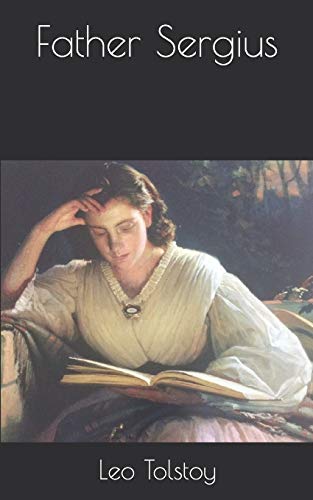
Start this bookNo. 12 on this list. Father Sergius · Leo Tolstoy · 1898
Father Sergius appears on university syllabi in Tolstoy studies and 19th-century Russian literature courses, but it occupies a secondary position relative to War and Peace, Anna Karenina, and The Death of Ivan Ilyich. No syllabus or Wikipedia data was returned by the data signals tool, consistent with the novella's status as a respected but not widely-taught shorter work. It appears in major collected editions of Tolstoy but is rarely the primary text in survey courses.
Moderate1.1 hours
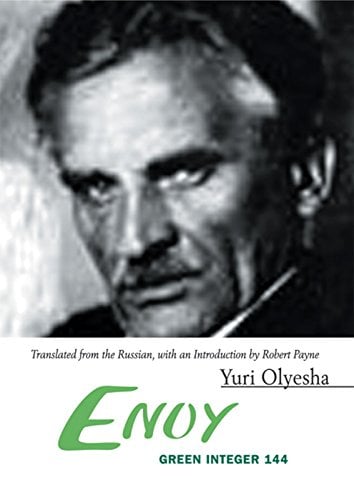
Read nowNo. 13 on this list. Envy · Yuri Olesha · 1927
A recognized masterpiece of early Soviet literature and one of the finest short novels in the Russian language.
Moderate2.2 hours
Start this bookNo. 14 on this list. Farewell to Matyora · Valentin Rasputin · 1976
The novella is a cornerstone of Russian 'village prose' and appears in Russian literature courses and school reading lists. It is less central to the Western world-literature canon.
Moderate3.4 hours
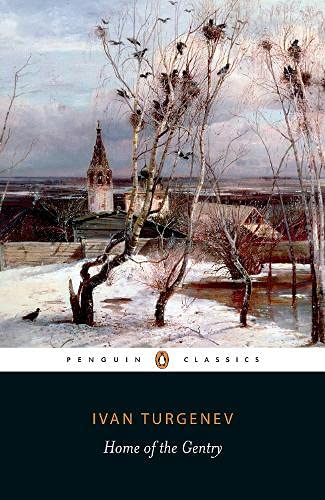
Start this bookNo. 15 on this list. Home of the Gentry · Ivan Turgenev · 1859
Taught in schools: Russian FGOS literature standard
Home of the Gentry is a standard text in Russian literature curricula, regularly anthologized alongside Turgenev's major works. It is less central to Western syllabi than Fathers and Sons but figures prominently in courses on 19th-century European realism. No data from Open Syllabus is available in the database, but its presence in scholarly editions and collected works reflects sustained institutional regard.
Moderate4.1 hours
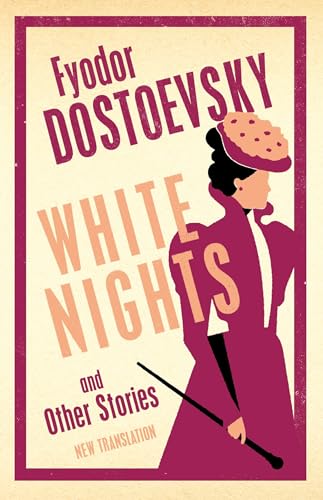
Start this bookNo. 16 on this list. White Nights · Fyodor Dostoevsky · 1848
White Nights is a standard entry in Russian literature survey courses and a common first Dostoevsky assignment precisely because of its brevity and accessibility, but it doesn't carry the curricular weight of Crime and Punishment or The Brothers Karamazov. It appears reliably in anthologies of Dostoevsky's short fiction and 19th-century Russian literature courses. No syllabus or Wikipedia-language data was available in the database for this specific title.
Moderate1.2 hours
Start this bookNo. 17 on this list. Noites Brancas · Fyodor Dostoevsky
A minor early work of a canonical author, read widely in Russian literature courses and adapted for film (Visconti, Bresson), but far less taught than the major novels.
Easy1.5 hours
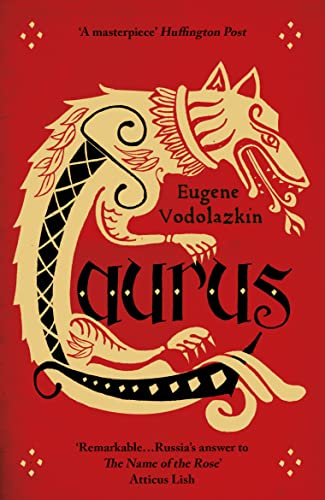
Start this bookNo. 18 on this list. Laurus · Eugene Vodolazkin · 2012
One of the most acclaimed Russian novels of the twenty-first century. A bestseller and major prize winner in Russia with growing international recognition.
Easy5.7 hours
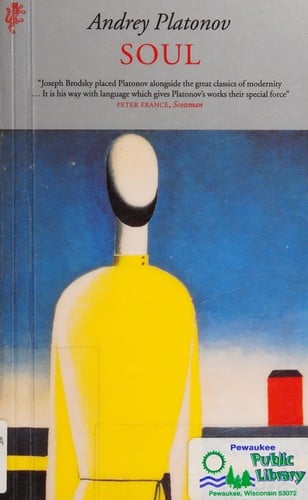
Start this bookNo. 19 on this list. Soul · Andrei Platonov · 1964
Less well known than The Foundation Pit or Chevengur but increasingly recognized as one of Platonov's finest achievements.
Moderate2.5 hours
Start this bookNo. 20 on this list. Zuleikha · Guzel Yakhina · 2015
A 2015 debut now widely read and adapted as a TV series, it has not yet entered syllabi to the degree of established Soviet-era classics. It is taught in some contemporary Russian literature courses.
Easy6.6 hours
Start this book
No. 21 on this list. Train to Samarkand · Guzel Yakhina · 2022
A 2021 novel too recent for syllabi, though it won the Big Book readers' prize in 2022 and Yakhina's reputation brings it attention in contemporary Russian fiction.
Easy7.7 hours
Start this bookNo. 22 on this list. Emergency Exit · Ilya Kochergin · 2025
A 2024–2025 release with no syllabus presence yet. A Big Book special prize gives it visibility within contemporary Russian prose. Far from the established canon.
Easy6 hours
Start this bookNo. 23 on this list. The Tunnel · Yana Vagner · 2024
Published in 2024, it is too recent for syllabi and sits in commercial thriller territory. Its Yandex bestseller placement and French edition show reach rather than curricular standing.
Easy
Start this bookNo. 24 on this list. The Screenwriter · Svetlana Pavlova · 2026
A very recent novel published in a generational-fiction series, with no university syllabus presence yet. Its prizes mark it as a notable new title in Russian publishing, not an established curriculum text.
Moderate
Start this bookNo. 25 on this list. Seven Ways to Pickle Souls · Vera Bogdanova · 2025
A 2025 release with no record of syllabus adoption. Its standing rests on genre readership and a single prize, not on teaching. It belongs with popular commercial fiction.
Easy
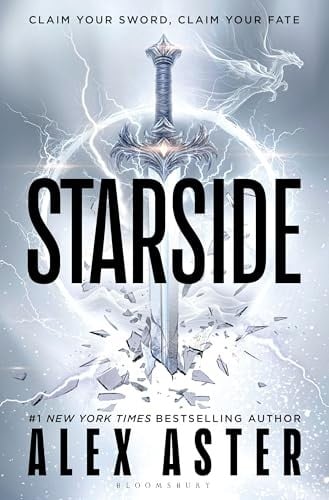
Start this bookNo. 26 on this list. Starside · Alex Aster · 2026
No syllabus appearances or Wikipedia page are recorded for this work, and it has been in print only a few months since its March 2026 release, leaving no time to enter academic curricula. Starside sits closer to Fifty Shades of Grey as a pure commercial-phenomenon book than to anything taught or studied, at least so far.
Easy11 hours
Start this bookNo. 27 on this list. Мой первый круиз · Asya Lavrinovich
Published in June 2025 as commercial youth romance, it has no syllabus presence and belongs to the popular category. It sits beside Beach Read as too recent to be taught.
Very Easy
Start this bookNo. 28 on this list. Глория. Начало истории · Stace Kramer
A 2019 young-adult release with no recorded syllabi or prizes sits in the commercial category, far from Beach Read-level syllabi presence only in being slightly older.
Easy
Start this bookNo. 29 on this list. Абиссаль · Stace Kramer
The book is a 2019 commercial release from AST in action-driven prose. No syllabi, prizes or scholarly attention are known, so it sits at the popular end alongside Beach Read.
Very Easy
Start this bookNo. 30 on this list. Я и есть безумие. Абиссаль · Stace Kramer
A Russian-language romantic thriller in Stace Kramer's Abyssal sequence, written for a young popular readership. It does not appear on any reading list.
Easy
Start this book
About this list
These 30 books are the highest-scoring eligible easy books from Russia currently in the catalogue. About 95 hours of reading in all, for the 23 with measured lengths. Difficulty runs from 34 to 41 out of 100 for the middle half of the list; the summit is Woe from Wit at 44.
This list is ranked by literary regard, with a consistent order for equal scores. Membership follows authors and co-authors, not translators or editors. Catalogue coverage and the historical canon both limit what this list can represent.
When we matched the Canons dataset to our catalogue in October 2026, our canonical-status scores rose with the number of school curricula, publisher series and lists in it that cite a work: the median score was 72 for books one such source cites, 84 at two, 88 at three, 92 at four and 93 at five or more. Prizes are left out of that count. Outside the state curricula, the dataset’s sources choose mostly from what has been translated into English or French, so it is a weaker check on other literatures. Source: Canons (Andrew Piper), CC BY 4.0
Questions people actually ask
- What are the best easy books from Russia?
- By literary regard, which weighs canonical status, critical standing and influence: One Day in the Life of Ivan Denisovich by Aleksandr Solzhenitsyn, The Death of Ivan Ilyich by Leo Tolstoy, The House of the Dead by Fyodor Dostoevsky, The Captain's Daughter by Alexander Pushkin and The Storm by Alexander Ostrovsky. ReadingRate ranks 30 such books, each with a difficulty score and a reading-time estimate.
- Which easy books from Russia should I read first?
- Start from difficulty, not from rank. The most approachable books on this list that still carry top literary regard are The Captain's Daughter by Alexander Pushkin (about 2.5 hours), One Day in the Life of Ivan Denisovich by Aleksandr Solzhenitsyn and The Storm by Alexander Ostrovsky.
- What are the shortest of the best easy books from Russia?
- Among the top 25, the shortest are Master and Man by Leo Tolstoy (about 51 min), Father Sergius by Leo Tolstoy (about 1.1 hours) and The Death of Ivan Ilyich by Leo Tolstoy (about 1.2 hours), at an average pace of 250 words a minute adjusted for each book's difficulty.
- Which of the best easy books from Russia are the established classics?
- By canonical status, how firmly a book sits in curricula, anthologies and the canon: One Day in the Life of Ivan Denisovich by Aleksandr Solzhenitsyn, The Storm by Alexander Ostrovsky, The Death of Ivan Ilyich by Leo Tolstoy, The House of the Dead by Fyodor Dostoevsky and The Captain's Daughter by Alexander Pushkin.
- Can I read any of these easy books from Russia for free?
- 3 of the 30 open in ReadingRate's reader with a free account, from public-domain editions: The House of the Dead, Master and Man and Father Sergius.
- How long would it take to read the top ten?
- About 36 hours, at an average pace of 250 words a minute adjusted for each book's difficulty: 18 days at two hours a day. Set your own pace on the page and the list's reading times change to it.
- How hard are easy books from Russia to read?
- Most of this list sits between 34 and 41 on ReadingRate's 100-point difficulty scale, where 40 to 55 is moderate. The summit is Woe from Wit at 44. Every entry carries its own score, so a reader can pick a great book at a difficulty they will finish.
- How is this list ranked?
- On literary-regard data: how canonically established a work is, its critical standing, and its influence on later writing. It is not a readers’ poll, which is why recent bestsellers rarely appear. Membership follows authors and co-authors, not translators or editors. Lists by country, author, period, theme or difficulty keep to literature: fiction, poetry and drama, with no philosophy, criticism or theory. A list of a kind of book, such as philosophy, memoir or criticism, keeps every book of that kind. Every list holds at most three works by one author.