Hours at an average pace
Showing 35 books
About 338 hours for 35 of 35 books with measured lengths. Estimates use 250 words a minute, adjusted for each book's difficulty. At 2 hours a day, about 170 days for those books.
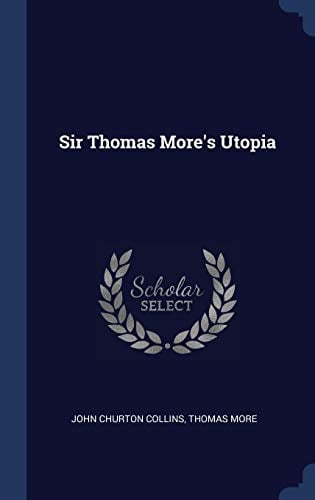
Utopia is a fixture in political philosophy, early modern history, and English literature curricula globally. The word 'utopia' entered every major European language, a feat achieved by fewer than a dozen literary works. It appears on thousands of university syllabi across disciplines — philosophy, political science, history, English, Renaissance studies — and is universally recognized as foundational reading.
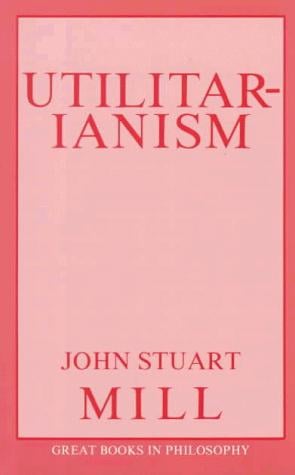
Utilitarianism is required reading in philosophy curricula worldwide and appears on virtually every syllabus for ethics, political philosophy, and moral theory. It is one of the most assigned philosophical texts in English-language universities, assigned alongside Kant's Groundwork as the foundational statement of consequentialist ethics. No undergraduate philosophy education omits it.
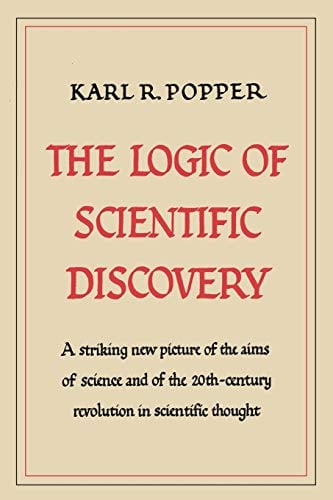
The Logic of Scientific Discovery is required reading in virtually every philosophy of science course at the university level and appears widely on syllabi in history and philosophy of science programs globally. It is not a literary canonical text but holds the equivalent position within its discipline — a foundational text that practitioners of science and philosophy are expected to know.
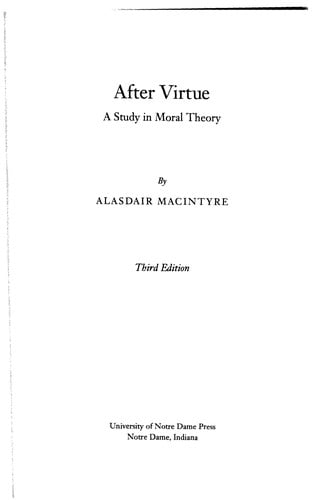
Alasdair MacIntyre opens After Virtue with a thought experiment: imagine that natural science suffered a catastrophe, that laboratories were burned, scientists lynched, and then an imperfect reconstruction took place — people using the words 'neutrino' and 'specific gravity' without understanding what they mean. MacIntyre's claim is that this is precisely the state of moral language today. We use words like 'justice,' 'rights,' and 'virtue' as fragments from a tradition we have lost, producing arguments that are logically valid but rationally interminable because the premises are incommensurable. The abortion debate, the debate over just war, the debate over justice in taxation: each rests on premises drawn from incompatible moral frameworks, and no shared standard exists to adjudicate between them. MacIntyre traces the collapse to the Enlightenment's failed attempt to ground morality without Aristotle's teleological framework. Hume tried desire; Kant tried reason; Kierkegaard tried choice. Each failed for reasons internal to its own logic. What was lost — and what MacIntyre argues must be recovered — is Aristotle's account of the virtues as the qualities that enable human beings to achieve their specific good, embedded in practices, communities, and narrative lives. The book is a work of moral philosophy and intellectual history at once, written with unusual clarity for its level of argument. What it demands is patience with sustained abstraction and prior familiarity with the major figures in Western ethical theory.
Samuel Taylor Coleridge published Biographia Literaria in 1817 to settle a score with critics, explain his intellectual development, and deliver a theory of the Imagination that would ground all of English poetry on philosophical foundations. He does two of these things. The third — the promised deduction of the Primary and Secondary Imagination from Kantian and Schellingian idealism — arrives in Chapter 13 as a single dense paragraph, preceded by a letter from a friend advising Coleridge not to publish the full argument lest it overwhelm his readers. The letter is fictional. The argument was never written. What Coleridge gives instead is something stranger: a self-portrait that uses autobiography as scaffolding for philosophy, and philosophy as scaffolding for the most exacting account of Wordsworth's genius and failures produced by anyone in the 19th century. The chapters on Lyrical Ballads identify with precision which poems succeed, which fail, and why — the analysis of 'The Thorn' and 'Guilt and Sorrow' is still the most incisive criticism of early Wordsworth written. The philosophical chapters require patience with Kant, Schelling, and Hartley; the autobiographical chapters reward it with the closest thing we have to Coleridge's intellectual self-accounting. The book is the record of a mind moving at full stretch, making promises it cannot keep and keeping ones it never made.
Bacon's Essays appear on English literature survey syllabi and Renaissance studies courses across the anglophone world. They established the English familiar essay as a genre and appear on most 'English prose classics' and 'founding texts of the essay' reading lists alongside Montaigne's Essais. The database shows no records, but this reflects data coverage gaps rather than actual obscurity.
No. 7 on this list. Areopagitica
John Milton · 1644
Moderate1.3 hours
Included in: Great Books of the Western World
The foundational text of free speech philosophy. Required reading in political philosophy, law, and media studies worldwide.
Culture and Anarchy appears on university syllabi across English literature, Victorian studies, cultural theory, and political philosophy — a fixture in courses treating 19th-century intellectual history. The book introduced class-descriptive vocabulary ('Philistines,' 'Barbarians,' 'Populace') that entered common English usage, and Arnold's definition of culture as 'the best which has been thought and said' became the default point of departure for all subsequent debates about cultural value. Less universally taught than the novel canon but indispensable in the Victorian prose tradition.
Standard required reading in political philosophy, economics, and liberal theory courses at universities worldwide. Consistently appears on lists of the most influential non-fiction of the 20th century, including TIME's 100 Best Nonfiction list and the Modern Library's reader list. The Wikipedia article exists in over 40 languages, and the book has never gone out of print since 1944.
Karl Popper wrote The Open Society and Its Enemies in New Zealand during World War II, watching fascism spread across Europe and wondering how philosophy had helped it along. His answer runs to two thick volumes: Plato built the first blueprint for totalitarianism; Hegel dressed it in mystical abstraction; Marx gave it pseudo-scientific prophecy. The 'enemies' of the title are not politicians but ideas — historicism (the belief that history follows iron laws), essentialism (the belief that social entities have fixed natures), and utopianism (the belief that a perfect state can be designed and implemented whole). Popper dismantles each in turn with patient, numbered argument. He finds Plato's philosopher-kings to be authoritarians by design, their wisdom indistinguishable from the claim that power justifies itself. He finds Hegel's prose to be deliberate obscurantism in service of Prussian power — 'supreme only in his outstanding lack of originality.' He finds Marx's economic prophecies unfalsifiable, and therefore not science but mythology with a scientific costume. What survives the demolition is a defense of the open society: one that tolerates criticism, reforms institutions incrementally, and resists the tribal pull toward certainty. The arguments about why intellectuals are drawn to closed societies — and what makes free societies structurally fragile — read as if written for any decade that has produced one.
No. 11 on this list. Marxism and Literature · Raymond Williams · 1977
The standard introduction to Marxist literary theory. Essential in cultural studies, literary theory, and British intellectual history.
Difficult6.1 hours
Start this bookNo. 12 on this list. Women in Love · D.H. Lawrence · 1920
Appears on 241 university syllabi (59th percentile, Open Syllabus Project) and is listed on the Modern Library 100 Best Novels. Wikipedia coverage in 11 languages is modest for a major English novel, suggesting strong Anglophone canonical status that has not fully globalized.
Challenging16 hours
Read nowNo. 13 on this list. Early Greek Philosophy · Jonathan Barnes · 1979
The standard English scholarly companion to Presocratic philosophy; used in philosophy and classics departments internationally.
Difficult18 hours
Start this bookNo. 14 on this list. Three Guineas · Virginia Woolf · 1938
Three Guineas opens with a letter — one of three — asking Virginia Woolf to donate money to a society dedicated to preventing war. She has left it unanswered for three years. Her answer, when it comes, takes 180 pages and two additional letters to deliver, and it is not the answer the barrister expected. Woolf argues that men in professional life — lawyers, bishops, professors, politicians — have spent centuries constructing the institutions they now ask women to help defend. The same educational system that trained men to value hierarchy and pageantry over liberty, she shows, also produced the conditions for fascism. To give money to defend those institutions is to underwrite the system that built them. Her method is documentary: she quotes from men's biographies, from parliamentary debates, from newspaper reports of women barred from professions, from Sophocles. Each quotation is a piece of evidence. The three guineas — one to a women's college, one to a professional women's society, one to the anti-war fund — are dispensed on conditions that enact her argument rather than concede to convention. Published in 1938 as Europe moved toward war, Three Guineas is a work of controlled anger and elaborate rhetorical irony. Woolf performs deference with precision; every courtesy conceals a charge.
Moderate4.9 hours
Start this bookNo. 15 on this list. The Wealth of Nations · Adam Smith · 1776
The Wealth of Nations is one of the most important books in Western intellectual history and the foundational text of modern economics. It appears on virtually every list of essential works in economics, political philosophy, and the history of ideas. It is assigned in economics, political science, history, and philosophy departments worldwide. Published in 1776, it has been continuously in print for 250 years and remains the starting point for any serious study of market economics, free trade, or liberal political economy.
Challenging33 hours
Read nowNo. 16 on this list. Leviathan · Thomas Hobbes · 1651
Included in: Great Books of the Western World
Leviathan (1651) is Thomas Hobbes's systematic argument for why human beings, left without government, will destroy each other — and why they must therefore surrender natural liberty to an absolute sovereign. Working from materialist premises (all mental events are motions; desire and aversion govern all action), Hobbes builds a chain of definitions from sense-perception through imagination, reason, and passion to the state of nature, where life without government is 'solitary, poor, nasty, brutish, and short.' From this baseline he derives the social contract: rational creatures agree to transfer their rights to a sovereign who can impose peace by force. Written in deliberate Early Modern English with Latin and Greek terms throughout, Leviathan rewards patience rather than speed. Hobbes argues the way geometers prove theorems — each chapter builds on the definitions established in the last, and readers who skip ahead will lose the thread. The work covers psychology, epistemology, theology, jurisprudence, and political theory in a single unified framework, dismantling scholastic philosophy along the way. Readers who resist Hobbes's conclusions (absolute sovereignty, the subordination of religion to civil power, the denial of any natural right to rebel) must still engage with the argument on its own terms. It remains the most read and most contested text in the English political philosophy tradition.
Challenging20 hours
Read nowNo. 17 on this list. Two Treatises of Government · John Locke · 1689
Two Treatises of Government appears in virtually every Western political philosophy, political theory, and intellectual history curriculum from undergraduate survey to doctoral seminar. It is standard reading in philosophy, political science, history, law, and economics departments globally. The text is available in Wikipedia editions across 70+ languages and has been continuously in print since 1690. Its canonical standing in the history of political ideas rivals Shakespeare's standing in literary history.
Moderate6.7 hours
Read nowNo. 18 on this list. The Doors of Perception · Aldous Huxley · 1954
One morning in May 1953, Aldous Huxley swallowed four-tenths of a gram of mescalin dissolved in water and sat down to wait. What followed was not the colored geometries and visionary architectures he had expected. Instead, three flowers in a small vase — a rose, a carnation, an iris — began to shine with what he could only call their own inner light. Chair legs revealed themselves as something a Van Gogh would have painted with adoring terror. The folds in his gray flannel trousers disclosed an inexhaustible significance. Huxley's account of this eight-hour experiment is also a meditation on consciousness, perception, art, and the universal human need to escape selfhood. He draws on Vedantic philosophy, Zen Buddhism, Western art history — Vermeer, Botticelli, El Greco, Blake — and the pharmacology of adrenochrome to argue that mescalin temporarily disables the brain's reducing valve, admitting a flood of what he calls Mind at Large. The experience illuminates why the great mystics saw what they saw, why artists return obsessively to drapery, and why every culture throughout history has reached for chemical self-transcendence. The essay ends not in mystical surrender but in a pragmatic proposal: humanity needs better drugs, less toxic than alcohol, that produce changes in consciousness more genuinely valuable than mere sedation. Short enough to read in an afternoon, dense enough to reread for years.
Easy58 min
Start this bookNo. 19 on this list. Mere Christianity · C.S. Lewis · 1952
While not a staple of English literature syllabi, Mere Christianity is a fixture in philosophy, theology, and religious studies courses at universities worldwide. It ranks among the most assigned texts in Christian higher education and appears on virtually every list of essential 20th-century nonfiction. Wikipedia covers it in dozens of languages, reflecting global reach far beyond the Anglosphere.
Easy3.9 hours
Start this bookNo. 20 on this list. Modernity and Self-Identity · Anthony Giddens · 1991
No syllabus or Wikipedia-language data was returned for this record, but Modernity and Self-Identity is a fixture of graduate sociology, cultural studies, and media studies curricula worldwide, regularly paired with Giddens' The Consequences of Modernity and Beck's Risk Society on 'theories of modernity' reading lists. It is one of the most frequently assigned entries in Giddens' bibliography outside his introductory textbook Sociology.
Moderate6.1 hours
Start this book
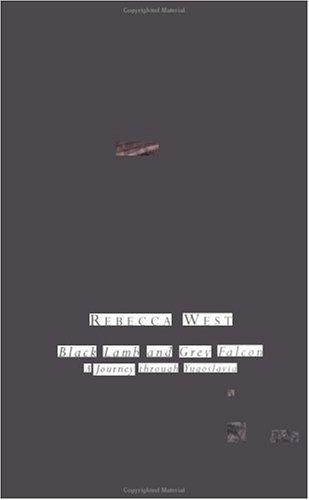
No. 21 on this list. Black Lamb and Grey Falcon · Rebecca West · 1941
Named to TIME Magazine's All-TIME 100 Best Nonfiction Books and to numerous 'greatest travel books' and 'greatest books of the 20th century' lists. Continuously in print since 1941 in Penguin Modern Classics. Not widely assigned in university courses relative to its reputation, but cited as essential reading by serious readers of 20th-century European history and political thought.
Challenging45 hours
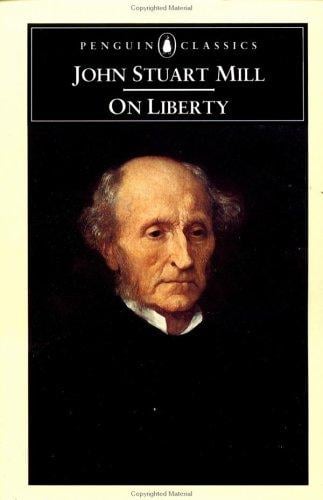
Start this bookNo. 22 on this list. On Liberty · John Stuart Mill · 1859
On Liberty appears on virtually every Political Philosophy, Liberal Theory, and Ethics syllabus at the undergraduate and graduate level worldwide. It is the foundational text of classical liberalism, required in philosophy, politics, law, and social theory programs globally. It is one of a handful of 19th-century philosophical works that has never left active university teaching.
Moderate3.3 hours
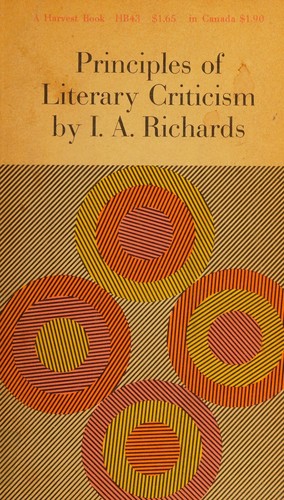
Read nowNo. 23 on this list. Principles of Literary Criticism · I.A. Richards · 1924
Principles of Literary Criticism is required reading in English graduate programs and literary theory courses worldwide, though not at the mass scale of canonical fiction. It is a foundational text in any serious criticism curriculum, positioned alongside Aristotle's Poetics and Sidney's Defence of Poesy as genre-defining works in critical theory.
Challenging7.6 hours
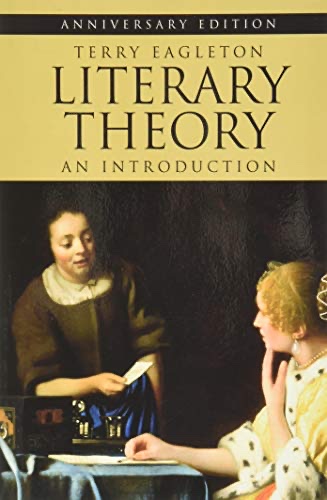
Start this bookNo. 24 on this list. Literary Theory: An Introduction · Terry Eagleton · 1983
Continuously in print since 1983 and revised twice (1996, 2008 Anniversary Edition), it has been the default first-year theory textbook in English departments across the anglophone world for four decades, assigned far more consistently than any single primary theory text it surveys.
Moderate5.1 hours
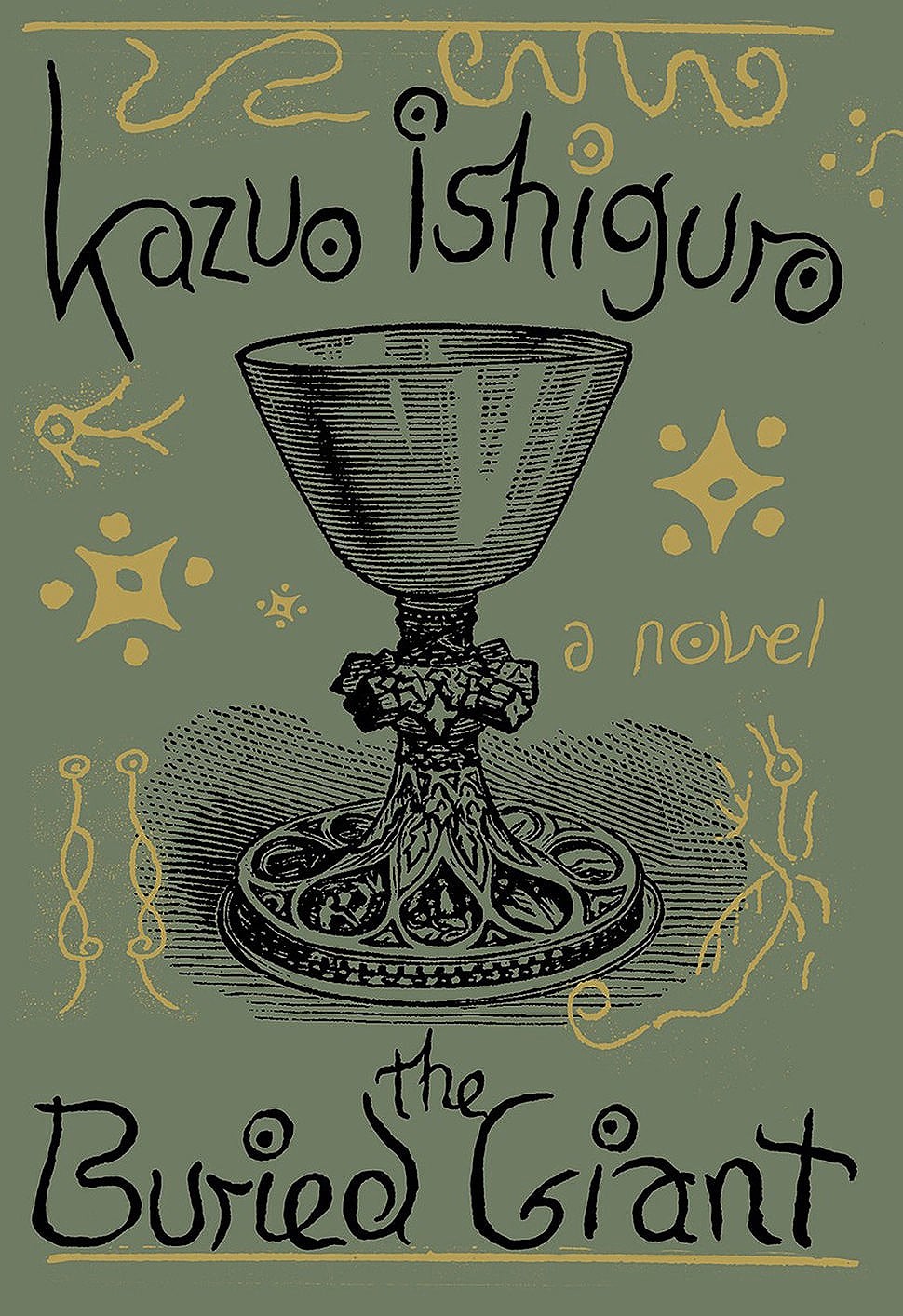
Start this bookNo. 25 on this list. The Buried Giant · Kazuo Ishiguro · 2015
The Buried Giant is not widely taught — 0 syllabus appearances in the database reflects its recent publication (2015) and mixed initial critical reception. Ishiguro's Nobel Prize in 2017 has elevated all his works in academic discourse, and the novel is gaining attention in post-conflict literature courses. It sits well below Remains of the Day in canonical standing but is not a marginal work.
Challenging8.7 hours
Start this bookNo. 26 on this list. Religio Medici · Thomas Browne · 1643
Religio Medici is a fixture of early modern English literature and history-of-ideas syllabi rather than a general undergraduate staple, valued chiefly within specialist courses on 17th-century prose. It lacks Wikipedia/syllabus data in our sources but has held a stable place in the canon of English prose stylists since the 17th century.
Challenging4.1 hours
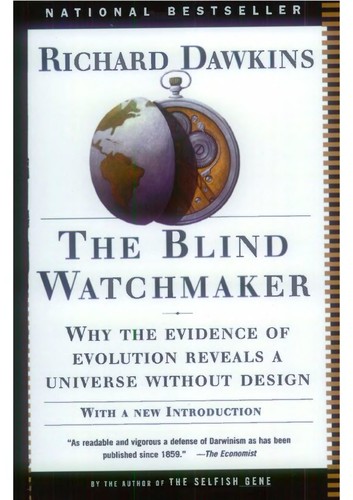
Start this bookNo. 27 on this list. The Blind Watchmaker · Richard Dawkins · 1986
One of the most important popular science books. Foundational to evolution communication.
Easy6.6 hours
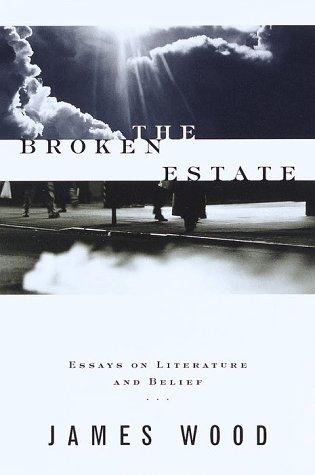
Start this bookNo. 28 on this list. The Broken Estate · James Wood · 1999
No syllabus or Wikipedia data is tracked for this title in our database, and as an essay collection it doesn't compete with novels for curriculum slots. But it's a standard reference in creative-writing and contemporary-criticism circles, and Wood's later Harvard courses and How Fiction Works (2008) built directly on the arguments introduced here.
Moderate6.4 hours
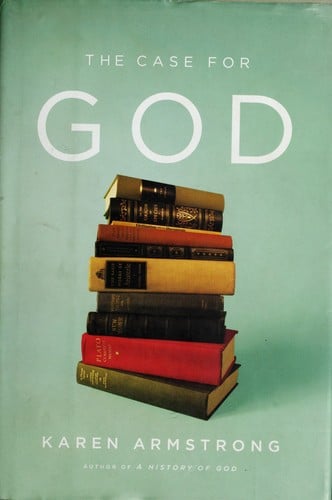
Start this bookNo. 29 on this list. The Case for God · Karen Armstrong · 2009
The Case for God (2009) appears on religion and theology syllabi at a moderate but not dominant rate, mainly in contemporary religious thought and philosophy of religion courses. Armstrong is widely assigned in university religion departments globally, making this a standard secondary text rather than a foundational one. The book lacks the institutional presence of her earlier A History of God, which is more frequently assigned.
Challenging13 hours
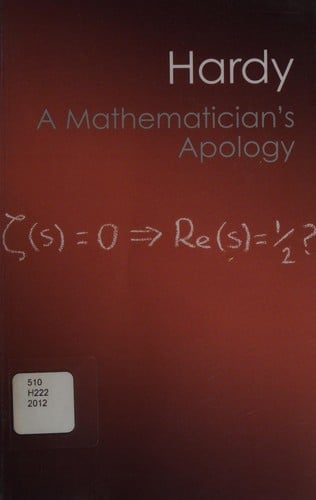
Start this bookNo. 30 on this list. A Mathematician's Apology · G.H. Hardy · 1940
Hardy's slim, melancholy essay is the most famous defense of pure mathematics ever written—and also a meditation on aging, creativity, and the decline of intellectual powers. Hardy argues that mathematics, at its best, is an art form: its patterns are beautiful, its truths are eternal, and its discoveries have a value that transcends any practical application. He distinguishes sharply between the 'real' mathematics of number theory and analysis—pursued for aesthetic rather than utilitarian reasons—and the 'trivial' mathematics used in engineering and applied science. The essay is shot through with sadness: Hardy wrote it at sixty, convinced that his best work was behind him, and his reflections on the aging mathematician's loss of creative power give the book an emotional intensity unusual in mathematical writing. C.P. Snow's biographical foreword, added in later editions, provides context for Hardy's personality and his famous collaboration with Ramanujan.
Easy1.3 hours
Start this book
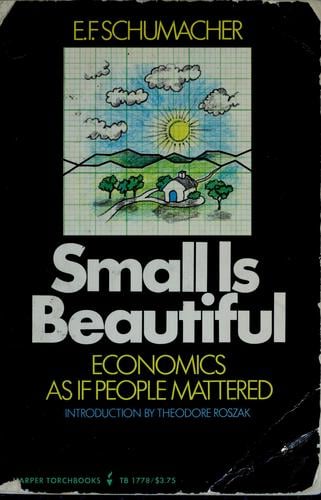
No. 31 on this list. Small Is Beautiful
E.F. Schumacher · 1973
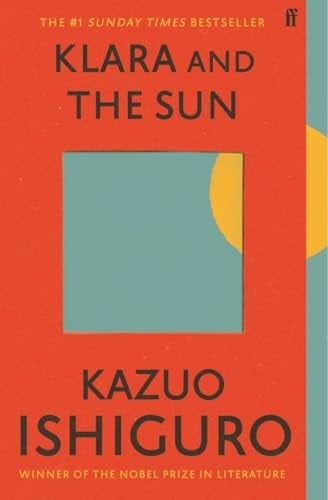
No. 32 on this list. Klara and the Sun
Kazuo Ishiguro · 2021
No. 33 on this list. The God Delusion
Richard Dawkins · 2006
No. 34 on this list. Being You: A New Science of Consciousness
Anil Seth · 2020
No. 35 on this list. The Architecture of Happiness
Alain de Botton · 2006
About this list
These 35 books are the highest-scoring eligible philosophy books from Britain currently in the catalogue. By literary regard, it opens with Utopia, Utilitarianism and The Logic of Scientific Discovery. About 338 hours of reading in all. Difficulty runs from 44 to 63 out of 100 for the middle half of the list; the summit is Early Greek Philosophy at 73.
This list is ranked by literary regard, with a consistent order for equal scores. Membership follows authors and co-authors, not translators or editors. Catalogue coverage and the historical canon both limit what this list can represent, and genre labels are the catalogue’s own, gathered into broader kinds.
When we matched the Canons dataset to our catalogue in October 2026, our canonical-status scores rose with the number of school curricula, publisher series and lists in it that cite a work: the median score was 72 for books one such source cites, 84 at two, 88 at three, 92 at four and 93 at five or more. Prizes are left out of that count. Outside the state curricula, the dataset’s sources choose mostly from what has been translated into English or French, so it is a weaker check on other literatures. Source: Canons (Andrew Piper), CC BY 4.0
Questions people actually ask
- What are the best philosophy books from Britain?
- By literary regard, which weighs canonical status, critical standing and influence, Utopia, Utilitarianism, The Logic of Scientific Discovery, After Virtue and Biographia Literaria lead. ReadingRate ranks 35 such books, each with a difficulty score and a reading-time estimate.
- Where should I start with philosophy books from Britain?
- Start from difficulty, not from rank. The most approachable books on this list that still carry top literary regard are The Doors of Perception by Aldous Huxley (about 58 min), Two Treatises of Government by John Locke and Three Guineas by Virginia Woolf.
- How hard are philosophy books from Britain to read?
- Most of this list sits between 44 and 63 on ReadingRate's 100-point difficulty scale, where 40 to 55 is moderate. The summit is Early Greek Philosophy at 73. Every entry carries its own score, so a reader can pick a great book at a difficulty they will finish.
- How is this list ranked?
- On literary-regard data: how canonically established a work is, its critical standing, and its influence on later writing. It is not a readers’ poll, which is why recent bestsellers rarely appear. Membership follows authors and co-authors, not translators or editors. A list that is not a genre list keeps to literature (fiction, poetry, drama and philosophy), with philosophy taking no more than one slot in five while there is literature left to rank; every list holds at most three works by one author.