Hours at an average pace
Showing 32 books
About 209 hours for 32 of 32 books with measured lengths. Estimates use 250 words a minute, adjusted for each book's difficulty. At 2 hours a day, about 105 days for those books.
The undisputed masterpiece of twentieth-century Catalan literature. Widely translated and recognized as one of the great European novels of the postwar period.
Appears on 835 university syllabi (73rd percentile, Open Syllabus Project), making it a standard text in postcolonial literature, African studies, and diaspora fiction courses. Wikipedia articles exist in 18 languages with a substantial article (38,294 characters) including dedicated reception and adaptations sections, indicating broad but not globally ubiquitous cultural reach.
Standard in modern Chinese literature and Chinese women's writing courses, published by Indiana University Press in Goldblatt's translation.
Claude Wheeler opened his eyes before the sun was up and vigorously shook his younger brother, who lay in the other half of the same bed. "Ralph, Ralph, get awake! Come down and help me wash the car." "What for?" "Why, aren't we going to the circus today?" "Car's all right. Let me alone." The boy turned over and pulled the sheet up to his face, to shut out the light which was beginning to come through the curtainless windows. Claude rose and dressed, - a simple operation which took very little time. He crept down two flights of stairs, feeling his way in the dusk, his red hair standing up in peaks, like a cock's comb. He went through the kitchen into the adjoining washroom, which held two porcelain stands with running water. Everybody had washed before going to bed, apparently, and the bowls were ringed with a dark sediment which the hard, alkaline water had not dissolved. Shutting the door on this disorder, he turned back to the kitchen, took Mahailey's tin basin, doused his face and head in cold water, and began to plaster down his wet hair.
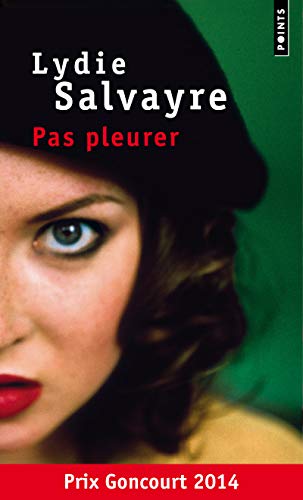
Winning the Prix Goncourt in 2014 secured Pas pleurer's position in contemporary French literature, though its canonical standing remains emergent rather than established. The novel addresses the enduring literary theme of the Spanish Civil War while contributing to the francophone tradition of linguistic experimentation with exile and bilingualism, placing it in conversation with Camus, Modiano, and postcolonial French writers.
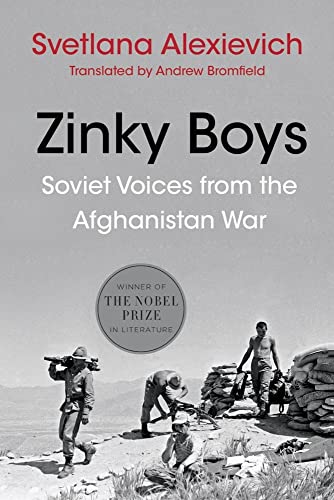
Zinky Boys is taught in courses on Soviet literature, oral history methodology, war literature, and post-communist memory across European and North American universities. No database data is available for this specific title's syllabus appearances, but Alexievich's work as a whole gained canonical status after her 2015 Nobel Prize, and Zinky Boys is among her most cited individual works alongside Chernobyl Prayer and The Unwomanly Face of War.
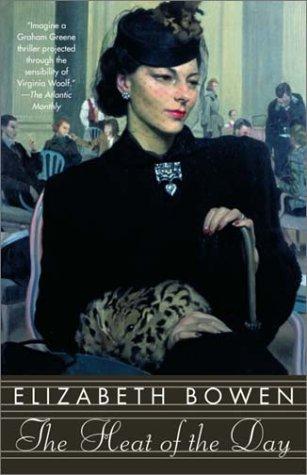
Stella Rodney works for British intelligence in wartime London, living with the particular alertness of a city that may be bombed tonight and probably will not be bombed tonight. Then a man named Harrison appears at a concert and offers her a deal: he will suppress evidence that her lover, Robert Kelway, is passing secrets to the Germans—if Stella sleeps with Harrison instead. What follows is not a thriller. Elizabeth Bowen uses the architecture of espionage to examine something harder to name: how people maintain the fiction of knowing who they love, and why, when the bombs have already stripped so much else away. The prose is Jamesian in its density—sentences that circle their subjects, speakers who say precisely what they do not mean—and the bomb-damaged London streets carry the weight of a social order losing its grip. Robert's guilt or innocence remains genuinely uncertain; what Bowen illuminates instead is the grammar of complicity, the way loyalty and self-deception share a syntax. A novel that rewards rereading more than reading, and reading more than most novels do.
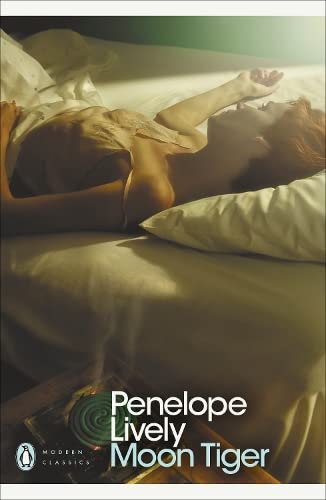
Moon Tiger appears on approximately 40 university syllabi according to Open Syllabus, placing it in the upper-middle range of taught contemporary fiction. Wikipedia articles exist in 5 languages. It holds a secure but not dominant place in the postwar British fiction canon, regularly appearing in courses on Booker Prize literature and late-twentieth-century experimental narrative.
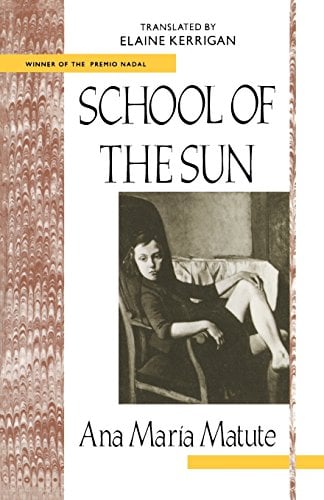
Widely taught in Spanish literature courses as the key novel of childhood under the Civil War and Matute's most studied book.
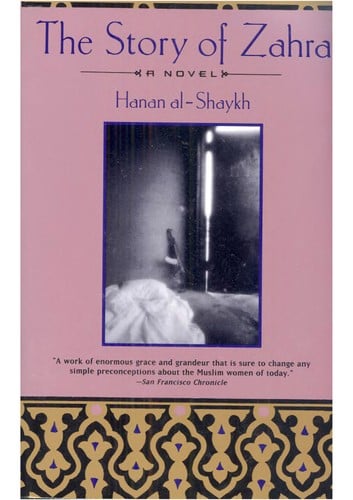
Major work of Lebanese and Arab women's literature. Widely taught.
No. 11 on this list. The Seventh Cross · Anna Seghers · 1942
It is a central text of German exile literature and anti-fascist writing, widely taught in German-language curricula and read in translation as an early depiction of the camps. It lacks the universal reach of the standard Western canon.
Moderate6.9 hours
Start this bookNo. 12 on this list. Regeneration · Pat Barker · 1991
Taught in schools: AQA GCSE and A-level English Literature (UK)
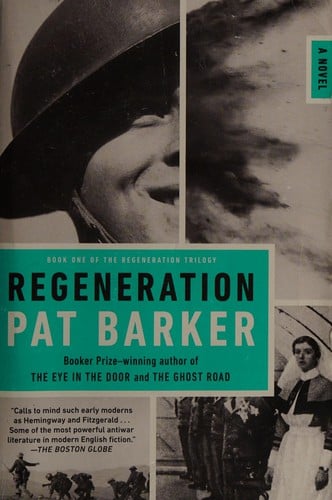
Regeneration is firmly established on British university syllabi, standard in courses on twentieth-century fiction, WWI literature, and trauma studies. While its canonical reach is strongest in the UK and Anglophone academia rather than globally, it appears alongside Goodbye to All That and Birdsong as a defining literary treatment of the Western Front's psychological toll. Its inclusion in school and university curricula has been consistent since the 1990s.
Challenging7.9 hours
Start this bookNo. 13 on this list. Day · A.L. Kennedy · 2007
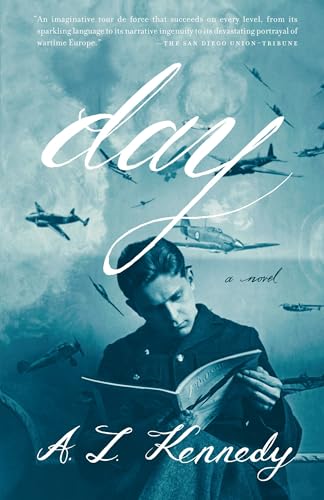
Winner of the 2007 Costa Book AwardAlfred Day wanted his war. In its turmoil he found his proper purpose as the tail-gunner in a Lancaster bomber; he found the wild, dark fellowship of his crew, and - most extraordinary of all - he found Joyce, a woman to love. But that's all gone now - the war took it away. Maybe it took him, too. Now in 1949, employed as an extra in a war film that echoes his real experience, Day begins to recall what he would rather forget...
Moderate4.9 hours
Start this bookNo. 14 on this list. Daniel Stein, Interpreter · Ludmila Ulitskaya · 2006
It is a central work by a leading contemporary Russian author, translated widely and taught in contemporary Russian and Jewish-themed literature courses. It has not yet reached the standing of the classics.
Challenging11 hours
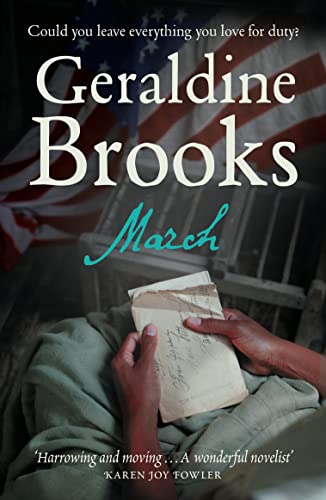
Start this bookNo. 15 on this list. March · Geraldine Brooks · 2006
March does not appear prominently on university syllabi and lacks the curriculum-fixture status of older Pulitzer winners. It surfaces occasionally in American literature and historical fiction courses but has not achieved the kind of ubiquity that places a novel in the canon of essential reading.
Difficult11 hours
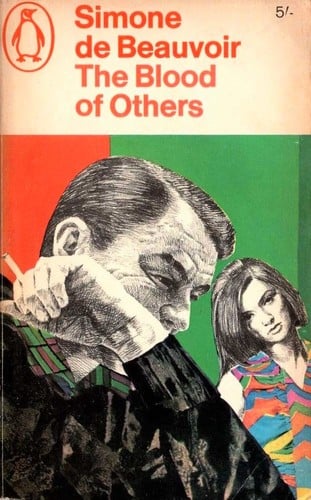
Start this bookNo. 16 on this list. The Blood of Others · Simone de Beauvoir · 1945
An important existentialist novel of the occupation period, though less widely read than Beauvoir's other works or comparable novels by Camus and Sartre.
Easy5.4 hours
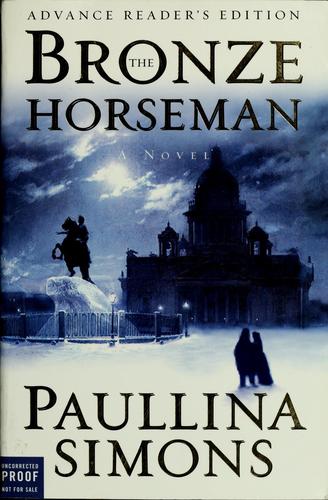
Start this bookNo. 17 on this list. The Bronze Horseman · Paullina Simons · 2001
Cult favorite in historical romance. Beloved for its epic scope and emotional intensity.
Easy9.8 hours
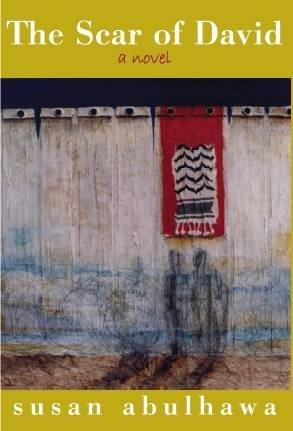
Start this bookNo. 18 on this list. The Scar of David · Susan Abulhawa · 2010
Widely read and discussed in postcolonial and Middle East courses and book clubs, but it has not yet become a core canonical text.
Easy5.2 hours
Start this bookNo. 19 on this list. The Crusaders · Zofia Kossak-Szczucka · 1935
A well-known Polish historical novel of the interwar period, read mainly in Polish literature contexts and in Catholic circles. It has little presence in wider world-literature syllabi.
Easy10 hours
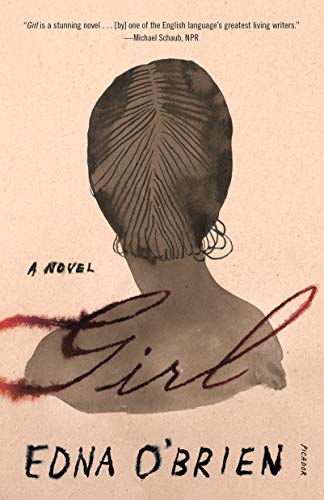
Start this bookNo. 20 on this list. Girl · Edna O'Brien · 2019
No syllabus data or Wikipedia presence found in the database. Published in 2019, the book is too recent to have accumulated significant curriculum placement. O'Brien is well-regarded in Irish and world literature courses, but this specific title has not achieved the institutional footprint of her earlier work like The Country Girls or August is a Wicked Month.
Moderate3.1 hours
Start this book
No. 21 on this list. Vierundsiebzig · Ronya Othmann · 2024
Published in 2024, it is too recent for established syllabi, though it has drawn wide attention in German-language literary culture as a major novel of the genocide.
Moderate9.2 hours
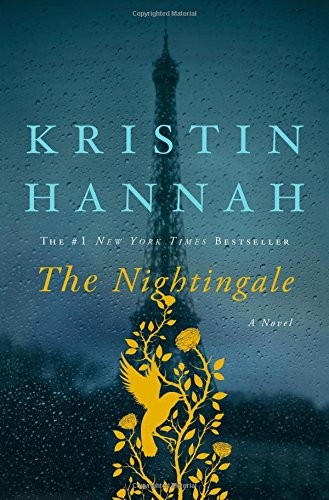
Start this bookNo. 22 on this list. The Nightingale · Kristin Hannah · 2015
A bestselling historical novel widely read in book clubs. Not yet part of the literary canon.
Easy7.6 hours
Start this bookNo. 23 on this list. The Bird Tattoo · Dunya Mikhail · 2023
Published in English in 2022-23, so it is too recent for syllabi. Its shortlisting for the International Prize for Arabic Fiction gives it a foothold, though no syllabus presence is yet established.
Moderate5.3 hours
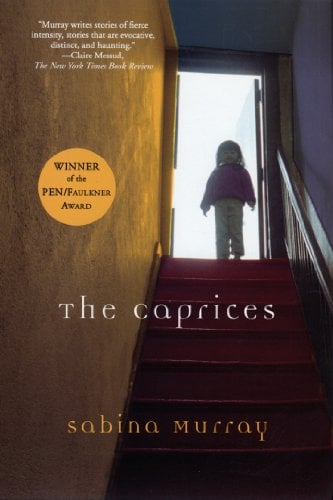
Start this bookNo. 24 on this list. The Caprices · Sabina Murray · 2003
The Caprices is rarely taught and is read today chiefly as a PEN/Faulkner winner about the Pacific war. It does not appear on standard reading lists.
Moderate3.7 hours
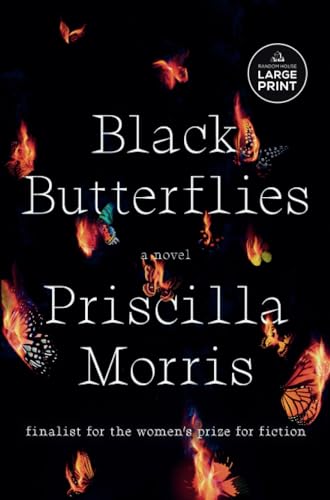
Start this bookNo. 25 on this list. Black Butterflies · Priscilla Morris · 2023
Black Butterflies is a recent debut, too new to have entered courses or lasting reading lists. It is read as contemporary fiction about an artist living through the siege of Sarajevo.
Moderate4.4 hours
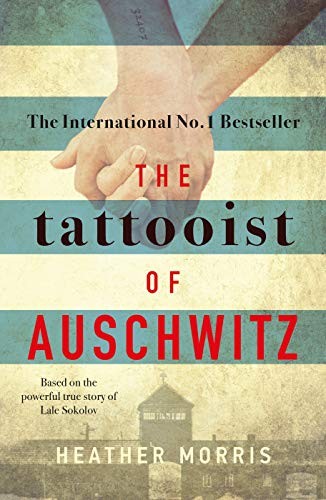
Start this bookNo. 26 on this list. The Tattooist of Auschwitz · Heather Morris · 2018
Not taught in literature courses—positioned as accessible Holocaust narrative rather than literary achievement. Historians have questioned its accuracy. Unlikely to enter any canon.
Easy4.1 hours
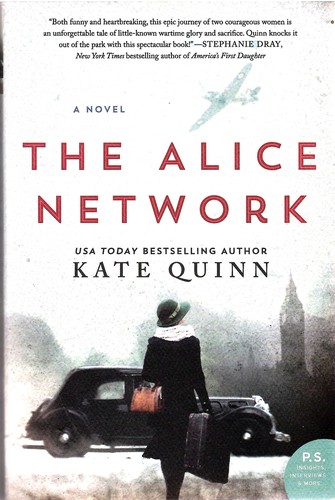
Start this bookNo. 27 on this list. The Alice Network · Kate Quinn · 2017
Quinn braids two timelines: in 1947, Charlie St. Clair, a pregnant American socialite, searches postwar Europe for her cousin who vanished during the German occupation of France; in 1915, Eve Gardiner, a young Englishwoman with a stammer, is recruited into the real-life Louise de Bettignies spy network operating behind German lines in occupied Lille. The two women's stories converge when Charlie tracks down the elderly, alcoholic, rage-filled Eve in London and discovers that Eve's wartime past holds the key to her cousin's disappearance. Quinn draws on the historical Alice Network—a ring of female spies who gathered intelligence on German troop movements—and builds a thriller that moves between the mud and terror of World War I espionage and the rubble-strewn moral reckoning of the postwar years. Eve's storyline, in which she seduces a German officer to extract military secrets while knowing that a single slip means execution, carries the novel's real weight. The tension between what espionage requires and what it destroys drives both timelines toward a violent, satisfying conclusion.
Very Easy5.2 hours
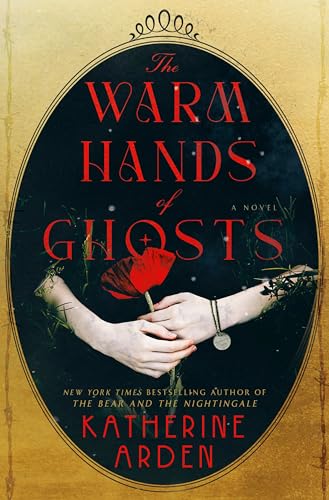
Start this bookNo. 28 on this list. The Warm Hands of Ghosts · Katherine Arden · 2024
A 2024 novel with no syllabus presence recorded. It is a commercial historical fantasy-adjacent title and sits in the same low band as Beach Read.
Easy5.4 hours
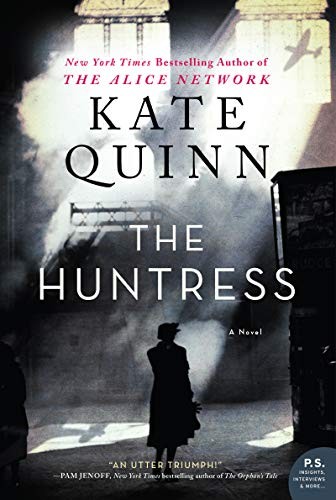
Start this bookNo. 29 on this list. The Huntress · Kate Quinn · 2019
Three narratives interlock across a decade: in 1946 Boston, a young photographer named Jordan McBride discovers that her father's charming new wife may not be who she claims; in postwar Vienna, a British war correspondent and a former Soviet bomber pilot team up to hunt Nazi war criminals; and during the war itself, a female Night Witch pilot flies suicide missions over the Eastern Front in a plywood biplane. The three threads spiral toward a single figure—a woman known as die Jagerin, the Huntress, who committed atrocities at a lake in Poland and has since vanished into a new identity. Quinn anchors the novel in the real history of the Soviet Union's all-female bomber regiments and the postwar Nazi-hunting operations, weaving genuine historical detail into a propulsive thriller structure. The novel's central question—whether ordinary-seeming people can harbor monstrous pasts—gains force because Quinn refuses to make the Huntress a one-dimensional villain. By the time her identity is revealed, the reader has spent hundreds of pages watching her perform kindness, and the dissonance is the point.
Easy5.8 hours
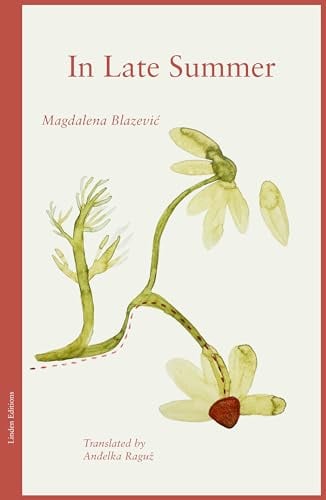
Start this bookNo. 30 on this list. In Late Summer · Magdalena Blažević · 2022
In Late Summer is a short recent novel narrated by a girl killed in a 1993 massacre in a village in central Bosnia. It reached English readers only recently and has no place on reading lists.
Moderate2.5 hours
Start this book


About this list
These 32 books are the highest-scoring eligible war novels by women currently in the catalogue. About 209 hours of reading in all. Difficulty runs from 35 to 56 out of 100 for the middle half of the list; the summit is Moon Tiger at 77.
This list is ranked by literary regard, with a consistent order for equal scores. Membership follows authors and co-authors, not translators or editors. Catalogue coverage and the historical canon both limit what this list can represent, and genre labels are the catalogue’s own, gathered into broader kinds.
When we matched the Canons dataset to our catalogue in October 2026, our canonical-status scores rose with the number of school curricula, publisher series and lists in it that cite a work: the median score was 72 for books one such source cites, 84 at two, 88 at three, 92 at four and 93 at five or more. Prizes are left out of that count. Outside the state curricula, the dataset’s sources choose mostly from what has been translated into English or French, so it is a weaker check on other literatures. Source: Canons (Andrew Piper), CC BY 4.0
Questions people actually ask
- What are the best war novels by women?
- By literary regard, which weighs canonical status, critical standing and influence: The Time of the Doves by Mercè Rodoreda, Half of a Yellow Sun by Chimamanda Ngozi Adichie, The Field of Life and Death by Xiao Hong, One of Ours by Willa Cather and Pas pleurer by Lydie Salvayre. ReadingRate ranks 32 such books, each with a difficulty score and a reading-time estimate.
- Which war novels by women should I read first?
- Start from difficulty, not from rank. The most approachable books on this list that still carry top literary regard are The Time of the Doves by Mercè Rodoreda (about 3 hours), One of Ours by Willa Cather and Zinky Boys by Svetlana Alexievich.
- What are the shortest of the best war novels by women?
- Among the top 25, the shortest are The Field of Life and Death by Xiao Hong (about 4.4 hours), Girl by Edna O'Brien (about 3.1 hours) and The Caprices by Sabina Murray (about 3.7 hours), at an average pace of 250 words a minute adjusted for each book's difficulty.
- Which of the best war novels by women are the established classics?
- By canonical status, how firmly a book sits in curricula, anthologies and the canon: The Time of the Doves by Mercè Rodoreda, Half of a Yellow Sun by Chimamanda Ngozi Adichie, The Field of Life and Death by Xiao Hong, Pas pleurer by Lydie Salvayre and School of the Sun by Ana María Matute.
- Can I read any of these war novels by women for free?
- 1 of the 32 opens in ReadingRate's reader with a free account, from public-domain editions: One of Ours.
- How long would it take to read the top ten?
- About 70 hours, at an average pace of 250 words a minute adjusted for each book's difficulty: 35 days at two hours a day. Set your own pace on the page and the list's reading times change to it.
- How hard are war novels by women to read?
- Most of this list sits between 35 and 56 on ReadingRate's 100-point difficulty scale, where 40 to 55 is moderate. The summit is Moon Tiger at 77. Every entry carries its own score, so a reader can pick a great book at a difficulty they will finish.
- How is this list ranked?
- On literary-regard data: how canonically established a work is, its critical standing, and its influence on later writing. It is not a readers’ poll, which is why recent bestsellers rarely appear. Membership follows authors and co-authors, not translators or editors. Lists by country, author, period, theme or difficulty keep to literature: fiction, poetry and drama, with no philosophy, criticism or theory. A list of a kind of book, such as philosophy, memoir or criticism, keeps every book of that kind. Every list holds at most three works by one author.