Hours at an average pace
Showing 35 books
About 458 hours for 35 of 35 books with measured lengths. Estimates use 250 words a minute, adjusted for each book's difficulty. At 2 hours a day, about 230 days for those books.
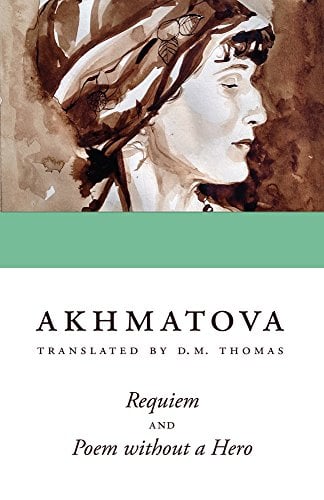
Requiem and Poem Without a Hero are canonical texts of 20th-century Russian literature and essential documents of Stalinist-era witness poetry — required reading in Russian literature courses worldwide. No database records appear for this English translation's syllabus presence, but the works are universally taught in courses on Soviet literature, women's writing, and poetry of witness. The Wikipedia absence in this database likely reflects a data gap rather than actual obscurity: Akhmatova's works are foundational to Russian studies curricula.
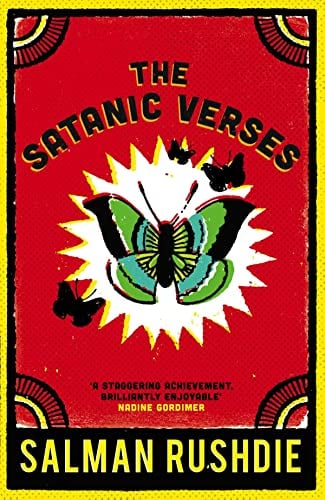
The Satanic Verses occupies singular position in late-twentieth-century literature due to the fatwa issued by Ayatollah Khomeini, making it perhaps the most internationally controversial novel of its era. Beyond the political firestorm, it stands as landmark postcolonial fiction and exemplar of British multicultural literature. The novel appears on standard lists of essential postmodern works and remains central to discussions of migration, identity, and religion in global fiction. Its notoriety ensures permanent place in literary and political history.
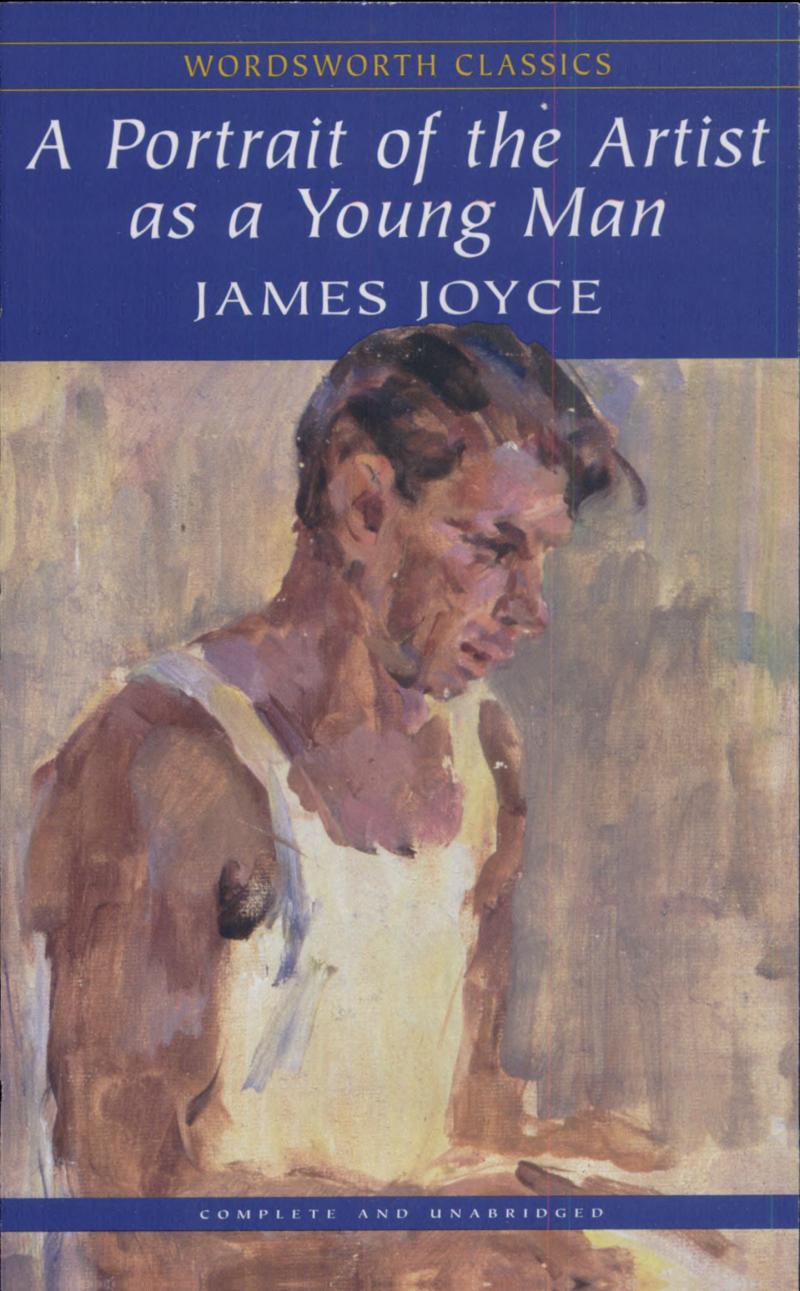
No. 3 on this list. A Portrait of the Artist as a Young Man
James Joyce · 1916
Difficult11 hours
Included in: Great Books of the Western World
Appears on 3,243 university syllabi according to the Open Syllabus Project (87.8th percentile), placing it in the company of the most-taught literary novels in English. Featured on the Modern Library 100 Best Novels, 1001 Books You Must Read Before You Die, and available in 40 Wikipedia languages — a global footprint that confirms its standing as a fixture of the Anglo-Irish modernist curriculum.
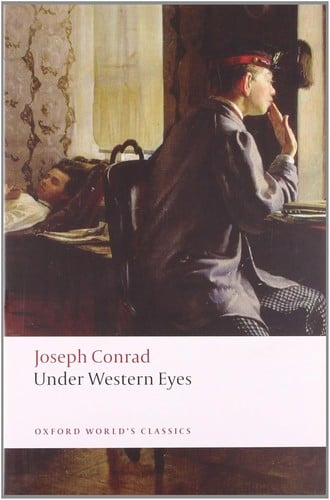
Under Western Eyes holds a secure place in the Conrad canon — studied in university courses alongside Nostromo, The Secret Agent, and Lord Jim, and consistently discussed in critical accounts of Conrad's major work. Leavis included Conrad among the great tradition of English novelists, and the novel's treatment of guilt, betrayal, and political despotism has kept it on syllabi across literature and political thought programmes. Its standing is below Heart of Darkness and Lord Jim in frequency of assignment but firmly canonical within the Conrad corpus.
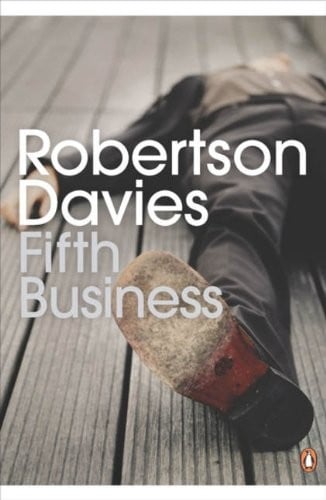
Fifth Business is widely regarded as the foundational text of modern Canadian literature and a fixture on university English syllabi across Canada and internationally. Its place at the head of the Deptford Trilogy and its sustained presence in academic course lists — from Canadian literature surveys to courses on the psychological novel — cement its canonical standing well beyond its national origin.
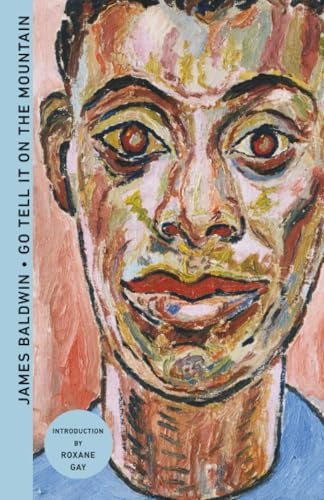
Listed on both the Modern Library 100 Best Novels (1998) and TIME All-TIME 100 Novels (2005), and appears on 414 university syllabi (65th percentile by Open Syllabus data). Baldwin's debut is a fixture in American literature and African-American literature courses.
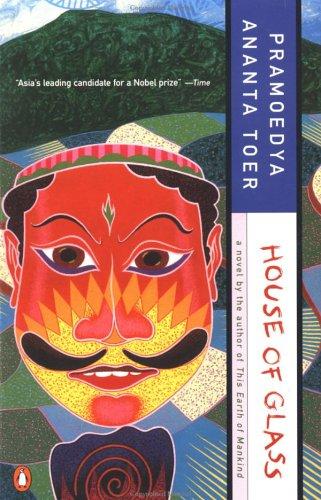
House of Glass is the concluding volume of the Buru Quartet, which is universally regarded as the most important work of Indonesian literature and one of the defining anticolonial novels of the twentieth century. It appears on numerous world literature reading lists and is taught at universities across Southeast Asia, Europe, and North America, though its presence in Western canons is less robust than its literary standing merits.
Eliot fused the rhythms of Anglican liturgy, the imagery of the English countryside, and the philosophy of time into four linked meditations on what it means to arrive where you started and know the place for the first time. The poems represent the summit of his craft — the point where his erudition finally dissolved entirely into music.
No. 9 on this list. Thus Spake Zarathustra A book for all and none
Difficult13 hours
A standard text in philosophy and German-literature courses, and one of the most widely read works of modern philosophy worldwide. Often the entry point to Nietzsche. It ranks with Notes from Underground in curricula, though less often assigned in full than Crime and Punishment.
"A Simple Heart" is one of the most anthologized short stories in world literature and appears across university syllabi in French literature and world literature courses. The collection as a whole is standard reading in 19th-century realism curricula globally. No scraped syllabus data was returned, but the collection's presence in major anthologies and its continuous critical attention over 140 years place it firmly in the high-canonical range.
No. 11 on this list. Measure for Measure · William Shakespeare · 1604
Taught in schools: AQA GCSE and A-level English Literature (UK), WJEC/Eduqas GCSE and A-level English Literature (UK)
Included in: Great Books of the Western World
Measure for Measure appears on university syllabi across English literature, drama, law, and gender studies courses worldwide. It is one of Shakespeare's most-taught 'problem plays,' central to any serious study of his canon, with Wikipedia articles in dozens of languages. Less ubiquitous than Hamlet or Macbeth, but firmly within the core Shakespeare curriculum.
Difficult2.8 hours
Read nowNo. 12 on this list. Angels in America: Perestroika · Tony Kushner · 1992
Angels in America is taught in American theater, drama, and queer studies programs at universities across the country and is consistently listed among the essential works of 20th-century American literature. Both parts of the play appear regularly on syllabi in literature, political science, and history courses. Its status as a defining document of the AIDS crisis and Reagan-era America makes it required context for anyone studying the period.
Difficult6.8 hours
Start this bookNo. 13 on this list. Cymbeline · William Shakespeare · 1611
Included in: Great Books of the Western World
Cymbeline is a regular presence in university Shakespeare courses and appears in collected editions universally, but it occupies the second tier of the canon — studied more as a late romance alongside The Winter's Tale and The Tempest than as a standalone essential. It lacks the curricular centrality of Hamlet, Macbeth, or King Lear, and general readers are unlikely to encounter it outside academic contexts. Its place in the late-romances grouping grants it moderate canonical standing, above Pericles but well below the great tragedies.
Difficult3.4 hours
Read nowNo. 14 on this list. The Scarlet Letter · Nathaniel Hawthorne · 1850
Taught in schools: Common Core text exemplars (Appendix B) (US), CSEC English B – Caribbean Examinations Council
Appears on 1,893 university syllabi (Open Syllabus, 81.9th percentile), a fixture of American literature courses and AP high school curricula across the United States. Wikipedia articles exist in 38 languages, and the work has continuous presence in American literary education since its 1850 publication.
Difficult9.4 hours
Read nowNo. 15 on this list. The Golden Ass · Apuleius · 170
Included in: Oxford World's Classics
The Golden Ass is the only Latin prose novel to survive complete from antiquity, making it a required text in virtually every classical literature and ancient novel course worldwide. Though the database returned no formal syllabus entries, the work appears across comparative literature, mythology, and world literature curricula at universities globally. It features in most canonical 'great books' programs and was included in Harold Bloom's Western Canon.
Difficult12 hours
Start this bookNo. 16 on this list. The Winding Stair · William Butler Yeats · 1933
Published in 1933, this collection represents Yeats at the height of his late powers, confronting old age, political disillusionment, and metaphysical yearning through symbols drawn from his occult system A Vision. The tower at Thoor Ballylee becomes a central image: in 'Blood and the Moon' it rises as both Anglo-Irish monument and emblem of consciousness ascending through gyres of history. 'A Dialogue of Self and Soul' stages an internal debate between transcendent renunciation and acceptance of embodied life, concluding with a forceful affirmation of existence that forgives even suffering. The paired Byzantium poems ('Sailing to Byzantium' appears in the earlier Tower volume, but 'Byzantium' here extends the meditation) envision sacred art as escape from biological decay into eternal form. 'Coole Park and Ballylee, 1931' elegizes Lady Gregory's estate and the cultural moment it represented, now dissolving in Ireland's post-revolutionary violence. 'Vacillation' sustains eight sections of philosophical oscillation between worldly and spiritual commitments without final resolution. Throughout, Yeats employs demanding stanzaic forms—ottava rima, terza rima—whose formal strictness contains explosive metaphysical content, creating poetry that is simultaneously architectural and visionary.
Difficult53 min
Start this bookNo. 17 on this list. Billy Budd, Sailor · Herman Melville
Taught in schools: Common Core text exemplars (Appendix B) (US)
Billy Budd is a fixture in American literature courses, canonized alongside Moby-Dick as one of Melville's essential works and one of the foundational American novellas. Although the data signals show no tracked syllabus entries in this database, the text has been continuously taught at university level since its rediscovery in the 1920s and appears on virtually every American literature syllabus covering the 19th century. It is frequently included on lists of great American fiction.
Difficult3.3 hours
Read nowNo. 18 on this list. The Faerie Queene · Edmund Spenser · 1590
The Faerie Queene appears in virtually every English Renaissance literature syllabus globally and is one of the most taught long poems in university English departments worldwide. It anchors the canon between Chaucer and Milton and is central to every history of the English literary tradition. Absence from the Open Syllabus database reflects data gaps, not actual classroom presence.
Difficult30 hours
Start this bookNo. 19 on this list. Paradise Lost · John Milton · 1667
Taught in schools: AQA GCSE and A-level English Literature (UK), WJEC/Eduqas GCSE and A-level English Literature (UK)
Included in: Great Books of the Western World
Milton retold the fall of man in blank verse of such muscular grandeur that Satan became the most charismatic figure in English poetry — not because Milton failed, but because he understood that rebellion requires eloquence. The poem reshaped the English language's sense of what a long sentence could do.
Challenging8.4 hours
Read nowNo. 20 on this list. Peer Gynt · Henrik Ibsen · 1867
Peer Gynt is a cornerstone of the Scandinavian theatrical canon and is regularly staged worldwide, from the National Theatre to major European opera houses. Edvard Grieg's 1876 incidental music gave the work cultural reach extending far beyond theatre audiences. It appears on world drama syllabi internationally and is central to any survey of 19th-century European literature.
Challenging4 hours
Start this book
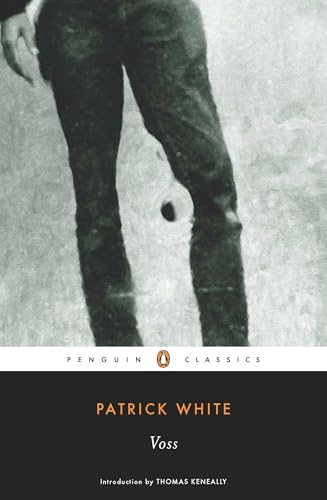
No. 21 on this list. Voss · Patrick White · 1957
Voss is recognized as a cornerstone of Australian literature and a major work of postcolonial fiction. It consistently appears in scholarly discussions of antipodean identity, imperial mythology, and mid-century modernism. The novel has maintained critical attention since publication and is standard curriculum in Australian and Commonwealth literary studies.
Challenging16 hours
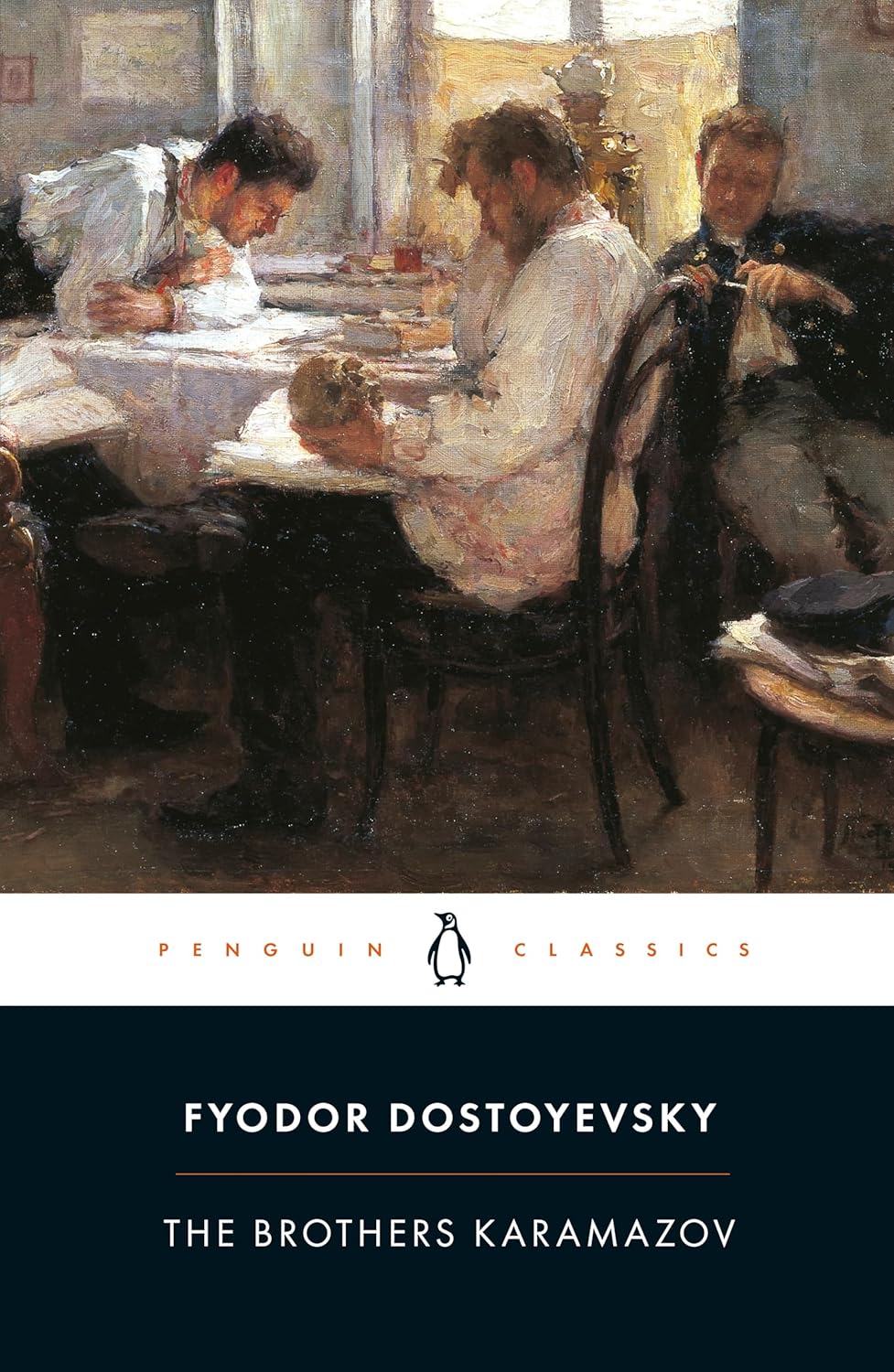
Start this bookNo. 22 on this list. The Brothers Karamazov · Fyodor Dostoevsky · 1880
Included in: Bokklubben World Library, Great Books of the Western World
Dostoevsky staged the question of whether God's existence can be reconciled with the suffering of children as a family drama among four brothers, each embodying a different answer. The Grand Inquisitor chapter alone would secure its place; the rest of the novel makes it the most intellectually ambitious work of fiction ever completed.
Challenging35 hours
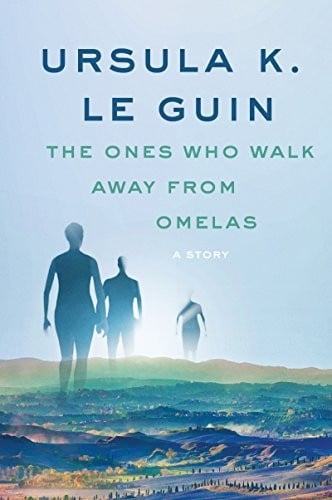
Read nowNo. 23 on this list. The Ones Who Walk Away from Omelas · Ursula K Le Guin · 1973
Widely taught in philosophy, ethics, and literature courses globally. Anthologized in hundreds of collections and featured on virtually every 'essential short fiction' list. Its presence in academic syllabi rivals Borges and Kafka in ethics curricula, where it functions as a standard thought-experiment text.
Challenging40 min
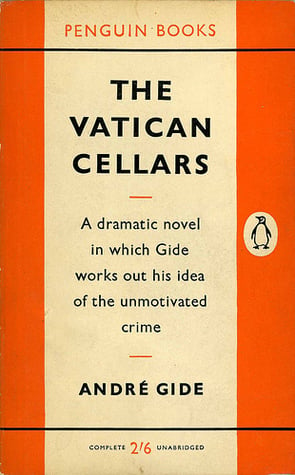
Start this bookNo. 24 on this list. The Vatican Cellars · André Gide · 1914
The Vatican Cellars opens in Rome in 1890 with Anthime Armand-Dubois, a freemason rationalist whose body trembles with spasms while his wife Véronique maintains quiet devotion. Anthime conducts vivisection experiments on animals to reduce behavior to simple tropisms, recruiting street orphan Beppo to procure his living test subjects. When Anthime smashes a Madonna statue in fury at his wife's prayers, he experiences a dream-vision of the Blessed Virgin that leaves him physically healed yet spiritually transformed. The novel then shifts to Julius de Baraglioul, a novelist and aristocrat whose father sends him to investigate the mysterious young Lafcadio Wluiki, a mysterious nineteen-year-old orphan of dubious origins. Julius discovers Lafcadio's private notebook, where the youth records not moral reflections but acts of self-harm, punishing himself with meticulous tallies for imagined transgressions. Gide weaves together these character strands with satirical precision, creating a darkly comic examination of belief, rebellion, and the peculiar violence that lurks beneath bourgeois respectability.
Challenging7.5 hours
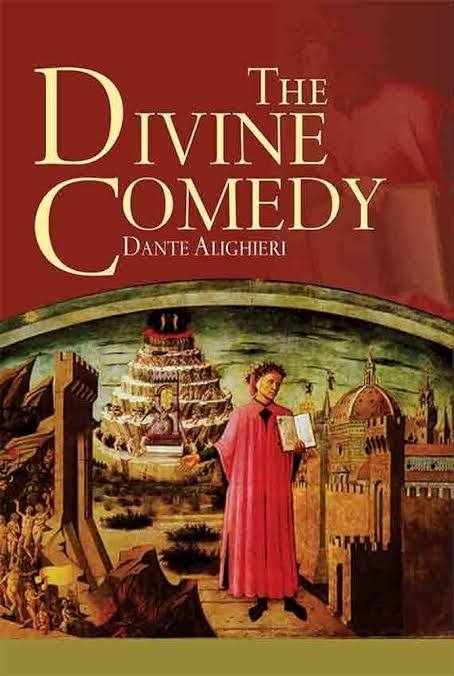
Start this bookNo. 25 on this list. Divine Comedy · Dante Alighieri · 1320
Taught in schools: Armenian secondary literature, Lektury obowiązkowe – Polish national reading list (Poland), UNAM Escuela Nacional Preparatoria – programas de Literatura (Mexico)
Included in: Bokklubben World Library, Great Books of the Western World, UNESCO Collection of Representative Works
Dante built a complete architecture of the afterlife so precise you can map it, then populated it with real people he knew. The result fused theology, politics, and autobiography into a single narrative structure that no poem has matched in ambition or execution.
Challenging11 hours
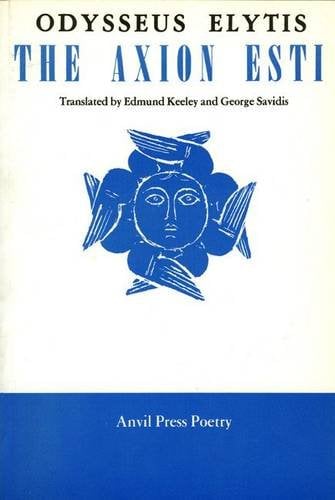
Read nowNo. 26 on this list. The Axion Esti · Odysseas Elytis · 1959
The Axion Esti stands as the central work of modern Greek poetry and one of the most significant long poems of the 20th century. It holds canonical status in Greek literature comparable to The Waste Land in English, widely taught in Greek schools and universities. The work's international recognition increased substantially after Elytis received the Nobel Prize in Literature (1979), though it remains less widely read outside Greece than other Nobel-honored poetry.
Challenging38 min
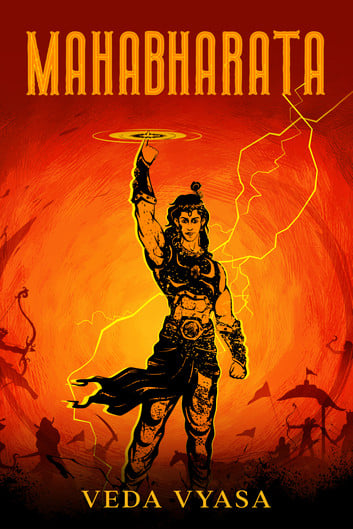
Start this bookNo. 27 on this list. Mahabharata · Vyasa · c. 400 BCE
At roughly 1.8 million words, the Mahabharata is the longest poem ever composed, and it earns its length: a dynastic war becomes the scaffold for a complete philosophy of duty, cosmic law, and the impossibility of righteous action in a fallen world. The Bhagavad Gita is embedded within it as a single episode, which gives some measure of its ambition.
Challenging61 hours
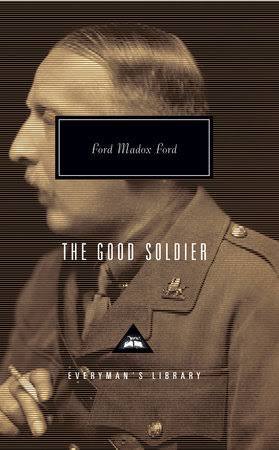
Read nowNo. 28 on this list. The Good Soldier · Ford Madox Ford · 1915
Appears on 473 university syllabi (67th percentile in Open Syllabus), placing it firmly in the modernist teaching canon alongside Conrad and early Lawrence. Listed on the Modern Library 100 Best Novels. A standard text in courses on British modernism and narrative technique, though less universally assigned than Woolf or Joyce.
Challenging7 hours
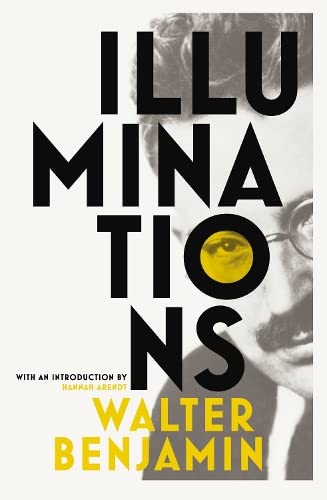
Read nowNo. 29 on this list. Illuminations · Walter Benjamin · 1955
Illuminations is the essential anglophone introduction to Benjamin, edited and introduced by Hannah Arendt in 1968. It appears on syllabi across German Studies, Critical Theory, Media Studies, Film Studies, and Literary Theory departments worldwide. 'The Work of Art in the Age of Mechanical Reproduction' is one of the most-assigned critical essays in university education globally, and the 'Theses on the Philosophy of History' are required reading in philosophy and history programs. Canonical status approaching Beloved (85) and above Infinite Jest (78).
Difficult11 hours
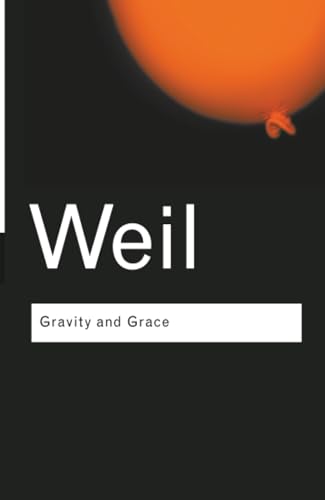
Start this bookNo. 30 on this list. Gravity and Grace · Simone Weil · 1947
Recognized as a 20th-century mystical classic. T.S. Eliot called Weil 'a kind of genius akin to that of the saints'; André Gide named her 'the best spiritual writer of this century.' The book is taught across philosophy, theology, and literature programs worldwide.
Difficult7.1 hours
Start this book
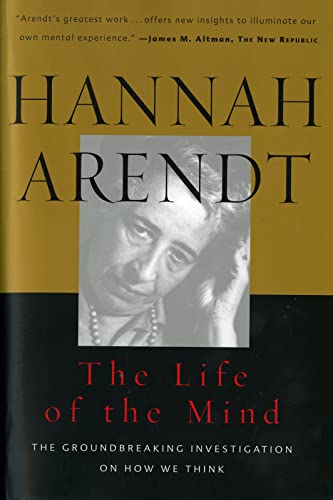
No. 31 on this list. The Life of the Mind
Hannah Arendt · 1978
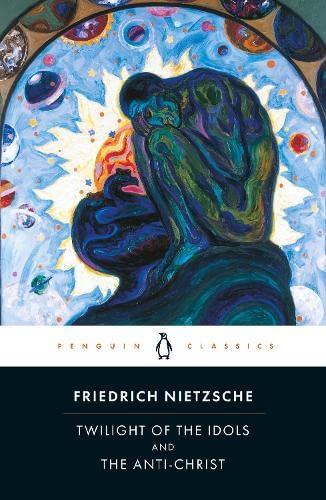
No. 32 on this list. Twilight of the Idols
Friedrich Nietzsche · 1889
No. 33 on this list. The Origins of Totalitarianism
Hannah Arendt · 1951
No. 34 on this list. City of God
Augustine of Hippo · 426
Included in: Great Books of the Western World
No. 35 on this list. Waiting for God
Simone Weil · 1950
About this list
These 35 books are the hardest-scoring eligible books about faith and spirituality currently in the catalogue. About 458 hours of reading in all. Difficulty runs from 67 to 75 out of 100 for the middle half of the list; the summit is Poem Without a Hero at 81.
This list is ranked by difficulty score, hardest first, with a consistent order for equal scores. Membership follows authors and co-authors, not translators or editors. A book is here when ReadingRate files it under Faith & Spirituality as one of its primary reading domains, at a confidence of 0.8 or more. Catalogue coverage and the historical canon both limit what this list can represent.
When we matched the Canons dataset to our catalogue in October 2026, our canonical-status scores rose with the number of school curricula, publisher series and lists in it that cite a work: the median score was 72 for books one such source cites, 84 at two, 88 at three, 92 at four and 93 at five or more. Prizes are left out of that count. Outside the state curricula, the dataset’s sources choose mostly from what has been translated into English or French, so it is a weaker check on other literatures. Source: Canons (Andrew Piper), CC BY 4.0
Questions people actually ask
- What are the hardest books about faith and spirituality to read?
- Ranked hardest first by difficulty score: Poem Without a Hero by Anna Akhmatova, The Satanic Verses by Salman Rushdie, A Portrait of the Artist as a Young Man by James Joyce, Under Western Eyes by Joseph Conrad and Fifth Business by Robertson Davies. ReadingRate ranks 35 such books, each with a difficulty score and a reading-time estimate.
- Can I read any of these books about faith and spirituality for free?
- 10 of the 35 open in ReadingRate's reader with a free account, from public-domain editions: A Portrait of the Artist as a Young Man, Measure for Measure, Cymbeline, The Scarlet Letter, Billy Budd, Sailor and 5 more.
- How long would it take to read the top ten?
- About 118 hours, at an average pace of 250 words a minute adjusted for each book's difficulty: 60 days at two hours a day. Set your own pace on the page and the list's reading times change to it.
- How hard are the hardest books about faith and spirituality?
- Most of this list sits between 67 and 75 on ReadingRate's 100-point difficulty scale, where 40 to 55 is moderate. The summit is Poem Without a Hero at 81. Every entry carries its own score, so a reader can pick a great book at a difficulty they will finish.
- How is this list ranked?
- Nine dimensions, from vocabulary and sentence structure to symbolic density and how much an ending withholds, each scored out of 100 and combined. It measures the text, not the reader, and it leans on meaning: The New York Trilogy scores 87 for how much it withholds, though its sentences are plainer than anything else in the top twenty. Each book's page shows which kind of hard it is. A book is here when ReadingRate files it under Faith & Spirituality as one of its primary reading domains, at a confidence of 0.8 or more.