Hours at an average pace
Showing 36 books
About 376 hours for 36 of 36 books with measured lengths. Estimates use 250 words a minute, adjusted for each book's difficulty. At 2 hours a day, about 189 days for those books.
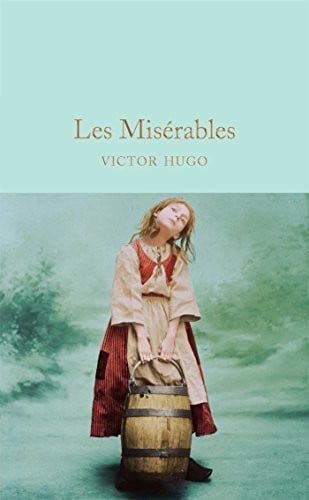
No. 1 on this list. Les Misérables
Victor Hugo · 1862
Challenging51 hours
Taught in schools: Turkish edebiyat curriculum (Turkey)
Les Misérables has a Wikipedia article available in 71 languages and a 73,000-character article with dedicated reception and adaptations sections — indicators of global cultural reach matched by few 19th-century novels. It is treated as a foundational text in French literature courses worldwide and appears on most lists of essential world fiction. Its canonical status in francophone secondary and university education is comparable to Hamlet's in English curricula.
Among Hugo most famous novels. Sparked Gothic Revival and cathedral preservation movement.
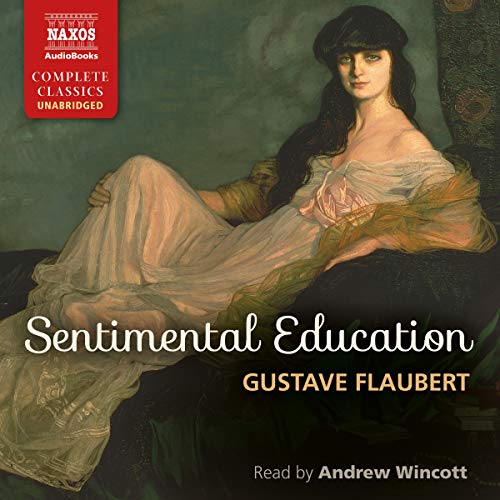
No. 3 on this list. Sentimental Education
Gustave Flaubert · 1869
Challenging18 hours
Included in: Bokklubben World Library
Wikipedia article available in 27 languages with dedicated reception and adaptations sections, indicating sustained global readership. Taught in French literature and comparative literature courses at universities worldwide, though less universally assigned than Madame Bovary.
A cornerstone of the 19th-century European novel, regularly taught in French literature and comparative literature courses. The novel exemplifies early psychological realism and remains essential reading for understanding the development of the modern novel.
Salammbô is taught regularly in French literature curricula and appears in world literature survey courses focused on 19th-century historical fiction, Orientalism, and the realist tradition. It holds a secure place in Flaubert's canonical oeuvre, though it is less universally assigned than Madame Bovary. The absence of collected Wikipedia or syllabus data in this dataset reflects a gap in data collection rather than actual marginality — the book has been continuously in print for 160 years and translated into dozens of languages.
Standard reading in French literature, European modernism, and existentialist philosophy courses worldwide. The Wikipedia article exists in 26 languages with a substantial dedicated Reception section, reflecting sustained international critical attention since the novel's 1945 publication. While not as universally required as Sartre's own Nausea or No Exit, The Age of Reason remains a fixed point of reference in 20th-century fiction curricula.
One of the most widely read novels in the world, The Count of Monte Cristo is a fixture in world literature courses and French literature curricula globally. Its Wikipedia article exists in over 80 languages, and the novel has remained continuously in print since its serialized publication in 1844-1846. It appears on virtually every canonical list of adventure fiction and is frequently cited as a foundational text of the roman-feuilleton tradition.
No. 8 on this list. Memoirs of Hadrian
Marguerite Yourcenar · 1951
Challenging8.3 hours
Included in: Bokklubben World Library
Widely taught in comparative and European literature courses; included in major lists of 20th-century literary classics; consistently cited as the defining modern example of the intellectual historical novel. Less dominant in the Anglophone canon than in the French-European tradition, but firmly placed in the Western literary canon through sustained critical and pedagogical reception since 1951.
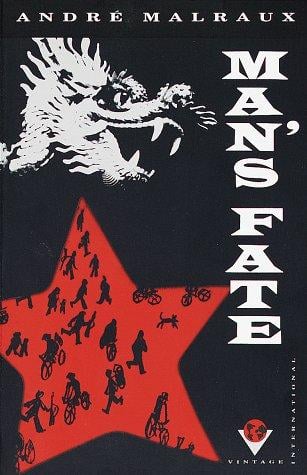
Taught in world literature surveys and 20th-century fiction courses; Goncourt Prize winner and defining novel of revolutionary fiction. Established canon presence though less universally required than Ulysses or Gatsby; regular inclusion in postcolonial and modern literature curricula.
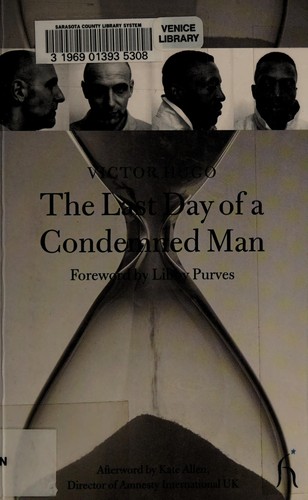
A staple of French literature and widely read in translation, it is a key text in debates on the death penalty. It is less taught than Hugo's Les Misérables.
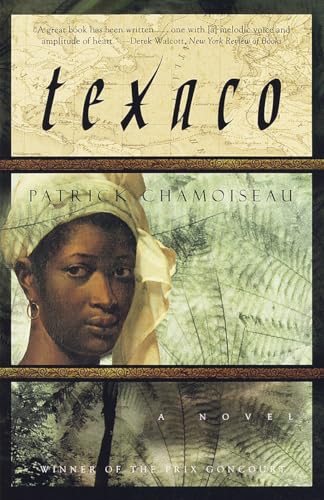
No. 11 on this list. Texaco · Patrick Chamoiseau · 1992
Texaco won the Prix Goncourt in 1992, France's most prestigious literary prize, securing its place in Francophone curricula and critical attention. The Wikipedia article appears in 32 languages, reflecting genuine global reach without approaching the breadth of canonical European works (Camus reaches 80+). As the principal novel of the Créolité movement, it functions as a required text in Caribbean and postcolonial literature courses worldwide.
Difficult12 hours
Start this bookNo. 12 on this list. The Rock of Tanios · Amin Maalouf · 1993
Prix Goncourt winner. Important work of Francophone and Lebanese literature.
Easy4.3 hours
Start this bookNo. 13 on this list. Pas pleurer · Lydie Salvayre · 2014
Winning the Prix Goncourt in 2014 secured Pas pleurer's position in contemporary French literature, though its canonical standing remains emergent rather than established. The novel addresses the enduring literary theme of the Spanish Civil War while contributing to the francophone tradition of linguistic experimentation with exile and bilingualism, placing it in conversation with Camus, Modiano, and postcolonial French writers.
Challenging4.1 hours
Start this bookNo. 14 on this list. The Abyss · Marguerite Yourcenar · 1968
A cornerstone of 20th-century French historical fiction and a key text in European intellectual novel tradition. Taught in French literature courses and recognized as Yourcenar's masterwork alongside Memoirs of Hadrian. Its canonical status is stronger in Europe than in Anglophone literary curricula, though it remains essential to understanding philosophical historical fiction.
Challenging11 hours
Start this bookNo. 15 on this list. The Debacle · Émile Zola · 1892
The Debacle was Zola's bestselling novel at publication and stands as one of the key entries in the Rougon-Macquart cycle, though it is considerably less taught today than Germinal or L'Assommoir. No syllabus or Wikipedia data is available in the database, but the novel holds an important place in French literary history.
Challenging19 hours
Start this bookNo. 16 on this list. The Reprieve · Jean-Paul Sartre · 1945
The data signals undercount the actual reputation: Wikipedia lists only 3 language editions and zero syllabus appearances, but these reflect data gaps rather than obscurity. The Roads to Freedom trilogy is taught in French literature and existentialist philosophy courses internationally, though the trilogy is less canonical than Sartre's philosophical works — Being and Nothingness, No Exit, Nausea — and remains primarily known among literary specialists rather than general curricula.
Difficult17 hours
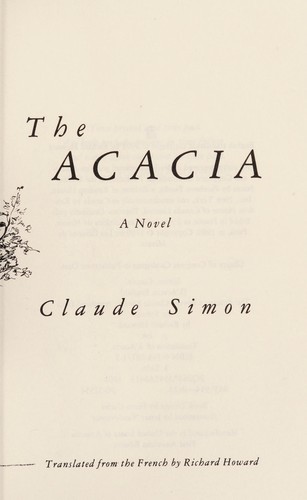
Start this bookNo. 17 on this list. The Acacia · Claude Simon · 1989
Four generations of a French family unfold against the backdrop of 20th-century history, from the trenches to the liberation. Simon's formally complex novel fragments narrative into a meditation on memory, war, and the persistence of the past.
Challenging6.7 hours
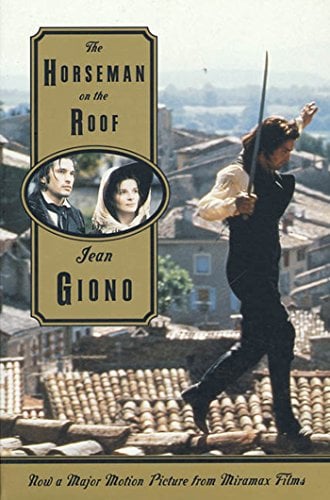
Start this bookNo. 18 on this list. The Horseman on the Roof · Jean Giono · 1951
Le Hussard sur le toit is on Le Monde's 100 Books of the Century, has Wikipedia articles in 18 languages, and is read in French schools and literature courses. It is less taught in English.
Moderate8.7 hours
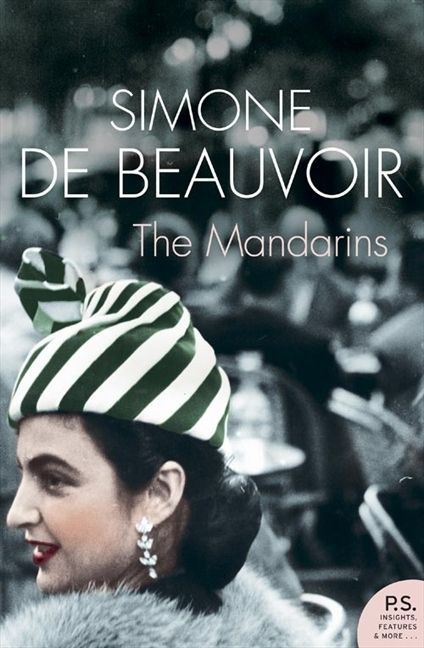
Start this bookNo. 19 on this list. The Mandarins · Simone de Beauvoir · 1954
The Mandarins appears on 6 university syllabi (19th percentile per Open Syllabus) and has Wikipedia coverage in 14 languages — modest reach for a Prix Goncourt winner. It is taught in French literature and existentialism courses, but The Second Sex dominates the de Beauvoir syllabus slot, leaving this novel a secondary canonical text.
Moderate19 hours
Start this bookNo. 20 on this list. La Reine Margot · Alexandre Dumas · 1845
A staple of French literature and of Dumas's Valois romances, widely read and adapted, though less often taught than The Three Musketeers. Standard in classic adventure and historical fiction reading.
Easy9.9 hours
Start this book
No. 21 on this list. The Gods Are Athirst · Anatole France · 1912
During the French Revolution's Terror, a painter becomes a fanatical revolutionary, sending former friends to the guillotine. Anatole France's ironic historical novel examines how idealism curdles into murderous fanaticism.
Moderate5.1 hours
Read nowNo. 22 on this list. Aurélien · Louis Aragon · 1944
Aurélien is on Le Monde's 100 Books of the Century and is widely regarded in France as Aragon's finest novel. It is little read or taught in English.
Moderate13 hours
Start this bookNo. 23 on this list. The House of Scorta · Laurent Gaudé · 2004
Three generations of the Scorta family struggle against the harsh landscape of southern Italy, from the late 19th century through the present. Gaudé's Prix Goncourt-winning novel celebrates resilience, family bonds, and the Mediterranean world.
Moderate4.6 hours
Start this bookNo. 24 on this list. See You Up There · Pierre Lemaitre · 2013
After World War I, two traumatized French veterans—one disfigured, one a con man—exact revenge on the patriotic society that sent them to die, by manipulating a scheme involving war memorials and graves. A darkly comic, intricately plotted thriller about the betrayal of soldiers by the nation they served. Winner of the Prix Goncourt.
Moderate9.5 hours
Start this bookNo. 25 on this list. The Great Families · Maurice Druon · 1948
The Schoudler family rises to wealth and political power in postwar France through the newspaper industry. Druon's Prix Goncourt-winning saga chronicles a dynasty's triumphs and corruptions across decades of French life.
Moderate5.8 hours
Start this bookNo. 26 on this list. The Civilized · Claude Farrère · 1905
French colonial officers in early 20th-century Saigon navigate desire, decadence, and moral corruption. Farrère's Prix Goncourt-winning novel captures the atmosphere of French Indochina and the rot within the colonial enterprise.
Moderate4.4 hours
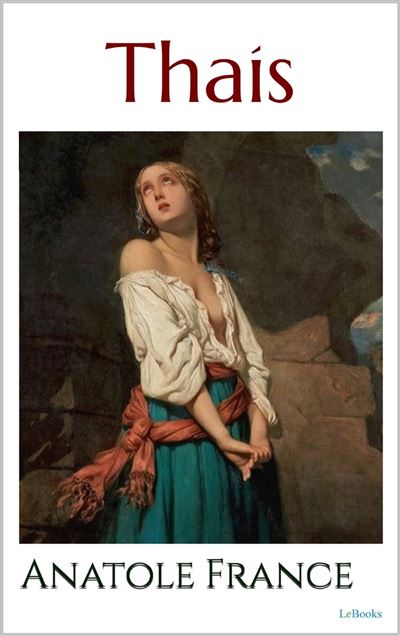
Read nowNo. 27 on this list. Thaïs · Anatole France · 1890
Thaïs appears on 28 Wikipedia language editions, indicating reasonable global cultural visibility, but the Open Syllabus Project records no measurable syllabus presence. It is not a standard text in French literature university courses today, though it was widely read across Europe and North America in the late 19th and early 20th centuries. Anatole France's Nobel Prize (1921) kept his work in print for decades, but Thaïs occupies a secondary position even within his own catalog — better known now through Massenet's 1894 opera than through direct readership.
Challenging3.6 hours
Read nowNo. 28 on this list. The Empty House · Laurent Mauvignier · 2025
Published in 2025, it has had no time to enter curricula, but the Prix Goncourt win marks it as a major French literary event. That lifts it above commercial fiction while leaving it short of established canon.
Moderate2.1 hours
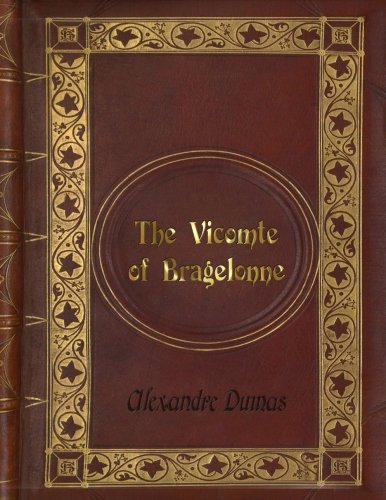
Start this bookNo. 29 on this list. The Vicomte de Bragelonne · Alexandre Dumas · 1847
The Vicomte de Bragelonne is widely recognized as a classic of French popular literature and the concluding volume of Dumas's d'Artagnan Romances. No syllabus data was found in the database, consistent with its status as beloved popular fiction rather than a fixture of university literature courses. The embedded narrative of The Man in the Iron Mask has nonetheless maintained continuous cultural presence across generations.
Moderate12 hours
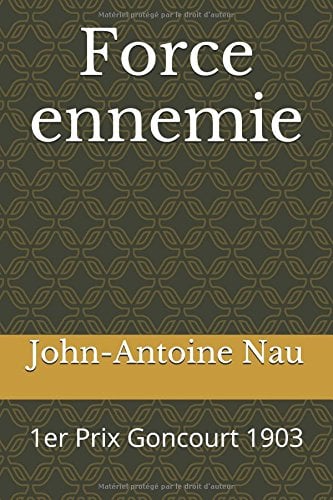
Start this bookNo. 30 on this list. Force ennemie · John-Antoine Nau · 1903
The first winner of the Prix Goncourt, this pioneering work of science fiction and spiritualism follows a man who discovers he can communicate telepathically with a woman named Dolorès. Nau's strange, forgotten novel blends occultism with psychological exploration.
Moderate5.7 hours
Start this book


No. 31 on this list. Our Lady of the Nile
Scholastique Mukasonga · 2012
No. 32 on this list. Perspective(s)
Laurent Binet · 2023
No. 33 on this list. The Last of the Just
André Schwarz-Bart · 1959
No. 34 on this list. A Invasão do Mar
No. 35 on this list. The Battle
Patrick Rambaud · 1997
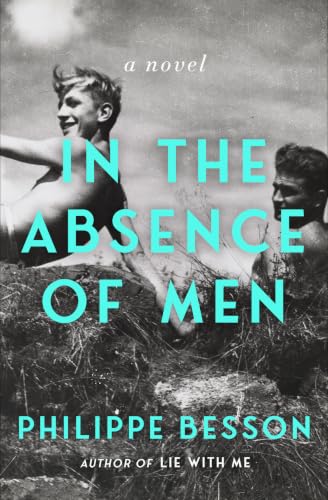
No. 36 on this list. In the Absence of Men
Philippe Besson · 2001
About this list
These 36 books are the highest-scoring eligible historical novels from France currently in the catalogue. By literary regard, it opens with Les Misérables, The Hunchback of Notre-Dame and Sentimental Education. About 376 hours of reading in all. Difficulty runs from 49 to 60 out of 100 for the middle half of the list; the summit is Texaco at 73.
This list is ranked by literary regard, with a consistent order for equal scores. Membership follows authors and co-authors, not translators or editors. Catalogue coverage and the historical canon both limit what this list can represent, and genre labels are the catalogue’s own, gathered into broader kinds.
When we matched the Canons dataset to our catalogue in October 2026, our canonical-status scores rose with the number of school curricula, publisher series and lists in it that cite a work: the median score was 72 for books one such source cites, 84 at two, 88 at three, 92 at four and 93 at five or more. Prizes are left out of that count. Outside the state curricula, the dataset’s sources choose mostly from what has been translated into English or French, so it is a weaker check on other literatures. Source: Canons (Andrew Piper), CC BY 4.0
Questions people actually ask
- What are the best historical novels from France?
- By literary regard, which weighs canonical status, critical standing and influence, Les Misérables, The Hunchback of Notre-Dame, Sentimental Education, The Charterhouse of Parma and Salammbô lead. ReadingRate ranks 36 such books, each with a difficulty score and a reading-time estimate.
- Where should I start with historical novels from France?
- Start from difficulty, not from rank. The most approachable books on this list that still carry top literary regard are Salammbô by Gustave Flaubert (about 7 hours), The Count of Monte Cristo by Alexandre Dumas and The Charterhouse of Parma by Stendhal.
- How hard are historical novels from France to read?
- Most of this list sits between 49 and 60 on ReadingRate's 100-point difficulty scale, where 40 to 55 is moderate. The summit is Texaco at 73. Every entry carries its own score, so a reader can pick a great book at a difficulty they will finish.
- How is this list ranked?
- On literary-regard data: how canonically established a work is, its critical standing, and its influence on later writing. It is not a readers’ poll, which is why recent bestsellers rarely appear. Membership follows authors and co-authors, not translators or editors. A list that is not a genre list keeps to literature (fiction, poetry, drama and philosophy), with philosophy taking no more than one slot in five while there is literature left to rank; every list holds at most three works by one author.