Hours at an average pace
Showing 64 books
About 319 hours for 64 of 64 books with measured lengths. Estimates use 250 words a minute, adjusted for each book's difficulty. At 2 hours a day, about 160 days for those books.
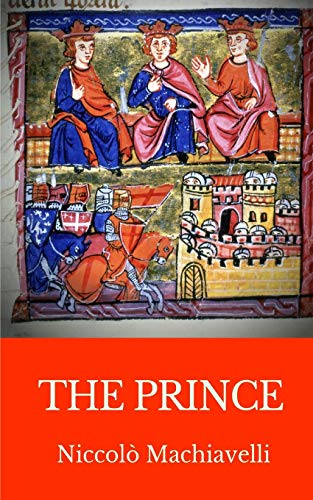
The Prince is required reading in political science, philosophy, history, and humanities curricula worldwide and is among the most widely assigned non-fiction texts in higher education. It appears on every syllabus for political philosophy and political theory, from introductory undergraduate courses to graduate seminars. Few texts of any era command this breadth of curricular presence.
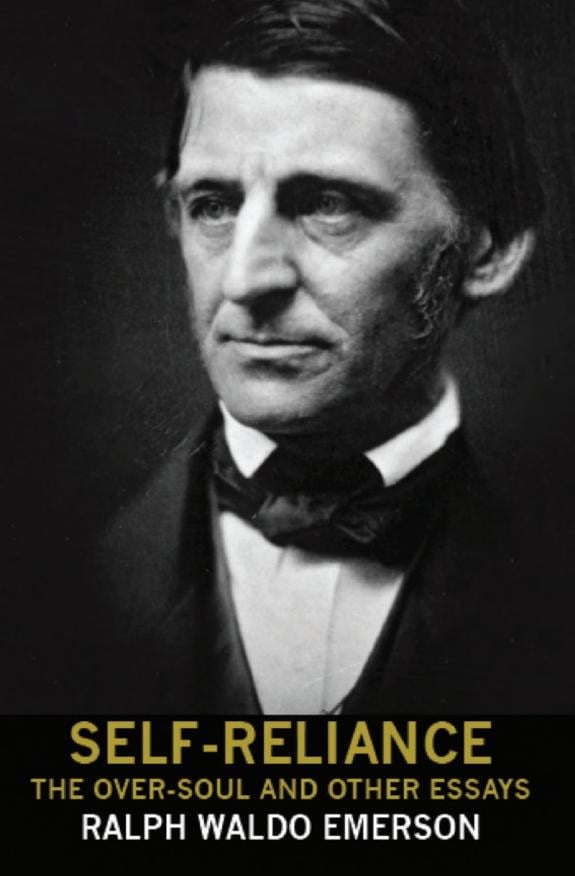
Self-Reliance is required reading in virtually every American high school and university American literature course; 'Self-Reliance' alone is one of the most-taught essays in the American educational canon. The collection appears on 'great American nonfiction' lists consistently and defines the Transcendentalist movement in survey curricula. No formal database signals were returned, but broad educational and cultural consensus places it among the highest-canonical American texts.
Niccolò Machiavelli spent the last decade of his life under house arrest, banned from Florence's political world, and wrote the Discourses on Livy as a systematic attempt to teach what he could no longer practice. Working through Titus Livy's history of Rome book by book, Machiavelli extracts from each episode a principle of republican governance — how to found a city, sustain a republic, manage armies, treat conquered peoples, handle conspiracies, and survive the inevitable corruption of institutions. The argument runs to 142 chapters across three books, each one a small essay: he states a thesis, marshals Roman examples, and delivers a verdict. Machiavelli's Rome is not an idealized past but a working laboratory. When he recommends that a new republic must sometimes execute its founding families, or that a prince should appear virtuous rather than be virtuous, he is not being provocative — he is being precise. The Discourses is the longer and more theoretically ambitious of his two major works, and the one where his commitment to republican liberty is explicit rather than implied. Readers accustomed to political philosophy as abstract theory will find this text unusual: it thinks in cases, in generals, in the specific behavior of specific tribunes during specific sieges. The Victorian translation adds a layer of archaic syntax to the Renaissance argument. What emerges is a political science conducted before the term existed — unsentimental, empirical, and still asking questions no subsequent political thinker has fully answered.
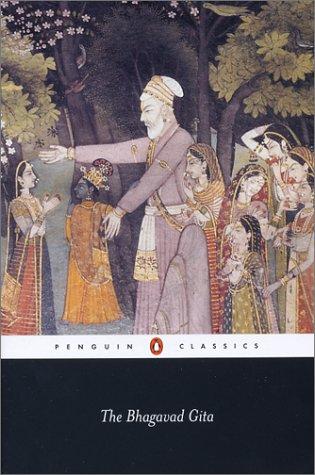
The Gita—a 700-verse dialogue between the warrior prince Arjuna and his charioteer Krishna, who is an avatar of God—is embedded within the Mahabharata but has been read as a standalone scripture for centuries. On the eve of a catastrophic battle, Arjuna sees his kinsmen arrayed on both sides and refuses to fight. Krishna's response unfolds the central teachings of Hindu philosophy: karma yoga (the path of selfless action), bhakti yoga (the path of devotion), and jnana yoga (the path of knowledge). Krishna argues that Arjuna must act—not because the outcome matters but because action without attachment to results is the nature of dharma. The Gita's synthesis of duty and detachment, action and renunciation, has made it the most widely read scripture in Hinduism and one of the most influential philosophical texts in world literature. Gandhi called it his 'eternal mother'; Oppenheimer quoted it upon witnessing the first nuclear explosion. Its teachings on duty, selflessness, and the nature of consciousness continue to resonate across cultures and centuries.
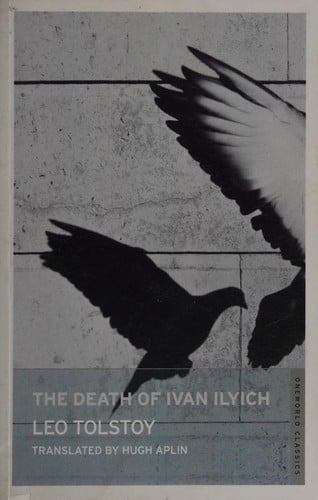
No. 5 on this list. The Death of Ivan Ilyich
Leo Tolstoy · 1886
Moderate1.2 hours
Taught in schools: Hungarian literature curriculum (magyar nyelv és irodalom) (Hungary), Russian FGOS literature standard
Included in: Bokklubben World Library
Universally regarded as one of the greatest novellas ever written. Studied across literature and philosophy courses.
In 1776, Jean-Jacques Rousseau was sixty-four years old, exiled from France, and convinced that his former friends — Diderot, Grimm, Voltaire — had orchestrated a universal conspiracy against him. He began walking the paths around Paris with a notebook, recording his thoughts. The result is ten 'walks': part diary, part philosophical essay, part self-justification by a man who had already written the Confessions and still felt misunderstood. The Fifth Walk, written on the Île Saint-Pierre in Lake Biel, is the book's still center — Rousseau lying in a drifting boat, mind blank, aware of nothing but existing. He calls this state the only happiness fully available to him. The Seventh Walk catalogs the plants he collected with botanical precision, finding in botany a discipline free of ambition. The Fourth Walk reckons with his lifelong relationship to lying, reaching the unexpected conclusion that truth is owed only to those with a claim on us. Rousseau writes as a man who has stopped performing for an audience and is thinking on paper — the prose is direct, ruminative, sometimes self-deluding in ways he cannot see. The book breaks off mid-sentence in the Tenth Walk, which is what happened: he died. It is the founding text of the lyric essay and the template for every writer who has walked to think.
No. 7 on this list. Lying: Moral Choice in Public and Private Life
Sissela Bok · 1978
Moderate5.2 hours
Standard text in applied ethics courses and a foundational reference in deception studies.
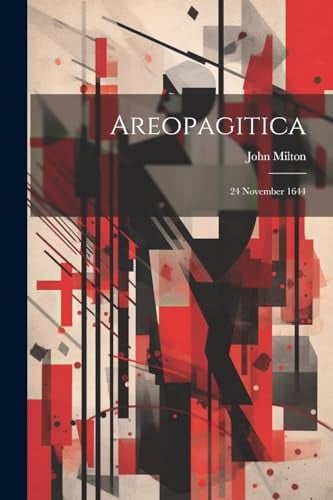
No. 8 on this list. Areopagitica
John Milton · 1644
Moderate1.3 hours
Included in: Great Books of the Western World
The foundational text of free speech philosophy. Required reading in political philosophy, law, and media studies worldwide.
The most widely read Stoic text and one of the most influential short philosophical works in Western history.
The most important work of political philosophy in the 20th century.
No. 11 on this list. Letters from a Stoic · Seneca · 65
Letters from a Stoic is among the most-taught classical texts in philosophy and humanities curricula worldwide. The Penguin Classics edition appears on syllabi for ancient philosophy, ethics, Latin literature, and Great Books courses at universities across North America and Europe. While the database returned no syllabus count, Seneca's letters are standard reading in any serious engagement with Stoicism and Roman prose.
Easy12 hours
Start this bookNo. 12 on this list. Emile, or On Education · Jean-Jacques Rousseau · 1762
One of the most influential books ever written on education. A foundational text of modern pedagogy, Romantic philosophy, and political thought.
Easy12 hours
Start this bookNo. 13 on this list. Meditations · Marcus Aurelius · 180
Included in: Great Books of the Western World
Foundational Stoic text; continuously read since Renaissance rediscovery.
Moderate4.3 hours
Read nowNo. 14 on this list. Discourses · Epictetus · 108
One of the three great Stoic texts alongside Marcus Aurelius and Seneca. A foundational work of Western ethics and a major influence on Christian and secular moral thought.
Easy6.5 hours
Start this bookNo. 15 on this list. On Crimes and Punishments · Cesare Beccaria · 1764
The founding text of modern criminology and penal reform, assigned in law, criminology, political-theory and Enlightenment courses everywhere, and permanently in print from Cambridge and Hackett.
Moderate2.2 hours
Start this bookNo. 16 on this list. The Cost of Discipleship · Dietrich Bonhoeffer · 1937
Dietrich Bonhoeffer opens with a distinction that splits the book in two. 'Cheap grace' is forgiveness sold on the cheap — grace without the cross, Christianity without Christ. 'Costly grace' is the real thing: the call that compelled Levi to leave his tax booth, that sent the disciples from their nets into unknown territory. Bonhoeffer wrote this in 1937, as a Lutheran pastor running an underground seminary while the German church bent its knee to the Nazi state. The stakes were not theoretical. What follows is a sustained reading of the Sermon on the Mount as a set of commands meant to be obeyed, not admired from a distance. The Beatitudes are not comforts for the passive; they describe what happens to people who actually follow Christ into the world. Bonhoeffer then builds outward from individual obedience to the visible church — a community that bears the form of the crucified Christ in its own body. Baptism is death. The Body of Christ is not a metaphor. The reader who expects gentle devotional prose will find instead a theologian making demands: that faith without obedience is not faith, that the church without costly commitment is not the church. The final chapters on the image of God carry the argument to its conclusion — to follow Christ means to be remade entirely, conformed to the image of the one who suffered.
Easy3.8 hours
Start this bookNo. 17 on this list. The Journalist and the Murderer · Janet Malcolm · 1990
The Journalist and the Murderer is a staple of journalism school curricula across North America and is widely assigned in media ethics, creative nonfiction, and literary journalism courses. Its opening sentence is among the most frequently quoted lines in American nonfiction. While it does not appear on general literary canons as broadly as major novels, within its domain — journalism studies and media ethics — it is as close to required reading as any single text.
Easy2.5 hours
Start this bookNo. 18 on this list. Discourse on Inequality · Jean-Jacques Rousseau · 1755
One of the foundational texts of modern political philosophy. Required reading in political theory, anthropology, and intellectual history courses worldwide.
Moderate2.5 hours
Start this bookNo. 19 on this list. The Art of War · Sun Tzu · c. 500 BCE
One of the most widely read texts in human history, taught in military academies (West Point, Sandhurst), MBA programs, political science courses, and East Asian studies worldwide. Wikipedia articles exist in over 100 languages. Its maxims have entered common parlance across cultures, and it appears on virtually every 'great books' or 'essential nonfiction' list.
Moderate2.1 hours
Read nowNo. 20 on this list. Meditations on First Philosophy · René Descartes · 1641
One of the most foundational texts in the entire Western philosophical tradition. The Meditations inaugurated modern philosophy and remains universally assigned in introductory and advanced philosophy courses worldwide. The cogito ('I think, therefore I am') is among the most recognized propositions in intellectual history. The work is canonical not merely within philosophy but within Western thought generally, shaping epistemology, philosophy of mind, and metaphysics for nearly four centuries.
Moderate1.6 hours
Start this book
No. 21 on this list. Two Treatises of Government · John Locke · 1689
Two Treatises of Government appears in virtually every Western political philosophy, political theory, and intellectual history curriculum from undergraduate survey to doctoral seminar. It is standard reading in philosophy, political science, history, law, and economics departments globally. The text is available in Wikipedia editions across 70+ languages and has been continuously in print since 1690. Its canonical standing in the history of political ideas rivals Shakespeare's standing in literary history.
Moderate6.7 hours
Read nowNo. 22 on this list. The Doors of Perception · Aldous Huxley · 1954
One morning in May 1953, Aldous Huxley swallowed four-tenths of a gram of mescalin dissolved in water and sat down to wait. What followed was not the colored geometries and visionary architectures he had expected. Instead, three flowers in a small vase — a rose, a carnation, an iris — began to shine with what he could only call their own inner light. Chair legs revealed themselves as something a Van Gogh would have painted with adoring terror. The folds in his gray flannel trousers disclosed an inexhaustible significance. Huxley's account of this eight-hour experiment is also a meditation on consciousness, perception, art, and the universal human need to escape selfhood. He draws on Vedantic philosophy, Zen Buddhism, Western art history — Vermeer, Botticelli, El Greco, Blake — and the pharmacology of adrenochrome to argue that mescalin temporarily disables the brain's reducing valve, admitting a flood of what he calls Mind at Large. The experience illuminates why the great mystics saw what they saw, why artists return obsessively to drapery, and why every culture throughout history has reached for chemical self-transcendence. The essay ends not in mystical surrender but in a pragmatic proposal: humanity needs better drugs, less toxic than alcohol, that produce changes in consciousness more genuinely valuable than mere sedation. Short enough to read in an afternoon, dense enough to reread for years.
Easy58 min
Start this bookNo. 23 on this list. The Elementary Forms of Religious Life · Emile Durkheim · 1912
Founding text of the sociology of religion. Required reading in every sociology program.
Easy8.9 hours
Start this bookNo. 24 on this list. Mere Christianity · C.S. Lewis · 1952
While not a staple of English literature syllabi, Mere Christianity is a fixture in philosophy, theology, and religious studies courses at universities worldwide. It ranks among the most assigned texts in Christian higher education and appears on virtually every list of essential 20th-century nonfiction. Wikipedia covers it in dozens of languages, reflecting global reach far beyond the Anglosphere.
Easy3.9 hours
Start this bookNo. 25 on this list. Zen Mind, Beginner's Mind · Shunryu Suzuki · 1970
No syllabus or Wikipedia data came back in ReadingRate's own signals check, but the book has been continuously in print since 1970, sold well over a million copies, and is a fixture of Buddhist Studies and religious-studies reading lists as the standard English-language introduction to Zen practice. It sits alongside classics like The Cloud of Unknowing as a devotional text assigned for its content rather than for a literary curriculum.
Easy1.7 hours
Start this bookNo. 26 on this list. The Little Prince · Antoine de Saint-Exupéry · 1943
Taught in schools: Common Core text exemplars (Appendix B) (US)
One of the most translated books in history with over 300 language editions, making it among the most widely read works of French literature. A staple of French school curricula and taught globally in world literature, philosophy, and children's literature courses. Wikipedia articles exist in well over 100 languages, reflecting universal cultural penetration.
Easy60 min
Start this bookNo. 27 on this list. Essays in Idleness · Yoshida Kenko · 1332
One of the three pillars of the zuihitsu tradition and a foundational text of Japanese aesthetics. Required reading in Japanese education.
Easy2.6 hours
Start this bookNo. 28 on this list. The Demon-Haunted World · Carl Sagan · 1995
The Demon-Haunted World is widely assigned in critical thinking, philosophy of science, and introductory science courses at universities across the English-speaking world. Its 'baloney detection kit' chapter is excerpted in dozens of textbooks and anthologies, and the book appears on most 'essential reading' lists for scientific literacy.
Moderate9 hours
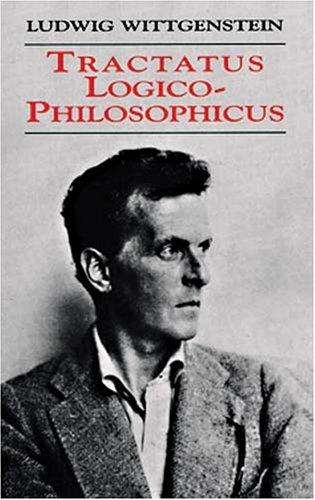
Start this bookNo. 29 on this list. Tractatus Logico-Philosophicus · Ludwig Wittgenstein · 1921
The Tractatus appears on virtually every analytic philosophy syllabus worldwide and is required reading in philosophy of language, logic, and 20th-century philosophy courses at every major university. It is the foundational text of logical positivism and the picture theory of meaning — a text that any philosophy student encounters, typically more than once. Its Wikipedia article exists in over 60 language editions, indicating its global reach as a canonical philosophical work.
Easy1.7 hours
Read nowNo. 30 on this list. The Interpretation of Cultures · Clifford Geertz · 1973
Foundational text in cultural anthropology. Assigned in virtually every graduate program.
Easy7 hours
Start this book
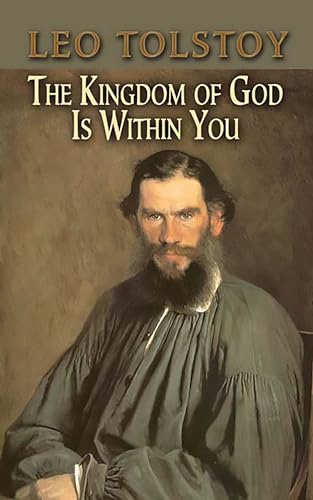
No. 31 on this list. The Kingdom of God Is Within You
Leo Tolstoy · 1894
No. 32 on this list. Capitalism and Freedom
Milton Friedman · 1962
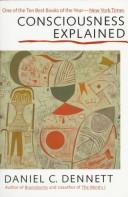
No. 33 on this list. Consciousness Explained
Daniel C. Dennett · 1991
No. 34 on this list. Florentine Histories
Niccolò Machiavelli · 1532
No. 35 on this list. Why I Am Not a Christian
Bertrand Russell · 1927
No. 36 on this list. The Structure of Social Action
Talcott Parsons · 1937
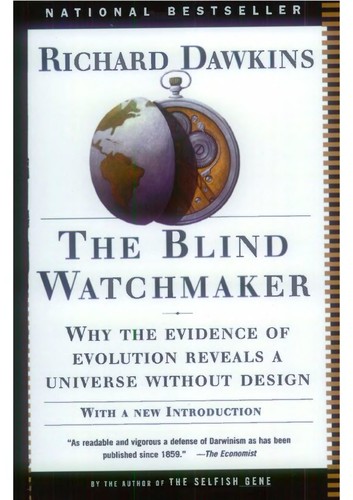
No. 37 on this list. The Blind Watchmaker
Richard Dawkins · 1986
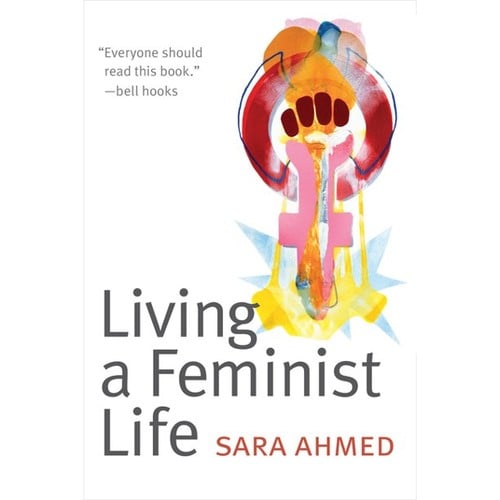
No. 38 on this list. Living a Feminist Life
Sara Ahmed · 2017
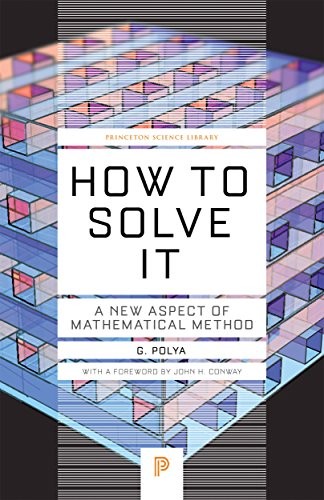
No. 39 on this list. How to Solve It
George Pólya · 1945
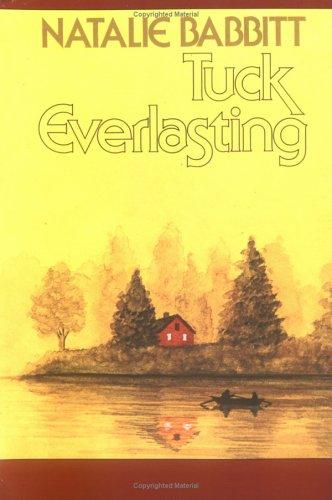
No. 40 on this list. Tuck Everlasting
Natalie Babbitt · 1975
Taught in schools: Common Core text exemplars (Appendix B) (US)
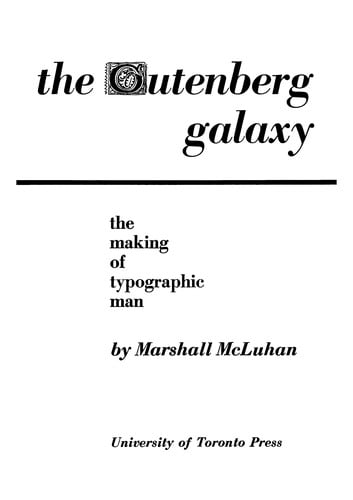
No. 41 on this list. The Gutenberg Galaxy
Marshall McLuhan · 1962
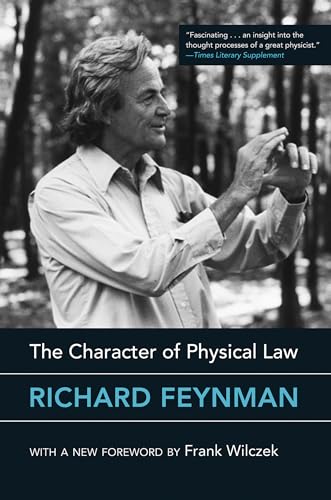
No. 42 on this list. The Character of Physical Law
Richard Feynman · 1965
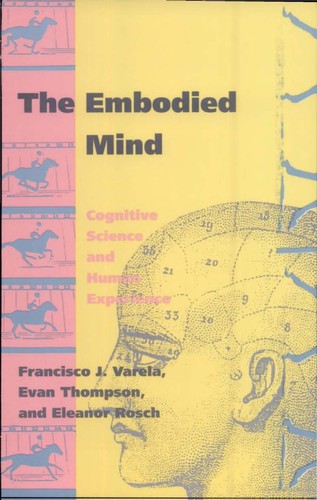
No. 43 on this list. The Embodied Mind
Francisco J. Varela · 1991
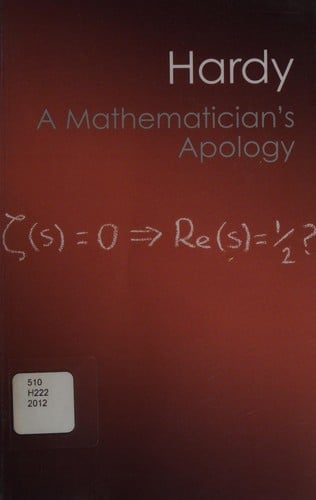
No. 44 on this list. A Mathematician's Apology
G.H. Hardy · 1940
No. 45 on this list. The Feeling of What Happens
Antonio Damasio · 1999
No. 46 on this list. Small Is Beautiful
E.F. Schumacher · 1973
No. 47 on this list. The Righteous Mind
Jonathan Haidt · 2012
No. 48 on this list. Being Mortal
Atul Gawande · 2014
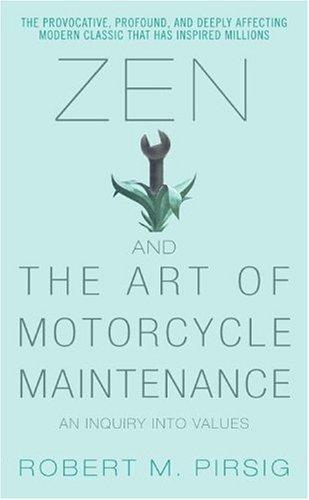
No. 49 on this list. Zen and the Art of Motorcycle Maintenance
Robert M. Pirsig · 1974
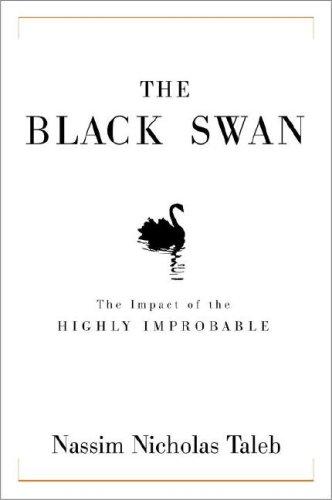
No. 50 on this list. The Black Swan
Nassim Nicholas Taleb · 2007
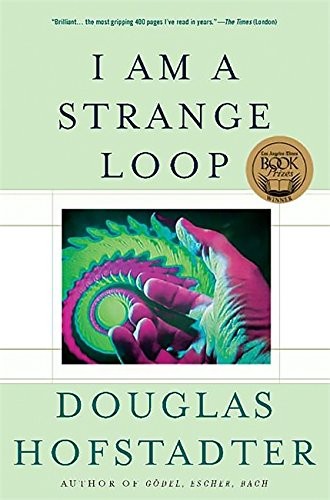
No. 51 on this list. I Am a Strange Loop
Douglas Hofstadter · 2007
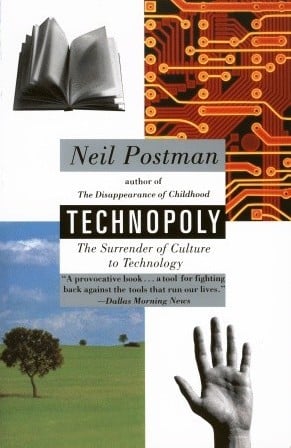
No. 52 on this list. Technopoly
Neil Postman · 1992
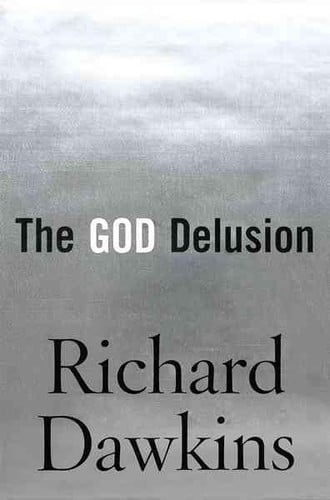
No. 53 on this list. The God Delusion
Richard Dawkins · 2006
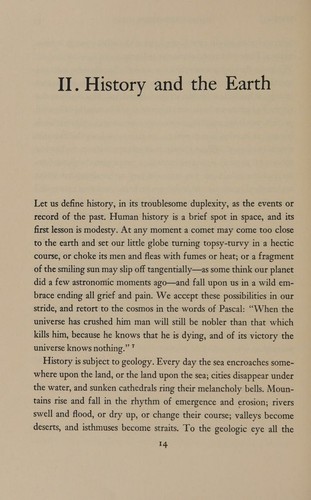
No. 54 on this list. The Lessons of History
Will Durant · 1968
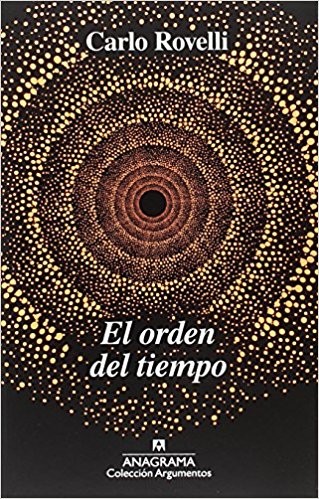
No. 55 on this list. The Order of Time
Carlo Rovelli · 2017
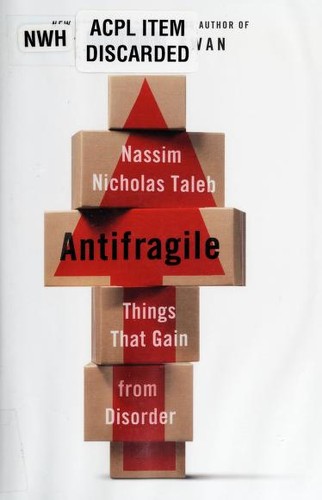
No. 56 on this list. Antifragile
Nassim Nicholas Taleb · 2012
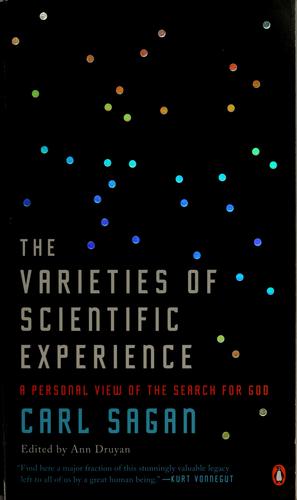
No. 57 on this list. The Varieties of Scientific Experience
Carl Sagan · 2006
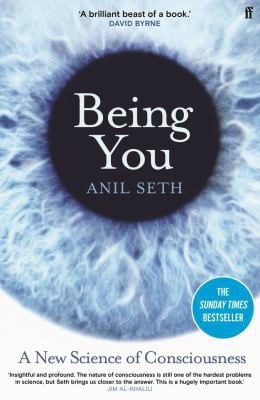
No. 58 on this list. Being You: A New Science of Consciousness
Anil Seth · 2020
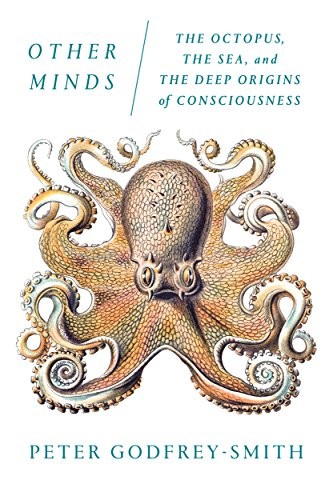
No. 59 on this list. Other Minds
Peter Godfrey-Smith · 2016
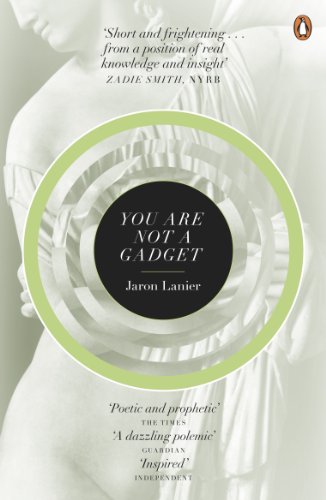
No. 60 on this list. You Are Not a Gadget
Jaron Lanier · 2010
About this list
These 64 books are the highest-scoring eligible easy philosophy books currently in the catalogue. By literary regard, it opens with The Prince, Self-Reliance and Other Essays and Discourses on Livy. About 319 hours of reading in all. Difficulty runs from 31 to 41 out of 100 for the middle half of the list; the summit is Areopagitica at 45.
This list is ranked by literary regard, with a consistent order for equal scores. Membership follows authors and co-authors, not translators or editors. Catalogue coverage and the historical canon both limit what this list can represent, and genre labels are the catalogue’s own, gathered into broader kinds.
When we matched the Canons dataset to our catalogue in October 2026, our canonical-status scores rose with the number of school curricula, publisher series and lists in it that cite a work: the median score was 72 for books one such source cites, 84 at two, 88 at three, 92 at four and 93 at five or more. Prizes are left out of that count. Outside the state curricula, the dataset’s sources choose mostly from what has been translated into English or French, so it is a weaker check on other literatures. Source: Canons (Andrew Piper), CC BY 4.0
Questions people actually ask
- What are the best easy philosophy books?
- By literary regard, which weighs canonical status, critical standing and influence, The Prince, Self-Reliance and Other Essays, Discourses on Livy, The Bhagavad Gita and The Death of Ivan Ilyich lead. ReadingRate ranks 64 such books, each with a difficulty score and a reading-time estimate.
- Where should I start with easy philosophy books?
- Start from difficulty, not from rank. The most approachable books on this list that still carry top literary regard are Enchiridion by Epictetus (about 22 min), The Journalist and the Murderer by Janet Malcolm and Discourses by Epictetus.
- How hard are easy philosophy books to read?
- Most of this list sits between 31 and 41 on ReadingRate's 100-point difficulty scale, where 40 to 55 is moderate. The summit is Areopagitica at 45. Every entry carries its own score, so a reader can pick a great book at a difficulty they will finish.
- How is this list ranked?
- On literary-regard data: how canonically established a work is, its critical standing, and its influence on later writing. It is not a readers’ poll, which is why recent bestsellers rarely appear. Membership follows authors and co-authors, not translators or editors. A list that is not a genre list keeps to literature (fiction, poetry, drama and philosophy), with philosophy taking no more than one slot in five while there is literature left to rank; every list holds at most three works by one author.