Hours at an average pace
Showing 45 books
About 276 hours for 45 of 45 books with measured lengths. Estimates use 250 words a minute, adjusted for each book's difficulty. At 2 hours a day, about 138 days for those books.
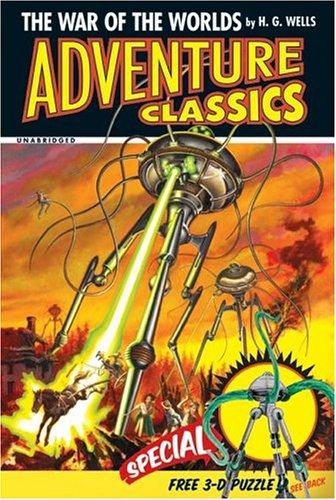
No. 1 on this list. The War of the Worlds
H.G. Wells · 1898
Moderate4.4 hours
Taught in schools: OCR GCSE and A-level English Literature (UK), Pearson Edexcel GCSE and A-level English Literature (UK), WJEC/Eduqas GCSE and A-level English Literature (UK)
The War of the Worlds is a cornerstone of science fiction, taught widely in literature and science fiction courses. While not as universally assigned as 1984 or Brave New World, it appears regularly in surveys of speculative fiction, Victorian literature, and science fiction history. The novel's influence on the genre ensures its continued academic presence.
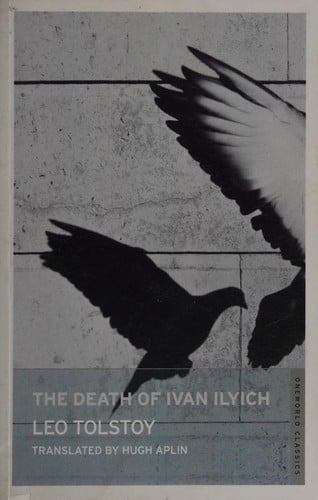
No. 2 on this list. The Death of Ivan Ilyich
Leo Tolstoy · 1886
Moderate1.2 hours
Taught in schools: Hungarian literature curriculum (magyar nyelv és irodalom) (Hungary), Russian FGOS literature standard
Included in: Bokklubben World Library
Universally regarded as one of the greatest novellas ever written. Studied across literature and philosophy courses.
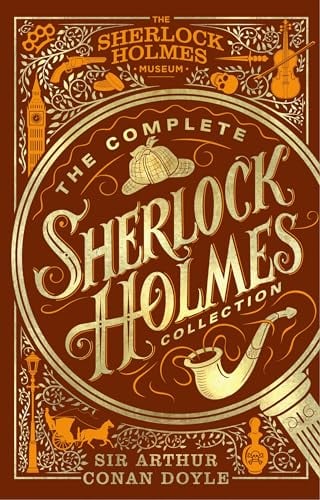
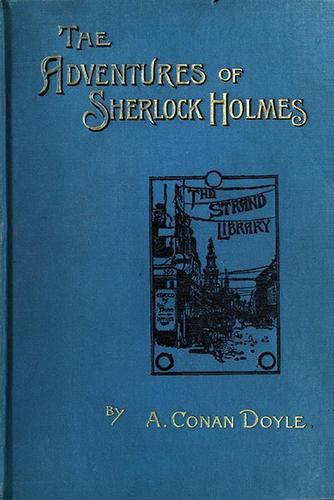
Holmes is a staple of English-language literature, taught widely in detective fiction and Victorian literature courses, and the stories are among the most-translated in the world. They are taught less as high literature than The Great Gatsby but are universally recognized.
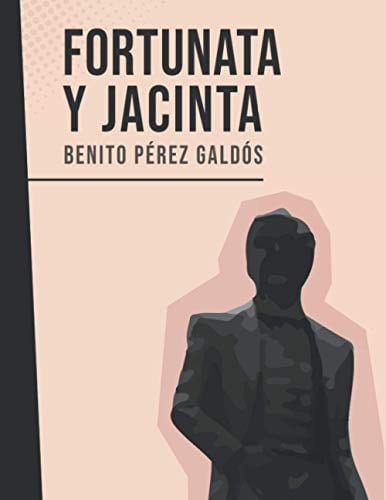
Universally recognized as the masterpiece of Spanish realism and one of the great European novels of the nineteenth century.
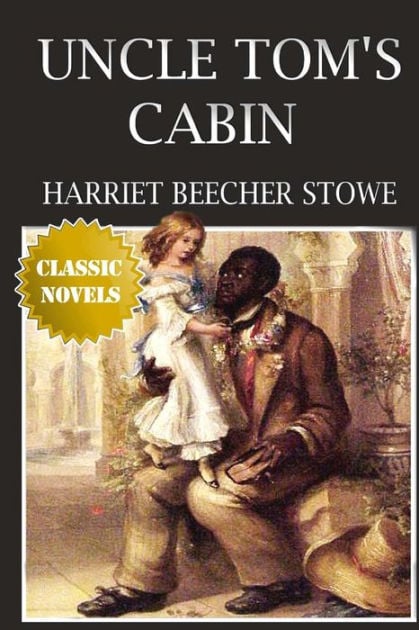
Uncle Tom's Cabin holds essential historical status in American literature and history curricula. Lincoln's alleged remark—'So this is the little lady who started this great war'—marks its political impact. The novel appears on lists of books that changed America, taught in courses on 19th-century literature, abolitionism, and protest fiction. Its canonical position rests on historical consequence more than literary innovation.
No. 6 on this list. Treasure Island
Robert Louis Stevenson · 1883
Easy4 hours
Taught in schools: Pacific Senior Secondary Certificate – English
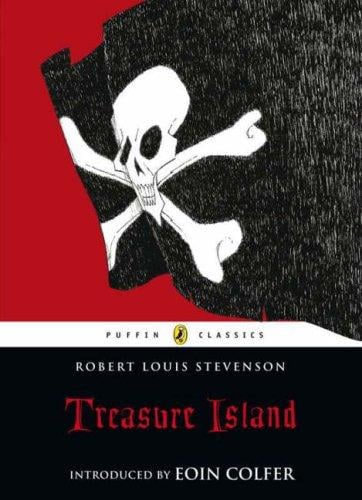
Treasure Island is the defining pirate novel in English literature, anthologized and taught to children across the globe since its 1883 publication. Adapted for film, stage, and television dozens of times, it occupies a foundational position in English-language adventure fiction. Though the data signals returned empty, its cultural ubiquity—Black Spot, treasure maps, parrots, Long John Silver—places it firmly in the literary canon.
No. 7 on this list. Little Women (Little Women, #1)
Louisa May Alcott · 1868
Easy6.5 hours
Taught in schools: Common Core text exemplars (Appendix B) (US)
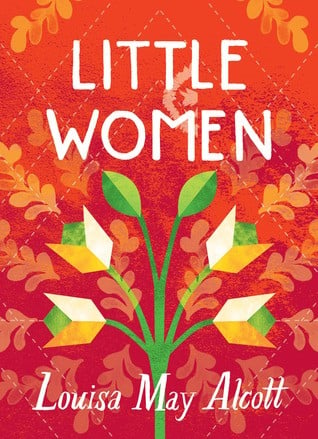
The book is a staple of American literature and girlhood reading, widely taught in schools and adapted many times. It ranks below the core canon of Gatsby and Mockingbird in college syllabi.
No. 8 on this list. The Adventures of Tom Sawyer
Mark Twain · 1876
Easy4.1 hours
Taught in schools: Common Core text exemplars (Appendix B) (US)
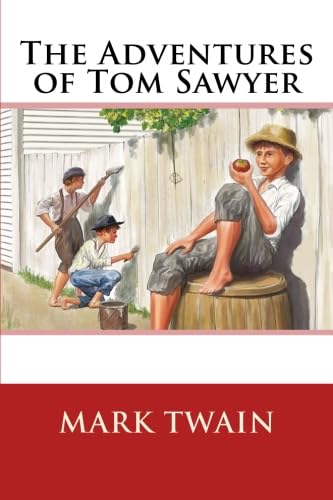
The Adventures of Tom Sawyer has been required reading in American middle and high schools for generations and appears on virtually every major list of American literature. Though university curricula tend to favor its sequel Huckleberry Finn, Tom Sawyer remains among the most widely read 19th-century American novels worldwide, with translations across dozens of languages.
The Adventures of Sherlock Holmes is one of the most widely read and recognized works of detective fiction in any language. Holmes is arguably the most famous fictional character after Hamlet. The stories appear in English literature surveys, genre studies, and Victorian literature courses. While not taught with the same frequency as canonical literary novels, the collection's cultural ubiquity and historical importance to the detective genre give it strong canonical standing. Wikipedia articles exist in dozens of languages, and the stories remain continuously in print worldwide.
Widely taught in Victorian literature courses at universities worldwide and consistently included in lists of the greatest 19th-century English novels. Routinely called Trollope's masterpiece and the finest Victorian satire of money and society. While no formal database entry is available here, the novel's presence on undergraduate syllabi is extensive, placing it solidly in the upper tier of Victorian canonical texts, though below the very highest (Dickens, George Eliot, Hardy).
No. 11 on this list. Twenty Thousand Leagues Under the Sea · Jules Verne · 1870
A staple of world adventure and science fiction, widely taught and abridged for school readers in many languages. It is a fixture of Verne's Voyages Extraordinaires, though less central to university literature courses than the major realist novels.
Easy4.3 hours
Start this bookNo. 12 on this list. Adam Bede · George Eliot · 1859
Adam Bede appears regularly on Victorian literature and 19th-century British fiction syllabi at universities worldwide, and is the standard entry point to George Eliot's work in courses that cannot assign the longer Middlemarch. It is included in most survey courses of the Victorian novel. Its canonical status within the Eliot corpus is secondary only to Middlemarch and The Mill on the Floss, but within the broader Victorian canon it holds a secure if not dominant position — consistently anthologized, consistently in print, and consistently cited as a foundational work of Victorian realism.
Moderate13 hours
Read nowNo. 13 on this list. Thérèse Raquin · Émile Zola · 1867
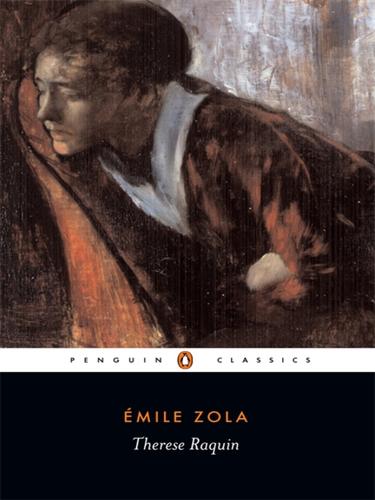
Widely read and taught as a foundational naturalist text, though less prominent than Germinal or L'Assommoir in the Zola canon.
Easy3.6 hours
Start this bookNo. 14 on this list. The Stechlin · Theodor Fontane · 1898
Highly regarded in German literature as Fontane's most experimental work. Less widely known internationally than Effi Briest but increasingly appreciated by scholars.
Moderate7.6 hours
Start this bookNo. 15 on this list. Journey to the Center of the Earth · Jules Verne · 1864
A foundational text of 19th-century adventure fiction and proto-science fiction, taught in French literature and science fiction history courses worldwide. No syllabus data is available in the database, but Verne's novel is widely considered essential reading in genre history. It appears on most curated lists of classic science fiction and has remained in continuous print for over 160 years.
Easy4.3 hours
Start this bookNo. 16 on this list. Master and Man · Leo Tolstoy · 1895
Frequently anthologized and taught as one of Tolstoy's finest short works. Its concentrated power and accessible length keep it in regular circulation.
Easy51 min
Read nowNo. 17 on this list. The House of the Seven Gables · Nathaniel Hawthorne · 1851
A major work of the American Renaissance, widely taught alongside The Scarlet Letter though less frequently read outside academic settings.
Moderate6.5 hours
Start this bookNo. 18 on this list. The Golovlyov Family · Mikhail Saltykov-Shchedrin · 1880
Considered the greatest Russian satirical novel and one of the major achievements of nineteenth-century Russian prose, though less internationally known than Tolstoy or Dostoevsky.
Easy6.8 hours
Start this bookNo. 19 on this list. The Innocents Abroad · Mark Twain · 1869
The Innocents Abroad appears frequently on university syllabi for 19th-century American literature and travel writing courses, though it is assigned less universally than Huckleberry Finn. It features on most canonical lists of American humor and is recognized as a founding document of the American travel narrative — a position that keeps it in academic circulation without making it a high school curriculum fixture.
Moderate12 hours
Read nowNo. 20 on this list. A Woman's Life · Guy de Maupassant · 1883
Jeanne de Lamare leaves her convent at seventeen with a calendar she will spend the rest of the novel crossing off, one disappointed hope at a time. Her father, a gentle Norman baron who worships Rousseau, has kept her cloistered from life so that he can introduce her to it properly — out in the countryside, among flowering fields and honest peasants. Within months she is married to Julien de Lamare, a handsome local nobleman whose charm evaporates immediately after the wedding night. Maupassant traces what follows with the patient, unsentimental eye of a naturalist: the husband's infidelities, the death of parents, the catastrophic indulgence of a son who bleeds her dry, the slow sale of everything she owns. The prose stays close to physical sensation — rain hammering on roof tiles, the salt smell of low-tide seaweed, Jeanne's hands trembling at the cliff edge. Maupassant refuses melodrama; the disasters accumulate quietly, the way ordinary life wears people down. Flaubert, who called this novel a masterpiece before it was finished, recognized the kinship with Emma Bovary: both women mistake romantic literature for a guide to living. But where Emma rages, Jeanne endures. A Woman's Life — Maupassant's first and finest novel — delivers its verdict in the maid Rosalie's closing line: life is never as good or as bad as we think.
Easy5 hours
Start this book

No. 21 on this list. Father Sergius · Leo Tolstoy · 1898
Father Sergius appears on university syllabi in Tolstoy studies and 19th-century Russian literature courses, but it occupies a secondary position relative to War and Peace, Anna Karenina, and The Death of Ivan Ilyich. No syllabus or Wikipedia data was returned by the data signals tool, consistent with the novella's status as a respected but not widely-taught shorter work. It appears in major collected editions of Tolstoy but is rarely the primary text in survey courses.
Moderate1.1 hours
Read nowNo. 22 on this list. Bel-Ami · Guy de Maupassant · 1885
Bel-Ami appears on world literature and French literature syllabi globally and is considered Maupassant's most important novel. The database lacks syllabus data but Wikipedia lists the book in over 30 languages with a substantial article including reception and adaptations sections. It features consistently on lists of essential 19th-century French novels.
Moderate3.1 hours
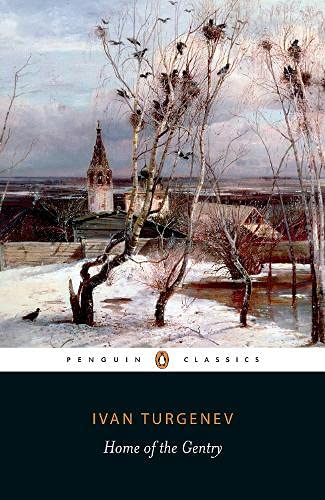
Start this bookNo. 23 on this list. Home of the Gentry · Ivan Turgenev · 1859
Taught in schools: Russian FGOS literature standard
Home of the Gentry is a standard text in Russian literature curricula, regularly anthologized alongside Turgenev's major works. It is less central to Western syllabi than Fathers and Sons but figures prominently in courses on 19th-century European realism. No data from Open Syllabus is available in the database, but its presence in scholarly editions and collected works reflects sustained institutional regard.
Moderate4.1 hours
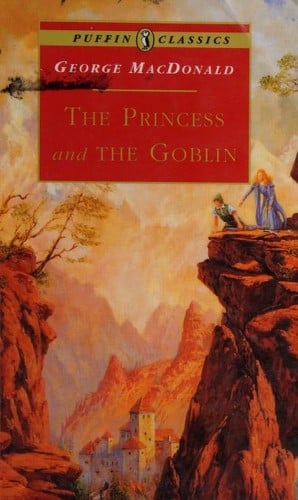
Start this bookNo. 24 on this list. The Princess and the Goblin · George MacDonald · 1872
The Princess and the Goblin is a classic of Victorian children's literature, regularly included in histories and courses on children's fantasy beside Alice's Adventures in Wonderland and The Water-Babies. It has stayed in print since its book publication in 1872.
Easy3.5 hours
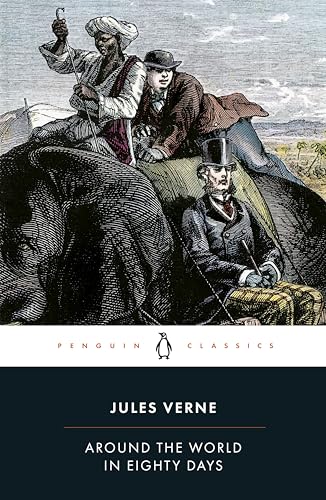
Start this bookNo. 25 on this list. Around the World in Eighty Days · Jules Verne · 1872
Taught in schools: CSEC English B – Caribbean Examinations Council
Around the World in Eighty Days is a recognized classic of world literature, appearing on recommended reading lists across many countries and taught in world literature and adventure fiction courses globally. The novel has been continuously in print since 1873 and has been translated into dozens of languages, cementing its place in the literary canon — though it sits below the most academically studied texts like Gatsby or Ulysses.
Easy3.6 hours
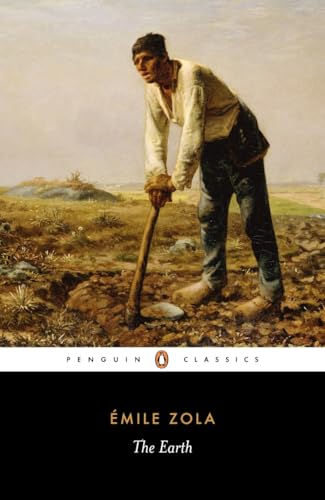
Start this bookNo. 26 on this list. The Earth · Émile Zola · 1887
An important entry in the Rougon-Macquart cycle but less widely read than Germinal, L'Assommoir, or Nana. Valued by scholars of naturalism and rural fiction.
Easy9.8 hours
Start this bookNo. 27 on this list. Under the Greenwood Tree · Thomas Hardy · 1872
Under the Greenwood Tree is taught in British literature and Hardy courses as the founding text of his Wessex cycle, but it occupies a supporting role in the canon relative to Tess of the d'Urbervilles or Far from the Madding Crowd. It appears on specialist Hardy syllabi and English pastoral fiction courses rather than general surveys. No syllabus data was found in the database, but the work's position in Hardy's oeuvre and the breadth of Hardy scholarship gives it modest but genuine canonical presence.
Easy3.3 hours
Start this bookNo. 28 on this list. Barchester Towers · Anthony Trollope · 1857
Barchester Towers is a fixture in Victorian literature courses, particularly in the UK and Commonwealth, and the Barchester Chronicles are frequently cited as essential Trollope reading. It lacks the global syllabi presence of Dickens or Eliot but commands a firm place in any survey of 19th-century English fiction. Its Wikipedia article exists in numerous languages, reflecting durable international recognition.
Easy12 hours
Start this bookNo. 29 on this list. A Study in Scarlet · Arthur Conan Doyle · 1887
A Study in Scarlet is the foundational text of Sherlock Holmes, one of the most globally recognized fictional characters. It appears regularly in detective fiction and popular literature courses, and the Holmes canon as a whole is considered essential reading in genre studies. The novel's cultural saturation is enormous even if formal literary syllabi treat it as genre rather than literary fiction.
Easy2.3 hours
Read nowNo. 30 on this list. Indian Summer · Adalbert Stifter · 1857
A landmark of Austrian literature, revered by some (Nietzsche, Thomas Mann) and dismissed by others. Occupies a unique and contested place in the German canon.
Easy14 hours
Start this book
No. 31 on this list. Cranford
Elizabeth Gaskell · 1853
No. 32 on this list. A Happy Boy
Bjørnstjerne Bjørnson · 1860
No. 33 on this list. Arne
Bjørnstjerne Bjørnson · 1858
No. 34 on this list. Romola
George Eliot · 1863
No. 35 on this list. Magnhild
Bjørnstjerne Bjørnson · 1877
No. 36 on this list. Following the Equator
Mark Twain · 1897
No. 37 on this list. White-Jacket
Herman Melville · 1850
No. 38 on this list. Scenes of Clerical Life
George Eliot · 1858
No. 39 on this list. Lady Susan
No. 40 on this list. The Black Tulip
Alexandre Dumas · 1850
About this list
These 45 books are the highest-scoring eligible easy Victorian and 19th-century books currently in the catalogue. About 276 hours of reading in all. Difficulty runs from 32 to 40 out of 100 for the middle half of the list; the summit is Romola at 45.
This list is ranked by literary regard, with a consistent order for equal scores. Membership follows authors and co-authors, not translators or editors. A book is here when ReadingRate files it under Victorian & 19th Century Literature as one of its primary reading domains, and only when its author’s lifetime places it in the period. Catalogue coverage and the historical canon both limit what this list can represent.
When we matched the Canons dataset to our catalogue in October 2026, our canonical-status scores rose with the number of school curricula, publisher series and lists in it that cite a work: the median score was 72 for books one such source cites, 84 at two, 88 at three, 92 at four and 93 at five or more. Prizes are left out of that count. Outside the state curricula, the dataset’s sources choose mostly from what has been translated into English or French, so it is a weaker check on other literatures. Source: Canons (Andrew Piper), CC BY 4.0
Questions people actually ask
- What are the best easy Victorian and 19th-century books?
- By literary regard, which weighs canonical status, critical standing and influence: The War of the Worlds by H.G. Wells, The Death of Ivan Ilyich by Leo Tolstoy, The Complete Sherlock Holmes by Arthur Conan Doyle, Fortunata and Jacinta by Benito Pérez Galdós and Uncle Tom's Cabin by Harriet Beecher Stowe. ReadingRate ranks 45 such books, each with a difficulty score and a reading-time estimate.
- Which easy Victorian and 19th-century books should I read first?
- Start from difficulty, not from rank. The most approachable books on this list that still carry top literary regard are The Complete Sherlock Holmes by Arthur Conan Doyle (about 5.6 hours), Treasure Island by Robert Louis Stevenson and Fortunata and Jacinta by Benito Pérez Galdós.
- What are the shortest of the best easy Victorian and 19th-century books?
- Among the top 25, the shortest are Master and Man by Leo Tolstoy (about 51 min), Father Sergius by Leo Tolstoy (about 1.1 hours) and The Death of Ivan Ilyich by Leo Tolstoy (about 1.2 hours), at an average pace of 250 words a minute adjusted for each book's difficulty.
- Which of the best easy Victorian and 19th-century books are the established classics?
- By canonical status, how firmly a book sits in curricula, anthologies and the canon: Uncle Tom's Cabin by Harriet Beecher Stowe, The War of the Worlds by H.G. Wells, Fortunata and Jacinta by Benito Pérez Galdós, The Complete Sherlock Holmes by Arthur Conan Doyle and The Death of Ivan Ilyich by Leo Tolstoy.
- Can I read any of these easy Victorian and 19th-century books for free?
- 18 of the 45 open in ReadingRate's reader with a free account, from public-domain editions: The War of the Worlds, Uncle Tom's Cabin, Treasure Island, The Adventures of Tom Sawyer, The Adventures of Sherlock Holmes and 13 more.
- How long would it take to read the top ten?
- About 85 hours, at an average pace of 250 words a minute adjusted for each book's difficulty: 43 days at two hours a day. Set your own pace on the page and the list's reading times change to it.
- How hard are easy Victorian and 19th-century books to read?
- Most of this list sits between 32 and 40 on ReadingRate's 100-point difficulty scale, where 40 to 55 is moderate. The summit is Romola at 45. Every entry carries its own score, so a reader can pick a great book at a difficulty they will finish.
- How is this list ranked?
- On literary-regard data: how canonically established a work is, its critical standing, and its influence on later writing. It is not a readers’ poll, which is why recent bestsellers rarely appear. Membership follows authors and co-authors, not translators or editors. Lists by country, author, period, theme or difficulty keep to literature (fiction, poetry, drama and philosophy), their novels, poems and plays first and their philosophy after them; a list of a kind of book, such as memoir or criticism, keeps every book of that kind. Every list holds at most three works by one author. A book is here when ReadingRate files it under Victorian & 19th Century Literature as one of its primary reading domains, and only when its author’s lifetime places it in the period.