Hours at an average pace
Showing 89 books
About 549 hours for 88 of 89 books with measured lengths. Estimates use 250 words a minute, adjusted for each book's difficulty. At 2 hours a day, about 275 days for those books.
Anti-Oedipus is canonical within Continental philosophy, critical theory, cultural studies, and queer theory — it appears on graduate syllabi wherever poststructuralism, Marxist theory, or affect theory is taught. Wikipedia data is absent from the database, but the work maintains Wikipedia articles in over 30 languages and is among the most-cited texts in humanities graduate education worldwide. Its status is more specialized than Orientalism but more widely taught than Negative Dialectics.
Appears on thousands of sociology, communication studies, and social psychology syllabi worldwide and is the foundational text for dramaturgical theory in social science. No comparable introduction to microsociology is as widely assigned across disciplines — sociology, anthropology, communication, performance studies, and cultural theory all treat it as required reading.
Joseph Campbell opens with a Freudian reading of an Arapaho folktale and never looks back. A woman falls through a hole in the sky while digging up a buffalo plant. An Aztec prince descends into the underworld to retrieve the bones of the dead. A Polynesian hero is swallowed by a whale. Campbell lines up hundreds of these stories from six continents and argues they are all the same story: a hero ventures from the ordinary world into a region of supernatural wonder, wins a decisive victory, and returns transformed. He calls this the monomyth — departure, initiation, return — and maps each stage with taxonomic precision: the Call to Adventure, the Belly of the Whale, the Meeting with the Goddess, the Apotheosis. The comparative method is relentless. A Navaho vision quest illuminates the Buddha's meditation under the Bo Tree, which rhymes with Christ's temptation in the desert. Campbell reads all of it through Jung and Freud, treating gods as projections of the psyche and mythic journeys as metaphors for psychological maturation. The second half widens from the individual hero to the cosmos itself — creation, virgin birth, the dissolution of worlds. The prose is mid-century academic, formal but clear, carried by the momentum of one extraordinary story after another. Readers who want to know why myths from unrelated cultures keep telling the same story will find Campbell's answer here, built from the evidence itself.
Robert Burton sits in his Oxford study, convinced he is melancholic, and sets out to cure himself by writing everything that has ever been said about melancholy. The result, first published in 1621 and expanded through five more editions before his death, runs to nearly 1,400 pages and cites over 1,250 authors. 'Democritus Junior' — Burton's pseudonym, borrowed from the ancient philosopher who laughed at human folly — addresses the reader as a fellow sufferer, diagnosing a world in which every person is mad in some particular way, and scholars most knowingly of all. The work divides melancholy into kinds: melancholy of the head, the body, the hypochondria; melancholy from love, from religion, from the stars. Each partition subdivides into sections, members, subsections, and then into digressions that swallow the parent argument whole. The Digression of Air runs sixty pages inside a single subsection, surveying cosmological hypotheses from Copernicus to the latest speculations about life on other worlds. Latin, Greek, and Arabic quotations crowd every paragraph. Burton's English is early seventeenth-century at its most capacious — learned, talkative, self-interrupting. The prescribed cures pile up as inexhaustibly as the causes, and the reader grasps eventually that the book is the disease and the disease is the book. No writer has made more persuasive company of inability to stop.
A foundational text in design education, required reading in virtually every industrial design, HCI, and UX program worldwide. The book has remained continuously in print since 1988 and appears on thousands of university syllabi across engineering, psychology, and design departments.
Widely assigned in psychology, philosophy, Holocaust studies and general reading courses, and long a standard recommended text, though not a literary canon fixture like Notes from Underground.
William James delivered these twenty lectures at the University of Edinburgh in 1901 and 1902 with a declared method: study religion not through theology or institutional history, but through the private testimony of individuals who have felt it acutely. He wanted the raw material—George Fox walking barefoot through Lichfield in winter, crying 'Wo to the bloody city!'; Saint Teresa's account of her visions; anonymous correspondents describing the sudden loss of a felt connection to something larger than themselves. The organizing argument is a defense of religious experience against what James calls medical materialism—the habit of dismissing mystical states by pointing to their neurological origins, as though epilepsy explained Saint Paul's vision on the Damascus road. James counters that all mental states, including scientific ones, have organic causes; the question of value must be answered on different grounds. His criterion: by their fruits, not their roots. The book maps varieties of religious consciousness—the healthy-minded who see goodness everywhere, the sick souls who cannot; conversion as psychological transformation; the mystical state as a genus with recognizable features across traditions. James treats Buddhist, Christian, Stoic, and New Thought testimonies as data points in the same inquiry. The prose is formal Victorian academic English, long-sentenced and densely qualified, but James keeps pulling back toward concrete cases. This is philosophy that takes human experience seriously enough to quote it at length.
In 1961, Stanley Milgram ran a simple experiment at Yale University. A volunteer sat in front of a shock generator with thirty labeled switches, from 15 volts to 450 volts. An experimenter in a lab coat instructed the volunteer to administer shocks to a stranger in the next room whenever the stranger answered a question incorrectly. The stranger screamed. The volunteer continued. Two-thirds of ordinary Americans delivered what they believed to be potentially lethal shocks because a man in authority told them to keep going. Milgram's account of these experiments is spare and methodical, walking through eighteen variations — what happens when the victim is in the same room, when the authority figure leaves, when other volunteers rebel, when the authority is a corporation rather than a university. Each variation peels away another excuse. It is not distance, not personality, not some German pathology. The mechanism is structural: people enter what Milgram calls the "agentic state," subordinating their own judgment to the hierarchy they find themselves in. The book is not comfortable reading, because its conclusions apply to the reader as readily as to anyone else. What makes it stick, fifty years later, is Milgram's refusal to look away from what he found — and his insistence that understanding the mechanism is the first step toward resisting it.
A fixture on neuroscience, psychology, philosophy of mind, and medical humanities syllabi at universities worldwide. Not part of the traditional literary canon, but treated as essential reading across multiple disciplines. Widely referenced in discussions of consciousness, selfhood, and the ethics of clinical medicine.
One of the most cited works in sociology. Foundational in disability and identity studies.
No. 11 on this list. The Image of the City · Kevin Lynch · 1960
Foundational text of urban design. One of the most cited in the field.
Easy2.2 hours
Start this bookNo. 12 on this list. The Blank Slate · Steven Pinker · 2002
The Blank Slate is a standard text in courses on psychology, evolutionary thought and science-and-society debates. It is widely assigned and cited, but it is a popular-science work and has not reached the status of a canonical classic.
Moderate14 hours
Start this bookNo. 13 on this list. The Language Instinct · Steven Pinker · 1994
The most influential popular linguistics book since Chomsky. Widely assigned in universities.
Moderate9.3 hours
Start this bookNo. 14 on this list. The Lonely Crowd · David Riesman · 1950
The bestselling sociology book in American history. Defined an era.
Challenging9.3 hours
Start this bookNo. 15 on this list. Mindstorms · Seymour Papert · 1980
Foundational text of educational computing and constructionist learning.
Easy3 hours
Start this bookNo. 16 on this list. Arbol del conocimiento · Francisco J. Varela · 1987
A canonical text of systems thinking and the biology of cognition, taught in cognitive science, cybernetics, and family-therapy training programs, and a fixture of Latin American intellectual life since its 1984 Chilean publication. It sits outside literary curricula but firmly inside several scientific and philosophical ones.
Challenging5.5 hours
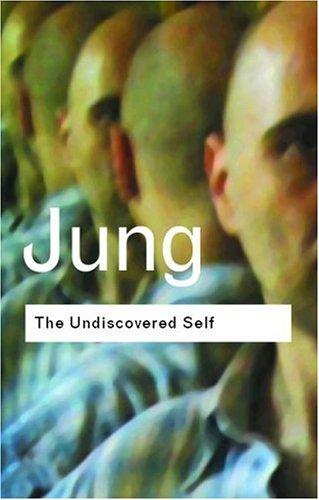
Start this bookNo. 17 on this list. The Undiscovered Self · Carl Jung · 1957
ReadingRate's own syllabus and Wikipedia-language checks came back empty for this title, but it remains a standard assignment in Jungian studies, political psychology, and courses on psychology and totalitarianism — taught for its argument more than as a literary set text, unlike Freud's Civilization and Its Discontents, which sits more firmly inside general humanities curricula.
Moderate2 hours
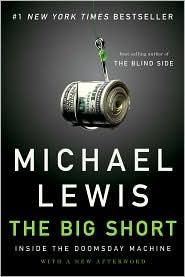
Start this bookNo. 18 on this list. The Big Short · Michael Lewis · 2010
Definitive account of the 2008 crisis. Academy Award-winning film adaptation. Widely assigned.
Easy5 hours
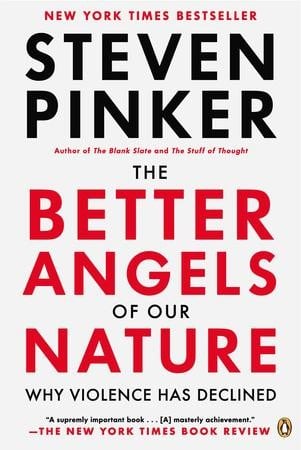
Start this bookNo. 19 on this list. The Better Angels of Our Nature · Steven Pinker · 2011
One of the most important and debated nonfiction books of the 2010s.
Easy16 hours
Start this bookNo. 20 on this list. Creativity: Flow and the Psychology of Discovery and Invention · Mihaly Csikszentmihalyi · 1996
“Although the benefits of this study to scholars are obvious, this thought-provoking mixture of scholarly and colloquial will enlighten inquisitive general readers, too.” — Library Journal (starred review) The classic study of the creative process from the bestselling author of Flow. Creativity is about capturing those moments that make life worth living. Legendary psychologist Mihaly Csikszentmihalyi (“The leading researcher into ‘flow states.’” — Newsweek) reveals what leads to these moments—be it the excitement of the artist at the easel or the scientist in the lab—so that this knowledge can be used to enrich people's lives. Drawing on nearly one hundred interviews with exceptional people, from biologists and physicists, to politicians and business leaders, to poets and artists, as well as his thirty years of research on the subject, Csikszentmihalyi uses his famous flow theory to explore the creative process. He discusses such ideas as why creative individuals are often seen as selfish and arrogant, and why the "tortured genius" is largely a myth. Most important, he explains why creativity needs to be cultivated and is necessary for the future of our country, if not the world.
Moderate8.7 hours
Start this book
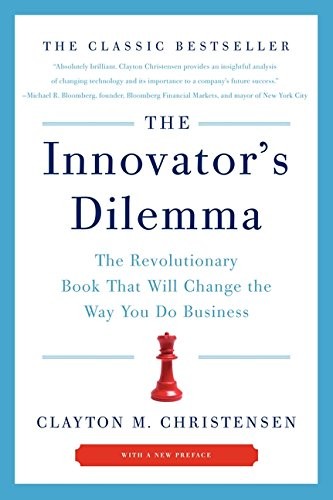
No. 21 on this list. The Innovator's Dilemma · Clayton M. Christensen · 1997
Christensen's landmark business book explains why great companies fail: not through incompetence but by doing exactly what good management theory tells them to do—listening to customers, investing in high-margin products, and focusing on their most profitable market segments. The problem is that disruptive technologies initially serve a different, less profitable market, and by the time incumbents recognize the threat, the disrupting company has improved enough to steal their customers. Christensen documents this pattern across industries—disk drives, steel, excavators, retail—showing that the same dynamic repeats with remarkable consistency. The book introduced 'disruptive innovation' into the business vocabulary and became required reading in every MBA program and Silicon Valley startup. Its central insight—that rational, well-managed companies can be destroyed by innovations they correctly identified as inferior—remains one of the most counterintuitive and important ideas in business strategy.
Easy4.8 hours
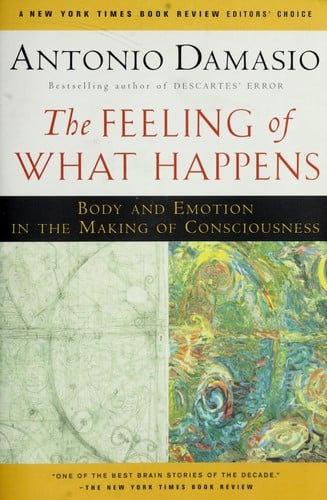
Start this bookNo. 22 on this list. The Feeling of What Happens · Antonio Damasio · 1999
A landmark in the neuroscience of consciousness. Widely assigned in university courses.
Easy7.2 hours
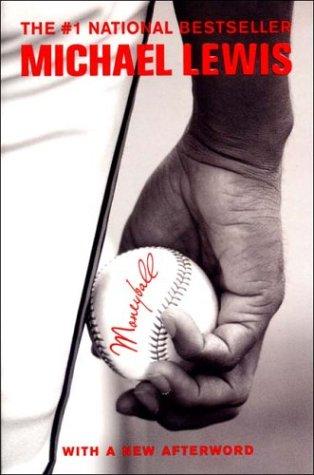
Start this bookNo. 23 on this list. Moneyball · Michael Lewis · 2003
Changed how professional sports operate worldwide. A cultural landmark.
Very Easy4.2 hours
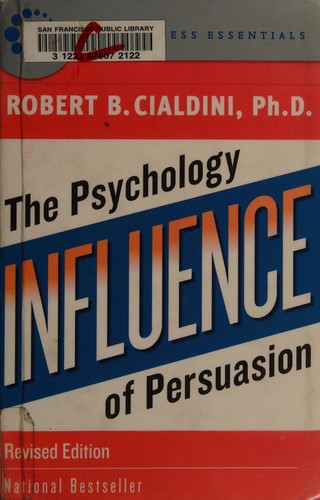
Start this bookNo. 24 on this list. Influence · Robert B. Cialdini · 1984
The definitive popular book on persuasion psychology. Required reading in many programs.
Very Easy4.9 hours
Start this bookNo. 25 on this list. How Children Fail · John Holt · 1964
Foundational text of alternative education. Launched the unschooling movement.
Very Easy2.9 hours
Start this bookNo. 26 on this list. Propaganda · Edward Bernays · 1928
Bernays—Sigmund Freud's nephew and the founder of public relations—wrote this slim book as a frank defense of propaganda as a tool of democracy. His opening sentence sets the tone: 'The conscious and intelligent manipulation of the organized habits and opinions of the masses is an important element in democratic society.' Bernays argues that modern society is too complex for citizens to make informed decisions about everything, so invisible 'engineers of consent' guide public opinion on behalf of corporations, governments, and interest groups. He describes techniques he pioneered: staged events designed to generate news coverage, celebrity endorsements, the manipulation of group psychology, and the creation of front organizations to disguise the source of campaigns. The book is remarkable for its candor—Bernays does not pretend that propaganda is anything other than manipulation, but he insists it is necessary and, in the right hands, beneficial. Reading it today feels prophetic: every technique Bernays described now operates at scale through social media.
Easy1.8 hours
Start this bookNo. 27 on this list. The Prize · Daniel Yergin · 1991
Pulitzer Prize winner. The definitive history of the oil industry.
Easy16 hours
Start this bookNo. 28 on this list. Fooled by Randomness: The Hidden Role of Chance in Life and in the Markets · Nassim Nicholas Taleb · 2001
Ranked by literary regard among eligible works in the current catalogue. This position reflects the available catalogue evidence.
Challenging6.3 hours
Start this bookNo. 29 on this list. The Righteous Mind · Jonathan Haidt · 2012
Haidt argues that moral judgments are not the product of reasoning but of intuition—that we feel first and rationalize afterward, and that reason functions not as a scientist seeking truth but as a lawyer defending a client who has already been chosen. He proposes Moral Foundations Theory, which identifies six foundations of moral intuition: care/harm, fairness/cheating, loyalty/betrayal, authority/subversion, sanctity/degradation, and liberty/oppression. Liberals, he argues, rely primarily on care and fairness; conservatives draw on all six. This is why the two sides talk past each other: liberals genuinely cannot understand why conservatives care about loyalty, authority, and sanctity, and conservatives genuinely cannot understand why liberals reduce morality to care and fairness. Haidt draws on evolutionary psychology, anthropology, and his own research to show that morality evolved to bind groups together and blind them to the perspectives of rival groups—making humans simultaneously righteous and tribal. The book challenges liberals and conservatives to understand each other's moral matrices, and it has become the most cited work in the field of moral psychology.
Easy5.8 hours
Start this bookNo. 30 on this list. Flow · Mihaly Csikszentmihalyi · 1990
The foundational text of flow psychology. Widely cited in positive psychology.
Easy4.6 hours
Start this book
No. 31 on this list. Nudge
Richard H. Thaler · 2008
No. 32 on this list. Bad Blood: Secrets and Lies in a Silicon Valley Startup
John Carreyrou · 2018
No. 33 on this list. Determined: A Science of Life Without Free Will
Robert M. Sapolsky · 2024
No. 34 on this list. Behave
Robert M. Sapolsky · 2017
No. 35 on this list. Liar's Poker
Michael Lewis · 1989
No. 36 on this list. Summerhill
A.S. Neill · 1960
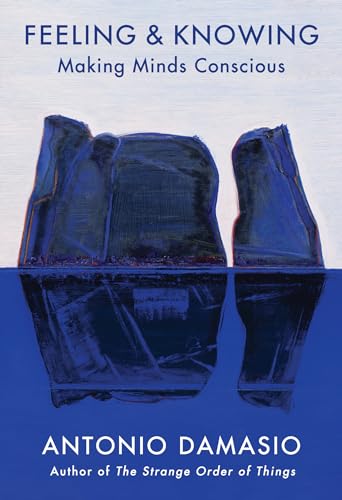
No. 37 on this list. Feeling & Knowing: Making Minds Conscious
Antonio Damasio · 2021
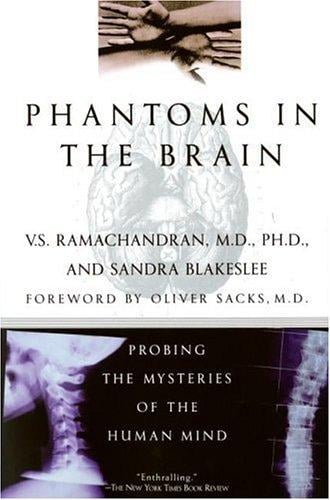
No. 38 on this list. Phantoms in the Brain
V. S. Ramachandran · 1998
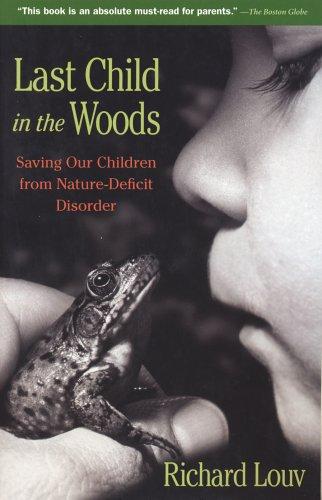
No. 39 on this list. Last Child in the Woods: Saving Our Children from Nature-Deficit Disorder
Richard Louv · 2006
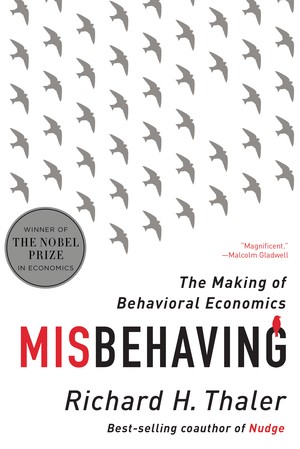
No. 40 on this list. Misbehaving
Richard H. Thaler · 2015
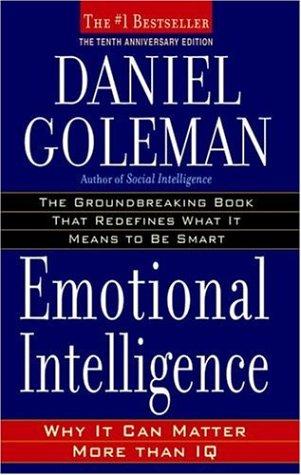
No. 41 on this list. Emotional Intelligence
Daniel Goleman · 1995
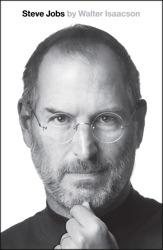
No. 42 on this list. Steve Jobs
Walter Isaacson · 2011
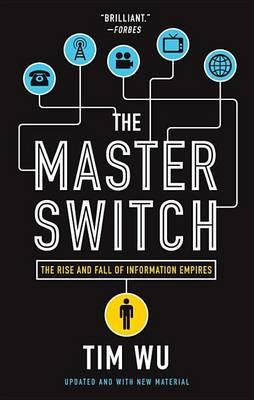
No. 43 on this list. The Master Switch
Tim Wu · 2010
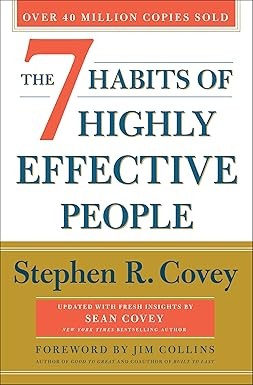
No. 44 on this list. The 7 Habits of Highly Effective People
Stephen R. Covey · 1989
No. 45 on this list. When Genius Failed
Roger Lowenstein · 2000
No. 46 on this list. Stumbling on Happiness
Daniel Gilbert · 2006
No. 47 on this list. The Myth of Normal: Trauma, Illness, and Healing in a Toxic Culture
Gabor Maté · 2022
No. 48 on this list. Good to Great
Jim Collins · 2001
No. 49 on this list. The Psychopath Test
Jon Ronson · 2011
No. 50 on this list. Scattered Minds: The Origins and Healing of Attention Deficit Disorder
Gabor Maté · 2019
No. 51 on this list. Creativity, Inc.
Ed Catmull · 2014
No. 52 on this list. Superbloom: How Technologies of Connection Tear Us Apart
Nicholas Carr · 2025
No. 53 on this list. Shoe Dog
Phil Knight · 2016
No. 54 on this list. Parenting from the Inside Out: How a Deeper Self-Understanding Can Help You Raise Children Who Thrive
Daniel J. Siegel · 2004
No. 55 on this list. The Power of Habit
Charles Duhigg · 2012
No. 56 on this list. The Lean Startup
Eric Ries · 2011
No. 57 on this list. Breath
James Nestor · 2020
No. 58 on this list. Zero to One
Peter Thiel · 2014
No. 59 on this list. Algorithms to Live By
Brian Christian · 2016
No. 60 on this list. Predictably Irrational
Dan Ariely · 2008
No. 61 on this list. The Schools Our Children Deserve
Alfie Kohn · 1999
No. 62 on this list. The Whole-Brain Child: Revolutionary Strategies to Nurture Your Child's Developing Mind
Daniel J. Siegel · 2011
No. 63 on this list. Digital Minimalism: Choosing a Focused Life in a Noisy World
Cal Newport · 2019
No. 64 on this list. The Everything Store
Brad Stone · 2013
No. 65 on this list. No Bad Parts
Richard C. Schwartz · 2021
No. 66 on this list. The Drunkard's Walk
Leonard Mlodinow · 2008
No. 67 on this list. Happy City
Charles Montgomery · 2013
No. 68 on this list. Why We Sleep
Matthew Walker · 2017
No. 69 on this list. You Are the One You've Been Waiting For: Applying Internal Family Systems to Intimate Relationships
Richard C. Schwartz · 2008
No. 70 on this list. Deep Survival: Who Lives, Who Dies, and Why
Laurence Gonzales · 2003


No. 71 on this list. Range
David Epstein · 2019
No. 72 on this list. The 48 Laws of Power
Robert Greene · 1998
No. 73 on this list. The Hard Thing About Hard Things
Ben Horowitz · 2014
No. 74 on this list. The Power of Now
Eckhart Tolle · 1997
No. 75 on this list. Meditations for Mortals: Four Weeks to Embrace Your Limitations and Finally Make Time for What Counts
Oliver Burkeman · 2025
No. 76 on this list. Deep Work
Cal Newport · 2016
No. 77 on this list. Mastery
Robert Greene · 2012
No. 78 on this list. Wild at Heart
John Eldredge · 2001
No. 79 on this list. IntraConnected: MWe (Me + We) as the Integration of Self, Identity, and Belonging
Daniel J. Siegel · 2022
No. 80 on this list. Laws of Human Nature Theexp
Robert Greene · 2018
No. 81 on this list. Notes on a Nervous Planet
Matt Haig · 2019
No. 82 on this list. What to Make of a Life: Cliffs, Fog, Fire and the Self-Knowledge Imperative
Jim Collins · 2026
No. 83 on this list. Dark And Magical Places: The Neuroscience of Navigation
Christopher Kemp · 2022
No. 84 on this list. The Art of Exceptional Living
Jim Rohn · 2003
No. 85 on this list. The Mastery of Love: A Practical Guide to the Art of Relationship: A Toltec Wisdom Book
Miguel Ruiz · 2002
No. 86 on this list. Atomic Habits: An Easy & Proven Way to Build Good Habits & Break Bad Ones
James Clear · 2018
No. 87 on this list. No Time for Losing
Fran Tarkenton · 1976
No. 88 on this list. The Science of Self-Discipline: The Willpower, Mental Toughness and Self-Control to Resist Temptation and Achieve Your Goals
Peter Hollins · 2021
No. 89 on this list. Dating Without Fear: Overcome Social Anxiety and Connect
Thomas Smithyman · 2022

About this list
These 89 books are the highest-scoring eligible psychology books by men currently in the catalogue. By literary regard, it opens with Anti-Oedipus, The Presentation of Self in Everyday Life and The Hero with a Thousand Faces. About 549 hours of reading in all, for the 88 with measured lengths. Difficulty runs from 18 to 39 out of 100 for the middle half of the list; the summit is Anti-Oedipus at 88.
This list is ranked by literary regard, with a consistent order for equal scores. Membership follows authors and co-authors, not translators or editors. Catalogue coverage and the historical canon both limit what this list can represent, and genre labels are the catalogue’s own, gathered into broader kinds.
When we matched the Canons dataset to our catalogue in October 2026, our canonical-status scores rose with the number of school curricula, publisher series and lists in it that cite a work: the median score was 72 for books one such source cites, 84 at two, 88 at three, 92 at four and 93 at five or more. Prizes are left out of that count. Outside the state curricula, the dataset’s sources choose mostly from what has been translated into English or French, so it is a weaker check on other literatures. Source: Canons (Andrew Piper), CC BY 4.0
Questions people actually ask
- What are the best psychology books by men?
- By literary regard, which weighs canonical status, critical standing and influence, Anti-Oedipus, The Presentation of Self in Everyday Life, The Hero with a Thousand Faces, The Anatomy of Melancholy and The Design of Everyday Things lead. ReadingRate ranks 89 such books, each with a difficulty score and a reading-time estimate.
- Where should I start with psychology books by men?
- Start from difficulty, not from rank. The most approachable books on this list that still carry top literary regard are Man's Search for Meaning by Viktor E. Frankl (about 2.4 hours), The Design of Everyday Things by Don Norman and The Hero with a Thousand Faces by Joseph Campbell.
- How hard are psychology books by men to read?
- Most of this list sits between 18 and 39 on ReadingRate's 100-point difficulty scale, where 40 to 55 is moderate. The summit is Anti-Oedipus at 88. Every entry carries its own score, so a reader can pick a great book at a difficulty they will finish.
- How is this list ranked?
- On literary-regard data: how canonically established a work is, its critical standing, and its influence on later writing. It is not a readers’ poll, which is why recent bestsellers rarely appear. Membership follows authors and co-authors, not translators or editors. A list that is not a genre list keeps to literature (fiction, poetry, drama and philosophy), with philosophy taking no more than one slot in five while there is literature left to rank; every list holds at most three works by one author.