Hours at an average pace
Showing 43 books
About 640 hours for 43 of 43 books with measured lengths. Estimates use 250 words a minute, adjusted for each book's difficulty. At 2 hours a day, about 321 days for those books.
Finnegans Wake appears on 108 university syllabi (Open Syllabus, 50th percentile) and holds a Wikipedia article in 39 languages. It is listed on the Modern Library 100 Best Novels and published by NYRB Classics. Syllabus presence is lower than Ulysses because the book is taught almost exclusively in graduate Joyce seminars and advanced modernism courses — its difficulty makes undergraduate adoption rare.
No. 2 on this list. The Waste Land
T. S. Eliot · 1922
Very Difficult1.4 hours
Taught in schools: Pacific Senior Secondary Certificate – English
Included in: Great Books of the Western World
Eliot shattered the conventions of English-language poetry by splicing together fragments of six languages, Grail legend, and London pub talk into a single 434-line collage that made modernism unavoidable. No poem before it had turned cultural disintegration itself into a formal principle.
No. 3 on this list. Ulysses
James Joyce · 1922
Very Difficult47 hours
Included in: Bokklubben World Library
Ulysses appears on 1,017 university syllabi (75th percentile, Open Syllabus Project) and features on the Modern Library's #1 Best Novels list, Le Monde's 100 Books of the Century, TIME's All-TIME 100 Novels, and the BBC Big Read. Wikipedia covers it in 36 languages. Published in Everyman's Library and Penguin Classics, it has maintained continuous academic circulation since its 1934 US publication.
Vladimir Nabokov named Petersburg one of the four greatest novels of the twentieth century, alongside Ulysses, Kafka's The Metamorphosis, and In Search of Lost Time. It is foundational to university syllabi in Slavic studies and comparative modernism globally, and appears on major world literature lists. Its canonical standing is high within literary circles and academia, though it reaches fewer general curricula than English-language modernist counterparts.
Harmonium appears on thousands of university poetry syllabi and is a fixture of American modernism courses. It is regularly listed among the foundational texts of American poetry, alongside Whitman's Leaves of Grass and Eliot's Prufrock — despite the database showing no captured syllabus appearances, Stevens's place in the academic canon is among the most secure of any twentieth-century American poet.
No. 6 on this list. The Sound and the Fury
William Faulkner · 1929
Difficult15 hours
Taught in schools: Turkish edebiyat curriculum (Turkey)
Included in: Bokklubben World Library
Listed on Modern Library 100 Best Novels, TIME All-TIME 100 Novels, Le Monde's 100 Books of the Century, and Open Syllabus Top 500 Literature. Wikipedia article exists in 35 languages with dedicated Reception and Adaptations sections and 57,976 characters of editorial content. A fixture of American literature courses and universally regarded as one of the defining works of American modernism — canonical weight comparable to or exceeding The Great Gatsby.
The database shows no syllabus appearances or Wikipedia data for this entry, but Spring and All is a well-known fixture in American modernist poetry courses and anthologies. It is regularly taught alongside Eliot's The Waste Land as the opposing American response to European modernism. The book's canonical poem so much depends upon a red wheel barrow is one of the most anthologized passages in twentieth-century American poetry.
No. 8 on this list. Absalom, Absalom!
William Faulkner · 1936
Difficult18 hours
Included in: Bokklubben World Library
Faulkner retold the story of the South's racial catastrophe through sentences that coil and branch like kudzu, with four narrators across a century reconstructing a plantation patriarch's crime and its consequences. The novel is the most structurally ambitious work in American fiction — a detective story about history itself, in which the clues are voices and the evidence is contradictory.
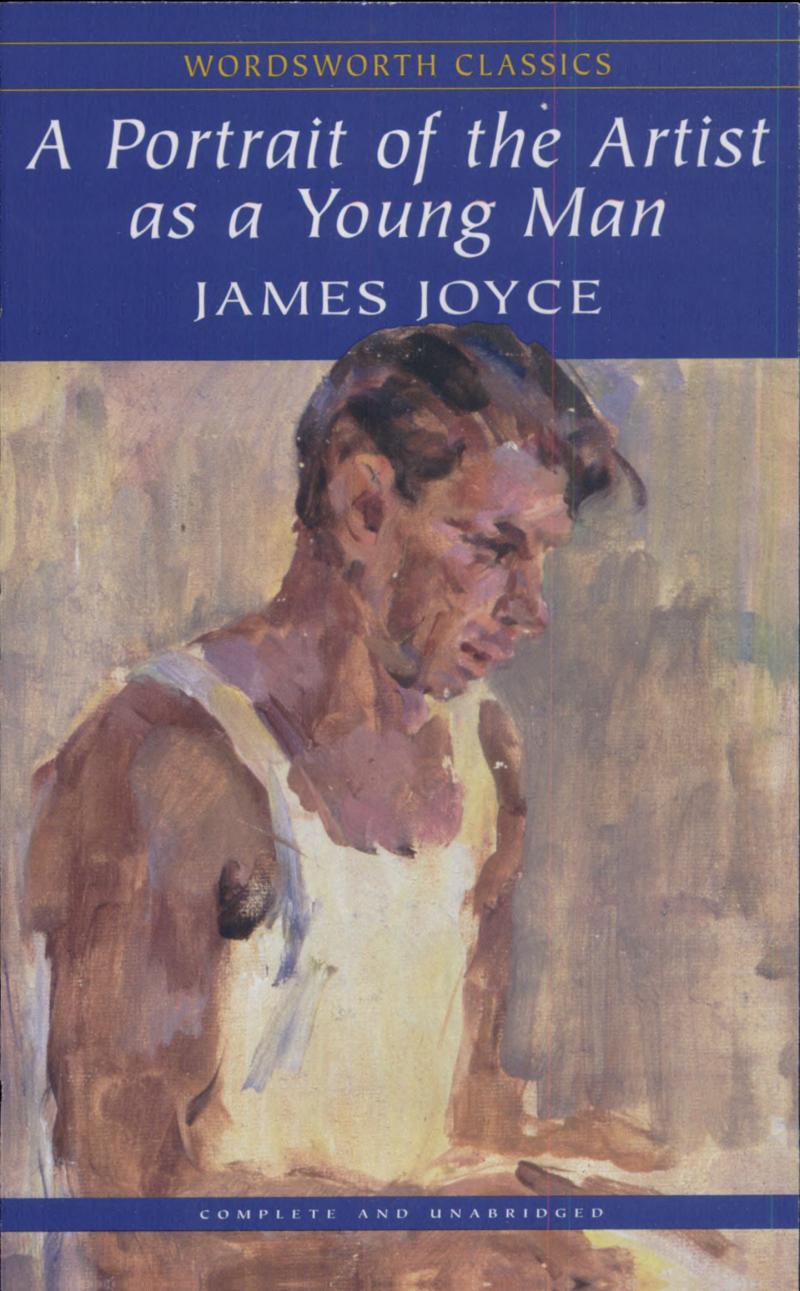
No. 9 on this list. A Portrait of the Artist as a Young Man
James Joyce · 1916
Difficult11 hours
Included in: Great Books of the Western World
Appears on 3,243 university syllabi according to the Open Syllabus Project (87.8th percentile), placing it in the company of the most-taught literary novels in English. Featured on the Modern Library 100 Best Novels, 1001 Books You Must Read Before You Die, and available in 40 Wikipedia languages — a global footprint that confirms its standing as a fixture of the Anglo-Irish modernist curriculum.
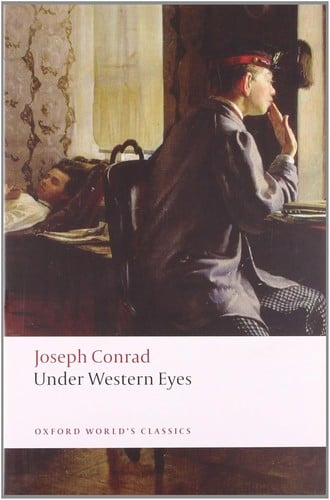
Under Western Eyes holds a secure place in the Conrad canon — studied in university courses alongside Nostromo, The Secret Agent, and Lord Jim, and consistently discussed in critical accounts of Conrad's major work. Leavis included Conrad among the great tradition of English novelists, and the novel's treatment of guilt, betrayal, and political despotism has kept it on syllabi across literature and political thought programmes. Its standing is below Heart of Darkness and Lord Jim in frequency of assignment but firmly canonical within the Conrad corpus.
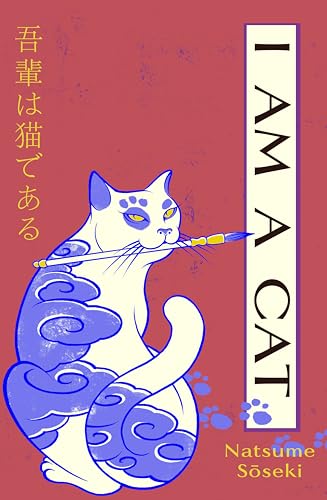
No. 11 on this list. I Am a Cat · Natsume Sōseki · 1905
Included in: UNESCO Collection of Representative Works
A cornerstone of modern Japanese literature, 'I Am a Cat' is taught across Japanese universities and regularly appears in world literature curricula internationally. Soseki's debut launched one of the most celebrated literary careers in Japanese history, and the novel remains required reading in discussions of Meiji-era fiction and the development of the modern Japanese novel form.
Difficult25 hours
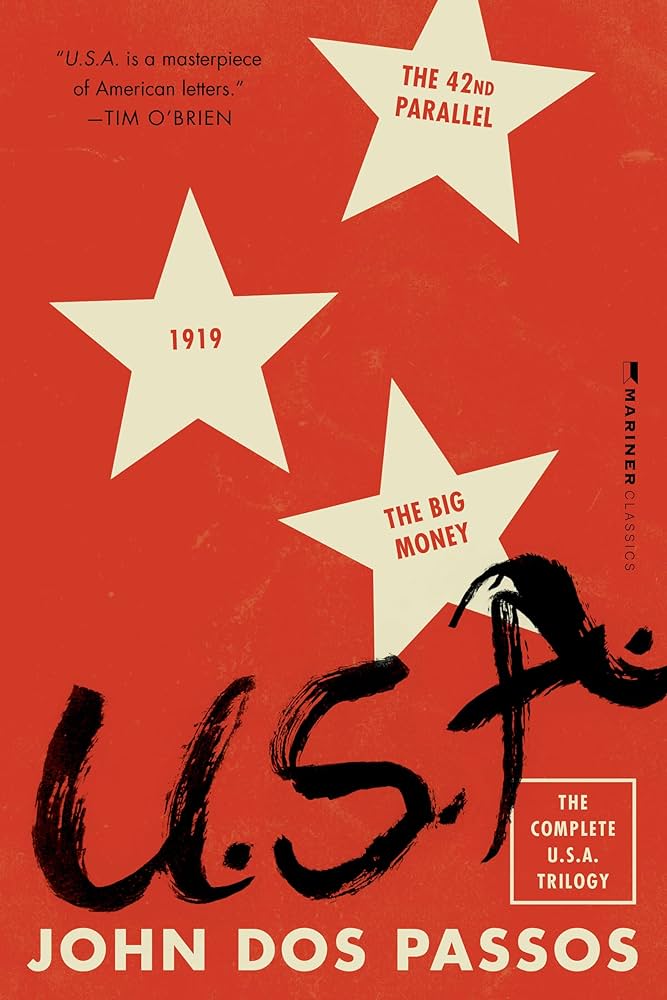
Start this bookNo. 12 on this list. U.S.A. · John Dos Passos · 1938
Listed on the Modern Library 100 Best Novels (1998), one of relatively few American works on that list. Regularly taught in American literature survey courses at universities and appears on nearly every critic's shortlist for the great American novel of the first half of the 20th century. TIME included it in its All-TIME 100 Novels list. The syllabus data shows low Open Syllabus counts, but the trilogy's academic presence is substantial in upper-division and graduate American literature courses.
Difficult57 hours
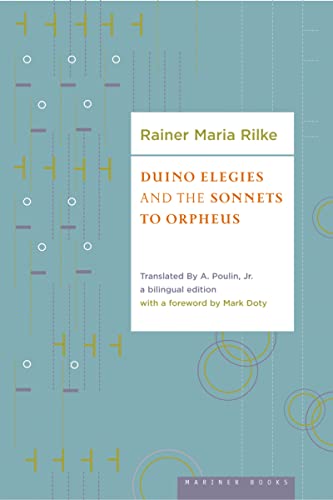
Start this bookNo. 13 on this list. Duino Elegies · Rainer Maria Rilke · 1923
The Duino Elegies appear on virtually every 20th-century world poetry and comparative literature syllabus internationally. Rilke is the central figure in German-language modernist poetry and the Elegies are his culminating work, regularly paired with The Waste Land and Four Quartets as the defining lyric sequences of the modernist era. The sequence has been translated into every major European language and dozens beyond.
Difficult2.9 hours
Start this bookNo. 14 on this list. Jacob's Room · Virginia Woolf · 1922
Jacob's Room appears on virtually every university syllabus covering modernist British literature, Woolf's work, or the literature of WWI. As Woolf's first fully experimental novel, it holds a foundational position in the modernist canon — taught alongside Mrs. Dalloway and To the Lighthouse in most Woolf courses. Its canonical status is somewhat lower than Woolf's later masterworks, which overshadow it in general survey courses.
Difficult6.8 hours
Read nowNo. 15 on this list. The Waves · Virginia Woolf · 1931
Recognized as Woolf's most ambitious experiment. Central to modernist studies.
Difficult9.5 hours
Start this bookNo. 16 on this list. Four Quartets · T. S. Eliot · 1943
Eliot fused the rhythms of Anglican liturgy, the imagery of the English countryside, and the philosophy of time into four linked meditations on what it means to arrive where you started and know the place for the first time. The poems represent the summit of his craft — the point where his erudition finally dissolved entirely into music.
Difficult51 min
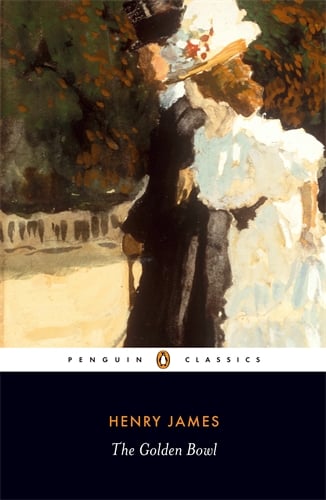
Start this bookNo. 17 on this list. The Golden Bowl · Henry James · 1904
The Golden Bowl represents Henry James's late style at its apex and appears regularly in twentieth-century literary histories as a major American novel. While less frequently taught than The Portrait of a Lady or The Ambassadors, it commands serious critical attention and appears on major 'best novels' lists. Its difficulty ensures a smaller readership than James's earlier works, but it remains essential for understanding literary modernism's development.
Difficult25 hours
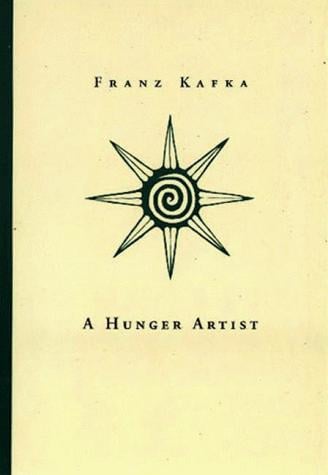
Read nowNo. 18 on this list. A Hunger Artist · Franz Kafka · 1924
Kafka's short fiction is taught in university literature courses worldwide, and 'A Hunger Artist' is among his most frequently anthologized works. It appears in virtually every Kafka collection and features in major short story anthologies. The work has sustained academic and pedagogical attention since its posthumous publication in 1922.
Difficult12 hours
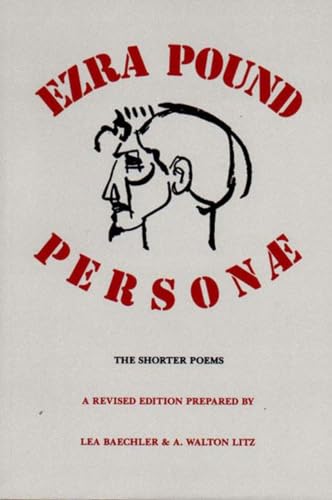
Start this bookNo. 19 on this list. Personae · Ezra Pound · 1926
Personae is a standard text in modernist poetry curricula worldwide and appears in virtually every major anthology of 20th-century poetry. Though no database syllabus data was returned, Pound's first collection is foundational to understanding Imagism and the troubadour influence on Anglo-American modernism. It is overshadowed in syllabi by the later Cantos and by Eliot, but remains required reading in modernist poetry courses.
Difficult1.1 hours
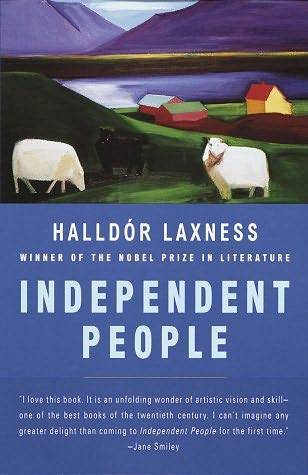
Start this bookNo. 20 on this list. Independent People · Halldór Laxness · 1934
Included in: Bokklubben World Library
Wikipedia presence in only 9 languages and no Open Syllabus appearances indicate it is not widely taught outside Scandinavia. However, Independent People appears regularly on canonical world literature lists, including Time magazine's All-TIME 100 Novels, and is considered Laxness's defining work — the novel most associated with his 1955 Nobel Prize.
Difficult24 hours
Start this book
No. 21 on this list. The Sonnets to Orpheus · Rainer Maria Rilke · 1923
In February 1922, Rainer Maria Rilke retreated to Chateau de Muzot in Switzerland and composed fifty-five sonnets in three weeks. He addressed them to Orpheus — the Greek poet-god who descended into death to reclaim Eurydice and was torn apart by the Maenads for refusing them. The occasion was the recent death of Vera Knoop, a nineteen-year-old dancer Rilke barely knew; her death opened something. A tree ascends in the first line. Animals cluster around it in silence, listening. What Rilke is after is the premise that true song is not desire or communication but reality — breath as invisible poem, the moment when inner and outer stop being distinct. Orpheus moves through the cycle not as a character but as a principle: he is already dead, he already belongs to both realms, and because of this he can praise everything, including loss. The Sonnets instruct readers to will transformation, to be ahead of all parting, to whisper 'I am flowing' to the earth. They do not resolve their questions about death and being; they teach acceptance of irresolution as the condition of consciousness. Reading them asks for slow, repeated attention — each poem is compact and dense, and the cycle's meaning accumulates across all fifty-five. This is poetry as philosophical practice, the lyric at maximum pressure.
Difficult2.8 hours
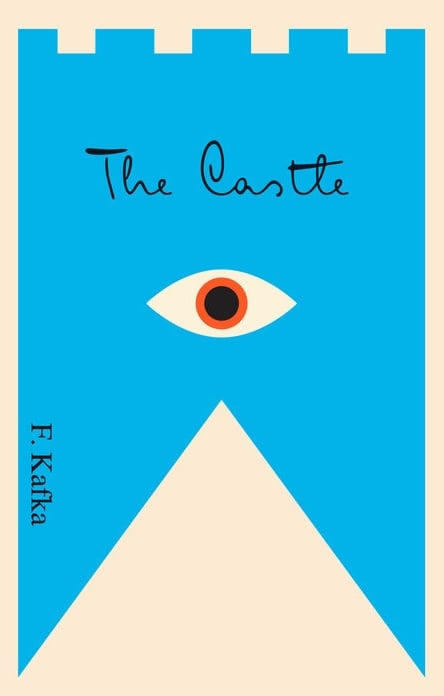
Start this bookNo. 22 on this list. The Castle · Franz Kafka · 1926
Included in: Bokklubben World Library
Data signals show only 3 Wikipedia language editions and no recorded syllabus appearances, but these undercount The Castle's actual standing. The novel appears on virtually every major 20th-century fiction list — Modern Library 100, Le Monde's 100 Books of the Century, Harold Bloom's Western Canon — and is taught in comparative literature, philosophy, and legal theory courses worldwide.
Difficult14 hours
Read nowNo. 23 on this list. The Wings of the Dove · Henry James · 1902
Appears on the Modern Library 100 Best Novels list and on university syllabi in courses on American literature, the novel, and Henry James. With only 5 syllabus appearances in the Open Syllabus data and Wikipedia articles in 7 languages, it ranks below James's most-taught works (Portrait of a Lady, The Turn of the Screw) but remains a fixture of the late-James critical canon.
Difficult22 hours
Read nowNo. 24 on this list. In Search of Lost Time · Marcel Proust · 1913
Included in: Bokklubben World Library, Great Books of the Western World
In Search of Lost Time appears on 223 university syllabi and registers at the 58.7th percentile in the Open Syllabus Project — a significant presence for a seven-volume novel typically taught in translation and only in specialized courses. It appears on virtually every 'greatest novels' list (Modern Library, Le Monde, Time), and is treated as the central work of French modernism in comparative literature programs worldwide.
Difficult25 hours
Read nowNo. 25 on this list. The Trial · Franz Kafka · 1925
Taught in schools: Lektury obowiązkowe – Polish national reading list (Poland)
Included in: Bokklubben World Library
Appears on Le Monde's 100 Books of the Century, the Open Syllabus Top 500 Literature list, and 1001 Books You Must Read Before You Die, with Wikipedia articles in 59 languages. Taught globally in comparative literature, philosophy, and political theory courses. The word 'Kafkaesque' entering the dictionary signals how completely the novel has entered Western cultural bedrock.
Difficult9.2 hours
Read nowNo. 26 on this list. Residence on Earth · Pablo Neruda · 1933
Pablo Neruda wrote the poems of 'Residence on Earth' during his years as a Chilean consul in Burma, Ceylon, and Java — postings that left him profoundly isolated, surrounded by unfamiliar languages and dissolving heat. What came out was a poetry of radical disorientation: rain that rots wood, flesh that smells of brine, clocks that leak time like a wound. The opening poem, 'Galope Muerto,' begins mid-sensation: 'Like ashes, like oceans populating themselves, in the submerged slowness, in the shapeless.' There is no speaker announced, no situation established. The collection works entirely through image — blood, sea, bone, stone — stacked without logical mortar until the pressure of accumulated sensation becomes its own argument. 'Walking Around' describes a man so disgusted by modern life he wants to throw everything away, the umbrellas and the accountants and the stockings. 'Ode with a Lament' addresses an unnamed woman through images of shipwrecks and salt. The later sections shift toward political fury — odes to Madrid under bombardment, to Stalingrad, to Spain's dead — but even the political poems work through elemental image rather than rhetoric. This is poetry that does not explain itself. Readers who need a narrative thread or an argument will find none. Those willing to receive sensation as meaning will encounter one of the most physically intense bodies of verse written in the 20th century.
Difficult7 hours
Start this bookNo. 27 on this list. The Winding Stair · William Butler Yeats · 1933
Published in 1933, this collection represents Yeats at the height of his late powers, confronting old age, political disillusionment, and metaphysical yearning through symbols drawn from his occult system A Vision. The tower at Thoor Ballylee becomes a central image: in 'Blood and the Moon' it rises as both Anglo-Irish monument and emblem of consciousness ascending through gyres of history. 'A Dialogue of Self and Soul' stages an internal debate between transcendent renunciation and acceptance of embodied life, concluding with a forceful affirmation of existence that forgives even suffering. The paired Byzantium poems ('Sailing to Byzantium' appears in the earlier Tower volume, but 'Byzantium' here extends the meditation) envision sacred art as escape from biological decay into eternal form. 'Coole Park and Ballylee, 1931' elegizes Lady Gregory's estate and the cultural moment it represented, now dissolving in Ireland's post-revolutionary violence. 'Vacillation' sustains eight sections of philosophical oscillation between worldly and spiritual commitments without final resolution. Throughout, Yeats employs demanding stanzaic forms—ottava rima, terza rima—whose formal strictness contains explosive metaphysical content, creating poetry that is simultaneously architectural and visionary.
Difficult53 min
Start this bookNo. 28 on this list. Billy Budd, Sailor · Herman Melville
Taught in schools: Common Core text exemplars (Appendix B) (US)
Billy Budd is a fixture in American literature courses, canonized alongside Moby-Dick as one of Melville's essential works and one of the foundational American novellas. Although the data signals show no tracked syllabus entries in this database, the text has been continuously taught at university level since its rediscovery in the 1920s and appears on virtually every American literature syllabus covering the 19th century. It is frequently included on lists of great American fiction.
Difficult3.3 hours
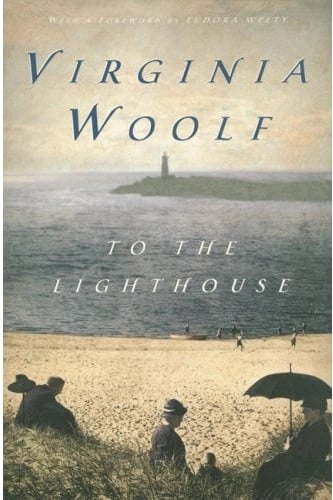
Read nowNo. 29 on this list. To the Lighthouse · Virginia Woolf · 1927
Included in: Bokklubben World Library, Great Books of the Western World
To the Lighthouse appears on 2,429 university syllabi according to Open Syllabus (84.6th percentile), placing it in the same tier as Beloved (85th). It holds places on the Modern Library 100 Best Novels (1998), TIME's All-TIME 100 Novels (2005), 1001 Books You Must Read Before You Die (2006), and is published by both Everyman's Library and Penguin Modern Classics. Wikipedia articles exist in 35 languages.
Difficult7.4 hours
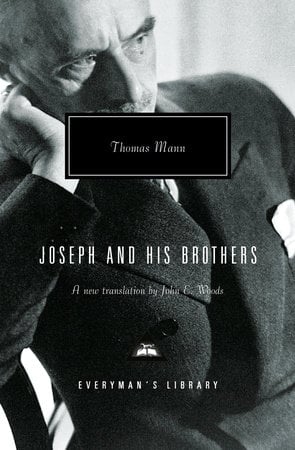
Read nowNo. 30 on this list. Joseph and His Brothers · Thomas Mann · 1943
Joseph and His Brothers appears regularly on European and world literature curricula, particularly in German literature courses and modernism seminars. It features on multiple 'greatest novels' lists including Le Monde's 100 Books of the Century. The tetralogy is less frequently taught than Mann's shorter works (Death in Venice, The Magic Mountain) owing to its length, but its canonical standing within the Mann oeuvre and 20th-century literature broadly is secure. The database shows no syllabus or Wikipedia data, but scholarly consensus places this among the defining works of European modernism.
Challenging68 hours
Start this book
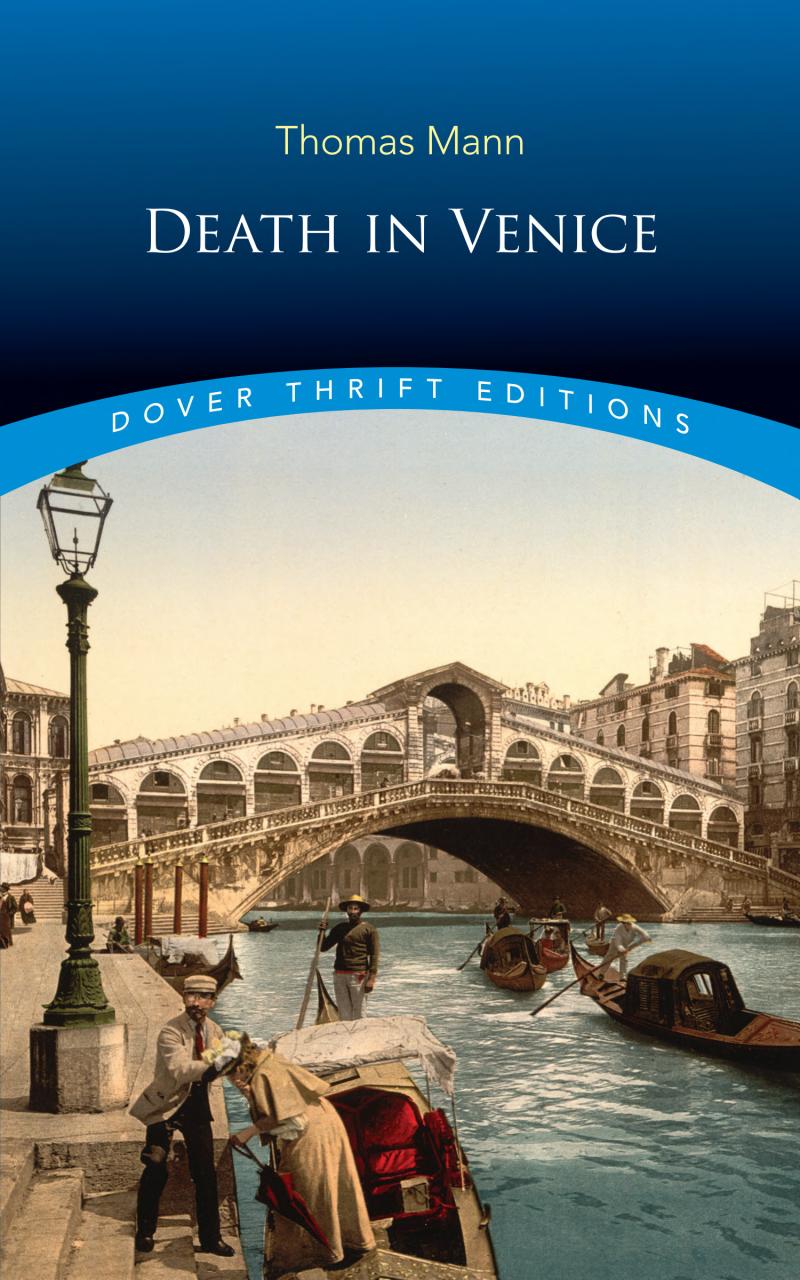
No. 31 on this list. Death in Venice
Thomas Mann · 1912
Included in: Great Books of the Western World
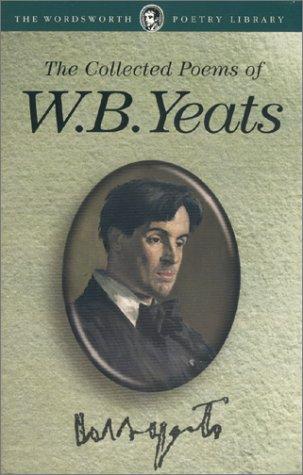
No. 32 on this list. Collected Poems of W.B. Yeats
William Butler Yeats · 1933
No. 33 on this list. Winesburg, Ohio
Sherwood Anderson · 1919
No. 34 on this list. Journey to the End of the Night
Louis-Ferdinand Céline · 1932
Included in: Bokklubben World Library
No. 35 on this list. The Beast In The Jungle
Henry James · 1903
Included in: Great Books of the Western World
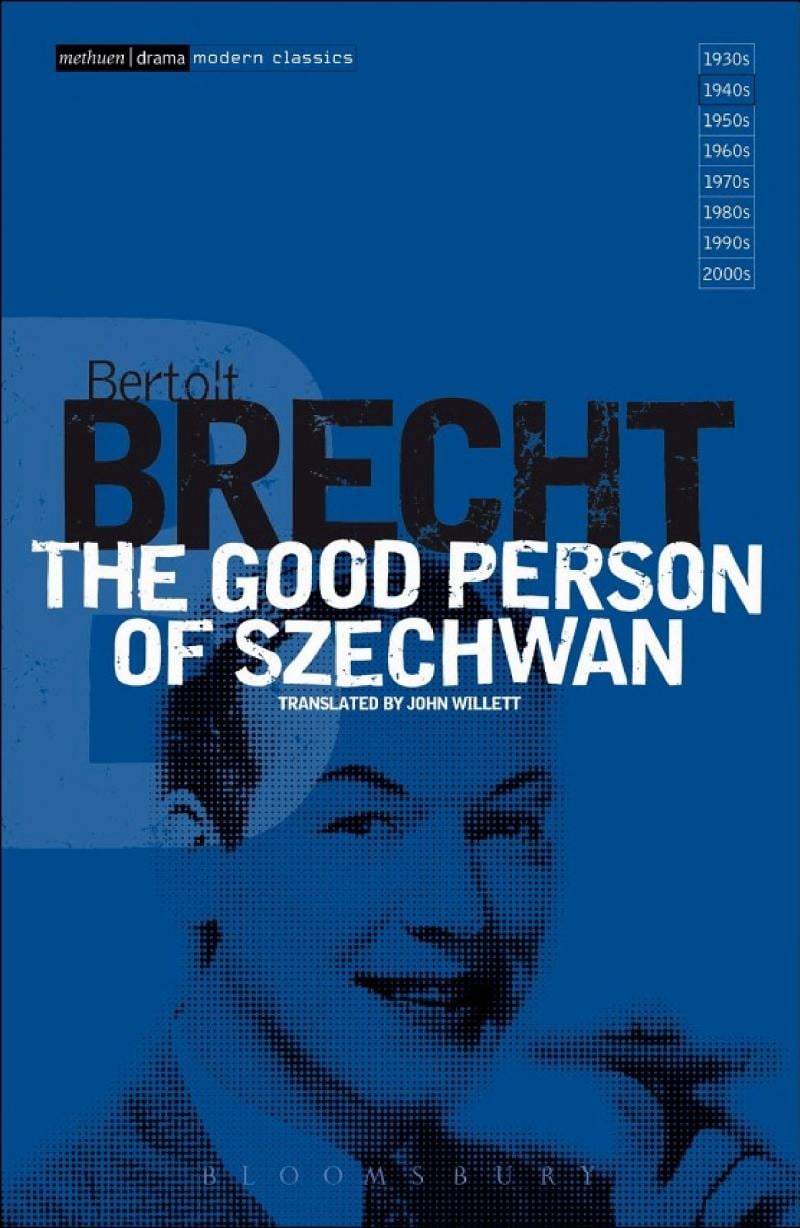
No. 36 on this list. Life of Galileo
Bertolt Brecht · 1943
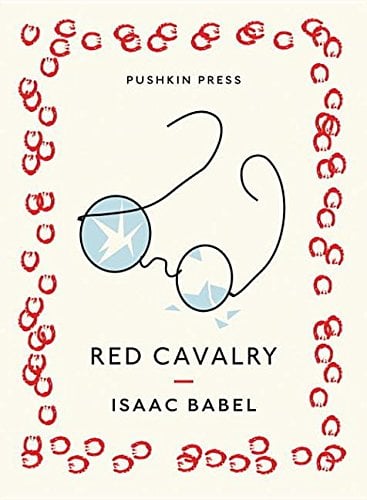
No. 37 on this list. Red Cavalry
Isaac Babel · 1926
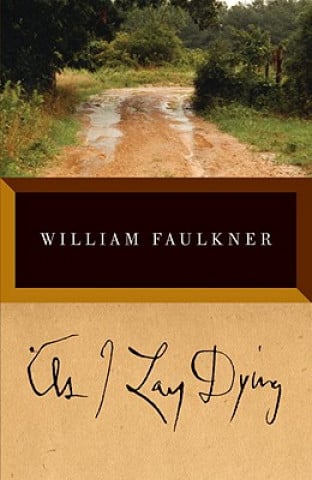
No. 38 on this list. As I Lay Dying
William Faulkner · 1930
Taught in schools: Common Core text exemplars (Appendix B) (US)
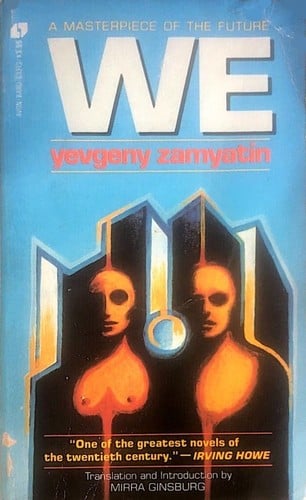
No. 39 on this list. We
Yevgeny Zamyatin · 1924
Taught in schools: Russian FGOS literature standard
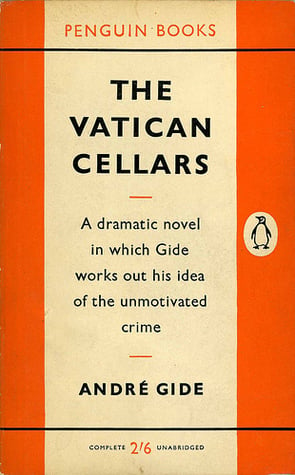
No. 40 on this list. The Vatican Cellars
André Gide · 1914
About this list
These 43 books are the hardest-scoring eligible modernist books currently in the catalogue. About 640 hours of reading in all. Difficulty runs from 69 to 77 out of 100 for the middle half of the list; the summit is Finnegans Wake at 94.
This list is ranked by difficulty score, hardest first, with a consistent order for equal scores. Membership follows authors and co-authors, not translators or editors. A book is here when ReadingRate files it under Modernist Literature as one of its primary reading domains, and only when its author’s lifetime places it in the period. Catalogue coverage and the historical canon both limit what this list can represent.
When we matched the Canons dataset to our catalogue in October 2026, our canonical-status scores rose with the number of school curricula, publisher series and lists in it that cite a work: the median score was 72 for books one such source cites, 84 at two, 88 at three, 92 at four and 93 at five or more. Prizes are left out of that count. Outside the state curricula, the dataset’s sources choose mostly from what has been translated into English or French, so it is a weaker check on other literatures. Source: Canons (Andrew Piper), CC BY 4.0
Questions people actually ask
- What are the hardest modernist books to read?
- Ranked hardest first by difficulty score: Finnegans Wake by James Joyce, The Waste Land by T. S. Eliot, Ulysses by James Joyce, Petersburg by Andrei Bely and Harmonium by Wallace Stevens. ReadingRate ranks 43 such books, each with a difficulty score and a reading-time estimate.
- Can I read any of these modernist books for free?
- 14 of the 43 open in ReadingRate's reader with a free account, from public-domain editions: The Waste Land, Ulysses, A Portrait of the Artist as a Young Man, Jacob's Room, The Golden Bowl and 9 more.
- How long would it take to read the top ten?
- About 199 hours, at an average pace of 250 words a minute adjusted for each book's difficulty: 100 days at two hours a day. Set your own pace on the page and the list's reading times change to it.
- How hard are the hardest modernist books?
- Most of this list sits between 69 and 77 on ReadingRate's 100-point difficulty scale, where 40 to 55 is moderate. The summit is Finnegans Wake at 94. Every entry carries its own score, so a reader can pick a great book at a difficulty they will finish.
- How is this list ranked?
- Nine dimensions, from vocabulary and sentence structure to symbolic density and how much an ending withholds, each scored out of 100 and combined. It measures the text, not the reader, and it leans on meaning: The New York Trilogy scores 87 for how much it withholds, though its sentences are plainer than anything else in the top twenty. Each book's page shows which kind of hard it is. A book is here when ReadingRate files it under Modernist Literature as one of its primary reading domains, and only when its author’s lifetime places it in the period.