Hours at an average pace
Showing 62 books
About 331 hours for 62 of 62 books with measured lengths. Estimates use 250 words a minute, adjusted for each book's difficulty. At 2 hours a day, about 166 days for those books.
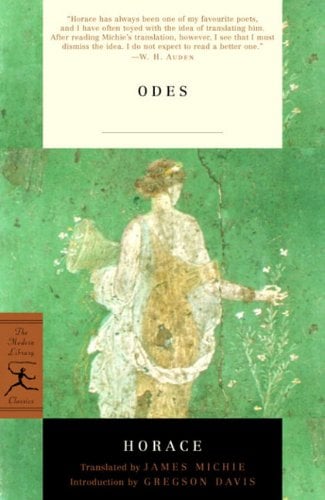
Horace's Odes have been required reading in classical curricula for over two thousand years without interruption — studied in Rome, medieval monasteries, Renaissance courts, and modern universities alike. The phrase 'carpe diem' originates in Odes I.11 and has entered every major world language. The Wikipedia article appears in only 1 language in the current database, but this reflects a data gap: the Odes are among the most-taught texts in any Western classics or humanities program, with presence on thousands of university syllabi globally.
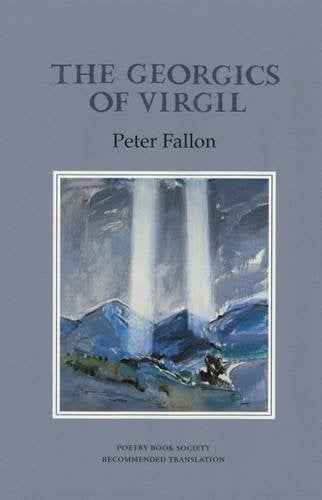
No. 2 on this list. Georgics
Virgil · c. 29 BCE
Moderate1.6 hours
Included in: Great Books of the Western World
The Georgics is a cornerstone of Western classical education, appearing on university syllabi worldwide wherever Latin literature, pastoral poetry, or the history of agriculture is taught. It stands alongside the Aeneid and Eclogues as the essential Virgilian triad; no serious study of Latin poetry omits it. Its influence on English poets from Dryden through Seamus Heaney has kept it continuously present in anglophone literary education as well.
No. 3 on this list. Six Characters in Search of an Author
Luigi Pirandello · 1921
Challenging1.9 hours
Taught in schools: UNAM Escuela Nacional Preparatoria – programas de Literatura (Mexico)
Included in: Great Books of the Western World
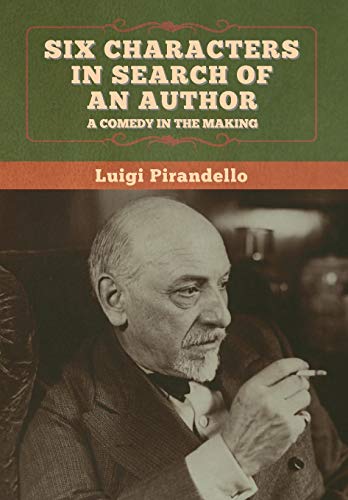
Pirandello sent six fictional characters onto a stage to confront the actors rehearsing their story, detonating the boundary between author, character, and performer decades before anyone used the word "metafiction." The play asked who owns a story — the person who wrote it or the person who lives it — and left the question permanently unresolved.
No. 4 on this list. On the Nature of Things
Lucretius · c. 55 BCE
Moderate5.5 hours
Included in: Great Books of the Western World
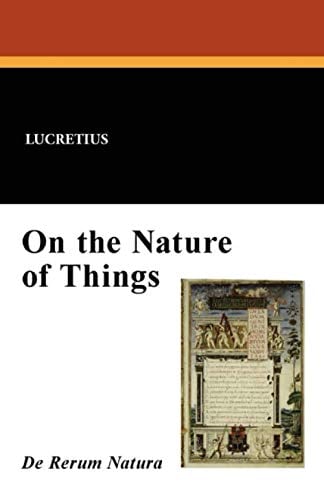
De Rerum Natura is one of the most significant surviving texts from antiquity, taught in classics, philosophy, and history of science programs at universities worldwide. It represents the fullest extant exposition of Epicurean atomism in any language and appears on virtually every list of essential classical works. Its rediscovery by Poggio Bracciolini in 1417 is credited with catalyzing Renaissance intellectual culture.
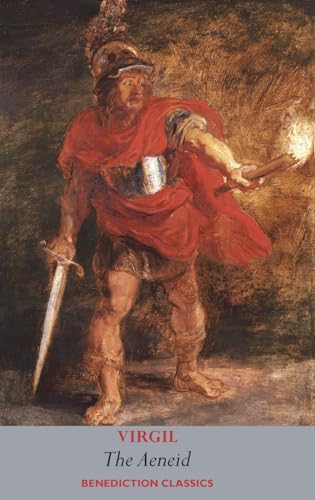
No. 5 on this list. Aeneid
Virgil · c. 19 BCE
Challenging9.4 hours
Included in: Bokklubben World Library, Great Books of the Western World
Virgil reverse-engineered Homer to give Rome a founding myth that justified empire, pietas, and destiny — and in the process invented the idea that a national epic could be a deliberate literary construction rather than an inherited oral tradition. Dante, Milton, and every poet who tried to write a civilization into existence started here.
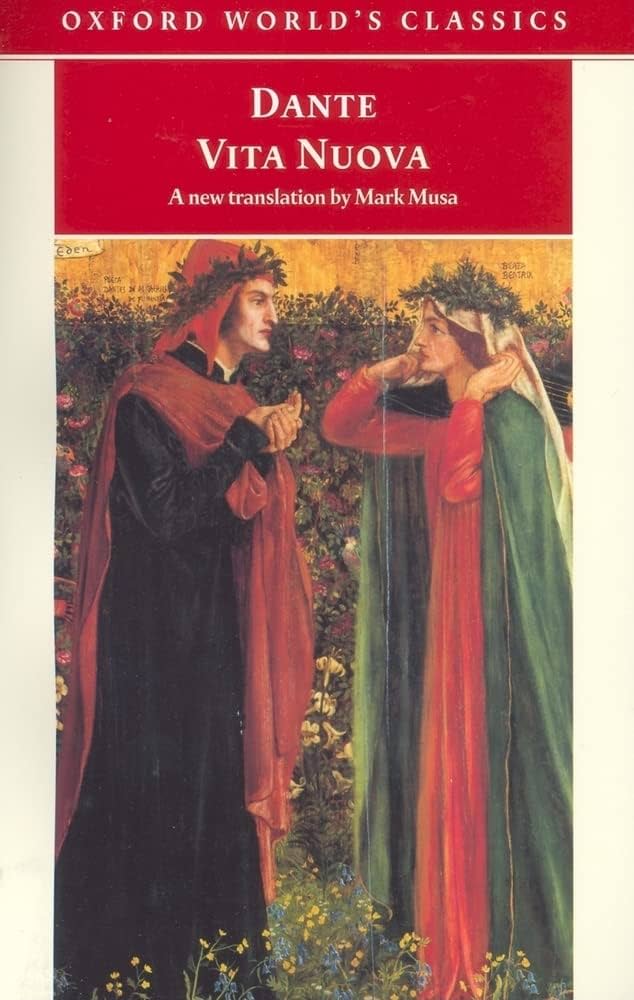
Vita Nuova is taught in virtually every medieval Italian literature program worldwide and appears in most comparative literature and Romance philology curricula. It is the foundational text of the dolce stil novo movement and the biographical prologue to the Divine Comedy, one of the most studied works in Western literary history. Wikipedia entries exist in more than 80 languages, and the work has been continuously in print and commentary since Boccaccio's 14th-century biography of Dante.
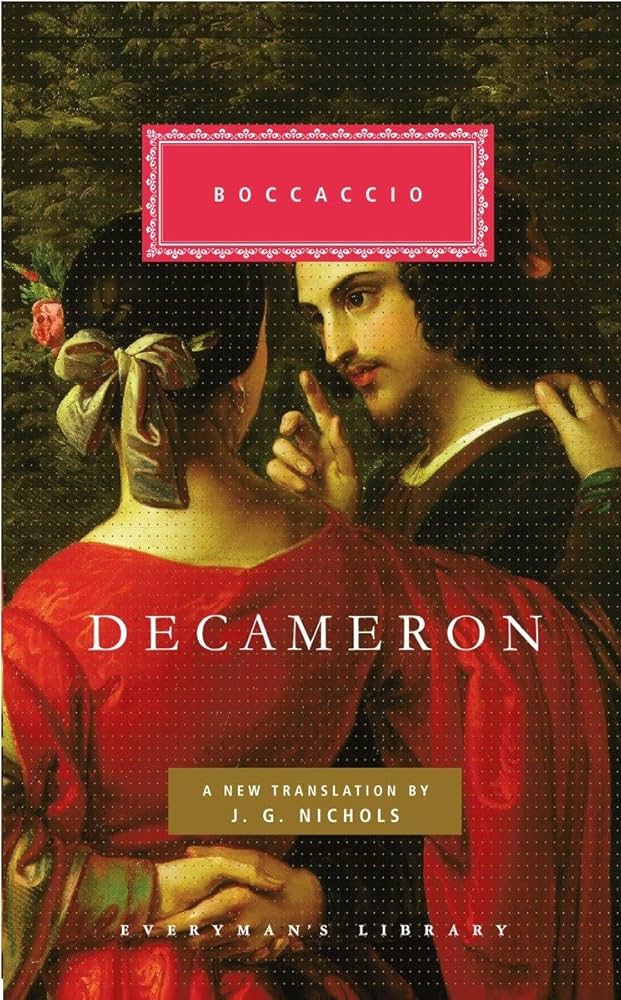
No. 7 on this list. The Decameron
Giovanni Boccaccio · 1353
Moderate20 hours
Included in: Bokklubben World Library
Ten young Florentines flee the Black Death and tell a hundred stories—bawdy, tragic, satirical—that give prose fiction its first great architecture. Chaucer borrowed from it, and the frame-narrative technique Boccaccio perfected here became the scaffolding for centuries of European storytelling.
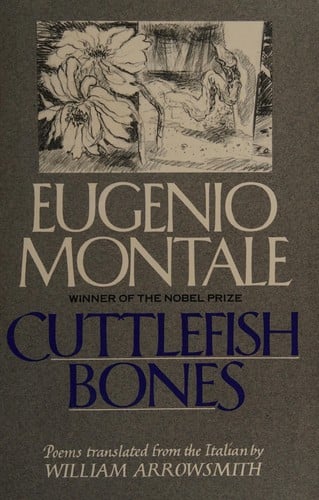
Montale's 1925 debut collection presents a Mediterranean landscape fractured into discrete, observed moments. The poems inhabit a stark geography of cliffs, withered gardens, and coastal stone—Liguria rendered as both literal place and emotional correlative. Images accumulate without resolution: a cuttlebone washed ashore, lizards on parched earth, the "harsh grating" of cicadas. The speaker moves through this terrain with precise attention but no explanatory frame, registering sensory data without interpretive commentary. Verb tenses shift; temporal progression collapses. A wall of cactus resists metaphor, remains simply wall. This refusal of ornament distinguishes Montale from his Romantic predecessors. The collection enacts a poetics of negative capability—what remains unstated carries more weight than declaration. Individual poems accumulate like the book's governing image: bones on a beach, fragments of form, stripped of context yet demanding attention. The work's sparse diction and angular syntax establish modernism's austere aesthetic while maintaining connection to observable reality. Death, absence, and the incompleteness of human understanding pervade the collection, not as abstract philosophy but as the texture of looking at a specific landscape.
The Consolation of Philosophy was a cornerstone text of medieval European education, read and copied across centuries in monasteries and universities. It remains standard reading in philosophy, classics, and medieval studies courses worldwide, with Wikipedia articles in over 50 languages attesting to its global reach. Few works written before the print era hold such sustained pedagogical standing.
Marco Polo sits before Kublai Khan and describes cities he has visited — or perhaps invented. Despina can be approached by land or by sea, and looks entirely different depending on which direction you come from. Valdrada was built above a lake so that every action of its inhabitants would be doubled in the water below; the city and its mirror have learned to hate each other. Zobeide was constructed by men who all dreamed the same woman and built a city to trap her, but the woman never appeared. Calvino arranges 55 such cities across 11 categories — Cities & Memory, Cities & Desire, Thin Cities — in a mathematical grid that wears the clothing of fiction. The cities are not places. They are states of mind, arguments about time and loss, meditations on the difference between a map and the territory it claims to represent. Between the vignettes, Marco Polo and the Khan conduct dialogues about language, empire, and whether it is possible to describe anything that exists. The prose is precise and dreaming at once — a short paragraph can hold more compressed thought than a chapter of conventional fiction. This is a book that accumulates rather than progresses, and what it accumulates is a complete philosophy of how cities, and perhaps consciousness itself, work.
No. 11 on this list. Ars Poetica · Horace · c. 19 BCE
The single most influential text on poetics between Aristotle and the Romantics. Foundation of neoclassical literary theory.
Moderate32 min
Start this bookNo. 12 on this list. Heroides · Ovid · c. 15 BCE
Penelope has been waiting twenty years. She writes to Odysseus — still missing, still silent — and the letter is not a love note but a legal brief. She catalogs what she has lost, what she has endured, and what she expects in return. Ovid's Heroides gives the floor to the women Greek and Roman epic left waiting in the margins: Medea, Ariadne, Dido, Briseis, Phaedra — each in her own verse letter, each making her case to the man who abandoned her. The text works as a systematic rebuttal of the heroic tradition. Aeneas's piety looks different from Dido's cartilage; Jason's glory looks different from Medea's exile. Where Virgil and Homer judge these women by the needs of the hero, Ovid hands them the pen and lets them judge the heroes back. The letters are arguments as much as laments — rhetorical performances full of evidence, precedent, and accusation. The reader encounters mythological density on every page: the Symplegades, the fleece, the earth-born warriors, the labyrinth. These are not ornaments but proof. Reading Heroides demands classical literacy and rewards it with a complete inversion of the tradition — twenty-one letters that, taken together, constitute one of the ancient world's sharpest critiques of heroic self-justification.
Moderate3.6 hours
Start this bookNo. 13 on this list. Amores · Ovid · c. 16 BCE
Ovid is twenty years old and Corinna will not open her door. So begins the Amores — forty-nine love elegies written in the 20s BCE by a Roman poet who understood, from the first poem, that wit is more powerful than sincerity. Cupid, he explains in Elegy I, stole a foot from his heroic hexameter and turned his epic into love poetry against his will. This is Ovid's characteristic move: mock complaint that reveals total mastery. The Amores catalogues an affair with the unnamed mistress Corinna — bribing her doorkeeper, watching her comb her ruined hair, mourning her parrot with the same hyperbolic grief he'd spend on a person, catching her in adultery and immediately forgiving her because she denied it too beautifully. Each poem is a rhetorical performance: Ovid argues, apostrophizes, invokes mythology, reverses himself, and lands a final turn with the timing of a practised comedian. He invented the mode of the suffering lover who is too articulate to suffer. Reading the Amores is to watch the cleverest poet in Rome construct the template that Petrarch would use a millennium later, and that has governed love poetry ever since — which is to say, Ovid built the room everyone else still lives in.
Moderate2 hours
Read nowNo. 14 on this list. The Drowned and the Saved · Primo Levi · 1986
Taught widely in Holocaust studies, memory studies, ethics, and comparative literature courses at universities across Europe, North America, and Israel. Levi's concept of 'the gray zone' has become standard vocabulary in moral philosophy curricula. While the database returned no syllabus count, the book's standing as essential reading in its field is well established across decades of academic discourse.
Moderate3.6 hours
Start this bookNo. 15 on this list. The Leopard · Giuseppe Tomasi di Lampedusa · 1958
A fixture on world-literature and modern-European syllabi, in print in Everyman's and Vintage Classics, and the standard text for the Risorgimento in literature courses. Visconti's 1963 film, Palme d'Or winner, kept it in general circulation.
Challenging7.7 hours
Start this bookNo. 16 on this list. Orlando Furioso · Ludovico Ariosto · 1516
Taught in schools: UNAM Escuela Nacional Preparatoria – programas de Literatura (Mexico)
Orlando Furioso stands as one of the defining works of Italian Renaissance literature, a fixture in Italian university curricula and comparative literature courses worldwide. Its influence on Spenser, Milton, Shakespeare, Cervantes, and Voltaire makes it indispensable to the study of early modern literature. While less taught in English-language universities than Greek and Roman epic, it appears on virtually every world literature and Renaissance literature syllabus.
Challenging22 hours
Start this bookNo. 17 on this list. The Betrothed · Alessandro Manzoni · 1827
I Promessi Sposi is the foundational novel of Italian literature, required reading in every Italian school for over 150 years. It appears on syllabi worldwide in Italian literature, European Romanticism, and world literature courses. Wikipedia articles exist in over 60 languages, and it is consistently cited as the single most important work of Italian prose fiction.
Challenging13 hours
Start this bookNo. 18 on this list. Satyricon · Petronius · 60
Included in: Oxford World's Classics
One of the earliest surviving novels and a foundational text of European fiction. The Cena Trimalchionis is one of the most famous scenes in Latin literature.
Moderate2.6 hours
Start this bookNo. 19 on this list. The Name of the Rose · Umberto Eco · 1980
Widely taught in comparative literature and semiotics courses; appears on numerous 'greatest novels' lists (Le Monde's 100, Guardian's 100 Best Novels); studied as exemplar of postmodern historical fiction. Translated into over 50 languages with millions of copies sold.
Challenging29 hours
Start this bookNo. 20 on this list. On the Sublime · Longinus · 100
On the Sublime is standard reading in classical rhetoric, literary theory, and Western aesthetic philosophy courses at universities worldwide. While no syllabus data is recorded in the database, its presence in every major anthology of classical criticism and in curricula from Renaissance schools to modern departments of English and Classics confirms its canonical status. It ranks among the handful of Greek critical texts — alongside Aristotle's Poetics and Horace's Ars Poetica — considered foundational to Western literary education.
Moderate1.9 hours
Start this book
No. 21 on this list. Mr. Palomar · Italo Calvino · 1983
Mr. Palomar appears on comparative literature and Italian literature syllabi globally, though less frequently than Invisible Cities or Calvino's earlier work. It features on specialist lists of postmodern fiction and philosophical novels, and is cited among Calvino's major works in virtually every critical study of his career. Its canonical standing is strong within literary circles but narrower than the author's most-taught titles.
Challenging2.1 hours
Start this bookNo. 22 on this list. The Book of the Courtier · Baldassare Castiglione · 1528
A core text of Renaissance studies and of the history of manners, taught alongside Machiavelli's Prince as its courtly counterpart, and continuously in print from Penguin Classics and Norton.
Challenging11 hours
Start this bookNo. 23 on this list. Fasti · Ovid · 8
Fasti is a core text in Latin studies curricula and appears in most classical literature courses treating Augustan Rome, though it sits in the shadow of Ovid's Metamorphoses and Virgil's Aeneid in breadth of teaching. The Oxford World's Classics edition by Anne and Peter Wiseman (2011, revised 2013) marks its standing as a prestige canonical work. It is not among the most-taught Latin texts in translation courses but is standard reading for specialists.
Challenging6.9 hours
Read nowNo. 24 on this list. The Day of the Owl · Leonardo Sciascia · 1961
The standard first text on the Mafia in literature, taught in Italian and comparative crime-fiction courses, and continuously in print in NYRB Classics and Granta editions.
Challenging3.5 hours
Start this bookNo. 25 on this list. The Autobiography of Benvenuto Cellini · Benvenuto Cellini
The standard primary source for Renaissance workshop practice and patronage, assigned in art-history, Renaissance-studies and life-writing courses, and continuously in print from Penguin Classics and Oxford World's Classics.
Moderate10 hours
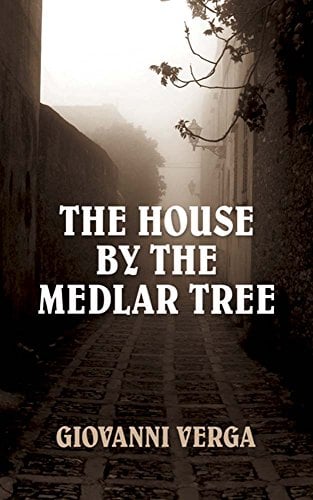
Start this bookNo. 26 on this list. The House by the Medlar Tree · Giovanni Verga · 1881
Widely taught in Italian literature and comparative literature courses internationally, 'I Malavoglia' is foundational to understanding Italian verismo and the development of the modern Italian novel. It appears prominently in European literature curricula and is consistently cited in 'essential works of world literature' lists. Less prominent in Anglophone syllabi than in Italian and continental European programs.
Challenging6.2 hours
Start this bookNo. 27 on this list. The Garden of the Finzi-Continis · Giorgio Bassani · 1962
A standard text on Holocaust-literature and modern-Italian syllabi, in Penguin Modern Classics and Everyman's, and included in 1001 Books You Must Read Before You Die.
Challenging6 hours
Start this bookNo. 28 on this list. Christ Stopped at Eboli · Carlo Levi · 1945
The founding text of Italy's postwar debate on the South, standard in Italian-studies and anthropology courses, and kept in print by Penguin Classics and FSG.
Moderate6.3 hours
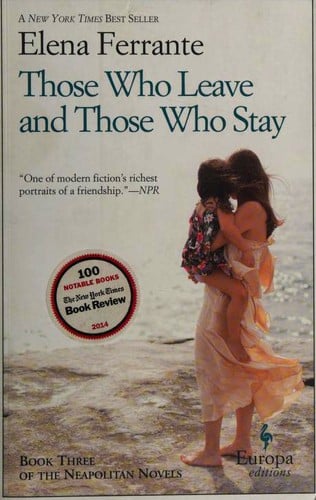
Start this bookNo. 29 on this list. Those Who Leave and Those Who Stay · Elena Ferrante · 2013
The Neapolitan Novels have become required reading in contemporary fiction and world literature courses across Europe and North America, and the series as a whole appears on hundreds of university syllabi. This third volume is less commonly assigned as a standalone text than the series opener, but no major literary conversation about contemporary Italian fiction or female friendship narratives omits it. The series' Wikipedia presence spans 30+ languages, signaling genuine global reach.
Challenging12 hours
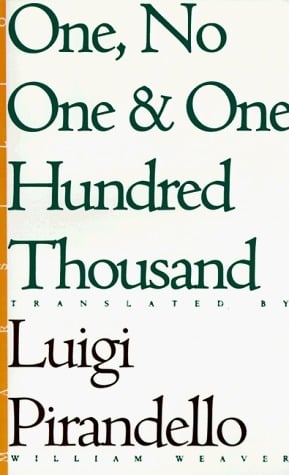
Start this bookNo. 30 on this list. One, No One and One Hundred Thousand · Luigi Pirandello · 1926
Vitangelo Moscarda discovers that others see him differently than he sees himself, setting off an obsessive quest to understand identity. Pirandello's final novel pushes his characteristic themes of appearance and reality to their philosophical limits.
Challenging4.6 hours
Start this book
No. 31 on this list. And Suddenly It's Evening
Salvatore Quasimodo · 1942
No. 32 on this list. Henry IV
Luigi Pirandello · 1922
No. 33 on this list. The Cloven Viscount
Italo Calvino · 1952
No. 34 on this list. The Conformist
Alberto Moravia · 1951
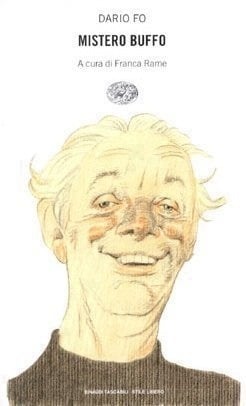
No. 35 on this list. Mistero Buffo
Dario Fo · 1969
No. 36 on this list. Pereira Maintains
Antonio Tabucchi · 1994
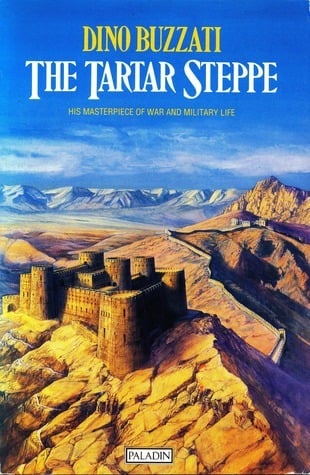
No. 37 on this list. The Tartar Steppe
Dino Buzzati · 1940
No. 38 on this list. Bread and Wine
Ignazio Silone · 1936
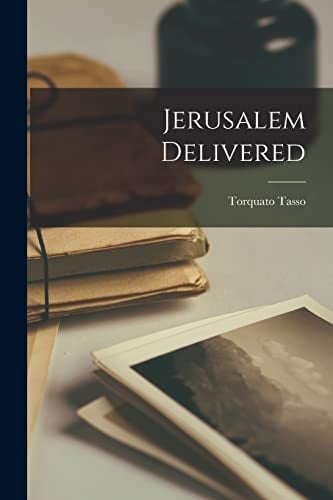
No. 39 on this list. Jerusalem Delivered
Torquato Tasso · 1581
No. 40 on this list. The Ballad of the Salty Sea
Hugo Pratt · 1967
No. 41 on this list. Thyestes
No. 42 on this list. Convivio
Dante Alighieri · 1307
No. 43 on this list. Two Women
Alberto Moravia · 1957
No. 44 on this list. Distant Reading
Franco Moretti · 2013
No. 45 on this list. The Days of Abandonment
Elena Ferrante · 2002
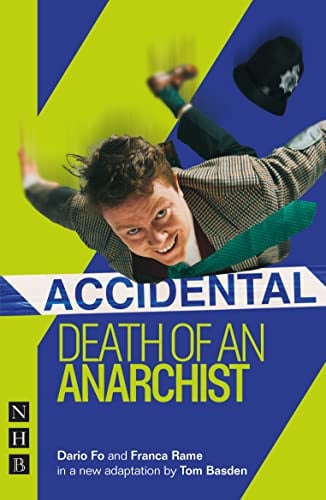
No. 46 on this list. Accidental Death of an Anarchist
Dario Fo · 1970
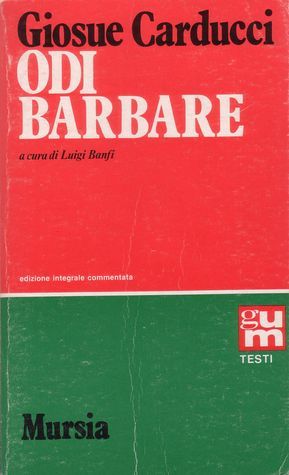
No. 47 on this list. Odi barbare
Giosuè Carducci · 1877
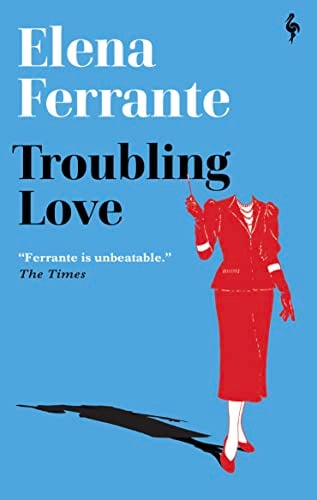
No. 48 on this list. Troubling Love
Elena Ferrante · 1992
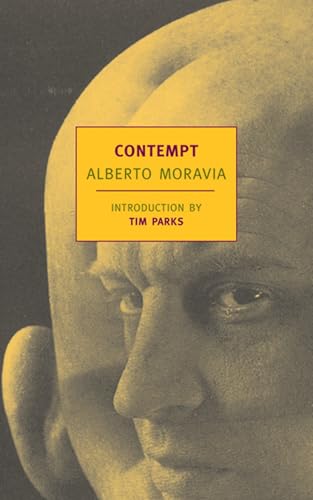
No. 49 on this list. Contempt
Alberto Moravia · 1954
No. 50 on this list. De Monarchia
Dante Alighieri · 1313
No. 51 on this list. Reeds in the Wind
Grazia Deledda · 1913
No. 52 on this list. The Mother
Grazia Deledda · 1920
No. 53 on this list. Elias Portolu
Grazia Deledda · 1903
No. 54 on this list. The Dry Heart
Natalia Ginzburg · 1947
No. 55 on this list. Valentino and Sagittarius
Natalia Ginzburg · 1957
No. 56 on this list. Silk
Alessandro Baricco · 1996
No. 57 on this list. Separate Rooms
Pier Vittorio Tondelli · 1989
No. 58 on this list. Octavia
No. 59 on this list. A Love Affair
Dino Buzzati · 1964
No. 60 on this list. Last Summer in the City
Gianfranco Calligarich · 1973
About this list
These 62 books are the highest-scoring eligible moderately difficult books from Italy currently in the catalogue. By literary regard, it opens with Odes, Georgics and Six Characters in Search of an Author. About 331 hours of reading in all. Difficulty runs from 51 to 61 out of 100 for the middle half of the list; the summit is Six Characters in Search of an Author at 64.
This list is ranked by literary regard, with a consistent order for equal scores. Membership follows authors and co-authors, not translators or editors. Catalogue coverage and the historical canon both limit what this list can represent.
When we matched the Canons dataset to our catalogue in October 2026, our canonical-status scores rose with the number of school curricula, publisher series and lists in it that cite a work: the median score was 72 for books one such source cites, 84 at two, 88 at three, 92 at four and 93 at five or more. Prizes are left out of that count. Outside the state curricula, the dataset’s sources choose mostly from what has been translated into English or French, so it is a weaker check on other literatures. Source: Canons (Andrew Piper), CC BY 4.0
Questions people actually ask
- What are the best moderately difficult books from Italy?
- By literary regard, which weighs canonical status, critical standing and influence, Odes, Georgics, Six Characters in Search of an Author, On the Nature of Things and Aeneid lead. ReadingRate ranks 62 such books, each with a difficulty score and a reading-time estimate.
- Where should I start with moderately difficult books from Italy?
- Start from difficulty, not from rank. The most approachable books on this list that still carry top literary regard are Amores by Ovid (about 2 hours), Satyricon by Petronius and The Decameron by Giovanni Boccaccio.
- How hard are moderately difficult books from Italy to read?
- Most of this list sits between 51 and 61 on ReadingRate's 100-point difficulty scale, where 40 to 55 is moderate. The summit is Six Characters in Search of an Author at 64. Every entry carries its own score, so a reader can pick a great book at a difficulty they will finish.
- How is this list ranked?
- On literary-regard data: how canonically established a work is, its critical standing, and its influence on later writing. It is not a readers’ poll, which is why recent bestsellers rarely appear. Membership follows authors and co-authors, not translators or editors. A list that is not a genre list keeps to literature (fiction, poetry, drama and philosophy), with philosophy taking no more than one slot in five while there is literature left to rank; every list holds at most three works by one author.