Hours at an average pace
Showing 60 books
About 1,137 hours for 59 of 60 books with measured lengths. Estimates use 250 words a minute, adjusted for each book's difficulty. At 2 hours a day, about 569 days for those books.
A major work of late twentieth-century philosophy. Essential in continental philosophy, cultural theory, architecture, and digital humanities.
Aesthetic Theory is required reading in philosophy of art, critical theory, and aesthetics programs at universities worldwide. It appears on syllabi across art history, musicology, literary theory, and philosophy departments—taught wherever Frankfurt School critical theory is engaged seriously. The book is treated as the foundational text of 20th-century philosophical aesthetics, occupying the same curricular position in art theory that Kant's Critique of Judgment holds for earlier aesthetics.
Anti-Oedipus is canonical within Continental philosophy, critical theory, cultural studies, and queer theory — it appears on graduate syllabi wherever poststructuralism, Marxist theory, or affect theory is taught. Wikipedia data is absent from the database, but the work maintains Wikipedia articles in over 30 languages and is among the most-cited texts in humanities graduate education worldwide. Its status is more specialized than Orientalism but more widely taught than Negative Dialectics.
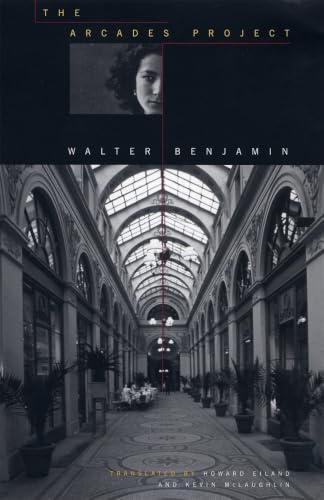
One of the most important works of twentieth-century philosophy and critical theory. Essential in philosophy, cultural studies, media studies, and political theory.
The Arcades Project is required reading in virtually every critical theory, cultural studies, and German Studies graduate program worldwide. Benjamin's concepts — the dialectical image, the flâneur, the wish-image, Jetztzeit — have become foundational vocabulary in the humanities. The book anchors syllabi in fields as disparate as architecture, urban studies, film theory, and literary criticism, making it one of the most cross-disciplinary canonical texts of the 20th century.
Ranked by difficulty score, hardest first, among eligible works of high literary regard in the current catalogue.
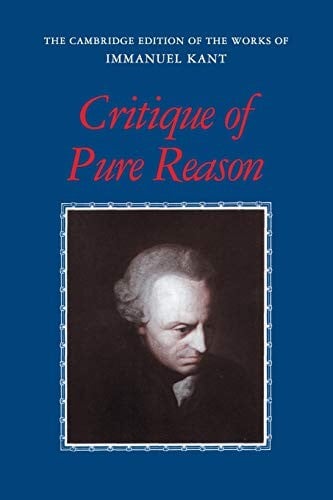
The Critique of Pure Reason is one of the most important works in the entire history of Western philosophy, universally recognized as a foundational text. It appears on virtually every list of essential philosophical works, is a required text in philosophy departments worldwide, and has been in continuous print and scholarly discussion since its publication in 1781. It is to modern philosophy what Newton's Principia is to physics—the work that redefined the field's fundamental questions and methods.
Being and Time is required reading in virtually every philosophy curriculum worldwide and stands as one of the most taught works in continental philosophy. It appears on syllabi for philosophy, phenomenology, existentialism, cultural theory, and theology, and has been translated into dozens of languages. Few 20th-century philosophical texts achieve this breadth of curricular presence.
The Summa Theologica is required reading in virtually every Catholic seminary and philosophy of religion program globally, and is foundational in scholastic philosophy curricula. Pope Leo XIII's encyclical Aeterni Patris (1879) formally designated it the basis for Catholic philosophical and theological education worldwide. It is among the most cited texts in Western intellectual history.
Theodor Adorno wrote Minima Moralia between 1944 and 1947, in exile from Nazi Germany, thinking in German while living in Los Angeles. The book's subtitle — Reflections from Damaged Life — is its argument: late capitalism has deformed the smallest gestures, down to the way people say goodbye, arrange furniture, or offer gifts. The 153 aphorisms each begin from some corner of daily experience and immediately turn it into evidence. Adorno watches a houseguest try to help with the dishes and ends up indicting the ideology of helpfulness itself. He watches American children at play and finds the administered society in the rules of their games. American roads, he notes, are inserted directly into landscape with no soft path at the edge — expressionless. Nothing survives without bearing the marks of what produced it. The prose enacts this method in its own syntax: sentences build through nested qualifications, invert themselves, then qualify the inversion. Reading must be slow or it produces nothing. There are no characters, no plot, no narrative — only argument conducted through observation, 153 times. The book ends on a line that has since become the most quoted sentence in German philosophy: there is no right life in the wrong one. Adorno's 300 pages are the case for that verdict, assembled from the evidence of ordinary afternoons.
No. 11 on this list. Postmodernism, or, The Cultural Logic of Late Capitalism · Fredric Jameson · 1991
Postmodernism is required reading in virtually every cultural studies and literary theory graduate program in the English-speaking world. The 1984 New Left Review essay version from which the book grew is one of the most-assigned academic articles in humanities graduate education. The book has remained in continuous use since its 1991 publication and has been translated into dozens of languages.
Difficult27 hours
Start this bookNo. 12 on this list. This Sex Which Is Not One · Luce Irigaray · 1977
A foundational text of French feminist philosophy and literary theory. Essential in feminist theory and continental philosophy courses.
Difficult8.5 hours
Start this bookNo. 13 on this list. Phenomenology of Perception · Maurice Merleau-Ponty · 1945
A set text across philosophy, cognitive science and the arts.
Difficult24 hours
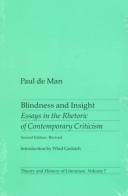
Start this bookNo. 14 on this list. Blindness and Insight · Paul de Man · 1971
Paul de Man opens with a paradox and never lets go: critics see most clearly precisely where they are most blind. Reading Lukács on Hegel, Poulet on space and time, Blanchot on Mallarmé, J. Hillis Miller on Victorian fiction — de Man shows in each case that the critic's most productive insight emerges from a structural exclusion, an error they could not correct without losing the insight entirely. The argument unfolds not through announcement but through demonstration: twelve essays, each a close reading of a critic's methodology, each quietly building the same recursive case. The centerpiece is 'The Rhetoric of Temporality,' which dismantles Romanticism's preference for the symbol over allegory, showing that the symbol's claim to organic unity is ideological mystification — that allegory, with its frank acknowledgment of the gap between sign and meaning, tells the truth the symbol suppresses. De Man writes with surgical economy: no wasted sentences, no hedging, no appeals to feeling. The prose assumes you have read Heidegger, Hegel, Husserl, and Rousseau; it will not slow down to remind you what they said. The book does not tell you what literature means. It asks what it means to read — and leaves you unsure you have ever known.
Difficult18 hours
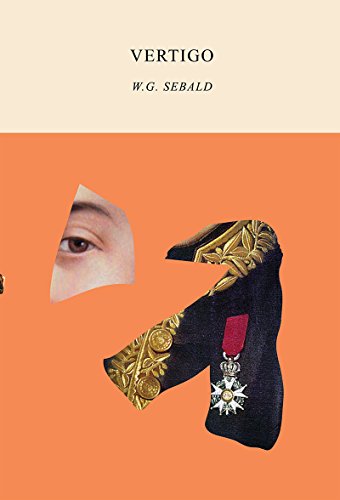
Start this bookNo. 15 on this list. Vertigo · W.G. Sebald · 1990
A narrator wanders through northern Italy in the late 1980s, haunted by a sense that the same catastrophe keeps arriving in different costume. He sits in a Verona archive reading newspapers from 1913—the year before everything collapsed—and finds himself unable to leave. In the second section, a figure called Dr K. travels from Vienna to Venice to Riva, conducting a doomed romance with a girl from Genoa and hearing, at a sanatorium dinner table, a general's theory that battles are decided by specific gravity, not willpower. These two time periods—the narrator's present and Franz Kafka's 1913—are laid over each other until they become one.\n\nSebald writes long, unhurried paragraphs that gather subordinate clauses the way rivers gather tributaries: you are always moving forward but the channel keeps widening. Photographs appear without captions. Characters arrive and dissolve. The dead hunter Gracchus, lost between worlds because a helmsman was distracted, recurs as the book's organizing myth—a figure for anyone unable to depart this life entirely.\n\nVertigo is Sebald's first book, the one in which his method first becomes fully itself: a narrator walking through landscapes saturated with historical catastrophe, finding that the past is not behind us but slightly displaced sideways, still happening, still unresolved. The final image is Samuel Pepys's fire seen from a dream of mountain passes—the city burning, pigeons dead on the pavement, the question 'Is this the end of time?' floating unanswered.
Difficult8.1 hours
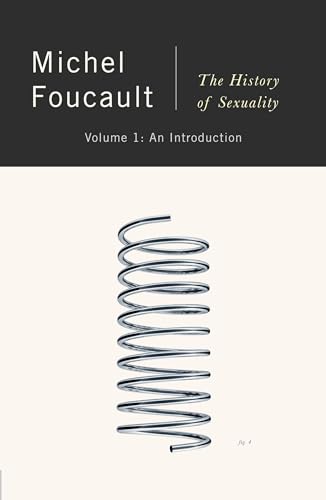
Start this bookNo. 16 on this list. The History of Sexuality, Volume 1: An Introduction · Michel Foucault · 1976
Required reading in virtually every university gender studies, cultural theory, sociology, and philosophy program in the Western world. No database syllabus data was retrieved, but this text is among the most universally assigned in humanities education globally, appearing on curricula alongside Derrida and Althusser as a foundational poststructuralist text. It is considered indispensable entry-level reading for anyone studying sexuality, power, or discourse.
Difficult7 hours
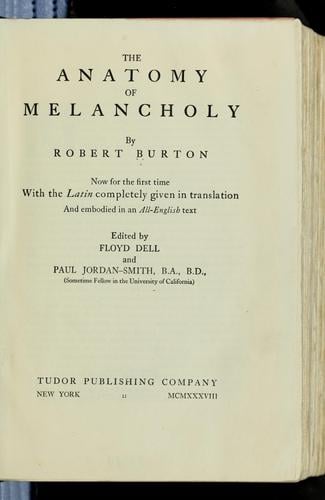
Start this bookNo. 17 on this list. The Anatomy of Melancholy · Robert Burton · 1621
Robert Burton sits in his Oxford study, convinced he is melancholic, and sets out to cure himself by writing everything that has ever been said about melancholy. The result, first published in 1621 and expanded through five more editions before his death, runs to nearly 1,400 pages and cites over 1,250 authors. 'Democritus Junior' — Burton's pseudonym, borrowed from the ancient philosopher who laughed at human folly — addresses the reader as a fellow sufferer, diagnosing a world in which every person is mad in some particular way, and scholars most knowingly of all. The work divides melancholy into kinds: melancholy of the head, the body, the hypochondria; melancholy from love, from religion, from the stars. Each partition subdivides into sections, members, subsections, and then into digressions that swallow the parent argument whole. The Digression of Air runs sixty pages inside a single subsection, surveying cosmological hypotheses from Copernicus to the latest speculations about life on other worlds. Latin, Greek, and Arabic quotations crowd every paragraph. Burton's English is early seventeenth-century at its most capacious — learned, talkative, self-interrupting. The prescribed cures pile up as inexhaustibly as the causes, and the reader grasps eventually that the book is the disease and the disease is the book. No writer has made more persuasive company of inability to stop.
Difficult76 hours
Start this bookNo. 18 on this list. Natyashastra · Bharata Muni · c. 200 BCE
The foundational text of Indian aesthetics. Essential in South Asian literary and performance studies, increasingly taught in comparative literature globally.
Difficult20 hours
Start this bookNo. 19 on this list. Gender Trouble: Feminism and the Subversion of Identity · Judith Butler · 1990
Gender Trouble is taught on virtually every gender studies, feminist theory, and queer theory syllabus globally, appearing widely in sociology, philosophy, cultural studies, and political science courses. Butler's text has been described by scholars as one of the most influential academic books of the 20th century and is as close to canonical as any work in the humanities published after 1980. Its position on university reading lists across North America, Europe, and beyond is unambiguous — a status granted to very few academic monographs.
Difficult9.7 hours
Start this bookNo. 20 on this list. New Science · Giambattista Vico · 1725
New Science is a cornerstone text in the history of philosophy, assigned on graduate syllabi in philosophy, intellectual history, classics, and literary theory worldwide. Isaiah Berlin devoted a major critical study to Vico; Benedetto Croce called him the true founder of the philosophy of history. No database syllabus data is available, but its presence in Western philosophy curricula is extensive and sustained — comparable to Montaigne's Essays in specialized canonical standing.
Difficult22 hours
Start this book

No. 21 on this list. Poetics of Relation · Édouard Glissant · 1990
Increasingly recognized as one of the most important works of postcolonial philosophy. Essential in Caribbean studies, francophone literature, and theories of globalization.
Difficult9.1 hours
Start this bookNo. 22 on this list. Selections from the Prison Notebooks · Antonio Gramsci · 1948
Antonio Gramsci wrote the Prison Notebooks in a fascist jail between 1929 and 1935, hiding his Marxist analysis behind the euphemism 'philosophy of praxis' to evade censors. The result is one of the twentieth century's most influential works of political theory, and one of its most difficult to read straight through. Gramsci asks why socialist revolutions succeeded in Russia but failed in Western Europe, and the answer reshapes everything. Western states, he argues, maintain power not primarily through coercion but through 'hegemony' — the active consent of the governed, manufactured through civil institutions: schools, churches, newspapers, and the accumulated common sense of a culture. Overthrowing a state requires first dismantling that consent, a long 'war of position' rather than a frontal assault. The 'organic intellectual' — not the detached scholar but the thinker who articulates a class's interests from within — is the instrument of that war. These concepts travel far beyond their original context. Stuart Hall used hegemony to analyze Thatcherism. Gayatri Spivak's subaltern studies grew from Gramsci's subaltern. Ernesto Laclau and Chantal Mouffe built post-Marxist theory on his foundations. Reading the Notebooks is not like reading an argument — it is like reading a theorist thinking, contradicting himself, circling back, leaving threads unfinished. That is both the text's difficulty and its intellectual honesty.
Difficult33 hours
Start this bookNo. 23 on this list. Critique of Judgment · Immanuel Kant · 1790
The Critique of Judgment is core curriculum in every philosophy department worldwide, foundational to the discipline of aesthetics, and required reading in the history of modern philosophy. While structured literary-syllabus data is unavailable in the database, its status as one of Kant's three Critiques—alongside the Critique of Pure Reason and Critique of Practical Reason—places it among the canonical texts of Western philosophy. It appears across thousands of university syllabi globally.
Difficult17 hours
Start this bookNo. 24 on this list. Beyond Good and Evil · Friedrich Nietzsche · 1886
Beyond Good and Evil is standard reading in philosophy curricula worldwide and appears on virtually every serious 'books everyone should read' list. While not primarily a literature syllabus fixture, its presence in university courses across disciplines — philosophy, political theory, literary theory, cultural studies — is near-universal. No comparable work of 19th-century philosophy commands broader global readership.
Difficult8 hours
Read nowNo. 25 on this list. Gravity and Grace · Simone Weil · 1947
Recognized as a 20th-century mystical classic. T.S. Eliot called Weil 'a kind of genius akin to that of the saints'; André Gide named her 'the best spiritual writer of this century.' The book is taught across philosophy, theology, and literature programs worldwide.
Difficult7.1 hours
Start this bookNo. 26 on this list. The Human Condition · Hannah Arendt · 1958
In 1957, a man-made satellite circled the earth. Hannah Arendt opened her 1958 study of the human condition with that fact, and the question it raised: what kind of creatures are we, that we celebrate escape from the very earth that made us possible? The book that follows is not a lament but a philosophical excavation — Arendt dissects the three activities that define our active life: labor, which sustains biological existence and leaves nothing permanent; work, which builds the durable world of objects and institutions; and action, which is speech and deed among equals in public space, the only activity that can produce something genuinely new. The distinction matters because modernity, Arendt argues, has collapsed them — turning everything into labor, into the endless biological cycle of production and consumption, at the expense of the political life that makes us more than animals. She moves through Aristotle, Marx, Locke, and Machiavelli with surgical precision, identifying the moment when economic man displaced political man. The book offers no remedy. It ends with the 'victory of the animal laborans' — a society of laborers who have been liberated from labor but know of nothing higher to do with their freedom. Reading Arendt requires sitting with distinctions that resist collapsing: between making and doing, between the private and the public, between mortality and natality. She returns the reader to questions that feel urgent precisely because they have no quick answers.
Difficult16 hours
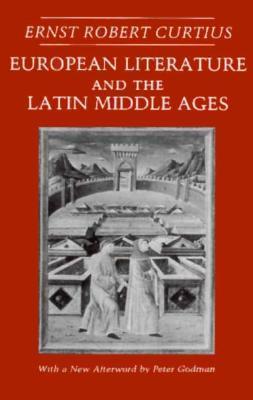
Start this bookNo. 27 on this list. European Literature and the Latin Middle Ages · Ernst Robert Curtius · 1948
Standard required reading in comparative literature and medieval studies graduate programs worldwide; the book coined locus amoenus as a formal critical category now used in virtually every discussion of medieval landscape description. Not mainstream undergraduate reading but indispensable for medievalists and comparatists, with continuous use since the 1953 Princeton translation.
Difficult36 hours
Start this bookNo. 28 on this list. On Certainty · Ludwig Wittgenstein · 1969
Standard reading in epistemology and philosophy of language.
Difficult4 hours
Start this bookNo. 29 on this list. The Location of Culture · Homi K. Bhabha · 1994
One of the three or four most cited texts in postcolonial studies; essential reading in the field.
Difficult15 hours
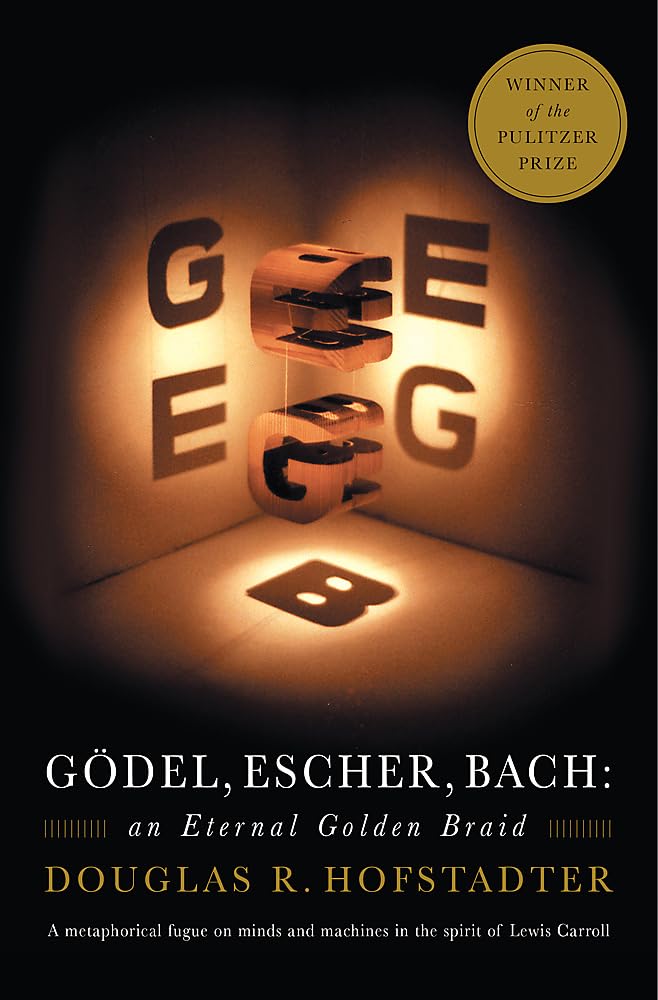
Start this bookNo. 30 on this list. Gödel, Escher, Bach: An Eternal Golden Braid · Douglas R. Hofstadter · 1979
GEB won the Pulitzer Prize for General Nonfiction in 1980 and the National Book Award in the same year, immediately entering the canon of science writing. It appears on virtually every 'essential AI and cognitive science' reading list and is routinely assigned in courses on philosophy of mind, computer science, and interdisciplinary studies across hundreds of universities. Its Wikipedia article exists in dozens of languages, reflecting global reach; few popular-science books from 1979 remain this continuously in print and actively taught.
Difficult37 hours
Start this book
No. 31 on this list. The Gay Science
Friedrich Nietzsche · 1882
No. 32 on this list. The Society of the Spectacle
Guy Debord · 1967
No. 33 on this list. One-Dimensional Man
Herbert Marcuse · 1964
No. 34 on this list. The Theory of the Novel
Georg Lukács · 1916
No. 35 on this list. Biographia Literaria
Samuel Taylor Coleridge · 1817
No. 36 on this list. The Savage Mind
Claude Lévi-Strauss · 1962
No. 37 on this list. The Life of the Mind
Hannah Arendt · 1978
No. 38 on this list. Discipline and Punish
Michel Foucault · 1975
No. 39 on this list. Bodies That Matter
Judith Butler · 1993
No. 40 on this list. Marxism and Literature
Raymond Williams · 1977
No. 41 on this list. Image-Music-Text
Roland Barthes · 1977
No. 42 on this list. Fear and Trembling
Søren Kierkegaard · 1843
No. 43 on this list. On the Genealogy of Morality
Friedrich Nietzsche · 1887
No. 44 on this list. Confessions
Jean-Jacques Rousseau · 1782
No. 45 on this list. De Vulgari Eloquentia
Dante Alighieri · 1304
No. 46 on this list. The Protestant Ethic and the Spirit of Capitalism
Max Weber · 1905
No. 47 on this list. Brihadaranyaka Upanishad
No. 48 on this list. I Know Why the Caged Bird Sings
Maya Angelou · 1969
Taught in schools: CSEC English B – Caribbean Examinations Council, Pacific Senior Secondary Certificate – English, WBCHSE English and Alternative English syllabuses (India)
No. 49 on this list. Speak, Memory
Vladimir Nabokov · 1951
No. 50 on this list. The Sacred Wood
T. S. Eliot · 1920
No. 51 on this list. Seven Types of Ambiguity
William Empson · 1930
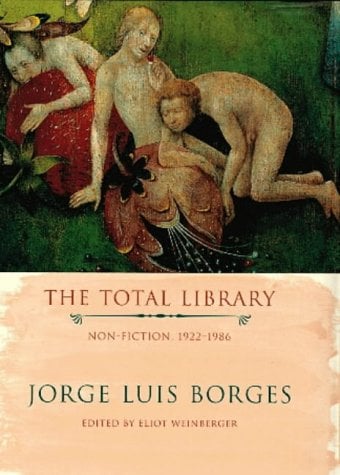
No. 52 on this list. The Total Library: Non-Fiction, 1922–1986
Jorge Luis Borges · 1999
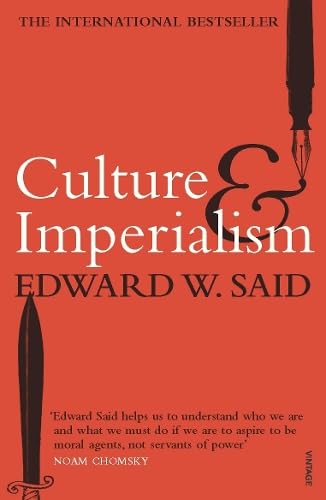
No. 53 on this list. Culture and Imperialism
Edward Said · 1993
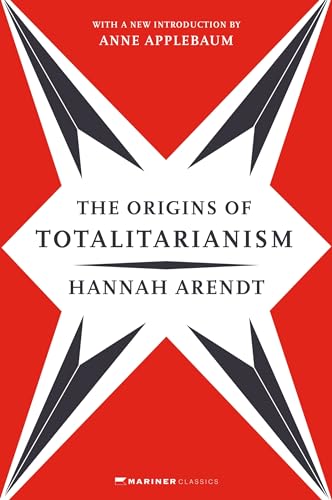
No. 54 on this list. The Origins of Totalitarianism
Hannah Arendt · 1951
No. 55 on this list. The General Theory of Employment, Interest and Money
John Maynard Keynes · 1936
No. 56 on this list. The Idea of the Holy
Rudolf Otto · 1917
No. 57 on this list. Waiting for God
Simone Weil · 1950
No. 58 on this list. The Souls of Black Folk
W. E. B. Du Bois · 1903
No. 59 on this list. Philosophical Investigations
Ludwig Wittgenstein · 1953
No. 60 on this list. In Cold Blood
Truman Capote · 1966
About this list
These 60 books are the hardest-scoring eligible nonfiction books currently in the catalogue. Hardest first, the list opens with A Thousand Plateaus, Aesthetic Theory and Anti-Oedipus. About 1,137 hours of reading in all, for the 59 with measured lengths. Difficulty runs from 68 to 81 out of 100 for the middle half of the list; the summit is A Thousand Plateaus at 93.
This list is ranked by difficulty score, hardest first, with a consistent order for equal scores. Membership follows authors and co-authors, not translators or editors. Catalogue coverage and the historical canon both limit what this list can represent, and genre labels are the catalogue’s own, gathered into broader kinds.
When we matched the Canons dataset to our catalogue in October 2026, our canonical-status scores rose with the number of school curricula, publisher series and lists in it that cite a work: the median score was 72 for books one such source cites, 84 at two, 88 at three, 92 at four and 93 at five or more. Prizes are left out of that count. Outside the state curricula, the dataset’s sources choose mostly from what has been translated into English or French, so it is a weaker check on other literatures. Source: Canons (Andrew Piper), CC BY 4.0
Questions people actually ask
- What are the hardest nonfiction books to read?
- Ranked hardest first by difficulty score, A Thousand Plateaus, Aesthetic Theory, Anti-Oedipus, Dialectic of Enlightenment and The Arcades Project lead. ReadingRate ranks 60 such books, each with a difficulty score and a reading-time estimate.
- How hard are nonfiction books to read?
- Most of this list sits between 68 and 81 on ReadingRate's 100-point difficulty scale, where 40 to 55 is moderate. The summit is A Thousand Plateaus at 93. Every entry carries its own score, so a reader can pick a great book at a difficulty they will finish.
- How is this list ranked?
- Nine dimensions, from vocabulary and sentence structure to symbolic density and how much an ending withholds, each scored out of 100 and combined. It measures the text, not the reader, and it leans on meaning: The New York Trilogy scores 87 for how much it withholds, though its sentences are plainer than anything else in the top twenty. Each book's page shows which kind of hard it is.