Hours at an average pace
Showing 39 books
About 274 hours for 39 of 39 books with measured lengths. Estimates use 250 words a minute, adjusted for each book's difficulty. At 2 hours a day, about 137 days for those books.
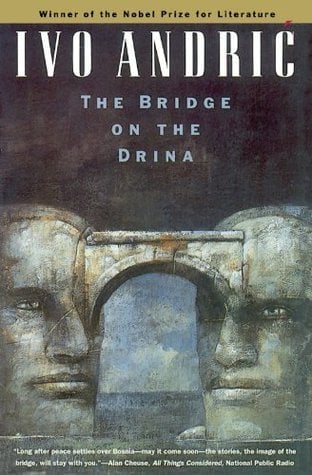
No. 1 on this list. The Bridge on the Drina
Ivo Andrić · 1945
Challenging11 hours
Taught in schools: Turkish edebiyat curriculum (Turkey)
Andrić's Nobel Prize-winning masterwork holds central position in Balkan literature and broader 20th-century fiction. The novel appears regularly in world literature curricula and scholarly studies of historical fiction, postcolonial literature, and European modernism. It defines the chronicle-novel form and serves as essential text for understanding Balkan cultural memory.
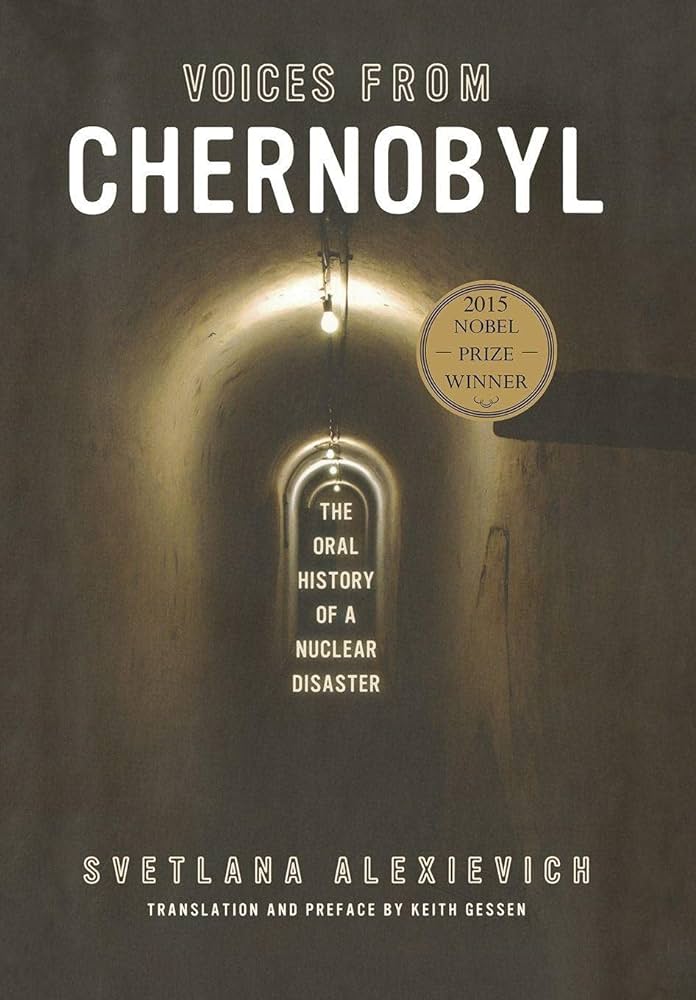
Widely recognized as the definitive literary account of Chernobyl and a landmark of documentary literature. The 2015 Nobel Prize in Literature elevated its status, establishing Alexievich's polyphonic method as a major formal innovation. Required reading in post-Soviet studies and increasingly taught in world literature curricula. Its documentary approach has influenced contemporary non-fiction globally.
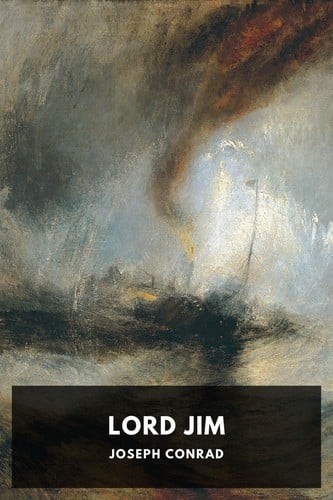
No. 3 on this list. Lord Jim
Joseph Conrad · 1900
Challenging11 hours
Taught in schools: CSEC English B – Caribbean Examinations Council
The great novel of honor lost and sought. Jim's jump from the Patna, his redemption in Patusan, Marlow's narration—Conrad explored how one moment can define a life. Core text in modernism and British literature courses.
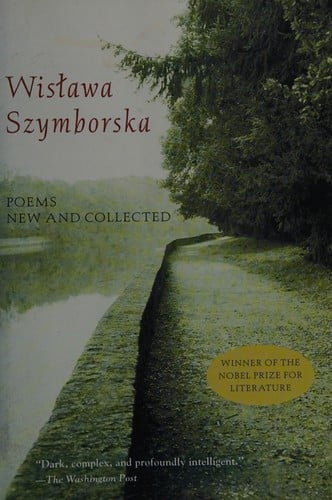
Szymborska's retrospective gathers five decades of work in what would become the definitive English collection. Her poems are deceptively simple—short, conversational, funny—while containing philosophical depths. She writes about clouds and dreams and history, about the way reality keeps being stranger than our categories. 'I am who I am. / A coincidence no less unthinkable / than any other.' She won the Nobel in 1996, and these poems show why: a voice at once modest and vast, finding wonder in ordinary things.
Required reading in comparative literature, philosophy of literature, and European fiction courses across Europe and North America. One of the defining novels of the 1980s and a staple of Cold War literary history curricula. Consistently appears on 'essential European novels' lists and is taught wherever 20th-century fiction is surveyed.
The Knights of the Cross holds major canonical status in Polish literature as one of Sienkiewicz's historical trilogy novels, widely taught in Polish schools and central to national cultural identity. The work occupies a prominent place in Slavic literary studies and 19th-century historical fiction scholarship. However, it remains less universally recognized in the broader Western canon than contemporaneous works by Tolstoy, Dostoevsky, or Flaubert, partly due to its specific focus on Polish-Teutonic conflicts and its distance from modernist aesthetics that shaped 20th-century canonicity. Still, Sienkiewicz's Nobel Prize (1905) ensures enduring international recognition.
Kundera's first novel is on Le Monde's 100 Books of the Century and is taught in courses on Central European literature and the literature of Communism. It is one of the standard novels of the Prague Spring.
No. 8 on this list. Fatelessness
Imre Kertész · 1975
Challenging4.6 hours
Taught in schools: Hungarian literature curriculum (magyar nyelv és irodalom) (Hungary)
Fatelessness holds significant canonical status within Holocaust literature and Central European fiction, frequently taught in university courses on trauma literature and twentieth-century European novels. While not as universally assigned as Wiesel or Levi, it represents a crucial counter-narrative in Holocaust literature, challenging redemptive and metaphysical interpretations of the camps.
Szymborska is a staple of world poetry courses and a Nobel laureate, and this collection is the standard English edition of her work. Its place is secure, though below Hamlet or Gatsby in universal syllabus presence.
Victory appears on university syllabi in modernism and postcolonial literature courses, though less frequently than Heart of Darkness or Lord Jim, Conrad's most taught works. It is included in most major Conrad critical surveys and considered part of his mature canon. No verified Open Syllabus data was returned, but the novel's presence in the Oxford World's Classics and Penguin Modern Classics series signals sustained scholarly standing.
No. 11 on this list. The General of the Dead Army · Ismail Kadare · 1963
Listed in Le Monde's 100 Books of the Century and the work that introduced Kadare to Western readers after its 1970 French translation. It is studied in courses on Balkan and Eastern European literature.
Challenging6.9 hours
Start this bookNo. 12 on this list. View with a Grain of Sand · Wisława Szymborska · 1995
Szymborska's poems are deceptively simple, their philosophical depths hidden beneath conversational surfaces. She writes about clouds and dreams and history, about the way reality keeps escaping our categories. 'We know ourselves only / as far as we've been tested.' This collection gathers work from across her career, establishing her as one of the essential voices of twentieth-century poetry. She won the Nobel Prize in 1996 for poems that are funny, humble, and vast.
Challenging43 min
Start this bookNo. 13 on this list. Garden, Ashes · Danilo Kiš · 1965
Considered one of the finest autobiographical novels about the Holocaust and a key work of Yugoslav literature. Widely translated and studied.
Moderate3.3 hours
Start this bookNo. 14 on this list. The Woman from Sarajevo · Ivo Andrić · 1945
A woman in Sarajevo witnesses the political upheavals of the early 20th century, her life shaped by the forces of history. Andrić's novel captures the tensions of Bosnia through one woman's experience.
Challenging5 hours
Start this bookNo. 15 on this list. The Museum of Unconditional Surrender · Dubravka Ugrešić · 1997
Ugrešić's most acclaimed novel, widely recognized as a major work of post-Yugoslav literature and contemporary European fiction.
Challenging4.5 hours
Start this bookNo. 16 on this list. Zinky Boys · Svetlana Alexievich · 1991
Zinky Boys is taught in courses on Soviet literature, oral history methodology, war literature, and post-communist memory across European and North American universities. No database data is available for this specific title's syllabus appearances, but Alexievich's work as a whole gained canonical status after her 2015 Nobel Prize, and Zinky Boys is among her most cited individual works alongside Chernobyl Prayer and The Unwomanly Face of War.
Moderate5.1 hours
Start this bookNo. 17 on this list. School at the Frontier · Géza Ottlik · 1959
Widely regarded as the greatest Hungarian novel of the twentieth century. Less known internationally due to limited translation history.
Moderate6.2 hours
Start this bookNo. 18 on this list. Celestial Harmonies · Péter Esterházy · 2000
Considered Esterhazy's masterpiece and one of the most important Hungarian novels of the post-Communist era. Widely translated and internationally recognized.
Challenging17 hours
Start this bookNo. 19 on this list. The Deluge · Henryk Sienkiewicz · 1886
Taught in schools: Lektury obowiązkowe – Polish national reading list (Poland)
The second volume of Sienkiewicz's Trilogy follows Poland's struggle against Swedish invasion in the 17th century. Epic battles and romantic intrigue unfold against the backdrop of national catastrophe.
Moderate16 hours
Read nowNo. 20 on this list. With Fire and Sword · Henryk Sienkiewicz · 1884
Poland defends itself against Swedish and Cossack invasion in the 17th century. The first volume of Sienkiewicz's Trilogy celebrates Polish heroism and resistance.
Challenging22 hours
Read now

No. 21 on this list. Embers · Sándor Márai · 1942
Rediscovered in the 1990s and now recognized as a major European novel. An international bestseller that restored Marai's reputation posthumously.
Moderate3 hours
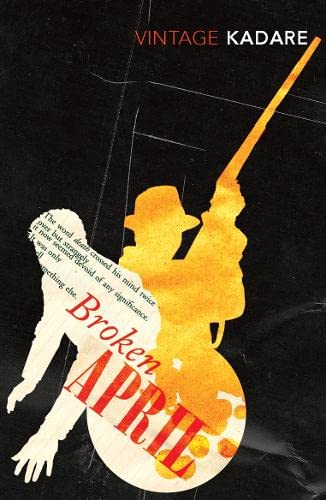
Start this bookNo. 22 on this list. Broken April · Ismail Kadare · 1978
Broken April is Kadare's most internationally translated and taught work, appearing on syllabi in world literature, Eastern European literature, and postcolonial studies courses. Despite the database showing no syllabus or Wikipedia data (likely a data gap), the novel has been translated into over thirty languages and maintains an active Wikipedia presence across multiple language editions. It is the foundational text for Kadare's global literary reputation.
Moderate4.1 hours
Start this bookNo. 23 on this list. The Promised Land · Władysław Reymont · 1899
Jewish settlers build a new life in Poland, their community rising and falling with history. Reymont's novel chronicles the Polish-Jewish experience with characteristic scope and detail.
Moderate8.1 hours
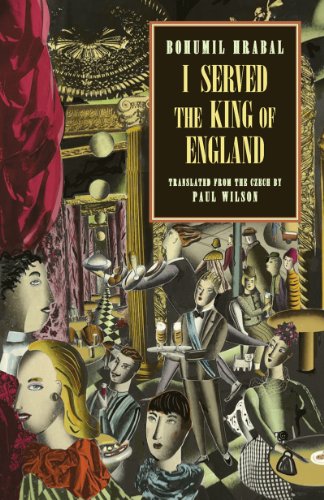
Read nowNo. 24 on this list. I Served the King of England · Bohumil Hrabal · 1971
Ditie begins his career running hot sausages along train platforms, keeping the change when passengers can't reach him before the train moves. By his late twenties, having worked his way up through Prague hotels, he kneels before the Emperor of Ethiopia and pours his wine after the head waiter forgets. The decoration placed on his chest that evening will follow him for the rest of his life, into a marriage with a German nationalist, through the Nazi occupation, through Communist confiscation, and finally into solitary exile in a village inn where only a horse and a goat keep him company. Hrabal's narrator Ditie is one of literature's great unreliable innocents: a man who genuinely cannot see his own complicity, who reports his collaboration with cheerful precision and mistakes advancement for virtue. The novel's sentences run for paragraphs without stopping, accumulating hotel inventory and erotic incident and geopolitical catastrophe in the same breathless rush — Hrabal's characteristic 'palavering' style that makes the prose feel simultaneously trivial and portentous. Czech history from the 1930s through communism passes through a waiter's eyes, visible only in the details he notices: the gold cutlery counted three times after the state banquet, the missing spoon that threatens everything, the stamps in a dead woman's suitcase that buy him a hotel.
Challenging4.5 hours
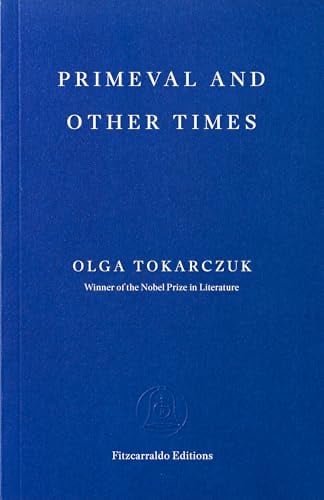
Start this bookNo. 25 on this list. Primeval and Other Times · Olga Tokarczuk · 1996
Appears on 22 university syllabi (33rd percentile in Open Syllabus), with Wikipedia articles in 5 languages. Not yet a fixture of world literature courses, though its visibility has increased steadily since Tokarczuk's 2018 Nobel Prize brought her backlist into English-language classrooms.
Challenging5.8 hours
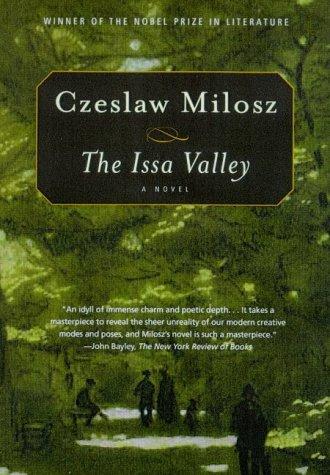
Start this bookNo. 26 on this list. The Issa Valley · Czesław Miłosz · 1955
Thomas grows up on a Lithuanian estate in the early twentieth century, learning to hunt, to observe nature, and to fear God. Miłosz's autobiographical novel recreates a lost world with hallucinatory precision—the rivers and forests of his childhood, the peasants and priests, the animals he tracked and killed. The prose moves between pastoral beauty and sudden violence, innocence and knowledge that corrupts. Thomas will become a poet; the valley will be destroyed by war and Soviet occupation. But in the novel's present, everything is still possible.
Challenging5.2 hours
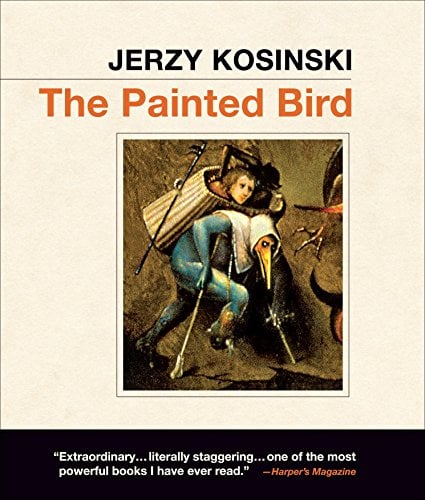
Start this bookNo. 27 on this list. The Painted Bird · Jerzy Kosinski · 1965
On TIME's All-TIME 100 Novels and found on 26 syllabi (35th percentile), with Wikipedia articles in 12 languages. It is taught in courses on Holocaust literature.
Challenging5.8 hours
Start this bookNo. 28 on this list. The Forbidden Forest · Mircea Eliade · 1955
Considered Eliade's major novel and an important work of Romanian literature. Better known in Romance-language countries than in the Anglophone world.
Moderate16 hours
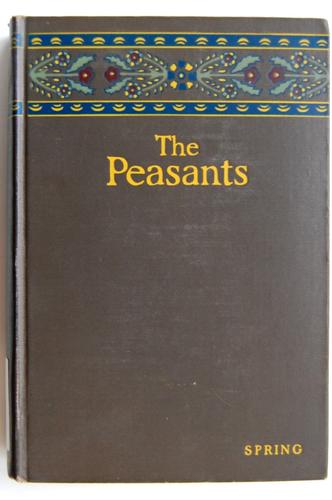
Start this bookNo. 29 on this list. The Peasants · Władysław Reymont · 1904
Taught in schools: Lektury obowiązkowe – Polish national reading list (Poland)
The Peasants has a Wikipedia presence in only 14 languages, well below the threshold of globally canonical works, and no measurable university syllabus presence in open databases. Within Poland it is the defining literary monument of the late nineteenth century, but outside that tradition it sits at the margins of world literature curricula.
Challenging6.8 hours
Read nowNo. 30 on this list. The Door by Magda Szabo · Magda Szabó · 1987
Taught in world-literature courses since its English rediscovery.
Challenging4.7 hours
Start this book
No. 31 on this list. Fiasco
Imre Kertész · 1988
No. 32 on this list. Time Shelter
Georgi Gospodinov · 2023
No. 33 on this list. The Physics of Sorrow
Georgi Gospodinov · 2021
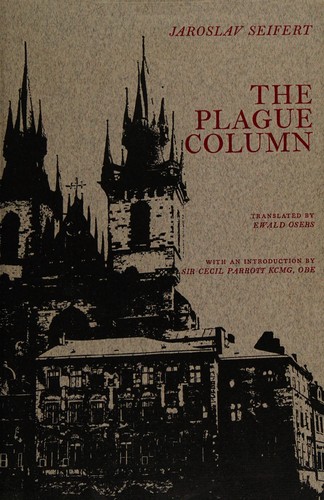
No. 34 on this list. The Plague Column
Jaroslav Seifert · 1977
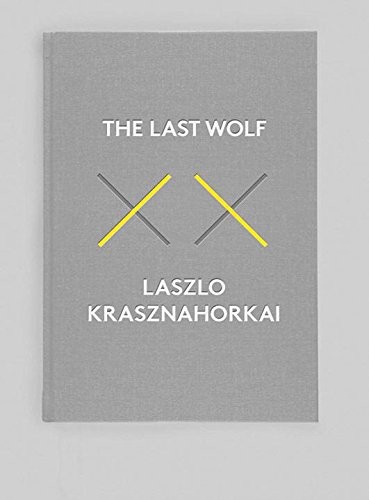
No. 35 on this list. The Last Wolf & Herman
László Krasznahorkai · 2009
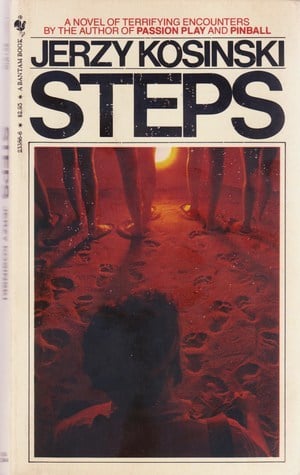
No. 36 on this list. Steps
Jerzy Kosinski · 1969
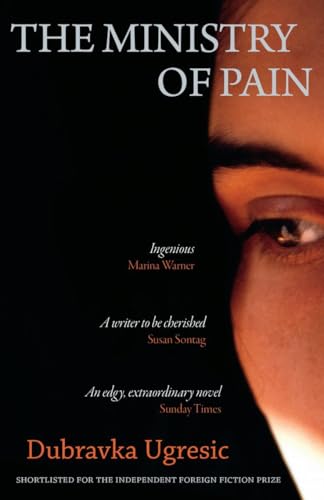
No. 37 on this list. The Ministry of Pain
Dubravka Ugrešić · 2004
No. 38 on this list. Vita Nostra
Marina and Sergey Dyachenko · 2007
No. 39 on this list. Sword of Destiny
Andrzej Sapkowski · 2015
About this list
These 39 books are the highest-scoring eligible moderately difficult books from Eastern Europe currently in the catalogue. About 274 hours of reading in all. Difficulty runs from 54 to 60 out of 100 for the middle half of the list; the summit is The General of the Dead Army at 64.
This list is ranked by literary regard, with a consistent order for equal scores. Membership follows authors and co-authors, not translators or editors. A book is here when ReadingRate files it under Eastern European Literature as one of its primary reading domains. Catalogue coverage and the historical canon both limit what this list can represent.
When we matched the Canons dataset to our catalogue in October 2026, our canonical-status scores rose with the number of school curricula, publisher series and lists in it that cite a work: the median score was 72 for books one such source cites, 84 at two, 88 at three, 92 at four and 93 at five or more. Prizes are left out of that count. Outside the state curricula, the dataset’s sources choose mostly from what has been translated into English or French, so it is a weaker check on other literatures. Source: Canons (Andrew Piper), CC BY 4.0
Questions people actually ask
- What are the best moderately difficult books from Eastern Europe?
- By literary regard, which weighs canonical status, critical standing and influence: The Bridge on the Drina by Ivo Andrić, Voices from Chernobyl by Svetlana Alexievich, Lord Jim by Joseph Conrad, Poems New and Collected by Wisława Szymborska and The Unbearable Lightness of Being by Milan Kundera. ReadingRate ranks 39 such books, each with a difficulty score and a reading-time estimate.
- Which moderately difficult books from Eastern Europe should I read first?
- Start from difficulty, not from rank. The most approachable books on this list that still carry top literary regard are Voices from Chernobyl by Svetlana Alexievich (about 6.3 hours), The Bridge on the Drina by Ivo Andrić and Poems New and Collected by Wisława Szymborska.
- What are the shortest of the best moderately difficult books from Eastern Europe?
- Among the top 25, the shortest are View with a Grain of Sand by Wisława Szymborska (about 43 min), Poems New and Collected by Wisława Szymborska (about 2.7 hours) and Selected Poems of Wisława Szymborska by Wisława Szymborska (about 2.4 hours), at an average pace of 250 words a minute adjusted for each book's difficulty.
- Which of the best moderately difficult books from Eastern Europe are the established classics?
- By canonical status, how firmly a book sits in curricula, anthologies and the canon: The Bridge on the Drina by Ivo Andrić, Voices from Chernobyl by Svetlana Alexievich, The Unbearable Lightness of Being by Milan Kundera, The Knights of the Cross by Henryk Sienkiewicz and Lord Jim by Joseph Conrad.
- Can I read any of these moderately difficult books from Eastern Europe for free?
- 6 of the 39 open in ReadingRate's reader with a free account, from public-domain editions: Lord Jim, The Knights of the Cross, The Deluge, With Fire and Sword, The Promised Land and 1 more.
- How long would it take to read the top ten?
- About 78 hours, at an average pace of 250 words a minute adjusted for each book's difficulty: 39 days at two hours a day. Set your own pace on the page and the list's reading times change to it.
- How hard are moderately difficult books from Eastern Europe to read?
- Most of this list sits between 54 and 60 on ReadingRate's 100-point difficulty scale, where 40 to 55 is moderate. The summit is The General of the Dead Army at 64. Every entry carries its own score, so a reader can pick a great book at a difficulty they will finish.
- How is this list ranked?
- On literary-regard data: how canonically established a work is, its critical standing, and its influence on later writing. It is not a readers’ poll, which is why recent bestsellers rarely appear. Membership follows authors and co-authors, not translators or editors. Lists by country, author, period, theme or difficulty keep to literature (fiction, poetry, drama and philosophy), their novels, poems and plays first and their philosophy after them; a list of a kind of book, such as memoir or criticism, keeps every book of that kind. Every list holds at most three works by one author. A book is here when ReadingRate files it under Eastern European Literature as one of its primary reading domains.