Hours at an average pace
Showing 40 books
About 362 hours for 40 of 40 books with measured lengths. Estimates use 250 words a minute, adjusted for each book's difficulty. At 2 hours a day, about 181 days for those books.
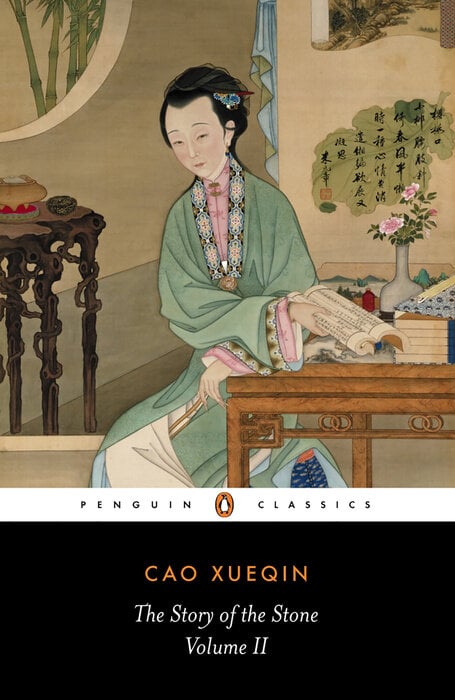
No. 1 on this list. Dream of the Red Chamber
Cao Xueqin · 1791
Difficult97 hours
Included in: UNESCO Collection of Representative Works
Cao Xueqin chronicled the decline of an aristocratic Chinese clan through the consciousness of over four hundred distinct characters, weaving Buddhist philosophy, classical poetry, and granular domestic life into a novel of a scope that European fiction would not attempt for another century. It remains the central work of Chinese narrative art.
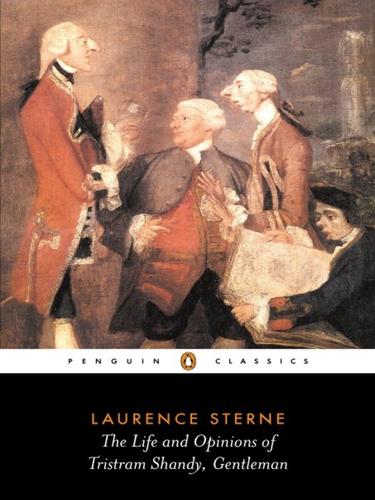
No. 2 on this list. The Life and Opinions of Tristram Shandy, Gentleman
Laurence Sterne · 1759
Difficult27 hours
Included in: Bokklubben World Library, Great Books of the Western World
Tristram Shandy is one of the most taught 18th-century English novels in university literature programs worldwide, appearing on virtually every course covering the development of the novel form, postmodernism avant la lettre, and experimental fiction. It consistently appears on lists of the greatest novels in the English language — Modern Library, Penguin Classics, academic consensus lists — and is the foundational text for any discussion of metafiction and narrative self-consciousness. Its canonical status is second only to Fielding's Tom Jones among 18th-century English prose fiction.
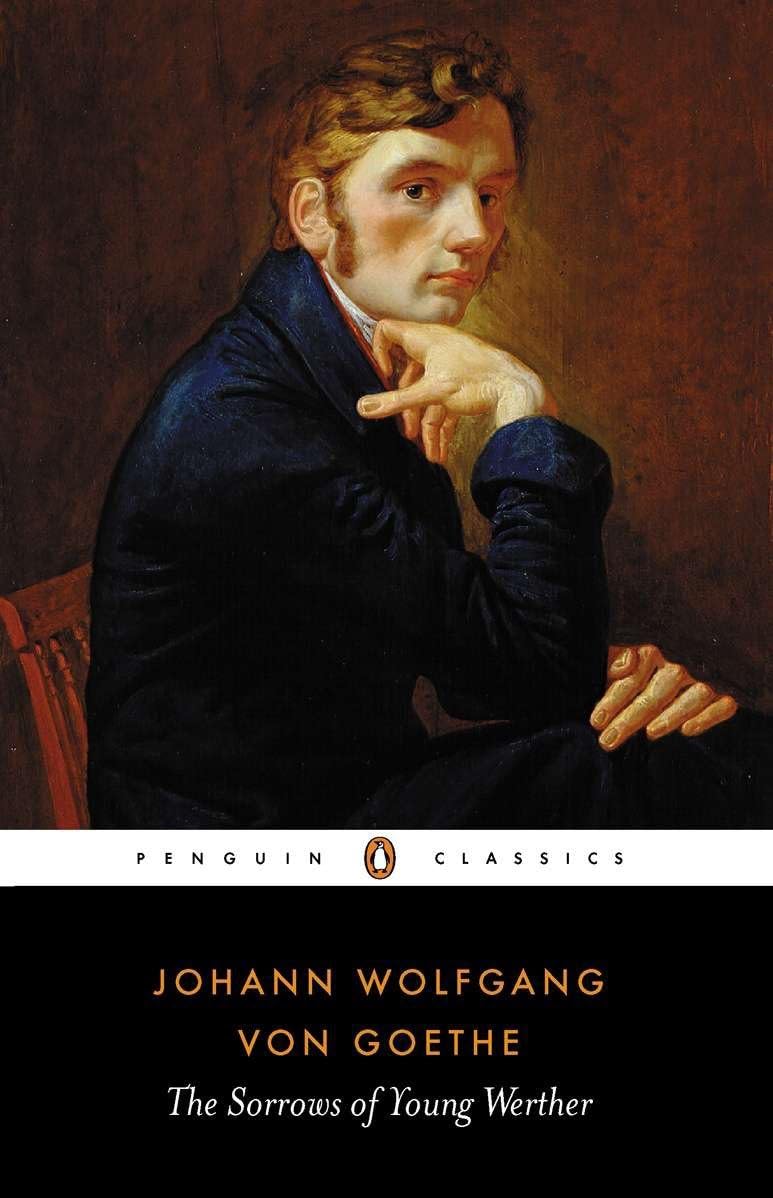
No. 3 on this list. The Sorrows of Young Werther
Johann Wolfgang von Goethe · 1774
Challenging4.4 hours
Standard curriculum in German literature and comparative literature courses worldwide. The novel launched the Sturm und Drang movement and anchored the European Romantic turn. No syllabus data is available in the database, but its presence in university world literature courses is pervasive and long-established.
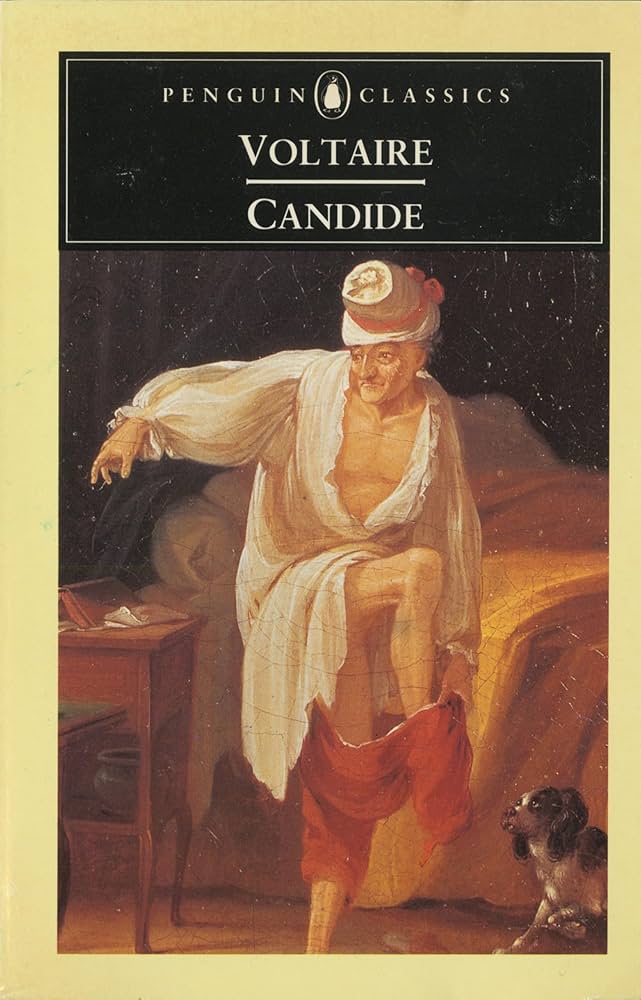
No. 4 on this list. Candide
Voltaire · 1759
Challenging2.8 hours
Taught in schools: Hungarian literature curriculum (magyar nyelv és irodalom) (Hungary)
Included in: Great Books of the Western World
Voltaire's Candide gets flogged, shipwrecked, and nearly auto-da-féd across three continents, each catastrophe demolishing Pangloss's insistence that this is the best of all possible worlds. The final line—"we must cultivate our garden"—became the Enlightenment's most quoted rebuke to metaphysical optimism.
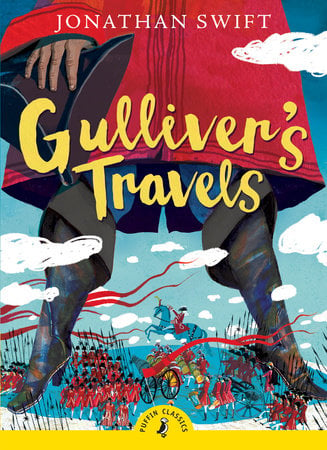
No. 5 on this list. Gulliver's Travels
Jonathan Swift · 1726
Challenging10 hours
Taught in schools: CSEC English B – Caribbean Examinations Council, Hungarian literature curriculum (magyar nyelv és irodalom) (Hungary)
Included in: Bokklubben World Library, Great Books of the Western World
Swift shrinks his protagonist to six inches in Lilliput, inflates him to a giant in Brobdingnag, then deposits him among rational horses who regard humans as vermin. No other satire in English has so thoroughly weaponized scale and perspective to indict politics, science, and the species itself.
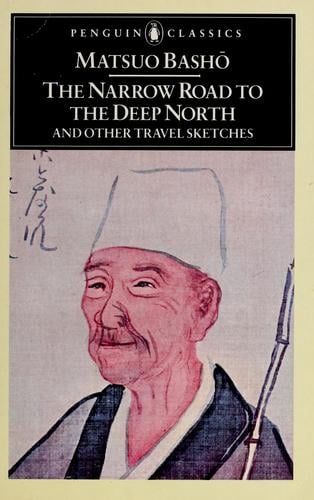
No. 6 on this list. The Narrow Road to the Deep North and Other Travel Sketches
Matsuo Bashō · 1702
Moderate1.6 hours
It is one of the central works of Japanese literature and appears in Penguin Classics. It is taught widely in world literature and Asian studies courses.
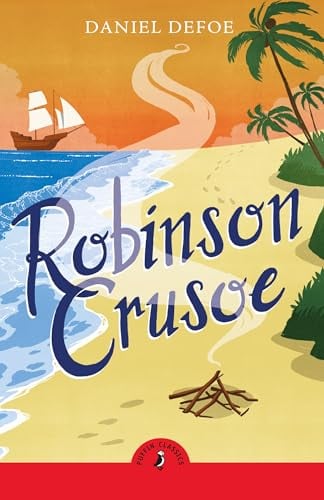
No. 7 on this list. Robinson Crusoe
Daniel Defoe · 1719
Easy7.1 hours
Taught in schools: Turkish edebiyat curriculum (Turkey)
Defoe dropped a castaway on an island with a wrecked ship's supplies and invented the novel as we know it: plain prose, daily particulars, one man's consciousness stretched across twenty-eight years of solitude. Every survival narrative and desert-island story descends from Crusoe's footprint in the sand.
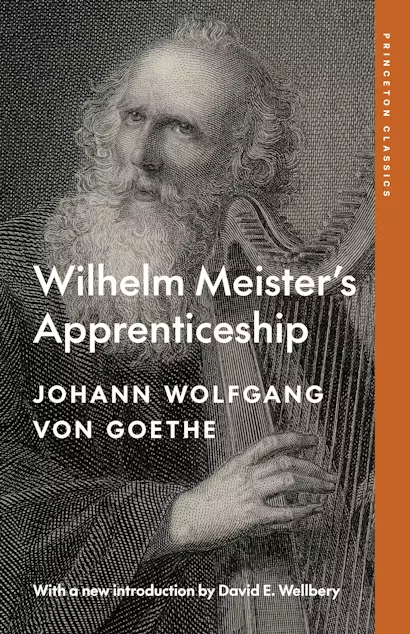
No. 8 on this list. Wilhelm Meister's Apprenticeship
Johann Wolfgang von Goethe · 1796
Challenging19 hours
Wilhelm Meister's Apprenticeship is taught in comparative literature and world literature courses globally, and is considered essential reading for understanding the development of European prose fiction. Its position as the founding text of the Bildungsroman places it on syllabi wherever German literature or the novel as a form is studied seriously. No database signals were available, but its literary-historical importance is universally acknowledged.
No. 9 on this list. Songs of Innocence and of Experience
William Blake · 1794
Challenging30 min
Taught in schools: AQA GCSE and A-level English Literature (UK)
Blake etched, printed, and hand-colored each plate himself, fusing lyric poetry with visual art in a form no one had attempted before. The paired "Lamb" and "Tyger" compress an entire theology into forty-four lines: innocence asks who made you; experience asks how dare He.
Pamela Andrews is fifteen years old and in service when her mistress dies and the mistress's son, Mr. B, begins a campaign to seduce her. She refuses. He escalates — intercepting her letters, relocating her to a remote estate, locking her in — and she keeps writing, to her parents and in a secret journal she hides in her clothing. What makes the novel strange is that we only have Pamela's account: earnest, relentlessly self-observing, written in the knowledge that Mr. B may one day read every word she has set down. Published in 1740, Pamela invented something — not just the epistolary novel, but the novel's peculiar project of making a single consciousness the center of a world. Richardson called his method 'writing to the moment': the heroine records events as they happen, before she knows how they will turn out. Readers have been arguing about Pamela's sincerity ever since. Henry Fielding published Shamela the following year, certain the whole performance was calculation dressed as virtue. That argument — is Pamela genuinely good, or is goodness here just the strategy that worked? — has never been settled. The novel is slow by design: captivity is repetitive, and Richardson wants you to feel it. But the compression of one young woman's inner life, the surveillance she endures and returns in kind, and the original sin of a marriage that rewards persistence over refusal make Pamela one of the most uncomfortable triumphs in English fiction.
No. 11 on this list. Clarissa · Samuel Richardson · 1748
Clarissa is a founding text of the English novel, appearing on virtually every 18th-century literature syllabus and in English doctoral programs worldwide. It features on the Modern Library and TIME All-TIME 100 lists and is treated as essential reading alongside Tom Jones and Robinson Crusoe. While database signals show no recorded syllabus appearances, this reflects data gaps rather than the book's actual canonical position — it is among the most studied British novels of any century.
Challenging8.5 hours
Start this bookNo. 12 on this list. The Robbers · Friedrich Schiller · 1781
One of the foundations of German theatre and Sturm und Drang, staple of German literature curricula, and regularly staged. Its place in world-drama courses is less universal than Hamlet's.
Moderate2.8 hours
Start this bookNo. 13 on this list. Emilia Galotti · Gotthold Ephraim Lessing · 1772
Standard text in German literature courses and school curricula as the model of the bourgeois tragedy. It sits beside Nathan the Wise and Minna von Barnhelm in the Lessing canon. Less widely taught outside German-speaking countries.
Moderate1.3 hours
Start this bookNo. 14 on this list. Persian Letters · Montesquieu · 1721
Taught in schools: Hungarian literature curriculum (magyar nyelv és irodalom) (Hungary)
Persian Letters appears on university syllabi across French literature, Enlightenment history, and political philosophy courses worldwide. It is consistently anthologized as a founding text of the French Enlightenment and one of the first major works of sociological and political satire in the European tradition.
Challenging8.5 hours
Start this bookNo. 15 on this list. Moll Flanders · Daniel Defoe · 1722
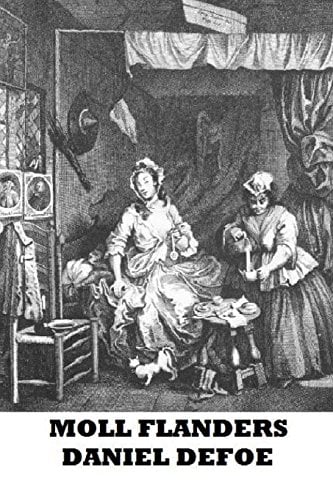
Moll Flanders is taught in virtually every 18th-century British literature and novel origins course, recognized as one of the first English novels alongside Robinson Crusoe. No syllabus data is available in the database, but Defoe's foundational status in the novel's history ensures widespread academic presence. Wikipedia articles exist in dozens of languages, reflecting its global canonical recognition.
Moderate9.1 hours
Start this bookNo. 16 on this list. Three Hundred Tang Poems · Sun Zhu · 1763
It is the standard Chinese anthology of Tang poetry, memorized by schoolchildren across China, Taiwan and Singapore for more than 250 years. Its poems appear in school textbooks and in every translation of Chinese literature. It stands among the central texts of Chinese literary education, comparable to the Pushkin of Russian curricula.
Challenging1.1 hours
Start this bookNo. 17 on this list. Tom Jones · Henry Fielding · 1749
Included in: Great Books of the Western World
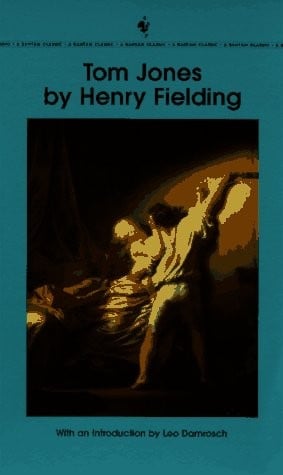
Tom Jones is a foundling, discovered as an infant in the bed of the wealthy Somerset squire Allworthy, who raises him alongside the scheming Blifil. Tom grows up handsome, generous, impulsive, and entirely unsuited to the careful management of reputation—which in 18th-century England is fatal. He loves Sophia Western, the spirited daughter of his neighbor, but his illegitimate birth and his talent for getting into trouble conspire against him. Expelled from Allworthy's estate, he sets out across England, stumbling through inns and battlefields and drawing rooms, pursued by Sophia, who is fleeing her own forced marriage. Fielding narrates all of this with a wit that never lets you forget he's in the room. Each book opens with a chapter of authorial commentary—on writing, morality, criticism, the reader's expectations—before he returns to the story. The effect is of a novelist who has invented the form and wants you to watch him think about it. Beneath the comedy, the novel asks a serious question: whether goodness of heart can survive a world that rewards calculation. Tom's answer, delivered across 900 pages of mishap and delight, is stubbornly, improbably yes.
Moderate23 hours
Start this bookNo. 18 on this list. Hyperion · Friedrich Hölderlin · 1797
It is a core text of German Romanticism and Idealism and a staple of German literature courses worldwide. It is less often taught in English-language curricula than the rubric's major canon.
Challenging4 hours
Start this bookNo. 19 on this list. Don Carlos · Friedrich Schiller · 1787
A staple of German literature curricula and the standard repertoire of German theatre, and the basis for Verdi's opera. Outside Germany it is taught less than Schiller's Wilhelm Tell or The Robbers.
Moderate3.2 hours
Start this bookNo. 20 on this list. Iphigenia in Tauris · Johann Wolfgang von Goethe · 1787
This is a cornerstone of Weimar Classicism and a standard text in German literature courses and school curricula. It is less widely taught in English-speaking courses than Faust.
Moderate1.3 hours
Start this book
No. 21 on this list. Intrigue and Love · Friedrich Schiller · 1784
A staple of German school and university curricula and one of the most performed German tragedies, though less taught outside the German-speaking world than Faust or Hamlet.
Easy2.1 hours
Start this bookNo. 22 on this list. Minna von Barnhelm · Gotthold Ephraim Lessing · 1767
It is a staple of German literature curricula and the foundational German comedy, taught in schools and universities across the German-speaking world. Lessing's place in the Enlightenment canon keeps it on stage and on syllabi.
Easy1.7 hours
Start this bookNo. 23 on this list. Dangerous Liaisons · Pierre Choderlos de Laclos · 1782
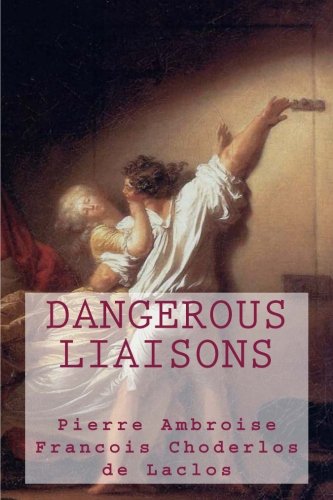
The Vicomte de Valmont and the Marquise de Merteuil write letters to each other about the people they are destroying. Valmont is attempting to seduce a virtuous married woman, Madame de Tourvel; Merteuil is engineering the corruption of a convent-bred girl named Cecile to revenge herself on a former lover. The letters are so charming, so intelligent, so full of wit about their own villainy that readers spend 175 letters half-admiring two people they should despise. Laclos's trick is to make his protagonists their own prosecutors: every self-congratulatory letter strips away another layer of their claimed philosophical freedom. Merteuil's letter 81 — a brilliant feminist manifesto about female self-creation in a society that offers women no legitimate power — is delivered by a woman who has devoted her genius entirely to cruelty. The epistolary form means nothing happens except what the characters choose to report, and every report lies. When the reckoning comes, it is absolute: Valmont dead, Merteuil's face destroyed by smallpox, Tourvel killed by grief. Whether this satisfies or merely parodies moral justice is left for the reader to decide.
Challenging11 hours
Start this bookNo. 24 on this list. Tales of Moonlight and Rain · Ueda Akinari · 1776
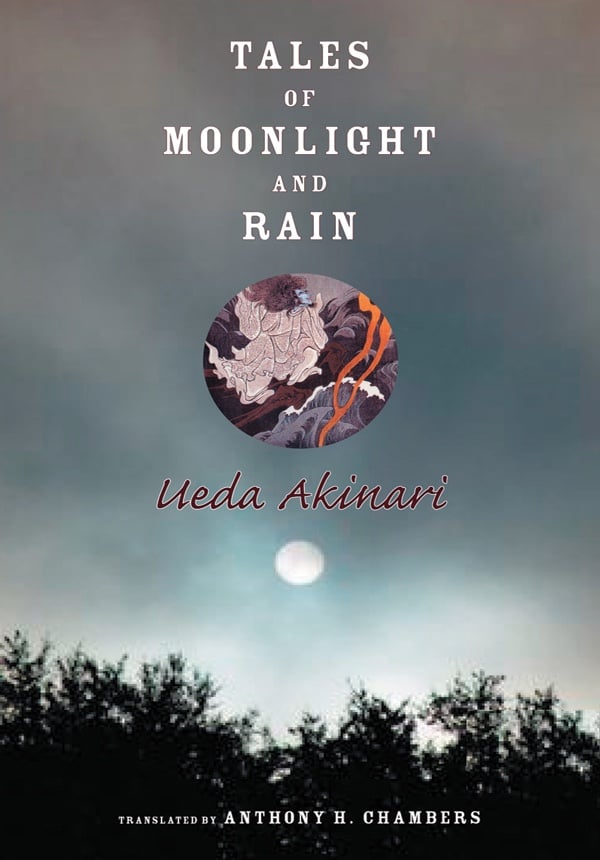
A staple of Japanese literature courses and world-literature anthologies, widely translated and adapted into Mizoguchi's 1953 film Ugetsu. Core of Edo-period reading lists.
Moderate2.1 hours
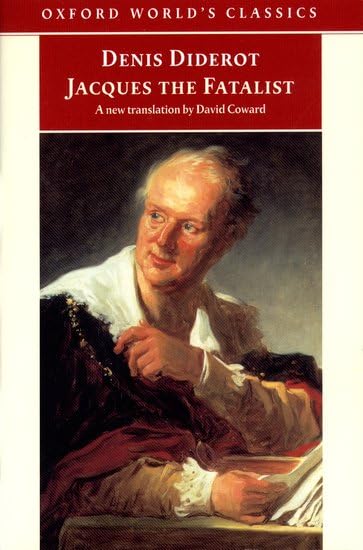
Start this bookNo. 25 on this list. Jacques the Fatalist and His Master · Denis Diderot · 1796
Included in: Bokklubben World Library
Jacques the Fatalist is firmly established in the European canon as a key work of Enlightenment fiction and a precursor to the postmodern novel. It appears regularly in French literature courses and European novel seminars, though less widely taught than Voltaire's Candide or Rousseau. Featured on most scholarly 'essential Enlightenment fiction' lists and acknowledged as a foundational text for meta-fictional tradition.
Difficult11 hours
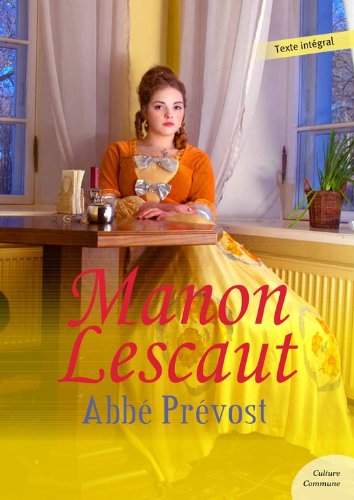
Start this bookNo. 26 on this list. Manon Lescaut · Abbé Prévost · 1731
Taught in schools: Programme de français, lycée général et technologique (France)
A cornerstone of the French novel and one of the great love stories of European literature. Widely read and studied.
Easy2.9 hours
Start this bookNo. 27 on this list. The Servant of Two Masters · Carlo Goldoni · 1745
A staple of the Italian theatrical repertoire and a standard example of commedia dell'arte in theatre and drama courses, with frequent adaptations such as One Man, Two Guvnors. It is more specialist than the central Western canon.
Easy1.3 hours
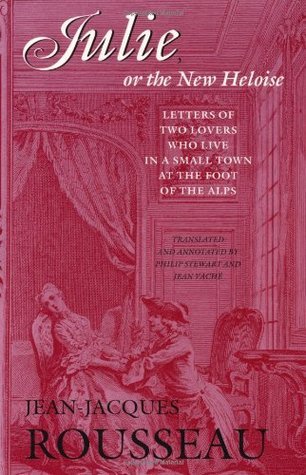
Start this bookNo. 28 on this list. Julie, or the New Heloise · Jean-Jacques Rousseau · 1761
The most important French novel before the 19th century and a founding text of Romanticism. Less read today than it deserves, partly due to its length and didactic passages.
Moderate18 hours
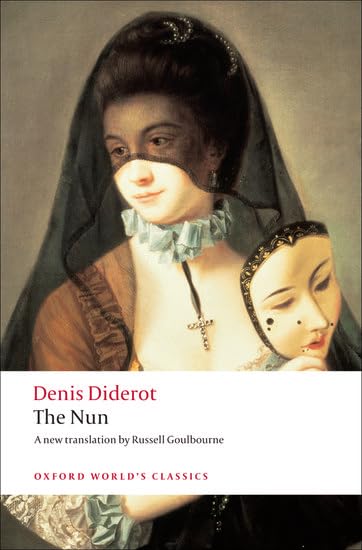
Start this bookNo. 29 on this list. The Nun · Denis Diderot · 1796
Suzanne Simonin is sixteen when her parents force her into a convent she never chose, pressing her vows while she stands dazed at the altar, hearing nothing, answering nothing. Her story — told as a memoir to a sympathetic marquis she hopes will rescue her — moves through three convents: one governed by a saintly mystic, one by a sadistic bully, and one by a Mother Superior whose tender attentions gradually reveal themselves as something else entirely. Diderot wrote The Nun as part of an elaborate practical joke in 1760, but Suzanne's predicament took hold of his imagination and produced his most disciplined novel. The narrator's sustained innocence is itself the book's great irony: she reports the Superior's midnight visits, the hand on her knee, the shivering in her bed, with clinical accuracy and genuine incomprehension. Diderot's target is not the Church but the unnatural institution — segregation, enforced celibacy, and authority without accountability. The convent produces madness, cruelty, and erotic obsession not because nuns are corrupt, but because the system is. The ending refuses to resolve: Suzanne escapes into a world she is completely unprepared for, carrying nothing but a singing voice and the portrait of a dead Superior she still kisses each morning.
Moderate4.6 hours
Start this bookNo. 30 on this list. Fables and Parables · Ignacy Krasicki · 1779
Krasicki's fables are a staple of Polish school curricula and a cornerstone of Enlightenment Polish literature, with works like "The Lamb and the Wolves" and "The Birds in a Cage" known by most Polish readers. Outside Poland the book sits in specialist and comparative fable studies.
Easy1.2 hours
Start this book
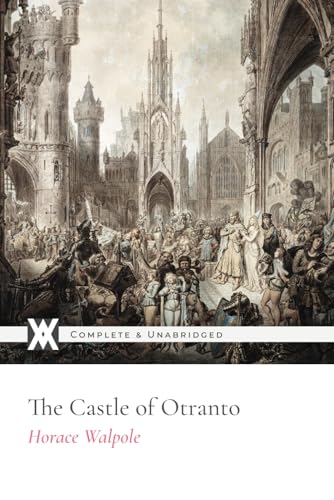
No. 31 on this list. The Castle of Otranto
Horace Walpole · 1764
No. 32 on this list. The Mistress of the Inn
Carlo Goldoni · 1753
No. 33 on this list. The Mysteries of Udolpho
Ann Radcliffe · 1794
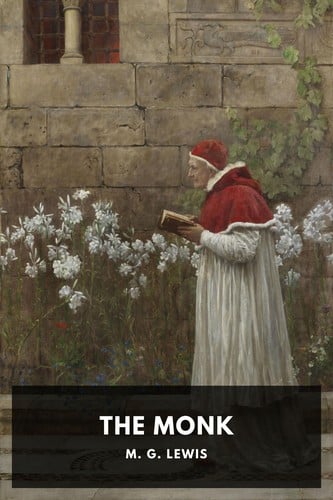
No. 34 on this list. The Monk
Matthew Gregory Lewis · 1796
No. 35 on this list. The Adventures of Mr. Nicholas Wisdom
Ignacy Krasicki · 1776
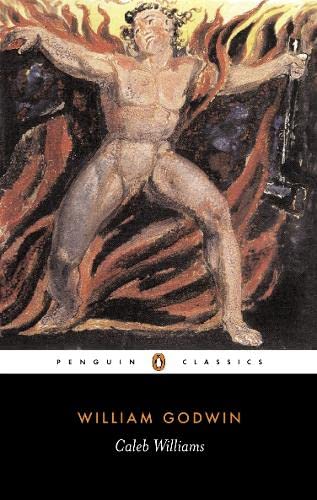
No. 36 on this list. Caleb Williams
William Godwin · 1794
No. 37 on this list. Saul
Vittorio Alfieri · 1782
No. 38 on this list. Anton Reiser
Karl Philipp Moritz · 1785
No. 39 on this list. The Return of the Deputy
Julian Ursyn Niemcewicz · 1790
No. 40 on this list. Vathek
William Beckford · 1786
About this list
These 40 books are the highest-scoring eligible books of the Enlightenment and the 18th century currently in the catalogue. About 362 hours of reading in all. Difficulty runs from 38 to 60 out of 100 for the middle half of the list; the summit is The Life and Opinions of Tristram Shandy, Gentleman at 82.
This list is ranked by literary regard, with a consistent order for equal scores. Membership follows authors and co-authors, not translators or editors. A book is here when ReadingRate files it under Enlightenment & 18th Century as one of its primary reading domains, and only when its author’s lifetime places it in the period. Catalogue coverage and the historical canon both limit what this list can represent.
When we matched the Canons dataset to our catalogue in October 2026, our canonical-status scores rose with the number of school curricula, publisher series and lists in it that cite a work: the median score was 72 for books one such source cites, 84 at two, 88 at three, 92 at four and 93 at five or more. Prizes are left out of that count. Outside the state curricula, the dataset’s sources choose mostly from what has been translated into English or French, so it is a weaker check on other literatures. Source: Canons (Andrew Piper), CC BY 4.0
Questions people actually ask
- What are the best books of the Enlightenment and the 18th century?
- By literary regard, which weighs canonical status, critical standing and influence: Dream of the Red Chamber by Cao Xueqin, The Life and Opinions of Tristram Shandy, Gentleman by Laurence Sterne, The Sorrows of Young Werther by Johann Wolfgang von Goethe, Candide by Voltaire and Gulliver's Travels by Jonathan Swift. ReadingRate ranks 40 such books, each with a difficulty score and a reading-time estimate.
- Which books of the Enlightenment and the 18th century should I read first?
- Start from difficulty, not from rank. The most approachable books on this list that still carry top literary regard are Minna von Barnhelm by Gotthold Ephraim Lessing (about 1.7 hours), Robinson Crusoe by Daniel Defoe and Intrigue and Love by Friedrich Schiller.
- What are the shortest of the best books of the Enlightenment and the 18th century?
- Among the top 25, the shortest are Songs of Innocence and of Experience by William Blake (about 30 min), Three Hundred Tang Poems by Sun Zhu (about 1.1 hours) and Emilia Galotti by Gotthold Ephraim Lessing (about 1.3 hours), at an average pace of 250 words a minute adjusted for each book's difficulty.
- Which of the best books of the Enlightenment and the 18th century are the established classics?
- By canonical status, how firmly a book sits in curricula, anthologies and the canon: Dream of the Red Chamber by Cao Xueqin, Three Hundred Tang Poems by Sun Zhu, Candide by Voltaire, Gulliver's Travels by Jonathan Swift and Robinson Crusoe by Daniel Defoe.
- Can I read any of these books of the Enlightenment and the 18th century for free?
- 7 of the 40 open in ReadingRate's reader with a free account, from public-domain editions: Dream of the Red Chamber, The Sorrows of Young Werther, Candide, Gulliver's Travels, Robinson Crusoe and 2 more.
- How long would it take to read the top ten?
- About 183 hours, at an average pace of 250 words a minute adjusted for each book's difficulty: 92 days at two hours a day. Set your own pace on the page and the list's reading times change to it.
- How hard are books of the Enlightenment and the 18th century to read?
- Most of this list sits between 38 and 60 on ReadingRate's 100-point difficulty scale, where 40 to 55 is moderate. The summit is The Life and Opinions of Tristram Shandy, Gentleman at 82. Every entry carries its own score, so a reader can pick a great book at a difficulty they will finish.
- How is this list ranked?
- On literary-regard data: how canonically established a work is, its critical standing, and its influence on later writing. It is not a readers’ poll, which is why recent bestsellers rarely appear. Membership follows authors and co-authors, not translators or editors. Lists by country, author, period, theme or difficulty keep to literature: fiction, poetry and drama, with no philosophy, criticism or theory. A list of a kind of book, such as philosophy, memoir or criticism, keeps every book of that kind. Every list holds at most three works by one author. A book is here when ReadingRate files it under Enlightenment & 18th Century as one of its primary reading domains, and only when its author’s lifetime places it in the period.