Hours at an average pace
Showing 48 books
About 554 hours for 48 of 48 books with measured lengths. Estimates use 250 words a minute, adjusted for each book's difficulty. At 2 hours a day, about 278 days for those books.
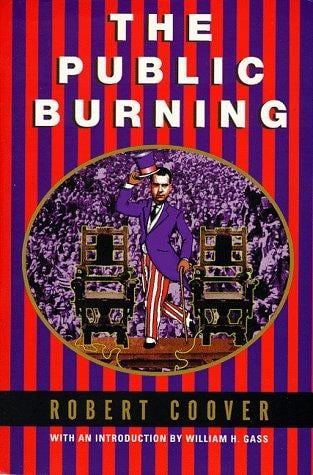
The Public Burning is Robert Coover's most ambitious and controversial novel — refused by seventeen publishers before Viking accepted it, then immediately pulled from paperback after a Nixon lawsuit threat. It appears in every major survey of American postmodern fiction (Hassan, Waugh, McHale), is taught widely in graduate seminars on metafiction, and is cited alongside Gravity's Rainbow and Giles Goat-Boy as the defining novels of the postmodern satirical-historical mode. Its canonical status exceeds its readership by a large margin.
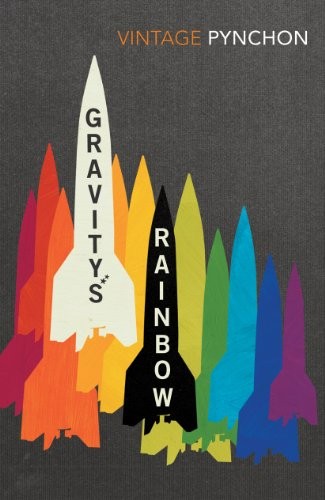
Thomas Pynchon constructs an encyclopedic paranoid masterwork spanning 760 pages of rocket science, Pavlovian conditioning, corporate conspiracy, and encyclopedic digression. Tyrone Slothrop, American lieutenant in wartime London, discovers his sexual conquests map perfectly onto V-2 rocket strike locations—but the erections precede the impacts. Was he conditioned as an infant by sinister behaviorist Laszlo Jamf? Does a corporate-military cartel control history itself? Pynchon provides evidence for every paranoid connection while confirming none. The novel sprawls across 1944-45 Europe, from London under rocket attack to occupied Germany's anarchic Zone, accumulating hundreds of characters, corporate entities, chemical formulas, and historical conspiracies. Pynchon's prose shifts registers violently: technical manuals on rocket engineering dissolve into vaudeville routines, then into lyrical meditations on death and entropy. The vocabulary demands encyclopedic knowledge—thermodynamics, organic chemistry, Tarot, Rilke, film history, brand names. Readers navigate specialized jargon without glossaries, track characters who appear once and vanish, decode references to real and imaginary corporations. The difficulty is purposeful: Pynchon creates textual experience of paranoid information overload. His central symbol, the V-2 rocket, carries impossible symbolic weight: phallic death-bringer, technological sublime, gravity's rainbow parabola from launch to silent impact. The rocket arrives before its sound—death you cannot hear coming. Pynchon explores how technology transforms human consciousness, how corporations and states use Pavlovian conditioning for control, how empire produces extinction (the dodo, the Herero genocide). Concrete plot events—Slothrop's investigation, Roger and Jessica's doomed love, Blicero's ritual rocket launch—carry enormous abstract weight about history, causation, and freedom. The novel asks whether patterns are real or paranoid projection: does Slothrop's conditioning prove control, or is it coincidence interpreted as conspiracy? Pynchon withholds answers. The structure mirrors paranoid thinking—everything potentially connects, secret cartels manipulate history, individual agency vanishes into systems. Slothrop himself fragments as the novel progresses, appearing less frequently, dissolving into scattered references, finally disappearing entirely. The dissolution is structural: as Slothrop loses coherence, so does the narrative. Subplots proliferate, the center fails to hold, entropy increases. The ending places readers in a movie theater in Los Angeles, present tense, as the 00000 rocket descends toward them. The novel freeze-frames before impact, leaving readers perpetually awaiting the explosion. No resolution occurs—narrative, thematic, or moral. Gravity's Rainbow withholds the satisfactions of conventional fiction while demanding enormous interpretive labor. Its encyclopedic scope, technical difficulty, and paranoid plotting make it among English literature's most challenging novels. Pynchon proved unreadability and importance could coexist, that difficulty itself could be the point. The novel's influence on postmodern fiction is incalculable—it established new possibilities for combining history, science, and popular culture in maximalist form. Reading it requires surrender to accumulation, pattern-seeking without resolution, immersion in encyclopedic detail that may or may not signify. The reward is experiencing consciousness under late capitalism: paranoid, fragmented, overwhelmed by information, seeking patterns in noise, awaiting the rocket's silent arrival.
Marks of Identity is the opening volume of Goytisolo's Mendiola Trilogy, widely recognized as the most important work of experimental Spanish fiction produced under Francoism. It holds a secure position in world literature syllabi as a landmark text of anti-Francoist dissent written in a formal language learned from Faulkner, Sartre, and the nouveau roman.
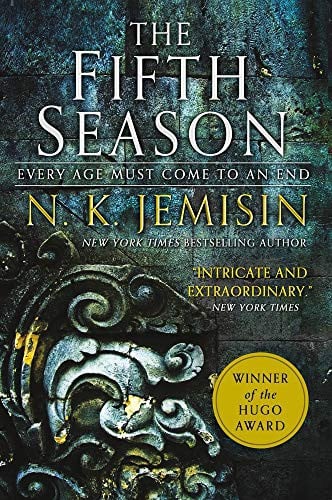
The Fifth Season won the Hugo Award for Best Novel in 2016, the first book in what became an unprecedented trilogy of consecutive Hugo wins for Jemisin—a feat unmatched in the award's history. It appears on contemporary science fiction and fantasy syllabi and in critical discussions of the genre's formal and political possibilities. Its position in the canon is still consolidating, but its influence on subsequent speculative fiction is already evident.
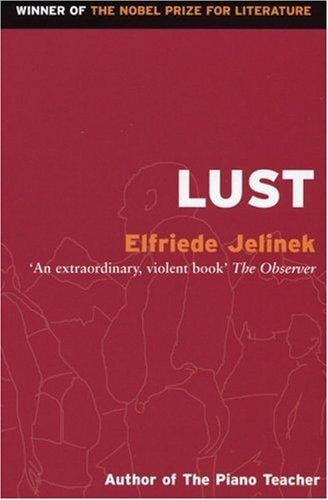
Jelinek is a Nobel Prize winner (2004), and Lust is among her most-discussed novels, central to courses in feminist literature, Austrian literature, and avant-garde fiction. The Wikipedia article on Lust exists in 58 languages, indicating significant global recognition. However, the novel is not a fixture of general literary survey courses in the way that Jelinek's work as a whole is taught — it is a specialist text, assigned where Jelinek is the focus or feminist radical fiction is the subject. Its explicit content limits its classroom reach. Canonical within feminist literary studies; less so in general world literature curricula.
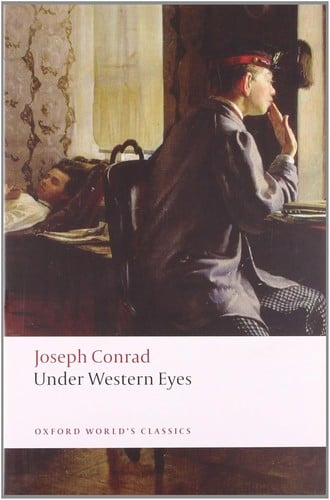
Under Western Eyes holds a secure place in the Conrad canon — studied in university courses alongside Nostromo, The Secret Agent, and Lord Jim, and consistently discussed in critical accounts of Conrad's major work. Leavis included Conrad among the great tradition of English novelists, and the novel's treatment of guilt, betrayal, and political despotism has kept it on syllabi across literature and political thought programmes. Its standing is below Heart of Darkness and Lord Jim in frequency of assignment but firmly canonical within the Conrad corpus.
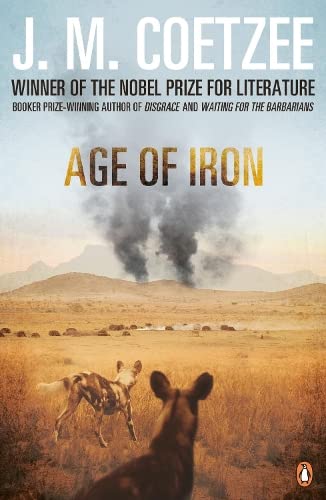
Age of Iron occupies a secure place in the Coetzee canon alongside Disgrace and Waiting for the Barbarians, and is regularly included in postcolonial and South African literature curricula worldwide. Its apartheid-era historical weight gives it documentary as well as aesthetic canonical status.
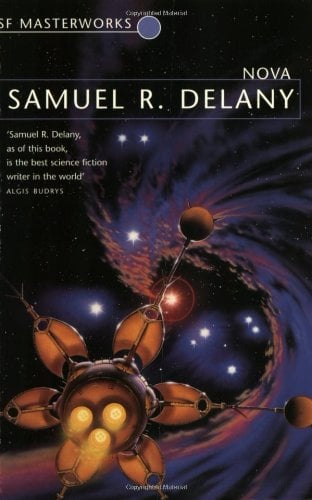
Nova holds a firm place in the SF literary canon, included in the SF Masterworks series and cited as a defining text of the New Wave movement. Its standing is strong within genre criticism but has not fully crossed into mainstream literary canonization.
The Piano Teacher is widely taught in European universities — particularly in German-language literature, feminist literary criticism, and comparative literature courses — though this database captures 0 syllabus appearances and only a stub Wikipedia article. The novel's canonical standing in German-language and feminist literary studies is well established; its international profile is significant but narrower than Anglophone canonical texts at the same level of critical regard.
House of Glass is the concluding volume of the Buru Quartet, which is universally regarded as the most important work of Indonesian literature and one of the defining anticolonial novels of the twentieth century. It appears on numerous world literature reading lists and is taught at universities across Southeast Asia, Europe, and North America, though its presence in Western canons is less robust than its literary standing merits.
No. 11 on this list. Henry IV, Part 1 · William Shakespeare · 1598
Taught in schools: WJEC/Eduqas GCSE and A-level English Literature (UK)
Included in: Great Books of the Western World
Henry IV, Part 1 appears on 48 university syllabi in the Open Syllabus Project and has a Wikipedia article available in 30 languages, reflecting its status as a standard text in Shakespeare courses and English history play curricula worldwide. While not the first Shakespeare play assigned — that tends to be Hamlet, Macbeth, or Romeo and Juliet — it is taught in virtually every dedicated Shakespeare module and appears on most lists of essential history plays.
Difficult3.1 hours
Read nowNo. 12 on this list. Measure for Measure · William Shakespeare · 1604
Taught in schools: AQA GCSE and A-level English Literature (UK), WJEC/Eduqas GCSE and A-level English Literature (UK)
Included in: Great Books of the Western World
Measure for Measure appears on university syllabi across English literature, drama, law, and gender studies courses worldwide. It is one of Shakespeare's most-taught 'problem plays,' central to any serious study of his canon, with Wikipedia articles in dozens of languages. Less ubiquitous than Hamlet or Macbeth, but firmly within the core Shakespeare curriculum.
Difficult2.8 hours
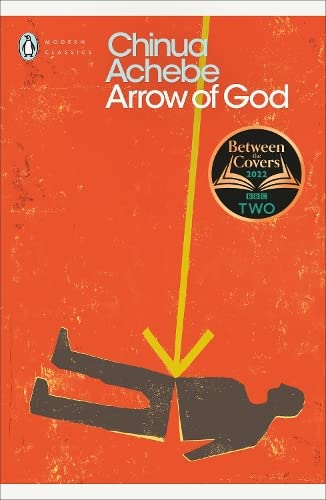
Read nowNo. 13 on this list. Arrow of God · Chinua Achebe · 1964
Taught in schools: CSEC English B – Caribbean Examinations Council
Included in: Heinemann African Writers Series
Arrow of God appears regularly on postcolonial literature, African studies, and world literature syllabi at universities across Europe, North America, and Africa. It is less universally assigned than Things Fall Apart but holds a firm place in courses devoted to African fiction and the novel of colonial encounter. No database records were retrieved, but its continued presence in academic reading lists reflects a strong if not dominant canonical position.
Difficult10 hours
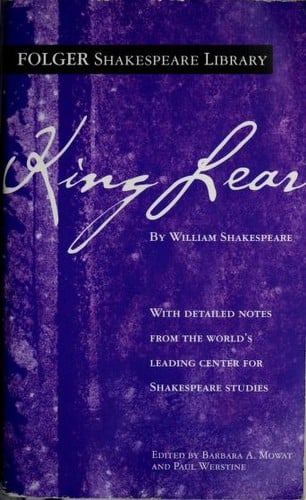
Start this bookNo. 14 on this list. King Lear · William Shakespeare · 1606
Taught in schools: AQA GCSE and A-level English Literature (UK), WJEC/Eduqas GCSE and A-level English Literature (UK)
Included in: Bokklubben World Library, Great Books of the Western World, UNESCO Collection of Representative Works
King Lear appears on 2,254 university syllabi per Open Syllabus — placing it in the 84th percentile of all works — and has Wikipedia articles in 71 languages. It appears in virtually every anthology of English literature and every Shakespeare course worldwide. Most critics rank it alongside Hamlet as Shakespeare's greatest achievement; Harold Bloom called it the summit of the Western literary canon.
Difficult12 hours
Read nowNo. 15 on this list. Angels in America: Perestroika · Tony Kushner · 1992
Angels in America is taught in American theater, drama, and queer studies programs at universities across the country and is consistently listed among the essential works of 20th-century American literature. Both parts of the play appear regularly on syllabi in literature, political science, and history courses. Its status as a defining document of the AIDS crisis and Reagan-era America makes it required context for anyone studying the period.
Difficult6.8 hours
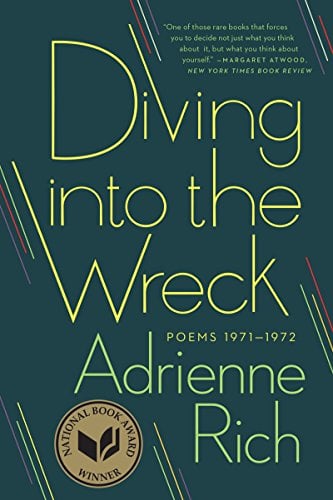
Start this bookNo. 16 on this list. Diving into the Wreck · Adrienne Rich · 1973
The title poem appears in virtually every major American poetry anthology and is standard reading in feminist literature, American poetry, and contemporary poetry courses. The collection sits firmly in the literary canon, comparable to Beloved (85) in academic reach if not in the broadest syllabi. No database data was returned, but Rich's place in American poetry curricula is well established.
Difficult47 min
Start this bookNo. 17 on this list. The Caucasian Chalk Circle · Bertolt Brecht · 1948
The Caucasian Chalk Circle is among the most-taught plays in university drama and literature curricula worldwide, standard on syllabi alongside Mother Courage and The Good Person of Szechwan. It appears in secondary school programs across Europe and is a fixture of Western dramatic canon, placing it well above mid-century works that lack similar educational penetration.
Difficult4.7 hours
Start this bookNo. 18 on this list. The Castle · Franz Kafka · 1926
Included in: Bokklubben World Library
Data signals show only 3 Wikipedia language editions and no recorded syllabus appearances, but these undercount The Castle's actual standing. The novel appears on virtually every major 20th-century fiction list — Modern Library 100, Le Monde's 100 Books of the Century, Harold Bloom's Western Canon — and is taught in comparative literature, philosophy, and legal theory courses worldwide.
Difficult14 hours
Read nowNo. 19 on this list. The Quiet American · Graham Greene · 1955
The Quiet American appears on the Modern Library 100 Best Novels and TIME's All-TIME 100 Novels lists and is taught regularly in postcolonial literature, Cold War fiction, and 20th-century British novel courses worldwide. Its prophetic critique of American intervention in Vietnam has made it a fixture in both literary and political science curricula. No syllabus or Wikipedia data was returned from the database, but its standing as a canonical text in world literature is established by critical consensus.
Difficult6.8 hours
Start this bookNo. 20 on this list. Life Is Elsewhere · Milan Kundera · 1973
Life Is Elsewhere won the Prix Médicis Étranger in 1973, Kundera's first major international prize, and established him as a central figure of world literature outside the Communist bloc. It is taught in comparative literature and Central European literature courses at universities internationally, and is included in numerous critical surveys of the twentieth-century novel. Its canonical position rests partly on Kundera's broader oeuvre — The Unbearable Lightness of Being secured his global reputation — but this novel is consistently cited as his most structurally ambitious.
Difficult10 hours
Start this book
No. 21 on this list. Requiem · Anna Akhmatova · 1963
Taught in schools: Russian FGOS literature standard
Requiem appears on syllabi in virtually every university course covering 20th-century Russian literature, genocide and testimony studies, and modernist poetry globally. Akhmatova's Wikipedia entry exists in over 80 languages. The work is consistently listed among the defining literary documents of Stalinist terror alongside Solzhenitsyn's Gulag Archipelago and Nadezhda Mandelstam's memoirs. It has been continuously in print since its 1987 Soviet publication and in Western translation since 1964.
Difficult1.5 hours
Start this bookNo. 22 on this list. Unfortunately, It Was Paradise · Mahmoud Darwish · 2003
No syllabus data was found in the database for this English translation, but the Arabic originals anchor Darwish as the most-taught Arab poet in world literature and comparative literature courses globally. This collection, published by University of California Press and with a foreword by poet Fady Joudah, is the only comprehensive selected poems in English spanning his entire career. It is widely assigned in Middle Eastern studies, postcolonial literature, and translation studies programs.
Difficult3.8 hours
Start this bookNo. 23 on this list. Billy Budd, Sailor · Herman Melville
Taught in schools: Common Core text exemplars (Appendix B) (US)
Billy Budd is a fixture in American literature courses, canonized alongside Moby-Dick as one of Melville's essential works and one of the foundational American novellas. Although the data signals show no tracked syllabus entries in this database, the text has been continuously taught at university level since its rediscovery in the 1920s and appears on virtually every American literature syllabus covering the 19th century. It is frequently included on lists of great American fiction.
Difficult3.3 hours
Read nowNo. 24 on this list. The House of the Spirits · Isabel Allende · 1982
Taught in schools: Literatura, Diseño Curricular – Provincia de Buenos Aires (Argentina), UNAM Escuela Nacional Preparatoria – programas de Literatura (Mexico)
The House of the Spirits appears on a substantial number of university syllabi in Latin American literature, world literature, and postcolonial studies courses across the US and Europe. It features on several '100 best novels' lists and is considered essential reading in its genre. While not as universally assigned as canonical Anglo-American works, it holds a firm place in the world literature curriculum, particularly in Spanish-language departments and courses on magical realism.
Challenging19 hours
Start this bookNo. 25 on this list. Life of Galileo · Bertolt Brecht · 1943
Life of Galileo is a cornerstone of the Brechtian canon and a fixture on university syllabi worldwide — taught in drama programs, literature departments, and philosophy of science courses alike. Brecht's five-scene structure and the figure of Galileo recanting before the Inquisition appear in virtually every survey of modern drama, placing this work well above mid-tier literary status.
Challenging15 hours
Start this bookNo. 26 on this list. Red Cavalry · Isaac Babel · 1926
Isaac Babel spent six weeks riding with Budyonny's First Cavalry Army during the 1920 Polish-Soviet War and came back with thirty-five stories that read like dispatches from a world being destroyed while it still believes itself alive. The narrator, Lyutov — a bespectacled Jewish intellectual from Odessa — rides with Cossacks who slaughter without hesitation and then sleep soundly, and he watches them with a hunger he never admits and a horror he never names. In 'My First Goose,' Lyutov kills a goose to prove himself worthy of his billet; the act costs him something the story refuses to specify. In 'The Rabbi's Son,' a young Hasidic revolutionary dies clutching manuscripts of Hebrew poetry alongside Communist pamphlets. Babel writes in sentences so compressed they feel pressurized — the lyrical and the brutal occupy the same clause without canceling each other out. A dying horse, a looted synagogue, a father shot by his son: each image arrives exact and then Babel moves on, leaving the weight for the reader to carry. The collection refuses to resolve whether the revolution justified its violence, whether Lyutov ever earned his place among the Cossacks, or whether the Jewish civilization being trampled deserved to survive. Babel was arrested in 1939 and shot in 1940. These stories are what he left.
Challenging4.2 hours
Start this bookNo. 27 on this list. Kiss of the Spider Woman · Manuel Puig · 1976
Luis Molina shares a prison cell with Valentín Arregui, a Marxist guerrilla. To pass the time, Molina tells films — old Hollywood pictures about panther women in Manhattan, zombies in the Caribbean, a Nazi chanteuse in occupied Paris, a blind pianist in an enchanted forest. Valentín argues, interrupts, accuses them of being bourgeois escapism, then asks for more. Interspersed among their exchanges, academic footnotes cite Freud, Marcuse, and West on the origins of homosexuality, in a scholarly voice that grows increasingly unreliable as the chapters proceed. Puig wrote the entire novel as dialogue — no narration except what slips through the two men's competing descriptions and imaginings. The films Molina chooses are not arbitrary: each one mirrors the relationship forming in the cell, the compromises being made, the deals struck with power. The Spider Woman of the title never appears directly. She is the figure who traps men in her web — which, by the novel's devastating final chapters, could describe almost anyone in the book. The 1985 film adaptation won William Hurt the Academy Award, but the novel does something no film can: it forces the reader to reconstruct meaning from two voices talking in the dark, one trying to lose himself in stories, one trying to hold onto politics. Both fail, in the most human way possible. The final chapter delivers Molina's fate through a police surveillance report — facts without feeling, the cruelest possible form of narration.
Challenging9.3 hours
Start this bookNo. 28 on this list. Watchmen · Alan Moore · 1986
TIME magazine named Watchmen one of the 100 greatest English-language novels published since 1923, the only graphic novel on the list. It appears in university literature courses worldwide and is credited with establishing the graphic novel as a legitimate literary form. The work defines the mature possibilities of comics storytelling.
Challenging12 hours
Start this bookNo. 29 on this list. The Ones Who Walk Away from Omelas · Ursula K Le Guin · 1973
Widely taught in philosophy, ethics, and literature courses globally. Anthologized in hundreds of collections and featured on virtually every 'essential short fiction' list. Its presence in academic syllabi rivals Borges and Kafka in ethics curricula, where it functions as a standard thought-experiment text.
Challenging40 min
Start this bookNo. 30 on this list. Raised from the Ground · José Saramago · 1980
Frequently taught in world literature and Iberian studies courses as the foundational Portuguese novel of the 20th century. It appears consistently in comparative literature syllabi focused on Latin American and European magical realism, and is cited in virtually every critical treatment of Saramago's oeuvre. Less globally ubiquitous than One Hundred Years of Solitude but central to any serious study of European literary modernism.
Challenging13 hours
Start this book

No. 31 on this list. Utopia
Thomas More · 1516
No. 32 on this list. We
Yevgeny Zamyatin · 1924
Taught in schools: Russian FGOS literature standard
No. 33 on this list. Bleak House
Charles Dickens · 1853
No. 34 on this list. Lord of the Flies
William Golding · 1954
Taught in schools: AQA GCSE and A-level English Literature (UK), Pacific Senior Secondary Certificate – English, Pearson Edexcel GCSE and A-level English Literature (UK)
No. 35 on this list. Miss Julie
August Strindberg · 1888
No. 36 on this list. The Good Soldier
Ford Madox Ford · 1915
No. 37 on this list. Dialectic of Enlightenment
Theodor W. Adorno · 1944
No. 38 on this list. The History of Sexuality, Volume 1: An Introduction
Michel Foucault · 1976
No. 39 on this list. Selections from the Prison Notebooks
Antonio Gramsci · 1948
No. 40 on this list. The Human Condition
Hannah Arendt · 1958
No. 41 on this list. The Society of the Spectacle
Guy Debord · 1967
No. 42 on this list. Madness and Civilization: A History of Insanity in the Age of Reason
Michel Foucault · 1961
No. 43 on this list. On Violence
Hannah Arendt · 1969
No. 44 on this list. Twilight of the Idols
Friedrich Nietzsche · 1889
No. 45 on this list. The Origins of Totalitarianism
Hannah Arendt · 1951
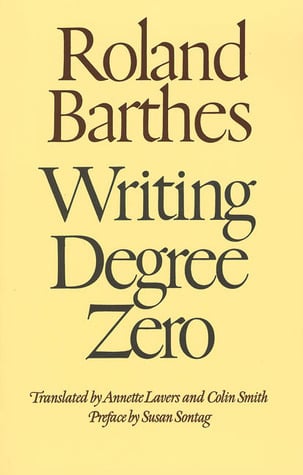
No. 46 on this list. Writing Degree Zero
Roland Barthes · 1953
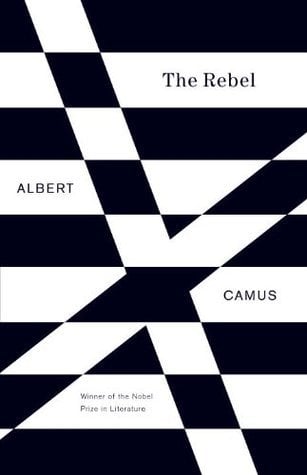
No. 47 on this list. The Rebel: An Essay on Man in Revolt
Albert Camus · 1951
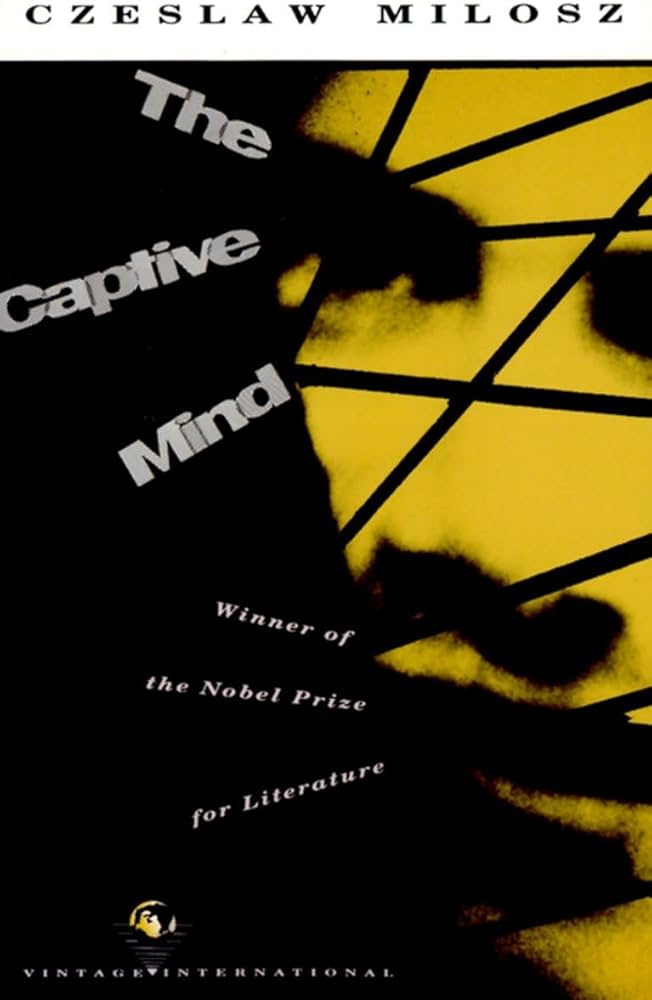
No. 48 on this list. The Captive Mind
Czesław Miłosz · 1953
About this list
These 48 books are the hardest-scoring eligible books about power and politics currently in the catalogue. About 554 hours of reading in all. Difficulty runs from 68 to 75 out of 100 for the middle half of the list; the summit is Dialectic of Enlightenment at 88.
This list is ranked by difficulty score, hardest first, with a consistent order for equal scores. Membership follows authors and co-authors, not translators or editors. A book is here when ReadingRate files it under Power & Politics as one of its primary reading domains, at a confidence of 0.8 or more. Catalogue coverage and the historical canon both limit what this list can represent.
When we matched the Canons dataset to our catalogue in October 2026, our canonical-status scores rose with the number of school curricula, publisher series and lists in it that cite a work: the median score was 72 for books one such source cites, 84 at two, 88 at three, 92 at four and 93 at five or more. Prizes are left out of that count. Outside the state curricula, the dataset’s sources choose mostly from what has been translated into English or French, so it is a weaker check on other literatures. Source: Canons (Andrew Piper), CC BY 4.0
Questions people actually ask
- What are the hardest books about power and politics to read?
- Ranked hardest first by difficulty score: The Public Burning by Robert Coover, Gravity's Rainbow by Thomas Pynchon, Marks of Identity by Juan Goytisolo, The Fifth Season by N.K. Jemisin and Lust by Elfriede Jelinek. ReadingRate ranks 48 such books, each with a difficulty score and a reading-time estimate.
- Can I read any of these books about power and politics for free?
- 7 of the 48 open in ReadingRate's reader with a free account, from public-domain editions: Henry IV, Part 1, Measure for Measure, King Lear, The Castle, Billy Budd, Sailor and 2 more.
- How long would it take to read the top ten?
- About 200 hours, at an average pace of 250 words a minute adjusted for each book's difficulty: 101 days at two hours a day. Set your own pace on the page and the list's reading times change to it.
- How hard are the hardest books about power and politics?
- Most of this list sits between 68 and 75 on ReadingRate's 100-point difficulty scale, where 40 to 55 is moderate. The summit is Dialectic of Enlightenment at 88. Every entry carries its own score, so a reader can pick a great book at a difficulty they will finish.
- How is this list ranked?
- Nine dimensions, from vocabulary and sentence structure to symbolic density and how much an ending withholds, each scored out of 100 and combined. It measures the text, not the reader, and it leans on meaning: The New York Trilogy scores 87 for how much it withholds, though its sentences are plainer than anything else in the top twenty. Each book's page shows which kind of hard it is. A book is here when ReadingRate files it under Power & Politics as one of its primary reading domains, at a confidence of 0.8 or more.